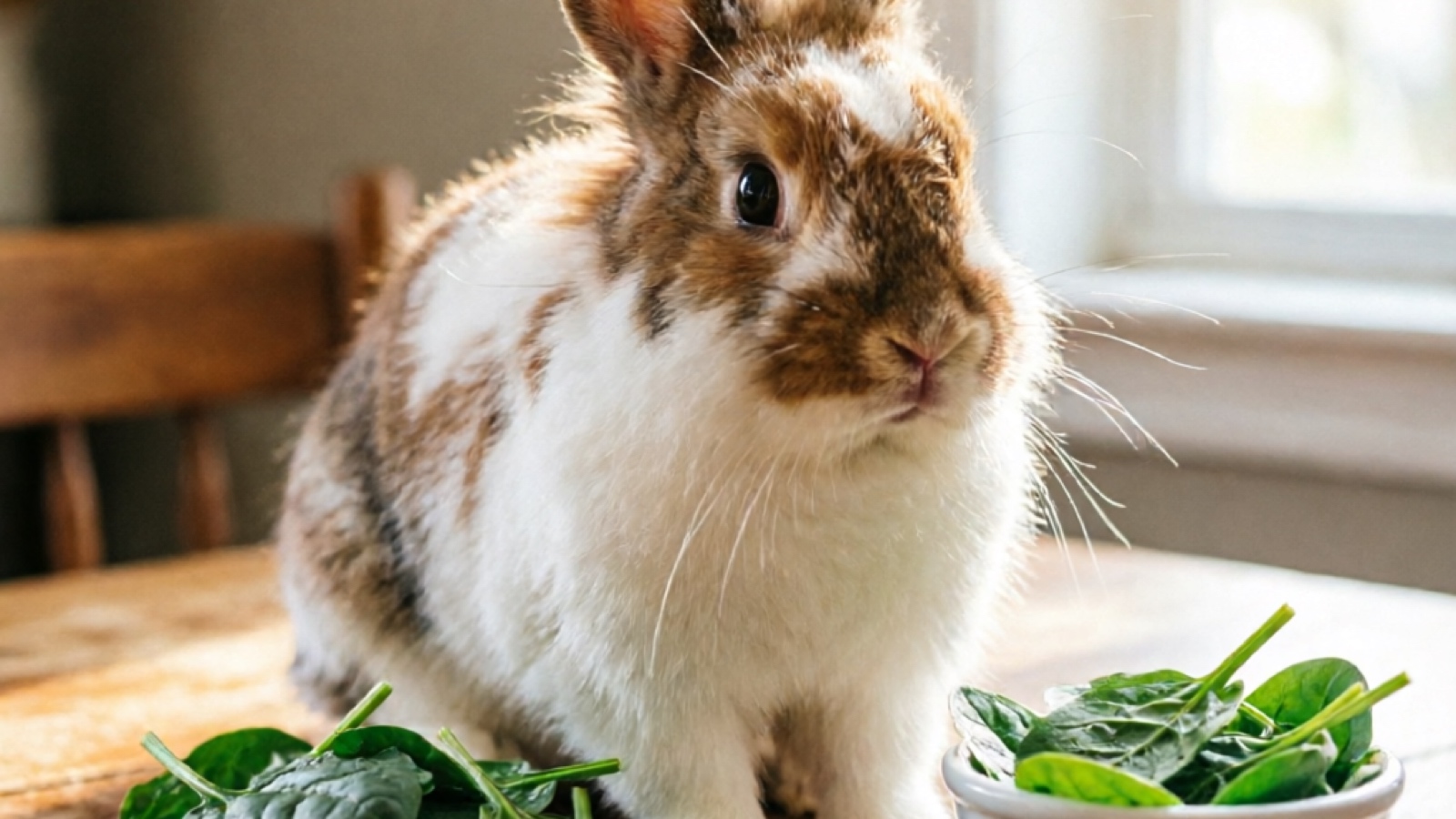
Can Rabbits Eat Spinach?
Yes, technically — but spinach is one of the most controversial vegetables you can feed a rabbit, and many veterinarians recommend avoiding it entirely.
💡 TL;DR: Spinach is not toxic, but its high oxalate content (0.97g per 100g) can cause calcium deposits and bladder stones over time. If you feed it, limit to 1-2 small leaves, once or twice a week. Many vets advise skipping spinach entirely — there are plenty of safer greens available.
I’ve been raising rabbits for years, and spinach is one of the few foods where I’ve consistently seen conflicting advice from experienced rabbit owners and veterinarians. Some treat it as a perfectly fine occasional green. Others treat it like something close to toxic. After researching the nutritional science and consulting with rabbit-savvy vets, I’ve landed on a cautious middle ground: spinach is safe in very small amounts, but it’s not worth the risk when there are so many better alternatives. I’d rather give my rabbits romaine lettuce and cilantro — greens that provide similar or better nutrition without the oxalate concern.
The core issue isn’t that spinach is poisonous. It’s that the compounds in spinach can cause cumulative, long-term damage to a rabbit’s urinary system. This is fundamentally different from the acute risks of, say, chocolate or avocado. A single spinach leaf won’t hurt your rabbit today. But a spinach leaf every day for six months might contribute to a painful and expensive bladder stone surgery. For comprehensive dietary guidance, see our rabbit food guide and best rabbit food recommendations.
Spinach Nutrition Facts for Rabbits
Prevue Pet Products Forage ‘n Play Box is a quality option worth considering for your setup.
USDA nutritional data — raw spinach, per 100g USDA FDC ID 11457 — “Spinach, raw”:
| Nutrient (per 100g) | Amount | Relevance to Rabbits |
|---|---|---|
| Energy | 23 kcal | Very low calorie |
| Protein | 2.86g | Moderate protein |
| Fat | 0.39g | Very low fat |
| Carbohydrate | 3.63g | Very low carb |
| Fiber | 2.2g | Moderate fiber |
| Sugar | 0.42g | Very low sugar — not a sugar concern |
| Water | 91.4g | Good hydration |
| Calcium | 99mg | HIGH — problematic for rabbits |
| Oxalates | ~970mg | VERY HIGH — the core risk |
| Iron | 2.71mg | Good iron content |
| Phosphorus | 49mg | Moderate |
| Potassium | 558mg | High potassium |
| Vitamin A | 9377 IU | Extremely high — beneficial |
| Vitamin C | 28.1mg | Good vitamin C |
| Vitamin K | 483µg | Extremely high — blood clotting |
| Folate | 194µg | Very high — cell growth |
The Numbers That Matter Most
Oxalates at ~970mg per 100g: This is the number that defines spinach’s relationship with rabbits. Oxalates (oxalic acid) are naturally occurring compounds found in many leafy greens, but spinach has one of the highest concentrations among common vegetables. In a rabbit’s body, oxalates bind with calcium to form calcium oxalate crystals. These crystals can accumulate in the urinary tract, leading to bladder sludge, bladder stones (urolithiasis), and kidney deposits. Unlike digestive upset from too much sugar — which resolves within days — oxalate accumulation builds silently over weeks and months.
Rabbits are particularly susceptible to urinary tract problems because they naturally excrete excess calcium through their urine (unlike most mammals, which regulate calcium absorption). When you add high dietary oxalates to a system that already handles calcium differently, the risk of crystal formation increases significantly.
Calcium at 99mg per 100g: This is high for a rabbit food. While growing rabbits on alfalfa-based diets need calcium, adult rabbits on Timothy hay can develop calcium imbalances from high-calcium greens. The combination of high calcium AND high oxalates in spinach is a double concern — not only does spinach bring its own calcium, but the oxalates can also pull calcium from the rabbit’s body to form crystals.
Vitamin K at 483µg per 100g: This is extraordinarily high — roughly 250 times the amount in strawberries and 25 times the amount in blueberries. Vitamin K is essential for blood clotting and bone health. The vitamin K content is arguably the strongest nutritional argument for including spinach in small amounts — but safer greens like parsley (650µg) and basil (415µg) provide comparable amounts with far less oxalate.
Vitamin A at 9377 IU per 100g: Extremely high — beneficial for vision, immune function, and skin health. But again, bell peppers and carrots also provide excellent vitamin A without the oxalate baggage.
Sugar at 0.42g per 100g: Here’s where spinach differs completely from fruit treats. The sugar content is negligible — spinach will not cause the sugar-related problems (GI stasis, obesity, dental disease) that grapes, strawberries, or blueberries can. The risk profile is entirely different.
Spinach vs Safer Greens
| Food | Oxalates (mg/100g) | Calcium (mg) | Vitamin K (µg) | Risk Level | Frequency |
|---|---|---|---|---|---|
| Spinach | ~970 | 99mg | 483µg | High (oxalates) | 1-2x/week max |
| Romaine lettuce | ~13 | 16mg | 102µg | Very low | Daily |
| Cilantro | ~10 | 67mg | 310µg | Very low | Daily |
| Basil | ~50 | 177mg | 415µg | Low | Daily |
| Parsley | ~100 | 138mg | 650µg | Low-moderate | 3-4x/week |
| Broccoli | ~190 | 47mg | 102µg | Low | 2-3x/week |
| Bell peppers | ~5 | 7mg | 7µg | Very low | Daily |
| Cucumber | ~8 | 16mg | 17µg | Very low | 2-3x/week |
The contrast is stark. Romaine lettuce has roughly 75 times less oxalate than spinach. Cilantro has nearly 100 times less. When there are so many low-oxalate alternatives that rabbits enjoy equally well, the argument for feeding spinach becomes difficult to make.
Benefits of Spinach for Rabbits
Many owners find that VISCOO 12-Panel Small Animal Playpen works well for their pet’s needs.
Vitamin K
At 483µg per 100g, spinach provides exceptional vitamin K — essential for proper blood clotting and bone metabolism. This is the strongest single nutritional argument for including spinach in small amounts. However, parsley (650µg) and basil (415µg) provide comparable amounts with significantly lower oxalate levels.
Vitamin A
At 9,377 IU per 100g, spinach is one of the richest sources of vitamin A among rabbit-safe vegetables. Vitamin A supports vision, immune function, and skin health. Carrots (16,706 IU) and bell peppers (varies by color, 3,131-5,717 IU) also provide excellent vitamin A without oxalates.
Folate
At 194µg per 100g, spinach is rich in folate (vitamin B9), which supports cell division and growth. This is particularly relevant for growing rabbits and breeding does, though young rabbits shouldn’t have spinach due to their developing digestive systems.
Iron
At 2.71mg per 100g, spinach provides meaningful iron content. While iron deficiency is uncommon in rabbits on a proper hay-based diet, the additional dietary iron from spinach is a small bonus.
Low Sugar
At 0.42g per 100g, spinach won’t contribute to the sugar-related problems — GI stasis, obesity, dental disease — that are concerns with fruit treats. If your rabbit needs more greens in their diet but you’re watching sugar intake, spinach doesn’t add to that problem (though the oxalate issue is separate).
Hydration
At 91.4% water, spinach provides good hydration — comparable to cucumber (95%) and tomatoes (95%). This is useful during hot weather.
Risks and Precautions
For this purpose, kathson Stainless Steel Hanging Bowl is a popular choice among pet owners.
High Oxalate Content — The Primary Concern
This is what makes spinach fundamentally different from other vegetables in a rabbit’s diet. Oxalates are not an acute toxin — your rabbit won’t show immediate symptoms from eating spinach. The danger is cumulative and progressive:
- Weeks 1-4: No visible symptoms. Oxalates begin binding with calcium in the urinary tract.
- Weeks 4-12: Small calcium oxalate crystals may begin forming in the bladder (bladder sludge). Still often asymptomatic.
- Months 3-6+: Crystals can aggregate into larger bladder stones. Symptoms appear: difficulty urinating, blood in urine, straining, frequent small urinations, abdominal pain.
- Severe cases: Complete urinary blockage — a life-threatening emergency requiring immediate veterinary intervention, often surgery.
The timeline varies between individual rabbits. Some rabbits seem more susceptible to oxalate-related problems than others, and genetics likely play a role. But the risk is real and well-documented in veterinary literature.
High Calcium Content
At 99mg per 100g, spinach is high in calcium. Rabbits uniquely absorb all dietary calcium and excrete excess through urine — they don’t regulate calcium absorption the way humans and most other mammals do. When you combine high dietary calcium with high oxalates, the conditions for crystal formation are ideal.
Urinary Tract Disease
Bladder sludge (thick, sandy urine), bladder stones, and kidney problems are among the most common — and most expensive — health issues in pet rabbits. Surgery to remove bladder stones can cost $1,000-3,000+ and carries significant risk. Prevention through proper diet is far better than treatment. For more on rabbit health, see our rabbit health guide and how diet directly impacts rabbit lifespan.
The Veterinary Debate
It’s important to be transparent about the range of opinions on spinach:
-
Conservative vets (and I’d include myself in this camp): Recommend avoiding spinach entirely. The nutritional benefits are available from safer greens, so why take the risk? Romaine lettuce, cilantro, basil, and parsley provide excellent nutrition without the oxalate concern.
-
Moderate vets: Allow spinach in strict moderation — 1-2 small leaves, once or twice a week. They acknowledge the oxalate risk but believe the amount in small, infrequent servings is manageable.
-
Some holistic/natural diet advocates: Include spinach as part of a varied green rotation, arguing that the oxalate concern is overblown and that wild rabbits would naturally encounter oxalate-containing plants.
In my experience, the conservative approach makes the most sense. There is simply no nutritional benefit that spinach provides that can’t be obtained from a safer alternative. The risk-to-reward ratio is poor.
Pesticide Residue
Spinach consistently ranks at or near the top of the EWG’s “Dirty Dozen” list — often in the number one or two position. The large, tender leaves absorb and retain pesticide residue more than most other vegetables. Thorough washing is essential: soak in 1:3 vinegar-water for 2-3 minutes, then rinse under running water for 15-20 seconds. Organic spinach is strongly preferred for rabbits.
Gas and Bloating
Like broccoli and cabbage, spinach can cause gas in some rabbits. While not as gassy as cruciferous vegetables, it’s worth monitoring your rabbit after the first few spinach feedings. Rabbits cannot burp or pass gas easily — excessive gas causes painful bloating and can contribute to GI stasis. If you notice a bloated abdomen or your rabbit becomes lethargic after eating spinach, discontinue it immediately.
Serving Guide by Breed and Size
Small Breeds (2-4 lbs)
Breeds: Netherland Dwarf, Holland Lop, Lionhead, Polish, Dwarf Hotot
- Amount: One small spinach leaf, torn into pieces
- Frequency: Once a week maximum — or not at all
- Why more cautious: Small rabbits have smaller urinary tracts where crystals can cause blockages more easily. The risk-to-size ratio is worse for small breeds. I’d genuinely recommend skipping spinach for breeds under 3 pounds entirely.
Medium Breeds (4-8 lbs)
Breeds: Mini Lop, English Spot, Rex, Dutch, Angora
- Amount: 1-2 small leaves
- Frequency: Once or twice a week
- Preparation: Wash thoroughly, tear into smaller pieces, remove any tough stems if desired
Medium breeds have more body mass to process oxalates, but the risk is still present. If you choose to feed spinach, keep it to once or twice a week and rotate with safer greens on other days.
Large Breeds (8-12+ lbs)
Breeds: Flemish Giant, French Lop, Giant Chinchilla, New Zealand
- Amount: 2-3 small leaves
- Frequency: Once or twice a week
- Why slightly more: Larger body mass and larger urinary tract mean blockages are somewhat less likely. However, the oxalate content is the same regardless of rabbit size.
Baby Rabbits (Under 12 Weeks)
Baby rabbits should not eat spinach or any leafy greens. Their digestive systems are developing:
- 0-6 weeks: Mother’s milk + alfalfa hay
- 6-8 weeks: Introduce high-quality pellets gradually
- 8-12 weeks: Introduce small amounts of SAFE leafy greens first — start with romaine lettuce or cilantro, NOT spinach
- 12+ weeks: If you want to introduce spinach, do it only after safer greens are well-tolerated, and in tiny amounts (a quarter leaf) with 48-hour observation between feedings
Senior Rabbits
Senior rabbits are actually at higher risk for urinary tract problems, making spinach a worse choice for older animals. If your senior rabbit has any history of bladder sludge, urinary difficulty, or kidney issues, eliminate spinach from the diet completely. Safer greens provide the same nutritional benefits without the urinary risk.
How to Prepare Spinach for Your Rabbit
Step 1: Choose Fresh, Dark Green Spinach
Select spinach that is:
- Deep green — pale or yellowing leaves have lower nutritional value
- Crisp and firm — wilted spinach has lost nutrients and may harbor bacteria
- Intact — no mold, slime, or dark spots
- Young leaves preferred — baby spinach tends to be more tender and slightly lower in oxalates than mature spinach
- Organic when possible — spinach is the #1 or #2 most pesticide-contaminated vegetable most years
Step 2: Wash Thoroughly — This Step Is Critical
Because of spinach’s position on the Dirty Dozen, washing deserves extra attention:
- Separate the leaves and discard any that are wilted, slimy, or discolored
- Soak in a 1:3 vinegar-water solution for 2-3 minutes
- Rinse under cool running water for 15-20 seconds, gently rubbing each leaf
- Pat dry with a clean paper towel
- Inspect each leaf for insects, snails, or debris (common with fresh spinach)
Step 3: Remove Thick Stems (Optional)
The thick central stem of mature spinach leaves is fibrous and some rabbits don’t enjoy it. Young spinach (baby spinach) has tender stems that most rabbits eat without issue. If using mature spinach, you can fold the leaf and tear away the stem, then offer the leaf portions only.
Step 4: Tear Into Pieces
Don’t offer whole leaves, especially to small breeds. Tear each leaf into 2-3 pieces. This makes it easier for your rabbit to eat and prevents them from trying to stuff a whole leaf into their mouth.
Step 5: Serve at Room Temperature
Don’t serve spinach straight from the refrigerator. Cold greens can cause temporary digestive slowdown. Let the pieces sit at room temperature for 5-10 minutes before offering.
Step 6: Remove Uneaten Spinach After 2-3 Hours
Fresh spinach wilts quickly at room temperature and can develop a slimy texture that harbors bacteria. Remove any uneaten pieces from the food bowl and cage floor.
What to Avoid
Cooked Spinach
Rabbits should never eat cooked vegetables of any kind. Cooking destroys vitamin C and folate, alters the fiber structure, and makes food harder for a rabbit’s digestive system to process. Additionally, cooked spinach for human consumption almost always contains salt, oil, butter, or garlic — all harmful to rabbits. Raw only.
Frozen Spinach
Frozen spinach is typically blanched (partially cooked) before freezing, which already compromises the nutritional profile. Thawed frozen spinach also becomes mushy and unappealing. More importantly, frozen spinach blocks are often from mature leaves with higher oxalate concentrations. Fresh, raw spinach is the only acceptable form.
Canned Spinach
Canned spinach is packed with added salt, sometimes preservatives, and the canning process destroys most vitamins. The texture is also completely unsuitable for rabbits. Never offer canned spinach.
Creamed Spinach or Spinach Dishes
Any prepared spinach dish — creamed spinach, spinach dip, spanakopita, spinach pie, or any recipe containing spinach — contains ingredients unsafe for rabbits: dairy, salt, garlic, onions, oil, and flour. Raw spinach only, with nothing added.
Pre-Washed Salad Mixes Containing Spinach
Bagged salad mixes often combine spinach with other greens and may have been washed in chlorinated solutions. They also have shorter shelf life and higher bacterial risk. Buy whole spinach leaves and wash them yourself.
Daily Feeding
The most dangerous approach with spinach isn’t feeding it once — it’s feeding it regularly. Even 1-2 leaves every day adds up to significant oxalate exposure over time. If you choose to feed spinach, make it an occasional addition (once or twice a week), not a regular part of the rotation.
Safer Alternatives to Spinach
This is the most important section of this article. Spinach’s nutritional benefits — vitamin K, vitamin A, folate, iron, hydration — are all available from safer greens that your rabbit will enjoy just as much.
Daily Greens (Safe for Every Day)
- Romaine lettuce — the gold standard rabbit green. Very low oxalates (~13mg), good hydration, mild flavor that most rabbits love. Should be a daily staple.
- Cilantro — extremely low oxalates (~10mg), strong aroma that rabbits find appealing, good vitamin K. Many rabbits prefer cilantro to almost any other green.
- Basil — low oxalates (~50mg), high vitamin K (415µg — close to spinach), aromatic. Both sweet basil and Italian basil are safe.
- Dill — low oxalates, good flavor variety for rotation.
- Mint — low oxalates, aids digestion (in moderation). Peppermint and spearmint are both safe.
Regular Greens (3-4 Times Per Week)
- Parsley — moderate oxalates (~100mg) but very high vitamin K (650µg). Richer in vitamin K than spinach with about one-tenth the oxalates. Limit to 3-4 times per week due to moderate oxalate level.
- Arugula — low oxalates, peppery flavor. Good for variety.
Vegetables (Regular Rotation)
- Bell peppers — very low oxalates, excellent vitamin C
- Broccoli — low sugar, moderate oxalates (~190mg), good nutrition
- Cucumber — very low oxalates, excellent hydration
- Tomatoes — low oxalates, good hydration (remove leaves and stem)
- Carrots — moderate sugar but very low oxalates
A Sample Weekly Rotation (Without Spinach)
Monday: romaine lettuce + cilantro Tuesday: romaine lettuce + basil Wednesday: bell pepper strips + romaine Thursday: romaine lettuce + parsley Friday: carrot piece + cucumber slice Saturday: romaine lettuce + cilantro Sunday: broccoli floret + romaine
This rotation provides excellent nutritional variety, plenty of vitamin K and vitamin A, good hydration, and zero oxalate concern. Your rabbit won’t miss spinach. For comprehensive care beyond diet, see our setup guide, grooming guide, litter training guide, and health guide.
Other Foods Your Rabbit Can Eat
Each link leads to a full safety guide with serving recommendations.
Vegetables
- Can Rabbits Eat Carrots?
- Can Rabbits Eat Bell Peppers?
- Can Rabbits Eat Broccoli?
- Can Rabbits Eat Cucumber?
- Can Rabbits Eat Tomatoes?
Fruits
Core Guides
- Rabbit Food Guide | Best Rabbit Food
- Rabbit Care Guide | Rabbit Health
- Rabbit Lifespan | Rabbit Behavior
- Rabbit Grooming | Litter Training
- Rabbit Sounds
Housing and Supplies
- Best Rabbit Cage | Rabbit Cage Size
- Best Rabbit Toys | Best Rabbit Treats
- Best Rabbit Harness | Best Rabbit Litter
- DIY Hutch Plans
Breed Guides
Product Recommendations
Here are some products mentioned in this guide:
Frequently Asked Questions
Can rabbits eat spinach?
Technically yes, but many vets recommend avoiding it. The high oxalate content (0.97g per 100g) can cause calcium oxalate crystals in the urinary tract over time. If you do feed spinach, limit to 1-2 small leaves, once or twice a week. Safer greens like romaine lettuce and cilantro provide similar nutrition without the risk.
Can rabbits eat spinach everyday?
Absolutely not. Daily spinach feeding leads to oxalate accumulation, which causes bladder sludge, stones, and kidney problems. The damage is cumulative and progressive — your rabbit may show no symptoms for months until a serious urinary problem develops. Most vets say once or twice a week maximum, or not at all.
Can baby rabbits eat spinach?
No. Under 12 weeks, no leafy greens at all. After 12 weeks, start with safe greens like romaine lettuce — not spinach. Spinach should be the last green you consider introducing, if at all.
How much spinach can a rabbit eat?
Medium (4-6 lbs): 1-2 small leaves, 1-2x/week. Small breeds (Netherland Dwarf, Holland Lop): one leaf, once/week — or skip entirely. Large breeds (Flemish Giant): 2-3 small leaves, 1-2x/week. Many vets recommend not feeding spinach at all.
Is spinach toxic to rabbits?
Not acutely toxic — a small amount won’t cause immediate harm. The danger is long-term and cumulative: oxalates bind with calcium to form crystals in the urinary tract. This is a chronic health risk, not an acute poisoning. However, the consequences (bladder stones requiring surgery) can be severe.
Can rabbits eat spinach stems?
Yes, stems are safe and contain slightly less oxalate than leaves. But the same strict portion limits apply to the whole plant.
What greens are safer than spinach?
Romaine lettuce, cilantro, basil, dill, and mint are all daily-safe with minimal oxalates. Parsley and arugula are safe 3-4 times per week. These provide excellent nutrition without the urinary tract risks.
Can rabbits eat cooked spinach?
No. Rabbits should never eat cooked vegetables. Cooking destroys nutrients, alters fiber structure, and cooked spinach for humans contains salt, oil, and other harmful ingredients. Raw only.