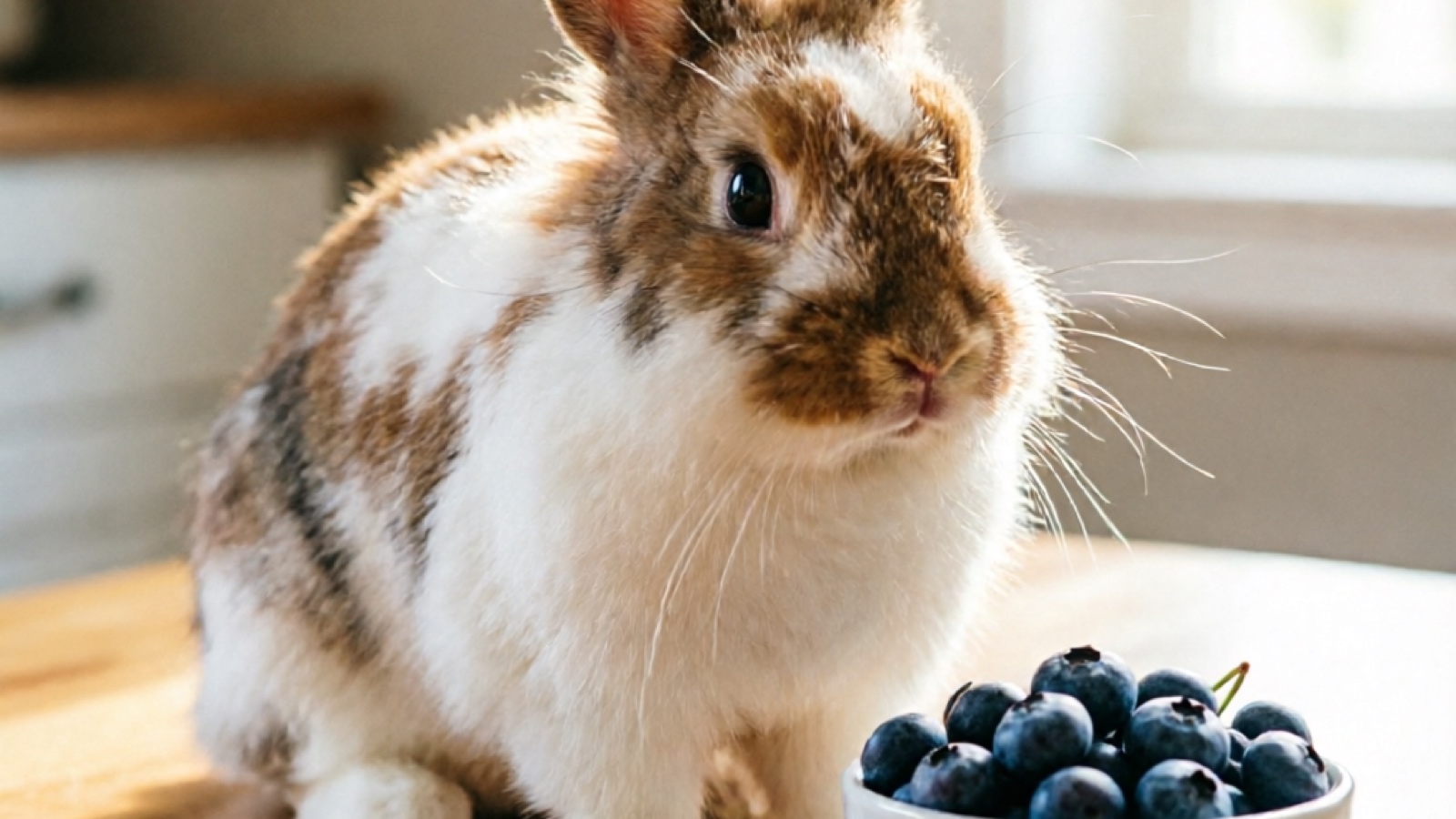
Can Rabbits Eat Blueberries?
Yes — blueberries are one of the most nutritious fruit treats you can offer a rabbit, but portions still need to be controlled.
💡 TL;DR: Medium rabbits (4-6 lbs): 1-2 small blueberries, 2-3 times per week. Small breeds: 1 blueberry, once or twice a week. Large breeds: 2-3 blueberries, 2-3 times per week. Always wash thoroughly and serve at room temperature.
I’ve offered blueberries to my rabbits for years, and they’re consistently one of the most well-received treats in our rotation — right alongside strawberries and carrots. What makes blueberries particularly appealing from a nutritional standpoint is their antioxidant profile. Very few common rabbit treats deliver the concentration of anthocyanins and vitamin C that blueberries provide. But like any fruit, the sugar content means they’re a treat — not a daily food.
The fundamental consideration with blueberries is the same as with all fruit: a rabbit’s digestive system evolved to process high-fiber, low-sugar foods — primarily grass and hay, which contain less than 1g of sugar per 100g. Blueberries, at roughly 10g of sugar per 100g, are about 10 times sweeter than a rabbit’s natural diet. That’s less extreme than grapes at 16 times, but it still demands portion discipline. For the complete dietary framework, see our rabbit food guide and best rabbit food recommendations.
Blueberry Nutrition Facts for Rabbits
Lixit Wide Mouth Water Bottle is a quality option worth considering for your setup.
USDA nutritional data — raw blueberries, per 100g USDA FDC ID 09050 — “Blueberries, raw”:
| Nutrient (per 100g) | Amount | Relevance to Rabbits |
|---|---|---|
| Energy | 57 kcal | Moderate calorie for a treat |
| Protein | 0.74g | Minimal protein |
| Fat | 0.33g | Very low fat |
| Carbohydrate | 14.49g | Moderate carb |
| Fiber | 2.4g | Low-moderate fiber — not a substitute for hay |
| Sugar | 9.96g | Moderate sugar — ~10x natural diet |
| Water | 84.21g | Good hydration |
| Calcium | 6mg | Low calcium |
| Phosphorus | 12mg | Low phosphorus |
| Potassium | 77mg | Heart and muscle function |
| Vitamin C | 9.7mg | Good vitamin C — antioxidant support |
| Vitamin K | 19.3µg | High vitamin K — blood clotting |
| Vitamin E | 0.57mg | Antioxidant |
| Manganese | 0.336mg | Bone metabolism |
The Numbers That Matter Most
Sugar at 9.96g per 100g: Blueberries sit in the middle of the fruit sugar spectrum for rabbits. They have roughly 60% of the sugar in grapes (16.3g) but about double the sugar in strawberries (4.9g). A single small blueberry weighs about 1.5g and contains roughly 0.15g of sugar — a very small dose, which is why portion control is somewhat easier with blueberries than with larger fruits. The small size of individual berries is actually an advantage: it’s hard to overfeed when each piece is only 1-2 grams.
Vitamin K at 19.3µg per 100g: This is one of the standout nutrients. Blueberries have significantly more vitamin K than strawberries (2.2µg) or grapes (14.6µg). Vitamin K plays a crucial role in blood clotting and bone metabolism. While rabbits don’t typically have vitamin K deficiencies, the additional dietary contribution from blueberries supports overall health.
Fiber at 2.4g per 100g: Better than grapes (0.9g) and on par with strawberries (2.0g). However, a rabbit needs 20-25% dietary fiber for proper gut motility, so blueberries still can’t replace hay in any meaningful way.
Calories at 57 kcal per 100g: Moderate — higher than strawberries (32 kcal) but lower than grapes (69 kcal). A single blueberry (1.5g) delivers less than 1 calorie, making it one of the lowest calorie-per-serving treats available.
Blueberries vs Other Safe Treats
| Food | Sugar (per 100g) | Fiber | Calories | Risk Level | Frequency |
|---|---|---|---|---|---|
| Grapes | 16.3g | 0.9g | 69 kcal | High sugar | 1-2x/week |
| Carrots | 4.7g | 2.8g | 41 kcal | Moderate | 1-2x/week |
| Blueberries | 10.0g | 2.4g | 57 kcal | Moderate | 2-3x/week |
| Strawberries | 4.9g | 2.0g | 32 kcal | Moderate | 1-2x/week |
| Bell peppers | 4.2g | 2.1g | 31 kcal | Low | Daily |
| Broccoli | 1.7g | 2.6g | 34 kcal | Very low | 2-3x/week |
| Cucumber | 1.7g | 0.5g | 16 kcal | Low | 2-3x/week |
| Tomatoes | 2.6g | 1.2g | 18 kcal | Low | 2x/week |
| Celery | 1.3g | 1.6g | 16 kcal | Very low | Daily |
Blueberries have more sugar than strawberries and carrots, but the small berry size means each individual serving delivers less total sugar than a strawberry or carrot piece of equivalent visual size. The tradeoff is more sugar per gram, but less total sugar per serving — and that’s what matters for your rabbit’s digestion.
Benefits of Blueberries for Rabbits
Many owners find that kathson Stainless Steel Hanging Bowl works well for their pet’s needs.
Powerful Antioxidant Content
This is where blueberries truly shine. They are one of the most antioxidant-rich foods commonly available, packed with anthocyanins (the compounds that give them their deep blue-purple color), quercetin, and myricetin. Antioxidants help protect cells from oxidative damage and support immune function. Among all the fruits commonly offered to rabbits, blueberries consistently rank at or near the top for antioxidant capacity — higher than strawberries, significantly higher than grapes, and far higher than carrots.
Vitamin K
At 19.3µg per 100g, blueberries provide more vitamin K than most other rabbit-safe fruits. Vitamin K is essential for proper blood clotting and plays a role in bone metabolism. While rabbits generally get sufficient vitamin K from their hay-based diet, the additional amount from blueberries provides a meaningful supplementary benefit.
Vitamin C
At 9.7mg per 100g, blueberries offer moderate vitamin C content. While rabbits synthesize their own vitamin C (unlike guinea pigs), the additional dietary vitamin C still supports immune function and acts as an antioxidant. It’s less than bell peppers (80-120mg) or strawberries (58.8mg), but the combination with the anthocyanin antioxidants creates a strong overall antioxidant package.
Easy Portion Control
I’ve found blueberries to be one of the easiest treats to portion correctly. Unlike strawberries, which need to be cut into pieces, or grapes, which can vary widely in size, blueberries are naturally small and relatively uniform. A single blueberry weighs 1-2 grams — the perfect serving increment. There’s no cutting, no measuring, and very little risk of accidentally giving too much. This makes them an ideal treat for busy owners or for family members who might not be familiar with proper rabbit portion sizes.
Hydration
At 84% water, blueberries provide decent hydration — not as much as cucumber (96%) or tomatoes (95%), but enough to contribute during warm weather. The combination of water and fiber in blueberries means they’re less likely to cause digestive issues than very low-fiber, high-moisture foods.
Training and Bonding
In my experience, blueberries are one of the most effective training rewards for rabbits. Their strong aroma makes them highly motivating, and the small size means you can offer multiple small rewards during a training session without overfeeding. I’ve used single blueberries to encourage nail trimming cooperation, litter box usage, and even basic recall. The key advantage over carrots is that a whole blueberry feels like a “real” treat to the rabbit, while being small enough to avoid filling them up.
Mental Enrichment
Dietary variety is important for a rabbit’s mental wellbeing. Offering different treats on different days — blueberries on Tuesday, strawberries on Friday, carrots on the weekend — keeps feeding time interesting. Bored rabbits can develop destructive behaviors like cage chewing or fur pulling, which we cover in our rabbit behavior guide.
Risks and Precautions
For this purpose, Ware Twist-N-Go is a popular choice among pet owners.
Sugar Content — The Primary Concern
At 10g per 100g, blueberries are moderate in sugar. They’re less dangerous than grapes (16.3g), but more concentrated than strawberries (4.9g). A rabbit’s digestive system relies on hindgut fermentation of fiber — a slow, continuous process. When you introduce sugar, it disrupts the gut bacteria balance and can slow gut motility.
Consequences of excess sugar in rabbits:
- GI stasis — the most serious risk. Sugar slows or stops gut movement, potentially leading to complete digestive shutdown. GI stasis is painful and can become fatal within 12-24 hours if untreated. Symptoms include reduced appetite, smaller or fewer droppings, bloating, teeth grinding (a pain indicator), and lethargy.
- Obesity — excess calories from sugar convert to fat. Weight directly impacts rabbit lifespan, and obese rabbits face higher risks of joint problems, heart disease, and fatty liver disease.
- Dental disease — sugar promotes harmful oral bacteria. Since rabbit teeth grow continuously throughout their lives, dental problems escalate quickly and become expensive to treat.
- Enterotoxemia — dangerous bacterial overgrowth (particularly Clostridium) in the gut, triggered by high-sugar, low-fiber conditions. This is more common in young rabbits but can affect adults fed too much sugar.
Pesticide Residue
Blueberries are a thin-skinned fruit and appear on the EWG’s “Dirty Dozen” list most years. The small size and bumpy surface make them particularly difficult to clean thoroughly — pesticide residue can settle in the crevice at the top of each berry where the stem was attached. I always soak blueberries in a 1:3 vinegar-water solution for 2-3 minutes, then rinse under cool running water for at least 15 seconds. Organic blueberries are strongly preferred for rabbits.
Choking Hazard
While blueberries are small and soft, they’re roughly the right size to potentially lodge in a small rabbit’s throat. Rabbits don’t always chew their food thoroughly — especially when excited about a sweet treat. For very small breeds (Netherland Dwarf, Holland Lop), consider cutting each berry in half before serving. For medium and large breeds, whole berries are generally safe.
Diarrhea
Introducing blueberries too quickly or in too large a portion can cause diarrhea. Rabbit diarrhea is more serious than in many other pets because it can rapidly lead to dehydration and GI stasis. If your rabbit develops loose stool after eating blueberries:
- Remove all fresh food and treats immediately
- Provide unlimited Timothy hay and fresh water only
- Monitor droppings every few hours
- If diarrhea persists beyond 12 hours, your rabbit stops eating hay, or you notice bloating, contact a rabbit-savvy vet immediately
Nutritional Displacement
This is the risk that catches many owners off guard. When a rabbit fills up on sweet treats — even relatively moderate ones like blueberries — it eats less hay. And hay is the single most important component of a rabbit’s diet, making up 80% or more of total food intake. The fiber in blueberries (2.4g per 100g) is helpful but nowhere near the 20-25% a rabbit needs. A few blueberries won’t displace much hay, but if you’re offering treats multiple times per day, the cumulative effect adds up.
Serving Guide by Breed and Size
Serving sizes depend primarily on body weight. Here are guidelines based on common rabbit breeds:
Small Breeds (2-4 lbs)
Breeds: Netherland Dwarf, Holland Lop, Lionhead, Polish, Dwarf Hotot
- Amount: 1 small blueberry, cut in half
- Frequency: Once or twice a week
- Why smaller: Small rabbits have significantly less body mass to process sugar. A single blueberry represents a larger percentage of their caloric intake and sugar tolerance compared to a large breed. I always recommend cutting berries in half for breeds under 3 pounds — the risk of choking is small but real, and it doubles the number of “treat moments” your rabbit gets.
I’ve found that small breeds are often the most enthusiastic about blueberries, which can make portion control challenging. My Netherland Dwarf would nudge my hand relentlessly for more after finishing a single berry. Staying firm on the once-or-twice-a-week limit is important — their tiny systems simply can’t handle more sugar than that without consequences.
Medium Breeds (4-8 lbs)
Breeds: Mini Lop, English Spot, Rex, Dutch, Angora
- Amount: 1-2 small blueberries
- Frequency: 2-3 times per week
- Preparation: Wash thoroughly, serve whole or halved depending on berry size
Medium breeds handle blueberries well within these limits. The 1-2 berry serving is calibrated for this size category and provides a satisfying treat without excessive sugar. I typically offer blueberries 2-3 times per week as part of a rotating treat schedule alongside strawberries and carrots.
Large Breeds (8-12+ lbs)
Breeds: Flemish Giant, French Lop, Giant Chinchilla, New Zealand
- Amount: 2-3 blueberries
- Frequency: 2-3 times per week
- Why more: Larger body mass processes sugar more effectively, allowing slightly larger portions. Even so, a 15-pound Flemish Giant shouldn’t have more than 3 berries per serving.
Baby Rabbits (Under 12 Weeks)
Baby rabbits should not eat blueberries. Their digestive systems are developing and cannot handle sugar of any kind. The proper diet progression is:
- 0-6 weeks: Mother’s milk + alfalfa hay
- 6-8 weeks: Introduce high-quality pellets gradually
- 8-12 weeks: Introduce small amounts of leafy greens one at a time
- 12+ weeks: Fruit treats like blueberries can be introduced — start with half a single blueberry and wait 48 hours to confirm no digestive upset before offering a full berry
Senior Rabbits
Senior rabbits can enjoy blueberries in the same portions as adults of similar size, with some caveats. Older rabbits often have slower metabolisms and reduced activity levels, making them more susceptible to weight gain from sugary treats. If your senior rabbit is overweight or has a history of GI stasis, consider reducing fruit treats to once a week or switching entirely to lower-sugar vegetables like bell peppers or broccoli.
How to Prepare Blueberries for Your Rabbit
Step 1: Choose Fresh Blueberries
Select blueberries that are:
- Firm and plump — they should bounce back slightly when gently squeezed
- Deep blue with a silvery bloom — the dusty white coating (bloom) is natural and indicates freshness
- Uniformly colored — green or reddish berries are underripe and more acidic
- Dry — avoid berries in clammy or moldy containers
- Organic when possible — this significantly reduces pesticide exposure
Step 2: Wash Thoroughly
Blueberries require careful washing due to their small size and the stem-end crevice where residue collects:
- Place blueberries in a fine-mesh strainer
- Soak in a 1:3 vinegar-water solution for 2-3 minutes
- Rinse under cool running water for 15-20 seconds, gently agitating
- Spread on a clean paper towel and pat dry
- Inspect each berry for soft spots, mold, or debris
Don’t skip the vinegar soak — it makes a real difference with blueberries. The bumpy surface and stem scar create tiny pockets that plain water doesn’t fully clean.
Step 3: Inspect Each Berry
Before serving, quickly check each blueberry for:
- Mold (even a tiny spot of mold means discard the whole berry)
- Soft or mushy spots
- Stems or leaves still attached (remove these)
- Unusual discoloration
Step 4: Serve Whole or Halved
For medium and large breeds, whole blueberries are generally fine. For small breeds under 3 pounds, cut each berry in half. This serves two purposes: it eliminates the small choking risk and makes the treat feel like more to your rabbit.
Step 5: Serve at Room Temperature
Don’t serve blueberries straight from the refrigerator. Cold food can cause temporary digestive slowdown in rabbits. Let the berries sit at room temperature for 5-10 minutes before offering. This also enhances their aroma, making them more appealing.
Step 6: Remove Uneaten Berries After 1-2 Hours
Blueberries at room temperature spoil faster than you might think. Check food bowls and the cage floor for uneaten berries. Rabbits sometimes push food into corners or bedding where it can develop mold quickly.
What to Avoid
Dried Blueberries
Dried blueberries concentrate sugar roughly 4-5 times per gram compared to fresh. Most commercially dried blueberries also contain added sugar and preservatives. The chewy, sticky texture also poses a choking hazard. Never offer dried blueberries to rabbits.
Blueberry Jam, Muffins, or Baked Goods
Any processed blueberry product contains added sugar, refined flour, and often artificial ingredients. Blueberry-flavored yogurt, ice cream, cereal, and candy are all unsafe for rabbits. Only raw, fresh blueberries are acceptable.
Frozen Blueberries (Unthawed)
Frozen blueberries straight from the freezer are too cold and can cause digestive shock. If you want to use frozen blueberries — which are actually a good option since they’re typically frozen at peak ripeness — thaw them completely at room temperature first. Thawed blueberries become softer, which some rabbits prefer. Just make sure they’re fully defrosted before serving.
Canned Blueberries
Canned blueberries or fruit cocktail containing blueberries are packed in sugary syrup with preservatives. These are not safe for rabbits in any amount.
Blueberry-Flavored Rabbit Treats
Some commercial rabbit treats are marketed with “blueberry flavor.” Read ingredient lists carefully — many contain added sugar, artificial flavors, and fillers. A fresh blueberry is always better than a processed “blueberry-flavored” treat.
Wild Blueberries from Unknown Sources
While wild blueberries are safe in principle, only collect from areas you’re certain are free of pesticides, herbicides, and chemical fertilizers. Roadside berry patches, areas near agricultural fields, and public parks that use chemical treatments are all potential risk zones. When in doubt, don’t risk it.
Overfeeding
The most common mistake isn’t feeding the wrong thing — it’s feeding the right thing too often. Blueberries are small and it’s tempting to offer “just one more.” But 3-4 blueberries for a medium rabbit on a daily basis will cause problems within weeks: loose stool, reduced hay consumption, and gradual weight gain. Stick to 2-3 times per week maximum.
Safe Alternatives to Rotate With Blueberries
A balanced treat rotation provides both nutritional variety and mental enrichment:
Daily vegetables (safe for every day): Bell peppers (4.2g sugar, very high vitamin C), romaine lettuce (low calorie, good hydration), cilantro, parsley
Regular treats (2-3x/week): Carrots (4.7g sugar), broccoli (1.7g sugar), cucumber (1.7g sugar), tomatoes (2.6g sugar)
Fruit treats (1-3x/week): Blueberries (10g sugar), strawberries (4.9g sugar), grapes (16.3g sugar — strictest portions)
A sample weekly rotation for a medium rabbit: daily bell pepper + leafy greens, Tuesday — 1-2 blueberries, Thursday — carrot piece, Saturday — half a strawberry, Sunday — cucumber slice. For comprehensive care beyond diet, see our setup guide, grooming guide, litter training guide, and health guide.
Other Foods Your Rabbit Can Eat
Each link leads to a full safety guide with serving recommendations.
Vegetables
- Can Rabbits Eat Carrots?
- Can Rabbits Eat Bell Peppers?
- Can Rabbits Eat Broccoli?
- Can Rabbits Eat Cucumber?
- Can Rabbits Eat Tomatoes?
Fruits
Core Guides
- Rabbit Food Guide | Best Rabbit Food
- Rabbit Care Guide | Rabbit Health
- Rabbit Lifespan | Rabbit Behavior
- Rabbit Grooming | Litter Training
- Rabbit Sounds
Housing and Supplies
- Best Rabbit Cage | Rabbit Cage Size
- Best Rabbit Toys | Best Rabbit Treats
- Best Rabbit Harness | Best Rabbit Litter
- DIY Hutch Plans
Breed Guides
Product Recommendations
Here are some products mentioned in this guide:
Frequently Asked Questions
Can rabbits eat blueberries?
Yes, in moderation — 1-2 small blueberries for a medium rabbit, 2-3 times per week. Blueberries contain about 10g sugar per 100g, which is moderate but still 10 times sweeter than a rabbit’s natural diet of hay and grass. Always wash thoroughly and serve at room temperature.
Can rabbits eat blueberries everyday?
No. At 10g sugar per 100g, daily blueberry intake disrupts gut bacteria balance over time and can lead to GI stasis, obesity, and dental disease. Limit to 2-3 times per week maximum.
Can baby rabbits eat blueberries?
No. Under 12 weeks, their digestive systems can’t process sugar. Follow proper progression: milk + alfalfa hay → pellets at 6-8 weeks → greens at 8-12 weeks → fruit treats like blueberries after 12 weeks.
How many blueberries can a rabbit eat?
Medium (4-6 lbs): 1-2 blueberries, 2-3x/week. Small breeds (Netherland Dwarf, Holland Lop): 1 blueberry halved, 1-2x/week. Large breeds (Flemish Giant): 2-3 blueberries, 2-3x/week. Always start with one and monitor.
Can rabbits eat frozen blueberries?
Not directly from the freezer — the cold causes digestive upset. Thaw completely at room temperature first. Thawed blueberries are softer, which some rabbits prefer. Fresh is always best.
Can rabbits eat dried blueberries?
No. Drying concentrates sugar 4-5x per gram, and most commercial dried blueberries contain added sugar. The sticky texture is also a choking hazard. Serve fresh only.
Can rabbits eat wild blueberries?
Yes, and they often contain more antioxidants than commercial varieties due to higher skin-to-flesh ratio. Only collect from pesticide-free areas and wash thoroughly before serving.
Are blueberries safe for rabbits?
Safe in small, infrequent portions. Not toxic. The danger is overfeeding, not the blueberries themselves. At 1-2 berries, 2-3 times per week, blueberries are one of the more nutritious fruit treats available for rabbits.