
A 25-inch wire box labeled “rabbit cage” looks finished in the product photo. An adult rabbit in that box can turn around and sit - not hop a full stride - so the first month usually brings sore hocks, chewed bars, and a second enclosure on the shopping list. This page is the mixed best rabbit cage lineup: exercise pen vs indoor metal cage vs one furniture hutch. It is not the outdoor-hutch catalog and not a playpen-only list.
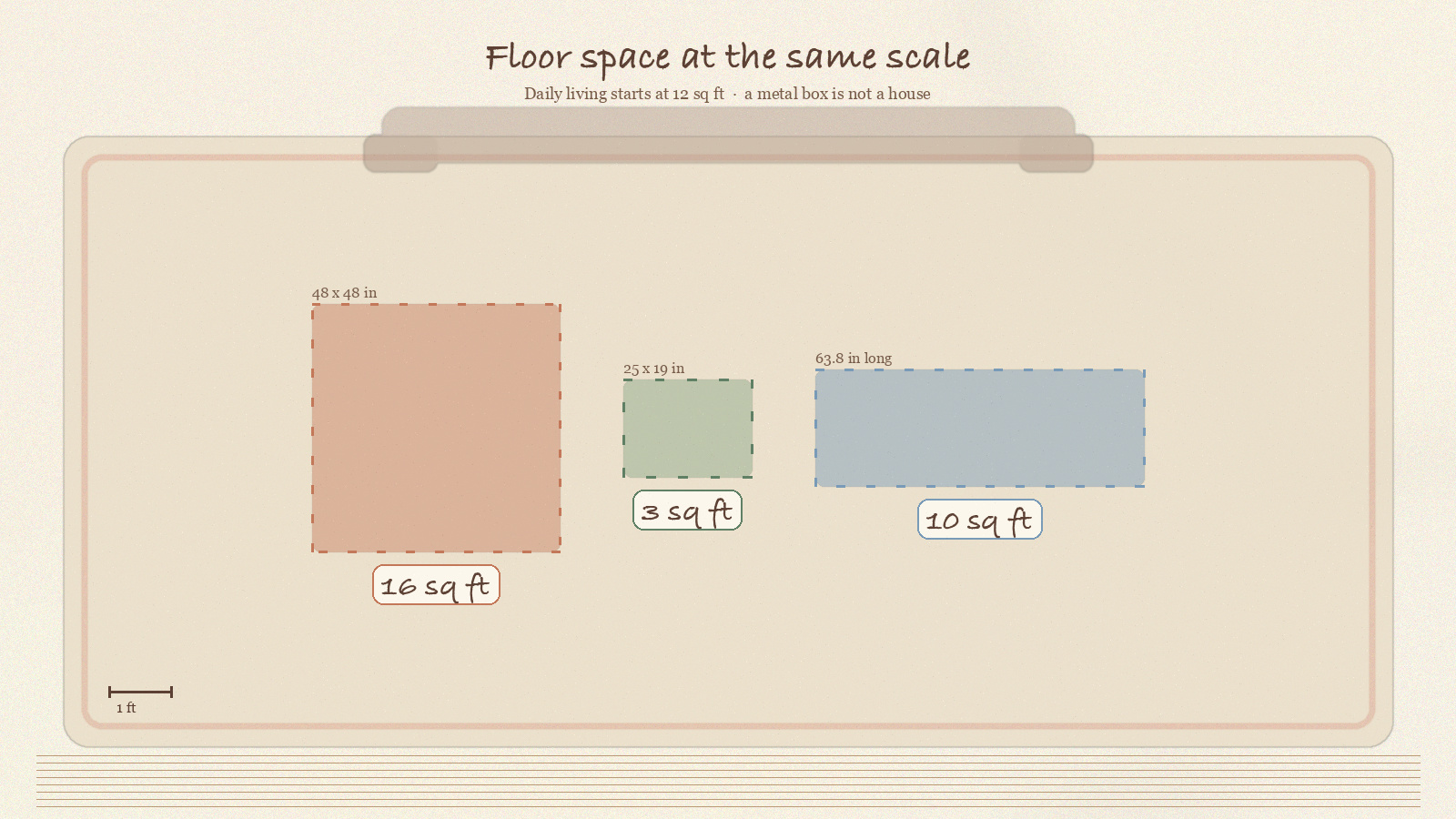
Daily living space starts at 12 sq ft for one rabbit (RSPCA). A metal box with a tray is overnight, travel, or breeding. Daytime belongs on the floor, inside a pen or a rabbit-proofed room.
Cage vs Exercise Pen vs Hutch: Which Is Right for Your Rabbit?
Buy the housing type first. Brand comes second.
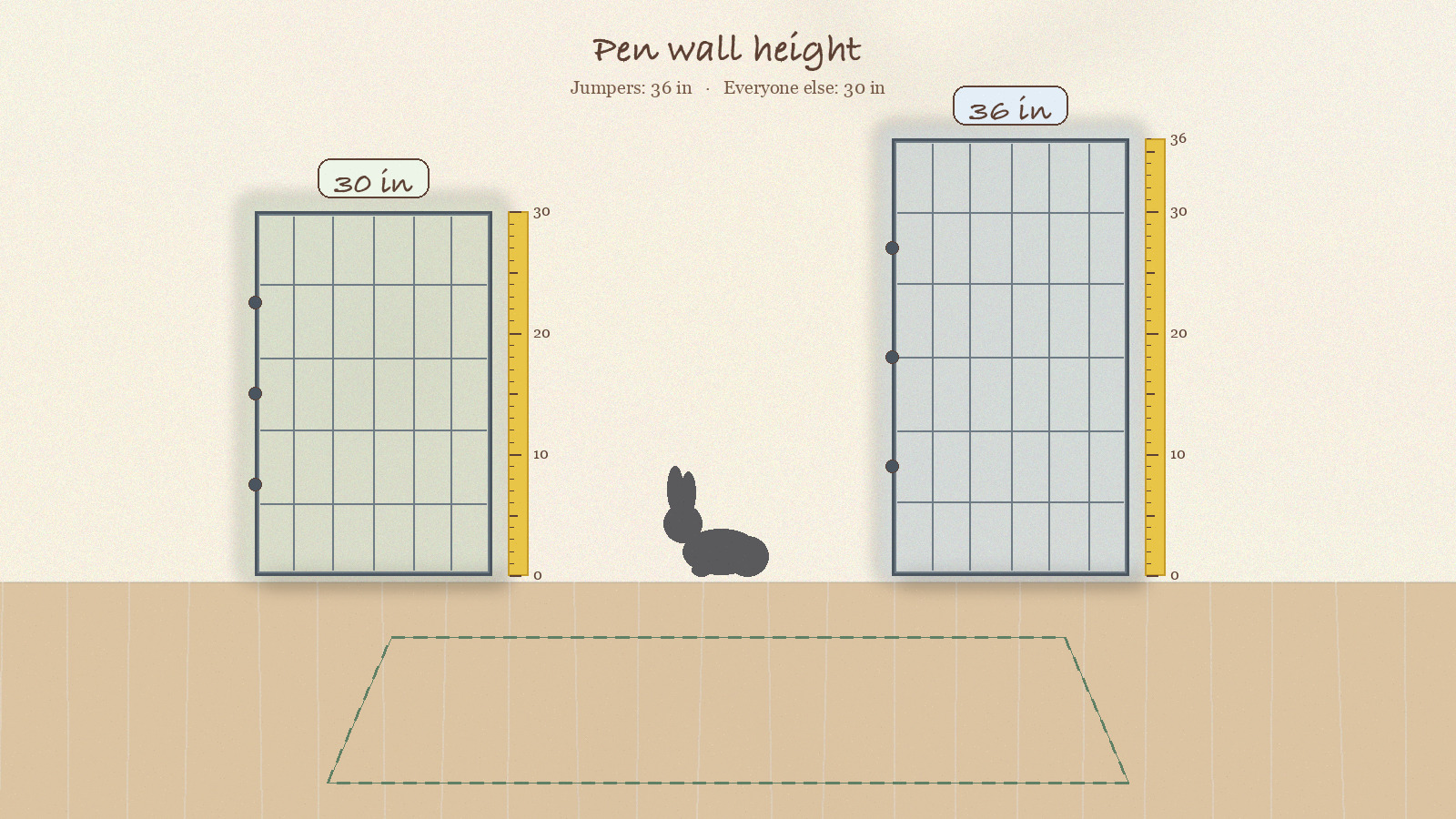
An exercise pen is a fold-up wall of panels with no roof, or a roof you add later. Eight 24-inch-wide panels at 30 or 36 inches high enclose about 16 sq ft of real floor. You step over the wall. There is no latch for a rabbit to learn.
An indoor metal cage is a wire box on a plastic pan, often with a pull-out tray. It is easy to carry and easy to dump. Most of the ones sold as “large” still sit under 8 sq ft. That is a bedroom, not a house.
A wooden hutch is a wood frame with mesh windows. This page keeps one furniture-look unit. If the job is weather, predators, or a yard run, leave this page and use the outdoor rabbit hutch picks.
This is also not a hamster page. A hamster cage is a vertical problem plus a wheel. A rabbit needs a horizontal runway. A guinea pig cage is closer — both species want floor — but a guinea pig does not clear a 30-inch wall the way a bored adult rabbit will.
Indoor is the default here: you control temperature, and there is no hawk. Outdoor housing has to survive raccoons and heat above about 80°F. Do not park a no-roof pen in the yard and call it done.
For the tape-measure version of these numbers, use the rabbit cage size guide.
| Type | Floor job | Best for | Skip if | Biggest drawback |
|---|---|---|---|---|
| Exercise pen | 16 sq ft class, open top | Most indoor adults | You need a latching travel box | No roof; other pets can hop in |
| Indoor metal cage | Under 8 sq ft, tray | Night, vet, car, stacks | This is the only space all day | Rabbit cannot complete a hop |
| Wooden hutch | One furniture box | Look, not welfare math | You need a predator-proof yard house | Rabbits chew wood |
Quick Comparison: 9 Best Rabbit Cage Picks (Pens and Indoor Cages)
Nine in-stock Amazon units make up the best rabbit cage shortlist for 2026 (snapshot 2026-08-27): two MidWest pens, two modular C&C sets, four indoor metal cages, and one hutch. No second hutch. Listing dollars move; use Check Price.
How to choose the best rabbit cage in three steps:
- Measure the floor first. One indoor adult needs 12 sq ft of daily living space, and a 16 sq ft pen is the working ideal. A metal box under 8 sq ft is a bedroom, not a house.
- Match the wall to the jumper. Wall heights on this page run from 16 to 36 inches, and every jump-out complaint in the reviews sits at 30 or below. Height stops escapes; it does not add square feet.
- Assign the job before the box. Overnight, travel, and vet runs go to a metal cage with a pull-out tray. Daily living goes to a pen or a rabbit-proofed room.
| Product | Type | Footprint / Height | Best For | Skip |
|---|---|---|---|---|
| MidWest 30” Exercise Pen | Pen | 16 sq ft / 30” | Most indoor adults | Kits through 1.5” bars; 30” jumpers |
| MidWest 36” Exercise Pen | Pen | 16 sq ft / 36” | Rabbits that already cleared 30” | Never-jump small breeds |
| DINMO 28-Panel Playpen | C&C | ~22” panels, modular | Expandable indoor run + mesh floor | Teens that pop connectors |
| VISCOO 20-Panel 16” | C&C | 48×24×16” | Kits, short supervised play | Any adult that hops 16” |
| MidWest Deluxe XL | Metal | 47.2×23.6×19.7” | Indoor large + deep tray | Pair as only home |
| Ferplast Krolik XXL | Metal | 63.8” long | 1 large or 2 small + bottles | Treating XXL as 12 sq ft |
| MidWest Small Wabbitat | Metal | 25×19×20” | Travel / vet / temp | 24/7 adult housing |
| HOMESTEAD Stackable | Metal | 24” cube | Breeder stacks, urine guard | Two layers instead of floor |
| GEGURI Wooden Hutch | Hutch | 48×24×36” | Furniture look only | Real outdoor hutch job |
Check Price on Amazon → for the 30-inch pen, or jump to the matching section below for the other eight.
Best Rabbit Cage for Most Owners: Exercise Pens
If the rabbit will live indoors and you have a rectangle of floor, buy wall height first. Do not buy a travel crate and “upgrade later.” A 16-inch kit pen is not a starter home for an adult that already hops a sofa. Jumpers get 36 inches. Everyone else starts at 30.
New World 30-Inch Exercise Pen — Best Overall
The New World 30-inch exercise pen is eight 24-inch-wide panels, 30 inches high, about 16 sq ft when you close the rectangle. That is the RSPCA 12 sq ft floor rule with room left for a litter box, hay, and a hide. There is no door. You step over the wall. That is annoying for your knees and useful against a rabbit that learns latches.
Skip if you have a kit that can walk through 1.5-inch bar gaps — zip-tie cardboard or hardware cloth on the bottom row until the rabbit cannot squeeze. Skip if the rabbit has already cleared a 30-inch wall; that is the 36-inch sibling, not a second set of 30-inch panels stacked badly.
Owners like that it folds flat and sets up without tools. One reviewer also said hanging even a half-full water bucket on the wire “makes the pen unstable on a hard surface.” Put the bottle on a stand inside the footprint, not on the fence.
Honest downside from the same listing: the wire is light-gauge, and wet outdoor use rusts. Indoor dry floors are the job.
Litter, hay, and hide layout lives on the rabbit cage setup page. Check Price on Amazon →
New World 36-Inch Exercise Pen — Jumpers
The New World 36-inch exercise pen keeps the same 16 sq ft footprint and adds six inches of wall. Buy it when the rabbit has already gone over 30 inches, or when you have a large breed that treats a sofa back as a suggestion.
Skip if the rabbit is a small indoor adult that has never jumped a 30-inch panel — you are paying for height you will not use, and stepping over 36 inches is worse. Skip if you hoped 36 inches would turn one pen into a Flemish Giant’s only house. Height stops escapes. It does not add square feet. Add a second ring or a rabbit-proofed room.
The honest complaint is the same light wire as the 30-inch model. A reviewer called it “a very light weight exercise pen” after a water bucket pulled the wall in. Same fix: bottles inside, not clipped on. No door on this model either. Confirm you did not mean a door model before you open the box.
DINMO 28-Panel Playpen — Modular C&C
The DINMO 28-panel playpen is the rabbit-marketed take on a C&C build - grid panels and connectors you assemble yourself. This one has plastic and metal grids, an iron-net floor so a digger cannot tunnel out, and about 22.3 inches of wall. That is taller than the 16-inch VISCOO and shorter than either MidWest. Owners connect two sets when they want a double run.
One mini-lop owner used it to restart litter habits after free-roam and said it “got the job done.” Another owner with a teenage rabbit said the bunny could “hop right out” and “break the cage apart.” Believe both. Height and connectors are the limit, not the marketing word “bunny.”
Skip if you want fold-out-in-30-seconds — DINMO is a puzzle with a rubber hammer. Skip if your rabbit already pops plastic joints; zip-ties help, they do not make a giant stay in a 22-inch wall.
If you are shopping playpen shapes on purpose, stop after this paragraph and open the rabbit playpen guide. Persistent digging is a behavior problem as much as a fence problem; see why rabbits dig. Check Price on Amazon →
VISCOO 20-Panel 16-Inch — Kits and Supervised Play Only
The VISCOO 20-panel 16-inch playpen assembles to about 48 × 24 × 16 inches. Eight of the twenty panels are ceiling pieces, so the footprint is smaller than a 20-panel count sounds. Treat it as a kit corral or a short, watched play slot - not an adult jumper home.
Guinea-pig owners like the extra floor versus a pet-store box. Kitten owners on the same listing watched the animals “jump out so quickly.” A 16-inch wall is a speed bump for an adult rabbit, not a fence.
Skip any rabbit that can hop onto a couch. Skip leaving it in a sunny window; one owner said direct sun turned it into “a greenhouse for the animal.” Clips also loosen after weeks of take-down. If you need daily adult housing, go back to the 30-inch MidWest.
Best Indoor Rabbit Cage with a Pull-Out Tray
A pull-out tray solves manure. It does not invent square feet. The best rabbit cage in the tray class is simply the longest box that still wipes down in one pass. Use these metal boxes as night rooms, vet-day crates, or breeding stacks. The rabbit still needs floor time every day. In this section, a large rabbit cage means the longest plastic-base box on the page - not a box that meets 12 sq ft alone.
MidWest Deluxe XL — Best Indoor Large
The MidWest Deluxe XL is about 47.2 × 23.6 × 19.7 inches with a 5.5-inch deep base and a hay feeder on the box. That is the indoor large pick when you need a tray and a door, not another 25-inch starter.
Owners call it easy to wipe and large compared with shop cages. One buyer still said that within two months “the roof started collapsing because there are no support beams to hold up the top.” Plan on checking the top supports. Another owner disliked that a real clean meant taking the cage apart.
Skip a bonded pair living only in this box — it is still under 8 sq ft. Skip if you need a roof that never sags; this is a plastic-and-wire room, not a stall.
Ferplast Krolik XXL — One Large or Two Small
The Ferplast Krolik XXL is the longest indoor metal cage here: about 63.8 × 23.6 × 19.7 inches, plus a separate wire extension, two bottles, and hay racks. That is the 2-small-rabbit or 1-large-rabbit kit on this page.
Some owners run several of these and call them the best they have found. Welfare-minded reviewers still say even XXL is “not appropriate” if the rabbit never leaves to hop and binky. Both can be true. Length is not 24 sq ft.
Skip if the budget is already at the top of this page and you still will not offer daily floor time — the extra inches will not buy a clear conscience. Skip if you need tank-grade stiffness; one owner called it flimsy and planned to replace it. Pegs and holes also misalign on some boxes. Dry-fit before you force plastic.
MidWest Small Wabbitat — Travel and Temp
The MidWest Small Wabbitat is 25 × 19 × 20 inches. It is not a 39-inch living room cage. Continental Giant owners on the listing use it to move rabbits, which is the honest job: car, clinic, bonding timeout.
The slide-out pan and urine guard are why people keep buying it. The same listing also shows warped doors, cracked trays, and a leak “right at the corner where the pee shield is.” Quality is a coin toss. The wire floor needs a rest board or you are buying sore hocks on purpose.
Skip as a 24/7 adult home. Skip if you cannot add a solid sitting plate. Litter training is easier in a pen with a real box than in a 25-inch crate that leaks.
HOMESTEAD Stackable — Breeder Cube
The HOMESTEAD stackable cage is a 24-inch metal cube with a urine guard, dual doors, and a deep tray. A ten-year breeder on the listing called the shields the part that “helps ABUNDANTLY with cleanup.” That is the buyer: stacked rabbitry, not a pair of house rabbits.
Another owner said bolts loosen when rabbits jump and “the nut fall off and vanish.” Check hardware after the first week. The tray can slide free and dump indoors if you do not stop it.
Skip using two stacked cubes as a substitute for 12 sq ft of floor. Skip large house breeds — reviewers already flag it as small. Bar spacing around 0.8 inch is tighter than the MidWest pens, which is the one point in its favor for kits you cannot leave in a 1.5-inch grid.
Best Wooden Rabbit Hutch — One Indoor/Outdoor Look
This page carries one hutch. If you are comparing wood vs wire for a living-room look, stay. If you are buying a yard house, leave.
GEGURI Wooden Hutch — Only Hutch
The GEGURI wooden hutch is about 48 × 24 × 36 inches. It photographs like furniture. Assembly is simple enough that chicken keepers call it sturdy. Read that sentence again: many of the happy reviews are hens, not rabbits.
Rabbit owners on the same page said it was “not suitable for rabbits” because they “can destroy the wood within minutes.” Ramps go first. There is no metal wrap on the chew edges.
Skip if you need predator-proof outdoor mesh - a chicken reviewer already flagged that. Skip if you wanted a second hutch on this page; that slot is closed. Serious outdoor shopping is the outdoor rabbit hutch list. Building from lumber is a DIY hutch build.
Rabbit Cage Size for One or Two Rabbits
RSPCA’s working floor for one rabbit is 12 sq ft of daily living space. Ideal indoor setups land on a 16 sq ft pen plus hide, hay, and a box - that pen, not the longest metal box, is the best rabbit cage for most owners. Two bonded small rabbits start at 24 sq ft. Two large rabbits want 24–32 sq ft or a room. The rabbit cage size guide is the calculator; this table is only “what this page can and cannot do.”
Idle rabbits get fat. Housing that blocks hopping makes the rabbit food math harder, not easier.
| Setup | Daily floor rule | Ideal on this page | Still not enough |
|---|---|---|---|
| 1 small adult | 12 sq ft | 30” pen, 16 sq ft | Wabbitat 25×19×20 as only home |
| 1 large / jumper | 12 sq ft + 36” wall | 36” pen, same 16 sq ft | Deluxe XL or Krolik as only home |
| Bonded pair, small | 24 sq ft start | Two pens or room + night box | Krolik XXL alone |
| Bonded pair, large | 24–32 sq ft | Room + pens | Every metal cage here |
Krolik is the longest indoor metal cage on the page. It is not 24 sq ft. Deluxe XL is the better single-rabbit tray box. Neither replaces a pen as the best rabbit cage for daily living.
What to Do, and What Not to Do
The best rabbit cages on this page share one pattern - floor first, job second:
✅ 30” pen, 16 sq ft, for one indoor adult that cannot clear 30”
✅ 36” pen if the rabbit already cleared 30”
✅ Deluxe XL / Krolik as an indoor box plus daily floor time
✅ Wabbitat / HOMESTEAD for travel, vet, or breeding stacks
✅ GEGURI only for furniture-look — then leave for the hutch sibling
✅ Solid rest board on any wire floor
✅ 12 sq ft daily living as the floor rule
✅ Zip-tie 1.5” bars for kits
❌ VISCOO 16” as an adult jumper home
❌ Wabbitat as 24/7 housing
❌ A second hutch on this page
❌ Trusting the “large” label on a box under 8 sq ft