What Is a Holland Lop Rabbit?
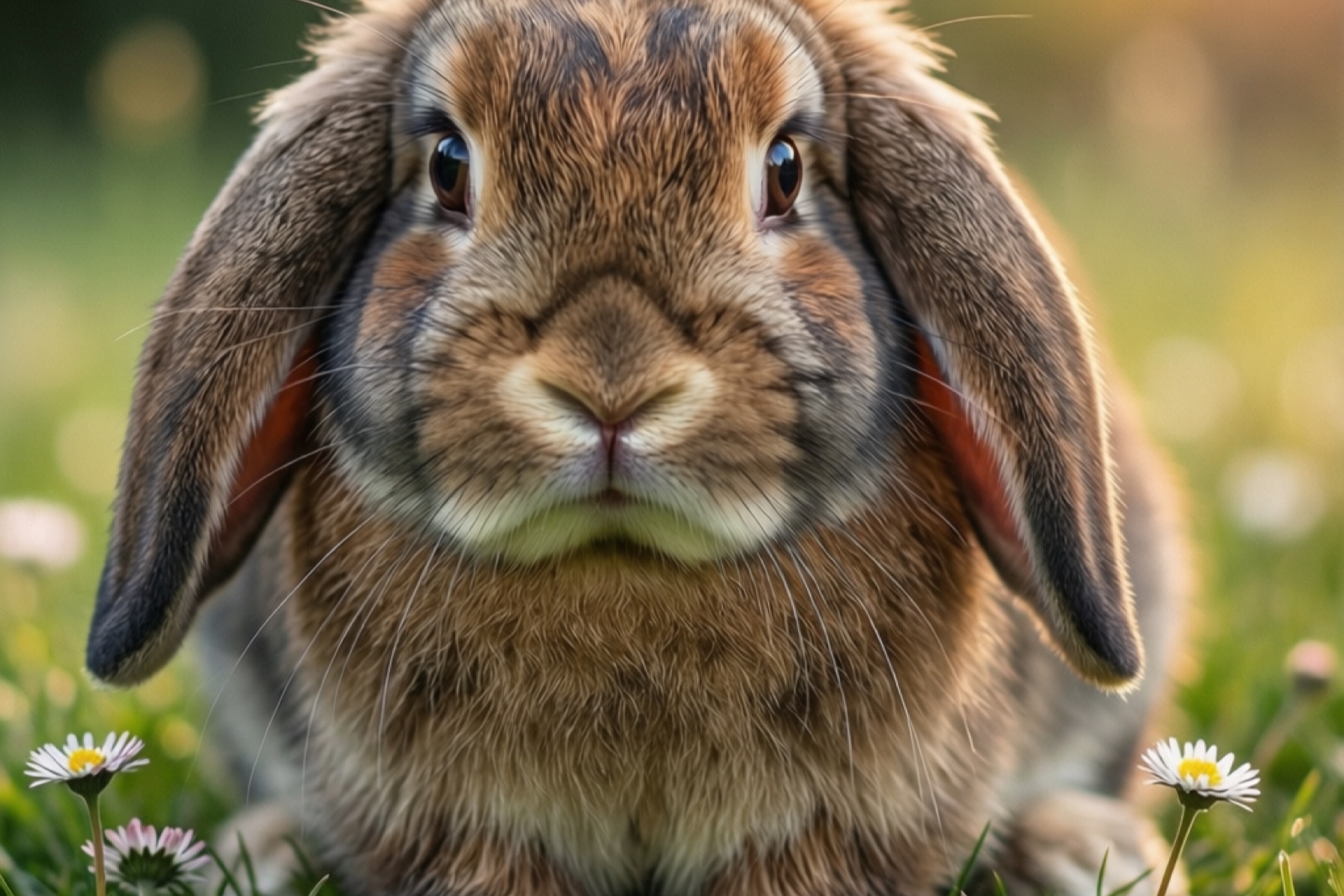
Holland Lop rabbit: A small lop-eared rabbit breed recognized by ARBA, weighing 2–4 lbs, known for their distinctive floppy ears that hang close to the face. Originating in the Netherlands, they are one of the most popular rabbit breeds worldwide and the most popular lop breed in the United States.
The breed was developed in the Netherlands during the 1950s by Adriann de Cock, who crossed Netherland Dwarf does with French Lop bucks, then introduced English Lop bloodline to refine the ear carriage. The result was a compact, heavily-muscled rabbit with a distinctive crown of fur pushing the ears down alongside the face. ARBA officially recognized the Holland Lop in 1979, and it has been the most popular lop breed in America ever since.
Holland Lop at a Glance
- Weight: 2–4 lbs (0.9–1.8 kg)
- Body length: 10–12 inches
- Ear length: 4–5 inches (floppy, hanging below the jaw)
- Lifespan: 7–14 years (average 8–10 years)
- ARBA recognized: 1979
- Most popular lop breed in the US
Their combination of compact size, signature floppy ears, and friendly holland lop temperament makes them the most searched rabbit breed on Google. If you are deciding between breeds, you can compare Holland Lop to the Lionhead rabbit — another popular small breed to see which fits your lifestyle better.
Holland Lop Size & Weight
| Measurement | Range | Notes |
|---|---|---|
| Adult weight | 2–4 lbs (0.9–1.8 kg) | Ideal show weight: 3.5 lbs |
| Body length | 10–12 inches (25–30 cm) | Compact, muscular body |
| Ear length | 4–5 inches (10–13 cm) | Floppy, hang below the jaw |
| Head | Round, broad | Crowned with ear carriage |
| Lifespan | 7–14 years | Average: 8–10 years |
| Age to maturity | 4–6 months | Full bone development |
How big do holland lop rabbits get? They top out at 4 pounds with a 10–12 inch body — making them a true dwarf lop breed. The holland lop rabbit weight ranges from 2–4 lbs, with ideal show weight around 3.5 lbs. Their compact, heavily-muscled frame gives them a rounded appearance that distinguishes them from the longer-bodied Mini Lop.
Breed Size Comparison
| Breed | Weight | Ear Type | Best For |
|---|---|---|---|
| Netherland Dwarf | 1.1–2.5 lbs | Upright | Small spaces |
| Holland Lop | 2–4 lbs | Floppy | Families, beginners |
| Lionhead | 2.5–3.75 lbs | Upright | Fluffy appearance lovers |
| Mini Lop | 4.5–6.5 lbs | Floppy | Handling-friendly |
| Flemish Giant | 12–20 lbs | Upright | Experienced owners |
The holland lop rabbit size places them between Netherland Dwarfs and Mini Lops. Their small frame means they need appropriately scaled enclosures — check our rabbit cage size guide by breed for specific dimensions suited to their weight class.
Holland Lop Colors & Varieties
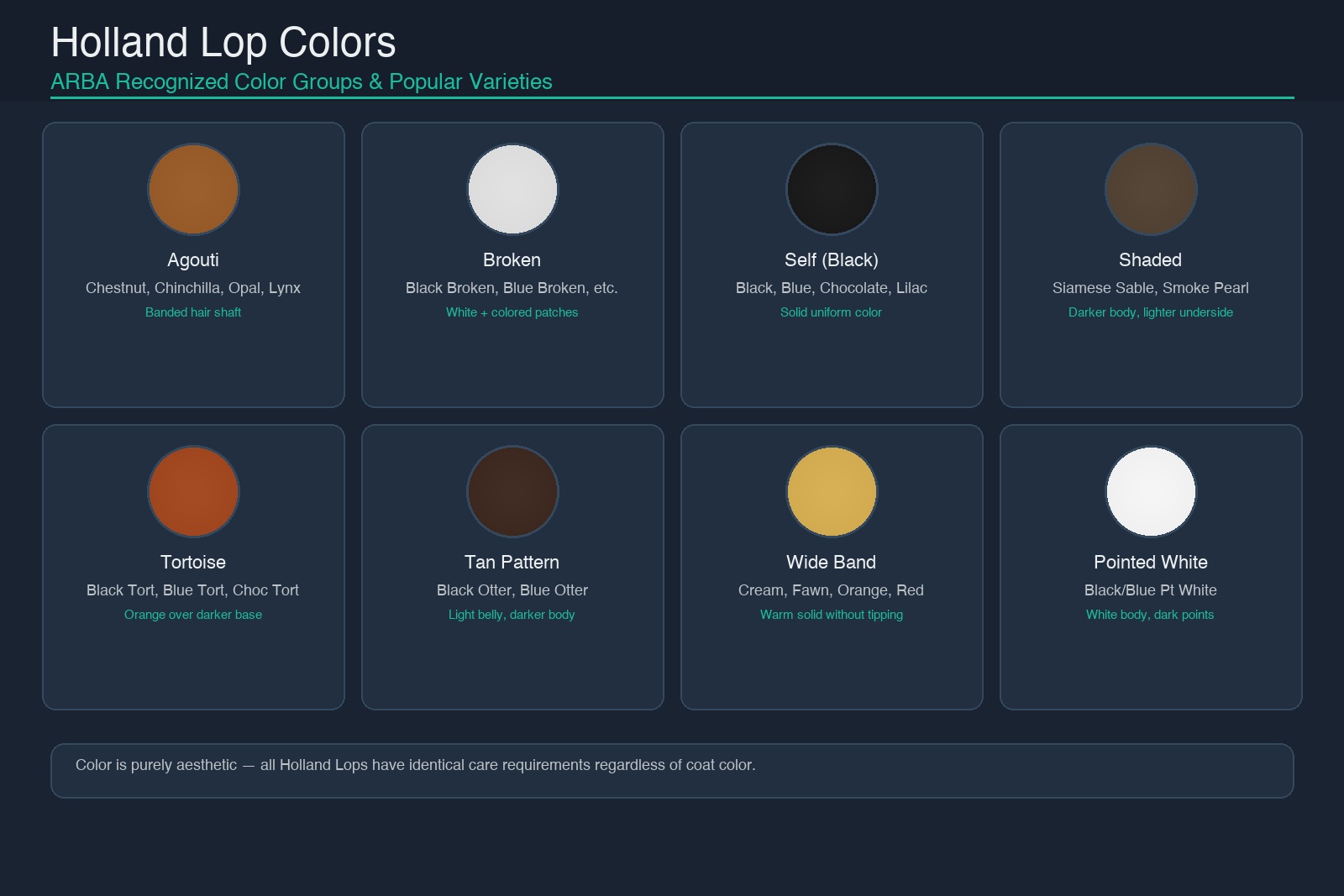
ARBA recognizes Holland Lops in all color groups — one of the most diverse rabbit breeds in terms of coat color. This means there is no “standard” Holland Lop color, and breeders can produce virtually any combination.
| Color Group | Popular Examples | Description |
|---|---|---|
| Agouti | Chestnut, Chinchilla, Opal, Lynx | Banded hair shaft with ticking |
| Broken | Any color + white | White patches, 50%+ color ideal for shows |
| Self | Black, Blue, Chocolate, Lilac, Blue-Eyed White | Solid, uniform color throughout |
| Shaded | Siamese Sable, Smoke Pearl, Sable Point | Darker body, lighter underside |
| Tortoise | Black Tort, Blue Tort, Chocolate Tort | Orange/cream shading over darker base |
| Tan Pattern | Black Otter, Blue Otter, Chocolate Otter | Light belly markings, darker body |
| Wide Band | Cream, Fawn, Orange, Red | Solid warm colors without dark tipping |
| Pointed White | Black/Blue Pt White | White body, dark points (ears, nose, feet) |
Most Popular Holland Lop Colors
- Black Tortoise — the single most popular holland lop rabbit color. Holland lop rabbit colors span all ARBA-recognized groups, making this one of the most diverse rabbit breeds in terms of coat color. The warm orange/cream shading over a dark base creates a rich, multi-tonal appearance that photographs beautifully.
- Blue — a dilute black that produces a soft gray-blue coat. Particularly striking on the compact Holland Lop body type.
- Broken pattern — any recognized color combined with white. Each broken-pattern Holland Lop is visually unique, which is part of the appeal. Show standard requires at least 10% color markings to avoid disqualification.
Color is purely aesthetic and does not affect holland lop temperament, health, or lifespan. A black tort and a blue-eyed white have identical care requirements.
Holland Lop Temperament & Personality
Holland Lop rabbits are friendly, gentle, and social. They enjoy cuddling, are easy to handle, and make excellent family pets. They can be shy at first but warm up quickly once comfortable. Males tend to be more outgoing than females.
This section matters because holland lop temperament is the #2 fastest-rising search query for the breed (+180% year-over-year), and holland lop personality (+110%) is also surging. The data reflects what owners already know — Holland Lops have a distinct personality that sets them apart from other rabbit breeds.
Key Temperament Traits
- Friendly and gentle — one of the most affectionate rabbit breeds. Holland Lops actively seek out human interaction and will nudge your hand for attention
- Social — they do not thrive in isolation. A bonded pair or daily interaction with their human family is essential for their well-being
- Playful but calm — energetic binkying sessions followed by quiet cuddle time. They have a good on/off switch compared to more hyperactive breeds
- Intelligent — Holland Lops can be litter trained, learn their name, and respond to daily routines. See our guide on how to litter train your Holland Lop
- Slightly shy at first — new Holland Lops need 1–2 weeks of patient bonding before showing their full personality. Sit at their level, offer treats, let them come to you
- Males vs females — males (bucks) are typically more outgoing, relaxed, and cuddly. Females (does) are more independent and territorial, especially if not spayed
Understanding rabbit body language and what it means helps you read your Holland Lop’s mood. A relaxed Holland Lop will sprawl out flat (“loaf” position) with ears loose — a clear sign they feel safe. Learning rabbit sounds and their meanings also helps you respond to their needs, from the soft tooth-purring of contentment to the foot-thumping alarm signal.
Are Holland Lops good pets? Yes — they are consistently ranked as one of the best rabbit breeds for families and first-time owners. Their manageable size, affectionate nature, and adaptability to indoor living make them an excellent choice. They do best in calm households with children 9 years or older who understand how to handle rabbits gently.
Holland Lop Lifespan
Holland Lops live 7–14 years with proper care, though 8–10 years is the most common range. If you are wondering how long do holland lop rabbits live compared to other breeds, they are one of the longer-lived small rabbit breeds — comparable to Lionheads and Netherland Dwarfs, and potentially longer than Mini Lops depending on individual health. The holland lop rabbit lifespan is influenced by diet quality, housing conditions, and whether the rabbit is spayed or neutered.
Factors That Affect Holland Lop Lifespan
| Factor | Impact | How to Optimize |
|---|---|---|
| Diet quality | High — 80% hay adds 1-3 years | Unlimited Timothy hay, measured pellets |
| Living conditions | High — indoor rabbits live 2+ years longer | Keep indoors, temperature controlled |
| Spay/neuter | High — reduces reproductive cancer risk | Spay by 6 months, neuter by 4 months |
| Dental health | Medium — teeth grow 2mm/week | Unlimited hay for tooth wear, chew toys |
| Ear health | Medium — floppy ears trap moisture | Weekly ear cleaning and inspection |
| Veterinary care | Medium — annual checkups catch problems early | Find an exotic vet experienced with rabbits |
Tips for Maximizing Holland Lop Lifespan
- Unlimited Timothy hay 24/7 — the single most impactful diet choice
- Spay or neuter by 4–6 months — reduces cancer risk, can extend life by 1–2 years
- Weekly ear checks and cleaning — prevent infections from trapped moisture
- Annual exotic vet exam — rabbits hide illness until it is advanced
- Daily exercise (2+ hours outside cage) — prevents obesity and GI stasis
- Maintain healthy weight (2–4 lbs ideal) — even 1 lb overweight stresses joints and organs
For detailed rabbit lifespan data by breed, including how Holland Lops compare to every major breed, see our comprehensive lifespan guide.
Holland Lop Diet & Nutrition
Holland Lop diet: Because Holland Lops are small (2–4 lbs), portion control is critical — even small amounts of overfeeding lead to obesity quickly. The nutritional ratio is the same as all rabbits, but portions are significantly smaller than larger breeds.
Daily Diet for Holland Lops
| Food Type | Daily Amount | % of Diet | Notes |
|---|---|---|---|
| Timothy hay | Unlimited | ~80% | Must be available 24/7 |
| Fresh greens | 1–1.5 cups | ~10% | Romaine, cilantro, parsley, bell peppers — safe daily vegetable |
| Timothy pellets | 1/8 cup (under 3 lbs) / 1/4 cup (3-4 lbs) | ~8% | Uniform pellets only |
| Treats | 1–2 small pieces | ~2% | 2–3x per week max |
| Fresh water | Unlimited | — | Water bottle preferred |
The holland lop rabbit diet follows the same 80/10/8/2 ratio as all rabbits, but the actual volumes are small. A 3 lb Holland Lop eating 1/4 cup of pellets per day — that is roughly 2 tablespoons. It looks like almost nothing, which is why owners consistently overfeed. Free-feeding pellets is the #1 cause of obesity in Holland Lops.
Holland Lop Feeding Rules
- Unlimited hay — prevents GI stasis and wears teeth that grow 2mm per week
- Weigh pellets with a measuring scoop — never free-feed
- Introduce new vegetables one at a time — wait 3 days between each new food
- Carrots — high sugar, feed sparingly — 1 thin slice as a treat, not a daily food
- Broccoli — feed stalks only, watch for gas — small amounts only, monitor for bloating
- Cucumber as occasional treat — mostly water, low nutritional value
- No iceberg lettuce (causes diarrhea)
- No muesli or mixed food (causes selective eating — rabbits pick out the sugary pieces)
- No seeds, nuts, bread, chocolate, or human food
For the complete rabbit diet guide with detailed vegetable lists, feeding schedules, and seasonal adjustments, or to find the best rabbit food brands reviewed for pellet recommendations, see our dedicated guides.
Holland Lop Housing Requirements
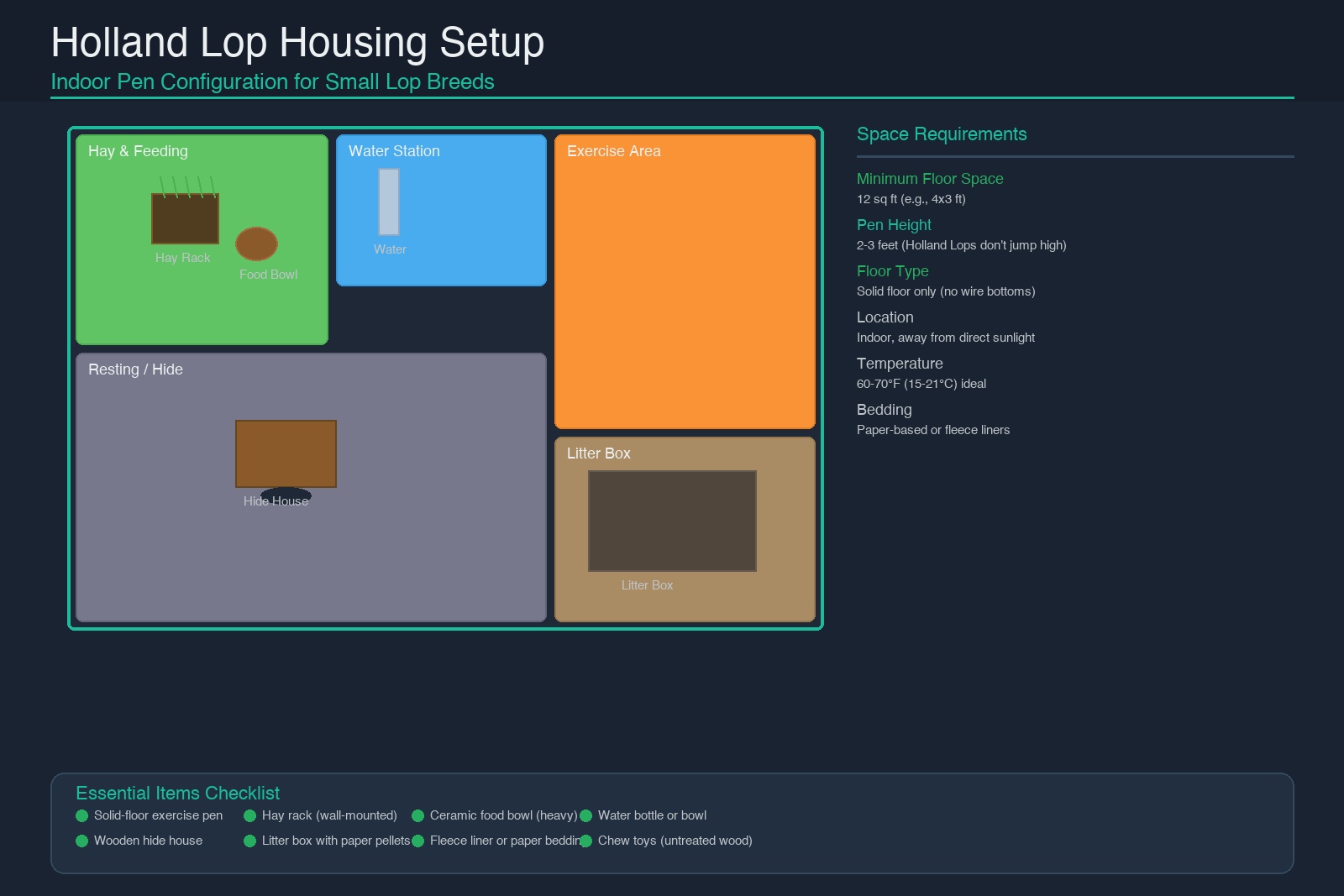
A holland lop rabbit cage size needs to account for their compact but muscular build. Minimum 24 × 24 inches — slightly larger than what a Lionhead needs because Holland Lops carry more body weight relative to their foot size, making solid flooring critical.
Minimum Housing Requirements
| Requirement | Specification |
|---|---|
| Minimum enclosure size | 24 × 24 inches |
| Recommended exercise pen | 4 × 4 ft x-pen for daily roaming |
| Floor type | Solid (wire floors cause sore hocks) |
| Temperature range | 50–77°F (10–25°C) |
| Daily exercise | 2+ hours outside enclosure |
| Ventilation | Good airflow, no drafts, no direct sunlight |
Holland Lop Housing Essentials
- Solid floor — wire bottoms cause sore hocks, especially dangerous for Holland Lops whose compact body weight concentrates pressure on small feet
- Minimum 24 × 24 inch enclosure — larger is always better
- 2+ hours daily out-of-cage exercise — essential for physical and mental health
- Hide house or tunnel — Holland Lops love enclosed spaces and need a secure retreat
- Litter box with paper-based litter — no clay, no pine or cedar shavings
- Heavy ceramic food bowl — prevents tipping (Holland Lops are surprisingly strong)
- Water bottle — prevents contamination from bedding and fur
- Best rabbit toys for enrichment — chew toys, tunnels, cardboard boxes
- No wire-bottom cages
- No glass aquariums — poor ventilation
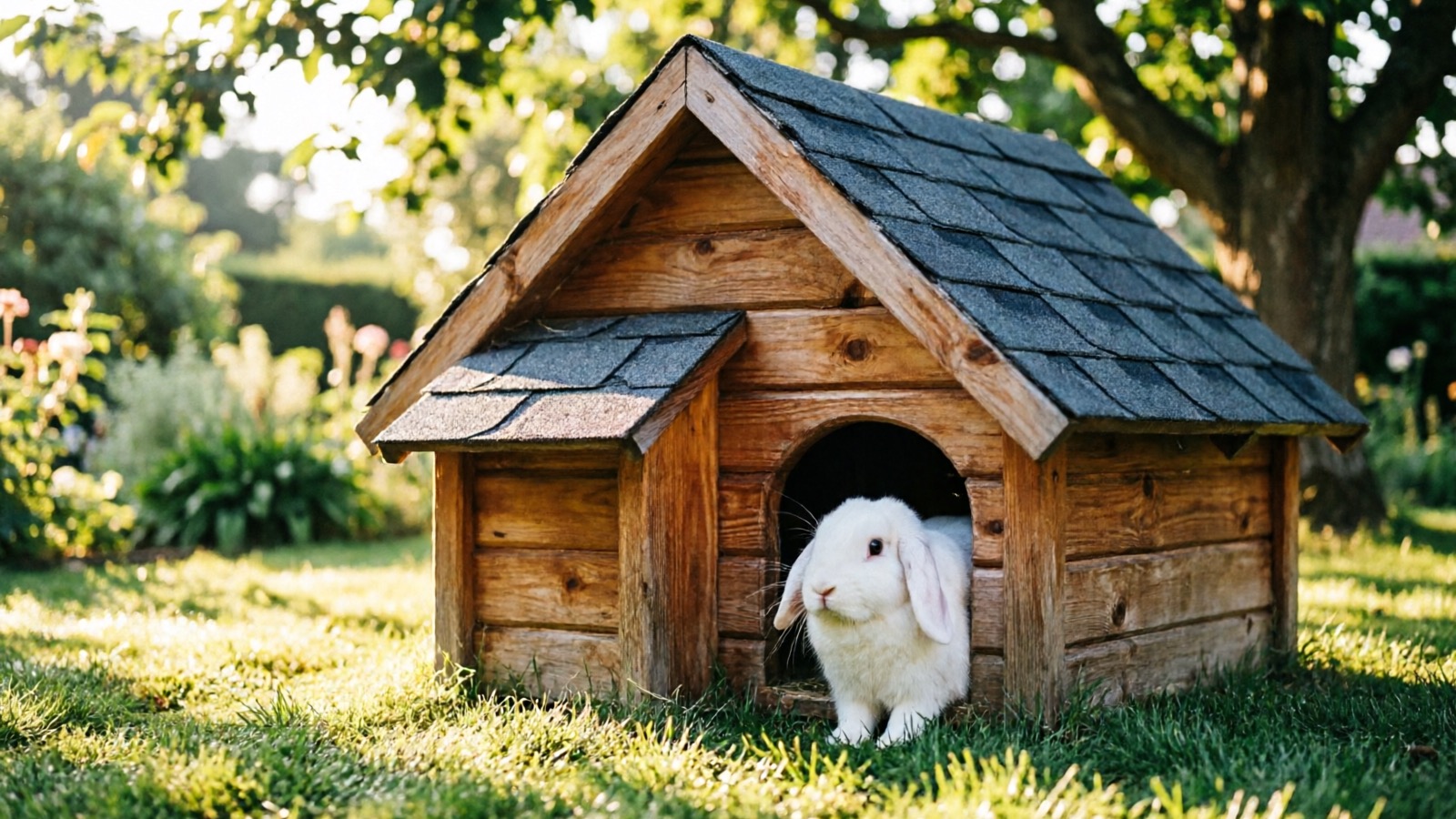
- No outdoor-only housing — ear infection risk, predator exposure, temperature stress
Indoor housing is strongly recommended. Holland Lops are a social breed that needs daily interaction, and their floppy ears make outdoor living particularly risky — damp conditions promote ear infections, and their small size makes them vulnerable to predators. For product-specific recommendations, see our guide to the best rabbit cages for Holland Lops and the rabbit cage size guide for dimensions scaled to your space.
For everything you need before bringing your rabbit home, our complete rabbit setup guide covers enclosure, accessories, feeding setup, and daily routines. If you’re on a budget or want a custom enclosure, our DIY rabbit hutch guide walks you through building a safe, comfortable home for your Holland Lop.
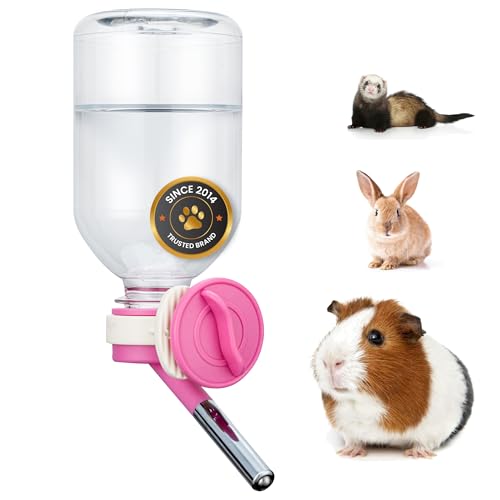
Water bottle recommendation: The Choco Nose Patented No-Drip Water Bottle (10.2 oz) is the best no-drip option for Holland Lops. Its patented nozzle design eliminates the constant dripping that wets bedding and promotes ear infections. rating across 14. The 10.2 oz capacity is adequate for a single Holland Lop but will need daily refills.
Holland Lop Grooming
Holland lop rabbit care has one critical difference from upright-eared breeds: floppy ears require weekly cleaning. The ear structure that makes Holland Lops so adorable — ears hanging close to the face with reduced airflow — also creates a warm, moist environment where bacteria and yeast thrive.
Grooming Schedule
Holland lop rabbit grooming is straightforward but has one breed-specific requirement: weekly ear cleaning. Beyond that, the schedule is similar to other short-haired breeds.
| Task | Frequency | Why It Matters |
|---|---|---|
| Brush coat | 1–2x per week (daily during molting) | Controls loose fur, prevents wool block |
| Clean ears | Weekly | Prevents ear infections from trapped moisture |
| Trim nails | Every 4–6 weeks | Overgrown nails alter gait, cause foot soreness |
| Check eyes | Weekly | Clean any discharge with damp cotton ball |
| Spot-clean fur | As needed | Soiled areas attract flies, risk flystrike |
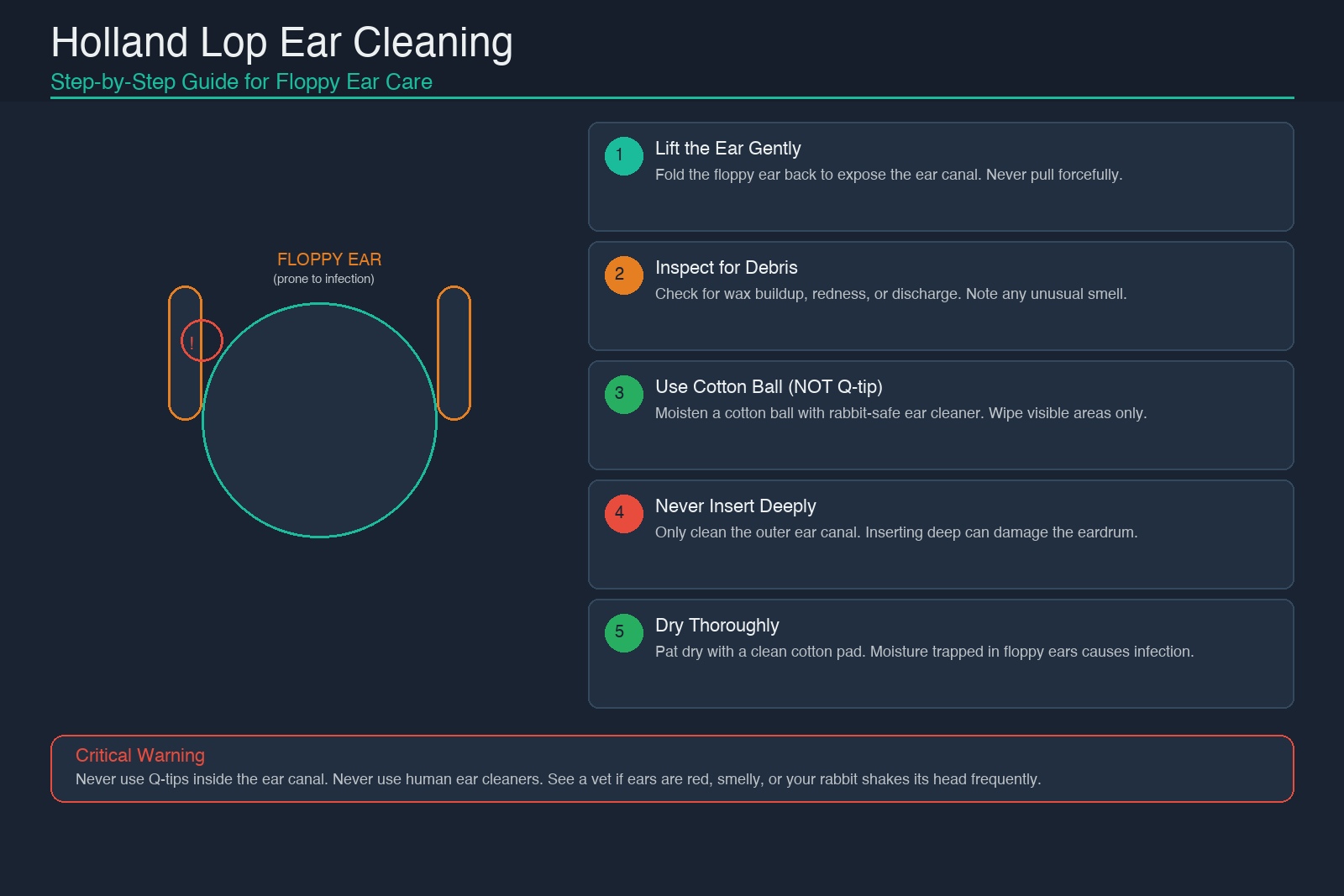
How to Clean Holland Lop Ears (Step-by-Step)
- Gently fold back the ear to expose the inner canal — support the base of the ear, never pull
- Apply rabbit-safe ear cleaner (e.g., Vetericyn) to a cotton ball — never pour liquid directly into the ear
- Wipe the visible inner ear in gentle circular motions — remove wax, debris, and discharge
- Dry gently with a clean cotton ball — moisture is the enemy with floppy ears
- Check for warning signs — redness, odor, discharge, or head-shaking indicate infection
- Repeat on the second ear, then reward with a small treat
Never insert cotton swabs or any object into the ear canal. You are cleaning only the visible inner surface.
How to Trim Holland Lop Nails (Step-by-Step)
- Wrap your Holland Lop in a towel (burrito wrap) — this keeps them calm and prevents kicking
- Locate the quick — the pink area inside the nail. On light-colored nails it is clearly visible; on dark nails, shine a flashlight from behind
- Cut below the quick at a 45-degree angle — if unsure, cut less rather than more
- If you nick the quick, apply styptic powder immediately — it stops bleeding within seconds
- Trim all 4 paws — check for overgrown dewclaws on the front feet
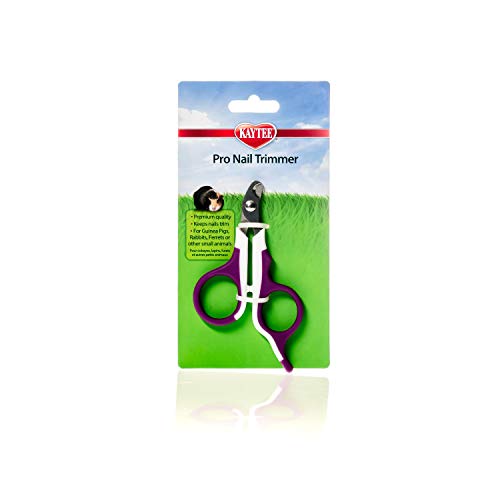
Nail trimmer recommendation: The Kaytee Pro-Nail Trimmer is the best clipper for Holland Lops. The narrow precision tip fits between small toes easily, the spring-loaded mechanism provides clean cuts without splitting nails, and at roughly $3 it is the best value on the market. rating across 8. The only downside is the small handle size can be tricky for users with larger hands.
Grooming Tools Comparison
| Product | Type | Best For |
|---|---|---|
| Kaytee Pro-Nail Trimmer | Nail clipper | Precision trimming |
| Choco Nose Water Bottle | Water bottle | No-drip hydration |
Grooming Mistakes to Avoid
- Never bathe a Holland Lop in water — risk of hypothermia, shock, and stress
- Never trim fur with scissors — rabbit skin is paper-thin and tears easily
- Never use cotton swabs inside ears — can push debris deeper or damage the eardrum
- Never cut nails too short — hitting the quick causes bleeding, pain, and lasting fear of trimming
For a comprehensive guide covering all aspects of rabbit coat care, ear maintenance, and seasonal molting, see our detailed rabbit grooming guide.
Holland Lop Health Problems
Holland lop rabbit health issues are not hereditary but stem from the breed’s physical characteristics — floppy ears, compact heavy body, small feet — which create elevated risk for certain conditions.
| Condition | Cause | Symptoms | Prevention | Severity |
|---|---|---|---|---|
| Ear infections | Floppy ears trap moisture | Head tilt, scratching, odor | Weekly ear cleaning | Medium |
| GI stasis | Low fiber, stress, dehydration | No stool 12+ hrs, lethargy, bloating | 80% hay diet, exercise | Critical |
| Dental problems | Teeth overgrowth (2mm/week) | Drooling, decreased appetite | Unlimited hay, chew toys | High |
| Sore hocks | Wire floors, obesity | Bare patches on heels, limping | Solid floor, weight control | Medium |
| Wool block | Ingested fur during molting | Reduced appetite, small droppings | Brush during 2-week molting period | Medium |
| Cheyletiella mites | Parasite (“walking dandruff”) | Itching, flaky skin, hair loss | Clean environment, vet treatment | Medium |
| E. cuniculi | Parasite (urine transmission) | Head tilt, eye twitching, seizures | Hygiene, vet deworming | High |
| Obesity | Overfeeding pellets/treats | Weight over 4.5 lbs, lethargy | Portion control, exercise | Medium |
Holland Lop-Specific Health Risks
Ear infections are the #1 breed-specific concern. Unlike upright-eared breeds (Netherland Dwarf, Lionhead) where air circulates freely through the ear canal, the Holland Lop’s floppy ears create a sealed, warm environment that traps moisture and debris. This makes weekly ear cleaning non-negotiable — not optional. Left untreated, ear infections can progress to inner ear damage causing permanent head tilt.
Sore hocks (pododermatitis) are elevated in Holland Lops because their compact, muscular body weight concentrates on relatively small feet. Wire flooring is the primary culprit. Even short periods on wire-bottom cages can cause damage. A solid floor with padding is essential.
Dental overgrowth affects all rabbits, but Holland Lops’ small skull dimensions can compound the issue. Rabbit teeth grow approximately 2mm per week — that is roughly 4 inches per year. Unlimited hay provides the abrasive chewing action that wears teeth down naturally. When teeth overgrow, they form sharp spikes that cut into the gums and tongue, making eating painful.
When to see a vet immediately: no stool for 12+ hours, head tilt, drooling, hard or bloated abdomen, loud teeth grinding (pain signal), severe lethargy, or any sign of flystrike. These are emergencies — rabbits are prey animals that hide illness until it is advanced.
For more detail on recognizing and managing these conditions, see our guide to common rabbit health problems and treatment.
How Much Does a Holland Lop Cost?
The holland lop rabbit price is the #1 fastest-rising search query for the breed (+190% year-over-year), and holland lop price (+170%) is close behind. This surge reflects growing demand — Holland Lops have been the most popular rabbit breed in America for years, and interest continues to climb.
Purchase Price by Source
| Source | Price Range | What’s Included |
|---|---|---|
| Rescue / Shelter | $50–$150 | Spayed/neutered, vet-checked, health guarantee |
| Breeder (pet quality) | $40–$150 | Health guarantee, age-appropriate (8+ weeks) |
| Breeder (show quality) | $100–$400+ | Pedigree, show potential, health guarantee |
| Pet store | $30–$80 | Rabbit only — usually no vetting, may be underage |
Adoption from a rescue is strongly recommended. Rescue rabbits are already spayed or neutered (saving $200–400 in surgery costs), health-screened, and often litter-trained. The upfront adoption fee of $50–$150 is higher than a pet store rabbit, but the included vet work makes it the better financial decision. rabbit.org specifically advises against purchasing from chain pet stores where rabbits are often underage, unspayed, and stressed from transport.
Monthly Care Costs
| Expense | Monthly Cost | Notes |
|---|---|---|
| Timothy hay | $10–$20 | Bulk buying from farm stores saves money |
| Pellets | $5–$8 | 1/8–1/4 cup daily = ~2 lb bag lasts 2 months |
| Fresh vegetables | $10–$15 | Share from family grocery shopping |
| Litter | $5–$10 | Paper-based or wood pellet litter |
| Vet checkup | ~$10/month (amortized) | Annual exotic vet visit |
| Emergency fund | ~$20/month recommended | Rabbits hide illness — costs escalate fast |
| Total monthly cost | $40–$75/month | First month higher due to setup |
One-Time Setup Costs
- Cage or exercise pen: $50–$150
- Litter box: $10
- Heavy ceramic food bowl: $5
- Hide house: $10–$20
- Hay rack: $10
- Nail trimmer: $3–$8
- Water bottle: $10
- Total setup: ~$100–$215
Lifetime Cost Estimate
At $40–$75/month over an 8–10 year lifespan, expect to spend $4,000–$10,000 over your Holland Lop’s lifetime. Emergency vet visits ($300–$800 each) are the biggest unpredictable expense. Budget for pet insurance or maintain an emergency fund of at least $500 from day one.
Finding a Holland Lop Rabbit
Where to Get a Holland Lop
Rescue (recommended): Search House Rabbit Society chapters, local animal shelters, and Petfinder.com. Rescue rabbits are the best value — spayed, neutered, health-checked, and behaviorally assessed. You know exactly what you are getting.
Reputable breeder: Look for ARBA-registered breeders who allow facility visits, provide pedigree documentation, offer a health guarantee (minimum 30 days), and will not release a kit before 8 weeks (10–12 weeks preferred). Ask to see both parents — this gives you a good prediction of the kit’s adult size and temperament.
Pet store (avoid if possible): Often sourced from mass breeding operations. Rabbits may be underage, stressed from transport, unspayed, and without health screening. rabbit.org maintains a list of reasons to avoid pet store purchases.
Tips for “Holland Lop Rabbit Breeders Near Me”
- Ask for ARBA membership and registration
- Visit the facility — clean, spacious enclosures with socialized rabbits
- Ask to see both parents of the litter
- Verify health guarantee in writing (minimum 30 days)
- Confirm the kit is at least 8 weeks old (10–12 weeks is better)
- Red flags: breeder refuses visits, overcrowded cages, unhealthy-looking rabbits, no paperwork
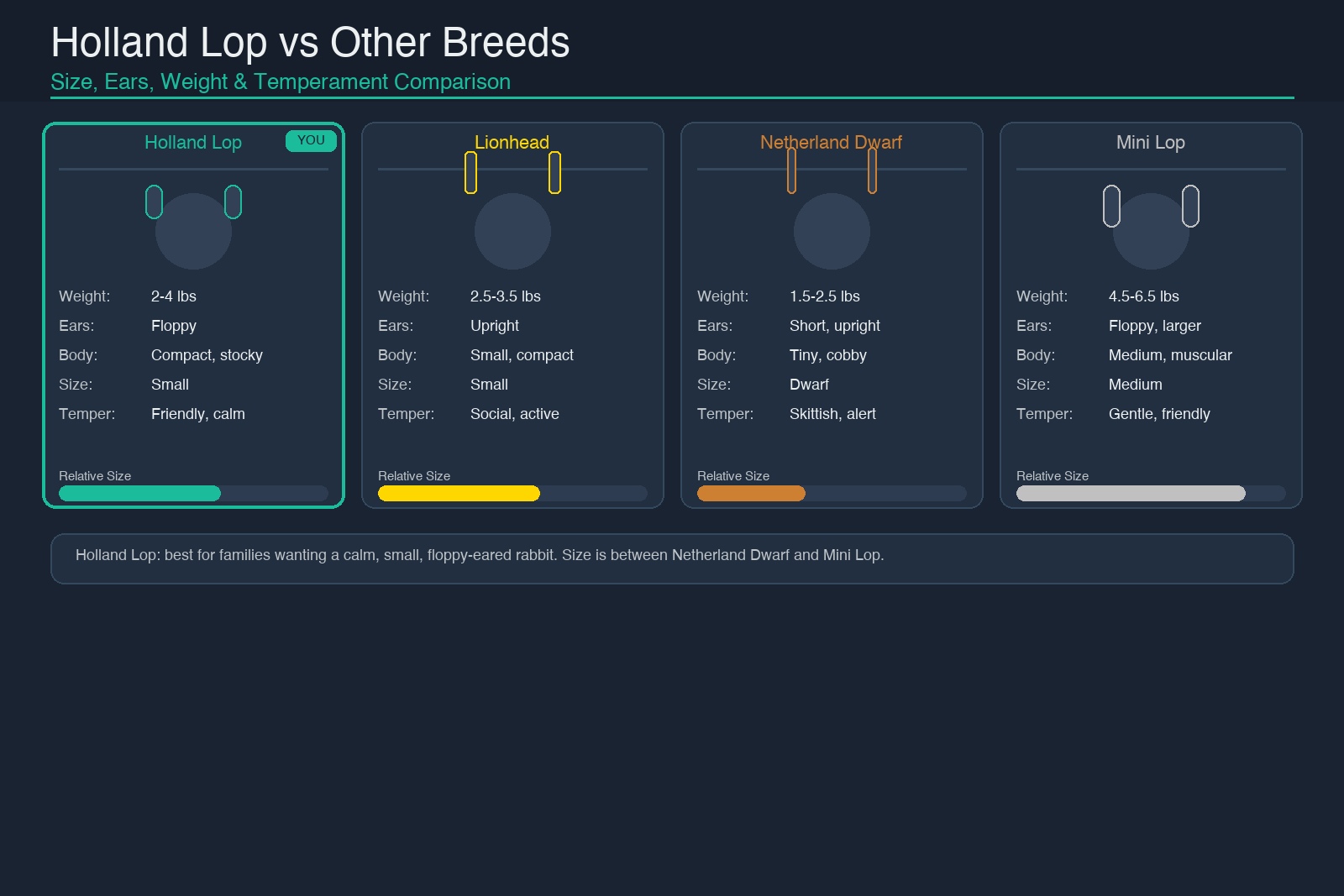
Holland Lop vs Other Popular Breeds
Another popular breed worth considering alongside the Holland Lop is the Dutch Rabbit, known for its distinctive color pattern and easygoing temperament.
| Feature | Holland Lop | Lionhead | Netherland Dwarf | Mini Lop |
|---|---|---|---|---|
| Weight | 2–4 lbs | 2.5–3.75 lbs | 1.1–2.5 lbs | 4.5–6.5 lbs |
| Ear Type | Floppy (4–5”) | Upright (2–3.5”) | Upright (2–3”) | Floppy |
| Temperament | Friendly, cuddly | Social, active | Energetic, nervous | Calm, easygoing |
| Grooming | Medium (ears!) | High (mane) | Low | Low-Medium |
| Lifespan | 7–14 years | 7–10 years | 7–12 years | 7–14 years |
| Best For | Families, first-timers | Fluffy lovers | Small spaces | Handling |
| Price | $40–$400 | $30–$100 | $30–$150 | $40–$200 |
| Difficulty | Easy-Medium | Medium (grooming) | Medium (shy) | Easy |
Choose Holland Lop if: You want a friendly, cuddly family pet with adorable floppy ears and are willing to commit to weekly ear cleaning.
Choose Lionhead if: You want a fluffy, eye-catching rabbit and are committed to daily grooming of their mane. See the full Lionhead rabbit breed guide for details.
Choose Netherland Dwarf if: Space is very limited and you want the smallest possible rabbit. They are more nervous and less cuddly than Holland Lops.
Choose Mini Lop if: You want a larger lop breed that is easier to handle and has lower grooming requirements than Holland Lops.
Conclusion
Holland Lops are the most popular rabbit breed in America for good reason — compact, friendly, adorable, and adaptable to indoor family life. But their floppy ears and stocky build come with breed-specific responsibilities that set them apart from upright-eared breeds.
Five key takeaways:
- Compact size (2–4 lbs) with signature floppy ears that require weekly cleaning
- Friendly holland lop temperament — one of the best rabbit breeds for families with children 9+
- Weekly ear cleaning is essential — the #1 breed-specific health need (reduced airflow traps moisture)
- Holland lop rabbit price: $50–$150 from rescue (recommended), $40–$75/month ongoing care
- Lifespan 7–14 years — a decade-plus commitment that requires proper diet, indoor housing, and regular vet care
Ready to bring a Holland Lop home? Our complete rabbit setup guide covers everything you need before your rabbit arrives, and our best rabbit cage recommendations help you choose an enclosure that fits their compact size and active personality.