Introduction
A backyard hutch is sold as a “starter pet” — heat, foxes, and a missed GI-stasis morning are what actually cut the years. This page is indoor vs outdoor, pet vs wild, and giant vs dwarf — not a two-year hamster timeline.
| Living situation | Typical years | Skip because |
|---|---|---|
| Indoor house rabbit | 8–12 (many 10–14) | Skip a 2-year-pet plan |
| Outdoor domestic (hutch) | 3–5 typical; 5–8 with heavy shelter | Skip if summer >80°F / predators |
| Wild | 1–2 | Not a pet comparison |
Rabbit lifespan is how many years a rabbit typically survives under a given living situation (indoor pet, outdoor hutch, or wild).
How Long Do Rabbits Live? Average Lifespan
How Long Do Rabbits Live as Pets?
The usual indoor pet lands at 8–12 years, and a well-run household often sees about 10. House Rabbit Society figures on rabbit.org match indoor 8–12 / outdoor 3–5 / wild 1–2. PetMD (Melissa Witherell, DVM, 2022) puts many pets nearer 7–10 unless they are spayed or neutered, then often 8–12 — still a decade-scale commitment, not a classroom-pet calendar.
Compared with other small mammals people shop next to rabbits:
| Pet | Average years |
|---|---|
| Hamster | 2–3 |
| Guinea pig | 4–8 |
| Ferret | 6–10 |
| Rabbit | 8–12 |
| Cat | 12–18 |
House Rabbit Society has long flagged rabbits among the pets most often surrendered in the United States, in part because buyers treat them like a short classroom animal and then meet a decade of hay, vet bills, and bunny-proofing. If a 2–3 year hamster calendar is what you budgeted for, a rabbit is the wrong animal.
Rabbit Life Expectancy by Living Situation
Where the rabbit sleeps is the blunt lever:
- Indoor house rabbits: 8–12 years typical; 10–14 shows up with hay-first diets, spay/neuter, and an exotic-vet clinic on speed dial.
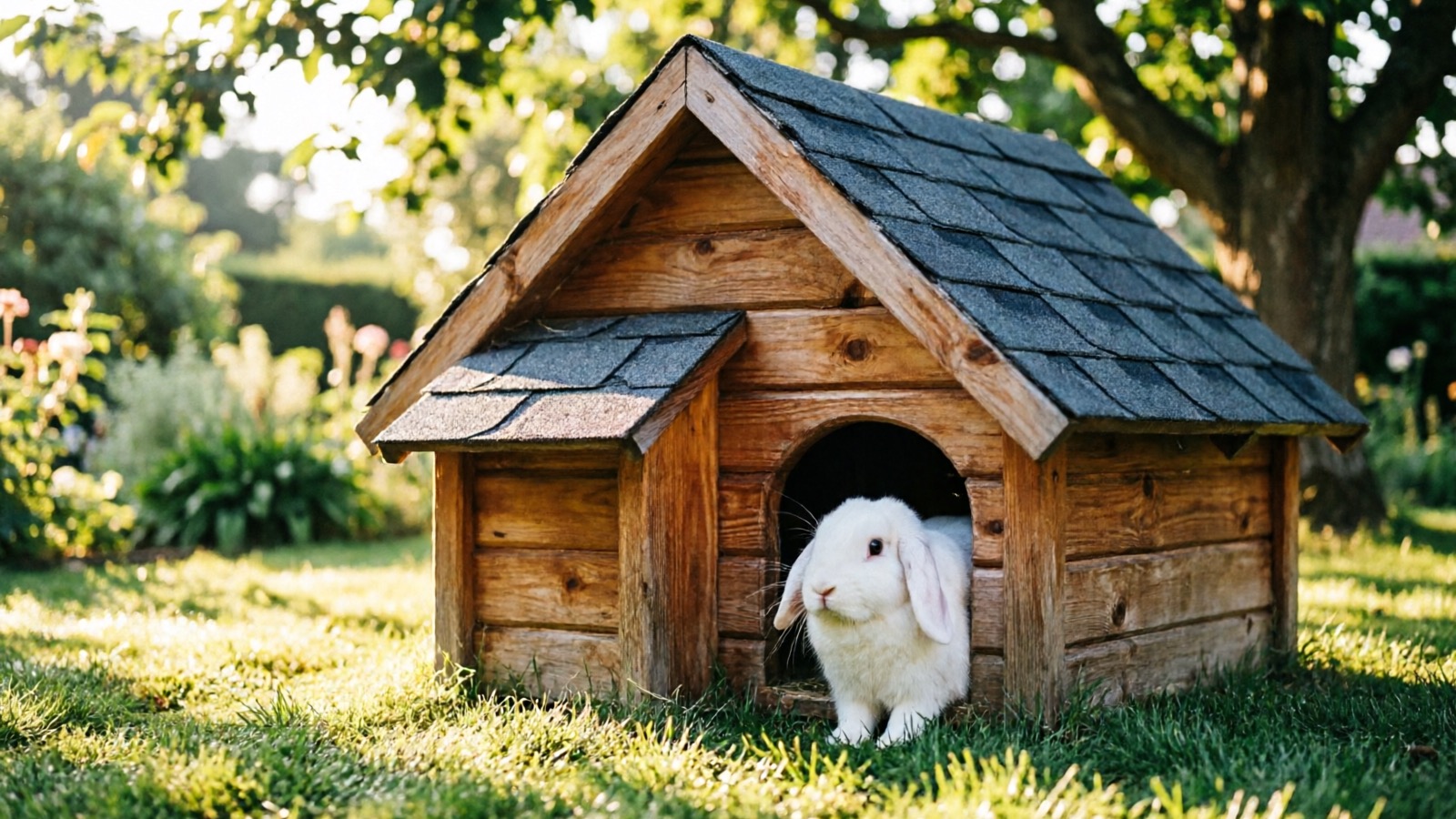
- Outdoor domestic rabbits with real shelter: 5–8 years is the optimistic band — shade, hardware cloth, winter insulation, and someone who still checks droppings every morning.
- Outdoor rabbits without that setup: 3–5 years is the typical figure rabbit.org uses. Heat, damp, predators, and delayed care pull the average down.
- Wild rabbits: 1–2 years typical — that is how long do rabbits live in the wild as a planning number, not a lucky outlier.
Wild years are not a pet comparison. Foxes, hawks, neighborhood dogs, cars, weather, and disease (including RHDV2) cull most wild rabbits before a house rabbit would even be called “young adult.” PetMD notes some wild rabbits can persist longer — it cites a 1–9 year spread — but that upper tail is habitat luck, not a husbandry target. This page uses 1–2 as the typical wild number.
The gap between a house rabbit and a hutch rabbit is often several years, not months. Temperature control, predator-proof walls, and the simple fact that you see the litter box twice a day are the mechanism, not a personality trait of “indoor breeds.”
What Changed? The Rabbit Lifespan Revolution
Older pet-store husbandry often produced 5–6 year rabbits: outdoor hutches, mixed “rabbit mix” seed bags, and intact does. Indoor living, hay as 80% of the diet, exotic-pet medicine, and routine spay/neuter are why many companion rabbits now reach the 8–12 band. Treat the 1960s “five or six years” line as a husbandry memory, not a lab trial this page ran.
What did not change: rabbits still cannot vomit, still hide pain, and still crash from GI stasis in a weekend. Longer years only show up if the daily system (hay, water, litter, cool rooms) actually runs.
Rabbit Lifespan by Breed — Complete Comparison
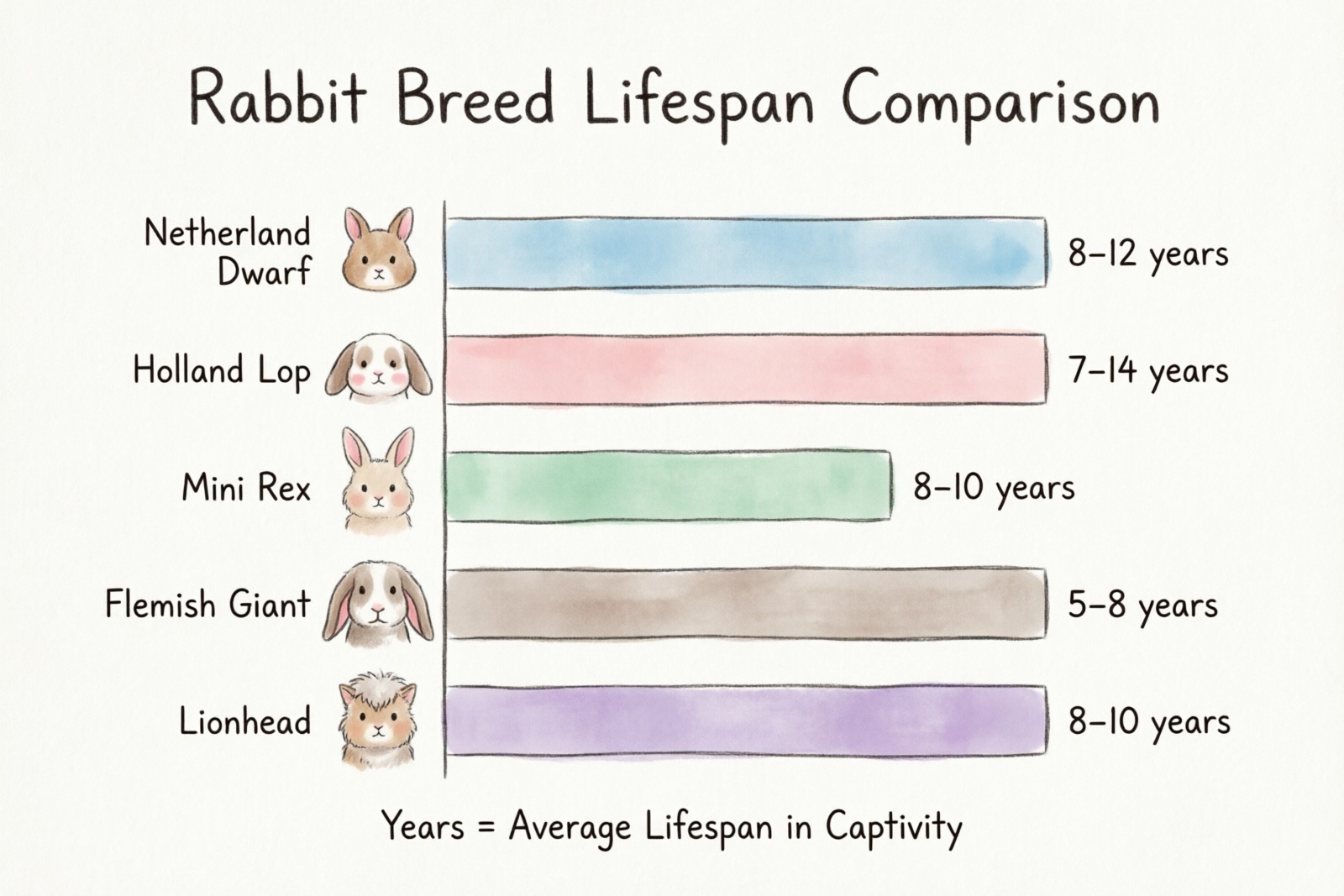
Smaller bodies usually last longer than giant ones — more heart and joint years before the frame wears out. Breed gaps of 5–7 years are normal. The table has 15 indoor ranges. Outdoor housing can clip any of these toward the 3–5 band.
| Breed | Typical indoor years | Adult size | Watch-out |
|---|---|---|---|
| Netherland Dwarf | 7–10 | 1.1–2.5 lb | Dental crowding in a tiny skull |
| Polish | 8–10 | ~2.5 lb | Fragile; heat-sensitive |
| Holland Lop | 7–12 | 2–4 lb | Folded ears trap moisture |
| Mini Lop | 7–12 | 4.5–6.5 lb | Ear infections; “mini” is still a solid rabbit |
| Lionhead | 7–10 | 2.5–3.5 lb | Wool block if the mane is neglected |
| Mini Rex | 8–10 | 3.5–4.5 lb | Sore hocks on wire or hard plastic |
| Standard Rex | 7–10 | 7.5–10.5 lb | Same thin foot fur as Mini Rex |
| Dutch | 8–12 | 3.5–5.5 lb | Generally hardy indoor pet |
| Jersey Wooly | 7–10 | 2.5–3.5 lb | Daily coat care |
| English Angora | 7–12 | 5–7 lb | Wool block; not a low-groom breed |
| New Zealand | 5–8 | 9–12 lb | Meat-breed frame; watch weight |
| Californian | 5–8 | 8–10.5 lb | Large-breed joint and heat load |
| French Lop | 5–8 | 10–15 lb | Ear hygiene plus giant-breed heart load |
| English Lop | 5–8 | 9–12 lb | Ear injury and infection risk |
| Flemish Giant | 5–8 | 12–15+ lb | Arthritis, sore hocks, bloat |
Dutch and New Zealand sit in the table only — this site has no dedicated page for those two breeds.
Flemish Giant Rabbit Lifespan
Years: 5–8
Size: 12–15+ lb
The Flemish Giant is a sofa with a pulse. Extra mass loads the heart, hocks, and gut. You still get a gentle companion; you do not get Lop-length years. Keep weight honest, give soft flooring, and book the vet more often than you would for a 4 lb lop. Attentive care pushes them toward the top of 5–8, not into Mini Lop territory.
Health risks: arthritis, sore hocks, heart disease, GI stasis / bloat, obesity.
Lionhead Rabbit Lifespan
Years: 7–10
Size: 2.5–3.5 lb
Lionhead rabbits stay small, which helps, then grow a wool mane that does not. Swallowed fur plus a gut that only moves if fiber is constant is how wool block starts. Daily brushing is not optional grooming theater — it is how you keep the 7–10 year window open. Full coat technique lives in the rabbit grooming guide.
Health risks: wool block, dental problems, matted fur, heat load under that coat.
Lop Rabbit Lifespan (Holland Lop / Mini Lop)
Years: 7–12
Size: Holland Lop about 2–4 lb; Mini Lop about 4.5–6.5 lb
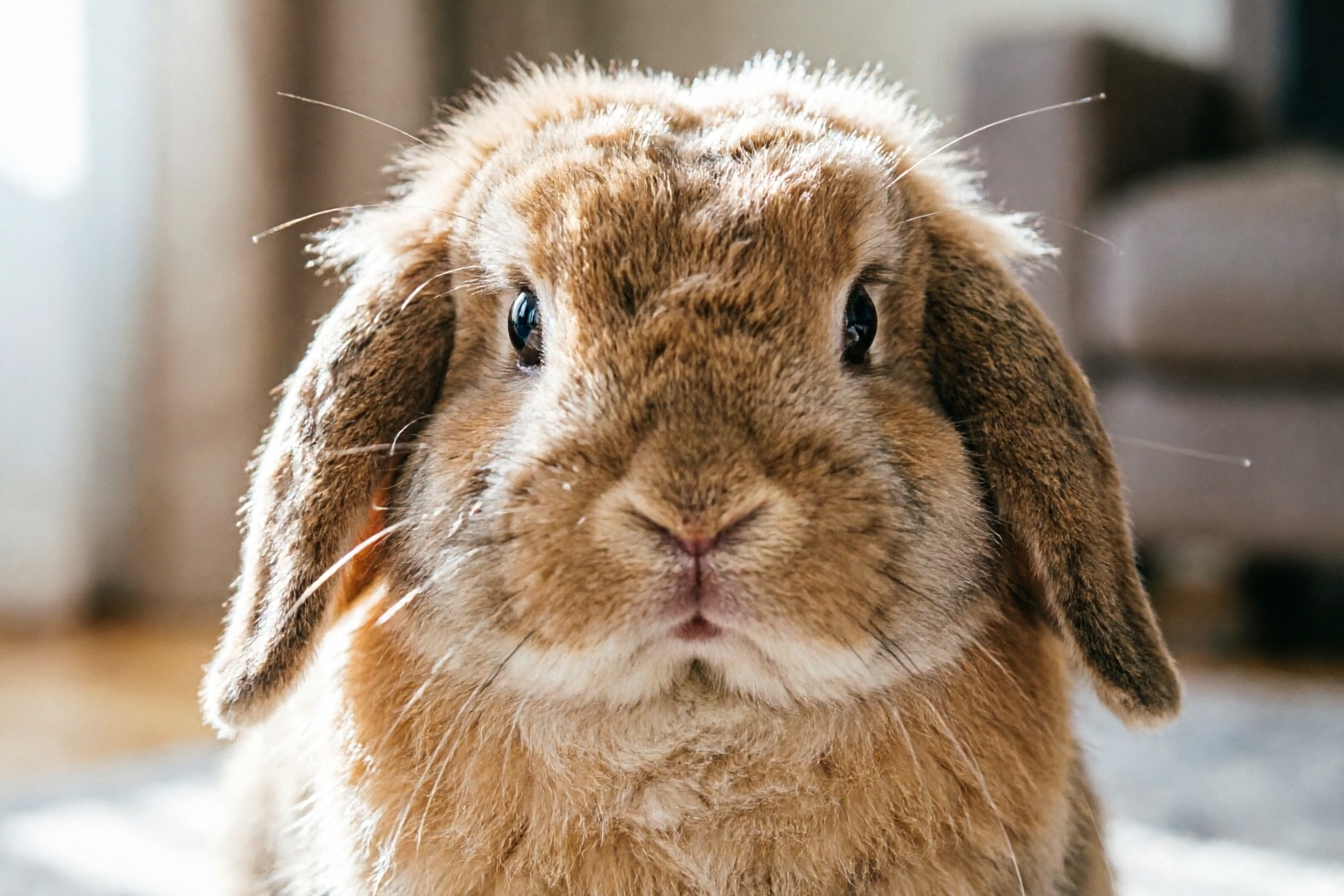
Lops are the long-lived middle: enough size to be sturdy, not Flemish-Giant size. Folded ear canals are the tax. Moisture and wax sit in the fold; infections show up as head shaking, discharge, or a head tilt you should not wait on.
Mini Lop is the search people actually type when they mean “how old does this compact lop get.” Treat 7–12 indoor years as the planning range, same band as Holland Lop, with extra ear checks. “Mini” is a show-weight label, not a dwarf-skull animal and not a 3-year pet. Breed detail: Mini Lop lifespan on the dedicated profile.
Health risks: ear infections, dental malocclusion, GI stasis.
Check ears weekly: redness, smell, discharge, or shaking. Skip “they always hold their ears like that” if one ear is suddenly hotter or dirtier than the other.
Dwarf Rabbit Lifespan (Netherland Dwarf)
Years: 7–10
Size: 1.1–2.5 lb
Netherland Dwarfs are tiny and often feisty. Small size usually helps longevity; the compact skull often does not. Teeth in a short face misalign, then overgrow, then the rabbit stops eating, then GI stasis writes the ending. Hay is dental care, not a side salad.
Health risks: dental malocclusion, fragile bones if dropped, heat sensitivity.
Mini Rex Rabbit Lifespan
Years: 8–10
Size: 3.5–4.5 lb
Mini Rex have a reputation for solid indoor years and a plush coat that does not mat like Angora. Their feet lack thick fur pads, so wire floors and slick plastic chew the hocks. Soft fleece or mats are cheaper than treating open sores.
Health risks: sore hocks, heat sensitivity.
Standard Rex rabbits typically sit around 7–10 years with the same velvety coat and the same hock problem. Angora rabbits can reach 7–12 years if someone actually does the daily wool work; skip Angora if you wanted a low-maintenance coat. Mini Rex, Rex, and Angora stay in the table; this site has no dedicated page for those three.
How Long Do Rabbits Live Indoor vs Outdoor
Indoor 8–12 versus outdoor 3–5 is the number. This indoor vs outdoor rabbit lifespan section is the mechanism — heat, predators, and whether you notice a quiet gut on Tuesday — including the search people type as “house rabbits vs outdoor rabbits.”
Indoor Rabbits Live Significantly Longer
Indoor housing is the single largest year-adding decision most owners still control. House rabbits in a climate-controlled room typically see 8–12 years. Outdoor hutch rabbits more often see 3–5, unless the hutch is honestly predator-proof, shaded, insulated, and checked daily — then 5–8 is the band people quote.
Why house rabbits keep the years:
- Heat: Rabbits do not sweat and they do not pant well. They dump heat through ear vessels. Above 80°F (27°C), outdoor hutches become heatstroke boxes. Indoor rooms stay under that line in summer if you actually run the A/C or a fan that is not blasting the rabbit in the face.
- Predators: Foxes, hawks, raccoons, neighborhood cats, and dogs. Even a failed attack is a stress event. Chronic predator pressure suppresses immune function; you will not see that on a weekend visit.
- You notice Tuesday, not Sunday: Indoor rabbits share your hallway. Appetite, behavior, and litter-box volume are in your face. Rabbit sounds and body language — tooth purring vs loud grinding, loaf vs hunched — is how GI stasis gets a same-day vet instead of a shock on day two.
- Fewer parasites and barn pathogens: Outdoor soil and wild-rabbit traffic are extra dice rolls, including RHDV2 in regions where it is already moving.
Heatstroke is a leading outdoor killer because the timeline is hours, not weeks. A dark hutch in July is not “fresh air.”
Skip outdoor housing if your summers regularly sit above 80°F, if raccoons or dogs can reach the run, or if nobody is home to check hay and droppings before noon. Skip a two-year-pet plan either way — even the outdoor 3–5 band is longer than a hamster.
If You Must Keep Your Rabbit Outdoors
If indoor housing is truly off the table, the job is damage control, not a tie with house rabbits:
- Shade and airflow — never full sun on the hutch roof
- Cooling — frozen water bottles, ceramic tiles, a fan that moves air around the hutch rather than into the rabbit’s face
- Predator-proofing — hardware cloth, not chicken wire; locked latches; raised floor
- Winter — insulation; below 40°F (4°C) is a problem, not “they have fur”
- Daily in-person checks — outdoor rabbits still need you to catch a quiet gut before it stops
For build notes, see the DIY rabbit hutch guide. A good hutch still loses to a bunny-proofed spare room on years.
Factors That Affect Rabbit Lifespan
Diet and Nutrition
Diet is the boring lever that decides whether the gut keeps moving for a decade. The 80-10-5-5 split is the rule; products come after the rule.
- 80% hay: Unlimited grass hay (timothy, orchard, meadow). Fiber keeps the gut in motion and files the teeth that never stop growing.
- 10% fresh vegetables: Leafy greens such as romaine, cilantro, parsley — not a fruit bowl.
- 5% pellets: Plain, high-fiber pellets. No seeds, nuts, or candy-colored bits as the “fun” base.
- 5% or less treats: Tiny fruit pieces, carrot coins, commercial treats as a garnish.
Hay is non-negotiable. Low fiber is how GI stasis starts. Full feeding detail: rabbit diet guide.
For the 5% pellet slice, Oxbow Garden Select Adult Rabbit Food is a timothy-forward, non-GMO pellet sold as an 8 lb bag in a pack of 2 — read the pack size on the listing; it is not a single-sack price comparison. Owners often say the pellets “come fresh and good quality.” Other households hit a wall: picky rabbits refuse them, and some bags arrive as powder. If your rabbit snubs the first bowl, do not starve them into it — mix a small amount with a pellet they already eat, or switch rather than waiting out an empty gut.
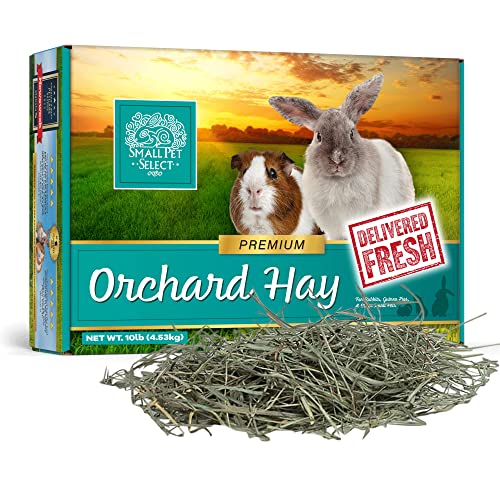
Pair pellets with Small Pet Select Orchard Grass Hay (10 lb) so the 80% is grass, not alfalfa for an adult. Buyers call it “beautiful hay”; others say a box looked “old and brown,” and one report found debris in the carton — still dump-check hay before it hits the feeder. A CAIQINLI rabbit hay feeder with metal frame keeps hay off soiled litter so they actually eat the 80% instead of using it as bedding. Owners like that it “hangs on the playpen wall” and feels sturdy; others say hay “falls out” between widely spaced bars. If your rabbit is a shredder, you may still find a pile on the floor — that is a known complaint, not a secret.
Skip seed-and-treat “rabbit mix” as the staple. It looks busy and leaves the fiber pellets uneaten.
Exercise and Space
Rabbits need 3–4 hours of out-of-cage time daily. No run means fat, weak bone, and a rabbit that stops binkying. Bunny-proof a room: cords, toxic houseplants, chewable baseboards.
Some people add supervised outdoor time on a harness. The Niteangel Adjustable Soft Harness (XL for larger rabbits) is a soft vest, not a free-range license. One New Zealand-rabbit owner said their rabbit “didn’t seem uncomfortable with it.” Other owners find it “hard to get it on” a kicking rabbit, and rabbits do slip out. Test in a closed room. Never treat a harness as unsupervised “free range.” Enrichment ideas: rabbit toys guide.
Veterinary Care
Find an exotic-pet veterinarian before you need one at midnight.
- Annual wellness exams while young
- Every six months from about age 5
- RHDV2 vaccination — USDA APHIS has confirmed Rabbit Hemorrhagic Disease Virus Type 2 across most US states since 2020; exotic vets and the American Rabbit Breeders Association treat vaccination as standard, not optional
- Blood work when the vet wants a kidney/liver baseline, especially in seniors
Living Environment
Ammonia from a dirty litter box is a respiratory injury, not a smell preference.
- Daily litter scooping
- Weekly full clean
- Airflow without a draft on the resting spot
Cramped housing is chronic stress. Minimums: rabbit cage size guide. Setup walkthrough: rabbit cage setup guide.
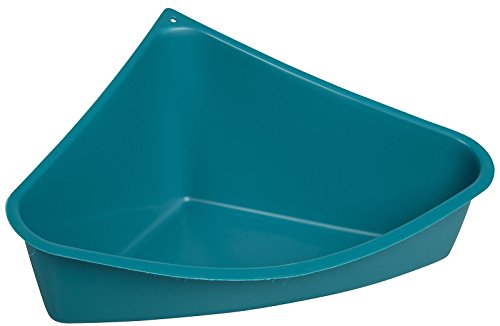
Litter training makes the daily scoop realistic. The Lixit Corner Litter Pan tucks into a corner. Owners call it “easy to clean and stable.” Size is the honest knock: some small pets swim in it, others find it “too small.” Measure the rabbit, not the product photo. Step-by-step: rabbit litter training guide.
Spaying and Neutering
This is one of the few medical decisions that moves the year-count in a measurable way.
- Unspayed females: 60–80% uterine adenocarcinoma risk by about age 4 (research summarized in the Journal of the American Veterinary Medical Association)
- Spayed females: that cancer risk is taken off the table; many vets quote 1–3 extra years
- Neutered males: no testicular cancer, less hormone-driven fighting and spraying, easier litter habits
Most exotic vets spay or neuter around 4–6 months. This is not “because litters are inconvenient.” It is because uterine cancer is a common way intact does die in what should have been mid-life.
Common Health Problems That Shorten Rabbit Lifespan
Catch these early or they become the year-count.
Digestive Issues (GI Stasis)
GI stasis is the leading cause of death in pet rabbits in exotic-pet literature (Journal of Exotic Pet Medicine). The gut slows or stops, gas and toxins build, the liver takes damage. Untreated, death can land in 24–48 hours.
Symptoms: not eating, fewer or zero fecal pellets, hunched posture, loud tooth grinding.
Prevention: unlimited hay, daily movement, counting pellets like they matter — because they do.
Dental Problems
Teeth grow continuously. Without hay abrasion they overgrow, abscess, and the rabbit stops eating, which hands the case back to GI stasis.
Symptoms: drool, dropped food, weight loss, picking at pellets then walking away.
Prevention: unlimited grass hay, safe chewables, dental checks at wellness visits.
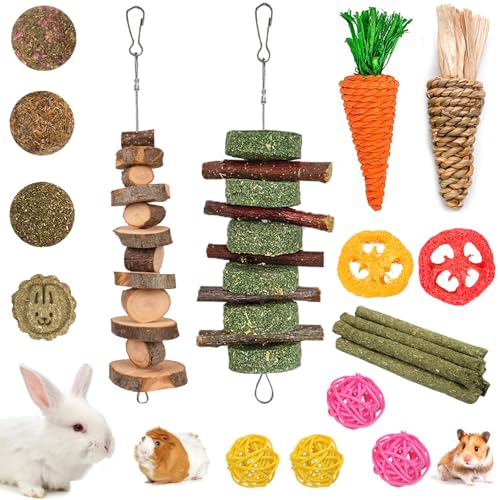
Grddaef 20 PCS Bunny Chew Toys give extra gnawing besides hay. Some owners say their rabbits “loved it.” Others report the set arrived unlabeled, with no ingredient list, and worry that some pieces “include items with glue.” Treat chews as a supplement to hay, not a substitute, and throw out anything that looks bonded with adhesive.
Respiratory Infections
“Snuffles” thrives in ammonia and still air.
Symptoms: sneezing, nasal discharge, wet eyes.
Prevention: clean litter, ventilation, less stress. Outdoor damp is not automatically “fresh.”
Cancer
Uterine cancer in intact does is the standout preventable cancer. Intact males can get testicular cancer. Spay and neuter.
Obesity
Fat rabbits get sore joints, heart strain, and cannot groom the rear — which is how flystrike starts in warm months.
Prevention: hay-first diet, 3–4 hours of real hopping, skip treating pellets like kibble you top up “because they looked hungry.”
Broader clinical map: rabbit health guide.
How to Help Your Rabbit Live Longer
Five verbs. Do them in this order if you are starting from a messy setup.
- Feed unlimited grass hay as ~80% of the diet, a measured 5% of plain pellets, daily leafy greens, and almost no sugary mix. Keep Oxbow Garden Select Adult Rabbit Food (pack of two 8 lb bags) as the pellet, and Small Pet Select Orchard Grass Hay in the rack — not a seed mix in a bowl they can sort.
- Keep 3–4 hours of supervised out-of-cage hopping every day. Indoor housing if you can. If you use the Niteangel Adjustable Soft Harness, test it indoors and stay within arm’s reach; skip it as a substitute for a bunny-proof room.
- Clean the litter box daily and the whole setup weekly. Park hay in the CAIQINLI hay feeder and urine in a Lixit Corner Litter Pan so ammonia and food do not share a corner.
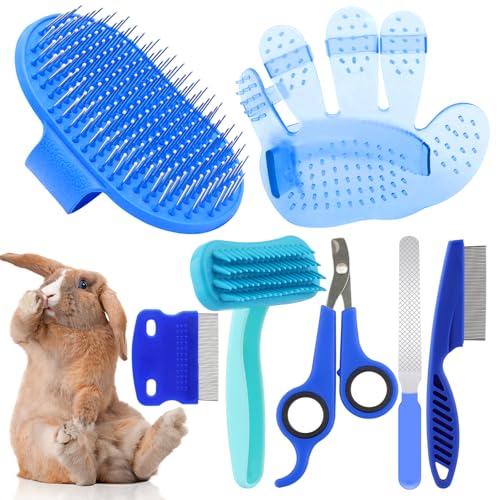
- Groom weekly (daily on Lionheads and Angoras). Nails every 4–6 weeks. The KALAMANDA rabbit grooming kit bundles a brush and clippers. Some owners find it fine for routine coat work; others call it “cheap made” and say it “didn’t work very well” — if the clippers crush rather than cut, stop before you tear the quick. Offer Grddaef chew toys only as extra wear besides hay, and skip any piece that looks glued.
- Book an exotic-vet exam, RHDV2 vaccination, and spay or neuter by about 6 months. After age 5, book twice a year.
Quick longevity checklist (only items already covered above):
Indoor housing when you have the room
Unlimited grass hay in a feeder, not an ignored pile
3–4 hours of supervised out-of-cage hopping
Spay does by 6 months
RHDV2 vaccine plus an exotic-vet exam
Wellness visits every six months from age 5
Hardware cloth and locked latches if a hutch is the only option
No pellets / no droppings for 12 hours = same-day vet, not “wait and see”
Chicken-wire hutches as predator mesh
Seed-and-treat mix as the staple
Unsupervised harness time as “free range”
Leaving an intact doe “to see if you want babies later”
Signs of Aging: What to Expect as Rabbit Lifespan Progresses
Call a rabbit a senior at 5–6 years, earlier for giants.
Physical Changes
- Less jumping, fewer binkies
- Weight up from sitting, or weight down from teeth and gut
- Duller, thinner coat
- Nails that seem to slow (still trim; just check more often for overgrown dewclaws)
- Gray around the face and paws
Behavioral Changes
- More sleep
- Less interest in noisy play
- Picky eating — which you still treat as a medical red flag first, “picky senior” second
- More time parked against your foot
What to Do When Your Rabbit Ages
- Vet every six months
- Softer hay and easier greens if molars are worn or spurs appear
- Lower platforms; skip the Olympic ramps
- Warmer resting zone — seniors chill faster
- Same 12-hour eating/dropping rule as a youngster; old age is not a reason to wait
Keep the KALAMANDA grooming kit in the senior kit for rear-end checks. Flystrike on a messy coat is a warm-weather killer, not a grooming aesthetic.
Oldest Rabbits Ever Recorded
Record-Breaking Longevity
Flopsy, an Australian rabbit, is the name House Rabbit Society and PetMD both put at 18 years and 10 months. That is the outer figure this page uses. Fourteen to sixteen years shows up in indoor, hay-first, spayed/neutered pets with boring vet schedules. It is not a promise and it is not a hutch average.
Mick, sometimes listed around 16 years as a “oldest living” news item in 2019, is a long-lived pet story — not a reason to overwrite Flopsy’s 18 years 10 months.
Common threads among the long-lived:
- Indoor their whole lives
- Unlimited grass hay
- Early vet trips, not heroic last weekends
- Spay/neuter
- Daily movement and a stable companion (human or bonded rabbit)
What those long lives actually share
Five years vs fifteen is mostly care stacked for a decade, not a secret breed. Catch GI stasis on hour 12, keep summers under 80°F, and do not leave an intact doe “to see if you want babies later.”
What Do Rabbits Usually Die From?
Most Common Causes of Death
Prevention only works if you know the list.
- GI stasis — leading pet-rabbit killer; hay, motion, and same-day care.
- Uterine cancer — 60–80% of intact does by ~4 years; spay removes the bet.
- Respiratory infections — dirty, still, ammonia-heavy air.
- Heart disease — seniors and large breeds; exercise intolerance, hard breathing.
- Dental disease — overgrown teeth → starvation → stasis.
- Accidents — stepped on, dropped, dog or cat attack. House rabbits are not “fine with the labrador.”
- Heatstroke — outdoor summers; hours, not days.
- RHDV2 — highly contagious, often fatal. USDA APHIS has confirmed it across most US states since 2020. Vaccinate.
Preventable vs Non-Preventable
Mostly preventable
- GI stasis (hay + monitoring)
- Uterine cancer (spay)
- Many respiratory cases (clean air)
- Dental crisis (hay + checks)
- Accidents (supervision, no free-roam with predators)
- Heatstroke (indoor, or real shade and cooling)
- RHDV2 (vaccine)
Not fully preventable
- Age-related organ failure
- Some cancers after a long life
- Congenital dental alignment in dwarfs (you manage it; you may not erase it)
Common Questions About Rabbit Lifespan (FAQ)
How long do rabbits live as pets?
Most indoor pets reach 8–12 years; 10–14 happens with hay-first care and an exotic vet. Plan for a decade, not a school year.
What Is the Oldest Rabbit on Record?
Flopsy is cited at 18 years 10 months. Use that as an outer record, not a care target.
Do indoor rabbits live longer than outdoor?
Yes. House rabbits typically see 8–12 years; outdoor rabbits more often 3–5, or 5–8 with serious shelter. Heat, predators, and slow illness checks are the gap.
Which rabbit breed lives the longest?
Lops and Mini Rex often sit at 7–12 indoor years. Flemish Giants more often 5–8. Smaller frames usually win.
How can I tell a rabbit’s age?
Without paperwork, you guess: glossy coat and easy jumps in the young; stiffness, gray, and slower binkies in seniors. Exact months need a record.
Does spaying/neutering extend lifespan?
Yes. Spaying removes the 60–80% uterine-cancer risk in does and may add 1–3 years. Neutering males cuts testicular cancer and fight wounds.
Conclusion
Indoor pets typically get 8–12 years. Outdoor hutches more often get 3–5 unless you over-build shelter. Wild rabbits get 1–2. None of those numbers are a personality quiz — they are housing, hay, and whether Tuesday’s quiet gut gets a vet.
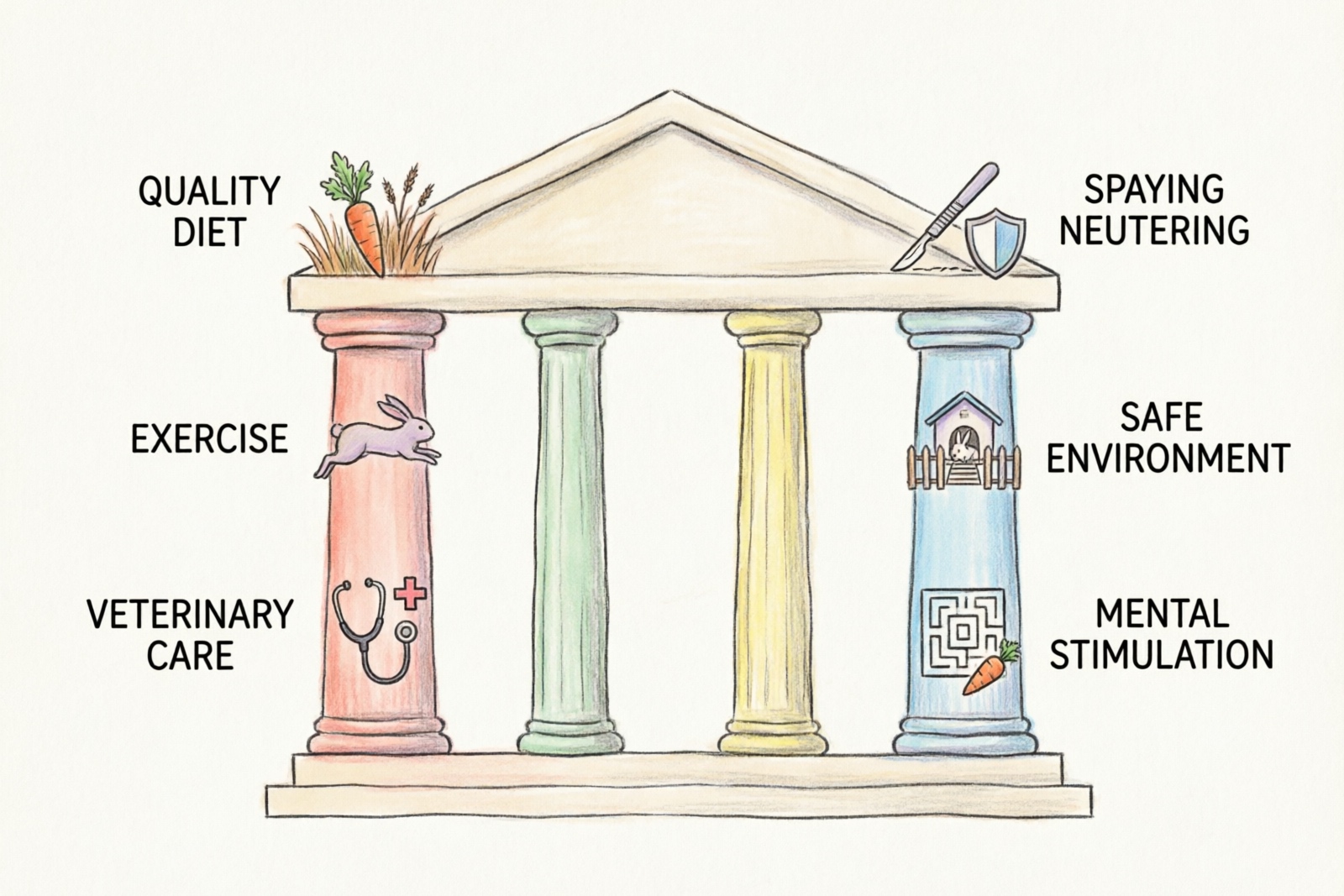
Six pillars
- Diet — unlimited grass hay, measured pellets, greens
- Exercise — 3–4 hours out of the cage
- Environment — indoor if you can
- Grooming — coat and nails on a calendar
- Veterinary care — exotic vet, RHDV2
- Spay/neuter — especially does by 6 months
Start this week
- Move the rabbit indoors if the hutch is the only home
- Put grass hay in reach 24/7
- Book the annual (or six-month) exam
- Schedule spay/neuter if it is still “someday”
- Count droppings tomorrow morning like it is a vital sign
A rabbit is a decade-scale roommate. Treat the years that way on day one.
Products That Support a Longer Rabbit Life
The four levers you control daily — diet, weight, grooming, and exercise — each map to gear covered earlier in this guide:
| Longevity Lever | Pick | Price | How It Helps |
|---|---|---|---|
| Diet (the 5% pellet slice) | Oxbow Garden Select Adult Rabbit Food | $39.08 | Timothy-based, non-GMO uniform pellets |
| Diet (the 80% hay base) | Small Pet Select Orchard Grass Hay, 10 lb | $34.99 | Keeps gut and teeth working daily |
| Grooming (flystrike prevention) | KALAMANDA Rabbit Grooming Kit | $8.99 | Brush and nail clippers for weekly coat work |
| Exercise (supervised outdoor time) | Niteangel Adjustable Soft Harness | $9.99 | Soft vest harness for safe hops outside |
Prices verified against Amazon on 2026-09-04; check the listing for current pricing.