Why Treats Matter for Rabbits
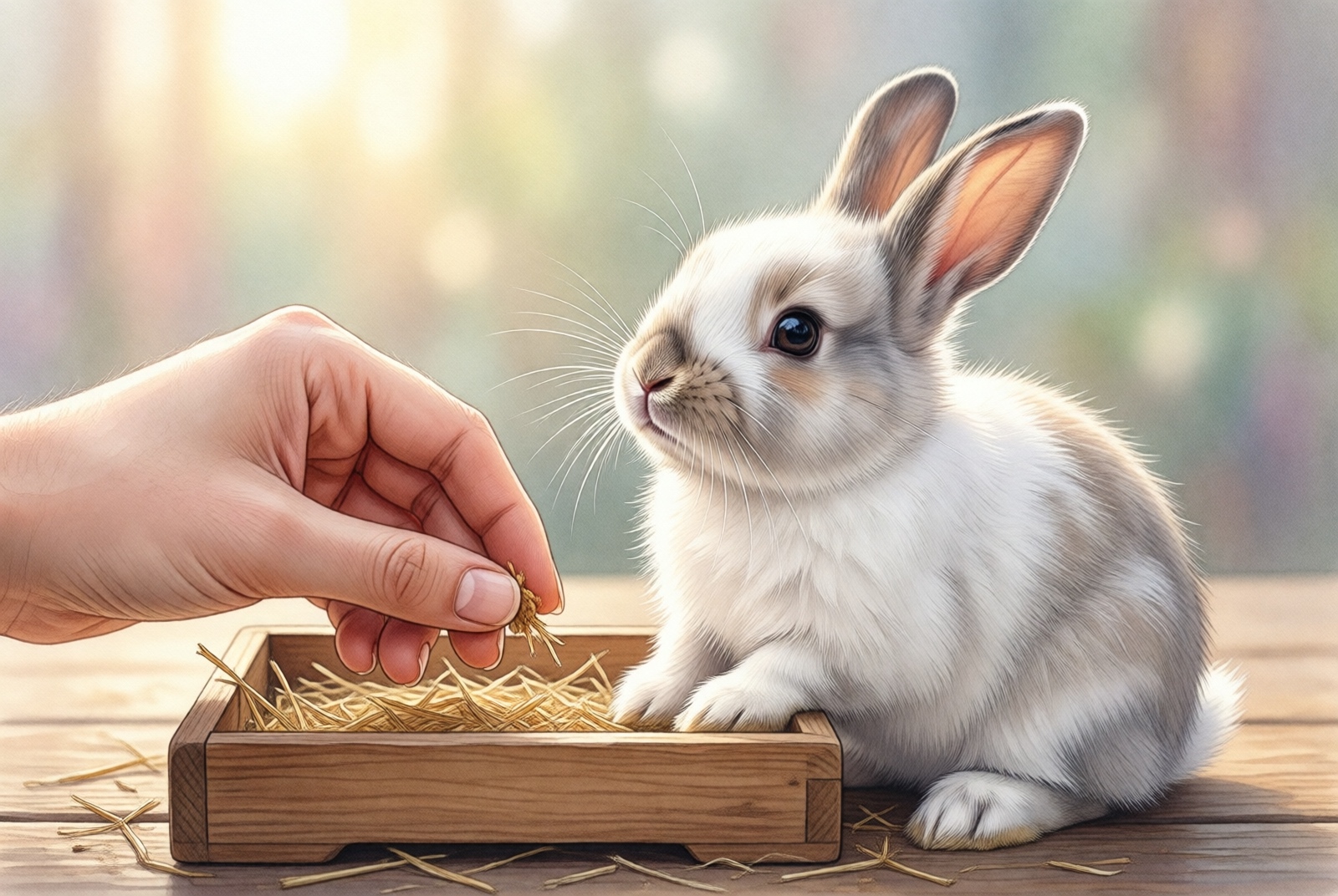
Treats serve three important purposes in a rabbit’s life: bonding, training, and enrichment. Hand-feeding treats builds trust between you and your rabbit — especially useful with newly adopted or shy animals. Small treats reward desired behaviors during litter training and other training sessions. And scattering treats in hay encourages natural foraging behavior that prevents boredom.
The golden rule: treats should never exceed 5% of your rabbit’s daily diet — roughly 1-2 tablespoons total. The core diet breakdown is 80% hay, 10% pellets, 5% fresh vegetables, and no more than 5% treats. Most commercial rabbit treats contain far too much sugar, and many veterinarians recommend avoiding them entirely in favor of fresh vegetables and hay-based options.
For the best rabbit food recommendations and a complete rabbit food guide, see our dedicated articles.
What Makes a Good Rabbit Treat?
Not all rabbit treats are created equal. Here’s what separates a healthy choice from a harmful one:
High fiber content — Timothy or orchard grass hay as the primary ingredient is ideal. A rabbit’s digestive system requires constant fiber to function properly. Hay-based treats support gut motility and dental health simultaneously.
Low sugar — This is the single most important factor. Added sugar, honey, and molasses disrupt gut flora, can trigger GI stasis (a potentially fatal condition), and contribute to obesity. Check the ingredient list — if sugar, molasses, or corn syrup appears in the top five ingredients, pass on it.
Natural ingredients — Dried herbs, vegetables, and flowers are what rabbits evolved to eat. Artificial colors, preservatives, and flavorings provide no nutritional value and may cause allergic reactions.
Rabbit-safe composition — Rabbits cannot digest dairy products. Yogurt-based treats, despite their popularity, are biologically inappropriate. Similarly, seeds and nuts are too high in fat for a rabbit’s system.
Appropriate size — Training treats should be small enough to consume quickly (under 5 seconds) so the rabbit stays focused on the training session rather than the food.
For baby rabbits under 6 months, the only appropriate treats are alfalfa-based options (young rabbits need extra calcium and protein). Adult rabbits should receive timothy-based treats. Diet quality directly impacts rabbit lifespan and rabbit health.
Best Rabbit Treats — Quick Comparison
| # | Product | Type | Reviews |
|---|---|---|---|
| Oxbow Organic Rewards | Organic hay biscuit | Low | Healthiest overall |
| Vitakraft Drops Wildberry | Yogurt drops | 5,070 | ⚠️ HIGH |
| Vitakraft Nibble Rings | Alfalfa rings | 5,836 | Zero |
| Kaytee Healthy Bits | Seed/nut bits | 2,929 | Moderate |
| Kaytee Alfalfa Cubes | Compressed hay | 7,392 | Zero |
| Vitakraft Bursts Wild Berry | Berry crispy | 2,080 | Moderate |
| Kaytee Food from The Wild | Dried flowers/veggies | 18,161 | Low |
| Kaytee Country Harvest | Mixed fruit/seed/nut | 5,590 | Moderate |
⚠️ Safety warning: Products #2 (Vitakraft Drops), #4 (Kaytee Healthy Bits), and #8 (Kaytee Country Harvest) contain ingredients that veterinarians recommend limiting to occasional use only. See our detailed safety notes below each review and in the Treats to Avoid section.
Detailed Product Reviews
Oxbow Organic Rewards — Best Overall (Healthiest)
The Oxbow Organic Rewards earn the top spot because they are the only USDA certified organic rabbit treat on this list. Made with barley and timothy hay, they deliver high fiber in a format rabbits genuinely enjoy. The small amount of molasses provides palatability without excessive sugar.
When shopping for rabbit treats Oxbow products should be at the top of your list — the brand is consistently recommended by exotic veterinarians for their simple, natural ingredient lists. At from nearly 1, the track record is strong. The main drawback is price: organic certification costs more, and the 2.64 oz bags disappear quickly with multiple rabbits.
Note: The oxbow rabbit treats discontinued Simple Rewards Baked Treats line (B0058V2QXK) is no longer available. The Organic Rewards (B0D7VP6QBM) is the current replacement from Oxbow.
| Feature | Detail |
|---|---|
| Size | 2.64 oz (Pack of 2) |
| Main ingredients | Barley, timothy hay, molasses |
| Sugar level | Low |
| Best for | Daily healthy treat |
Vitakraft Drops Wildberry — Best for Bonding (Use Sparingly)
The Vitakraft Drops Wildberry are the most popular rabbit treat on Amazon with over 5 — and rabbits genuinely cannot resist them. The soft, creamy texture and sweet berry flavor make them incredibly effective for bonding with shy or newly adopted rabbits.
However, I need to be direct about the problems. These contain dairy (yogurt powder), added sugar, and artificial colors. Rabbits cannot properly digest lactose — dairy products can cause digestive upset, bloating, and diarrhea. The high sugar content disrupts the delicate balance of gut bacteria that keeps a rabbit’s digestive system functioning.
If you choose to use them, limit to 1-2 drops per week maximum. Never use as a daily treat. Multiple reviewers report their rabbits developing diarrhea from overfeeding.
| Feature | Detail |
|---|---|
| Size | 5.3 oz |
| Main ingredients | Sugar, yogurt powder, vegetable oil, artificial colors |
| Sugar level | ⚠️ HIGH |
| Best for | Occasional bonding (1-2/week max) |
Vitakraft Nibble Rings — Best for Training
The Vitakraft Nibble Rings are the best rabbit treats for training I’ve found. They contain zero added sugar, the ring shape breaks cleanly in half for smaller rewards, and rabbits actually enjoy them — a rare combination in healthy treats.
The alfalfa base provides fiber and calcium, and the crunchy texture helps wear down teeth. The 5 confirm broad acceptance across rabbits, guinea pigs, and other small pets. One owner specifically noted: “These are my favorite training treats — I break them in half easily.”
The caveat: alfalfa is higher in calcium and protein than timothy, so limit quantity for adult rabbits. These are better suited for young rabbits, nursing does, or as occasional training rewards for adults.
| Feature | Detail |
|---|---|
| Size | Pack of 2 |
| Main ingredients | Alfalfa meal, wheat flour, vegetable oil |
| Sugar level | Zero |
| Best for | Training rewards |
Kaytee Healthy Bits — Best for Picky Eaters
The Kaytee Healthy Bits combine seeds, nuts, and dried fruits into bite-sized pieces that even the most finicky rabbits find irresistible. The strong peanut butter aroma gets attention immediately — multiple reviewers mention their rabbits “coming running” when they hear the bag.
The downside: seeds and nuts are high in fat. A rabbit’s digestive system is designed for high-fiber, low-fat forage — not the concentrated fats found in sunflower seeds and peanuts. Limit to 1-2 pieces per week. The bits also crumble easily, creating mess in the cage.
| Feature | Detail |
|---|---|
| Size | 4.5 oz (Pack of 2) |
| Main ingredients | Sunflower seeds, peanuts, dried fruits, grains |
| Sugar level | Moderate (high fat) |
| Best for | Picky eaters (1-2/week) |
Kaytee Alfalfa Cubes — Best Value & Dental Health
The Kaytee Alfalfa Cubes are the simplest treat on this list: compressed alfalfa hay and nothing else. That single-ingredient simplicity is exactly what makes them effective. Rabbits must chew the hard cubes thoroughly, which wears down their continuously growing teeth and provides extended enrichment.
At 15 oz per pack with 7, these are the best value option. They travel well (cubes hold together better than loose hay) and work well in treat-dispensing toys. The hardness can be an issue for older rabbits with dental problems, and the high calcium content means adults shouldn’t receive these daily. For young rabbits and growing babies, however, alfalfa cubes are an excellent supplement.
| Feature | Detail |
|---|---|
| Size | 15 oz (Pack of 2) |
| Main ingredients | Alfalfa |
| Sugar level | Zero |
| Best for | Dental health, travel, young rabbits |
Vitakraft Bursts Wild Berry — Best Occasional Sweet Treat
The Vitakraft Bursts Wild Berry sit in an interesting middle ground: sweeter than hay-based treats but without the dairy found in yogurt drops. The light, crispy texture and berry flavor appeal to rabbits, and the absence of yogurt powder makes them a slightly better choice than the Wildberry Drops.
They still contain added sugar and artificial colors, so these are occasional treats only — not a daily option. The 1.76 oz bags are quite small for the price. Some rabbits do refuse them, so consider buying a single pack first to test acceptance.
| Feature | Detail |
|---|---|
| Size | 1.76 oz (Pack of 2) |
| Main ingredients | Wheat flour, sugar, vegetable oil, berry flavoring |
| Sugar level | Moderate |
| Best for | Occasional sweet treat |
Kaytee Food from The Wild — Best Natural Foraging Treat
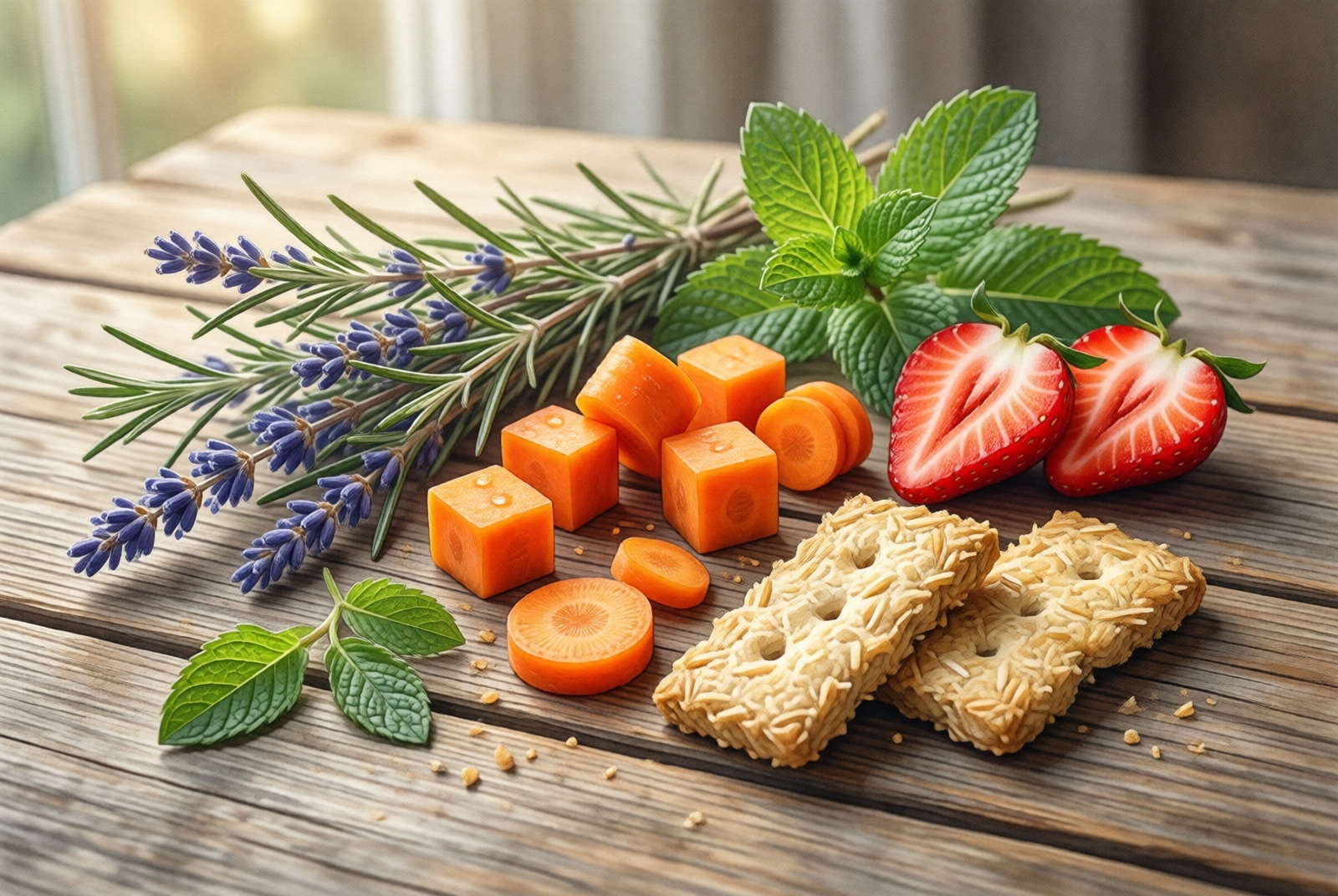
The Kaytee Food from The Wild is the most-reviewed rabbit treat on Amazon with an impressive 18. The mix contains dried carrots, strawberries, hibiscus petals, marigold, and rose petals — all natural ingredients with no artificial colors.
The best way to use these is as foraging enrichment: scatter the pieces throughout your rabbit’s hay pile and let them hunt for the treats. This mimics natural foraging behavior and provides mental stimulation. The main complaint is the tiny 1 oz bags — the product is significantly smaller than the photos suggest.
| Feature | Detail |
|---|---|
| Size | 1 oz (Pack of 2) |
| Main ingredients | Dried carrots, strawberries, hibiscus, marigold, rose petals |
| Sugar level | Low |
| Best for | Foraging enrichment |
Kaytee Country Harvest — Best Variety Blend
The Kaytee Country Harvest offers the widest variety: dried fruits, seeds, nuts, and grains in a 7 oz bag. It looks like trail mix for rabbits, and both picky and non-picky rabbits enjoy picking through the mix. It’s excellent for hand-feeding and bonding sessions.
Like the Healthy Bits, the seed and nut content means this is an occasional treat only. Some rabbits learn to selectively eat only the sweetest pieces and leave the rest. The 7 oz pack size is generous for the price.
| Feature | Detail |
|---|---|
| Size | 7 oz (Pack of 2) |
| Main ingredients | Dried fruits, sunflower seeds, peanuts, grains |
| Sugar level | Moderate (high fat) |
| Best for | Hand-feeding and bonding |
Safe Vegetables & Fruits as Natural Treats
Fresh vegetables are the healthiest rabbit treats available — and the ones veterinarians recommend most. Rabbit treats vegetables like romaine, cilantro, and bell peppers provide hydration, fiber, vitamins, and minerals without the added sugar found in commercial products. Rabbit treats fruit options like blueberries, strawberries, and apple slices are also safe but must be limited to 2-3 times per week due to high sugar content.
Daily safe vegetables (unlimited): romaine lettuce, cilantro, parsley, basil, dill, mint, bell peppers, and celery (cut into small pieces to prevent stringy fibers from causing problems).
2-3 times per week: blueberries, strawberries, apple slices (remove all seeds — apple seeds contain trace cyanide compounds), small pieces of banana, and watermelon (flesh only, no rind).
Baby rabbits under 6 months: No treats at all. Only alfalfa hay, alfalfa-based pellets, and water. Their digestive systems are too immature to handle anything else safely.
For detailed safety information on specific foods, see our guides on whether rabbits can eat carrots, tomatoes, bell peppers, broccoli, and cucumber.
Homemade Rabbit Treats — Easy DIY Recipes
Rabbit treats DIY options are simpler than you might think. Making your own rabbit snacks gives you complete control over ingredients and sugar content. Each rabbit treats recipe below uses basic kitchen ingredients and takes under 20 minutes:
Banana-Oat Bites
- Mash 1 tablespoon of banana with 2 tablespoons of rolled oats until a sticky dough forms.
- Roll into small pea-sized balls and place on a parchment-lined baking sheet.
- Bake at 300°F for 15 minutes until firm. Cool completely before serving. Store in the refrigerator for up to 3 days.
Dried Herb Mix
Mix equal parts dried parsley, dried cilantro, and dried dill with a handful of dried rose petals. Store in an airtight container. Sprinkle a small pinch over your rabbit’s hay for foraging enrichment. This recipe requires no preparation — just mix and serve.
Carrot-Apple Crunch
Grate a small amount of carrot (about 1 teaspoon) and mix with a tiny piece of finely diced apple and a pinch of rolled oats. Serve fresh — no baking needed. This makes an excellent occasional treat.
Even homemade treats should be limited. Banana contains significant sugar, and apple pieces should be genuinely tiny. These are treats, not meal replacements.
Treats to Avoid — Safety Warnings
Understanding what rabbits cannot eat is as important as knowing what makes a good treat. The rabbit treats to avoid fall into two categories: never feed and limit severely.
Never feed these to rabbits:
- Chocolate — contains theobromine, which is toxic to rabbits
- Avocado — contains persin, toxic to many animals including rabbits
- Onion and garlic — cause hemolytic anemia (red blood cell destruction)
- Iceberg lettuce — contains lactucarium, can cause diarrhea; the high water content with minimal nutrition is also problematic
- Bread, pasta, crackers, and cereal — high-starch foods rabbits cannot digest
- Any human processed food — seasonings, salt, and preservatives are all harmful
Limit severely:
- Yogurt drops — dairy is biologically inappropriate for rabbits; max 1-2 per week
- Seed and nut blends — high fat disrupts digestion; max 1-2 pieces per week
- Dried fruit treats — concentrated sugar; max 1-2 small pieces per week
- Alfalfa-based treats for adult rabbits — excess calcium can cause bladder sludge and stones
- Commercial treat sticks — seeds glued to a wooden stick with starch-based adhesive; the glue may be harmful, and the seeds are high fat
For safe alternatives to treats, see our rabbit toys guide for enrichment ideas that don’t involve food, and our rabbit health article for diet-related health concerns.
How Many Treats Can a Rabbit Have?
The general rule is 1-2 tablespoons of treats total per day. This includes both commercial treats and fresh vegetable/fruit treats combined.
Healthy treats (hay-based biscuits, fresh vegetables): appropriate for daily use in moderation. Sugary treats (yogurt drops, dried fruit, seed blends): 1-2 times per week maximum, in small quantities.
For training sessions, 3-5 small treats per session with a maximum of 1-2 sessions per day works well. The Vitakraft Nibble Rings are ideal for this — break each ring in half for smaller rewards.
Signs of treat overfeeding include soft or runny stool, decreased hay consumption, weight gain, and refusal to eat regular pellets. If you notice any of these, eliminate all treats immediately and consult your exotic vet if symptoms persist.
Conclusion
The best rabbit treats are the ones your rabbit enjoys that also support their health. Oxbow Organic Rewards are the healthiest daily option — organic, hay-based, and from a trusted brand. Vitakraft Nibble Rings are the ideal training treat with zero added sugar. Kaytee Food from The Wild provides the best natural foraging experience with real dried flowers and vegetables.
Remember: treats are the smallest part of your rabbit’s diet. The 2% rule matters — keep treats to 1-2 tablespoons per day, prioritize fresh vegetables over commercial products, and always check ingredient labels for hidden sugar and dairy. Your rabbit’s rabbit food guide staples (80% hay) are what keep them healthy; treats are just the fun part.