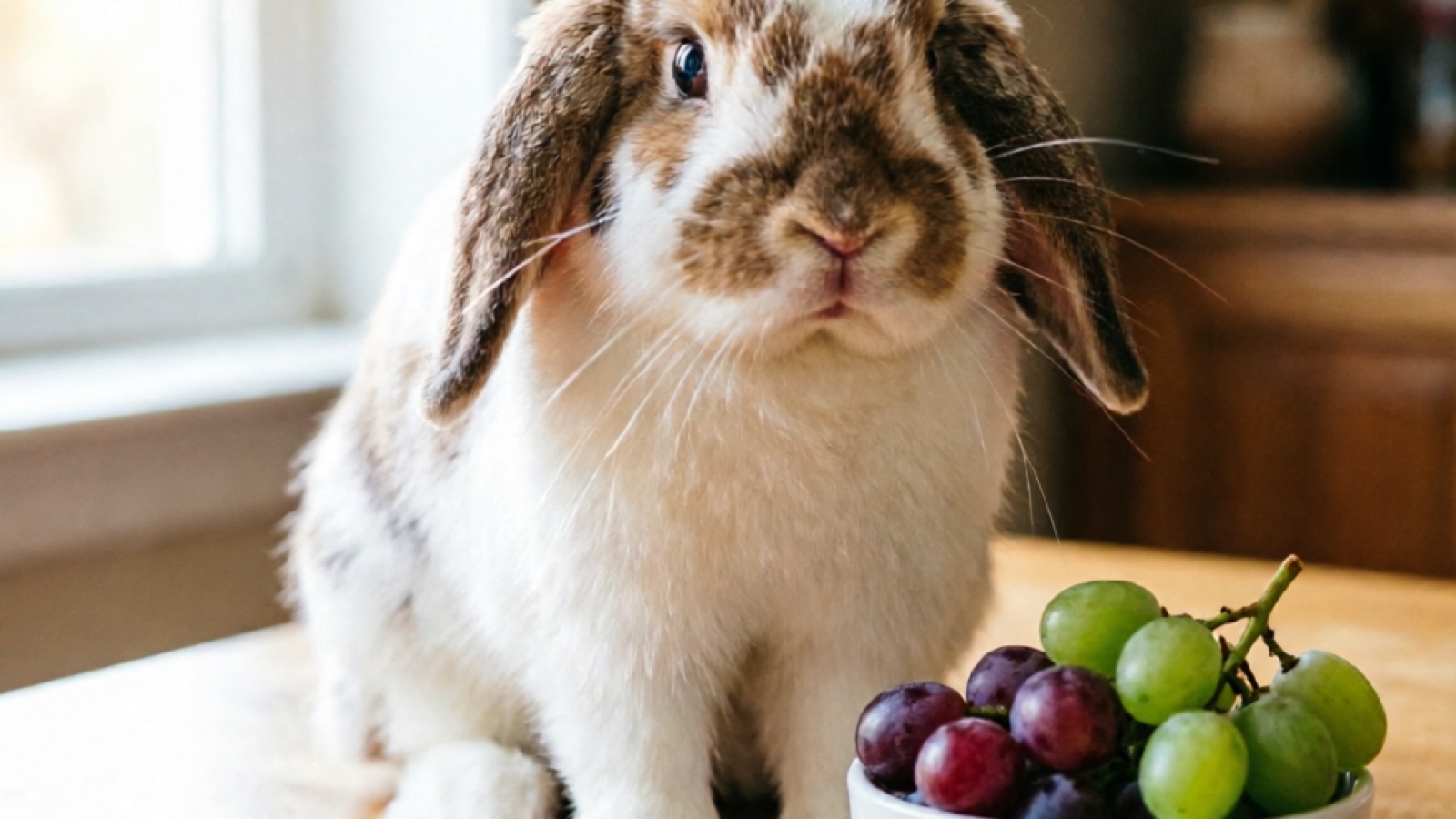
Can Rabbits Eat Grapes?
Yes — but grapes are one of the highest-sugar treats you can offer a rabbit, and portions must be strictly controlled.
💡 TL;DR: Medium rabbits (4-6 lbs): 1-2 small pieces (half a grape each), 1-2 times per week. Small breeds: one grape cut into pieces, once a week. Large breeds: 1-2 whole grapes, 1-2 times per week. Always wash, cut into pieces, and remove seeds.
I’ve offered grapes to my rabbits over the years, and their reaction is always the same — pure excitement. Rabbits have a natural sweet tooth, and grapes are one of the sweetest treats you can give them. But that enthusiasm is exactly why you need to be disciplined about portions. A rabbit will happily eat far more grapes than is safe for them.
The fundamental issue with grapes is the sugar content. A rabbit’s digestive system evolved to process high-fiber, low-sugar foods — primarily grass and hay, which contain less than 1g of sugar per 100g. Grapes, at 16g of sugar per 100g, are roughly 16 times sweeter than a rabbit’s natural diet. This isn’t a small mismatch — it’s a massive one. For the complete dietary framework, see our rabbit food guide and best rabbit food recommendations.
Grape Nutrition Facts for Rabbits
TRIXIE Rabbit Cage Outdoor Pen is a quality option worth considering for your setup.
USDA nutritional data — raw grapes (red or green, European variety), per 100g USDA FDC ID 09030 — “Grapes, red or green (European type, such as Thompson seedless), raw”:
| Nutrient (per 100g) | Amount | Relevance to Rabbits |
|---|---|---|
| Energy | 69 kcal | High calorie for a treat |
| Protein | 0.72g | Minimal protein |
| Fat | 0.16g | Very low fat |
| Carbohydrate | 18.1g | High carb content |
| Fiber | 0.9g | Very low fiber — dangerous for rabbits |
| Sugar | 16.3g | Very high sugar — 16x natural diet |
| Water | 80.5g | Good hydration |
| Calcium | 10mg | Low calcium |
| Phosphorus | 20mg | Low phosphorus |
| Potassium | 191mg | Heart and muscle function |
| Vitamin C | 3.2mg | Low vitamin C |
| Vitamin K | 14.6µg | Blood clotting |
| Vitamin B6 | 0.086mg | Metabolism |
The Numbers That Matter Most
Sugar at 16.3g per 100g: This is the highest sugar content among commonly recommended rabbit treats. Compare this to carrots at 4.7g, bell peppers at 4.2g, or cucumber at 1.7g. A single medium grape (about 5g) contains roughly 0.8g of sugar. That doesn’t sound like much, but for a digestive system designed to handle less than 1g of sugar per 100g of food, it’s significant.
Fiber at 0.9g per 100g: This is critically low. Rabbits need 20-25% fiber in their diet for proper gut motility. The low fiber in grapes means they contribute nothing to digestive health and can actually slow gut function if they displace hay in the diet. This is the real danger — not just the sugar itself, but the fact that sweet treats fill the stomach and reduce hay consumption.
Calories at 69 kcal per 100g: For a 4-pound rabbit that needs roughly 150-200 calories daily, a single grape provides about 3.5 calories — roughly 2% of daily needs. One or two grapes won’t cause weight gain, but regular overfeeding adds up quickly.
Grapes vs Other Safe Treats
| Food | Sugar (per 100g) | Fiber | Calories | Risk Level | Frequency |
|---|---|---|---|---|---|
| Grapes | 16.3g | 0.9g | 69 kcal | High sugar | 1-2x/week |
| Carrots | 4.7g | 2.8g | 41 kcal | Moderate | 1-2x/week |
| Bell peppers | 4.2g | 2.1g | 31 kcal | Low | Daily |
| Broccoli | 1.7g | 2.6g | 34 kcal | Very low | 2-3x/week |
| Cucumber | 1.7g | 0.5g | 16 kcal | Low | 2-3x/week |
| Tomatoes | 2.6g | 1.2g | 18 kcal | Low | 2x/week |
Grapes have nearly 4 times the sugar of carrots and 10 times the sugar of broccoli. Among all safe rabbit treats, grapes require the strictest portion control. When people ask “are grapes safe for rabbits,” the honest answer is yes — but they require more discipline from the owner than almost any other treat.
Benefits of Grapes for Rabbits
Many owners find that CAIQINLI Hay Feeder with Zipper works well for their pet’s needs.
Vitamins and Minerals
Grapes provide vitamin K (blood clotting), vitamin C (immune function), B vitamins (metabolism), and potassium (191mg per 100g for heart and muscle function). However, these nutrients are available in far greater quantities from safer vegetables like bell peppers and broccoli. The vitamin benefit is real but minor compared to the sugar risk.
Hydration
At 80.5% water, grapes provide meaningful hydration. While cucumber (96%) and tomatoes (95%) are more effective, grapes still help during hot weather.
Antioxidants
Red and purple grapes contain resveratrol and other polyphenol antioxidants that support cellular health. This is a genuine benefit, but too small to justify larger portions given the sugar content.
Training and Bonding Reward
In my experience, this is the most practical benefit of grapes. Rabbits are intelligent animals that respond well to positive reinforcement. A tiny piece of grape is one of the most effective training rewards — more motivating than carrots or pellets for most rabbits. I’ve used small grape pieces to encourage litter training, nail trimming cooperation, and coming when called. The key is using a very small piece — just enough to taste, not enough to fill up.
Mental Enrichment
Variety in diet provides mental stimulation. Offering a special treat like a grape adds excitement to your rabbit’s routine. Bored rabbits can develop destructive behaviors — see our rabbit behavior guide for more on mental health.
Risks and Precautions
For this purpose, MidWest 42-Inch Exercise Pen is a popular choice among pet owners.
High Sugar — The Primary Danger
At 16.3g of sugar per 100g, grapes pose the highest sugar risk among common rabbit treats. A rabbit’s digestive system is specifically adapted to ferment fiber through hindgut fermentation — a slow, continuous process that produces essential nutrients. When you introduce concentrated sugar, it disrupts this delicate balance.
Consequences of excess sugar in rabbits:
- GI stasis — the most serious risk. Excess sugar slows gut motility, potentially leading to complete digestive shutdown. GI stasis is painful and potentially fatal within 12-24 hours. Symptoms include reduced appetite, smaller droppings, bloating, and lethargy.
- Obesity — extra calories from sugar convert to fat. Diet directly impacts rabbit lifespan.
- Dental disease — sugar promotes bacterial growth in the mouth. Rabbit teeth grow continuously, and dental problems can become severe.
- Enterotoxemia — dangerous bacterial overgrowth in the gut triggered by high-sugar, low-fiber foods.
Choking Hazard
Whole grapes are roughly the right size to lodge in a rabbit’s throat. Rabbits don’t always chew their food thoroughly — especially when they’re excited about a treat. Always cut grapes into pieces before serving.
Diarrhea
Sudden introduction of sugary food can cause diarrhea in rabbits. Rabbit diarrhea is more serious than in many other pets because it can rapidly lead to dehydration and GI stasis. If your rabbit develops loose stool after eating grapes:
- Remove all fresh food immediately
- Provide unlimited hay and fresh water only
- Monitor droppings every few hours
- If diarrhea persists beyond 12 hours or your rabbit stops eating, contact a rabbit-savvy vet immediately
Nutritional Displacement
When a rabbit fills up on grapes, it eats less hay — and hay is the single most important component of a rabbit’s diet. The low fiber (0.9g per 100g) means grapes provide no digestive benefit. Hay should always be 80%+ of total food intake.
Pesticide Residue
Grapes are thin-skinned and consistently appear on the EWG’s “Dirty Dozen” list. Wash thoroughly under running water. For extra safety, soak in a 1:3 vinegar-water solution for 2-3 minutes. Organic grapes are preferable.
Serving Guide by Breed and Size
Rabbit serving sizes for grapes depend primarily on body weight, not breed name. Here are guidelines based on common breeds:
Small Breeds (2-4 lbs)
Breeds: Netherland Dwarf, Holland Lop, Lionhead, Polish, Dwarf Hotot
- Amount: One grape, cut into 2-3 small pieces
- Frequency: Once a week maximum
- Why smaller: Small rabbits have less body mass to process sugar. A single grape represents a larger percentage of their caloric intake compared to a large breed.
In my experience, small breeds are the most at risk for overfeeding because owners underestimate how concentrated sugar affects a 2-3 pound animal. I’d recommend starting with just one small piece (roughly a third of a grape) for the first feeding and waiting 48 hours. I’ve seen Netherland Dwarfs develop loose stool from a single whole grape — their tiny systems simply can’t handle that much sugar at once.
Medium Breeds (4-8 lbs)
Breeds: Mini Lop, English Spot, Rex, Dutch, Angora
- Amount: 1-2 small pieces (about half a grape each)
- Frequency: 1-2 times per week
- Preparation: Cut into halves or quarters, seeds removed if present
Medium breeds tolerate grapes reasonably well in proper portions. The standard “half a grape” serving is calibrated for this size category.
Large Breeds (8-12+ lbs)
Breeds: Flemish Giant, French Lop, Giant Chinchilla, New Zealand
- Amount: 1-2 whole grapes, cut in half
- Frequency: 1-2 times per week
- Why more: Larger body mass processes sugar more effectively. But even a 15-pound Flemish Giant shouldn’t have more than 2 grapes per serving.
Baby Rabbits (Under 12 Weeks)
Baby rabbits should not eat grapes. Their digestive systems are not developed enough to handle concentrated sugar. The proper diet progression is:
- 0-6 weeks: Mother’s milk + alfalfa hay
- 6-8 weeks: Introduce pellets gradually
- 8-12 weeks: Introduce small amounts of leafy greens
- 12+ weeks: Fruit treats like grapes can be introduced in tiny amounts — start with one small piece and wait 48 hours
Senior Rabbits
Senior rabbits can eat grapes in the same portions as adults of similar size. However, senior rabbits often have slower metabolisms and may be less active, making them more susceptible to weight gain. If your senior rabbit is overweight, reduce treat frequency to once a week or eliminate sugary treats entirely.
How to Prepare Grapes for Your Rabbit
Step 1: Choose Fresh Grapes
Select firm, plump grapes that are firmly attached to the stem. Avoid grapes that are wrinkled, mushy, brown, or leaking juice. The skin should be intact with a slight bloom (the powdery coating). Red and purple grapes have higher antioxidant content, while green grapes are slightly lower in sugar — both are safe.
Step 2: Wash Thoroughly
Remove grapes from the stem and place in a strainer. Rinse under cool running water for 15-20 seconds, gently agitating them. For extra safety, soak in a 1:3 vinegar-water solution for 2-3 minutes, then rinse thoroughly. Pat dry with a clean paper towel.
Step 3: Remove Seeds (If Present)
Most commercial grapes (Thompson Seedless, Flame Seedless) are seedless. If you’re using seeded grapes, cut them open and remove all seeds. Grape seeds are small enough to pose a choking risk for rabbits and provide no nutritional benefit.
Step 4: Cut Into Pieces
This is non-negotiable — never offer whole grapes. Cut each grape into halves or quarters depending on your rabbit’s size:
- Small breeds: cut into 3-4 pieces
- Medium breeds: cut into halves
- Large breeds: cut in half (more for easier eating than safety)
Step 5: Serve at Room Temperature
Don’t serve grapes straight from the refrigerator. Cold fruit can cause digestive upset in rabbits. Let the pieces sit at room temperature for 5-10 minutes before offering.
Step 6: Remove Uneaten Pieces After 1-2 Hours
Grapes at room temperature spoil quickly. Check food bowls and cage floor for uneaten pieces. Rabbits sometimes push food into corners or bedding where it can develop mold.
What to Avoid
Raisins and Dried Grapes
Dried grapes concentrate sugar roughly 4 times per gram and the sticky texture poses a choking hazard. Most commercially dried grapes also contain added sugar. Always serve fresh grapes only.
Grape Juice
Concentrated sugar with zero fiber. Never offer any fruit juice to rabbits.
Frozen Grapes
Frozen grapes straight from the freezer are too cold and can cause digestive shock. If using frozen grapes, thaw completely and bring to room temperature first.
Canned or Preserved Grapes
Canned grapes, fruit cocktail, grape preserves, or any processed grape product contains added sugar, syrup, and preservatives. Only raw, fresh grapes are safe.
Grape Stems
Grape leaves are safe in small amounts, but the woody stems are tough and pose a choking risk. Remove all stems before serving.
Overfeeding
The biggest risk isn’t toxicity — it’s the owner’s inability to resist pleading eyes. I’ve seen owners feed half a dozen grapes daily, and the result is almost always digestive problems within weeks. One or two small pieces, one or two times per week — that’s the absolute maximum.
Using Grapes as a Daily Reward
Even tiny daily amounts of sugar accumulate and disrupt gut bacteria over time. For daily training, use small pieces of bell pepper or a single pellet. Reserve grapes for weekly special occasions.
Safe Alternatives to Rotate With Grapes
For a balanced rotation, alternate grapes with these lower-sugar options:
Daily vegetables: Bell peppers (4.2g sugar, high vitamin C), romaine lettuce (low calorie, good hydration)
Regular treats (2-3x/week): Carrots (4.7g sugar), broccoli (1.7g sugar), cucumber (1.7g sugar)
Fruit treats (1-2x/week): Grapes (16.3g sugar — strictest portions), apple pieces (10.4g, remove seeds), strawberries (4.9g), tomatoes (2.6g)
A good rotation: daily bell pepper + greens, Monday — carrot, Wednesday — broccoli, Friday — half a grape, Sunday — cucumber. For comprehensive care, see our setup guide, grooming guide, litter training, and health guide.
Other Foods Your Rabbit Can Eat
Each link leads to a full safety guide with serving recommendations.
Vegetables
- Can Rabbits Eat Carrots?
- Can Rabbits Eat Bell Peppers?
- Can Rabbits Eat Broccoli?
- Can Rabbits Eat Cucumber?
- Can Rabbits Eat Tomatoes?
Core Guides
- Rabbit Food Guide | Best Rabbit Food
- Rabbit Care Guide | Rabbit Health
- Rabbit Lifespan | Rabbit Behavior
- Rabbit Grooming | Litter Training
- Rabbit Sounds
Housing and Supplies
- Best Rabbit Cage | Rabbit Cage Size
- Best Rabbit Toys | Best Rabbit Treats
- Best Rabbit Harness | Best Rabbit Litter
- DIY Hutch Plans
Breed Guides
Product Recommendations
Here are some products mentioned in this guide:
Frequently Asked Questions
Can rabbits eat grapes?
Yes, in very small amounts — 1-2 small pieces (half a grape each) for a medium rabbit, 1-2 times per week. Not toxic, but 16.3g sugar per 100g (16x natural diet) demands strict portions. Always wash, cut, remove seeds, serve at room temperature.
Can rabbits eat grapes everyday?
No. Daily sugar causes GI stasis, obesity, dental disease, and enterotoxemia. Limit to 1-2 times per week maximum.
Can baby rabbits eat grapes?
No. Under 12 weeks, their digestive systems can’t handle concentrated sugar. Follow proper progression: milk + alfalfa hay → pellets at 6-8 weeks → greens at 8-12 weeks → fruit treats after 12 weeks.
How many grapes can a rabbit eat?
Medium (4-6 lbs): 1-2 small pieces, 1-2x/week. Small breeds (Netherland Dwarf, Holland Lop): one grape in 2-3 pieces, once/week. Large breeds (Flemish Giant): 1-2 whole grapes cut in half, 1-2x/week.
Can rabbits eat grape stems and leaves?
Leaves are safe in small amounts with more fiber than the fruit. Stems are tough — remove before serving. A few pesticide-free grape leaves make a better treat than the grapes themselves.
Can rabbits eat raisins?
No. Drying concentrates sugar ~4x per gram and the sticky texture is a choking hazard. Serve fresh grapes only, in strict moderation.
Can rabbits eat green grapes?
Yes. Green grapes have slightly less sugar (~15g vs 16g per 100g), but the difference is small. Both require the same strict portion limits.
Are grapes safe for rabbits?
Safe in very small, infrequent portions. Not toxic like avocado or rhubarb. The danger is overfeeding, not the grapes themselves. At 1-2 small pieces, 1-2 times per week, grapes are a safe occasional reward.