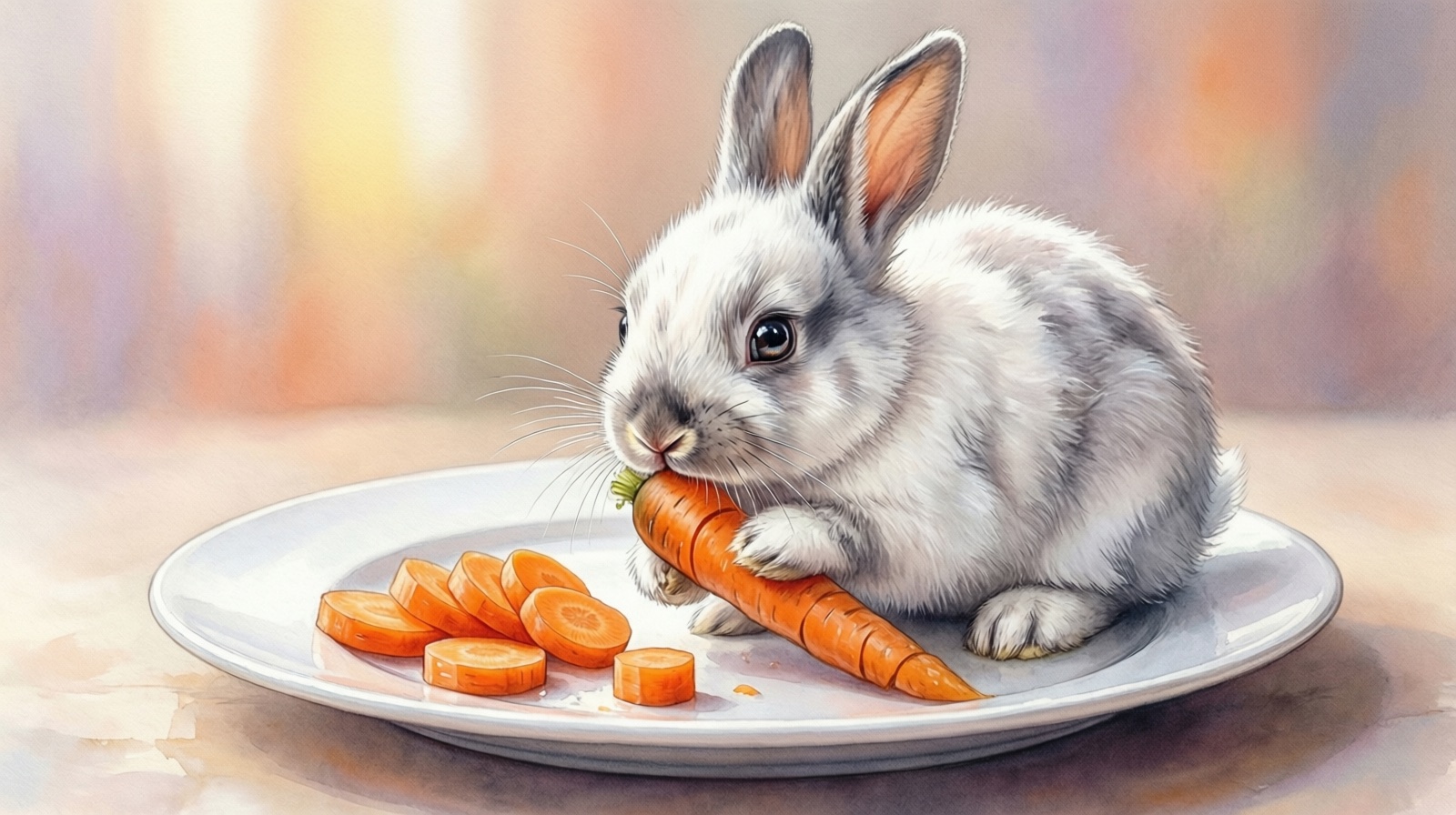
Can Rabbits Eat Carrots? (The Bugs Bunny Myth)
Yes — but the Bugs Bunny myth is wrong.
Myth: Rabbits eat carrots as their main food. Reality: Wild rabbits almost never eat carrots — which means can rabbits eat carrots is a different question than most people think. Root vegetables are not part of a rabbit’s natural diet.
The image of a rabbit happily munching a whole carrot is one of the most persistent myths in pet care — and it originated in Hollywood, not nature. Bugs Bunny first ate a carrot on screen in 1940, a gag borrowed from Clark Gable’s character in It Happened One Night (1934). The joke stuck, and generations of pet owners have been feeding rabbits entirely wrong ever since.
Can rabbits eat carrots? Yes — as an occasional treat, not a daily food. The rabbits carrots myth has caused more dietary harm than almost any other pet misconception. Wild rabbits eat grass, weeds, leafy greens, and flowers. Root vegetables like carrots are cultivated foods that wild rabbits would rarely encounter and certainly wouldn’t eat in large quantities.
When asking can rabbits eat carrots, remember a rabbit’s digestive system evolved for high-fiber, low-sugar foods. Hay and grass — with less than 1g of sugar per 100g — are what rabbits are built to eat. For context, 4.7g sugar per 100g is nearly five times the sugar content of a rabbit’s natural diet.
| Part | Safe? | Notes |
|---|---|---|
| Raw carrot (root) | ✅ Safe | 1-2 thin slices, 1-2x/week |
| Skin | ✅ Safe | Wash thoroughly, more fiber |
| Carrot tops/leaves | ✅ Safe | Actually healthier than the root |
| Cooked carrot | ❌ No | Loses nutrients, wrong texture |
| Dried carrot | ❌ Not recommended | Sugar concentrated ~5x |
| Whole carrot | ❌ No | Choking hazard — always cut |
For the complete dietary framework, see our rabbit food guide.
Carrot Nutrition Facts for Rabbits
USDA nutritional data — raw carrot, per 100g USDA FoodData Central FDC ID 170393:
| Nutrient | Amount per 100g | Relevance to Rabbits |
|---|---|---|
| Calories | 41 kcal | ⚠️ Higher than most daily vegetables |
| Water | 88g (88%) | Good hydration |
| Fiber | 2.8g | ✅ Decent — but not enough to justify frequent feeding |
| Sugar | 4.7g | ⚠️ High — 5x a rabbit’s natural diet |
| Vitamin A | 16,700 IU | ✅ Excellent — supports vision and immunity |
| Potassium | 320mg | ✅ Good for heart and muscle function |
| Calcium | 33mg | ⚠️ Moderate — excess increases bladder sludge risk |
| Vitamin C | 5.9mg | Not needed — rabbits synthesize their own vitamin C |
How Carrots Compare to Safe Daily Vegetables
A rabbit’s ideal daily vegetables should be low in sugar and high in fiber. Carrots fall short on both counts when compared to the best options:
| Vegetable | Sugar (per 100g) | Fiber (per 100g) | Safe for Daily Feeding? |
|---|---|---|---|
| Romaine lettuce | 1.2g ✅ | 2.1g | ✅ Yes — excellent daily staple |
| Cilantro | 0.9g ✅ | 2.8g | ✅ Yes — low sugar, high fiber |
| Celery | 1.3g ✅ | 1.6g | ✅ Yes — good hydration (see our celery guide) |
| Bell pepper | 2.6g ⚠️ | 1.7g | ⚠️ Occasional treat |
| Carrot | 4.7g ⚠️ | 2.8g | ❌ No — treat only, 1-2x/week |
When considering can rabbits eat carrots, they have more sugar than every common daily vegetable on this list. The 4.7g figure might not sound extreme, but rabbits evolved eating grasses with less than 1g of sugar per 100g. A diet high in sugar disrupts the gut balance — this is why can rabbits eat carrots only as treats.
Why Hay Is Non-Negotiable
When asking can rabbits eat carrots, remember hay must remain 80-90% of a rabbit’s diet — no exceptions. Oxbow Orchard Grass Hay ($9.99) provides the long-strand fiber that keeps the gut moving and teeth properly worn down. Carrots cannot replace hay — not even close. Hay is non-negotiable — a rabbit without adequate hay develops GI stasis, a painful and frequently fatal condition where the digestive system simply stops moving.
For safe treat alternatives that are portion-controlled, Kaytee Country Harvest Treat Blend ($14.39) offers a mixed fruit and vegetable blend that provides variety without overfeeding any single high-sugar food. Like all treats, use it sparingly — a few pieces per week at most.
A rabbit’s rabbit lifespan directly correlates with diet quality. Rabbits fed primarily hay and appropriate vegetables live significantly longer than those fed sugary treats and insufficient fiber.
Are Carrots Good or Bad for Rabbits?
Can rabbits eat carrots? The honest answer: good in small amounts, bad when overfed. The distinction matters because most rabbit owners dramatically overfeed them.
What carrots do well (in small amounts):
- Vitamin A (16,700 IU per 100g): Supports eye health, immune function, and skin condition. This is carrot’s strongest nutritional asset — few vegetables deliver this much beta-carotene.
- Fiber (2.8g per 100g): Contributes to digestive regularity, though hay remains the primary fiber source.
- Enrichment and bonding: Rabbits genuinely love the taste of carrots. Using tiny carrot pieces as training rewards or bonding treats is one of the best reasons to keep them in your rabbit’s diet.
What goes wrong with overfeeding:
- Obesity: For can rabbits eat carrots, 4.7g sugar per 100g adds up quickly. Rabbits are sedentary animals that burn very few calories. An overweight rabbit struggles with mobility, grooming, and cardiovascular health. I’ve seen rabbits that were fed carrots daily become visibly overweight within two months.
- GI stasis: This is the most dangerous consequence. Excess sugar disrupts the cecal bacteria population, slowing or stopping gut motility. GI stasis is a medical emergency — for can rabbits eat carrots overfeeding, rabbits can die within 12-24 hours if not treated. For more on recognizing and preventing this condition, see our rabbit health guide.
- Dental disease: Sugar residue feeds oral bacteria, leading to tooth decay and gum infections — the exact opposite of what most people assume.
- Bladder sludge: The 33mg calcium per 100g is moderate but contributes to calcium buildup in the urinary tract when fed frequently.
Are Carrots Good for Rabbits’ Teeth?
No — this is one of the most widespread rabbit myths. Can rabbits eat carrots for dental health? The idea is completely backwards.
A rabbit’s teeth grow continuously throughout its life — roughly 3-4 inches per year. In the wild, grinding tough, fibrous grasses and hay keeps teeth at the proper length. The lateral (side-to-side) chewing motion that hay requires is what grinds teeth evenly.
Carrot flesh is soft. However, biting into a slice barely engages the grinding motion that hay demands. The sugar in carrots actually promotes tooth decay — another reason can rabbits eat carrots only as treats by feeding bacteria in the mouth. Feeding carrots for dental health is like feeding a child candy for tooth strength.
Only long-strand hay and grass properly wear rabbit teeth. If your rabbit needs dental support, increase hay availability — don’t add more carrots.
Can Rabbits Eat Carrot Tops and Leaves?
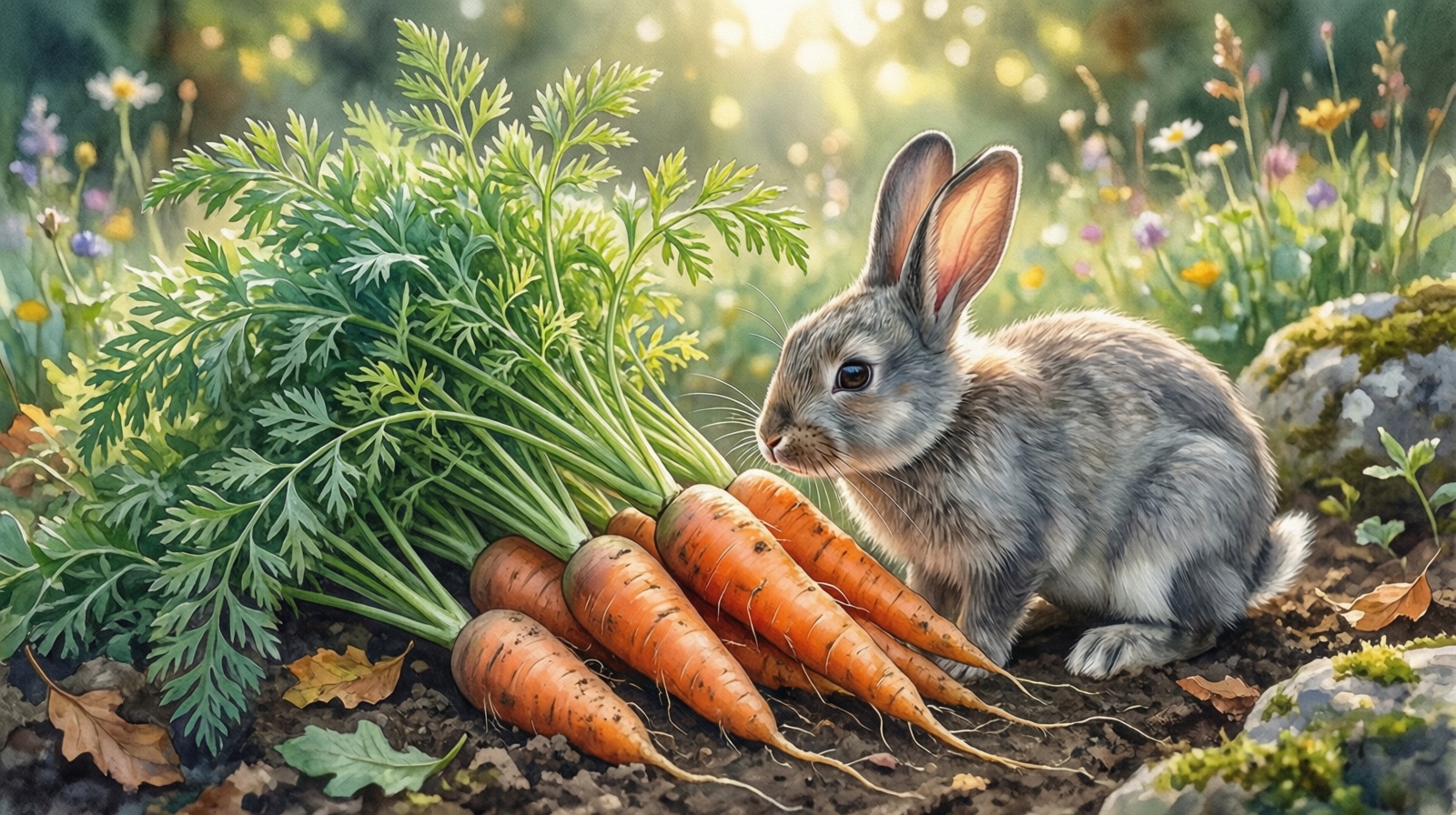
Can rabbits eat carrot tops? Yes — they’re actually healthier than the carrot root. This surprises most owners, but the nutritional data is clear.
Carrot Tops vs Carrot Root
| Nutrient | Carrot Tops (per 100g) | Carrot Root (per 100g) |
|---|---|---|
| Sugar | ~1.5g ✅ | 4.7g ⚠️ |
| Fiber | ~3.2g ✅ | 2.8g |
| Calcium | ~190mg ⚠️ | 33mg ✅ |
| Potassium | ~300mg | 320mg |
| Vitamin K | High ✅ | Low |
For can rabbits eat carrots, carrot tops have roughly one-third the sugar of the root, with more fiber and significantly more vitamin K. The tradeoff is higher calcium — 190mg per 100g, which means carrot tops should still be limited to avoid bladder sludge.
Feeding guidelines for carrot tops: 2-3 small handfuls per week. Wash thoroughly to remove soil. Organic is preferred since the tops are the most pesticide-exposed part of the plant. If you buy carrots with tops still attached at a farmer’s market, you get both the treat root and the more nutritious greens.
Can Rabbits Eat Carrot Leaves?
Carrot leaves and carrot tops are the same thing — the green, feathery foliage growing above ground. Yes, rabbits can eat them. The feeding guidelines are identical to carrot tops: wash well, feed in moderation (2-3x per week), and watch for any signs of digestive upset.
Carrot tops pair well with other safe vegetables. Can rabbits eat cucumber and can rabbits eat tomatoes are common companion questions — both are treat-category foods that should be rotated with carrots throughout the week.
How Much Carrot Can Rabbits Eat?
| Rabbit Weight | Serving Size | Max per Week |
|---|---|---|
| Under 4 lbs (mini/dwarf breeds, like the Mini Rex Rabbit) | 1-2 thin slices (~15g) | 1-2 times |
| 4-8 lbs (small-medium breeds) | 2-3 thin slices (~25g) | 2 times |
| 8-12 lbs (large breeds, including the Angora Rabbit) | 3-4 thin slices (~35g) | 2-3 times |
| Over 12 lbs (giant breeds) | 4-5 thin slices (~45g) | 2-3 times |
Slice thickness: approximately 3-5mm — about the thickness of two coins stacked.
Step-by-Step Feeding Guide
- Wash thoroughly — scrub under cool water to remove dirt and pesticide residue
- Peel or leave skin on — skin is safe and adds fiber, but wash extra well if leaving it
- Cut into thin slices — 3-5mm thick for standard rabbits, thinner for dwarf breeds
- Start with one slice on the first feeding — even if your rabbit is an adult
- Monitor stool for 24 hours — look for loose, misshapen, or reduced droppings
- If stool is normal — maintain the same portion for the next feeding
- Remove uneaten pieces after 2 hours — carrot oxidizes and can harbor bacteria at room temperature
- Track frequency on a calendar — it’s easy to accidentally exceed 1-2x per week
Dried Carrots for Rabbits
Not recommended. Drying removes water while concentrating everything else. Fresh carrots have 4.7g sugar per 100g; dried carrots contain approximately 20-25g sugar per 100g — a 4-5x concentration. At that level, even a small piece of dried carrot delivers more sugar than a rabbit should consume from treats in an entire day. Stick with fresh, raw carrot in controlled portions.
Can Baby Rabbits Eat Carrots?
Can baby rabbits eat carrots? No — rabbits under 12 weeks should not eat carrots at all. A baby rabbit’s digestive system is immature and highly sensitive to sugar.
| Age | What to Feed | Carrot? |
|---|---|---|
| 0-6 weeks | Mother’s milk + alfalfa hay only | ❌ Absolutely no treats |
| 6-8 weeks | Same + introduce pellets gradually | ❌ No vegetables yet |
| 8-12 weeks | Timothy hay + pellets + introduce dark leafy greens | ❌ No carrots — start with romaine and cilantro |
| 12+ weeks | Full adult diet | 1 thin slice, 1-2x/week max |
Why the strict timeline matters: A baby rabbit’s cecum (the fermentation chamber of their digestive system) is still developing its bacterial population. High sugar from carrots can cause a catastrophic bacterial imbalance, leading to enterotoxemia — a condition where toxin-producing bacteria multiply rapidly in the gut. Enterotoxemia can kill a baby rabbit within hours.
Introducing vegetables at 8-12 weeks: Start with small amounts of romaine lettuce or cilantro — low-sugar, high-fiber leafy greens. Introduce one vegetable at a time, waiting 3-4 days between each new food. Only after your rabbit is comfortably eating a variety of leafy greens (around 12 weeks) should you consider offering a tiny piece of carrot as a treat.
Conclusion
The Bugs Bunny myth about can rabbits eat carrots has done rabbits a disservice for over 80 years. For can rabbits eat carrots, they’re safe treats — not daily foods, not dental tools, and certainly not dietary staples. The reality is that a rabbit’s diet should be 80-90% hay, supplemented with daily low-sugar vegetables like romaine lettuce and cilantro.
Three rules to remember:
- 1-2 times per week, not daily — 4.7g sugar per 100g is too high for regular feeding
- Thin slices only, never whole — choking hazard and portion control
- Hay does the dental work, not carrots — carrot flesh is too soft; only long-strand fiber grinds teeth properly
Carrot tops are actually the more nutritious part — lower sugar, more fiber, more vitamin K. If you have access to them, they’re the better choice.
For the complete dietary framework, see our rabbit food guide. For recognizing and preventing the most dangerous diet-related condition, our rabbit health guide covers GI stasis, dental disease, and bladder sludge.