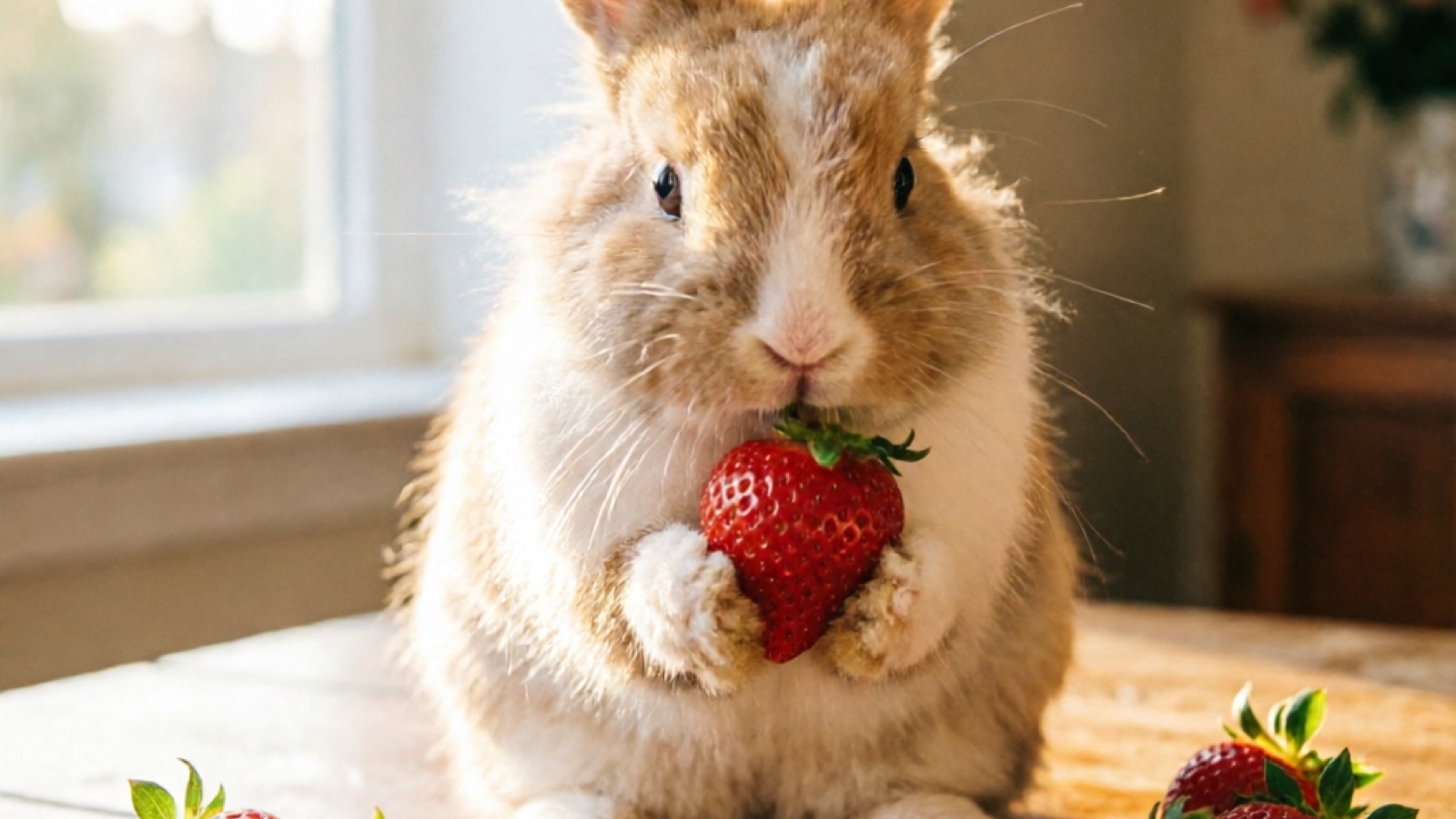
Can Rabbits Eat Strawberries?
Yes — strawberries are one of the better fruit treats you can offer a rabbit, but they’re still a treat, not a staple food.
💡 TL;DR: Medium rabbits (4-6 lbs): half a strawberry, 1-2 times per week. Small breeds: a quarter of a strawberry, once a week. Large breeds: half to one whole strawberry, 1-2 times per week. Always wash, remove the stem, and cut into bite-sized pieces.
I’ve been offering strawberries to my rabbits for years, and they consistently rank as one of the most enthusiastically received treats — right up there with grapes and carrots. But unlike grapes, which carry serious sugar concerns at 16g per 100g, strawberries sit in a more moderate range at roughly 5-6g of sugar per 100g. That doesn’t mean rabbits can eat them freely — it means the margin for error is slightly wider, which is reassuring for owners who want to offer variety without anxiety.
The key thing to understand is that a rabbit’s digestive system evolved to process high-fiber, low-sugar foods — primarily grass and hay, which contain less than 1g of sugar per 100g. Strawberries, at 5-6g of sugar per 100g, are roughly 5-6 times sweeter than a rabbit’s natural diet. That’s a significant gap, but it’s far less extreme than grapes at 16 times. For the complete dietary framework, see our rabbit food guide and best rabbit food recommendations.
Strawberry Nutrition Facts for Rabbits
VISCOO 12-Panel Small Animal Playpen is a quality option worth considering for your setup.
USDA nutritional data — raw strawberries, per 100g USDA FDC ID 169365 — “Strawberries, raw”:
| Nutrient (per 100g) | Amount | Relevance to Rabbits |
|---|---|---|
| Energy | 32 kcal | Low calorie for a treat |
| Protein | 0.67g | Minimal protein |
| Fat | 0.30g | Very low fat |
| Carbohydrate | 7.68g | Moderate carb |
| Fiber | 2.0g | Low fiber — not a substitute for hay |
| Sugar | 4.9g | Moderate sugar — 5-6x natural diet |
| Water | 90.95g | Good hydration |
| Calcium | 16mg | Low calcium |
| Phosphorus | 24mg | Low phosphorus |
| Potassium | 153mg | Heart and muscle function |
| Vitamin C | 58.8mg | High vitamin C — notable benefit |
| Vitamin K | 2.2µg | Blood clotting |
| Folate | 24µg | Cell growth |
| Manganese | 0.39mg | Bone metabolism |
The Numbers That Matter Most
Sugar at 4.9g per 100g: This is one of the lowest sugar contents among common rabbit fruits. Compare this to grapes at 16.3g, apples at 10.4g, mango at 13.7g, or bananas at 12g. Strawberries have roughly one-third the sugar of grapes, making them one of the safer fruit choices. However, 4.9g is still nearly 5 times more sugar than hay or grass, so portions still need to be controlled.
Vitamin C at 58.8mg per 100g: This is the standout nutrient. While rabbits synthesize their own vitamin C internally (unlike guinea pigs), the antioxidant properties still support immune function and overall health. No other commonly offered rabbit treat comes close to this vitamin C concentration — bell peppers are the closest at roughly 80-120mg depending on color.
Fiber at 2.0g per 100g: Better than grapes (0.9g) but still far below what rabbits need. A rabbit requires 20-25% dietary fiber for proper gut motility. Strawberries contribute a small amount but should never be considered a fiber source — that role belongs exclusively to hay.
Calories at 32 kcal per 100g: Very low calorie compared to most fruits. For a 4-pound rabbit needing roughly 150-200 calories daily, a half strawberry (about 5g) provides only about 1.6 calories — less than 1% of daily needs. This makes strawberries one of the least calorie-dense treats available, which is a real advantage over higher-calorie options like grapes (69 kcal/100g) or bananas (89 kcal/100g).
Strawberries vs Other Safe Treats
| Food | Sugar (per 100g) | Fiber | Calories | Risk Level | Frequency |
|---|---|---|---|---|---|
| Grapes | 16.3g | 0.9g | 69 kcal | High sugar | 1-2x/week |
| Carrots | 4.7g | 2.8g | 41 kcal | Moderate | 1-2x/week |
| Strawberries | 4.9g | 2.0g | 32 kcal | Moderate | 1-2x/week |
| Bell peppers | 4.2g | 2.1g | 31 kcal | Low | Daily |
| Broccoli | 1.7g | 2.6g | 34 kcal | Very low | 2-3x/week |
| Cucumber | 1.7g | 0.5g | 16 kcal | Low | 2-3x/week |
| Tomatoes | 2.6g | 1.2g | 18 kcal | Low | 2x/week |
Strawberries sit right alongside carrots in the moderate-sugar range, with the advantage of higher vitamin C and fewer calories. Among fruits specifically, strawberries are one of the safest choices you can make for your rabbit. But they’re still a treat — not a daily food.
Benefits of Strawberries for Rabbits
Many owners find that Amazon Basics Octagonal Exercise Pen works well for their pet’s needs.
High Vitamin C Content
At 58.8mg per 100g, strawberries are one of the most vitamin C-rich foods you can offer a rabbit. While rabbits produce their own vitamin C internally, additional dietary vitamin C supports immune function and acts as an antioxidant that helps protect cells from damage. This is a genuine nutritional benefit that most other rabbit treats can’t match — only bell peppers come close.
Antioxidants
Strawberries are packed with antioxidants, including anthocyanins (which give them their red color), ellagic acid, and quercetin. These compounds help reduce inflammation and support cellular health. The antioxidant content in strawberries is actually higher than in most other commonly offered rabbit fruits.
Hydration
At roughly 91% water, strawberries provide meaningful hydration — especially useful during warm weather or for rabbits that don’t drink enough from their water bottle. While cucumber (96%) is more effective for pure hydration, strawberries offer a more appealing flavor that can encourage reluctant drinkers.
Low Calorie Density
At just 32 kcal per 100g, strawberries are among the lowest-calorie fruit treats available. A typical serving (half a strawberry, about 5g) delivers only 1.6 calories. This means you can offer a more visually substantial treat without the calorie load of higher-density options like grapes or bananas.
Fiber
While not a substitute for hay, the 2.0g of fiber per 100g in strawberries is better than many other fruits. The combination of fiber and water content means strawberries are less likely to cause digestive upset than low-fiber, high-sugar alternatives.
Training and Bonding
In my experience, strawberries are one of the most effective bonding tools available. My Holland Lop would come running from across the room at the sound of a strawberry being washed. I’ve used tiny strawberry pieces to encourage litter training, carrier acceptance, and even nail trimming cooperation. The strong aroma and sweet flavor make them highly motivating — just remember to keep pieces very small so your rabbit doesn’t fill up.
Mental Enrichment
Dietary variety prevents boredom. Offering different treats on different days — strawberries one day, carrots another — keeps your rabbit engaged and curious. Bored rabbits can develop destructive behaviors like cage chewing, which we cover in our rabbit behavior guide.
Risks and Precautions
For this purpose, Choco Nose No-Drip Water Bottle is a popular choice among pet owners.
Sugar Content — The Primary Concern
At 4.9g per 100g, strawberries are moderate in sugar — not dangerous like grapes, but still significantly above a rabbit’s natural diet. A rabbit’s digestive system relies on hindgut fermentation of fiber, a slow and continuous process. Introducing sugar disrupts the gut bacteria balance and can slow gut motility.
Consequences of excess sugar in rabbits:
- GI stasis — the most serious risk. Sugar slows or stops gut movement, potentially leading to complete digestive shutdown. GI stasis is painful and can become fatal within 12-24 hours if untreated. Symptoms include reduced appetite, smaller or fewer droppings, bloating, teeth grinding, and lethargy.
- Obesity — excess calories from sugar convert to fat. Weight directly impacts rabbit lifespan, and obese rabbits face higher risks of joint problems, heart disease, and fatty liver disease.
- Dental disease — sugar promotes harmful bacteria in the mouth. Since rabbit teeth grow continuously throughout their lives, dental problems can escalate quickly and become expensive to treat.
- Enterotoxemia — a dangerous overgrowth of harmful bacteria (particularly Clostridium) in the gut, triggered by high-sugar, low-fiber conditions.
The good news is that strawberries’ moderate sugar content means you’d need to overfeed more significantly to cause problems compared to high-sugar fruits. But the risk is real — especially for small breeds with less body mass to absorb the sugar.
Pesticide Residue
Strawberries consistently rank at or near the top of the Environmental Working Group’s “Dirty Dozen” list — meaning they’re among the most pesticide-contaminated fruits commercially available. The bumpy texture traps pesticide residue in all those tiny seed pockets, making thorough washing essential. I always use a 1:3 vinegar-water soak for 2-3 minutes, then rinse under cool running water for at least 15 seconds. Organic strawberries are strongly preferred for rabbits.
Choking Hazard
While softer than many fruits, a whole strawberry is still large enough to cause choking in small breeds. Rabbits don’t always chew thoroughly when they’re excited about food. Always cut strawberries into appropriately sized pieces before serving.
Diarrhea
Introducing strawberries too quickly or in too large a portion can cause diarrhea. Rabbit diarrhea is more dangerous than in many other pets because it can rapidly lead to dehydration and GI stasis. If your rabbit develops loose stool after eating strawberries:
- Remove all fresh food and treats immediately
- Provide unlimited Timothy hay and fresh water only
- Monitor droppings every few hours
- If diarrhea persists beyond 12 hours, your rabbit stops eating, or you notice bloating, contact a rabbit-savvy vet immediately
Nutritional Displacement
This is the subtle risk that catches many owners off guard. When a rabbit fills up on sweet treats — even relatively moderate ones like strawberries — it eats less hay. And hay is the single most important component of a rabbit’s diet, making up 80% or more of total food intake. The low fiber content of strawberries (2.0g per 100g vs the 20-25% a rabbit needs) means they contribute almost nothing to digestive health.
Allergic Reactions
While rare, some rabbits may have individual sensitivities to strawberries. Watch for signs of an allergic reaction after the first feeding: skin irritation around the mouth, swelling, excessive scratching, or digestive upset beyond mild loose stool. If you notice any of these, discontinue strawberries and consult your vet.
Serving Guide by Breed and Size
Serving sizes depend primarily on body weight rather than breed name. Here are guidelines based on common rabbit breeds:
Small Breeds (2-4 lbs)
Breeds: Netherland Dwarf, Holland Lop, Lionhead, Polish, Dwarf Hotot
- Amount: A quarter of a medium strawberry, cut into small pieces
- Frequency: Once a week maximum
- Why smaller: Small rabbits have less body mass to process sugar. A quarter strawberry may not look like much, but for a 2-3 pound animal, it’s a meaningful sugar dose.
I’ve found that small breeds are especially enthusiastic about strawberries, which makes portion control harder. My Holland Lop would practically vibrate with excitement when he smelled strawberries. I learned to cut the pieces even smaller than I initially thought necessary — it stretches the treat across more bites and reduces the sugar concentration per mouthful.
Medium Breeds (4-8 lbs)
Breeds: Mini Lop, English Spot, Rex, Dutch, Angora
- Amount: Half a medium strawberry, cut into 2-3 pieces
- Frequency: 1-2 times per week
- Preparation: Remove stem and leaves (save leaves for separate treat), cut into bite-sized chunks
Medium breeds handle strawberries well within the recommended limits. The half-strawberry serving is calibrated for this size category and provides a satisfying treat without excessive sugar.
Large Breeds (8-12+ lbs)
Breeds: Flemish Giant, French Lop, Giant Chinchilla, New Zealand
- Amount: Half to one whole medium strawberry, cut into pieces
- Frequency: 1-2 times per week
- Why more: Larger body mass processes sugar more effectively, allowing slightly larger portions. Even so, a Flemish Giant shouldn’t eat more than one whole strawberry per serving.
Baby Rabbits (Under 12 Weeks)
Baby rabbits should not eat strawberries. Their digestive systems are developing and cannot handle sugar of any kind. The proper diet progression is:
- 0-6 weeks: Mother’s milk + alfalfa hay
- 6-8 weeks: Introduce high-quality pellets gradually
- 8-12 weeks: Introduce small amounts of leafy greens one at a time
- 12+ weeks: Fruit treats like strawberries can be introduced — start with a tiny piece (roughly a fingernail-sized portion) and wait 48 hours to confirm no digestive upset before offering a full portion
Senior Rabbits
Senior rabbits can enjoy strawberries in the same portions as adults of similar size, but with some additional considerations. Older rabbits often have slower metabolisms and reduced activity levels, making them more susceptible to weight gain from sugary treats. If your senior rabbit is already overweight or has a history of GI issues, consider reducing fruit treats to once a week or switching entirely to lower-sugar vegetables like bell peppers or broccoli.
How to Prepare Strawberries for Your Rabbit
Step 1: Choose Fresh, Ripe Strawberries
Select strawberries that are:
- Firm but not hard — gently squeeze; they should yield slightly without being mushy
- Fully red — white or green areas indicate underripe fruit, which is more acidic and harder to digest
- Intact — no mold, bruising, or soft spots
- Organic when possible — this significantly reduces pesticide exposure, which is especially important given strawberries’ position on the Dirty Dozen list
Step 2: Wash Thoroughly
This step deserves extra attention with strawberries. The bumpy surface traps pesticide residue, dirt, and bacteria in ways that smooth-skinned fruits don’t. Here’s my routine:
- Remove the green stem and leaves (save them — they’re a separate treat)
- Place strawberries in a colander
- Soak in a 1:3 vinegar-water solution for 2-3 minutes
- Rinse under cool running water for 15-20 seconds, gently rubbing the surface
- Pat dry with a clean paper towel
If you don’t have vinegar on hand, a thorough rinse under running water is better than nothing — just make sure to rub each strawberry individually.
Step 3: Remove the Stem and Hull
The green stem and leaves (calyx) should be removed from the strawberry before serving. However, don’t throw them away — strawberry tops are safe for rabbits and many owners feed them as a separate low-sugar treat. They actually contain more fiber and less sugar than the fruit itself.
Step 4: Cut Into Appropriate Pieces
Never offer a whole strawberry — even to large breeds. Cut based on your rabbit’s size:
- Small breeds: Cut into 4-6 small pieces
- Medium breeds: Cut into halves or thirds
- Large breeds: Cut into halves
The pieces should be small enough that your rabbit can eat them in a few bites without needing to use their paws to hold a large chunk.
Step 5: Serve at Room Temperature
Don’t serve strawberries straight from the refrigerator. Cold food can cause temporary digestive slowdown in rabbits. Let the pieces sit at room temperature for 5-10 minutes before offering. This also enhances the aroma, making the treat more appealing.
Step 6: Remove Uneaten Pieces After 1-2 Hours
Fresh strawberries spoil quickly at room temperature. Uneaten pieces can develop mold within hours, which is dangerous if your rabbit finds and eats them later. Check food bowls, cage floor, and favorite hiding spots for leftover pieces.
Strawberry Leaves and Tops — A Bonus Treat
One thing that makes strawberries unique among rabbit treats is that the leaves and tops are not only safe — they’re arguably healthier than the fruit itself. Strawberry tops contain:
- More fiber than the berry flesh
- Significantly less sugar — making them safer for more frequent feeding
- Beneficial polyphenols and antioxidants
Many rabbit owners, myself included, offer the leafy tops alongside the strawberry pieces. Some rabbits even prefer the tops to the berry. If your rabbit seems more interested in the green parts, that’s perfectly fine — you can offer just the tops as a more frequent, lower-sugar alternative to the full fruit.
I’ve noticed that my rabbits tend to eat the tops first, then move to the strawberry flesh. Whether this is instinctual (seeking fiber first) or just personal preference, it works out well — they get the fiber benefit before the sugar.
What to Avoid
Dried Strawberries
Dried strawberries concentrate sugar dramatically — they can contain 60-70% sugar by weight compared to about 5% in fresh strawberries. That’s roughly a 12-14x concentration. Most commercially dried strawberries also contain added sugar. Never offer dried strawberries to rabbits. Always serve fresh only.
Strawberry Jam, Preserves, or Sauce
Any processed strawberry product contains added sugar, preservatives, and often artificial ingredients. Strawberry-flavored yogurt, ice cream, baked goods, and candy are all unsafe for rabbits. Only raw, whole strawberries are acceptable.
Frozen Strawberries
Frozen strawberries straight from the freezer are too cold and can cause digestive upset. If you want to use frozen strawberries, thaw them completely first and bring them to room temperature. However, freezing alters the texture — strawberries become mushy when thawed, which some rabbits find unappealing. Fresh is always better.
Canned Strawberries
Canned strawberries or fruit cocktail containing strawberries are packed in sugary syrup with preservatives. These are not safe for rabbits in any amount.
Strawberry-Flavored Rabbit Treats
Some commercial rabbit treats are marketed with “strawberry flavor.” Read the ingredient list carefully — many of these contain added sugar, artificial flavors, and fillers. A small piece of fresh strawberry is always better than a processed “strawberry-flavored” treat.
Overfeeding
The most common mistake isn’t feeding the wrong thing — it’s feeding the right thing too often. I’ve seen owners who offer strawberries daily because their rabbit loves them. The result is usually digestive issues within a few weeks: loose stool, reduced hay consumption, and weight gain. Stick to 1-2 times per week, and your rabbit will enjoy strawberries for years without problems.
Feeding Strawberry Plants from the Garden
If you grow strawberries, the plants themselves are safe — leaves, runners, and all. But only if they haven’t been treated with pesticides, herbicides, or chemical fertilizers. Many garden centers sell pre-treated plants that are not safe for rabbits. If you’re unsure, don’t risk it.
Safe Alternatives to Rotate With Strawberries
Variety is important for both nutrition and mental enrichment. Here’s a good rotation framework:
Daily vegetables (safe for every day): Bell peppers (4.2g sugar, very high vitamin C), romaine lettuce (low calorie, good hydration), cilantro, parsley
Regular treats (2-3x/week): Carrots (4.7g sugar), broccoli (1.7g sugar), cucumber (1.7g sugar), tomatoes (2.6g sugar)
Fruit treats (1-2x/week): Strawberries (4.9g sugar), grapes (16.3g sugar — strictest portions)
A sample weekly rotation for a medium rabbit: daily bell pepper + leafy greens, Monday — carrot, Wednesday — broccoli, Friday — half a strawberry, Saturday — cucumber. For comprehensive care beyond diet, see our setup guide, grooming guide, litter training guide, and health guide.
Other Foods Your Rabbit Can Eat
Each link leads to a full safety guide with breed-specific serving recommendations.
Vegetables
- Can Rabbits Eat Carrots?
- Can Rabbits Eat Bell Peppers?
- Can Rabbits Eat Broccoli?
- Can Rabbits Eat Cucumber?
- Can Rabbits Eat Tomatoes?
- Can Rabbits Eat Grapes?
Core Guides
- Rabbit Food Guide | Best Rabbit Food
- Rabbit Care Guide | Rabbit Health
- Rabbit Lifespan | Rabbit Behavior
- Rabbit Grooming | Litter Training
- Rabbit Sounds
Housing and Supplies
- Best Rabbit Cage | Rabbit Cage Size
- Best Rabbit Toys | Best Rabbit Treats
- Best Rabbit Harness | Best Rabbit Litter
- DIY Hutch Plans
Breed Guides
Product Recommendations
Here are some products mentioned in this guide:
Frequently Asked Questions
Can rabbits eat strawberries?
Yes, in moderation — half a strawberry for a medium rabbit, 1-2 times per week. Strawberries contain about 4.9g sugar per 100g (significantly less than grapes at 16.3g), but still far above a rabbit’s natural diet. Always wash thoroughly, remove the stem, and cut into pieces.
Can rabbits eat strawberries everyday?
No. Even though strawberries are lower in sugar than many fruits, daily sugar intake disrupts gut bacteria balance and can lead to GI stasis, obesity, and dental disease over time. Limit to 1-2 times per week.
Can baby rabbits eat strawberries?
No. Under 12 weeks, their digestive systems can’t process sugar. Follow proper progression: milk + alfalfa hay → pellets at 6-8 weeks → greens at 8-12 weeks → fruit treats like strawberries after 12 weeks.
How many strawberries can a rabbit eat?
Medium (4-6 lbs): half a strawberry, 1-2x/week. Small breeds (Netherland Dwarf, Holland Lop): a quarter strawberry, once/week. Large breeds (Flemish Giant): half to one whole strawberry, 1-2x/week. Always start smaller and monitor.
Can rabbits eat strawberry leaves and tops?
Yes, and they’re actually healthier than the fruit itself — more fiber, less sugar. Many rabbits prefer the tops. Wash thoroughly and offer alongside or separately from the strawberry pieces.
Can rabbits eat frozen strawberries?
Not directly from the freezer — the cold can cause digestive shock. Thaw completely and bring to room temperature first. Fresh strawberries are always preferable.
Can rabbits eat wild strawberries?
Yes, wild strawberries are safe and contain slightly less sugar than commercial varieties. Only collect from areas confirmed free of pesticides and chemical treatments. Wash thoroughly before serving.
Are strawberries safe for rabbits?
Safe in small, infrequent portions. Not toxic. The danger is overfeeding, not the strawberries themselves. At proper portions, strawberries are one of the better fruit treats available — lower in sugar and calories than most alternatives.