What Is a Flemish Giant Rabbit?
Flemish Giant rabbit: The largest domestic rabbit breed in the world, recognized by ARBA, weighing 15–20 lbs with a body length of 2.5–4 feet. Originating in Belgium in the 16th century and further developed around 1860, they are known as the “Gentle Giant” for their docile temperament despite their imposing size.
The breed traces its roots to the “Patagonian” rabbits of the Flanders region in Belgium, though these were likely large European landraces rather than a distinct South American species. Selective breeding began around 1860 to standardize the massive size, and Flemish Giants were imported to the United States in the 1890s. They quickly became one of the most recognizable rabbit species in the world, prized both as pets and historically as a meat and fur breed.
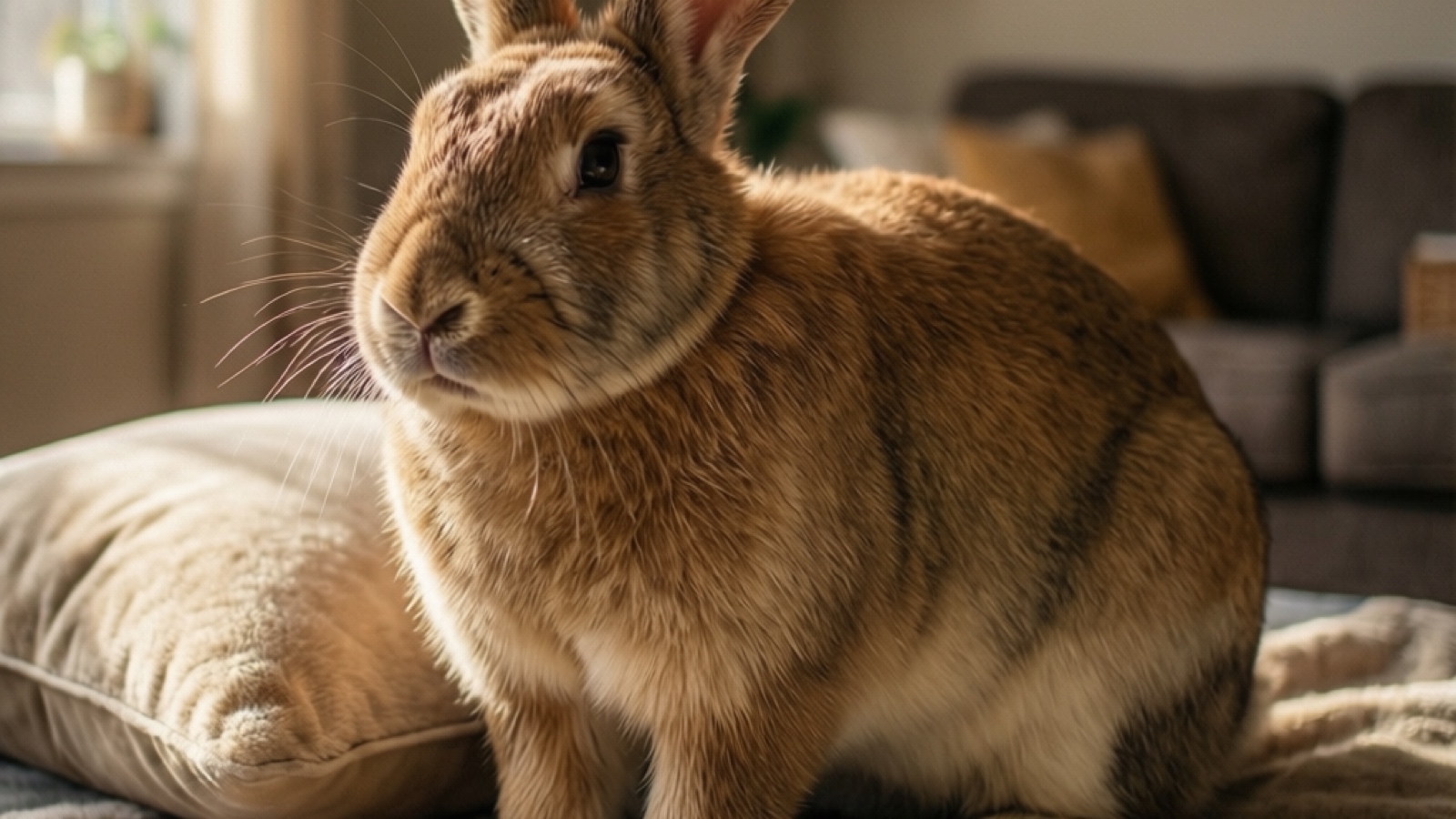
Today, the breed’s primary appeal is as a companion animal. Their combination of massive size and gentle disposition is unlike any other domestic rabbit — they behave more like a small dog than a typical rabbit, following owners around, enjoying being petted, and forming strong bonds with their families.
Flemish Giant at a Glance
- Weight: 15–20 lbs (6.8–9.1 kg) — some reach 22+ lbs
- Body length: 2.5–4 feet (76–122 cm) when fully stretched
- Ear type: Long, upright (5–6 inches)
- Lifespan: 8–10 years
- Fur type: Thick, glossy, smooth (short-haired)
- Litter size: 5–12 offspring
- Nickname: “Gentle Giant”
- One of the oldest recognized rabbit breeds
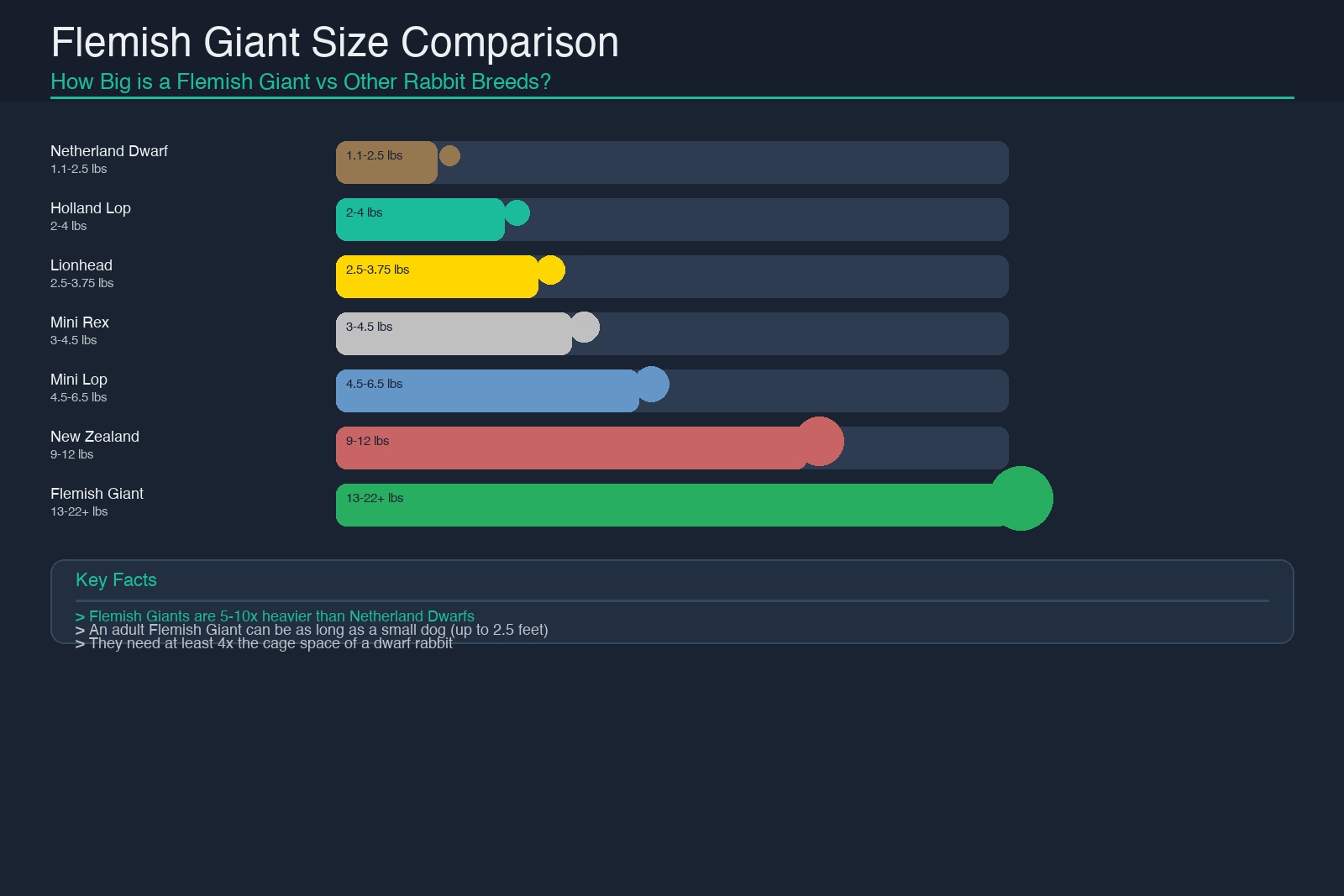
If you want to see how the Flemish Giant compares to smaller breeds, you can compare the Flemish Giant to the Lionhead rabbit — the contrast in size is dramatic. For context, a Lionhead weighs 2.5–3.75 lbs while a Flemish Giant weighs 15–20 lbs. The Holland Lop — the most popular small rabbit breed weighs just 2–4 lbs. A Flemish Giant can weigh 5–10× more than the average pet rabbit.
Flemish Giant Size & Weight
| Measurement | Range | Notes |
|---|---|---|
| Adult weight (bucks) | 13–20 lbs (5.9–9.1 kg) | Show ideal: 15 lbs |
| Adult weight (does) | 14–20 lbs (6.4–9.1 kg) | Show ideal: 16 lbs |
| Body length | 2.5–4 feet (76–122 cm) | When fully stretched |
| Ear length | 5–6 inches (13–15 cm) | Upright, not floppy |
| Hind feet | Large, powerful | Built for agility |
| Lifespan | 8–10 years | With proper care |
| Age to maturity | 1–1.5 years | Full bone development |
How big do flemish giant rabbits get? Adults weigh 15–20 lbs and stretch 2.5–4 feet long — roughly the size of a medium dog or a large house cat. A fully grown Flemish Giant sitting on your lap feels less like holding a rabbit and more like holding a small dog.
How much does a flemish giant rabbit weigh? The flemish giant rabbit weight standard range is 15–20 lbs, but exceptional individuals have been recorded at 22+ lbs. The Guinness World Record for the longest rabbit belongs to Darius, a Flemish Giant measuring 4 feet 4 inches, though weight records have been subject to verification disputes over the years.
Size Comparison: Flemish Giant vs Other Breeds
| Breed | Weight | Body Length | Ear Type | Size Category |
|---|---|---|---|---|
| Flemish Giant | 15–20 lbs | 2.5–4 ft | Upright | Giant |
| Mini Lop | 4.5–6.5 lbs | 12–16 inches | Floppy | Medium |
| Holland Lop | 2–4 lbs | 10–12 inches | Floppy | Small |
| Lionhead | 2.5–3.75 lbs | 8–10 inches | Upright | Small |
| Netherland Dwarf | 1.1–2.5 lbs | 8–10 inches | Upright | Dwarf |
| Rex Rabbit | 7.5–10.5 lbs | 18–20 inches | Upright | Large |
The flemish giant rabbit size makes it 5–10× heavier than the average pet rabbit. This size difference affects everything — housing, food costs, handling technique, and health risks. For enclosure dimensions scaled to this breed, see our rabbit cage size guide by breed.
Flemish Giant Colors & Varieties
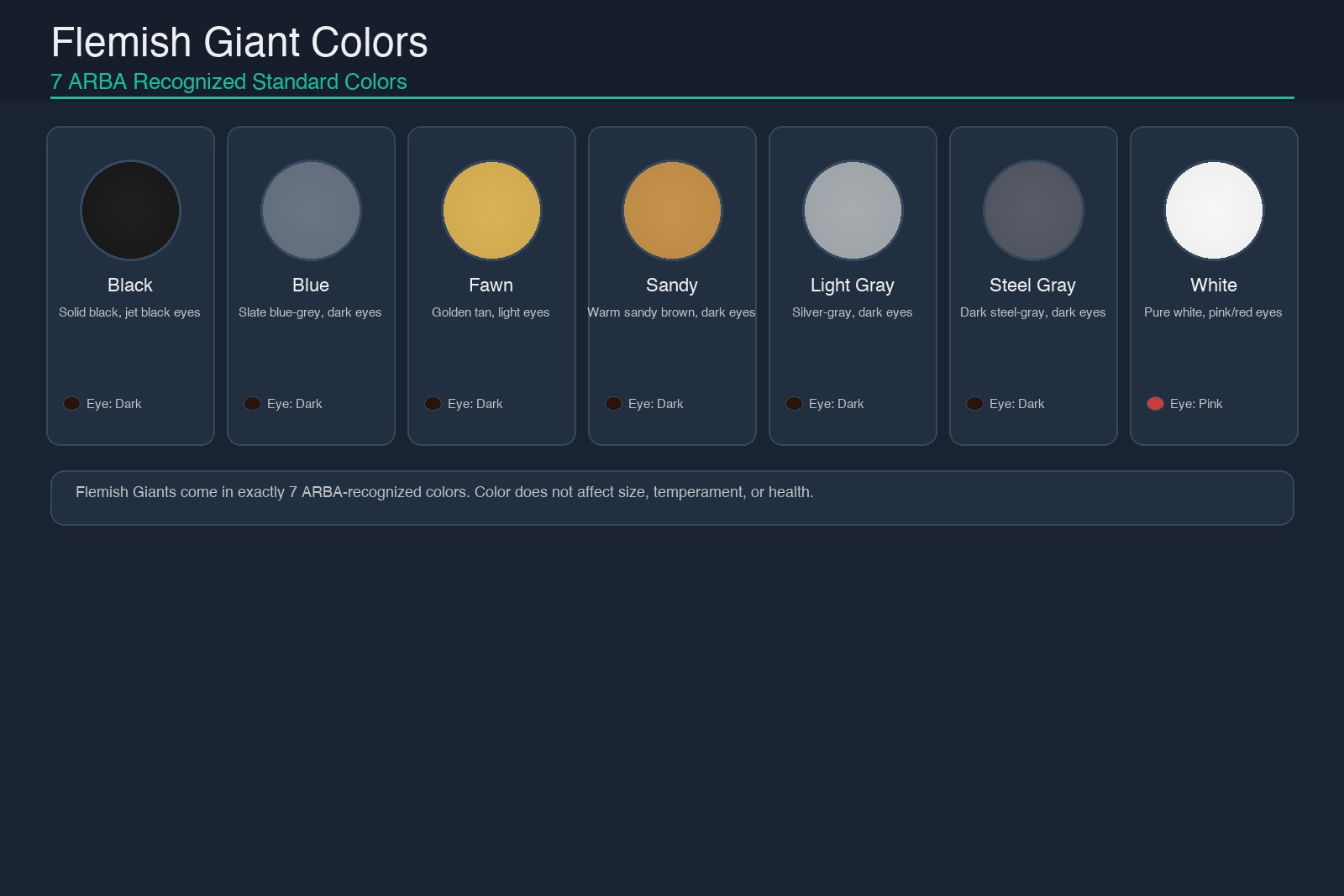
ARBA recognizes 7 color varieties for Flemish Giants — fewer than breeds like Holland Lops or Lionheads that accept all color groups. This is because the Flemish Giant standard emphasizes uniform, solid coloring without markings or patterns.
| Color Variety | Description | Popularity |
|---|---|---|
| Black | Solid jet black, uniform color throughout | Common |
| Blue | Slate blue-gray, uniform | Common |
| Fawn | Golden-orange with lighter belly | Common |
| Light Gray | Agouti ticking on gray base | Common |
| Sandy | Reddish-tan with ticking | Common |
| Steel Gray | Dark gray with silver tipping | Less common |
| White | Solid white, blue or brown eyes | Uncommon |
The most popular flemish giant rabbit colors for pets are Sandy, Fawn, and Light Gray — these warm-toned varieties show off the breed’s thick, glossy coat to maximum effect. Black and Blue are also widely available. White Flemish Giants (with blue or brown eyes) are the rarest.
Color does not affect temperament, health, or lifespan. A Black Flemish Giant and a Sandy Flemish Giant have identical care requirements and personality traits. Show standard requires uniform color with no spots or markings — broken patterns are not ARBA-standard for the breed. By comparison, the Holland Lop comes in all ARBA color groups — much more variety for owners who prioritize coat color options.
Flemish Giant Temperament & Personality
Flemish Giant rabbits are known as “Gentle Giants” because their flemish giant rabbit temperament is exceptionally docile, calm, and friendly despite their massive size. They are patient with children, enjoy cuddling, and are one of the easiest rabbit breeds to train. Males are typically calmer than females.
This is not marketing — it is the breed’s most consistently documented trait. Veterinarians, breeders, and owners all describe the same temperament profile: a rabbit that behaves more like a gentle dog than a prey animal.
Key Temperament Traits
- Docile and calm — the most defining trait. Flemish Giants are less easily spooked than smaller breeds and rarely react to sudden movements or noises
- Friendly and social — they thrive on human interaction and will follow owners from room to room. Many owners describe Flemish Giant behavior as “dog-like”
- Patient with children — their size and steady temperament make them more tolerant of handling than nervous breeds like Netherland Dwarfs
- Intelligent and trainable — how to litter train a Flemish Giant is one of the most common questions because they are such fast learners. They also learn their name and respond to daily routines
- Affectionate — enjoy being petted, chin scratches, and quiet snuggle time. Some will nudge your hand for attention
- Not aggressive — rarely bite unless severely provoked, in pain, or isolated for too long
- Males vs females: Males (bucks) are more relaxed, cuddly, and easygoing. Females (does) can be more territorial, especially if not spayed. Spaying eliminates most territorial behavior
- Social needs: Flemish Giants do NOT do well in isolation. They need daily interaction — a lonely Flemish Giant becomes frustrated, which can manifest as aggression, overgrooming, or destructive chewing
Are Flemish Giant rabbits good pets? Yes — they are one of the best rabbit breeds for families, particularly those with children and enough space. Understanding rabbit body language and what it means helps you read your Flemish Giant’s mood. A relaxed Flemish Giant will flop onto their side (a sign of complete trust), while rabbit sounds and their meanings help you distinguish between contentment tooth-purring and alarm foot-thumping.
Handling a Flemish Giant
At 15–20 lbs, handling a Flemish Giant requires proper technique:
- Always support the hindquarters — their heavy body puts significant strain on their spine if held improperly
- Lift from the rear with one hand under the chest and the other under the rump
- Keep the rabbit close to your body for stability
- Never pick up by the ears, scruff, or legs
- Sit on the floor for bonding sessions — let them come to you
- Children under 10 should not lift a Flemish Giant alone — the rabbit is too heavy for a child to support safely
Flemish Giant Lifespan
Flemish Giants live 8–10 years on average with proper care, though some reach 10–12 years with exceptional management. If you are wondering how long do flemish giant rabbits live compared to other breeds, their lifespan is slightly shorter than smaller breeds — Holland Lops live 7–14 years, for example — because carrying 15–20 lbs of body weight creates more strain on joints, organs, and the cardiovascular system over time. The flemish giant rabbit lifespan depends heavily on weight management, diet quality, and indoor housing.
Tips for Maximizing Flemish Giant Lifespan
- Unlimited Timothy or orchard grass hay 24/7 — the foundation of long life for any rabbit
- Spay or neuter by 4–6 months — prevents reproductive cancer and reduces territorial aggression
- Maintain healthy weight (15–20 lbs) — obesity is the #1 preventable lifespan reducer
- Annual exotic vet checkups — not regular vets, but rabbit specialists
- Weekly ear inspections — upright ears are susceptible to bacteria and debris buildup
- Daily exercise — critical for joint health and GI motility in large rabbits
- Clean, spacious living environment — solid floors, clean bedding, good ventilation
- Avoid wire-bottom cages — sore hocks lead to infection, which can be fatal if untreated
Factors that shorten Flemish Giant lifespan include obesity (the single most common preventable issue), untreated sore hocks that progress to systemic infection, GI stasis from insufficient hay, and dental disease from lack of abrasive chewing. For rabbit lifespan data by breed with a comprehensive comparison across all major breeds, see our dedicated lifespan guide.
Flemish Giant Diet & Nutrition
The flemish giant rabbit diet follows the same 80/10/8/2 ratio as all rabbit breeds, but because Flemish Giants are 5–10× larger than typical pet rabbits, their food requirements are proportionally bigger. They should eat their body weight in hay every day — a 15-lb Flemish Giant needs roughly 15 lbs of hay per month, compared to 3–4 lbs for a Holland Lop.
Daily Diet for Flemish Giants
| Food Type | Daily Amount | % of Diet | Notes |
|---|---|---|---|
| Timothy/orchard grass hay | Unlimited | ~80% | Must eat body weight in hay per day |
| Fresh greens | 2–3 cups | ~10% | Romaine, cilantro, parsley, basil, dandelion greens |
| Timothy pellets | 1/4 cup per 4–5 lbs | ~8% | 15-lb rabbit ≈ 3/4–1 cup daily |
| Treats | 1–2 small pieces | ~2% | 2–3x per week max |
| Fresh water | 16–32 oz/day | — | As much as a 25-lb dog! |
That 3/4 to 1 cup of pellets per day for an adult Flemish Giant is substantially more than smaller breeds need, but it still must be measured — not free-fed. Flemish Giants love food and will happily overeat if given the chance, which leads to rapid weight gain.
Feeding by Age
- Under 6 months: Unlimited alfalfa hay + unlimited pellets (growing phase — needs extra calcium and protein)
- 6–12 months: Transition from alfalfa to Timothy hay, gradually reduce pellets
- Adult (1+ years): Timothy hay unlimited, 3/4–1 cup pellets, 2–3 cups fresh greens daily
- Senior (5+ years): May need slightly higher-calorie pellets if weight drops, monitor dental health closely
Flemish Giant Feeding Rules
- Unlimited hay — prevents GI stasis and wears teeth that grow ~2mm per week
- Measure pellets carefully — obesity is a major health risk for heavy breeds
- Provide a large, heavy water bowl or 32 oz+ water bottle — they drink as much as a 25-lb dog
- Introduce new vegetables one at a time — wait 3 days between each
- Bell peppers — safe daily vegetable — high in vitamin C, low in sugar
- Broccoli — feed in moderation — stalks and leaves only, watch for gas
- Carrots — high sugar, feed sparingly — 1 thin slice as a treat, not daily food
- Cucumber as occasional hydrating treat — mostly water, low nutritional value
- Tomatoes — safe in small amounts — fruit only, no leaves or stems (toxic)
- No iceberg lettuce (causes diarrhea)
- No muesli or mixed food (causes selective eating)
- No free-feeding pellets
The flemish giant rabbit food volume is the single biggest cost differentiator. At 15 lbs of hay per month plus 3/4 cup pellets daily, expect to spend $20–40/month on hay alone — roughly double what a small breed requires.
For the complete rabbit diet guide with detailed vegetable lists and feeding schedules, or to find the best rabbit food brands reviewed for pellet recommendations, see our dedicated guides.
Housing Requirements (Cage Size, Setup & Exercise)
Flemish giant rabbit care requires more space than any other breed. The flemish giant rabbit cage size is the most critical housing decision — a standard rabbit cage is completely inadequate for a 15–20 lb rabbit. A Flemish Giant crammed into a standard cage will develop sore hocks, muscle atrophy, and behavioral problems within weeks.
Minimum Enclosure Requirements
| Requirement | Specification |
|---|---|
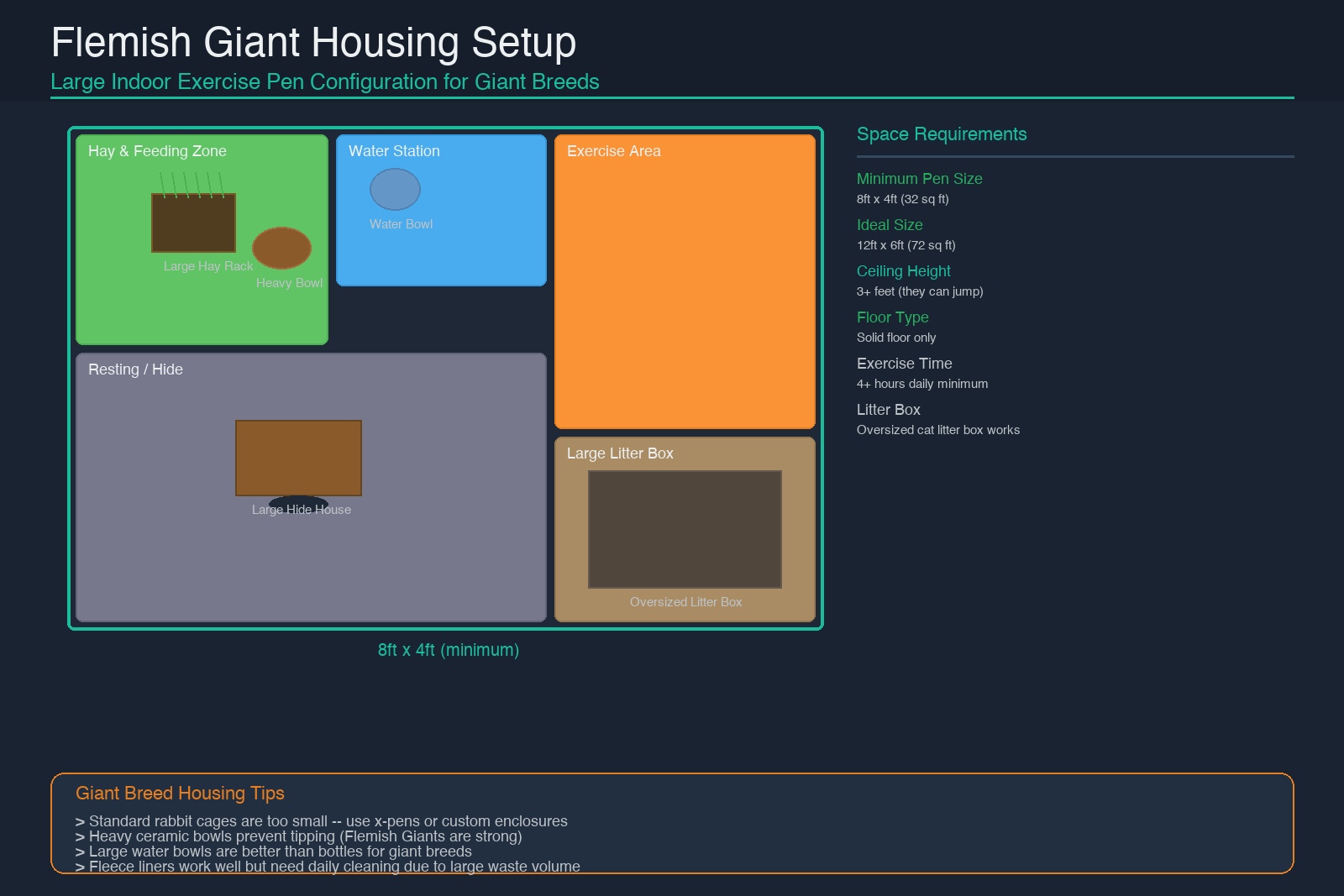
| Minimum enclosure | 36” wide × 36” tall × 120” long |
| Recommended exercise pen | 4×6 ft minimum (larger is better) |
| Floor type | Solid — absolutely no wire (sore hocks risk) |
| Daily exercise | 4+ hours outside enclosure |
| Temperature range | 40–75°F (4–24°C) |
| Litter box | XL cat-size or large dog litter box |
Why Cage Size Matters More for Flemish Giants
A standard rabbit cage (24×24 inches) gives a Flemish Giant roughly 4 square feet of space. A 15-lb rabbit in 4 square feet cannot stretch out, hop, or turn around comfortably. The result: pressure sores on the hocks, loss of muscle tone, depression, and aggression from confinement stress. The minimum 36×36×120 inch enclosure (per veterinary recommendation) provides 30 square feet — the absolute minimum for humane housing.
Flemish Giant Housing Essentials
- Minimum 36×36×120 inch enclosure OR 4×6 ft exercise pen
- Solid floor (sore hocks are the #1 preventable health issue for heavy rabbits)
- Fleece over yoga mat bedding — provides cushioning without absorbent dust
- 4+ hours daily exercise outside enclosure
- Rabbit-proofed room or large play area
- Heavy food and water bowls — a 15-lb rabbit will tip lightweight bowls
- Large litter box (cat-size XL or large dog litter box)
- Hide house large enough for a 15-lb rabbit to fit inside
- 32 oz+ water bottle or large heavy bowl
- Best rabbit toys for enrichment — chew toys, tunnels, cardboard castles
- No wire-bottom cages
- No carpet as bedding (abrasive on hocks)
- No glass aquariums
- No outdoor-only housing
Exercise Pen Recommendation
The MidWest Homes for Pets 30-Inch Exercise Pen is the best enclosure option for Flemish Giants. It provides 16 sq ft of play space with 8 foldable panels, is rated across 35, and works both indoors and outdoors. Connect 2 pens for 32 sq ft — this is the ideal setup for a Flemish Giant, giving them enough room to hop, stretch, and turn comfortably. The 30-inch height is adequate for most Flemish Giants, though particularly athletic individuals may need a taller option. Add a solid mat (yoga mat or foam tiles) over the wire panels for foot protection.
Indoor vs Outdoor Housing
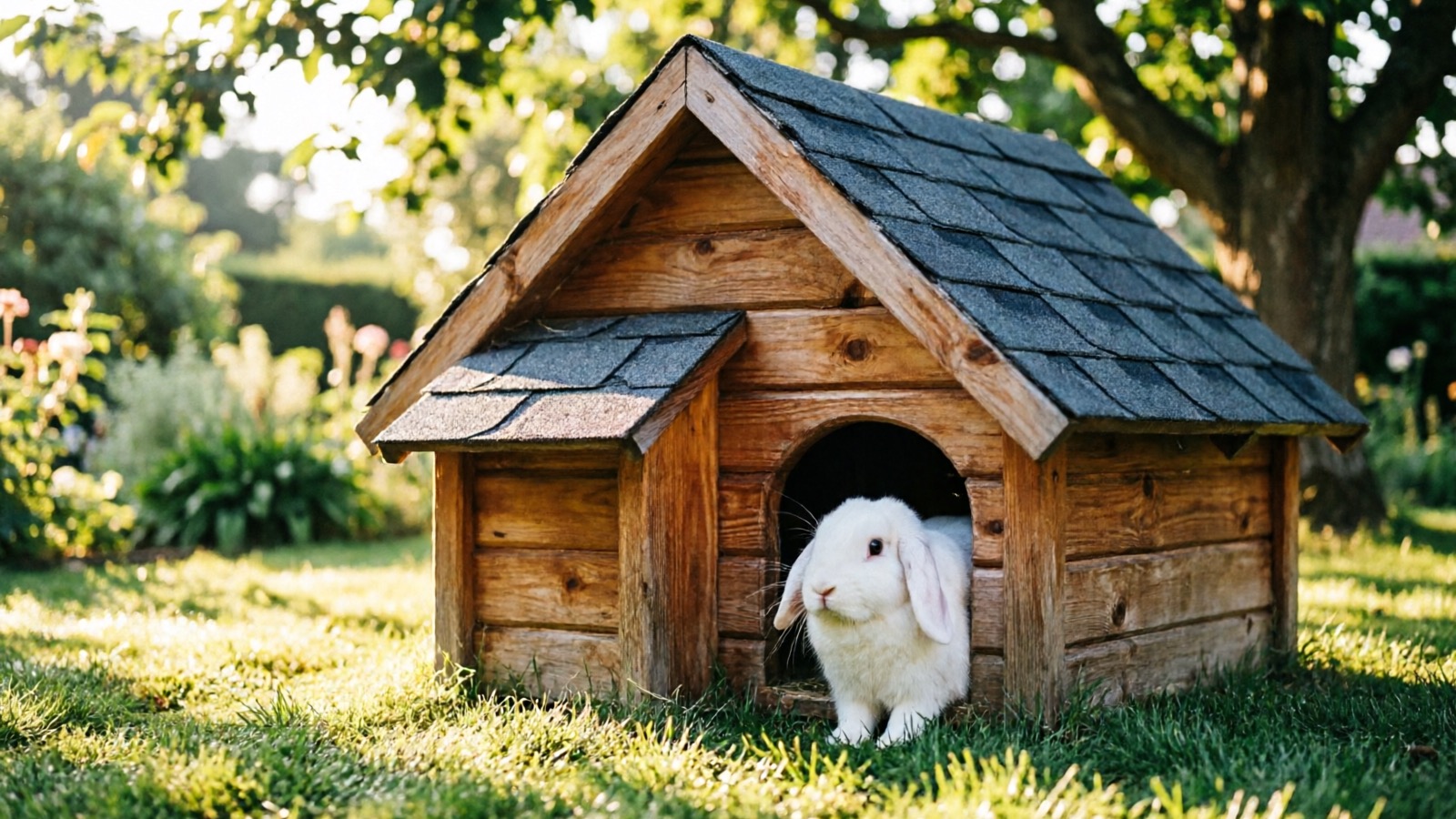
Indoor housing is strongly recommended. Flemish Giants are highly social — they need daily human interaction and will become depressed, aggressive, or develop compulsive behaviors if isolated outdoors. If outdoor housing is your only option, the hutch must be predator-proof, weather-protected, and your rabbit still needs at least 2–3 hours of daily indoor interaction time.
For product-specific recommendations, see our guide to the best rabbit cages for large breeds, the rabbit cage size guide for dimensions scaled to your space, and DIY rabbit hutch plans for large breeds if you want to build a custom enclosure. Our complete rabbit setup guide covers everything you need before bringing your rabbit home.
Flemish Giant Grooming
Flemish giant rabbit grooming is lower maintenance than long-haired breeds like Lionheads, but the sheer surface area means grooming takes longer. A full-body brush session covers significantly more fur on a 4-foot rabbit than on a 10-inch Holland Lop.
Grooming Schedule
| Task | Frequency | Why It Matters |
|---|---|---|
| Brush coat | 1–2x per week (daily during molting) | Dense short coat traps loose fur; molting period lasts ~2 weeks |
| Trim nails | Every 4–6 weeks | Large, thick nails need heavy-duty clippers |
| Check ears | Weekly | Upright ears susceptible to debris and bacteria |
| Check eyes | Weekly | Clean any discharge with damp cotton ball |
| Monitor teeth | Continuous | Teeth grow ~2mm/week — hay handles this naturally |
How to Trim Flemish Giant Nails (Step-by-Step)
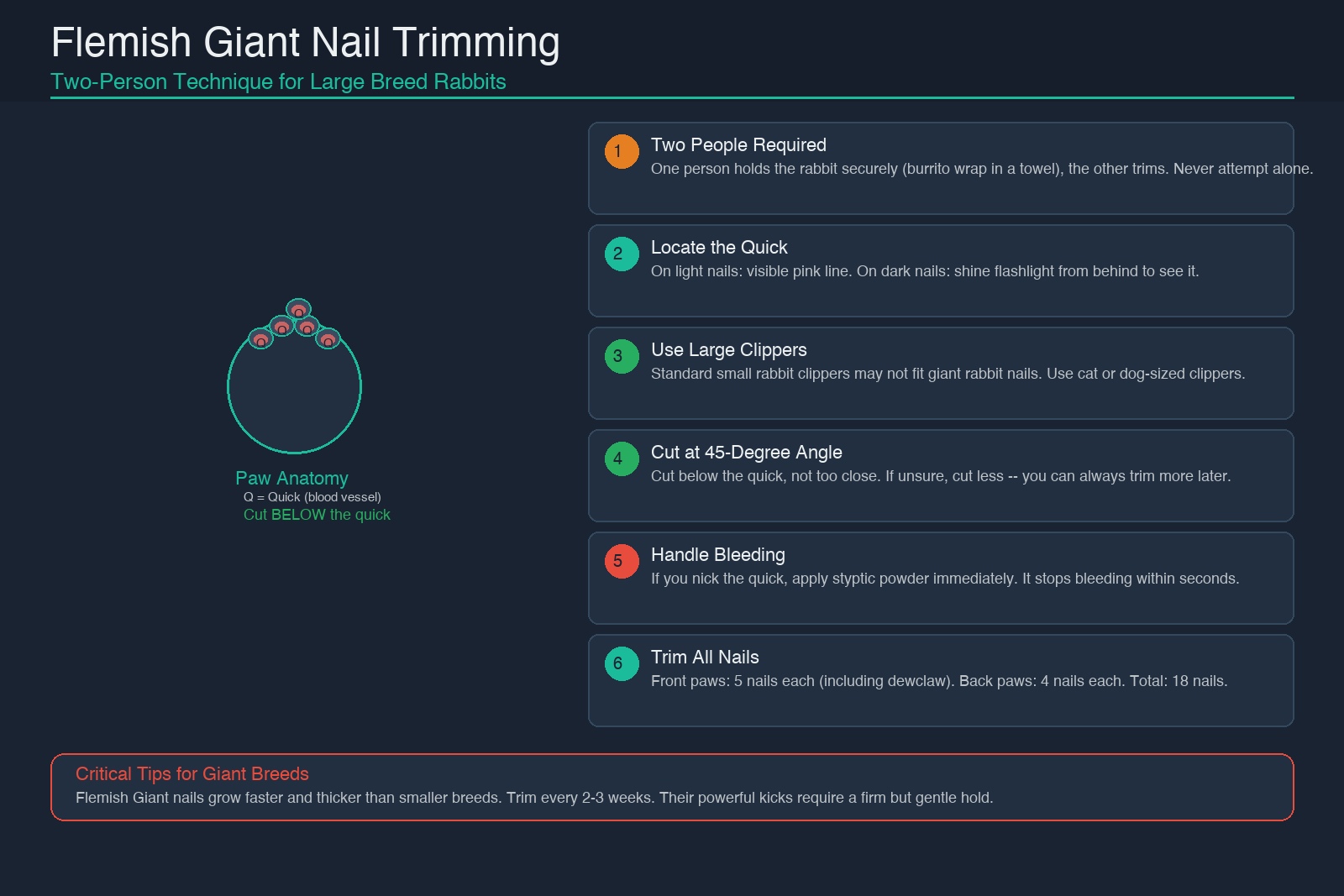
Nail trimming a Flemish Giant is fundamentally different from smaller breeds — at 15–20 lbs, you need a helper and heavy-duty equipment.
- Have someone help hold the rabbit — 15–20 lbs is difficult to control alone. One person holds, one person trims
- Wrap in a large bath towel (burrito wrap) — a hand towel is too small. Wrap snugly around the body, leaving one paw exposed
- Locate the quick — the pink area inside the nail. On dark nails, shine a flashlight from behind to see the quick
- Cut below the quick at a 45-degree angle using large-breed clippers — standard rabbit clippers cannot handle Flemish Giant nail thickness
- If you nick the quick, apply styptic powder immediately — it stops bleeding within seconds
- Trim all 4 paws including dewclaws on the front feet — reward with a treat after each paw
Nail Clipper Recommendation
The Epica Professional Large Dog Nail Clipper is the best nail clipper for Flemish Giants. Designed for large breed dogs, it has the cutting power to handle thick rabbit nails without splintering. The stainless steel blades are sharp enough for clean cuts, the safety guard prevents over-cutting, and the ergonomic grip provides leverage. rating across 22. Standard rabbit-sized clippers will flex and fail on Flemish Giant nails — this is a case where you need a tool sized for the job.
Grooming Mistakes to Avoid
- Never bathe a Flemish Giant in water — risk of hypothermia, stress, and fur matting on a dense coat
- Never use small rabbit clippers — won’t cut through thick nails, causes splintering and pain
- Never attempt nail trimming alone — have a helper hold the rabbit
- Never use cotton swabs inside ears — can push debris deeper or damage the eardrum
- Never ignore matting — spot clean with a warm damp towel instead of a full bath
For a comprehensive guide covering all aspects of rabbit coat care, see our detailed rabbit grooming guide.
Flemish Giant Health Problems
Flemish giant rabbit health issues are generally manageable, but their large body weight creates specific risks that are less common in smaller breeds. The three most significant breed-specific risks are sore hocks, obesity, and joint/arthritis problems.
| Condition | Cause | Symptoms | Prevention | Severity |
|---|---|---|---|---|
| Sore hocks | Wire floors, obesity, urine-soaked feet | Bare/red patches on heels, limping, reluctance to move | Solid floor, weight control, clean bedding | High |
| GI stasis | Low fiber, stress, dehydration | No stool 12+ hrs, lethargy, bloating | 80%+ hay diet, daily exercise | Critical |
| Obesity | Overfeeding pellets/treats | Weight over 20 lbs, lethargy, difficulty grooming | Portion control, daily exercise | Medium |
| Ear infections | Upright ears trap debris | Head tilt, scratching, discharge | Weekly ear checks, vet cleaning | Medium |
| URI | Dusty bedding, poor ventilation | Sneezing, nasal discharge, labored breathing | Dust-free bedding, clean cage | Medium |
| Dental problems | Teeth overgrowth (2mm/week) | Drooling, decreased appetite, weight loss | Unlimited hay, chew toys | High |
| E. cuniculi | Parasite (urine transmission) | Head tilt, eye twitching, kidney issues | Hygiene, vet deworming | High |
| Arthritis/joint issues | Heavy body weight over time | Stiffness, reluctance to move, hunched posture | Weight management, soft flooring | Medium |
| Sore hocks → infection | Untreated pressure sores | Swelling, pus, systemic infection | Early detection, vet treatment | Critical |
Flemish Giant-Specific Health Risks
Sore hocks (pododermatitis) is the #1 preventable health issue. The mechanics are straightforward: 15–20 lbs of body weight concentrated on relatively small hind feet creates extreme pressure on the hock joint. Wire flooring multiplies this pressure by removing the cushioning of solid ground. The result is fur loss, raw skin, open sores, and — if untreated — bacterial infection that can enter the bloodstream. Prevention is simple: solid flooring, clean dry bedding, and weight management. Treatment is more difficult and expensive once sores develop.
Obesity is common because Flemish Giants have big appetites and owners tend to overfeed. A Flemish Giant at 22+ lbs is not “impressive” — it is overweight and at elevated risk for every health condition on this list. Ideal weight is 15–20 lbs. Weigh your rabbit monthly and adjust pellet portions if weight creeps up.
Joint problems and arthritis develop over time as the rabbit carries 15–20 lbs. Soft flooring (fleece over yoga mat, not bare wire or hard tile) reduces joint strain. Daily exercise maintains muscle tone that supports the joints. Senior Flemish Giants (5+ years) may show stiffness in the morning or reluctance to jump — this is often early arthritis and should be evaluated by a vet.
When to see a vet immediately: No stool for 12+ hours, head tilt, limping or bleeding hocks, drooling, hard or bloated abdomen, loud teeth grinding (pain signal), severe lethargy, or any sign of flystrike. These are emergencies — rabbits hide illness until it is advanced, so visible symptoms mean the condition has already progressed.
For more detail on recognizing and managing these conditions, see our guide to common rabbit health problems and treatment.
How Much Does a Flemish Giant Cost?
The flemish giant rabbit price is rising fast (+90% year-over-year), reflecting growing demand for the breed. And the “flemish giant rabbit for sale texas” search has surged +200%, indicating strong regional demand — Texas has one of the largest Flemish Giant breeding populations in the US.
Purchase Price by Source
| Source | Price Range | What’s Included |
|---|---|---|
| Rescue / Shelter | $50–$150 | Spayed/neutered, vet-checked, vaccinated |
| Breeder (pet quality) | $50–$200 | Pedigree, health guarantee, age-appropriate |
| Breeder (show quality) | $200–$500+ | Show pedigree, proven bloodline |
| Pet store | $30–$80 | Usually no vetting, may be mixed breed |
Adoption from a rescue is strongly recommended. Flemish Giants are frequently surrendered to shelters when owners realize how large they get or how much they cost to feed. Rescue rabbits are already spayed or neutered — surgery for a 15-lb rabbit under anesthesia costs $300–500, making the $50–150 adoption fee an exceptional value. Rescues also provide health screening and temperament assessment.
Monthly Care Costs: Flemish Giant vs Average Rabbit
| Expense | Flemish Giant | Average Rabbit | Difference |
|---|---|---|---|
| Timothy hay | $20–$40 | $10–$20 | 2× more |
| Pellets | $10–$15 | $5–$8 | 2× more |
| Fresh vegetables | $15–$25 | $10–$15 | 1.5× more |
| Litter | $10–$15 | $5–$10 | 2× more |
| Water | $5 | $3 | — |
| Vet checkup | ~$15/month | ~$10/month | Higher dose meds |
| Emergency fund | ~$30/month | ~$20/month | Higher anesthesia risk |
| Monthly Total | $55–$100/month | $40–$75/month | ~40% more |
One-Time Setup Costs
- Exercise pen ×2 connected: $80–$120
- XL litter box: $20
- Heavy ceramic bowls: $10
- Large hide house: $20–$30
- Hay rack: $15
- Large nail clipper: $15–$25
- Total setup: ~$160–$220
Lifetime Cost Estimate
At $55–$100/month over an 8–10 year lifespan: $5,600–$12,000 over your Flemish Giant’s lifetime. The 40% monthly premium over smaller breeds adds up — expect to spend roughly $2,000–$4,000 more over a Flemish Giant’s life compared to a Holland Lop, primarily driven by food and hay volume.
Finding a Flemish Giant Rabbit
“Flemish giant rabbit for sale” is one of the highest-volume transactional searches for any rabbit breed, and “flemish giant rabbit for sale texas” has surged +200% year-over-year. This reflects strong demand and a relatively limited supply of reputable breeders.
Where to Get a Flemish Giant
Rescue (recommended): Search House Rabbit Society chapters, Petfinder.com, and local shelters. Flemish Giants are frequently surrendered due to their size — checking rescue listings regularly is worthwhile because available rabbits are adopted quickly.
Reputable breeder: Look for ARBA-registered breeders who specialize in Flemish Giants, allow facility visits, show both parent rabbits, provide pedigree documentation, and offer a health guarantee (minimum 30 days). The National Federation of Flemish Giant Rabbit Breeders (NFFGRB) maintains a breeder directory.
“Flemish giant rabbit breeders near me” — search tips:
- ARBA Breeder Directory (searchable by breed and state)
- NFFGRB member directory
- Local and regional rabbit shows
- Facebook groups: “Flemish Giant Rabbits” (large, active community)
- Search with your state name for localized results
Red flags: Breeder refuses facility visits, overcrowded cages (Flemish Giants need large enclosures), rabbits look thin or have dirty coats, no health guarantee, selling kits under 8 weeks old, no pedigree or breed documentation.
Flemish Giant vs Other Popular Breeds
| Feature | Flemish Giant | Holland Lop | Lionhead | Netherland Dwarf | Mini Lop |
|---|---|---|---|---|---|
| Weight | 15–20 lbs | 2–4 lbs | 2.5–3.75 lbs | 1.1–2.5 lbs | 4.5–6.5 lbs |
| Body Length | 2.5–4 ft | 10–12 in | 8–10 in | 8–10 in | 12–16 in |
| Ear Type | Upright (5–6”) | Floppy (4–5”) | Upright (2–3.5”) | Upright (2–3”) | Floppy |
| Temperament | Docile, gentle | Friendly, cuddly | Social, active | Energetic, nervous | Calm, easygoing |
| Grooming | Low-Medium | Medium (ears) | High (mane) | Low | Low-Medium |
| Lifespan | 8–10 years | 7–14 years | 7–10 years | 7–12 years | 7–14 years |
| Space Needed | Very large | Small | Small | Very small | Medium |
| Monthly Cost | $55–$100 | $40–$75 | $40–$75 | $35–$60 | $40–$75 |
| Best For | Families w/ space | Beginners, kids | Fluffy lovers | Small spaces | Handling |
| Difficulty | Medium | Easy-Medium | Medium | Medium | Easy |
| Child-Friendly | Excellent | Very good | Warning: Moderate | Warning: Skittish | Good |
Who Should Get a Flemish Giant?
- Families with children — patient, docile, tolerant of handling
- People with plenty of space — large apartment or house with room for a 4×6 ft pen
- First-time rabbit owners — calm temperament forgives beginner mistakes
- People who want a “dog-like” rabbit — follows you around, learns routines, enjoys interaction
- People in small apartments — minimum 4×6 ft enclosure is non-negotiable
- People on a tight budget — 40% higher monthly costs than smaller breeds
- People who travel frequently — Flemish Giants need daily interaction and are difficult to board
For comparison, the Lionhead rabbit breed guide covers a breed at the opposite end of the size spectrum (2.5–3.75 lbs), and the Holland Lop breed guide covers the most popular small lop breed.
Conclusion
Flemish Giants occupy a unique position in the rabbit world — the largest domestic breed, yet one of the gentlest. Their “Gentle Giant” reputation is well-earned, and for owners with the space and budget, they offer a rabbit ownership experience unlike any other breed.
Six key takeaways:
- Largest rabbit breed: 15–20 lbs, up to 4 feet long — 5–10× bigger than average pet rabbits
- “Gentle Giant” personality: Docile, patient, excellent with families and children
- Housing is critical: Minimum 36×36×120 inches or 4×6 ft exercise pen — standard cages are inadequate
- Higher costs: ~$55–100/month (40% more than smaller breeds) due to food and hay volume
- Lifespan 8–10 years: A decade-long commitment requiring proper diet, vet care, and weight management
- Sore hocks prevention: Solid flooring and weight management are non-negotiable for heavy rabbits
Ready to bring a Flemish Giant home? Our complete rabbit setup guide covers everything you need before your rabbit arrives, and our best rabbit cage recommendations include options specifically suited for large breeds.