Can Rabbits Eat Tomatoes?
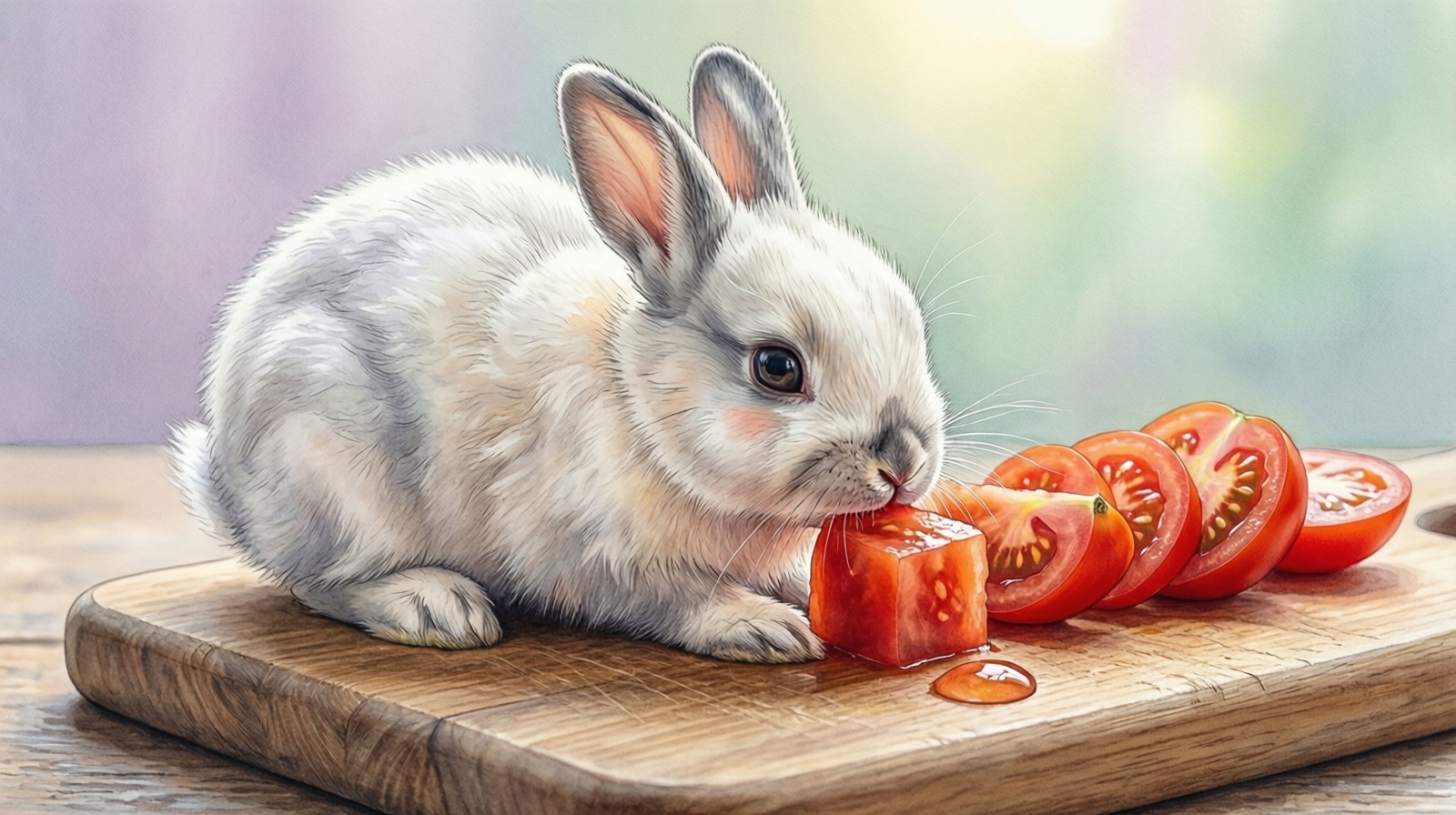
Yes — when asking “can rabbits eat tomatoes,” the answer is: ripe red tomato flesh only, in small amounts, 1-2 times per week.
For “can rabbits eat tomatoes,” the role in a rabbit’s diet: occasional fruit treat, not a vegetable staple. Despite being botanically a fruit, most people treat tomatoes as a vegetable. For rabbits, the distinction matters less than the nutritional profile — tomatoes are relatively high in sugar (2.6g per 100g) and acidic (pH 4.3-4.9), making them a treat food rather than a daily vegetable. The safe/treat ratio for rabbits should always favor hay (80-90% of diet) above everything else.
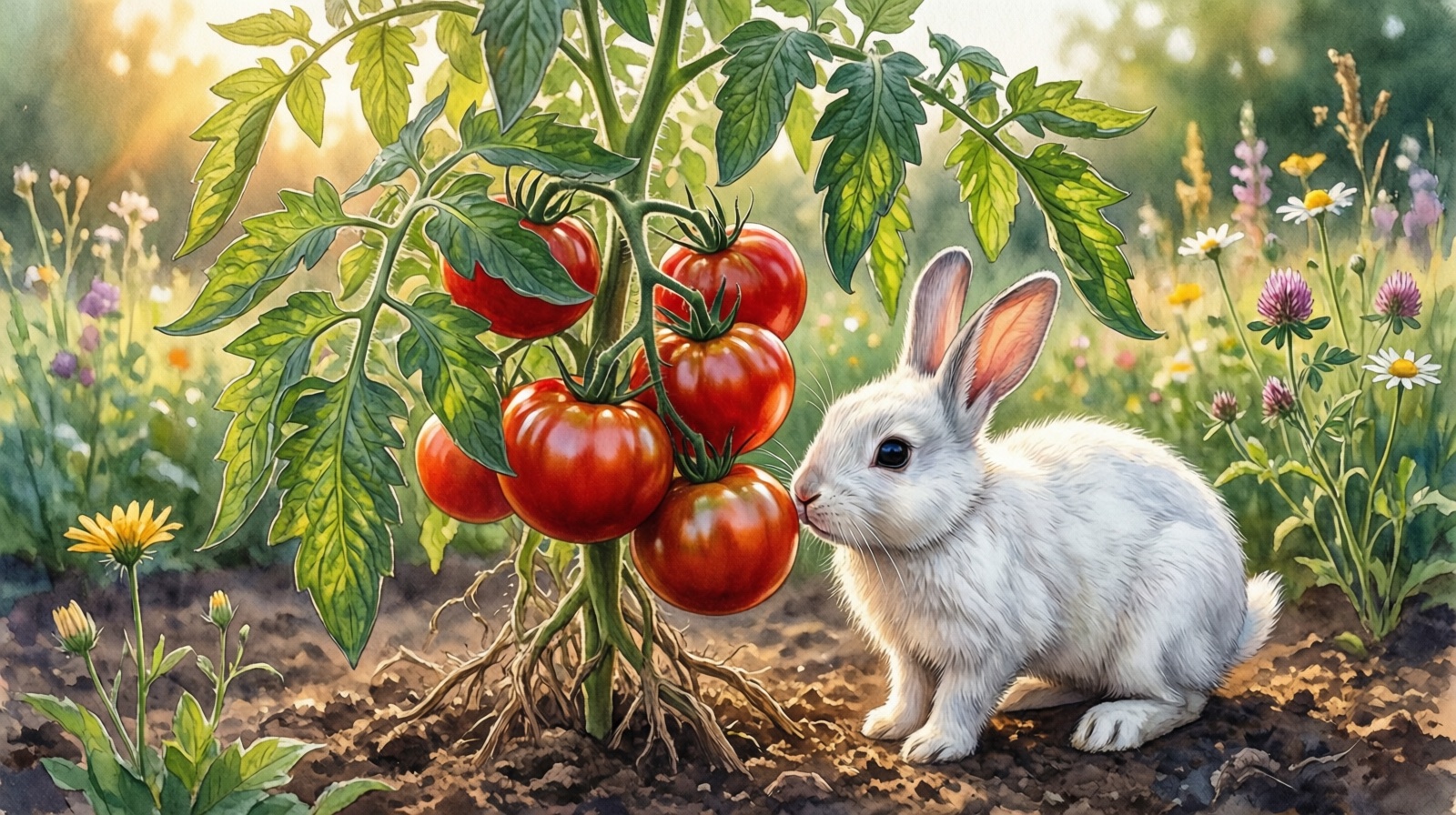
Critical safety warning: Only the ripe red fruit is safe. The leaves, vines, stems, and green (unripe) tomatoes contain solanine and tomatine — toxic compounds that can cause serious illness. This is the single most important thing about can rabbits eat tomatoes: only the ripe fruit is safe.
| Part | Safe? | Notes |
|---|---|---|
| Ripe red flesh | ✅ Safe | Only part to feed — 1-2 small cubes, 1-2x/week |
| Skin | ✅ Safe | Contains more lycopene; wash thoroughly |
| Seeds | ✅ Safe | Soft, no toxic compounds, no need to remove |
| Leaves | ❌ Toxic | Contains solanine and tomatine |
| Vines/Stems | ❌ Toxic | Contains solanine and tomatine |
| Green (unripe) fruit | ❌ Toxic | 3-5x higher solanine than ripe fruit |
Some people ask “can bunnies eat tomatoes” — but can rabbits eat tomatoes safely? Yes — “bunnies” is just another word for rabbits, and the same rules apply. Do rabbits eat tomatoes in the wild? Wild rabbits generally avoid tomato plants because the bitter-tasting leaves and stems signal toxicity. Domestic rabbits may not have the same instinct, which is why you need to enforce safe feeding boundaries. Understanding your rabbit’s behavior around food helps — some rabbits will eagerly eat anything offered, while others are more cautious.
For the complete framework on what rabbits should and shouldn’t eat, see our rabbit food guide.
Tomato Nutrition Facts for Rabbits
USDA nutritional data — raw red ripe tomato, per 100g USDA FoodData Central:
| Nutrient | Amount per 100g | Relevance to Rabbits |
|---|---|---|
| Calories | 18 kcal | Low calorie — safe for weight |
| Water | 94.5g (94.5%) | High water — moderation prevents diarrhea |
| Fiber | 1.2g | ⚠️ Low — ideal rabbit veggies have 2-5g |
| Sugar | 2.6g | ⚠️ Moderate — ideal treats have <1g |
| Vitamin C | 13.7mg | Rabbits synthesize their own Vit C |
| Vitamin A | 833 IU | Eye health, immune function |
| Lycopene | 2,573µg | Antioxidant — concentrated in skin |
| Potassium | 237mg | Heart and muscle function |
| pH level | 4.3-4.9 | ⚠️ Acidic — frequent feeding risks mouth sores |
The two numbers that define can rabbits eat tomatoes in a rabbit’s diet: 2.6g sugar and pH 4.3-4.9.
The sugar content puts tomatoes firmly in “treat” territory. When considering can rabbits eat tomatoes, compare 2.6g per 100g to ideal daily vegetables: romaine lettuce has 1.2g sugar, cilantro has 0.9g. Tomatoes have more than double the sugar of the best daily greens.
The acidity is a risk that most rabbit owners — and most articles — overlook. A rabbit’s digestive system and mouth are adapted to neutral-pH foods (hay, most leafy greens). The pH of tomato at 4.3-4.9 is significantly more acidic than what a rabbit’s mouth is designed to handle. For rabbits eating tomatoes frequently, this can cause mouth sores and gum irritation. This is why tomatoes should be limited to 1-2 times per week, not fed daily.
Lycopene is the one genuinely impressive nutrient in tomatoes. At 2,573µg per 100g, it’s a powerful antioxidant associated with reduced inflammation. Lycopene is concentrated in the skin, so leaving the skin on maximizes this benefit. However, lycopene alone doesn’t justify daily feeding — the sugar and acidity risks outweigh the antioxidant benefit at high frequency.
When researching can rabbits eat tomatoes, diet quality directly impacts longevity. A rabbit on a proper hay-based diet with limited treats can live 8-12 years, while poor diet is one of the leading causes of premature death. For more on how diet affects rabbit lifespan, see our dedicated guide.
Why Hay Remains Non-Negotiable
When considering can rabbits eat tomatoes, remember hay must be 80-90%. Tomatoes — and all other treats — cannot replace hay. Without adequate hay intake, rabbits develop GI stasis, a painful and potentially fatal condition where the digestive system slows or stops. Oxbow Orchard Grass Hay ($9.99) is a vet-recommended option — some rabbits prefer orchard grass over timothy hay, so offering both encourages eating. A proper rabbit cage setup with constant hay access ensures your rabbit always has fiber available.
Which Parts of the Tomato Are Safe for Rabbits?
Can Rabbits Eat Tomato Skin?
“Can rabbits eat tomatoes skin?” — yes, and it’s actually beneficial. The skin contains a higher concentration of lycopene (the antioxidant) and slightly more fiber than the flesh. Leaving the skin on maximizes the nutritional value of each serving.
However, store-bought tomatoes should be washed thoroughly under running water for 30+ seconds. Tomatoes are on the EWG’s Dirty Dozen list for pesticide residue. Organic tomatoes are preferable when available. If your rabbit consistently avoids the skin, it’s fine to remove it — the flesh alone is still safe.
Can Rabbits Eat Tomato Seeds?
“Can rabbits eat tomato seeds?” — yes, completely safe for rabbits. Unlike apple seeds (which contain amygdalin, a cyanide-releasing compound) or cherry pits (similar toxic risk), tomato seeds are soft, small, and contain no harmful substances. They pass through a rabbit’s digestive system without any issue.
There’s no need to remove seeds before feeding. Most rabbits won’t even notice them. This saves significant prep time compared to fruits where seed removal is essential.
How Much Tomato Can a Rabbit Eat?
| Rabbit Size | Max per Serving | Max per Week |
|---|---|---|
| Small (< 4 lbs) | 1-2 small cubes (~15g) | 1-2 times |
| Medium (4-8 lbs) | 2-3 cubes (~25g) | 1-2 times |
| Large (> 8 lbs) | 3-4 cubes (~35g) | 2 times |
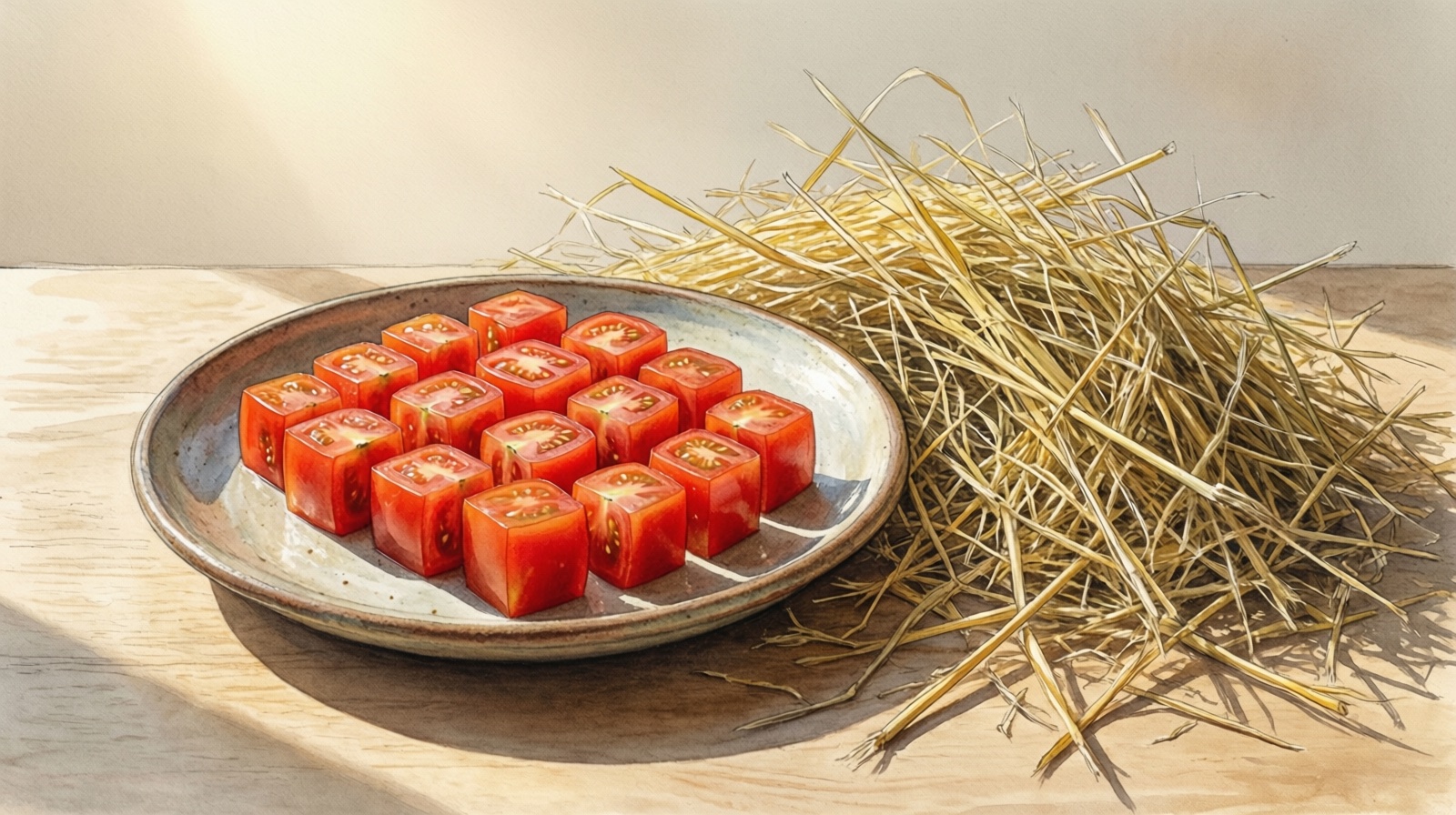
When feeding tomatoes to rabbits, cube size: approximately 1cm × 1cm — about the size of a standard dice.
Step-by-Step Feeding Guide
- Choose a fully ripe red tomato — no green patches, no soft spots
- Wash thoroughly — run under cool water for 30+ seconds
- Remove the stem and any leafy calyx — the green parts at the top are toxic
- Cut into small cubes — 1cm pieces, roughly dice-sized
- Leave skin on — more lycopene and fiber
- Leave seeds in — completely safe, no need to remove
- Start with half the recommended amount on first feeding
- Monitor stool for 24 hours — look for loose or misshapen droppings
- Remove uneaten pieces after 2 hours — tomato spoils quickly at room temperature
Cherry Tomatoes for Rabbits
Can rabbits eat cherry tomatoes? Yes — they follow the same safety rules. The advantage is portion control: one cherry tomato is roughly 15-20g, which is approximately one serving for a small to medium rabbit. I’d recommend cutting cherry tomatoes in half before feeding — the smaller pieces are easier to eat and reduce any (very slight) choking risk from feeding them whole.
Can Rabbits Eat Tomatoes and Cucumber Together?
Can rabbits eat tomatoes and cucumber? Yes, but with caution. Both tomatoes and cucumber are high-water treat foods. Feeding both on the same day doubles the hydration effect, which can lead to loose stool in sensitive rabbits. I’d recommend feeding them on alternate days rather than in the same meal. If you do feed both on the same day, reduce each to half the normal portion.
Can Rabbits Eat Tomatoes and Carrots Together?
Can rabbits eat tomatoes and carrots? I’d avoid feeding both on the same day. Tomatoes and carrots are both treat-category foods with moderate to high sugar content. Tomatoes have 2.6g sugar per 100g, and carrots have 4.7g. Feeding both on the same day concentrates sugar intake. A better approach: tomato one day, carrot another day, each limited to 1-2 times per week.
Can Rabbits Eat Tomatoes and Lettuce Together?
Can rabbits eat tomatoes and lettuce? Yes — romaine and tomato make a fine combination. Romaine is a daily staple vegetable (low sugar, decent fiber at 2.1g), while tomato is an occasional treat. The nutritional profiles complement each other well. However, avoid iceberg lettuce — it contains lactucarium, which can be harmful to rabbits.
Safe Treat Alternatives
If your rabbit loves treats and you want variety beyond fresh vegetables, Kaytee Country Harvest Treat Blend ($14.39) offers a mix of dried fruits and vegetables that many rabbits enjoy. I’d recommend 1-2 small pieces per week — it contains concentrated sugars from the dried fruit, so moderation is important. This can be a good option on days when you don’t have fresh tomatoes or other treats available.
Can Rabbits Eat Tomato Leaves, Vines, or Plants?
Can rabbits eat tomato leaves? No — all green parts are toxic to rabbits. This is not a “feed in moderation” situation. Leaves, vines, stems, and the leafy calyx at the top of the fruit contain solanine and tomatine, naturally occurring glycoalkaloids that act as the plant’s defense mechanism against pests.
How Solanine and Tomatine Affect Rabbits
Tomatoes belong to the nightshade family (Solanaceae), which includes potatoes, eggplants, and peppers. All nightshade plants produce glycoalkaloid compounds as a natural defense. In tomatoes specifically:
- Solanine: Concentrated in leaves, vines, and green fruit. Causes gastrointestinal distress, neurological symptoms, and in severe cases, cardiac issues.
- Tomatine: Found primarily in the leaves and stems. Less toxic than solanine but still dangerous in the quantities a rabbit would consume from grazing.
Symptoms of solanine/tomatine poisoning in rabbits:
| Severity | Symptoms | Action |
|---|---|---|
| Mild | Drooling, decreased appetite, mild diarrhea | Remove plant material, offer hay and water, monitor |
| Moderate | Lethargy, bloating, persistent diarrhea | Contact vet within hours |
| Severe | Difficulty breathing, tremors, rapid heart rate | Emergency vet visit immediately |
If you suspect your rabbit has eaten any green part of a tomato plant, don’t wait for symptoms to appear. Contact an exotic vet immediately and describe exactly what was consumed. See our rabbit health guide for more on recognizing and responding to poisoning.
Can Rabbits Eat Tomato Vines?
No — tomato vines are toxic. The vines contain the same solanine and tomatine compounds as the leaves. Even a small amount can cause illness. This is particularly important if you grow tomatoes at home — your rabbit must not have access to the garden area where tomato plants grow. If you’re building an outdoor enclosure, our DIY rabbit hutch guide covers garden safety considerations including plant access prevention.
Can Rabbits Eat Tomato Plants?
No — the entire tomato plant is toxic except for the ripe red fruit. Every part other than the ripe fruit — leaves, vines, stems, roots, flowers, and green fruit — contains solanine and tomatine. If your rabbit has any access to a tomato garden, treat it as a potential poisoning hazard and block access completely.
Can Rabbits Eat Green (Unripe) Tomatoes?
Can rabbits eat green tomatoes? No — they contain 3-5 times more solanine than ripe red tomatoes. As a tomato ripens from green to red, the solanine content drops significantly. A fully ripe red tomato contains negligible solanine (safe to eat), but a green tomato still has active, concentrated levels.
This applies to all stages of unripeness: completely green tomatoes, partially green (yellowish-orange) tomatoes, and tomatoes with any green patches. Only fully red, ripe tomatoes are safe.
What if your rabbit ate a green tomato? Don’t panic, but don’t wait either. Remove any remaining green tomato pieces, offer unlimited hay and water, and monitor closely for 24 hours. If you notice drooling, diarrhea, lethargy, or loss of appetite, contact a vet immediately. The severity depends on the amount consumed — a small nibble of green tomato is less dangerous than eating an entire green tomato.
Can Rabbits Eat Tomatoes Everyday?
No — tomatoes should NOT be a daily food for rabbits. Three reasons:
-
Sugar content (2.6g per 100g): Daily feeding leads to weight gain and disrupts the gut bacteria balance. Obesity in rabbits reduces rabbit lifespan and contributes to joint problems, respiratory issues, and difficulty grooming.
-
Acidity (pH 4.3-4.9): The acidic nature of tomatoes can cause mouth sores and gum irritation with frequent exposure. A rabbit’s mouth pH is designed for neutral foods — acidic treats should be occasional, not routine.
-
Low fiber (1.2g per 100g): Tomatoes contribute almost nothing to the fiber intake that keeps a rabbit’s gut moving. Every treat that displaces hay is a step toward GI stasis risk.
Recommended frequency: 1-2 times per week maximum, with 2-3 days between servings.
Better daily vegetable choices: If you want vegetables to feed every day, romaine lettuce, cilantro, and bell peppers are far superior to tomatoes. They have higher fiber, lower sugar, and a pH that won’t irritate your rabbit’s mouth. For a complete daily vegetable list, see our rabbit food guide.
Can Rabbits Eat Tomatoes in the Winter?
Yes — the feeding rules don’t change with the seasons. Winter greenhouse tomatoes may have slightly less flavor and lower lycopene content than summer vine-ripened tomatoes, but they’re equally safe. The sugar content and acidity remain the same regardless of growing season. Limit to 1-2 times per week year-round.
Conclusion
The answer to “can rabbits eat tomatoes” is yes — ripe red flesh only, in small amounts, 1-2 times per week. The toxicity of the green parts (leaves, vines, stems, green fruit) makes tomatoes unique among common “can rabbits eat” foods — most vegetables are either fully safe or fully unsafe, but tomatoes have a sharp line between the two.
Three rules to remember:
- Ripe red only — any green part (leaves, vines, stem, unripe fruit) contains toxic solanine and tomatine
- 1-2 times per week — sugar and acidity make daily feeding dangerous
- Small portions — 1-4 small cubes depending on your rabbit’s size, always monitor stool
For the complete guide to your rabbit’s nutritional needs, see our rabbit food guide. For information on another common vegetable treat, see our article on can rabbits eat cucumber.