What Is a Netherland Dwarf Rabbit?
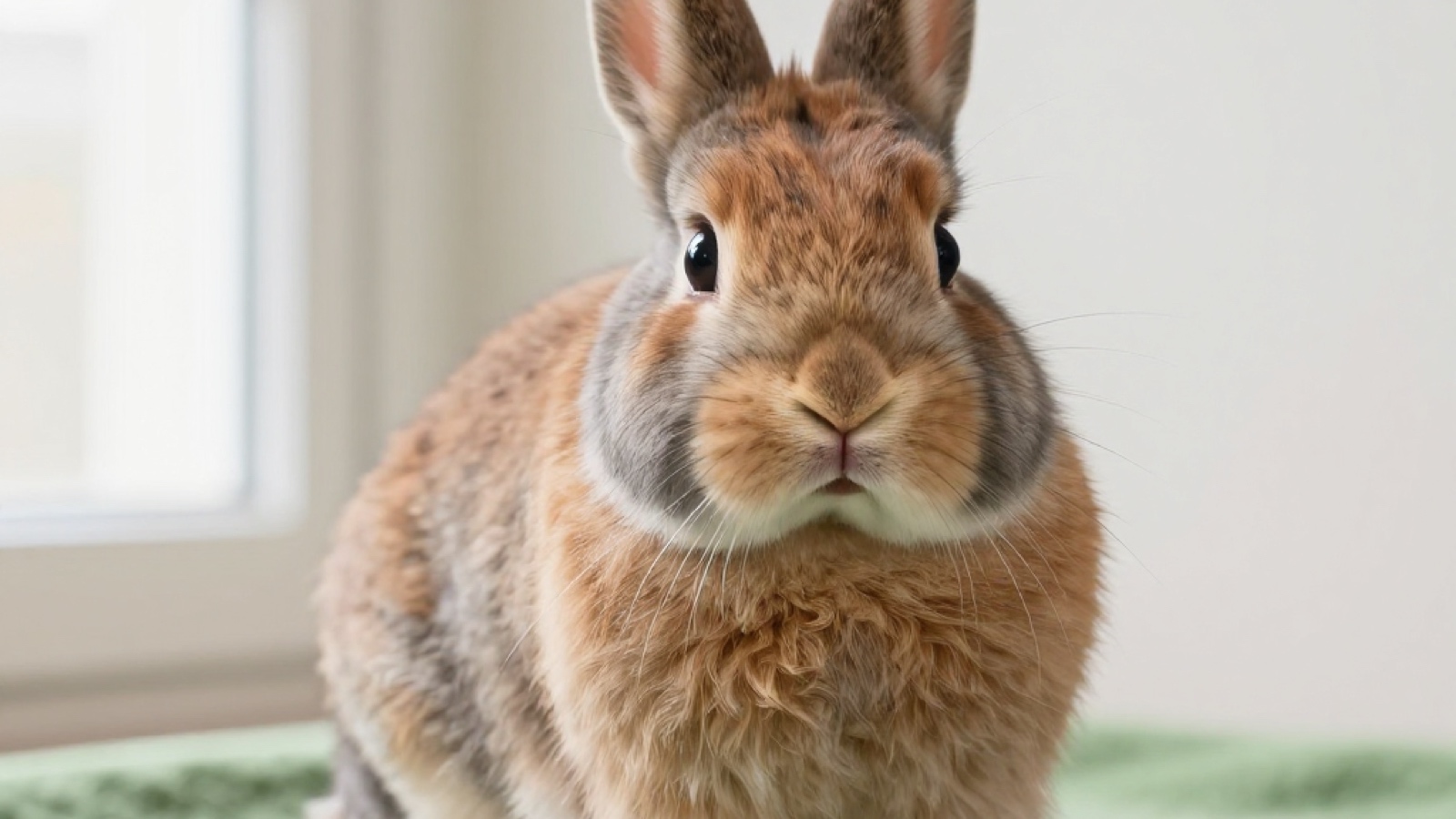
Netherland dwarf rabbit: The smallest domestic rabbit breed, weighing 1.1–2.5 lbs, distinguished by a compact cobby body, short erect ears (max 2.5 inches), large eyes relative to head size, and a rounded “baby face” appearance that persists into adulthood. The breed was developed in the Netherlands in the early 1900s by crossing Polish rabbits with small wild rabbits, and was officially recognized by the American Rabbit Breeders Association (ARBA) in 1969.
Originally bred for fur and meat production — their small size was an advantage in post-war Europe when resources were scarce — the Netherland dwarf rabbit gradually evolved into a companion pet. Today it’s one of the most recognizable and popular rabbit breeds worldwide, known primarily for its perpetually youthful appearance. That round face and compact body make adult Netherland Dwarf rabbits look like kits even at full maturity, which is a big part of their appeal.
ARBA recognizes 25+ color varieties across all major color groups including Agouti, Self, Shaded, Broken, Tan Pattern, Wide Band, and Pointed White. This diversity means you can find this breed in virtually any color, though some varieties like Black, Blue-Eyed White, and Chestnut Agouti are the most commonly available. For understanding general rabbit behavior and how this breed fits in, our behavior guide covers all rabbit species.
Netherland Dwarf Rabbit Size & Weight
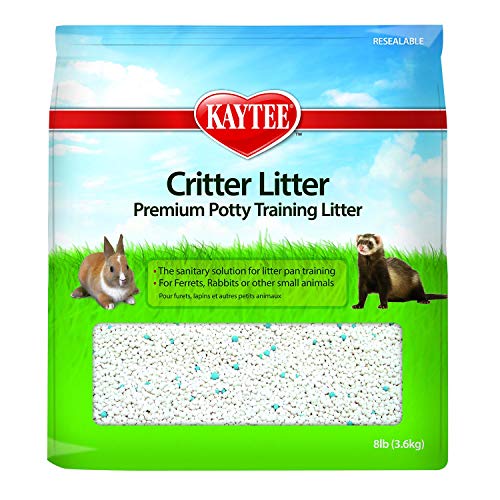
Kaytee Premium Potty Training Litter is a quality option worth considering for your setup.
One of the first questions potential owners ask is about Netherland dwarf rabbit size — and it’s the breed’s defining characteristic. They are the smallest recognized domestic rabbit breed in the world.
| Attribute | Measurement |
|---|---|
| Adult weight | 1.1–2.5 lbs (0.5–1.1 kg) |
| Body length | 5–6 inches |
| Ear length | Max 2.5 inches (shortest of all breeds) |
| Maturity | 6–8 months |
| Body type | Compact, cobby, rounded |
A Netherland dwarf rabbit full grown weighs no more than 2.5 pounds — that’s lighter than a bag of coffee. Typical netherland dwarf rabbit weight ranges from 1.1 to 2.5 lbs, with show specimens held to stricter ARBA standards. Their compact, cobby body shape is distinctly different from the more elongated build of breeds like the Flemish Giant rabbit. The short, erect ears (never exceeding 2.5 inches) and disproportionately large eyes create that signature “baby face” look.
For rabbit cage size requirements specific to this breed, don’t make the mistake of assuming their small body means they need a small cage — more on that in the housing section below. See our best rabbit cage guide for product recommendations suited to small breeds.
Netherland Dwarf Rabbit Colors & Varieties
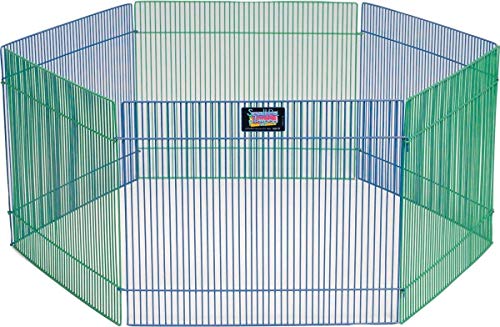
Many owners find that MidWest Small Animal Playpen works well for their pet’s needs.
Netherland Dwarf rabbits come in more color varieties than most people realize. ARBA recognizes 25+ colors across seven major color groups:
| Color Group | Examples | Eye Color |
|---|---|---|
| Agouti | Chestnut, Chinchilla, Opal, Lynx | Brown |
| Self | Black, Blue, Chocolate, Lilac | Matching (dark) |
| Shaded | Siamese Sable, Smoke Pearl, Sable Point | Brown |
| Broken | Any color + white patches | Variable |
| Tan Pattern | Black Otter, Chocolate Otter, Silver Marten | Brown |
| Wide Band | Cream, Orange, Red, Fawn | Brown |
| Pointed White | White body + dark points (ears, nose, feet) | Pink/Blue |
The most popular and widely available colors are Black, Blue-Eyed White, Chestnut Agouti, and Orange. Show-quality Netherland dwarf rabbits have stricter color standards than pet-quality animals — color distribution, shading, and eye color all factor into judging. For general rabbit grooming tips that apply to all coat colors, our grooming guide covers techniques for both short and long-haired breeds.
Netherland Dwarf Rabbit Lifespan
For this purpose, Mr. Pen Inner Leash is a popular choice among pet owners.
Netherland dwarf rabbit lifespan is one of the breed’s strongest selling points. With proper care, these rabbits live 7–12 years, averaging around 10 years. That’s comparable to or longer than most dog breeds, making them a significant long-term commitment.
| Breed | Average Lifespan | Max Reported |
|---|---|---|
| Netherland Dwarf | 7–12 years (avg 10) | 14+ years |
| Lionhead | 7–10 years | 12 years |
| Holland Lop | 7–14 years | 15 years |
| Flemish Giant | 5–8 years | 10 years |
Small rabbit breeds generally outlive giant breeds, and the Netherland dwarf rabbit is no exception. The key factors that affect lifespan are diet quality (80% hay is non-negotiable), housing (indoor-only is strongly recommended), spay/neuter status (fixed rabbits live 1–2 years longer on average), and access to an exotic vet experienced with rabbits. For comprehensive data across all breeds, our rabbit lifespan guide has detailed statistics.
Netherland Dwarf Rabbit Temperament & Personality
The Netherland dwarf rabbit personality is probably the most misunderstood aspect of the breed. They have a reputation for being “mean” or “aggressive,” but that reputation is unfair — what people are actually seeing is fear, not aggression.
Core temperament traits:
- Shy and skittish with strangers and new situations
- Bonds very strongly with their trusted person (often just one person)
- Intelligent and observant — they learn routines quickly
- Moderate activity level — needs daily exercise but not hyperactive
- Can be territorial about their cage space
The defensive behavior that earns them the “aggressive” label is almost always fear-based. A rabbit that nips when you reach into its cage isn’t being mean — it’s reacting to a perceived threat. Their small size makes everything around them seem enormous, and fast movements or loud noises can be genuinely frightening. With patient, consistent socialization — sitting near the cage, offering treats from your hand, gradually increasing contact — most become calm, trusting, and even affectionate companions. For netherland dwarf rabbit training, start with litter training and hand-feeding to build trust before attempting more advanced behaviors.
They’re not the best choice for households with young children. Kids tend to be loud and grabby, which triggers the fear response in Netherland Dwarfs. But for adults, seniors, or quiet households willing to invest in the bonding process, a Netherland dwarf rabbit can be an incredibly rewarding companion. Our rabbit behavior guide covers socialization techniques that work well for this breed.
Are Netherland Dwarf Rabbits Good Pets?
This is the question everyone asks, and the answer depends entirely on your expectations and household. A Netherland dwarf rabbit is an excellent pet for the right owner — and a frustrating experience for the wrong one.
Best for: Adults, seniors, quiet households, experienced rabbit owners, apartment dwellers wanting a compact pet, people who appreciate a pet with personality rather than immediate cuddliness.
Not ideal for: Families with young children under 8, first-time rabbit owners who expect a cuddly toy, households with loud dogs or cats, people who want a pet that’s immediately outgoing.
| Pros | Cons |
|---|---|
| Smallest breed — very compact | Skittish with strangers |
| Long lifespan (7–12 years) | May nip when frightened |
| Low grooming needs (short coat) | Delicate — not child-proof |
| Intelligent and trainable | Bonds with one person primarily |
| Beautiful “baby face” appearance | Dental issues common |
| Cheaper to feed than large breeds | Harder to find than common breeds |
A Netherland dwarf rabbit can live indoors comfortably in a relatively small footprint, which makes them popular apartment pets. They should never be housed outdoors — indoor living protects them from predators, temperature extremes, and parasites while allowing them to bond with their owners. For setting up their living space, our rabbit cage setup guide covers everything you need.
Netherland Dwarf Rabbit Diet & Nutrition
Netherland dwarf rabbit diet follows the same ratios as all rabbit breeds — 80% hay, 10% greens, 8% pellets, 2% treats — but the portions are significantly smaller due to their tiny body size. This is where many owners make mistakes: overfeeding a Netherland Dwarf is easy because the portions seem so small, but obesity is a real risk for this breed. When choosing netherland dwarf rabbit food, prioritize Timothy-based pellets over alfalfa-based ones, especially for adults.
| Food Category | Daily Portion (ND) | Notes |
|---|---|---|
| Timothy hay | Unlimited | Body weight equivalent daily |
| Fresh greens | 3/4–1 cup | Rotate 2-3 varieties |
| Timothy pellets | 1/8 cup | Smaller than most breeds |
| Treats | 1 small piece, 2-3x/week | Fruit or commercial treat |
| Water | Always available | Bottle preferred over bowl |
The most critical component is unlimited Timothy hay. These rabbits are especially prone to dental malocclusion, and constant hay chewing is the primary way to keep their teeth properly worn down. Without adequate hay, dental problems develop quickly and can become life-threatening.
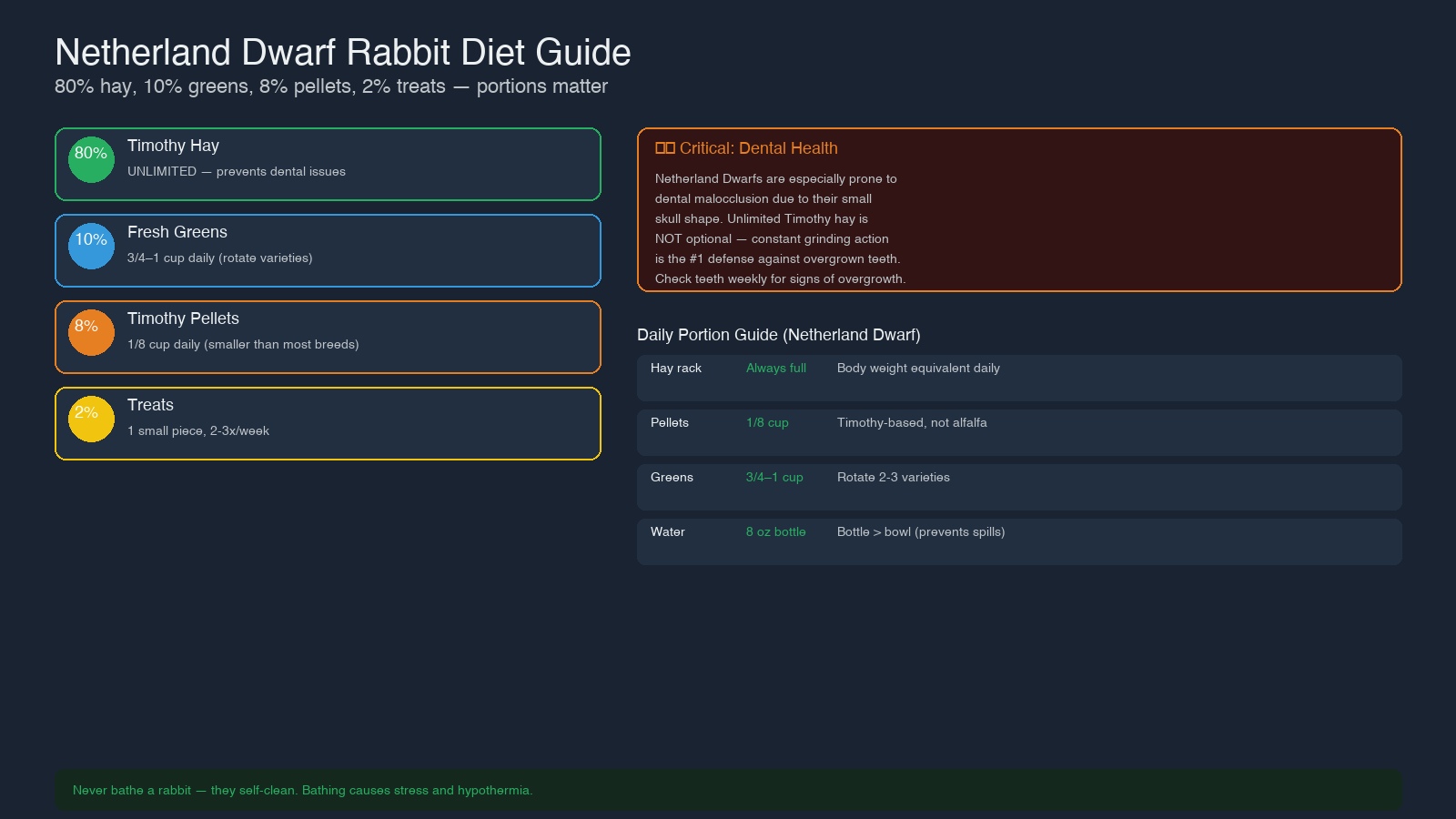
A water bottle is preferable to a bowl — these small rabbits are easily able to tip bowls or get their dewlap wet, which can lead to skin infections. For specific food recommendations, our rabbit diet guide and best rabbit food reviews cover quality pellet and hay brands.
Netherland Dwarf Rabbit Housing & Cage Size
The single most common mistake new owners make is buying a cage that’s too small. The logic seems reasonable — a 2-pound rabbit doesn’t need much space, right? Wrong. These rabbits need just as much floor space and exercise time as larger breeds. Their small bodies are designed for movement, and confinement leads to obesity, muscle atrophy, and behavioral problems.
Minimum enclosure: 24×36 inches of floor space with a solid bottom (no wire flooring — it causes sore hocks). This is the absolute minimum, and I’d recommend going larger if possible.
Recommended setup: A 4×4 foot exercise pen (x-pen) with a hide house, litter box, hay rack, and water bottle inside, plus 4+ hours of daily free-roam time in a rabbit-proofed room. This gives your Netherland dwarf rabbit room to hop, binky, and explore. When choosing a netherland dwarf rabbit cage, look for solid flooring and at least 24×36 inches — the netherland dwarf rabbit cage size should never be underestimated.
Essential cage items:
- Solid floor with appropriate bedding or litter
- Hide house or covered area for security
- Litter box (corner-style works well for small breeds)
- Hay rack or feeder
- Water bottle (8 oz is sufficient)
- Chew toys for dental health
Temperature range should be kept between 50–77°F. This breed is sensitive to heat due to their compact body — they can’t dissipate heat as efficiently as larger breeds. Avoid placing the enclosure in direct sunlight or near heat sources. For detailed sizing requirements, our rabbit cage size guide has breed-specific recommendations, the best rabbit cage guide covers product options, and our rabbit hutch plans guide shows how to build a custom enclosure scaled for a Netherland Dwarf.
Netherland Dwarf Rabbit Grooming
One of the practical advantages of this breed is their low-maintenance coat. Unlike long-haired breeds like the Lionhead rabbit that need daily brushing, the Netherland Dwarf’s short, dense fur requires minimal attention — a real plus for netherland dwarf rabbit care routines.
| Grooming Task | Frequency | Notes |
|---|---|---|
| Brushing | 1–2x per week | Soft bristle brush, increase during shedding seasons |
| Nail trimming | Every 4–6 weeks | Small animal nail clippers |
| Ear check | Weekly | Look for redness, discharge, or mites |
| Teeth check | Weekly | Look for overgrowth or misalignment |
| Bathing | Never | Rabbits self-clean; bathing causes stress and hypothermia |
Shedding increases in spring and fall — during these periods, brush 3–4 times per week to prevent hair ingestion, which can contribute to GI stasis. For a complete grooming walkthrough, our rabbit grooming guide covers techniques, tools, and common issues for all rabbit breeds.
Netherland Dwarf Rabbit Health Problems
Health problems are an important consideration before bringing one home. The dwarf gene that gives this breed its compact size also creates some specific vulnerabilities.
| Condition | Cause | Symptoms | Prevention | Severity |
|---|---|---|---|---|
| Dental malocclusion | Small skull shape = misaligned teeth | Drooling, weight loss, not eating | Unlimited hay, regular vet checks | High |
| GI stasis | Slow gut motility | Not eating, small/no droppings, bloating | High-hay diet, exercise, hydration | High |
| E. cuniculi | Parasitic infection | Head tilt, balance issues, kidney problems | Clean environment, vet testing | Medium |
| Respiratory infections | Short snout anatomy | Sneezing, nasal discharge, labored breathing | Clean bedding, good ventilation | Medium |
| Obesity | Overfeeding (easy with small breed) | Weight gain, lethargy, soft stool | Portion control, daily exercise | Medium |
| Ear mites | Parasite | Head shaking, scratching, crusty ears | Weekly ear checks, clean environment | Low |
Dental malocclusion is the number one health concern for this breed. Their small skull shape means the upper and lower teeth don’t always align properly, which prevents natural wearing down. If left untreated, overgrown teeth can cause mouth ulcers, abscesses, and eventually prevent the rabbit from eating entirely. This is why unlimited hay is non-negotiable — the constant grinding action is the best defense against dental problems.
Emergency signs that require immediate vet attention: Not eating or drinking for 12+ hours, head tilt, labored breathing, bloated or distended belly, severe lethargy, or bloody urine. Rabbits hide illness well, so by the time symptoms are visible, the condition is often serious. Find an exotic vet before you need one — not all vets treat rabbits. Our rabbit health guide covers common conditions, prevention strategies, and when to seek emergency care.
Dwarf gene genetics: When two Netherland dwarf rabbits breed, the dwarf gene combination produces 25% “peewee” kits that carry a lethal double-dwarf gene (DD). These kits are significantly smaller, non-viable, and typically die within days of birth. This is a well-documented genetic reality of the breed that responsible breeders manage carefully. A netherland dwarf rabbit baby (kit) should only come from breeders who understand these genetics and can provide health documentation.
Netherland Dwarf Rabbit Cost
The purchase price is relatively affordable, but ongoing care costs add up over their 7–12 year lifespan. The netherland dwarf rabbit price ranges from $20–$100 depending on source:
Purchase price:
- Breeder: $20–$100 (show quality $75–$200+)
- Rescue: $30–$100 (often includes spay/neuter and initial vet check)
- Pet store: $25–$75 (availability varies)
Monthly care costs:
| Category | Monthly Cost |
|---|---|
| Timothy hay | $8–$15 |
| Pellets | $3–$5 |
| Fresh vegetables | $8–$12 |
| Litter | $5–$8 |
| Vet care (annual amortized) | ~$10 |
| Total monthly | $34–$50 |
One-time setup costs: Enclosure ($50–$200), spay/neuter ($200–$400), initial vet check ($50–$100), supplies (litter box, bowls, toys — $30–$50). Total upfront investment: $300–$700.
The good news is that they’re cheaper to maintain than larger breeds — less food, less litter, and smaller enclosures. But over a rabbit lifespan of 10+ years, those monthly costs add up to $4,000–$6,000 total.
Netherland Dwarf Rabbit vs Other Rabbit Breeds
Comparing this breed to other popular rabbit breeds helps clarify where it fits and whether it’s the right choice for you.
| Feature | Netherland Dwarf | Lionhead | Holland Lop | Flemish Giant |
|---|---|---|---|---|
| Weight | 1.1–2.5 lbs | 2.5–3.75 lbs | 3–4 lbs | 10–20+ lbs |
| Lifespan | 7–12 years | 7–10 years | 7–14 years | 5–8 years |
| Grooming | 1–2x/week (low) | 3–7x/week (high) | 1–2x/week (low) | 1x/week (low) |
| Temperament | Shy, bonds deeply | Friendly, social | Very friendly, relaxed | Gentle, docile |
| Child-friendly | No | Moderate | Yes | Yes (supervised) |
| Space needed | Medium | Medium | Medium | Very large |
| Monthly cost | $34–$50 | $40–$70 | $40–$60 | $60–$100+ |
| Difficulty | Intermediate | Beginner | Beginner | Advanced |
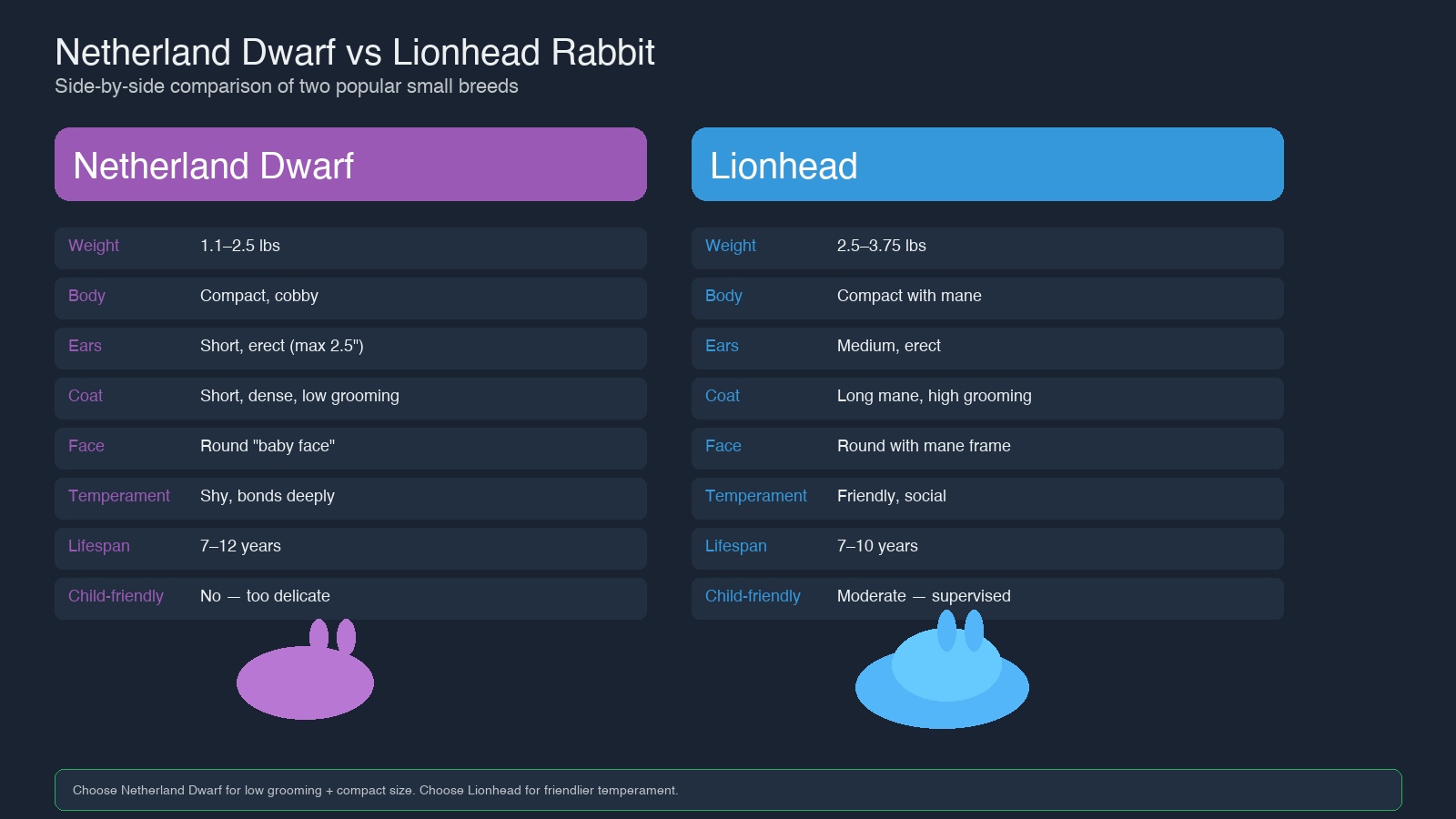
Netherland Dwarf vs Lionhead: The Netherland dwarf rabbit is smaller, requires less grooming, and has a more compact body. The Lionhead rabbit is friendlier and more social out of the box, but requires significantly more grooming due to their mane. Both are similar in space requirements and cost.
Netherland Dwarf vs Holland Lop: The Holland Lop rabbit is the most beginner-friendly of the three small breeds. They’re slightly larger, significantly more relaxed and outgoing, and easier to handle. The Netherland dwarf rabbit is more independent and takes longer to bond, but their smaller size and lower grooming needs appeal to owners who want a low-maintenance compact pet.
Netherland Dwarf vs Flemish Giant: These are at opposite extremes. The Flemish Giant rabbit weighs 5–10x more, needs a massive enclosure, and has a shorter lifespan. However, Flemish Giants are notably gentler and more tolerant of handling, making them better for families. The Netherland dwarf rabbit is the better choice for apartment living and owners who want a longer-lived, smaller-footprint pet.
Product Recommendations
Here are some products mentioned in this guide:
Frequently Asked Questions
Are Netherland Dwarf rabbits good pets? Yes, for adults and experienced owners. They’re intelligent, compact, and form deep bonds — but their skittish nature makes them unsuitable for young children.
How big does a Netherland Dwarf rabbit get? 1.1–2.5 lbs fully grown. They’re the smallest recognized domestic rabbit breed with a body length of 5–6 inches.
How long do Netherland Dwarf rabbits live? 7–12 years with proper care, averaging around 10 years. Indoor housing and a hay-heavy diet are the biggest longevity factors.
What do Netherland Dwarf rabbits eat? 80% unlimited Timothy hay, 10% fresh greens (3/4–1 cup), 8% pellets (1/8 cup), and 2% treats. Same ratios as all rabbits, just smaller portions.
Are Netherland Dwarf rabbits aggressive? No — they’re shy and defensive. Nipping is fear-based, not aggressive. Patient socialization resolves this in most cases.
Are Netherland Dwarf rabbits friendly? Yes, once bonded. Expect 1–3 weeks of adjustment, after which they become affectionate and actively seek interaction with their trusted person.
How much space does a Netherland Dwarf rabbit need? At least 24×36 inches of enclosure space plus 4+ hours of daily free-roam. Small body does not mean small space needs.
What health problems do Netherland Dwarf rabbits have? Dental malocclusion is the primary concern due to their small skull. GI stasis, E. cuniculi, respiratory infections, and obesity are also common.
Can Netherland Dwarf rabbits live inside? Yes — they should. Indoor living is strongly recommended for all rabbit breeds, and especially for small breeds like the Netherland Dwarf.
How much does a Netherland Dwarf rabbit cost? $20–$100 to purchase, $34–$50/month ongoing, and $300–$700 in initial setup costs.