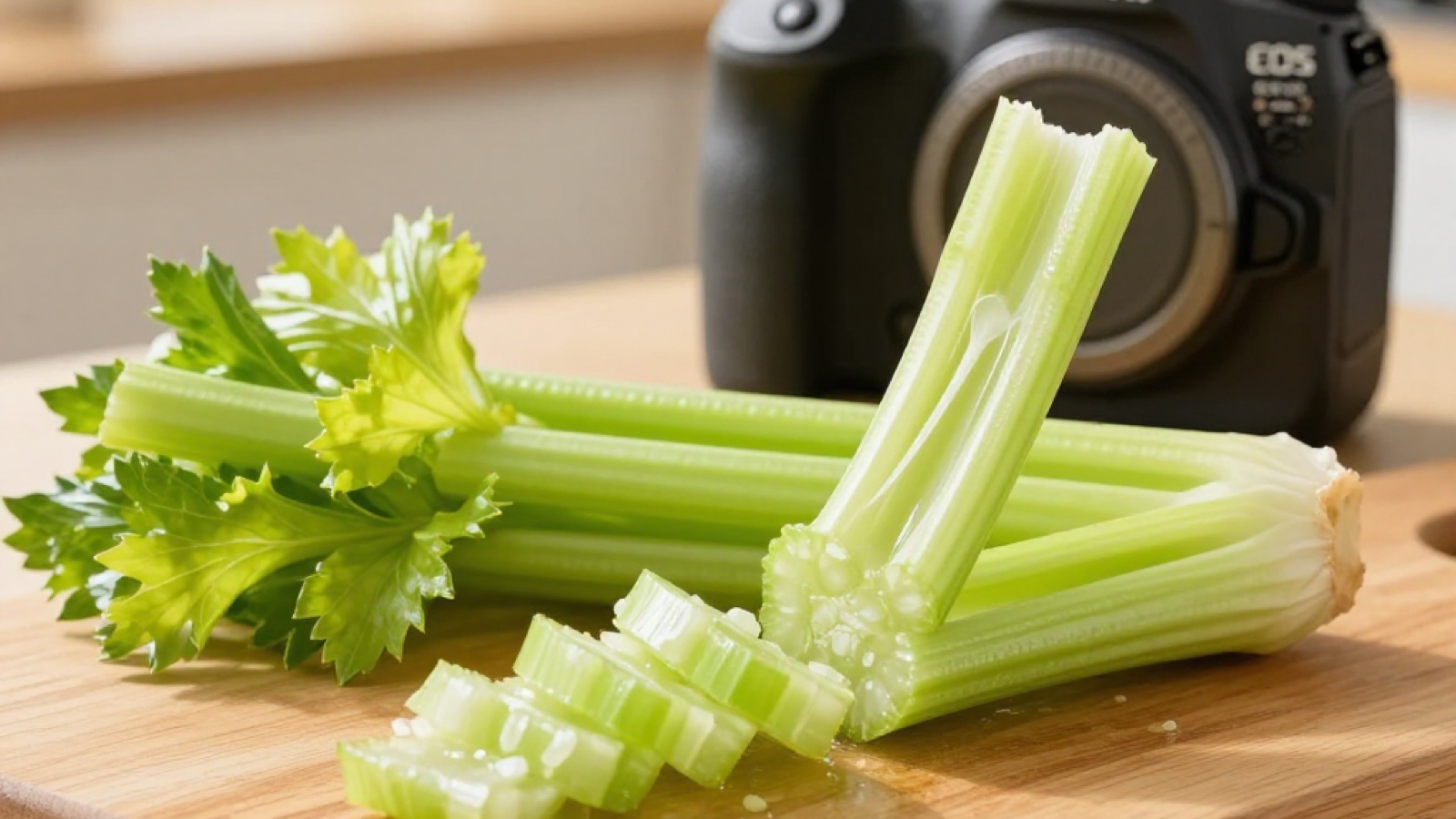
Quick Answer: Can Hamsters Eat Celery?
Yes — but only if you remove the stringy fibers first and cut it into tiny pieces.
| Syrian Hamster | Dwarf Hamster |
|---|---|
| Safe part | Inner flesh only (no strings) |
| Serving size | 1 teaspoon, finely chopped |
| Frequency | 2-3 times per week |
| Must remove | All stringy fibers |
💡 TL;DR: 1 tsp chopped celery (no strings) 2-3x/week for Syrians, ½ tsp 1-2x/week for dwarfs. The stringy fibers are the #1 danger — they can choke a hamster. Cut pieces to ¼ inch maximum.
The answer is yes with a big asterisk. Celery is one of the few vegetables where preparation method matters more than quantity.
The stringy fibers running through each stalk are genuinely dangerous for a hamster’s small throat and digestive tract. But once you remove those fibers (about 30 seconds of work), celery is a solid low-calorie, low-sugar treat. See our hamster diet guide for the full picture on safe foods.
Nutritional Value of Celery for Hamsters
Living World Carrier Large is a quality option worth considering for your setup.
USDA nutritional data — celery, raw USDA FoodData Central:
| Nutrient | Per 100g Celery | Per 1 tsp (~5g) | Benefit for Hamsters |
|---|---|---|---|
| Water | 95.4g (95%) | ~4.8g | Hydrating — but diarrhea risk if overfed |
| Calories | 16 kcal | ~0.8 kcal | Very low calorie |
| Sugar | 1.34g | ~0.07g | ✅ Low — safer than most fruit |
| Fiber | 1.6g | ~0.08g | Moderate fiber — supports digestion |
| Protein | 0.69g | ~0.03g | Minimal |
| Vitamin K | 29.3 µg | ~1.5 µg | Blood clotting, bone health |
| Vitamin A | 22 µg | ~1.1 µg | Eye and skin health |
| Vitamin C | 3.1 mg | ~0.16 mg | Mild immune support |
| Potassium | 260 mg | ~13 mg | Heart and muscle function |
| Folate | 36 µg | ~1.8 µg | Cell growth and repair |
| Sodium | 80 mg | ~4 mg | ⚠️ Relatively high for a vegetable |
Nutritionally, celery is interesting. Celery is extremely low in sugar (1.34g per 100g — far less than watermelon at 6.2g or bananas at 12.2g). The standout nutrient is vitamin K at 29.3 µg per 100g, important for bone metabolism and blood clotting.
But the sodium content (80 mg per 100g) is worth noting — that’s higher than most vegetables.
Celery for Hamsters Benefits
The three real benefits of feeding celery to hamsters:
-
Very low sugar — At 1.34g sugar per 100g, celery is one of the safest vegetables for diabetes-prone dwarf hamsters. Compare that to carrots (4.7g sugar) or grapes (16g sugar). If you have a Campbell’s dwarf hamster, celery is a better treat choice than almost any fruit.
-
Vitamin K — Celery provides 29.3 µg of vitamin K per 100g, which supports bone density and proper blood clotting. This is a nutrient many other hamster-safe vegetables lack in significant amounts.
-
Dental wear — The crunchy texture (when properly prepared in small pieces) gives hamsters something to gnaw on, which helps wear down their continuously growing teeth. This is a mechanical benefit, not nutritional, but it matters for hamster dental health.
The Three Risks: Fibers, Water, and Sodium
Many owners find that Trixie Pico Transport Crate works well for their pet’s needs.
Risk 1: Choking Hazard from Stringy Fibers (THE Big One)
This is the single most important thing to know about celery for hamsters. Celery stalks contain tough collenchyma strands — the stringy fibers that run lengthwise through the stalk. These fibers make celery a “prepare with caution” food, not a simple grab-and-feed treat.
A hamster’s esophagus is roughly 2mm wide. Celery strings are 0.5-1mm thick but can be 5-10mm long or more if not cut properly. A string can get lodged in the throat, wrap around the tongue, or ball up in the stomach and cause an intestinal blockage.
This is the primary reason some vets list celery as “feed with caution.”
How to eliminate this risk: Snap or cut a small piece of celery, then use your fingernail or a knife to peel off the stringy fibers on the outer surface. Pull them off like peeling a string cheese. Then chop the remaining flesh into pieces no larger than ¼ inch (about 5mm).
This takes 30 seconds and is why the answer to can hamsters eat celery always comes with a preparation warning — it removes the choking risk entirely.
Risk 2: Diarrhea from High Water Content
Celery is 95.4% water — even more than watermelon (92%). A hamster’s digestive system processes food in 12-16 hours, and too much water moving through that quickly produces loose, watery stools.
One teaspoon of celery (5g) contains about 4.8g of water. For a Syrian hamster weighing 120-200g, that’s manageable. For a dwarf hamster weighing 25-45g, that same teaspoon represents a much larger proportion of body weight — which is why the dwarf serving is only ½ teaspoon.
Signs of water-induced diarrhea: loose or watery droppings, wetness around the tail area, decreased appetite for regular pellets, lethargy. If you see these signs after feeding celery, remove all fresh food and monitor for 12-24 hours. If diarrhea persists beyond 24 hours, see a vet — it may have developed into wet tail, a bacterial infection that can be fatal within 48 hours.
Risk 3: Sodium Content
At 80 mg of sodium per 100g, celery contains more sodium than most vegetables. One teaspoon serving provides about 4 mg of sodium — not dangerous on its own, but worth monitoring if you feed celery multiple times per week alongside a commercial pellet mix that already contains sodium.
This isn’t a reason to avoid celery, but it is a reason to stick to the recommended frequency (2-3x/week for Syrians, 1-2x/week for dwarfs) rather than feeding it daily.
Celery Stalk vs Leaves vs Root: What’s Safe?
For this purpose, Kaytee Come Along Medium is a popular choice among pet owners.
| Part | Safe? | Why |
|---|---|---|
| Inner stalk flesh (strings removed) | ✅ Yes | Safe in small, chopped pieces |
| Outer stalk (with strings) | ❌ No | Stringy fibers = choking hazard |
| Celery leaves | ✅ Yes (preferred) | No stringy fibers, more vitamins |
| Celery root (celeriac) | ⚠️ Small amounts | Dense, starchy — feed less, cook preferred |
| Celery seeds | ❌ No | Too concentrated, medicinal properties |
Celery Leaves
Yes — and celery leaves are actually safer than the stalks. Leaves don’t have the stringy fibers that make stalks dangerous. They also pack more nutrition per gram: higher concentrations of vitamin A and vitamin C than the stalk itself.
The one concern with celery leaves is pesticides. Celery consistently appears on the Environmental Working Group’s Dirty Dozen list — it’s one of the most pesticide-contaminated vegetables. Wash leaves thoroughly under running water for at least 30 seconds.
Organic celery is the better choice if it’s available.
Celery Sticks
No — never give a hamster a whole celery stick or a long strip. The stringy fibers are most dangerous in long, intact pieces because a hamster will try to gnaw on them and can easily get fibers stuck in the throat. Even if you think your hamster will just nibble the soft inside, the outer strings are right there and accessible.
Always prepare celery by removing strings and cutting into ¼ inch pieces. A celery stick is a choking hazard, not a chew toy. If you want something for dental wear, use untreated wooden chew sticks instead.
Can Syrian Hamsters Eat Celery?
Yes — Syrian hamsters can eat 1 teaspoon of chopped, string-free celery, 2-3 times per week. Syrians are the largest hamster breed (120-200g), so they handle the water and sodium content best. Their larger size also means the ¼ inch pieces are a more appropriate bite size relative to their mouth.
Syrians have the lowest diabetes risk among hamster breeds, so the small amount of sugar in celery (0.07g per serving) is not a concern. If your Syrian is a healthy weight and eats a balanced pellet diet, celery is one of the better vegetable treats you can offer. For more on Syrian hamster diet, see our Syrian hamster care guide.
Can Dwarf Hamsters Eat Celery?
Yes — but only ½ teaspoon of finely chopped pieces, 1-2 times per week. Dwarf hamsters are smaller (20-45g) and more prone to diabetes, which means two things: smaller portions and less frequent feeding.
The good news is that celery’s extremely low sugar content (1.34g per 100g) makes it one of the safer treats for diabetes-prone breeds. Compared to apples (10g sugar) or strawberries (5g sugar), celery is a much better choice for a Campbell’s or Winter White dwarf. For more on this, see our hamster diabetes guide.
For dwarf breeds, the stringy fiber risk is actually higher because their throats are smaller. Be extra diligent about removing every fiber string and cutting pieces to ⅛ inch (3mm) for dwarf breeds.
Celery Portions by Hamster Breed
Every breed handles celery differently. Here’s the exact breakdown:
| Breed | Max Portion | Frequency | Special Notes |
|---|---|---|---|
| Syrian | 1 tsp chopped | 2-3x/week | Can handle slightly larger pieces |
| Winter White Dwarf | ½ tsp | 1-2x/week | Diabetes-prone, limit sugar |
| Campbell’s Dwarf | ½ tsp | 1-2x/week | Same as Winter White |
| Roborovski | ¼ tsp | 1x/week | Very small, high choking risk |
| Chinese Hamster | ½ tsp | 1-2x/week | Strip all fibers carefully |
Key takeaway: If you have a Roborovski, the portion is literally ¼ teaspoon — about the size of a grain of rice. Dwarf breeds need pieces cut to ⅛ inch (3mm), not the ¼ inch that Syrians can handle.
How to Prepare Celery for Your Hamster
- Choose fresh celery — look for firm, bright green stalks that snap cleanly. Avoid limp, yellowing, or rubbery stalks. Organic is preferred since celery is heavily pesticide-treated.
- Cut a 1-inch section from the thinner, inner stalks (these have fewer fibers than the thick outer stalks).
- Remove ALL stringy fibers — use your fingernail or a small knife to peel off the tough strings running along the outside. This is the most critical step. Check both sides of the piece.
- Chop into tiny pieces — ¼ inch (5-6mm) for Syrians, ⅛ inch (3mm) for dwarf hamsters. Pieces should be small enough that your hamster can’t possibly choke on them.
- Serve at room temperature — cold celery from the fridge can cause stomach cramps. Let pieces sit for 10 minutes before serving.
- Remove uneaten celery after 1 hour — hamsters stash food, so check hiding spots too. Uneaten vegetables spoil quickly and grow bacteria.
- Wash your hands before and after handling — both for your hamster’s safety and yours (salmonella risk goes both ways).
Signs Your Hamster Ate Too Much Celery
| Sign | Severity | What to Do |
|---|---|---|
| Slightly loose stool | 🟡 Mild | Remove all fresh food, monitor 12 hours |
| Watery diarrhea | 🟠 Moderate | Remove fresh food, offer dry pellets + water, monitor 24h |
| Wet tail area, lethargic | 🔴 Severe | Vet immediately — may be wet tail |
| Choking/gagging | 🔴 Severe | Vet immediately — fiber may be lodged in throat |
| Decreased appetite | 🟡 Mild | Skip next celery serving, monitor food intake |
| Excessive drinking | 🟠 Moderate | Possible sodium intake — stop celery, monitor 24h |
Choking Emergency
If you see your hamster gagging, pawing at its mouth, or struggling to breathe after eating celery, a fiber string may be lodged in the throat. Do not attempt to pull it out yourself — you can push it deeper or damage the throat tissue. Take your hamster to an exotic vet immediately.
This is exactly why preparation is so important. The 30 seconds it takes to remove stringy fibers can prevent a life-threatening emergency.
Celery vs Other Safe Vegetables
Not sure if celery is the right choice? Compare it with other hamster-safe veggies:
| Vegetable | Water % | Sugar | Choking Risk | Best For |
|---|---|---|---|---|
| Celery (peeled) | 95% | Low | Medium | Syrians, large breeds |
| Celery leaves | 83% | Low | Low | All breeds |
| Cucumber | 96% | Very Low | Low | All breeds (easier prep) |
| Broccoli | 89% | Low | Low | All breeds |
| Carrot | 88% | Medium | Low | Syrians only (higher sugar) |
| Bell Pepper | 92% | Low | Low | All breeds |
Bottom line: If you want zero choking risk, cucumber and bell pepper are safer alternatives with similar nutritional profiles. Celery leaves are actually the safest part of celery — no fibers, lower water content, and more vitamins per gram.
For more details on each vegetable, see our full guides:
| Vegetable | Sugar % | Serving | Why It’s Good |
|---|---|---|---|
| Cucumber | 1.7% | 1 tsp | Lowest sugar, easiest to prepare — no fibers |
| Broccoli | 1.7% | ½ tsp | High vitamin C, firm texture for dental wear |
| Carrots | 4.7% | ½ tsp | High vitamin A — but more sugar than celery |
| Bell peppers | 2.4% | ½ tsp | Very high vitamin C, low calorie |
| Lettuce | 0.7% | 1 tsp | Extremely low sugar and calorie — mostly water |
| Spinach | 0.4% | ½ tsp | Highest nutrient density — iron, calcium, vitamin K |
| Tomatoes | 2.6% | ½ tsp | Low sugar but acidic — watch for mouth irritation |
Other Foods Your Hamster Can Eat
Vegetables:
- Can Hamsters Eat Carrots?
- Can Hamsters Eat Broccoli?
- Can Hamsters Eat Cucumbers?
- Can Hamsters Eat Bell Peppers?
- Can Hamsters Eat Tomatoes?
- Can Hamsters Eat Lettuce?
- Can Hamsters Eat Spinach?
Fruits:
- Can Hamsters Eat Watermelon?
- Can Hamsters Eat Grapes?
- Can Hamsters Eat Bananas?
- Can Hamsters Eat Strawberries?
- Can Hamsters Eat Blueberries?
- Can Hamsters Eat Apples?
Proteins:
Product Recommendations
Here are some products mentioned in this guide:
FAQ
Can hamsters eat celery?
Yes, hamsters can eat celery in small amounts — but the stringy fibers are a serious choking hazard. Syrian hamsters can have 1 teaspoon of chopped celery 2-3 times per week. Dwarf hamsters can have ½ teaspoon 1-2 times per week. Always cut celery into tiny, fiber-free pieces.
Can hamsters eat celery leaves?
Yes, celery leaves are safer than stalks because they don’t have the stringy fibers that cause choking. Wash leaves thoroughly and offer 1-2 small leaves at a time. Celery is on the EWG Dirty Dozen list, so organic is best if available.
Why is celery dangerous for hamsters?
Celery has tough stringy fibers (collenchyma strands) that run the length of each stalk. These fibers can get stuck in the throat, wrap around the tongue, or cause intestinal blockage in a hamster’s small digestive tract.
How should I prepare celery for my hamster?
Cut a small piece of stalk, pull off ALL stringy fibers, then chop the remaining flesh into pieces no larger than ¼ inch (5mm). Serve at room temperature and remove uneaten celery after 1 hour. Never feed cold celery from the fridge.
Can hamsters eat celery every day?
No — celery should be an occasional treat, not a daily food. The high water content (95%) can cause diarrhea if fed too often. Syrian hamsters: 2-3 times per week maximum. Dwarf hamsters: 1-2 times per week maximum.
What happens if my hamster eats too much celery?
Too much celery causes diarrhea from the 95% water content, which can lead to dehydration. Signs of overfeeding include loose watery stools, wet tail area, lethargy, and decreased appetite. Remove all fresh food and monitor for 24 hours.
Can baby hamsters eat celery?
No — baby hamsters under 8 weeks should not eat celery or any fresh vegetables. Their digestive systems are still developing and cannot handle the water content and fiber. Introduce vegetables slowly after 8 weeks.
Can dwarf hamsters eat celery?
Yes, in very small amounts — ½ teaspoon of finely chopped pieces, 1-2 times per week. Dwarf hamsters are smaller (20-45g) and more prone to diabetes, so the serving must be smaller than for Syrians.