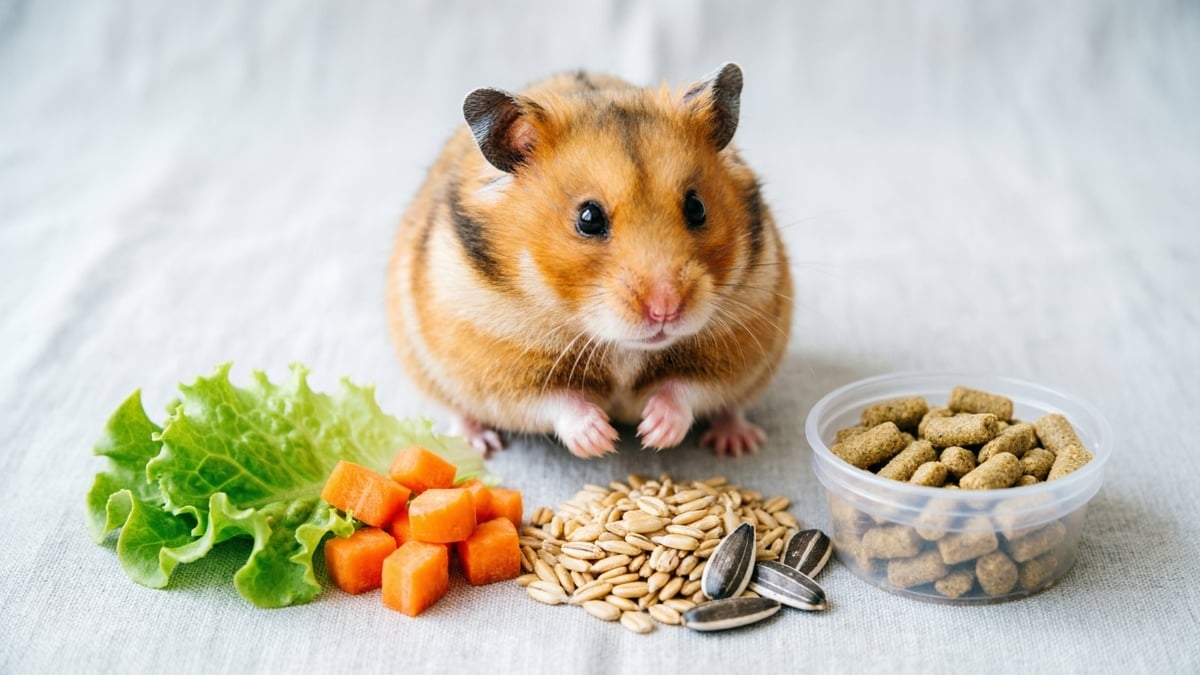
Proper nutrition is the foundation of your hamster’s health and longevity. Many new hamster owners unknowingly feed inappropriate foods, leading to obesity, diabetes, and other serious health problems. This comprehensive guide covers everything you need to know about feeding your hamster a balanced, healthy diet.
Understanding Hamster Nutritional Needs
Natural Diet
In the wild, hamsters are omnivores that eat:
- Seeds and grains
- Vegetables and fruits
- Insects and larvae
- Plant matter
This diverse diet provides the nutrients they need for energy, growth, and health.
Essential Nutrients
Protein (16-24%)
- Critical for growth, tissue repair, and immune function
- Young hamsters need higher protein (20-24%)
- Adults need 16-18%
Fat (4-7%)
- Provides energy and aids vitamin absorption
- Too much fat leads to obesity
- Dwarf hamsters are prone to diabetes from high-fat diets
Fiber (4-6%)
- Supports digestive health
- Found in hay, vegetables, and quality pellets
- Safe bedding like Niteangel aspen shavings matters too since hamsters may nibble on bedding
Vitamins and Minerals
- Vitamin A: Eye health, immune function
- Vitamin D: Bone health (from quality pellets)
- Vitamin E: Antioxidant, skin health
- Calcium: Bone and teeth health
- Phosphorus: Energy metabolism
Commercial Hamster Food: The Foundation
Types of Commercial Food
Seed Mixes
Pros:
- Variety of textures and flavors
- Natural foraging experience
- Palatable
Cons:
- Hamsters pick favorites (nutritional imbalance)
- Often high in sunflower seeds (high fat)
- Can lead to selective feeding
Best For: Supplementing pellets, not as sole diet
Recommended Brands:
- Supreme Tiny Friends Farm Harry Hamster Tasty Mix ($17-20)
- Buy on Amazon
- Vitakraft Wholesome Vita Smart Hamster Food ($8-10)
- Buy on Amazon
Pellets/Blocks
Pros:
- Complete nutrition in every bite
- Prevents selective feeding
- Helps wear down teeth
- Consistent nutrition
Cons:
- Less variety
- Some hamsters initially resist
Best For: Primary diet base
Recommended Brands:
- Oxbow Garden Select Hamster & Gerbil Food ($6-8)
- Buy on Amazon
- Mazuri Rat & Mouse Diet (excellent for hamsters too) ($10-12)
- Buy on Amazon
Lab Blocks
Pros:
- Scientifically formulated
- Complete nutrition
- Economical
Cons:
- Less palatable
- Boring
Best For: Breeding operations, health recovery
Recommended Feeding Approach
Best Practice: 70-80% pellets + 20-30% seed mix + fresh foods
This provides:
- Complete nutrition from pellets
- Variety and enrichment from seed mix
- Fresh nutrients from vegetables/fruits
Safe Fresh Foods for Hamsters
Vegetables (Feed 2-3 Times Weekly)
Safe Vegetables:
-
✅ Broccoli - Vitamin C, fiber
-
Amount: Small floret
-
Frequency: 2-3x per week
-
✅ Carrots - Vitamin A
-
Amount: 1-2 small slices
-
Frequency: 2x per week (high sugar)
-
✅ Cucumber - Hydration
-
Amount: Small slice
-
Frequency: 2-3x per week
-
✅ Spinach - Iron, vitamins
-
Amount: Small leaf
-
Frequency: 1-2x per week
-
✅ Kale - Nutrient-dense
-
Amount: Small piece
-
Frequency: 1-2x per week
-
✅ Bell Peppers - Vitamin C
-
Amount: Small piece (remove seeds)
-
Frequency: 2-3x per week
-
✅ Zucchini - Low calorie
-
Amount: Small slice
-
Frequency: 2-3x per week
-
✅ Cauliflower - Fiber
-
Amount: Small floret
-
Frequency: 1-2x per week
-
✅ Romaine Lettuce - Hydration
-
Amount: Small leaf
-
Frequency: 2-3x per week
-
Avoid: Iceberg lettuce (low nutrition)
-
✅ Green Beans - Fiber, vitamins
-
Amount: Small piece
-
Frequency: 1-2x per week
Fruits (Feed 1-2 Times Weekly - High Sugar)
Safe Fruits:
-
✅ Apple - Vitamin C, fiber
-
Amount: Small piece (no seeds!)
-
Frequency: 1-2x per week
-
✅ Banana - Potassium
-
Amount: Small slice
-
Frequency: 1x per week
-
✅ Blueberries - Antioxidants
-
Amount: 1-2 berries
-
Frequency: 1-2x per week
-
✅ Strawberries - Vitamin C
-
Amount: Small piece
-
Frequency: 1x per week
-
✅ Pear - Fiber
-
Amount: Small piece (no seeds)
-
Frequency: 1x per week
-
✅ Watermelon - Hydration
-
Amount: Small piece (seedless)
-
Frequency: 1x per week
-
✅ Grapes - Vitamins
-
Amount: 1 small grape (cut in half)
-
Frequency: 1x per week
Important: Fruits are treats! Dwarf hamsters are prone to diabetes - limit fruits even more strictly.
Protein Sources (Feed 1-2 Times Weekly)
Safe Proteins:
-
✅ Mealworms (live or dried)
-
Amount: 1-2 worms
-
Frequency: 1-2x per week
-
✅ Crickets (live or dried)
-
Amount: 1-2 crickets
-
Frequency: 1x per week
-
✅ Cooked Chicken (plain, unseasoned)
-
Amount: Small piece
-
Frequency: 1x per week
-
✅ Hard-Boiled Egg
-
Amount: Small piece (size of pea)
-
Frequency: 1x per week
-
✅ Tofu (plain)
-
Amount: Small cube
-
Frequency: 1x per week
Herbs and Plants
- ✅ Basil - Antioxidants
- ✅ Parsley - Vitamins A, C, K
- ✅ Cilantro - Vitamins
- ✅ Dill - Digestive health
- ✅ Mint - Fresh breath, digestion
- ✅ Wheatgrass - Nutrients
Dangerous Foods: What NOT to Feed
❌ Toxic Foods (Never Feed)
- 🚫 Almonds - Contain cyanide
- 🚫 Apple seeds - Contain cyanide
- 🚫 Apricot pits - Contain cyanide
- 🚫 Avocado - Toxic to small animals
- 🚫 Chocolate - Theobromine is toxic
- 🚫 Candy - Sugar, artificial ingredients
- 🚫 Onions - Cause anemia
- 🚫 Garlic - Toxic to small animals
- 🚫 Leeks - Toxic
- 🚫 Rhubarb - Toxic
- 🚫 Raw beans - Toxic
- 🚫 Raw potatoes - Toxic
- 🚫 Tomato leaves/stems - Toxic
- 🚫 Citrus fruits - Too acidic
- 🚫 Grapes/raisins (controversial) - Some sources say toxic, best to avoid
❌ Unhealthy Foods (Avoid)
- 🚫 Sugary foods - Diabetes risk
- 🚫 Salty foods - Health problems
- 🚫 Fried foods - Too much fat
- 🚫 Processed human foods - Unhealthy ingredients
- 🚫 Dairy products - Most hamsters are lactose intolerant
- 🚫 Iceberg lettuce - Low nutrition, diarrhea risk
- 🚫 Junk food - Obesity, health issues
⚠️ Foods to Limit
- ⚠️ Sunflower seeds - High fat (treat only, 1-2 per week)
- ⚠️ Pumpkin seeds - High fat (treat only)
- ⚠️ Nuts - High fat (very small amounts)
- ⚠️ Dried corn - Can cause impaction
- ⚠️ Bread - Low nutrition, can cause issues
Feeding Schedule and Portions
Daily Feeding Amount
| Hamster Size | Commercial Food | Fresh Food | Total Daily |
|---|---|---|---|
| Dwarf (Robo, Campbell’s, Winter White) | 1-2 teaspoons | Pea-sized | ~5-8 grams |
| Syrian (Golden, Teddy Bear) | 1-2 tablespoons | Marble-sized | ~8-12 grams |
| Chinese | 1-2 teaspoons | Pea-sized | ~6-8 grams |
Feeding Schedule
Evening Feeding (hamsters are nocturnal/crepuscular):
- Primary meal: Commercial food
- Fresh food: Vegetables/proteins
- Time: Dusk or early evening
Morning Check:
- Remove uneaten fresh food (prevents spoilage)
- Top up commercial food if empty
- Ensure water is fresh
Weekly Feeding Plan
Monday:
- Commercial food
- Small piece of broccoli
Tuesday:
- Commercial food only
Wednesday:
- Commercial food
- 1-2 mealworms
Thursday:
- Commercial food
- Small piece of cucumber
Friday:
- Commercial food
- Small piece of apple (treat)
Saturday:
- Commercial food
- Small piece of carrot
Sunday:
- Commercial food
- Small piece of hard-boiled egg
Water: Essential for Health
Water Requirements
- Amount: 10-30ml per day (varies by size, diet, temperature)
- Source: Fresh, clean water always available
Water Bottle vs. Bowl
Water Bottle (Recommended):
- ✅ Keeps water clean
- ✅ Prevents bedding from getting wet
- ✅ Easy to monitor intake
- ❌ Can leak or clog
- ❌ Must check daily
- A Choco Nose water bottle is a solid budget option, while a Lixit glass bottle is a premium, chew-proof alternative.
Water Bowl:
- ✅ Natural drinking position
- ✅ Easy access
- ❌ Gets dirty easily
- ❌ Can spill
- A no-drip automatic water bowl is a good compromise between bottle and bowl.
Best Practice: Provide both if possible
Water Quality
- Use filtered or bottled water if tap water contains chlorine
- Change water daily
- Clean bottle/bowl with hot water weekly
- Avoid distilled water (lacks minerals)
Top 10 Hamster Food Recommendations
Oxbow Garden Select Hamster & Gerbil Food
Rating: ⭐⭐⭐⭐⭐ Price: $6-8 for 1.5 lbs Protein: 18% Fat: 6%
Why It’s #1: Complete nutrition, high-quality ingredients, prevents selective feeding
Supreme Tiny Friends Farm Harry Hamster Tasty Mix
Rating: ⭐⭐⭐⭐ Price: $17-20 for 700g Type: Seed mix
Why It’s Great: Variety, natural ingredients, highly palatable
Mazuri Rat & Mouse Diet
Rating: ⭐⭐⭐⭐⭐ Price: $10-12 for 2 lbs Protein: 23% Type: Lab block
Why It’s Great: Scientifically formulated, complete nutrition
Kaytee Forti-Diet Pro Health
Rating: ⭐⭐⭐⭐ Price: $5-7 for 3 lbs Type: Seed mix with pellets
Why It’s Good: Affordable, fortified with probiotics
Vitakraft Wholesome Vita Smart
Rating: ⭐⭐⭐⭐ Price: $8-10 for 2 lbs Type: Natural seed mix
Why It’s Good: No artificial colors, variety
Brown’s Tropical Carnival
Rating: ⭐⭐⭐ Price: $8-10 for 2 lbs Type: Gourmet mix
Why It’s Popular: Variety, treats included
Vitakraft Sunseed Vita Prima
Rating: ⭐⭐⭐⭐ Price: $9-11 for 2 lbs Type: Premium seed mix
Why It’s Good: High-quality ingredients, ancient grains
Fluker’s Mealworms (Protein Treat)
Rating: ⭐⭐⭐⭐ Price: $5-7 for 3.5 oz Type: Protein treat
Why It’s Great: High protein, nutritious treat for hamsters
Special Dietary Considerations
Baby Hamsters (Under 3 Months)
- Higher protein needs (20-24%)
- Softer foods easier to eat
- Unlimited access to commercial food
- Small amounts of fresh foods introduced gradually
Senior Hamsters (Over 18 Months)
- Lower fat diet
- Softer foods if dental issues present
- Maintain protein for muscle mass
- Monitor weight closely
Dwarf Hamsters (Diabetes-Prone)
- Lower sugar diet
- Limit fruits strictly
- Avoid high-sugar vegetables (carrots, corn)
- Choose low-fat commercial foods
- Monitor for diabetes symptoms (excessive drinking, urinating)
Pregnant/Nursing Females
- Increase protein (20-24%)
- Increase food amount by 25-50%
- Provide extra calcium (small piece of cheese occasionally)
- Free-feed commercial food
Common Feeding Mistakes
1. Overfeeding
Problem: Obesity, reduced lifespan Solution: Measure food, monitor weight
2. Too Many Treats
Problem: Nutritional imbalance, obesity, diabetes Solution: Treats should be <10% of diet
3. Feeding Only Seed Mixes
Problem: Selective feeding, nutritional deficiency Solution: Use pellets as base, seed mix as supplement
4. Not Removing Fresh Food
Problem: Spoilage, bacterial growth Solution: Remove uneaten fresh food after 4-6 hours
5. Inconsistent Feeding Schedule
Problem: Stress, overeating Solution: Feed at same time each evening
6. Not Providing Variety
Problem: Boredom, nutrient deficiencies Solution: Rotate fresh foods, offer variety
7. Ignoring Water Quality
Problem: Dehydration, illness Solution: Change water daily, clean container weekly
Signs of Poor Nutrition
Obesity
- Difficulty moving
- Fat deposits
- Reduced activity
Malnutrition
- Weight loss
- Dull coat
- Lethargy
- Poor growth (young hamsters)
Diabetes (Dwarf Hamsters)
- Excessive drinking
- Frequent urination
- Weight loss despite eating
- Lethargy
Dental Problems
- Dropping food
- Difficulty eating
- Weight loss
- Overgrown teeth
What I’ve Learned About Feeding Hamsters
After helping hamster owners with diet questions for years, I’ve picked up some practical insights that go beyond the standard feeding guidelines.
The seed mix vs. pellet debate is overblown. I see owners stress about whether to feed pellets or seed mixes. The truth is, most hamsters do fine with either — the bigger issue is how much you feed. Seed mixes tend to be higher in fat, so if you go that route, I’d measure portions carefully and remove leftover seeds before refilling. Pellets are more nutritionally complete and prevent selective eating (where the hamster picks out only the tasty seeds and leaves the healthy bits). I generally recommend pellets as the base with a small handful of seeds as a supplement. This gives you the nutritional completeness of pellets while still providing the foraging variety that makes mealtime interesting for your hamster.
Fresh food introduction takes patience. Don’t drop a whole broccoli floret in your hamster’s cage and expect them to eat it. Introduce new vegetables in tiny pieces — smaller than your pinky fingernail — and offer the same vegetable for 3-4 days in a row. If your hamster ignores it at first, that’s normal. Most hamsters come around after repeated exposure. I’ve had hamsters that took two weeks to try a new food, then devoured it enthusiastically after that.
Diabetes-prone dwarfs need stricter diets than most people realize. If you have a Campbell’s dwarf or Winter White, I’d cut out fruit almost entirely and limit sugary vegetables (carrots, corn, peas) to rare treats. Diabetes is one of the most common and serious health problems in dwarf hamsters, and diet is the primary prevention tool. I’ve seen dwarf hamsters stabilize their blood sugar simply by switching from a seed mix to plain pellets and cutting out fruit. The symptoms can be subtle — increased thirst, increased urination, weight changes — so catching it early through dietary management makes a real difference. If you suspect your dwarf might be diabetic, our hamster diabetes guide covers symptoms, testing, and dietary management in detail.
Food hoarding is normal — but check the stash. Hamsters naturally store food in their cheek pouches and bury it in their bedding. This is healthy behavior rooted in their wild instincts. What’s not healthy is when hoarded fresh food starts rotting in the cage. I always remove uneaten fresh vegetables after 24 hours to prevent mold and bacterial growth. Check your hamster’s food stash spots periodically during cage cleaning — you’d be surprised how much can accumulate, especially with sunflower seeds and peanuts, which they love to save. Some owners find entire weeks’ worth of food hidden away. As long as the stash consists of dry food (seeds, pellets), it’s fine to leave it. Fresh food, however, should always be removed promptly.
The water bottle matters more than you’d think. I’ve seen hamsters develop dental problems from using water bottles with stiff ball bearings that require too much force to drink from. If your hamster seems to struggle with their bottle or you notice wetness around the nozzle, try a different bottle or switch to a shallow water bowl (though bowls can get soiled quickly). For dwarf hamsters, I prefer bowls since they’re easier to drink from. Whatever you choose, clean it weekly with hot water — I replace bottles entirely every month because algae builds up in places you can’t reach with a brush.
For more on hamster health issues related to diet, see our guides on hamster diabetes and hamster health problems. For creative diet ideas, our homemade hamster food guide covers safe recipes you can make at home.
Conclusion
A healthy hamster diet consists of:
- 70-80% quality commercial food (pellets preferred)
- 20-30% seed mix for variety
- Small amounts of fresh vegetables (2-3x weekly)
- Occasional fruits and proteins (1-2x weekly)
- Fresh water always available
Key Takeaways:
- Avoid toxic and unhealthy foods completely
- Measure food to prevent overfeeding
- Provide variety for enrichment
- Monitor your hamster’s weight and health
- Adjust diet based on age, species, and health status
Try these homemade hamster food recipes for a fun and nutritious supplement to your hamster’s diet.
With proper nutrition, your hamster can live a healthy, active life for 2-3 years (or longer for some species).
Frequently Asked Questions (FAQ)
Q: How much should I feed my hamster daily?
A: Syrian hamsters need 1-2 tablespoons of commercial food daily, while dwarf hamsters need 1-2 teaspoons. Adjust based on your hamster’s weight and activity level.
Q: Can hamsters eat carrots every day?
A: No. Carrots are high in sugar. Feed small pieces 1-2 times per week maximum, especially for dwarf hamsters prone to diabetes.
Q: Do hamsters need pellets or seed mixes?
A: Both have benefits. Pellets provide complete nutrition, while seed mixes offer variety. Best approach: 70-80% pellets + 20-30% seed mix.
Q: Can hamsters eat lettuce?
A: Romaine lettuce is safe in small amounts. Avoid iceberg lettuce - it has low nutritional value and can cause diarrhea.
Q: Why is my hamster storing food in its cheeks?
A: This is natural behavior! Hamsters hoard food in their cheek pouches and store it in their nest. This is normal and healthy.
Q: Can hamsters eat meat?
A: Yes, in small amounts. Plain cooked chicken, mealworms, and crickets are safe protein sources. Feed 1-2 times per week.
Q: How do I know if my hamster is overweight?
A: Signs include difficulty moving, visible fat deposits, reduced activity, and trouble fitting into tubes/wheels. Consult your vet for weight management.
Q: Can dwarf hamsters eat fruit?
A: Very sparingly. Dwarf hamsters are prone to diabetes. Limit fruit to tiny pieces once per week or less. Choose low-sugar options like blueberries.
Q: Should I remove uneaten fresh food?
A: Yes! Remove uneaten fresh food after 4-6 hours to prevent spoilage and bacterial growth.
Q: Can hamsters drink tap water?
A: If your tap water contains chlorine or other chemicals, use filtered or bottled water. Change water daily regardless of source.