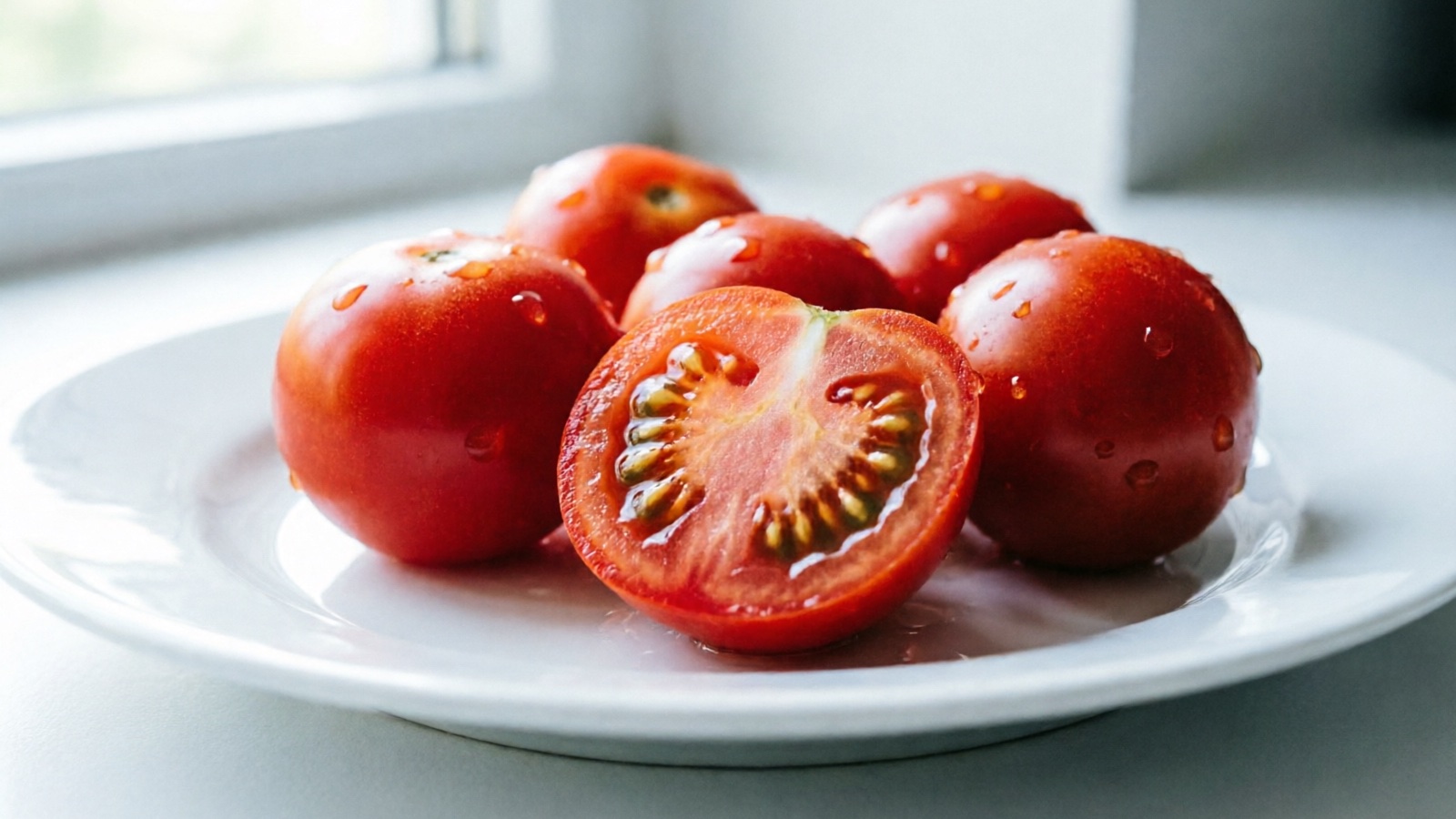
Quick Answer: Can Hamsters Eat Tomatoes?
Yes, hamsters can eat ripe tomatoes — but only the fruit itself. The leaves, stems, and vines are toxic. Ripe tomatoes are actually one of the safer vegetable treats because they’re low in sugar compared to most fruits.
💡 TL;DR: Offer 1 cherry tomato (or thumbnail-sized piece) once a week for Syrians, half a cherry tomato every two weeks for dwarfs. Only feed fully ripe, red tomatoes. Remove all leaves, stems, and vines. Never feed processed tomato products.
Tomatoes are an interesting case when it comes to whether can hamsters eat tomatoes safely — they blur the line between fruit and vegetable and come with a unique toxicity risk from the nightshade family. I’ve fed tomatoes to my Syrians over the years, and they’re a decent treat, but the tomatine warning is non-negotiable. Unlike blueberries or strawberries where the main concern is sugar, with tomatoes you need to think about toxicity from the green parts and acidity from the fruit.
Nutritional Value of Tomatoes for Hamsters
Key Nutrients
Tomatoes have a strong nutritional profile for a treat food. Here’s the USDA breakdown USDA FoodData Central — Tomatoes, red, ripe, raw:
| Nutrient | Per 100g | Per Cherry Tomato (~15g) | Benefit |
|---|---|---|---|
| Calories | 18 kcal | ~2.7 kcal | Very low calorie |
| Sugar | 2.6g | ~0.4g | Low — much safer than fruits |
| Vitamin C | 13.7 mg | ~2.1 mg | Immune support |
| Vitamin A | 42 mcg | ~6.3 mcg | Eye health & skin |
| Potassium | 237 mg | ~35.6 mg | Heart & muscle function |
| Lycopene | 2.6 mg | ~0.4 mg | Antioxidant (in skin) |
| Fiber | 1.2g | ~0.18g | Digestive aid |
| Water | ~95% | ~14.3g | Hydration |
| pH | 4.3-4.9 | — | Acidic — moderation needed |
Tomatoes vs Other Common Treats
Understanding where tomatoes sit in the treat hierarchy helps you make better choices:
| Food | Sugar/100g | Water | Acidity | Risk |
|---|---|---|---|---|
| Cucumber | 1.7g | 95% | Neutral | Very low |
| Broccoli | 1.7g | 89% | Neutral | Very low |
| Tomato | 2.6g | 95% | Moderate | Low |
| Strawberries | 4.9g | 91% | Low-mod | Moderate |
| Blueberries | 10g | 84% | Low | Moderate |
| Grapes | 16.3g | 81% | Low | High |
| Bananas | 12.2g | 75% | Low | Mod-high |
Key insight: tomatoes are one of the lowest-sugar treats available — at 2.6g per 100g, close to cucumber and broccoli. The main concern isn’t sugar (unlike grapes at 16.3g) but acidity and tomatine. This makes them unique: low sugar risk, but a toxicity dimension that other safe vegetables lack.
What Tomatoes Actually Offer
- Lycopene — a powerful antioxidant concentrated in the skin, rarely found in other hamster-safe vegetables
- Vitamin C — 13.7mg per 100g, meaningful immune support (more than grapes at 3.2mg)
- Hydration — 95% water content, similar to cucumber, excellent for summer
- Potassium — 237mg per 100g supports heart function and muscle contraction
- Vitamin A — 42mcg per 100g for eye health and skin condition
For your hamster’s overall hamster diet, tomatoes are a reasonable low-sugar, nutrient-dense addition when fed correctly.
Tomatine Toxicity: The Real Danger
This is the most important section in this article. If you’re asking whether can hamsters eat tomatoes, the answer depends entirely on which part of the plant. Tomatoes belong to the nightshade family (Solanaceae), which includes potatoes, peppers, eggplants, and tobacco. All nightshades produce glycoalkaloid toxins as natural defense compounds. In tomatoes, this toxin is called tomatine — a bitter-tasting compound concentrated in the plant’s green parts.
Where Tomatine Is Concentrated
The critical fact to understand is that tomatine distribution is wildly uneven across the plant. The ripe fruit is essentially safe, while the leaves and stems are genuinely toxic:
| Part of Plant | Tomatine Level | Safe? |
|---|---|---|
| Ripe fruit (red) | Trace (< 5mg/kg) | ✅ Safe |
| Unripe fruit (green) | Moderate (up to 50mg/kg) | ❌ Avoid |
| Leaves | High (200-500mg/kg) | ❌ Toxic |
| Stems | High (200-500mg/kg) | ❌ Toxic |
| Vines | Moderate-High | ❌ Toxic |
| Roots | High | ❌ Toxic |
| Flowers | Moderate | ❌ Toxic |
The critical distinction: tomatine levels drop dramatically as the fruit ripens. A fully red, ripe tomato contains only trace amounts — well below any toxic threshold. But leaves and stems maintain high concentrations regardless of fruit ripeness.
I want to be clear: a hamster would need to consume a significant quantity of leaves to suffer severe poisoning. The bitter taste usually deters them. But hamsters are small, and their tolerance threshold is correspondingly low.
Symptoms of Tomatine Poisoning
If your hamster has eaten tomato leaves, stems, or green tomatoes, watch for:
- Lethargy and unusual inactivity
- Drooling or excessive salivation
- Loss of appetite and refusal to eat
- Digestive upset: diarrhea, abdominal pain, bloating
- Difficulty breathing in severe cases
- Heart rhythm abnormalities — tomatine affects cardiac function
What to Do If Your Hamster Ate Tomato Leaves
- Remove any remaining plant material from the cage immediately
- Provide fresh water and monitor closely
- Contact an exotic veterinarian — don’t wait for symptoms to appear
- Note the approximate amount ingested and time
Most hamsters won’t seek out tomato leaves voluntarily (they’re bitter), but accidents happen if leaves fall into the cage or if you grow tomato plants nearby.
Can Syrian Hamsters Eat Tomatoes?
Yes — 1 cherry tomato or a thumbnail-sized piece once a week. Their larger body size (120-200g) and low diabetes risk make them well-suited for tomato treats. When Syrian owners ask can hamsters eat tomatoes, the answer for this breed is the most straightforward.
Recommended Serving for Syrians
- Amount: 1 cherry tomato (~15g) or thumbnail piece of regular tomato
- Frequency: Once per week
- Preparation: Ripe, red, washed, leaves and stems removed, room temperature
Syrians generally enjoy tomatoes — the soft, juicy texture is easy to eat. I’ve found most Syrians eat the flesh and leave the skin, which is fine since the flesh has most of the water and nutrients. For first-time feeding, start with half a cherry tomato and wait 24 hours before offering the full portion.
Can Dwarf Hamsters Eat Tomatoes?
Yes, but in smaller portions — half a cherry tomato every two weeks. While tomatoes are low in sugar (2.6g per 100g), dwarf hamsters still need careful portion management due to diabetes predisposition. The question of can hamsters eat tomatoes safely becomes more nuanced with dwarf breeds — their small body size and diabetes susceptibility mean extra caution is needed. Campbell’s dwarfs have an estimated 10-15% diabetes incidence in captivity. For more on this condition, see our hamster diabetes guide.
Recommended Serving for Dwarf Hamsters
- Amount: ½ cherry tomato or ⅛ teaspoon of chopped tomato
- Frequency: Once every two weeks
- Preparation: Same as Syrians — ripe, red, washed, room temperature
The acidity (pH 4.3-4.9) is actually more of a concern for dwarfs than the sugar. In my experience, some dwarf hamsters will paw at their mouths after eating tomato — a sign the acidity is bothering them. If this happens, discontinue and switch to neutral-pH alternatives like cucumber or broccoli.
Can Chinese Hamsters Eat Tomatoes?
Yes, in limited amounts — half a cherry tomato every two weeks. Chinese hamsters fall between Syrians and dwarfs on the diabetes risk spectrum. When determining can hamsters eat tomatoes in your specific case, Chinese hamsters need a conservative approach based on their smaller body size (30-45g). If your Chinese hamster shows digestive sensitivity — loose stool, mouth pawing, or appetite changes — discontinue tomatoes entirely.
Tomato Varieties: Cherry, Regular, and Everything In Between
Cherry Tomatoes vs Regular Tomatoes
Cherry tomatoes are the better choice for hamsters. Their small size (10-20g each) means natural portion control — one cherry tomato is approximately the right serving for a Syrian, half for a dwarf. When people ask can hamsters eat tomatoes, I always point them to cherry tomatoes first — the portioning is built in.
| Variety | Typical Size | Syrian Serving | Dwarf Serving |
|---|---|---|---|
| Cherry tomato | 10-20g | 1 whole | ½ tomato |
| Grape tomato | 5-10g | 1-2 whole | ½ tomato |
| Regular tomato | 100-200g | Thumbnail piece (~5g) | ⅛ tsp |
| Plum/Roma tomato | 60-100g | Thumbnail piece | ⅛ tsp |
I’ve always used cherry tomatoes for my hamsters because the portioning is straightforward — no cutting or guessing. For dwarfs, a quick halve and you’re done.
Green vs Ripe Tomatoes
Only feed fully ripe, red tomatoes. Green tomatoes contain significantly more tomatine (up to 50mg/kg vs < 5mg/kg in ripe fruit) — enough to cause mild poisoning in a hamster. A tomato is ready when it’s fully red, slightly soft, and fragrant.
How to Prepare Tomatoes for Your Hamster
Step 1: Choose a Ripe Tomato
Select fully red, slightly soft, and fragrant tomatoes. Avoid any with green, bruised, or moldy areas. Cherry tomatoes are easiest for portioning. Organic preferred — tomatoes appear on the EWG’s “Dirty Dozen” list for pesticide residue.
Step 2: Remove All Leaves and Stems
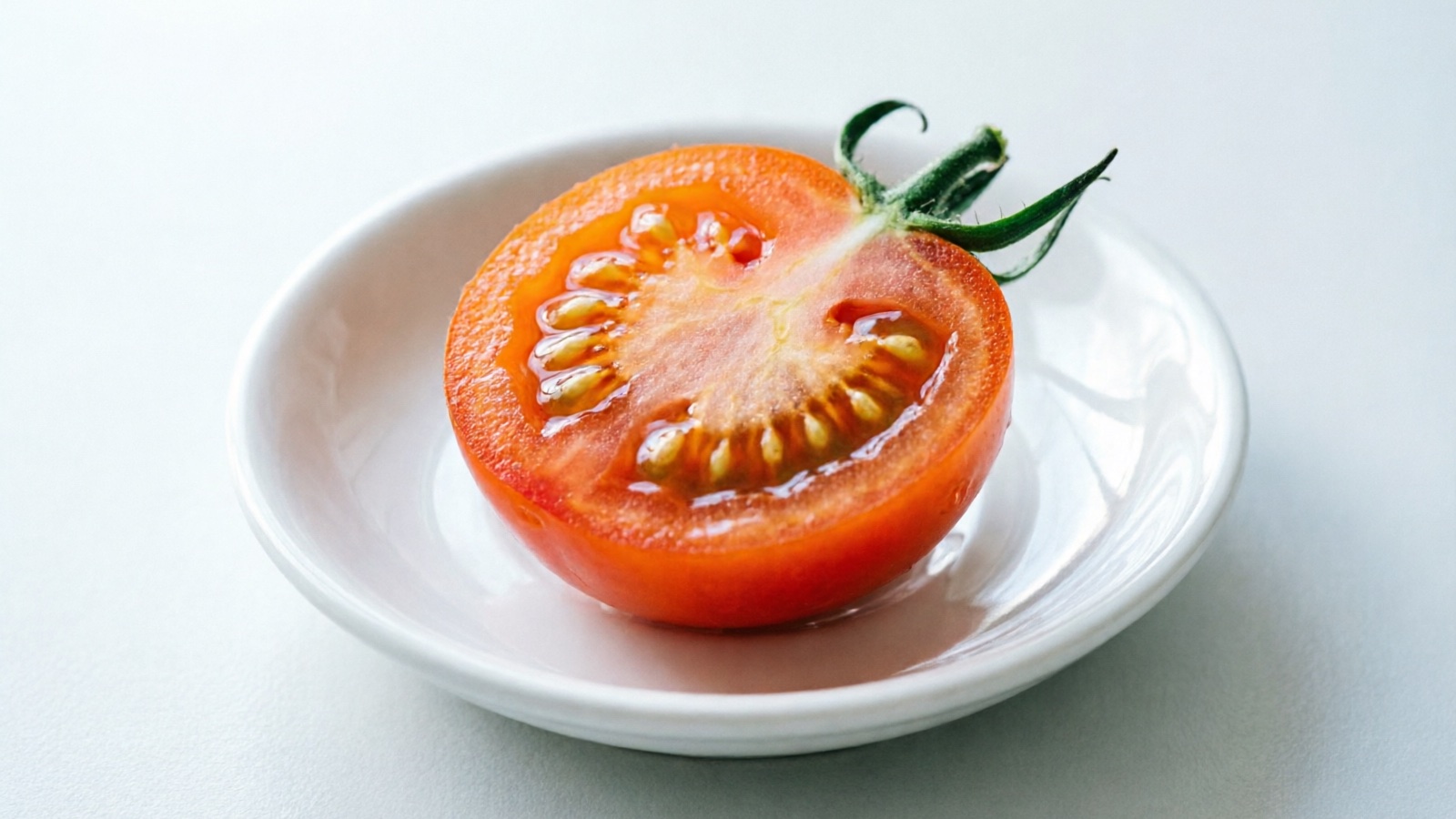
This is the most critical step. All green parts contain tomatine — leaves, stems, the calyx (green star-shaped piece where the tomato attaches to the vine), and the vine itself. Cut the calyx off completely. Even a small stem fragment can carry tomatine.
Step 3: Wash Thoroughly
Rinse under cool running water for 10-15 seconds. Tomatoes appear on the EWG’s “Dirty Dozen” list for pesticide residue, so consider a vinegar-water solution (1:3 ratio) for extra assurance. Pat dry — wet pieces make bedding soggy.
Step 4: Cut to Appropriate Size
Cherry tomatoes: whole for Syrians, halved for dwarfs and Chinese. Regular tomatoes: thumbnail-sized piece (~5mm). Tomato seeds are safe (no cyanide compounds, unlike apple or cherry pits), so no need to deseed.
Step 5: Serve at Room Temperature
Never serve cold tomato from the refrigerator. Cold food causes digestive upset and can trigger torpor. Let sit for 5-10 minutes before offering.
Step 6: Remove Uneaten Tomato After 2 Hours
Fresh tomato spoils quickly in warm enclosures. The high water content makes it messier than most treats. Remove uneaten portions within 2 hours and check hiding spots where your hamster may have hoarded pieces.
Processed Tomato Products: What to Avoid
All processed tomato products are unsafe for hamsters. If you’re researching can hamsters eat tomatoes, this is where many owners make mistakes — assuming that since fresh tomato is safe, all tomato products must be fine. They’re not. This includes:
Specifically, avoid all of the following:
- Tomato sauce / pasta sauce — contains garlic, onion, salt, oil, and sugar. Garlic and onion cause hemolytic anemia.
- Ketchup — extremely high in sugar and salt.
- Tomato paste — concentrated tomato with added salt and preservatives.
- Tomato soup — contains cream, salt, sugar, and often onion or garlic.
- Sundried tomatoes — concentrated tomatine plus often packed in oil with salt.
Why Processing Makes Tomatoes Dangerous
Fresh tomato is 95% water with only 2.6g sugar per 100g. Processing removes water and adds harmful ingredients:
- Salt — damages hamster kidneys over time
- Garlic and onion — cause hemolytic anemia by destroying red blood cells
- Added sugar — unnecessary and harmful in the quantities found in processed foods
- Oil and fat — hamsters don’t process high-fat foods well
Bottom line: the only safe form of tomato is fresh, raw, ripe tomato with no added ingredients.
How Often Can Hamsters Eat Tomatoes?
| Breed | Frequency | Serving Size | Notes |
|---|---|---|---|
| Syrian Hamster | 1x per week | 1 cherry tomato | Low sugar, watch acidity |
| Dwarf Hamster (WW/CC) | 1x every 2 weeks | ½ cherry tomato | Watch for mouth irritation |
| Chinese Hamster | 1x every 2 weeks | ½ cherry tomato | Moderate risk |
Despite the low sugar content, don’t exceed these limits. Tomatoes are acidic (pH 4.3-4.9) and have a mild laxative effect in some hamsters. When deciding how often can hamsters eat tomatoes, remember that frequency matters more than portion size with acidic foods.
Signs Your Hamster Ate Too Much Tomato
From Too Much Tomato Fruit
The most common issue is watery diarrhea from the 95% water content and acidity. Other signs include mouth irritation (pawing at the mouth), increased urination, and bloating. This usually resolves within 12-24 hours by removing all treats and providing fresh water. The good news is that since tomatoes are so low in sugar, can hamsters eat tomatoes in excess rarely causes the blood sugar spikes associated with sweeter fruits.
From Tomatine Poisoning (Leaves, Stems, or Green Tomatoes)
More serious — requires immediate veterinary attention: lethargy, drooling, appetite loss, diarrhea, abdominal pain, difficulty breathing, and heart irregularities. Tomatine affects cardiac function, so don’t wait for symptoms to develop.
When to See a Vet
Contact your exotic vet immediately for any sign of tomatine poisoning, even mild lethargy after suspected leaf ingestion. For simple diarrhea from too much tomato fruit, the 24-hour rule applies: if it persists beyond 24 hours, or if you see blood in the stool, complete food refusal, or dehydration (sunken eyes, dry skin), get veterinary help right away.
Safe Vegetable Alternatives
If you want lower-risk alternatives — or if your hamster doesn’t tolerate acidity and you’re reconsidering whether can hamsters eat tomatoes regularly:
- Cucumber — 1.7g sugar, 95% water, no toxicity concerns. The safest vegetable treat for all breeds.
- Broccoli — 1.7g sugar, strong vitamin C and fiber. Very low risk.
- Carrots — 4.7g sugar, well-tolerated in moderation, good dental exercise from the crunch. Along with crunchy treats like this, a properly sized exercise wheel is essential for your hamster’s health. Check our hamster wheel size chart to make sure your wheel is the right diameter for your hamster’s breed.
- Bell pepper — low sugar, high vitamin C. Remove seeds.
- Zucchini — 2.5g sugar, high water, mild flavor most hamsters accept.
Other Foods Your Hamster Can Eat
Each link leads to a full safety guide with breed-specific serving recommendations.
🍓 Fruits
- Can Hamsters Eat Strawberries?
- Can Hamsters Eat Blueberries?
- Can Hamsters Eat Grapes?
- Can Hamsters Eat Bananas?
- Can Hamsters Eat Apples? (Coming Soon)
🥬 Vegetables
🥜 Proteins & Treats
Frequently Asked Questions
Can hamsters eat tomatoes?
Yes, but only the ripe fruit in moderation. When people ask can hamsters eat tomatoes, the most important thing to understand is that leaves, stems, and vines contain tomatine, a glycoalkaloid toxin. A fully ripe red tomato is safe because tomatine drops below 5mg/kg as the fruit ripens (versus 200-500mg/kg in leaves). At 2.6g sugar per 100g [USDA], tomatoes are one of the lower-sugar treats — but their acidity (pH 4.3-4.9) means they shouldn’t be fed daily.
Can hamsters eat cherry tomatoes?
Yes — cherry tomatoes are my preferred form for hamsters. Their small size (10-20g) means natural portion control: one for a Syrian, half for a dwarf. Just make sure they’re fully ripe, wash them, remove the green calyx completely, and serve at room temperature. I’ve always used cherry tomatoes because the portioning is so straightforward.
Can hamsters eat tomato leaves?
No. Tomato leaves contain tomatine at 200-500mg/kg — toxic to hamsters. Symptoms include lethargy, drooling, appetite loss, digestive upset, and heart rhythm abnormalities. If your hamster has eaten tomato leaves, remove any remaining plant material, provide fresh water, and contact an exotic vet immediately. Don’t wait for symptoms — tomatine affects cardiac function.
Can hamsters eat tomato sauce?
No. All processed tomato products — sauce, ketchup, paste, soup, sundried — are unsafe. While fresh tomato is fine and can hamsters eat tomatoes as a raw treat is generally yes, processing adds salt (damages kidneys), garlic and onion (cause hemolytic anemia), sugar, and preservatives. Even tiny amounts of garlic or onion can cause serious problems. The only safe form is fresh, raw, ripe tomato with nothing added.
Can hamsters eat tomatoes every day?
No. While the answer to can hamsters eat tomatoes is generally yes, daily feeding is absolutely not recommended — they’re acidic (pH 4.3-4.9) and can cause mouth irritation and digestive upset with frequent feeding. They also have a mild laxative effect. Syrians: max once a week. Dwarfs: once every two weeks. More frequent feeding offers no benefit and increases risk.
Can hamsters eat tomato seeds?
Yes, completely safe. Unlike apple seeds or cherry pits (which contain cyanide compounds), tomato seeds and the surrounding jelly-like gel are harmless. No need to remove them before feeding.
Can hamsters eat tomato skin?
Yes, safe — it contains lycopene, a beneficial antioxidant. Some hamsters leave the skin behind, which is fine since the flesh has most of the water and nutrients. Peel before serving if your hamster consistently rejects the skin.
Can hamsters eat green tomatoes?
No. Green tomatoes contain up to 50mg/kg tomatine versus < 5mg/kg in ripe fruit — enough to cause mild poisoning in a hamster. When asking can hamsters eat tomatoes, the ripeness matters as much as the portion. Only feed fully red, slightly soft, fragrant tomatoes.
How much tomato can a hamster eat?
Syrians: 1 cherry tomato or thumbnail piece, once per week. Dwarfs and Chinese: ½ cherry tomato or ⅛ tsp chopped, once every two weeks. Always remove leaves, stems, and calyx. Wash, cut to size, serve at room temperature, and remove uneaten portions within 2 hours.
What happens if a hamster eats tomato leaves?
Tomatine poisoning causes lethargy, drooling, appetite loss, diarrhea, abdominal pain, and in severe cases heart rhythm abnormalities and breathing difficulty. If your hamster has ingested tomato leaves, remove remaining plant material, provide fresh water, and contact an exotic vet immediately — this is a veterinary emergency.