Quick Answer: Can Hamsters Eat Grapes?
Yes, hamsters can eat grapes — but in much stricter moderation than most other fruits. Grapes are safe when seeds are removed and portions are kept tiny, but their high sugar content makes them one of the riskier fruit choices, especially for dwarf hamsters.
💡 TL;DR: Offer 1 small seedless piece of grape (about ½ tsp) once a week for Syrians, ½ a piece every two weeks for dwarfs. Always remove seeds, wash thoroughly, and cut into tiny pieces. Many dwarf hamster owners skip grapes entirely.
I’ve offered grapes to my Syrian hamsters occasionally over the years, and they enjoy them — but I’ve always been more cautious with grapes than with lower-sugar fruits like strawberries or blueberries. The sugar differential is significant, and there’s simply no reason to push the limit with a 40-gram animal. Let me explain why.
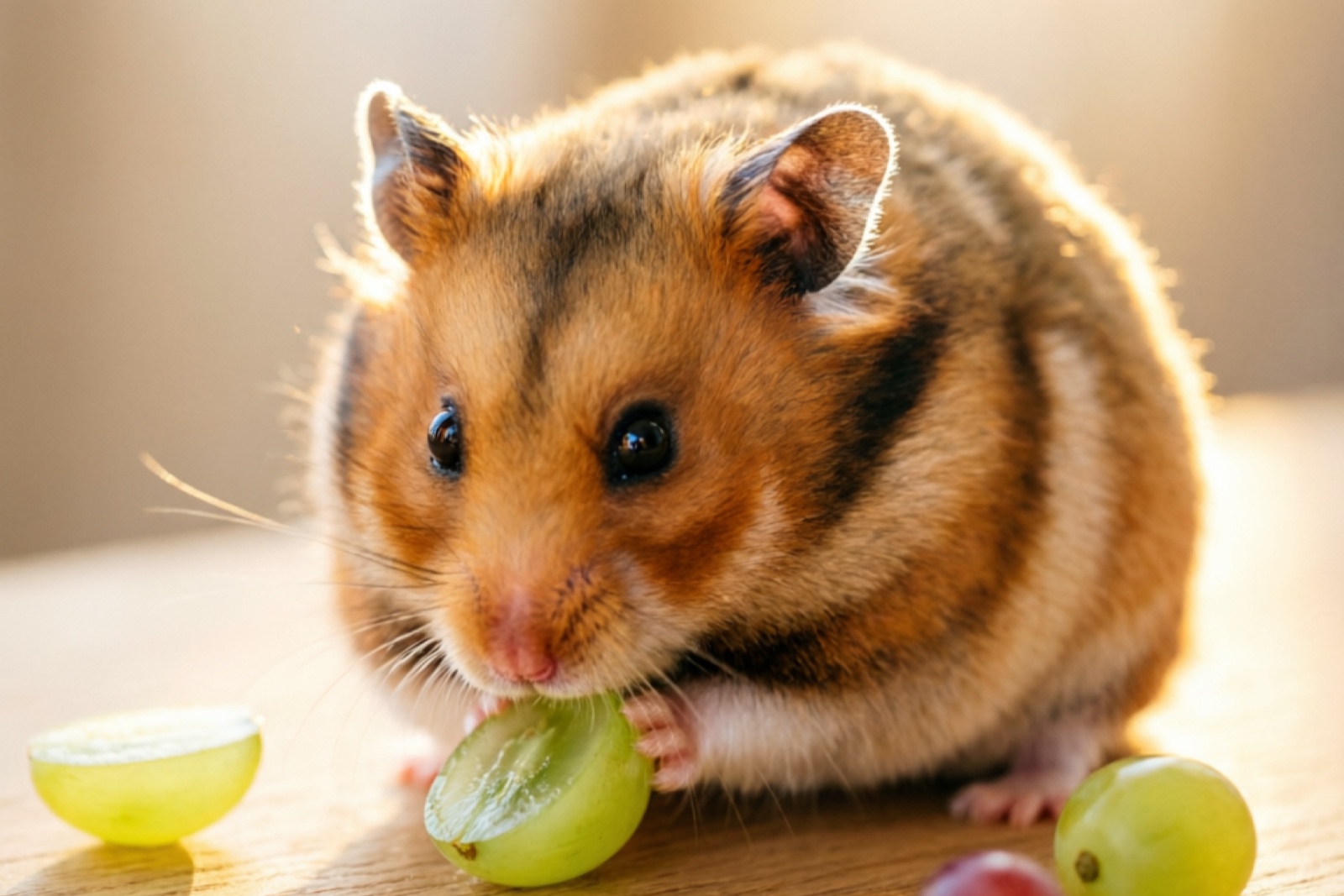
Nutritional Value of Grapes for Hamsters
Key Nutrients
Grapes do offer some nutritional benefits, but the sugar-to-nutrient ratio is less favorable than many other fruits. Here’s the breakdown based on USDA data USDA FoodData Central — Grapes, red or green, raw:
| Nutrient | Per 100g Grapes | Per ~5g Piece (1 Serving) | Benefit for Hamsters |
|---|---|---|---|
| Calories | 69 kcal | ~3.5 kcal | Higher calorie treat |
| Sugar | 16.3g | ~0.8g | Main concern — very high |
| Vitamin C | 3.2 mg | ~0.16 mg | Some immune support |
| Vitamin K | 14.6 mcg | ~0.73 mcg | Blood clotting & bone health |
| Potassium | 191 mg | ~9.6 mg | Heart & muscle function |
| Fiber | 0.9g | ~0.05g | Minimal digestive aid |
| Water | ~81% | ~4g | Some hydration |
Sugar Content: The Biggest Concern
This is where grapes diverge sharply from other fruits commonly offered to hamsters:
| Fruit | Sugar per 100g | Relative Risk |
|---|---|---|
| Cucumber | 1.7g | Very low |
| Broccoli | 1.7g | Very low |
| Strawberries | 4.9g | Low-moderate |
| Blueberries | 10g | Moderate |
| Grapes | 16.3g | High |
| Raisins (dried grapes) | ~60g | Very dangerous |
At 16.3g of sugar per 100g, grapes contain over three times the sugar of strawberries and nearly ten times that of cucumber. For context, a single small grape piece (about 5g) delivers roughly 0.8g of sugar to an animal that weighs 30-200 grams depending on breed. That’s a significant sugar dose relative to body weight.
The reason this matters so much is dwarf hamster diabetes. Campbell’s dwarf hamsters have an estimated diabetes incidence of 10-15% in captivity, and Winter Whites are also susceptible. The condition is progressive, irreversible, and requires lifelong dietary management. High-sugar foods like grapes are one of the primary dietary triggers. I can’t stress this enough — if you have a dwarf hamster, grapes should be an occasional exception at best, and many responsible owners choose to skip them entirely.
What Grapes Actually Offer
Despite the sugar concern, grapes aren’t empty calories. They contain:
- Vitamin K — important for blood clotting and bone metabolism. Hamsters don’t need large amounts, but the contribution from occasional grape treats is a small bonus.
- Potassium — supports heart function and muscle contraction.
- Antioxidants — red and purple grapes in particular contain resveratrol and other polyphenols, concentrated in the skin.
- Water content — at 81%, grapes provide some hydration, though not as much as cucumber (95%) or watermelon (92%).
The nutritional benefits are real but modest. I’d rank grapes below blueberries, strawberries, and broccoli as a treat choice — the sugar cost outweighs the nutritional gain for most hamsters, especially dwarfs.
Can Syrian Hamsters Eat Grapes?
Yes — Syrian hamsters can eat small pieces of seedless grape, once a week. Their larger body size (120-200g) and significantly lower diabetes risk compared to dwarf breeds make them the best candidates for grape treats.
Recommended Serving for Syrians
- Amount: 1 small piece, roughly ½ teaspoon
- Frequency: Once per week
- Preparation: Seedless, washed thoroughly, cut into small chunks
- Color preference: Green grapes are slightly lower in sugar than red or purple varieties
Syrians handle grapes reasonably well within the once-a-week limit. I’ve never had digestive issues with my Syrians from occasional grape treats, and the vitamin K and potassium are a nice addition. But I wouldn’t offer grapes more than once a week even to a Syrian — there’s no nutritional reason to do so, and the cumulative sugar adds up over time.
How to Feed Grapes to Syrian Hamsters
- Select a fresh, firm seedless grape (green varieties tend to have slightly less sugar)
- Wash it thoroughly under running water for 15-20 seconds
- Cut a piece roughly ½ teaspoon — about the size of a small pea
- Offer it in your hamster’s food bowl or by hand for bonding
- Remove any uneaten portion after 2 hours
If this is your Syrian’s first time trying grapes, start with half the recommended portion and wait 24 hours to confirm there are no digestive issues before offering the full amount.
Can Dwarf Hamsters Eat Grapes?
Yes, but I recommend extreme caution — and many experienced owners skip grapes entirely for dwarfs. Dwarf hamsters (Winter Whites and Campbell’s) are the most diabetes-prone hamster species, and grapes are one of the highest-sugar fruits you could offer them.
⚠️ Dwarf Hamster Diabetes Risk
Here’s the blunt reality: Campbell’s dwarf hamsters have a genetic predisposition to diabetes with an estimated 10-15% incidence rate in captivity. Winter Whites are also susceptible, though somewhat less so. Once a dwarf hamster develops diabetes, it’s a lifelong condition requiring specialized low-sugar diet management, regular glucose testing, and careful monitoring of water intake and weight.
Grapes at 16.3g sugar per 100g are a genuine risk factor for these animals. When I had Campbell’s dwarfs, I made the decision to avoid grapes altogether and focus on low-sugar vegetables and the occasional blueberry instead. It wasn’t worth the risk for a treat.
Recommended Serving for Dwarf Hamsters
- Amount: ½ a small piece, roughly ¼ teaspoon
- Frequency: Once every two weeks at most
- Preparation: Same as Syrians — seedless, washed, cut tiny
- Alternative: Many dwarf keepers substitute cucumber or broccoli and never offer grapes
If you do choose to offer grapes to your dwarf hamster, watch carefully for signs of elevated blood sugar in the days following: increased water consumption, increased urination, and sudden weight changes. These are early indicators of diabetes that warrant an immediate vet visit.
My Honest Recommendation
I’d be straightforward: if you have a dwarf hamster, there are better treat options. Blueberries are smaller and easier to portion. Cucumber provides hydration with essentially zero sugar. Broccoli delivers more vitamins with a fraction of the sugar. Save grapes for your Syrian, and give your dwarf the safer choices.
Can Chinese Hamsters Eat Grapes?
Yes, in very limited amounts. Chinese hamsters fall between Syrians and dwarfs on the diabetes risk spectrum — more sensitive than Syrians, but generally less prone than Campbell’s dwarfs.
Recommended Serving for Chinese Hamsters
- Amount: ¼ teaspoon piece
- Frequency: Once every two weeks
- Preparation: Seedless, washed, cut into tiny pieces
Chinese hamsters are less common as pets, so there’s less collective experience with their dietary tolerances. Based on their smaller body size (30-45g) and moderate diabetes susceptibility, I treat them closer to dwarfs when it comes to high-sugar fruits. A grape piece every two weeks is reasonable, but if your Chinese hamster shows any signs of sugar sensitivity — excessive drinking, lethargy after treats — I’d discontinue grapes and switch to lower-sugar alternatives.
How to Prepare Grapes for Your Hamster
Proper preparation matters with grapes more than almost any other fruit, because of the seed risk and pesticide concern. Here’s the step-by-step process:
Step 1: Choose Seedless Grapes
This is non-negotiable. Grape seeds are a choking hazard and can cause intestinal blockages in hamsters. Buy seedless varieties — green Thompson seedless are widely available and tend to be slightly lower in sugar than red or purple grapes. If you can only find grapes with seeds, you’ll need to halve each piece and inspect every half to confirm the seed has been fully removed.
Step 2: Wash Thoroughly
Grapes are notorious for pesticide residue — they consistently appear on the Environmental Working Group’s “Dirty Dozen” list of most contaminated produce. Wash each grape individually under cool running water for at least 15-20 seconds. I use a vegetable brush and a mild vinegar-water solution (1 part vinegar to 3 parts water) for extra assurance, then rinse clean. Organic grapes are preferable since they reduce — though don’t eliminate — chemical exposure.
Step 3: Cut into Tiny Pieces
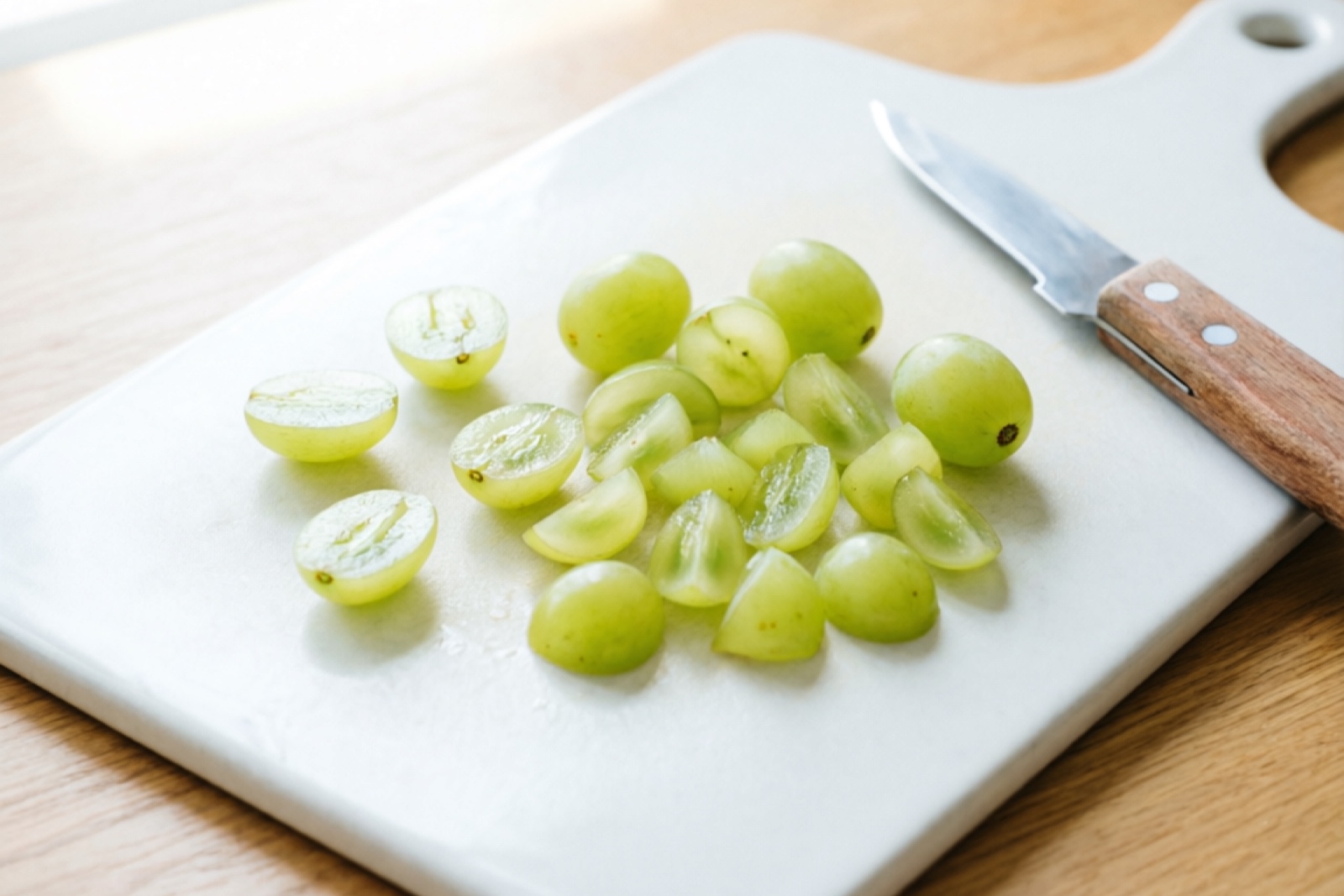
A whole grape is far too large for any hamster. Cut a piece about 5mm across — roughly the size of a small pea or a pencil eraser. For dwarf hamsters, cut it even smaller. The piece should be small enough that your hamster can eat it in one or two bites without needing to stuff it into their cheek pouches, where it could cause problems.
Step 4: Introduce Gradually
For first-time grape feeding, offer half the recommended portion and wait 24 hours. Monitor for:
- Normal stool (not loose, watery, or unusually colored)
- Normal activity level and energy
- No bloating or signs of abdominal discomfort
- Normal eating and drinking patterns
If everything looks good, you can offer the full recommended portion next time.
Step 5: Remove Uneaten Grapes After 2 Hours
Fresh grapes left in a warm enclosure become a bacterial breeding ground quickly. Any uneaten portion must be removed within 2 hours. Check your hamster’s hiding spots too — they love to hoard food, and a forgotten grape piece behind the water bottle can mold and cause respiratory or digestive problems.
How Often Can Hamsters Eat Grapes?
| Breed | Frequency | Serving Size | Max Per Week | Notes |
|---|---|---|---|---|
| Syrian Hamster | 1x per week | ½ tsp (1 piece) | ½ tsp total | Most sugar-tolerant |
| Dwarf Hamster (WW/CC) | 1x every 2 weeks | ¼ tsp (½ piece) | ¼ tsp per 2 weeks | High diabetes risk — consider skipping |
| Chinese Hamster | 1x every 2 weeks | ¼ tsp (½ piece) | ¼ tsp per 2 weeks | Moderate risk — conservative approach |
Compare this to strawberries (which Syrians can have twice weekly) and you can see why grapes demand stricter limits. The sugar content simply doesn’t allow for more frequent feeding, regardless of how much your hamster seems to enjoy them.
Signs Your Hamster Ate Too Many Grapes
Whether your hamster found a hoarded grape you missed, or a family member offered an extra treat without knowing the limits, here’s what to watch for:
Common Symptoms
- Diarrhea or loose stool — the most immediate and common reaction. A small amount of soft stool is normal after fruit, but watery diarrhea is a concern.
- Bloating — excess sugar ferments in the gut, producing gas that causes visible abdominal swelling.
- Increased thirst and urination — particularly concerning in dwarf hamsters, as this can indicate elevated blood sugar and early diabetes.
- Lethargy — a normally active hamster that becomes unusually sleepy or reluctant to explore.
- Decreased appetite — your hamster may refuse regular food if their digestive system is upset from excess sugar.
When to See a Vet
Most mild cases resolve within 12-24 hours if you remove all treats and stick to pellets and fresh water. But contact your exotic vet immediately if you observe:
- Diarrhea lasting more than 24 hours (risk of dehydration in a small animal)
- Blood in the stool
- Complete food or water refusal
- Extreme lethargy or difficulty moving
- Sunken eyes or dry skin indicating dehydration
- In dwarf hamsters: dramatically increased water consumption lasting more than a day
Hamsters are small enough that conditions escalate fast. Don’t wait to “see if it improves” once you hit the 24-hour mark.
Better Alternatives to Grapes for Hamsters
Given the high sugar content, grapes aren’t my first-choice treat for hamsters — especially dwarfs. Here are alternatives I reach for more often:
Lower-Sugar Fresh Foods
- Blueberries — roughly 10g sugar per 100g, but a single blueberry weighs only 1-2g, making the actual sugar dose per serving tiny and easy to control. Excellent antioxidant profile.
- Cucumber — approximately 1.7g sugar per 100g and 95% water. Nearly zero risk. Great for summer hydration.
- Broccoli florets — about 1.7g sugar per 100g with solid vitamin C and fiber content. One of the most nutritionally dense vegetable treats available.
- Strawberries — at 4.9g sugar per 100g, they have less than a third of the sugar in grapes while offering more vitamin C. A genuinely better fruit choice.
🛒 Recommended Safe Treats for Hamsters
If you’d prefer commercially prepared options with controlled portions, here are products I’ve used with my own hamsters:
-
Oxbow Simple Rewards Apple Banana Treats — freeze-dried strawberry treats in tiny, portion-controlled pieces. Lower sugar risk than fresh grapes and shelf-stable. 4.7⭐
-
Vitakraft Hamster Strawberry Drops — yogurt-based drops with berry flavoring. My Syrians love these as an occasional reward. I limit them to one per week. 4.5⭐
-
Kaytee Forti-Diet Pro Health — a quality staple pellet that provides the nutritional foundation so that treats like grapes remain occasional supplements rather than dietary mainstays. 4.7⭐
We may earn a commission if you purchase through our links, at no extra cost to you.
Other Foods Your Hamster Can Eat
Grapes are just one of many foods hamster owners ask about. Each link below leads to a full safety guide with breed-specific serving recommendations.
🍓 Fruits
- Can Hamsters Eat Strawberries?
- Can Hamsters Eat Blueberries? (Coming Soon)
- Can Hamsters Eat Bananas? (Coming Soon)
- Can Hamsters Eat Apples? (Coming Soon)
- Can Hamsters Eat Watermelon? (Coming Soon)
🥬 Vegetables
- Can Hamsters Eat Carrots? (Coming Soon)
- Can Hamsters Eat Broccoli? (Coming Soon)
- Can Hamsters Eat Cucumbers? (Coming Soon)
- Can Hamsters Eat Celery? (Coming Soon)
🥜 Proteins & Treats
- Can Hamsters Eat Mealworms? (Coming Soon)
- Can Hamsters Eat Eggs? (Coming Soon)
- Can Hamsters Eat Sunflower Seeds? (Coming Soon)
Frequently Asked Questions
Can hamsters eat grapes?
Yes, hamsters can eat grapes, but they require stricter moderation than most other fruits. Grapes are high in sugar — approximately 16.3g per 100g according to USDA data — which is more than three times the sugar content of strawberries. Always choose seedless grapes, wash them thoroughly to remove pesticide residue, cut them into tiny pieces no larger than a small pea, and feed only once a week for Syrians or once every two weeks for dwarf and Chinese hamsters. The seed risk is serious: grape seeds can cause choking and intestinal blockages in a small animal, so never skip the seed check.
Can baby hamsters eat grapes?
No — baby hamsters under 4 weeks of age should not eat grapes or any fresh fruit. Their digestive systems are still developing and lack the enzymes needed to process fruit sugars effectively. For the first 3-4 weeks, feed only mother’s milk (or a suitable milk replacer if orphaned) alongside a high-quality commercial hamster pellet introduced around 3 weeks. After 4 weeks, you can begin introducing tiny amounts of fruit one at a time, waiting 24 hours between each new food to check for adverse reactions. Start with lower-sugar options like cucumber before working up to sweeter fruits.
Can hamsters eat grape seeds?
Absolutely not. Grape seeds pose two distinct dangers to hamsters. First, they’re a choking hazard — hamsters stuff food into their cheek pouches, and a small seed can become lodged in the throat or pouch lining. Second, seeds can cause intestinal blockages if swallowed, which in a hamster’s small digestive tract can quickly become a life-threatening emergency requiring surgical intervention. Always buy seedless grapes, and even then, briefly inspect each piece before feeding. If you accidentally offer a seeded grape and suspect your hamster swallowed a seed, monitor closely for signs of distress — loss of appetite, bloating, or difficulty passing stool — and contact your vet if anything seems off.
Can hamsters eat grape skin?
Yes, grape skin is safe for hamsters and actually contains a meaningful concentration of antioxidants, including resveratrol, which has anti-inflammatory properties. The main concern with grape skin is pesticide residue — grapes are consistently ranked among the most pesticide-contaminated fruits. Wash thoroughly using a vinegar-water solution if possible, and consider organic grapes to minimize chemical exposure. The skin also adds a small amount of fiber, though grapes overall are not a significant fiber source compared to vegetables like broccoli.
Can hamsters eat raisins?
I strongly advise against feeding raisins to hamsters. Raisins are dried grapes, and the dehydration process removes water while concentrating every gram of sugar to approximately 60-70g per 100g — roughly four times the sugar of fresh grapes. For dwarf hamsters, raisins are particularly dangerous given their diabetes predisposition. Even for Syrians, the sugar concentration is excessive for an animal this small. Fresh, properly portioned grapes are always the safer choice, and honestly, I’d recommend lower-sugar fresh fruits over fresh grapes too.
Can Syrian hamsters eat grapes?
Yes — Syrian hamsters are the most suitable breed for occasional grape treats due to their larger body size and lower diabetes risk. Offer one small seedless piece (about ½ teaspoon) once per week. Green seedless grapes are slightly lower in sugar than red or purple varieties, making them the better choice. I’ve fed my Syrian hamsters grapes at this frequency without issues, but I wouldn’t increase it — there’s simply no nutritional justification for offering more sugar than necessary.
Can dwarf hamsters eat grapes?
Dwarf hamsters can technically eat grapes, but I recommend either skipping them entirely or feeding them at most once every two weeks in tiny ¼-teaspoon portions. The diabetes risk for Campbell’s and Winter White dwarfs is well-documented, and grapes are among the highest-sugar fruits commonly considered for hamsters. In my experience, the risk-to-reward ratio for grapes with dwarf hamsters is poor. Cucumber, broccoli, and even blueberries are better treat choices that deliver nutritional benefits with far less sugar. If your dwarf is already overweight or has any signs of elevated blood sugar, eliminate grapes from the diet completely.
What happens if a hamster eats too many grapes?
The most immediate consequence is diarrhea caused by excess sugar disrupting the balance of gut bacteria. You may also observe bloating from gas production, decreased appetite, and general lethargy. In dwarf hamsters, the more serious long-term concern is diabetes — repeated exposure to high-sugar foods like grapes contributes to insulin resistance over time. If your hamster has eaten significantly more grapes than recommended, remove all treats from their diet for 48 hours, ensure constant access to fresh water, and monitor stool and energy levels. Contact an exotic vet if diarrhea persists beyond 24 hours, if you notice blood in the stool, or if your hamster becomes completely lethargic or dehydrated.
How much grape can a hamster eat?
The safe amount depends entirely on breed. Syrian hamsters can have roughly ½ teaspoon (one small piece of seedless grape) once per week. Dwarf hamsters (both Winter White and Campbell’s) should get at most ¼ teaspoon (half a small piece) once every two weeks. Chinese hamsters fall in between at ¼ teaspoon once every two weeks. A single standard grape yields approximately 4-6 servings for a Syrian and 8-12 servings for a dwarf. Never offer a whole or half grape — always cut into tiny pieces no larger than a small pea.