⚠️ Important: This article provides information only and does not replace veterinary advice. If you suspect your hamster has diabetes, contact your exotic veterinarian.
What Is Hamster Diabetes?
Hamster diabetes is a chronic metabolic condition where the body either doesn’t produce enough insulin or becomes resistant to insulin, causing blood sugar levels to rise to dangerous levels. It is the most common endocrine disease in hamsters, particularly among dwarf species.
There are two types of hamster diabetes:
- Type 1 (Insulin-dependent): The pancreas cannot produce sufficient insulin. This is the most common form in Campbell’s dwarf hamsters and is linked to genetics.
- Type 2 (Insulin-resistant): The body’s cells stop responding properly to insulin, often triggered by obesity and high-sugar diets. This form is more common in Syrian hamsters that are overweight.
Dwarf hamsters, especially Campbell’s and Winter White varieties, have a strong genetic predisposition to diabetes. This makes it one of the most significant health concerns for these species. While hamster diabetes is manageable with the right approach, early detection and consistent care are critical.
This guide covers everything you need to know: which hamsters are at risk, early symptoms to watch for, how to test at home, dietary management, treatment options, and prevention strategies. For an overview of other common hamster illnesses, see our guide to common hamster health problems. If your hamster has wet, soiled fur around the tail area, that may indicate a different emergency — read our hamster wet tail guide for immediate action steps.
Which Hamsters Are Most at Risk?
Not all hamsters face the same diabetes risk. Understanding breed-specific vulnerability helps you take the right preventive measures.
High-Risk Breeds
Campbell’s Dwarf Hamster carries the highest genetic risk. Studies and breeder reports suggest that approximately 15–30% of Campbell’s dwarfs may develop diabetes during their lifetime [source: Ontario Hamsters Club]. This breed has a well-documented genetic predisposition, and diabetes can appear even in young, otherwise healthy-looking hamsters.
Winter White Dwarf Hamster also carries a genetic tendency, though the incidence rate appears somewhat lower than Campbell’s. The risk is still significant enough that low-sugar feeding should begin from day one.
Hybrid dwarf hamsters (Campbell’s × Winter White crosses) inherit the genetic risk from both parent species. Many pet store hamsters sold as “Winter Whites” are actually hybrids, which means they carry elevated risk.
Low-Risk Breeds
Syrian hamsters (also called golden or teddy bear hamsters) rarely develop spontaneous diabetes. Obesity-related Type 2 diabetes is possible but uncommon. Keeping your Syrian at a healthy weight is usually sufficient prevention.
Roborovski dwarf hamsters currently have no documented cases of diabetes in veterinary literature. They appear to be the least vulnerable species.
| Species | Diabetes Risk | Primary Cause | Prevention Focus |
|---|---|---|---|
| Campbell’s Dwarf | 🔴 High | Genetic predisposition | Low-sugar diet from day one |
| Winter White | 🟡 Medium | Genetic tendency | Low-sugar diet + weight management |
| Syrian | 🟢 Low | Obesity (rare) | Maintain healthy weight |
| Roborovski | 🟢 Low | No documented cases | Standard care |
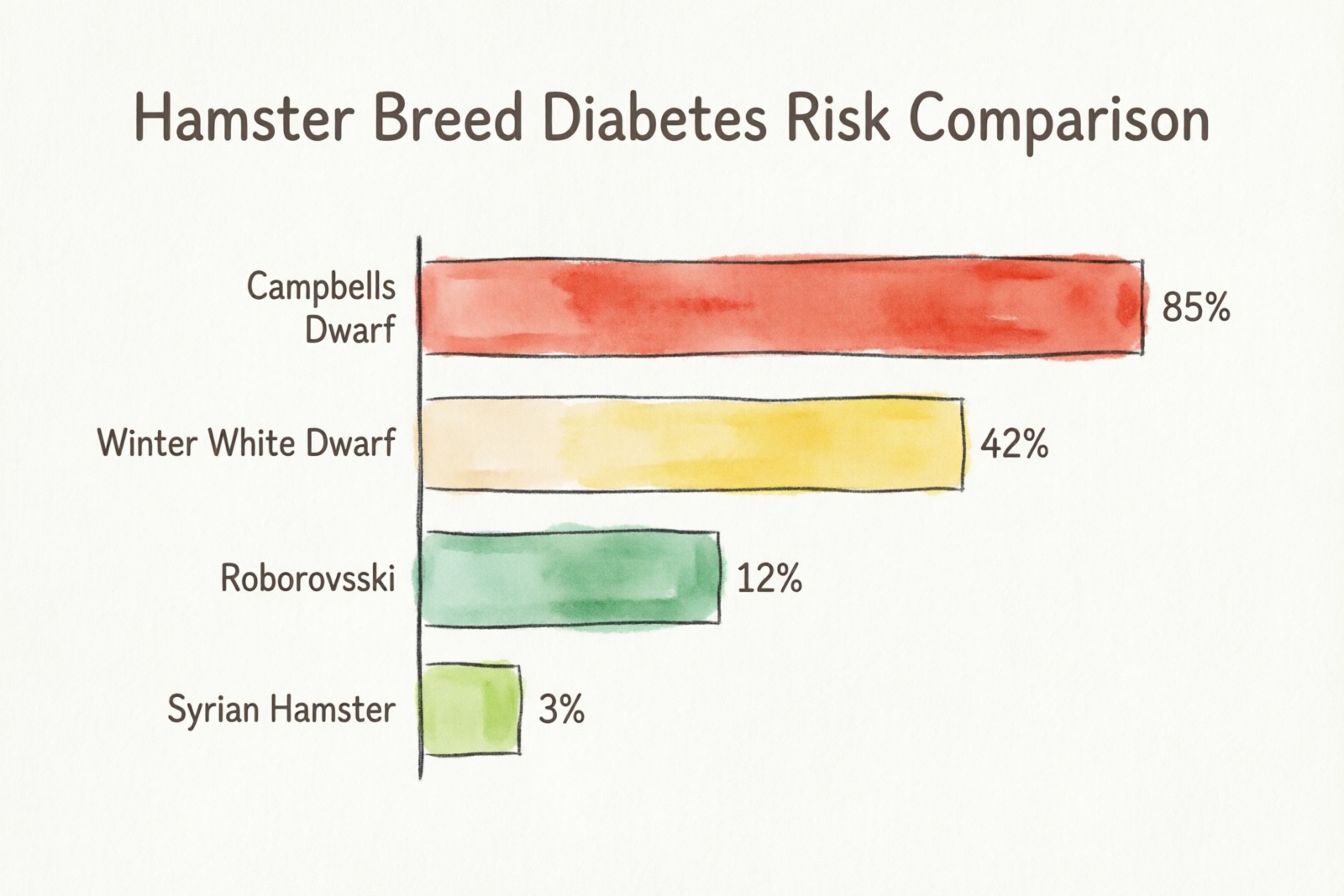
The key takeaway: if you own a dwarf hamster, especially a Campbell’s, assume diabetes is a possibility and take preventive dietary measures early. This is one of the most important differences in common hamster health problems between species.
Early Signs & Symptoms of Diabetes in Hamsters
Hamsters are prey animals and instinctively hide illness. By the time symptoms become obvious, the condition may already be advanced. Learning to recognize the early signs of hamster diabetes gives you the best chance of managing it effectively.
Core Symptoms (The “Three Polys”)
1. Excessive Thirst (Polydipsia) The most noticeable early sign is increased water consumption. Your hamster’s water bottle will empty much faster than normal. A healthy dwarf hamster typically drinks 10–15 mL per day — a diabetic hamster may drink 30–40 mL or more.
2. Frequent Urination (Polyuria) Increased water intake leads to increased urination. You’ll notice wetter bedding, a stronger ammonia smell, and more frequent need to spot-clean the cage. Some owners report having to change soiled areas daily instead of weekly.
3. Increased Appetite with Weight Loss (Polyphagia) Despite eating more food, your hamster loses weight. This happens because without insulin, the body can’t use glucose for energy and starts breaking down fat and muscle instead.
Secondary Symptoms
As hamster diabetes progresses, additional signs may appear:
- Sweet-smelling urine — caused by excess glucose being excreted
- Rough, dull coat — nutritional deficiency from poor glucose metabolism
- Cloudy eyes (cataracts) — prolonged high blood sugar damages the lens
- Lethargy and reduced activity — your hamster sleeps more and runs on the wheel less
- ** Hind leg weakness or wobbly walking** — nerve damage from chronically elevated blood sugar
Behavioral changes can be subtle. If your normally active hamster becomes withdrawn or stops using their wheel, these changes may signal an underlying health issue. See our guide to hamster behavior for more details on reading your hamster’s body language.
Symptom Progression
| Stage | Symptoms | Severity | Action |
|---|---|---|---|
| Early | Increased thirst and urination | Mild | Start home testing |
| Mid-stage | Increased appetite + weight loss, dull coat | Moderate | See a vet for diagnosis |
| Late stage | Cataracts, hind leg weakness, extreme lethargy | Severe | Urgent veterinary care |
If you notice these symptoms, don’t wait. Early intervention makes a significant difference in outcomes. For a broader look at hamster illness signs, check our hamster health guide.
Causes & Risk Factors: How Do Hamsters Get Diabetes?
Understanding what causes diabetes in hamsters helps you prevent it — especially important for high-risk dwarf species.
Genetics (Primary Factor)
Many owners ask: can hamsters get diabetes? Yes — genetics is the leading cause, particularly Type 1 in Campbell’s dwarf hamsters. If a hamster’s parents or siblings had diabetes, the risk increases significantly. Unfortunately, most pet store hamsters come from unknown bloodlines, making genetic screening impossible.
Diet-Related Factors
Diet plays a major role, especially in triggering hamster diabetes type 2. The mechanism mirrors human Type 2 diabetes: chronic high-sugar and high-fat intake leads to insulin resistance over time.
Key dietary risk factors include:
- High-sugar commercial treats — honey sticks, yogurt drops, and fruit-flavored snacks
- Excessive fruit — grapes, bananas, and apples contain concentrated sugars
- Too many sunflower seeds — high in fat, which contributes to insulin resistance
- Refined carbohydrates — bread, crackers, and cereal offered as treats
For a complete breakdown of safe and unsafe foods, see our hamster diet guide.
Lifestyle Factors
- Lack of exercise — hamsters without a properly sized wheel or enrichment have fewer opportunities to burn glucose
- Obesity — excess body fat directly worsens insulin resistance
- Chronic stress — elevated cortisol levels from poor cage conditions, frequent handling, or incompatible cage mates can destabilize blood sugar
How Hamsters Get Diabetes: The Process
The typical progression for diet-induced Type 2 diabetes follows a familiar path:
- High-sugar, high-fat diet over weeks or months
- Body cells become resistant to insulin
- Blood glucose levels begin rising
- Pancreas works harder to compensate
- Eventually, the system can’t keep up — diabetes develops
This is why diet and exercise are so critical for prevention. Regular exercise on a properly sized wheel helps maintain insulin sensitivity. Read our hamster exercise and wheel guide for wheel size recommendations by species.
How to Test for Diabetes at Home
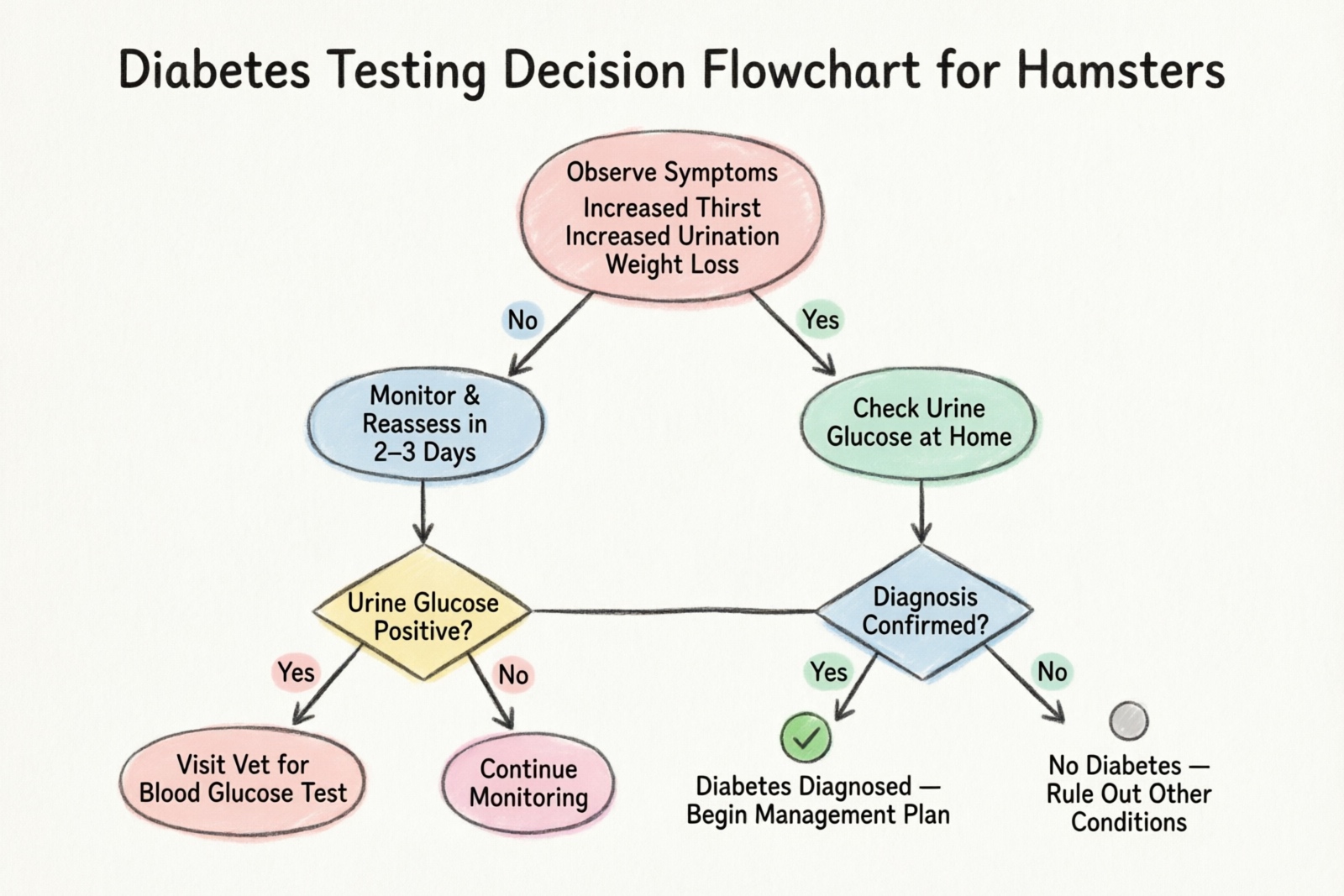
Testing your hamster at home is practical and affordable. There are two methods: urine screening (non-invasive, for initial detection) and blood glucose testing (for confirmed diagnosis and ongoing monitoring).
Step 1 — Urine Glucose Screening (Non-Invasive)
Urine testing is the easiest way to start. It requires no blood draw and can be done entirely at home.
How to collect urine:
- Place a clean, shallow dish or plastic lid in your hamster’s cage
- Wait for your hamster to urinate naturally (usually within 30–60 minutes)
- Dip the test strip into the collected urine
- Compare the color to the chart on the bottle after the specified time
Best time to test: First thing in the morning, using the first urine of the day. This gives the most concentrated reading.
Limitations: Urine glucose reflects blood sugar levels from the past several hours, not real-time readings. False negatives are possible, especially in early-stage diabetes. This method is best used as an initial screening tool, not a definitive diagnosis.
We recommend the KIT4CAT CheckUp Glucose Urine Testing Strips (100 Count) for screening. At $14.95 for 100 strips, it’s an affordable way to monitor regularly. The strips test for both glucose and ketones — elevated ketones can indicate a serious complication called diabetic ketoacidosis. Rated 4.3 stars.
Step 2 — Blood Glucose Testing (Accurate Diagnosis)
A reliable hamster diabetes test using blood glucose measurement is the gold standard for diagnosis and tracking management over time.
How to test blood glucose in a hamster:
- Prepare — Have your glucose meter, test strip, and lancing device ready
- Restrain gently — Wrap your hamster in a soft towel, leaving one ear exposed
- Clean the ear — Wipe the edge of the ear with a warm, damp cloth (this increases blood flow)
- Lance the ear margin — Use a sterile lancet to prick the thin edge of the ear, where capillaries are close to the surface
- Apply blood to strip — Gently touch the test strip to the blood drop
- Read the result — The meter displays blood glucose in mg/dL
Normal hamster blood glucose: 65–150 mg/dL (ranges vary slightly by source and species) Diabetic threshold: Consistent readings above 200 mg/dL Critical high: Readings above 400 mg/dL require immediate veterinary care
For first-time testers, the PetTest Beginner Glucose Monitoring Kit ($49.99, 4.2 stars) is a solid starting point. It includes everything you need: the meter, 25 test strips, lancets, and a lancing device. It requires only a small blood sample (0.5 µL), which is important for hamster-sized patients. Several users noted how little blood is needed compared to human-grade meters.
⚠️ Tip: Ask your exotic vet to walk you through the first blood glucose test. Most are happy to demonstrate the proper technique on the ear margin, which minimizes stress for both you and your hamster.
Glucose Test Strips: Ongoing Monitoring Supplies
Once diagnosed, regular monitoring becomes part of your routine. Test strips are consumables — you’ll need to restock periodically.
Budget-friendly option: PetTest Blood Glucose Test Strips (Easy Open, 50 Count) ($44.99, 4.7 stars, 🔥). These work with the PetTest meter and require only 0.5 µL of blood. The easy-open packaging is convenient when you’re testing regularly.
Veterinary-grade option: AlphaTrak 3 Test Strips ($59.72, 4.5 stars, 🔥). AlphaTrak is the brand most trusted by veterinarians worldwide. It requires only 0.3 µL of blood — the smallest sample size available — and delivers the most accurate readings for pets. Note: these strips only work with the AlphaTrak 3 meter, which is sold separately.
| Product | Price | Blood Needed | Accuracy | Best For |
|---|---|---|---|---|
| PetTest Beginner Kit | $49.99 | 0.5 µL | Good | First-time testers |
| PetTest Strips 50ct | $44.99 | 0.5 µL | Good | Ongoing monitoring |
| AlphaTrak 3 Strips | $59.72 | 0.3 µL | Veterinary-grade | Maximum accuracy |
Diabetic Hamster Diet: What to Feed & Avoid
A proper hamster diabetes diet is the single most important factor in managing this condition — in many cases, dietary changes alone can stabilize blood sugar levels significantly in hamsters with diabetes. If you’re wondering how to prevent diabetes in hamsters, the core principle is simple: low sugar, high fiber, moderate protein.
Safe Foods for Diabetic Hamsters
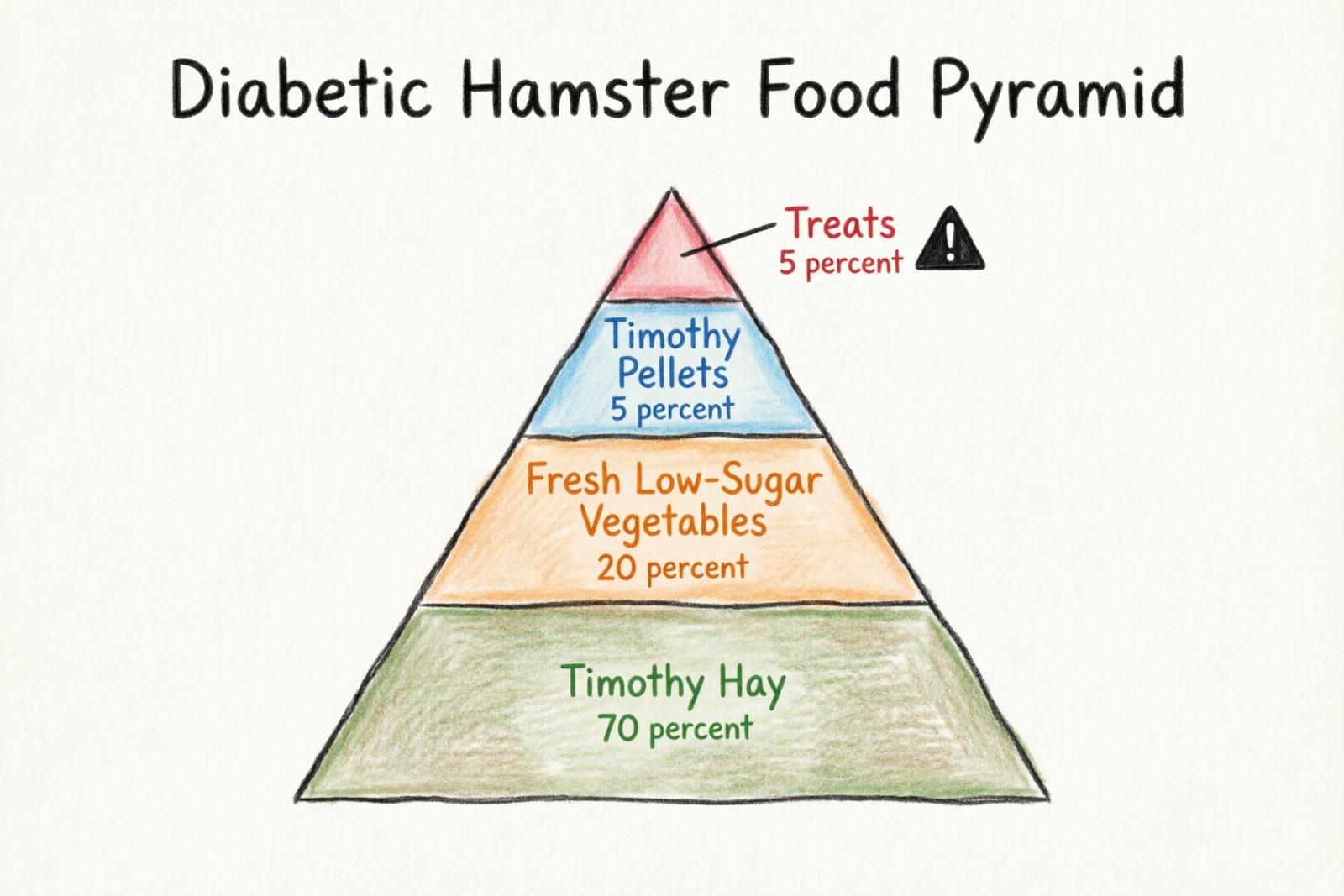
Think of your diabetic hamster’s diet as a pyramid with three layers:
Base layer (70%+ of daily diet — always available):
- Timothy hay should become the foundation of your diabetic hamster’s diet. It’s naturally low in sugar, high in fiber, and promotes healthy digestion. Unlike alfalfa hay, timothy hay won’t spike blood sugar.
- Low-sugar commercial pellets — choose a brand without honey, molasses, dried fruit, or added sugars. Read the ingredient list carefully.
We recommend Kaytee Premium Timothy Hay ($8.99, 4.7 stars, 🔥) as the dietary staple. It’s veterinarian-recommended for small pets, provides the fiber your hamster needs, and encourages natural foraging behavior. For more on building a complete diet, see our hamster diet guide.
Middle layer (20% of daily diet — daily supplementation):
- Fresh vegetables — broccoli, cucumber, celery, zucchini, and bell peppers are all safe, low-sugar options
- Lean protein — small pieces of boiled chicken breast, plain tofu, or dried crickets (available at pet stores)
- Avoid vegetables high in sugar, such as carrots and sweet potatoes
Top layer (under 10% — occasional treats only):
- Timothy-based treats are the safest reward option. We suggest Kaytee Timothy Biscuits Baked Treat (Apple) ($3.79, 4.7 stars, 🔥). Made primarily from timothy hay with a hard-baked texture that helps wear down teeth. The apple flavoring is very mild. For diabetic hamsters, limit to 1–2 biscuits per week.
If you prefer full control over ingredients, homemade hamster food recipes let you prepare meals with exactly the nutrients your diabetic hamster needs — and nothing they don’t.
Foods to Avoid
These foods can rapidly destabilize a diabetic hamster’s blood sugar:
| Food Type | Examples | Why It’s Dangerous |
|---|---|---|
| High-sugar fruits | Grapes, bananas, apples, melon | Directly spike blood glucose |
| Sugary treats | Honey sticks, yogurt drops, seed bells | Extremely concentrated sugar |
| Excess fatty seeds | Sunflower seeds, peanuts | Worsen insulin resistance |
| Processed human food | Bread, crackers, cereal, cookies | Refined carbohydrates |
| Corn products | Corn kernels, corn flakes | High glycemic index |
| Peas and carrots | Fresh or dried | Higher in sugar than most vegetables |
Treatment Options & Veterinary Care
While diet management is the cornerstone of treating hamster diabetes, veterinary care plays an essential role in diagnosis and monitoring. Do not attempt to diagnose or treat diabetes based solely on home testing — a veterinarian should confirm the diagnosis and guide the treatment plan.
Veterinary Treatment
Insulin therapy may be prescribed for hamsters with consistently high blood glucose that doesn’t respond to dietary changes alone. The veterinarian determines the exact dosage and injection schedule. Because hamsters are so small, dosing must be extremely precise — even a tiny overdose can cause dangerous hypoglycemia (low blood sugar).
Oral medications such as Glipizide (a drug used in human Type 2 diabetes) have been tried in hamsters, but there is limited standardized research on effective dosages for small rodents. Your vet may consider this option depending on the case.
Follow-up schedule: After diagnosis, plan veterinary check-ups every 2–4 weeks to monitor blood glucose curves and adjust treatment as needed.
Daily Care Routine for Diabetic Hamsters
Consistent daily management makes the biggest difference. Here’s what a good daily care routine looks like:
- 🕐 Fixed feeding schedule — Feed at the same times each day to stabilize blood sugar rhythms
- 💧 Monitor water intake — Track daily water bottle consumption; sudden increases may indicate worsening diabetes
- 🧪 Regular glucose testing — Test 2–3 times per week initially; reduce to once weekly once levels stabilize
- 🏃 Ensure exercise — A properly sized wheel is non-negotiable. Exercise directly helps lower blood glucose
- 🧹 Keep bedding dry — Increased urination means more frequent spot-cleaning to prevent skin infections and respiratory issues
- 👀 Track weight and energy — Weigh weekly and note any changes in activity level or coat condition
A good water bottle makes tracking daily intake much easier. The Choco Nose No-Drip Small Animal Water Bottle (8 oz) ($11.99, 4.2 stars, 🔥) features a double-ball bearing design that prevents dripping, so you can accurately measure how much your hamster drinks each day. Its 8 oz capacity is ideal for hamsters, and it fits securely on most cage types. For cage setup tips specific to diabetic hamsters — who need extra-dry environments — see our hamster cage setup guide.
Exercise is a powerful tool for blood sugar management. A hamster running on a wheel burns glucose as fuel. Make sure the wheel is the right size: at least 8.5 inches (21cm) for dwarf hamsters and 10.5–12 inches for Syrians. For detailed wheel recommendations, see our hamster exercise and wheel guide.
How Long Do Diabetic Hamsters Live?
A diabetes diagnosis is not an immediate death sentence. With proper management, diabetic hamsters can live close to their normal lifespan. Without management, however, the condition progresses rapidly and can be fatal within weeks.
Lifespan Comparison
- Normal dwarf hamster lifespan: 1.5–2 years
- Managed diabetic dwarf: 1.5–2+ years (near-normal)
- Unmanaged diabetic dwarf: Weeks to a few months
Prognosis by Management Level
| Management Level | Expected Lifespan | Key Actions |
|---|---|---|
| No management | Weeks to months | Organ failure from chronic high blood sugar |
| Basic (diet only) | 1–1.5 years | Low-sugar diet significantly extends life |
| Active (diet + monitoring + vet) | 1.5–2+ years | Close to normal lifespan with good quality of life |
Factors That Affect Prognosis
- How early diabetes is detected — hamsters diagnosed in the early stage respond much better to dietary changes
- Dietary compliance — consistent low-sugar feeding is the single most impactful factor
- Monitoring frequency — regular glucose checks catch problems before they become crises
- Complications — cataracts, kidney disease, and nerve damage shorten lifespan and reduce quality of life
Quality of Life Considerations
Focus on your hamster’s comfort and happiness, not just extending life. A well-managed diabetic hamster can remain active, curious, and engaged with their environment. Watch for signs of suffering: persistent lethargy, inability to climb or use the wheel, and loss of interest in food.
If your hamster’s quality of life deteriorates despite your best efforts, have an honest conversation with your veterinarian about end-of-life options. This is a difficult decision, but sometimes the kindest choice.
Prevention: How to Reduce Diabetes Risk
Prevention is far more effective than treatment. For owners of dwarf hamsters, these measures should start from the day you bring your hamster home.
For High-Risk Breeds (Dwarf Hamsters)
- Choose your hamster carefully — Ask breeders about diabetes history in the bloodline. Pet store hamsters often come from unknown backgrounds, which increases risk.
- Feed a low-sugar diet from day one — Don’t wait for symptoms to appear. Preventive dietary management is the most effective strategy for hamster diet in dwarf species.
- Screen regularly — Use urine test strips every 3–6 months as a routine health check, even if your hamster seems healthy.
For All Hamsters
- Maintain a healthy weight — Obesity is the primary trigger for Type 2 diabetes. A hamster at a healthy weight is far less likely to develop insulin resistance.
- Provide a proper wheel — Exercise is essential for glucose metabolism. Ensure the wheel is the correct size for your species.
- Eliminate sugary treats — Remove all honey sticks, yogurt drops, and fruit-flavored snacks from your hamster’s diet. Choose natural, low-sugar alternatives.
- Minimize stress — Chronic stress elevates cortisol, which destabilizes blood sugar. Provide a quiet, appropriately sized cage with proper enrichment.
Prevention Checklist
| Action | Frequency | Difficulty |
|---|---|---|
| Choose a low-sugar pellet food | One-time setup | Easy |
| Provide a properly sized wheel | Ongoing | Easy |
| Weigh your hamster weekly | Weekly | Easy |
| Perform urine glucose screening | Every 3–6 months | Moderate |
| Eliminate sugary treats | Ongoing | Easy |
| Keep a clean, low-stress environment | Ongoing | Easy |
For exercise recommendations specific to each hamster species, see our hamster exercise and wheel guide. The right wheel size and consistent access to exercise are among the most effective preventive measures available.
FAQ: Common Questions About Hamster Diabetes
Can hamsters recover from diabetes?
Type 1 diabetes (genetic) is not reversible. Type 2 diabetes triggered by diet and obesity may be partially managed or even stabilized through strict dietary changes, especially if caught early. However, a hamster that has developed full diabetes will likely require lifelong management.
What is the hamster diabetes life expectancy?
Most diabetic hamsters live 6-12 months after diagnosis with proper management. Some well-managed cases extend beyond 18 months. Early detection and strict dietary control are the biggest factors in extending life expectancy.
Is hamster diabetes contagious?
No. Hamster diabetes is not contagious to other hamsters or humans. However, the genetic predisposition can be passed to offspring, which is why breeding diabetic hamsters is strongly discouraged.
How much does it cost to treat a diabetic hamster?
Initial testing supplies (glucose meter + test strips) cost approximately $50–120. Ongoing monitoring runs $15–30 per month for replacement test strips. Veterinary visits typically cost $50–150 per session. While not inexpensive, the ongoing costs are manageable for most owners.
Should I put my diabetic hamster to sleep?
Not necessarily. Many diabetic hamsters live comfortable, active lives with proper management. The decision should only be made after thorough discussion with your veterinarian and when your hamster’s quality of life has clearly deteriorated despite consistent treatment.
Can a Syrian hamster get diabetes?
It is very rare. Syrian hamsters are not genetically predisposed to diabetes. Obesity-related Type 2 diabetes is theoretically possible but uncommon. Maintaining a healthy weight through proper diet and exercise is sufficient prevention for Syrian hamsters.
What’s the best food for a diabetic dwarf hamster?
Timothy hay should form the bulk of the diet, supplemented with a low-sugar commercial pellet, fresh vegetables (broccoli, cucumber, celery), and lean protein (boiled chicken, tofu). All fruits, sugary treats, and excess seeds should be eliminated. Timothy hay–based biscuits can be given as occasional treats (1–2 times per week).