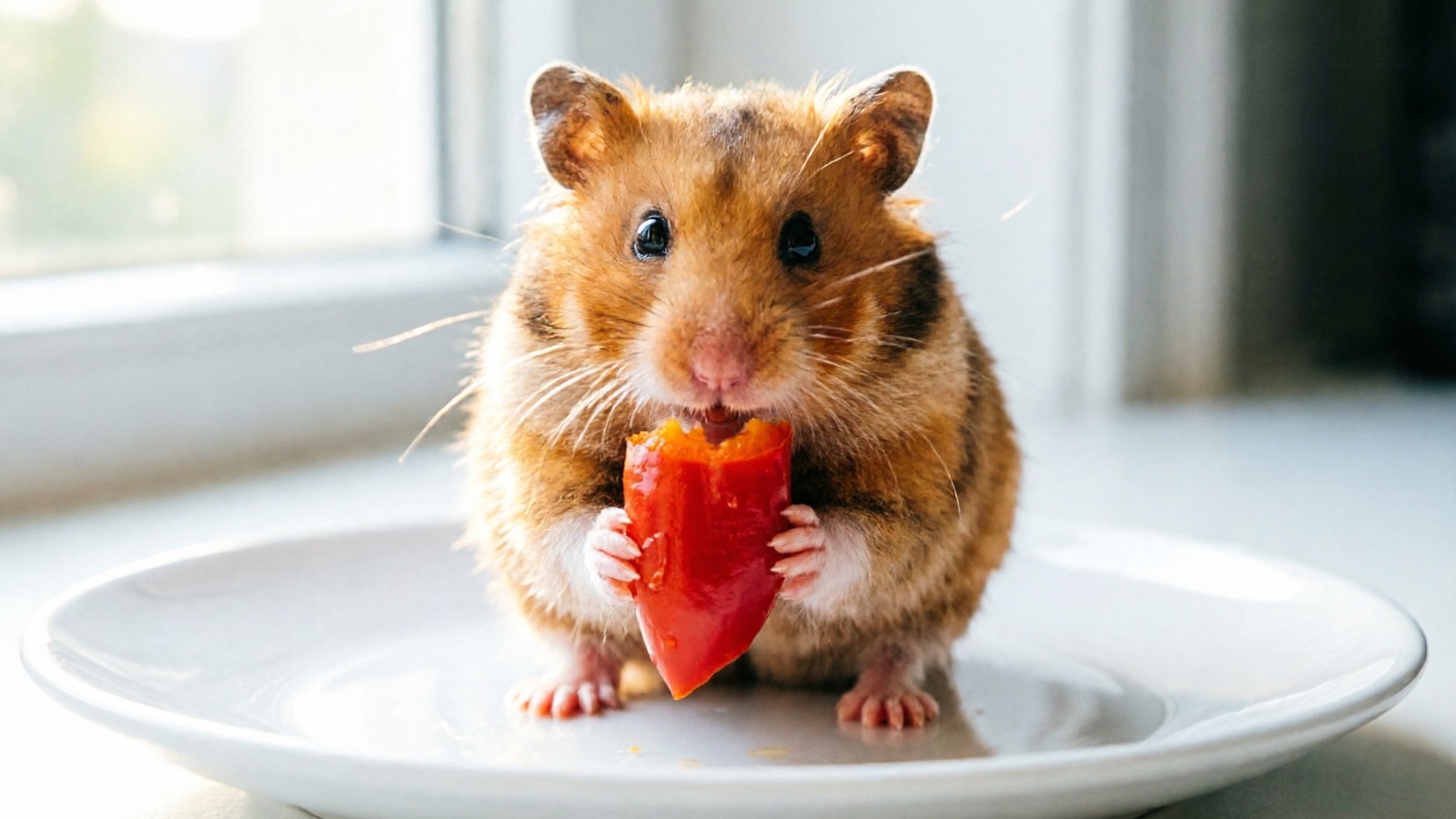
Quick Answer: Can Hamsters Eat Bell Peppers?
Yes — bell peppers are one of the safest, most nutritious vegetables for hamsters. The color you choose matters a lot though.
💡 TL;DR: Feed 1 small piece (~1 tsp diced) once or twice a week for Syrians, ½ tsp once a week for dwarfs. Red bell peppers are the best choice — highest in vitamin C and vitamin A. Remove all seeds, stem, and white pith. Serve raw and fresh.
Bell peppers are one of my go-to vegetables for hamsters. They’re crunchy, low in sugar, packed with vitamin C, and most hamsters seem to enjoy the slightly sweet flavor. I always reach for red peppers — they’re not only more nutritious but my Syrians seem to prefer the taste over green. Are bell peppers safe for hamsters? Absolutely — as long as you prepare them correctly and feed in moderation. For your hamster’s overall hamster diet, bell peppers are a nutritious occasional treat.
Nutritional Value of Bell Peppers for Hamsters
Key Nutrients (Red Bell Pepper)
Raw red bell pepper nutritional data from the USDA USDA FoodData Central — Peppers, sweet, red, raw:
| Nutrient | Per 100g Red Pepper | Per 1 tsp Diced (~5g) | Benefit for Hamsters |
|---|---|---|---|
| Calories | 31 kcal | ~1.6 kcal | Very low calorie |
| Sugar | 4.2g | ~0.21g | Low — safer than fruits |
| Fiber | 2.1g | ~0.11g | Digestive aid |
| Vitamin C | 128 mg | ~6.4 mg | Excellent immune support |
| Vitamin A | 3,131 IU | ~157 IU | Eye health and immune |
| Vitamin B6 | 0.3 mg | ~0.015 mg | Metabolism |
| Folate | 46 mcg | ~2.3 mcg | Cell function |
| Potassium | 211 mg | ~10.6 mg | Heart and muscle |
| Water | ~92% | ~4.6g | Moderate hydration |
Key insight: at 128mg per 100g, red bell pepper has an exceptionally high vitamin C content — far more than most hamster-safe vegetables. Hamsters can’t synthesize vitamin C internally (like humans, unlike many other mammals), so dietary sources are important for their immune system.
Bell Pepper vs Other Safe Vegetables
| Vegetable | Sugar | Fiber | Vitamin C | Vitamin A | Key Benefit |
|---|---|---|---|---|---|
| Red bell pepper | 4.2g | 2.1g | 128 mg | 3,131 IU | High Vit C, low sugar |
| Broccoli | 1.7g | 2.6g | 89 mg | 623 IU | Good all-around |
| Cucumber | 1.7g | 0.5g | 2.8 mg | 105 IU | Hydration |
| Carrots | 4.7g | 2.8g | 5.9 mg | 16,706 IU | High Vit A |
| Romaine lettuce | 2.3g | 2.1g | 24 mg | 8,710 IU | Vit A + K |
| Tomato | 2.6g | 1.2g | 14 mg | 851 IU | Low sugar, lycopene |
Red bell pepper has 46x more vitamin C than cucumber and 22x more than tomato. At only 4.2g sugar per 100g, it’s safer than most fruits while delivering superior immune support. For dwarf hamster owners concerned about sugar, bell peppers are one of the safest vegetable options — and when it comes to hamsters bell peppers are consistently ranked among the top recommended fresh treats by veterinarians.
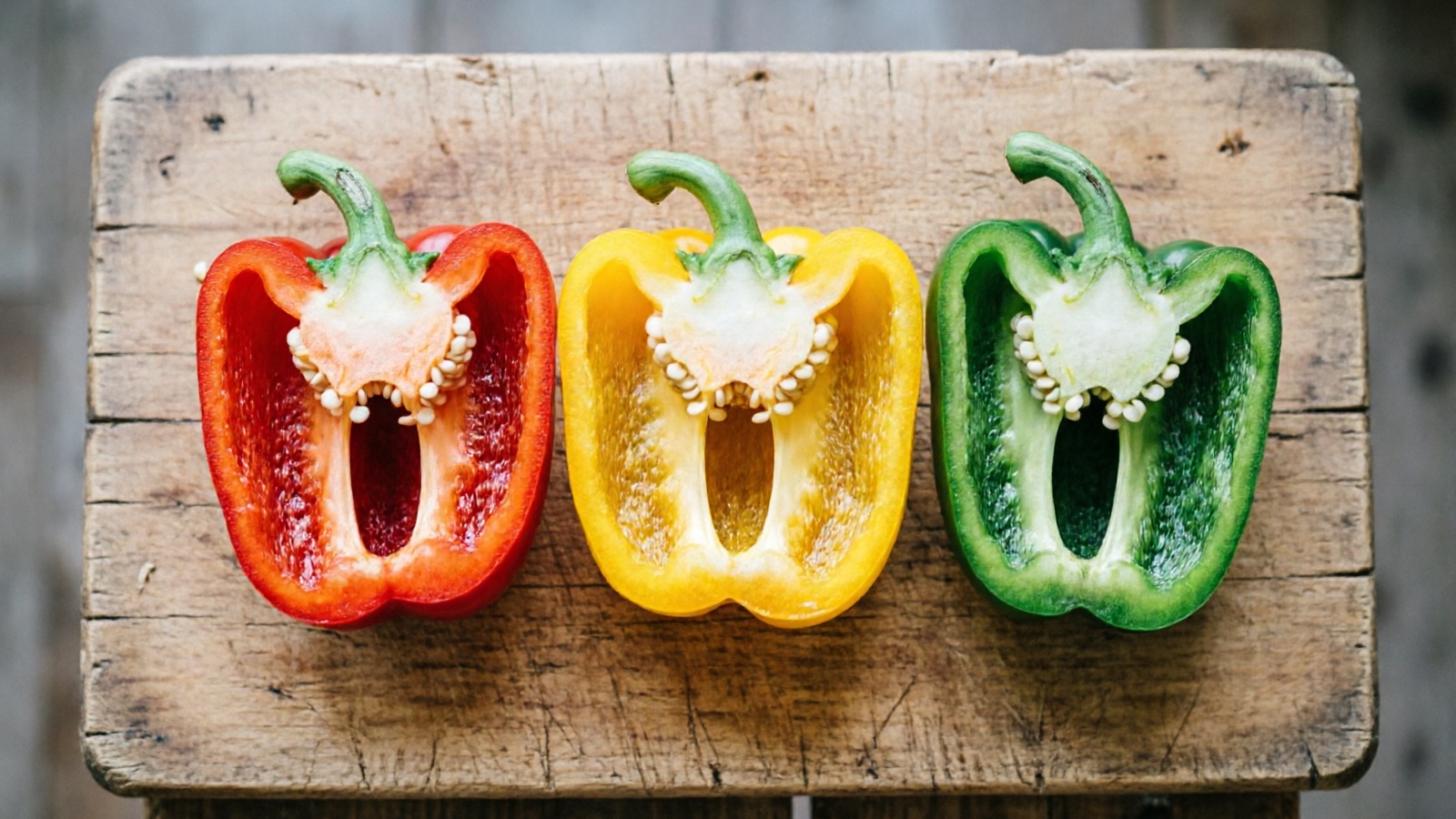
Color Matters: Red vs Green vs Yellow vs Orange
This is the section that separates this article from competitors. Most pet sites say “yes, hamsters can eat bell peppers” and stop there. But a green bell pepper and a red bell pepper are essentially different foods nutritionally.
| Color | Ripeness | Sugar | Vitamin C | Vitamin A | Flavor | Best For |
|---|---|---|---|---|---|---|
| Red | Fully ripe | 4.2g | 128 mg | 3,131 IU | Sweetest | Best choice |
| Orange | Nearly ripe | 4.3g | ~115 mg | ~2,500 IU | Sweet | Good |
| Yellow | Mostly ripe | 3.7g | ~180 mg | ~300 IU | Mild, slightly sweet | Good (highest Vit C) |
| Green | Unripe | 2.5g | ~80 mg | ~370 IU | Bitter | Acceptable |
The science: all bell peppers start green on the plant. As they ripen, their color changes and their nutrient profile transforms dramatically. A red bell pepper can have up to 8.5x more vitamin A than its green counterpart. The sugar content also increases as the pepper ripens (green 2.5g → red 4.2g), but the increase is small enough that even red peppers remain a very low-sugar treat.
Here’s something most people miss: yellow bell peppers actually have the highest vitamin C content of any color — around 180mg per 100g, significantly more than red. If you’re wondering can hamsters eat yellow bell peppers, the answer is a clear yes — they’re actually the vitamin C champion. If you can find yellow peppers, they’re great for your hamster. However, red peppers still win overall because they combine high vitamin C with the best vitamin A levels and the sweetest flavor hamsters prefer.
My recommendation: always choose red or yellow bell peppers for your hamster if available. Green peppers are perfectly fine if that’s what you have, but don’t buy green specifically thinking it’s healthier — it’s actually the least nutritious option. Most hamsters I’ve worked with strongly prefer the sweetness of red peppers and will turn their nose up at green.
Bell Peppers vs Chili Peppers: Why There’s No Heat
Bell peppers (Capsicum annuum, zero Scoville Heat Units) and chili peppers are in the same genus, but bell peppers lack capsaicin — the compound that makes peppers hot. Bell peppers carry a genetic mutation that completely disables capsaicin production. This is a natural genetic variation, not human modification.
For hamster owners: this means bell peppers are completely safe from a “heat” perspective. Your hamster won’t experience any burning sensation or digestive irritation from capsaicin. Chili peppers — jalapeños, habaneros, serranos — should be strictly avoided. They contain capsaicin that would severely irritate a hamster’s sensitive digestive system.
Nightshade family note: Bell peppers belong to the Solanaceae family, the same family as tomatoes and potatoes. Unlike tomato leaves and stems which contain tomatine (a potentially harmful alkaloid — see our tomato guide), bell pepper plants don’t produce significant amounts of harmful alkaloids in the mature fruit. The fleshy part of the bell pepper is perfectly safe. Only the green stem and leaves of the bell pepper plant should be avoided, but you won’t encounter those in a grocery-bought pepper.
Can Syrian Hamsters Eat Bell Peppers?
Yes — 1 teaspoon of diced bell pepper, 1-2 times per week.
Syrian hamsters (120-200g) handle bell peppers very well. The crunchy texture provides good dental exercise — their teeth grow continuously and need regular wear — and the vitamin C is excellent for immune support. I’ve found that Syrians almost always enjoy bell peppers, especially red ones.
Recommended Serving for Syrians
- Variety: Red bell pepper preferred
- Amount: 1 tsp diced (~5g)
- Frequency: 1-2 times per week
- Preparation: Raw, washed, seeds/stem/pith removed, room temperature
Can Dwarf Hamsters Eat Bell Peppers?
Yes — ½ teaspoon of finely diced bell pepper, once per week.
Dwarf hamsters (25-45g) can safely eat bell peppers in small amounts. The sugar content (4.2g per 100g for red) is low enough that it shouldn’t trigger diabetes concerns when fed in these modest portions. For more on dwarf hamster diabetes risk, see our dwarf hamster diabetes guide.
Recommended Serving for Dwarf Hamsters
- Variety: Red bell pepper preferred
- Amount: ½ tsp finely diced (~2.5g)
- Frequency: Once per week
- Extra caution: Dice finely to prevent choking. Watch for any digestive changes after the first serving.
Roborovski hamsters (20-25g, the smallest common species): follow the dwarf guidelines. Their tiny size means every gram of food matters more, so keep portions on the smaller side.
How to Prepare Bell Peppers for Your Hamster
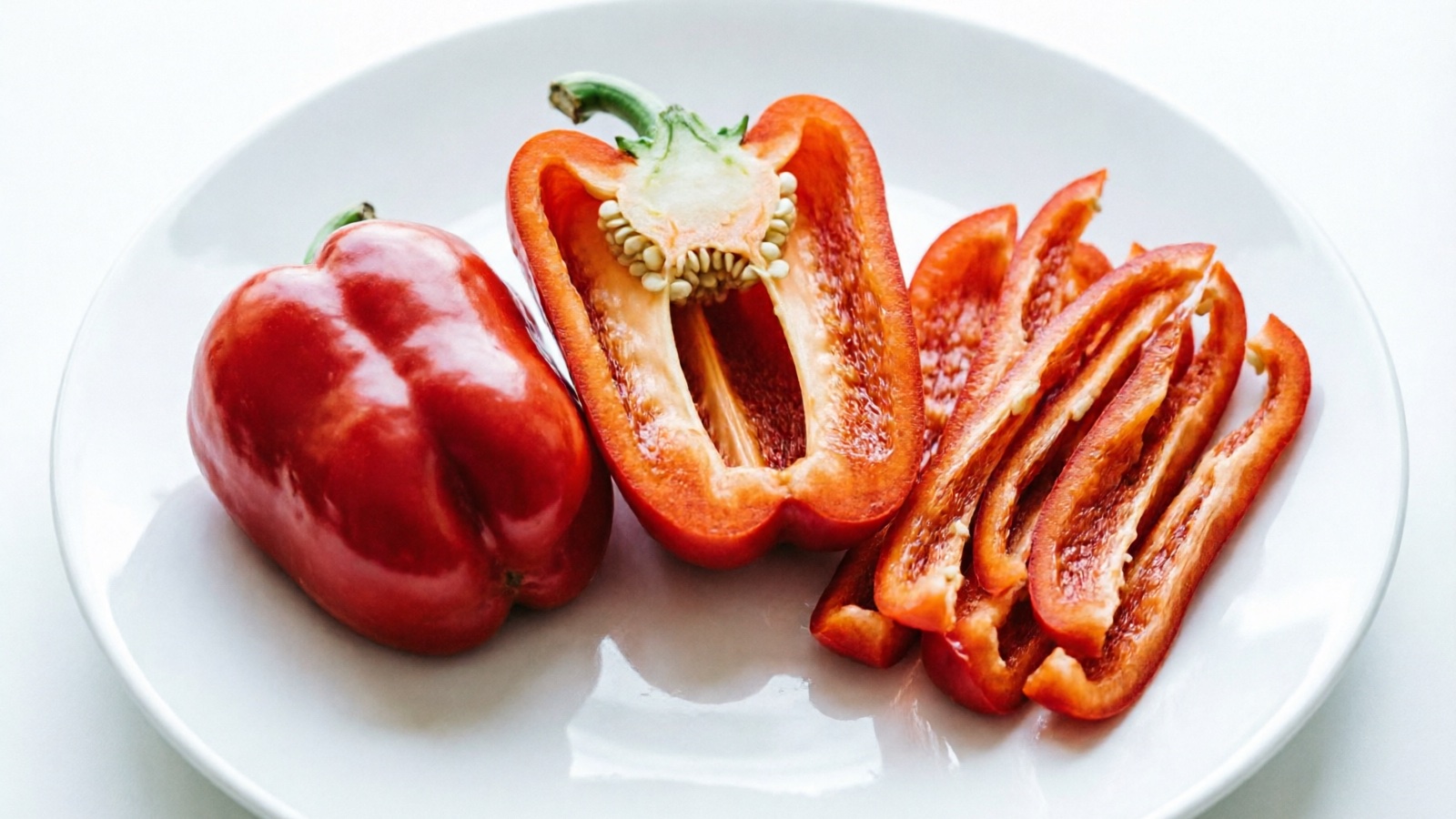
Step 1: Choose a Fresh Pepper
Select a firm, glossy pepper with no soft spots or wrinkles. Red bell peppers are the most nutritious choice. Organic is preferred since bell peppers consistently appear on the EWG’s “Dirty Dozen Plus” list for pesticide residue. Avoid pre-cut peppers — they oxidize quickly and lose vitamin C within hours of being sliced.
Step 2: Wash Thoroughly
Rinse the pepper under cool running water for 15-20 seconds. Use a produce brush if available, since the smooth skin can trap pesticide residue. For extra assurance, soak in a vinegar-water solution (1:3 ratio) for 2 minutes, then rinse clean. Pat dry with a clean towel.
Step 3: Remove the Top and Stem
Cut around the stem with a knife and pull it out. Discard the stem entirely — it’s tough, fibrous, and provides no nutritional value. The white pith (inner ribs running from the stem down the inside) should also be removed — it’s bitter and more fibrous than the flesh.
Step 4: Remove All Seeds
Seeds are a choking hazard for hamsters and can cause digestive irritation. Tap the pepper halves upside down over a bowl to dislodge most seeds, then rinse the inside under water to catch any remaining ones. Don’t skip this step — while bell pepper seeds aren’t toxic (unlike apple seeds which contain cyanide), they’re a known choking risk for animals this small.
Step 5: Dice Into Small Pieces
Cut the bell pepper flesh into pieces roughly ¼-inch (5mm) cubes. This size is safe for all hamster breeds and prevents choking. A proper bell pepper for hamsters should always be diced small enough that even a Roborovski can manage it without difficulty.
Cut the pepper flesh into small, manageable pieces:
- Syrian hamsters: approximately 1 cm cubes (about the size of their paw)
- Dwarf hamsters: 0.5 cm cubes (finely diced)
The smaller the pieces, the easier for your hamster to handle, stuff in cheek pouches, and store.
Step 6: Serve at Room Temperature
Never serve bell pepper straight from the refrigerator. Cold vegetables can cause digestive upset in hamsters. Let the pieces sit at room temperature for 5-10 minutes before offering.
Step 7: Remove Uneaten Pieces After 2 Hours
Bell peppers dry out and become tough in the warm environment of a hamster enclosure. Check hiding spots too — hamsters are notorious hoarders, and a pocketful of decaying bell pepper in the bedding creates bacteria, mold, and odor.
How Often Can Hamsters Eat Bell Peppers?
| Breed | Frequency | Serving Size | Notes |
|---|---|---|---|
| Syrian Hamster | 1-2x per week | 1 tsp diced | Well tolerated |
| Dwarf Hamster (WW/CC) | 1x per week | ½ tsp finely diced | Monitor after first serving |
| Chinese Hamster | 1x per week | ½ tsp finely diced | Same caution as dwarfs |
| Roborovski | 1x per week | ½ tsp finely diced | Small species, keep portions modest |
Bell peppers are low-risk, but variety is key. Don’t feed the same vegetable every time — rotate through your hamster’s safe vegetable options throughout the week.
Signs Your Hamster Ate Too Much Bell Pepper
Bell peppers are generally very safe, but overfeeding can cause:
- Loose stools — from the fiber content (2.1g per 100g), especially in dwarf hamsters
- Decreased appetite for regular food — if your hamster fills up on bell pepper instead of its seed mix
- Mouth irritation — rare, but the skin can be slightly tough for very small hamsters
What to do: remove all fresh food for 12-24 hours, provide only dry seed mix and fresh water. Symptoms typically resolve quickly. If your hamster shows signs of an allergic reaction (swelling, difficulty breathing — extremely rare), contact an exotic vet immediately.
Safe Vegetable Alternatives
If you want variety in your hamster’s vegetable rotation on days when you’re not serving bell peppers, these hamster safe vegetables make excellent options:
- Broccoli florets — excellent nutrition, soft digestible fiber, very safe
- Carrots — high vitamin A, satisfying crunch for dental health
- Cucumber — mostly water, gentle on digestion, no preparation needed beyond washing
- Romaine lettuce — high vitamin A and K, soft texture
- Spinach — high iron and vitamin A, but watch for oxalate content (limit to once every two weeks)
- Zucchini — mild flavor, very safe, 95% water
Other Foods Your Hamster Can Eat
Each link leads to a full safety guide with breed-specific serving recommendations.
Vegetables
- Can Hamsters Eat Carrots?
- Can Hamsters Eat Broccoli?
- Can Hamsters Eat Cucumbers?
- Can Hamsters Eat Tomatoes?
- Can Hamsters Eat Lettuce?
- Can Hamsters Eat Spinach?
Fruits
- Can Hamsters Eat Grapes?
- Can Hamsters Eat Strawberries?
- Can Hamsters Eat Blueberries?
- Can Hamsters Eat Bananas?
Proteins and Treats
Frequently Asked Questions
Can hamsters eat bell peppers?
Yes, hamsters can eat bell peppers safely. They are low in sugar (around 4.2g per 100g for red), high in vitamin C (128mg per 100g), and provide good fiber. Remove the seeds and stem before feeding, and offer only small pieces — about 1 teaspoon of diced pepper for Syrian hamsters, half that for dwarfs. Red bell peppers are the most nutritious choice due to their higher vitamin A and C content.
Can hamsters eat red bell peppers?
Yes — red bell peppers are actually the best choice for hamsters. They are fully ripe and contain the highest levels of vitamin A (3,131 IU per 100g) and substantial vitamin C. They’re also the sweetest variety, which most hamsters prefer over the more bitter green peppers. Serve in small pieces with seeds removed, once or twice a week for Syrians. I’ve found that my hamsters will often ignore green peppers but devour red ones immediately.
Can hamsters eat green bell peppers?
Yes, green bell peppers are safe for hamsters. However, they are the least ripe variety, meaning they have lower vitamin A and C content and a more bitter flavor that some hamsters actively dislike. They still provide about 80mg of vitamin C per 100g, which is respectable, but red or yellow are better choices if available. If green is what you have on hand, it’s perfectly fine — just don’t expect your hamster to be as enthusiastic.
Can hamsters eat bell pepper seeds?
No — bell pepper seeds should be removed before feeding to hamsters. When it comes to bell pepper seeds hamster safety is a genuine concern: while the seeds themselves aren’t toxic (unlike apple or cherry seeds which contain cyanide compounds), they can be a choking hazard and may cause digestive irritation in a small animal. The white pith around the seeds is also bitter and fibrous. Only feed the colorful flesh of the bell pepper.
Can hamsters eat bell peppers every day?
No. Bell peppers should be offered at most twice a week for Syrian hamsters and once a week for dwarf hamsters. Despite being low in sugar and highly nutritious, feeding any single vegetable daily can lead to nutrient imbalances and mild digestive upset from the fiber content. Rotate through different vegetables throughout the week for optimal nutrition.
Can dwarf hamsters eat bell peppers?
Yes, dwarf hamsters can eat bell peppers in small amounts — about ½ teaspoon of finely diced bell pepper once a week. Bell peppers are lower in sugar than many fruits (4.2g per 100g for red), making them a reasonable treat for dwarf hamsters who are prone to diabetes. Red peppers are the best choice for their nutrient density. Dice finely to prevent choking.
Can hamsters eat raw bell peppers?
Yes, raw bell peppers are the best and only safe form. Cooking softens the texture and can reduce vitamin C content through heat degradation. Raw, fresh, washed bell peppers — served at room temperature — are what hamsters should eat. Never feed cooked, pickled, or canned bell peppers, as these often contain salt, preservatives, or vinegar that are harmful to hamsters.
Are bell peppers safe for hamsters?
Yes, bell peppers (Capsicum annuum) are safe for hamsters. They belong to the nightshade family (Solanaceae), but the mature fruit contains no harmful compounds. Unlike chili peppers, bell peppers contain zero capsaicin — the compound responsible for the burning sensation in hot peppers. Remove seeds and stem, serve raw in small pieces, and they’re one of the safest vegetables you can offer.
What color bell pepper is best for hamsters?
Red bell peppers are the best overall choice — highest vitamin A, high vitamin C, and the sweetest flavor hamsters prefer. Yellow bell peppers actually have the highest vitamin C content (~180mg per 100g, more than red), so if you’re specifically looking for immune support, yellow is worth considering. Green peppers are the least ripe and least nutritious. Orange peppers are a solid middle ground.
Can hamsters eat bell pepper stems?
No — the stem should be removed and discarded. It’s tough, fibrous, difficult for small hamsters to chew, and provides no nutritional benefit. Only the colorful, fleshy part of the bell pepper is safe and desirable for hamsters. The same applies to the white pith (inner ribs) — it’s bitter and fibrous and should be removed along with the stem and seeds.