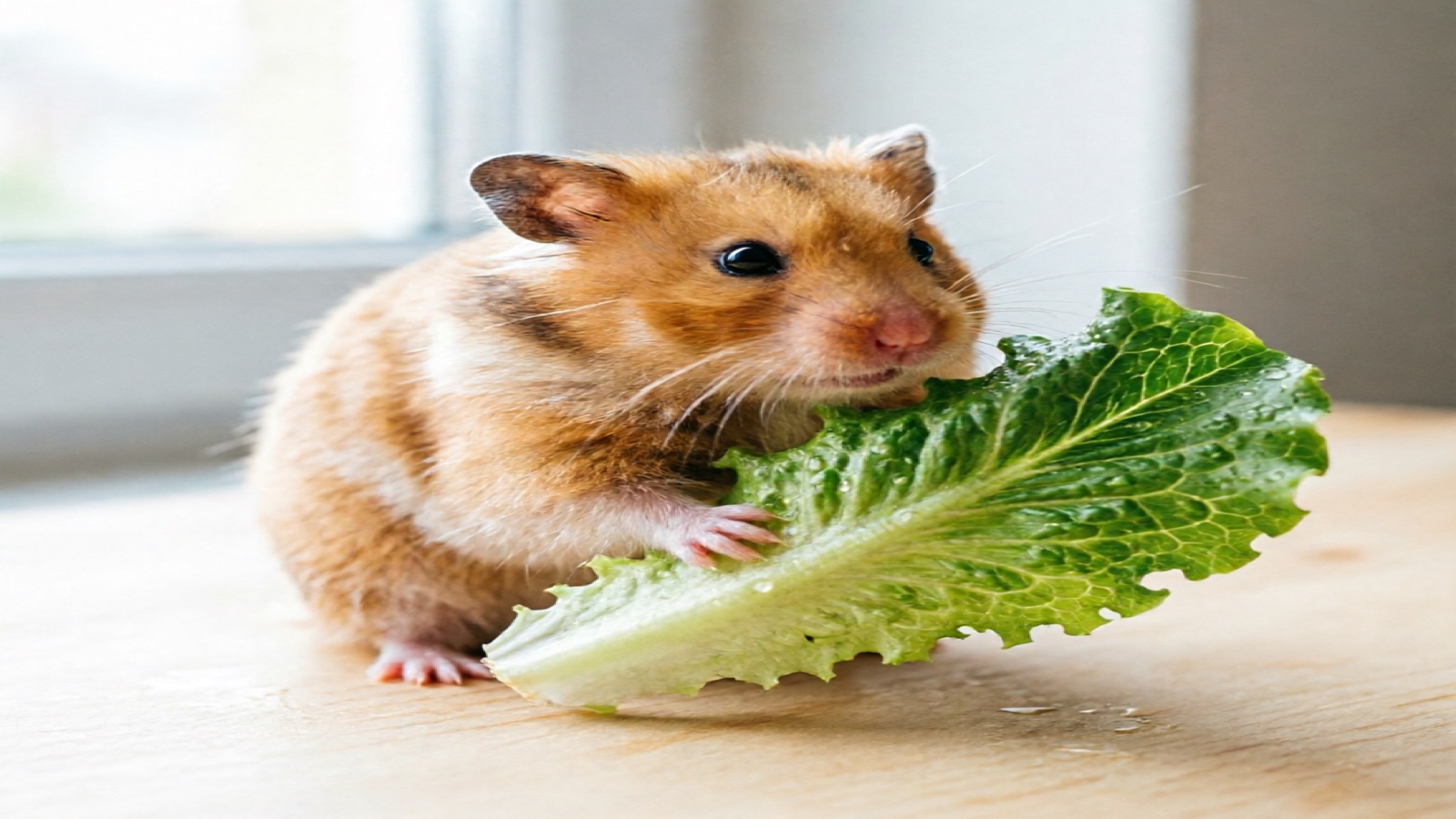
Quick Answer: Can Hamsters Eat Lettuce?
Yes — but the variety matters more than you’d think. Romaine, butterhead, and green leaf lettuce are safe and nutritious for hamsters. Iceberg lettuce should be avoided.
💡 TL;DR: Feed romaine or butterhead lettuce — 1 small leaf twice a week for Syrians, half a leaf every two weeks for dwarfs. Avoid iceberg lettuce (96% water, causes diarrhea). Always wash thoroughly, serve at room temperature, remove uneaten pieces after 2 hours.
Lettuce is one of those foods that seems like an obvious yes — it’s a salad staple, it’s green, it’s fresh. But after years of keeping hamsters, I’ve learned that “can they eat lettuce” is the wrong question. The real question is which lettuce. I made the iceberg mistake early on and learned the hard way what hamster diarrhea looks like. The difference between romaine and iceberg isn’t minor — it’s the difference between a nutritious vegetable treat and a near-certain case of loose stools.
Nutritional Value of Lettuce for Hamsters
Lettuce Varieties — Nutritional Comparison
The core differentiator in this article: not all lettuce is created equal. Here’s the USDA breakdown USDA FoodData Central:
| Nutrient | Romaine (per 100g) | Iceberg (per 100g) | Butterhead (per 100g) |
|---|---|---|---|
| Calories | 17 kcal | 14 kcal | 13 kcal |
| Water | 95% | 96% | 95% |
| Sugar | 2.3g | 2.0g | 0.5g |
| Fiber | 2.1g | 0.9g | 1.1g |
| Vitamin A | 8,710 IU | 502 IU | 3,312 IU |
| Vitamin C | 24 mg | 2.8 mg | 3.3 mg |
| Vitamin K | 102 mcg | 24 mcg | 102 mcg |
| Folate | 136 mcg | 29 mcg | 73 mcg |
| Potassium | 247 mg | 141 mg | 238 mg |
The numbers tell the whole story: romaine has 17x more vitamin A, 8.5x more vitamin C, and 4x more fiber than iceberg. They’re essentially different vegetables sharing a name. For context on how lettuce fits into your hamster’s overall hamster diet, treats like this should never exceed 10% of total weekly food intake.
Lettuce vs Other Safe Vegetables
| Vegetable | Water | Sugar | Fiber | Vitamin A | Risk |
|---|---|---|---|---|---|
| Romaine lettuce | 95% | 2.3g | 2.1g | Very high | Diarrhea if overfed |
| Cucumber | 95% | 1.7g | 0.5g | Low | Minimal risk |
| Broccoli | 89% | 1.7g | 2.6g | High | Gas if overfed |
| Carrots | 88% | 4.7g | 2.8g | Very high | Sugar (moderate) |
| Bell pepper | 92% | 4.2g | 1.7g | High | Seeds can choke |
What Romaine Lettuce Actually Offers
- Vitamin A — 8,710 IU per 100g. Critical for eye health, immune function, and skin condition. One of the highest vitamin A sources among hamster-safe vegetables.
- Vitamin K — 102 mcg per 100g for blood clotting and bone health.
- Vitamin C — 24 mg per 100g, solid immune support.
- Folate — 136 mcg per 100g for cell function.
- Fiber — 2.1g per 100g, which helps slow digestion and reduce diarrhea risk compared to iceberg’s 0.9g. This fiber difference is the real reason romaine is safer.
Iceberg vs Romaine: Why the Variety Matters
This section is what separates this article from every competitor that simply says “yes, hamsters can eat lettuce” without distinguishing varieties.
Iceberg Lettuce — Why I Don’t Recommend It
Iceberg is not toxic — it’s just nutritionally empty and dangerous for a different reason. At 96% water and only 0.9g fiber per 100g, it passes through a hamster’s small digestive system too quickly, pulling other nutrients along with it. The result is predictable: watery diarrhea.
The problems with iceberg:
- Nutrient void: 502 IU vitamin A versus romaine’s 8,710 IU. You’re feeding your hamster flavored water.
- Diarrhea risk: minimal fiber means no digestive slowdown. It acts essentially as a laxative.
- Displacement effect: a hamster full of iceberg won’t eat its protein-rich seed mix, leading to nutrient deficiency over time.
- No advantages: cucumber has even more water but less sugar and is already a safer hydrating option.
Romaine Lettuce — The Best Choice
Romaine is what I feed my hamsters. It has the highest nutrient density among common lettuce varieties, enough fiber (2.1g per 100g) to slow digestion, and a satisfying crunch that most hamsters enjoy. One small leaf is an appropriate serving.
Other Safe Varieties
| Variety | Safe? | Nutrition | Notes |
|---|---|---|---|
| Romaine | ✅ Best | High Vit A/K/C | Recommended first choice |
| Butterhead (Boston/Bibb) | ✅ Good | Moderate Vit A | Softer texture |
| Green leaf | ✅ Good | Good Vit A | Slightly bitter |
| Red leaf | ✅ Good | Good Vit A + antioxidants | Some hamsters dislike the color |
| Iceberg | ⚠️ Avoid | Near-zero nutrition | Diarrhea risk |
| Wild lettuce | ❌ Avoid | Variable | Contains lactucarium |
| Pre-washed salad mix | ⚠️ Risky | Variable | May contain unsafe greens |
Lactucarium: The Lettuce Toxin You Should Know About
Wild lettuce (Lactuca virosa) produces a milky substance called lactucarium, sometimes called “lettuce opium.” It’s a mild sedative compound that can cause lethargy and drowsiness in hamsters. While not typically fatal, it’s something to be aware of if you grow your own lettuce or forage for greens.
Should you worry? Probably not. The romaine and butterhead lettuce you buy at the grocery store contains only trace, harmless amounts of lactucarium. Wild lettuce is the concern — it’s identified by tall stems, yellow flowers, and the characteristic milky sap when cut. You won’t find it in a supermarket salad section.
However, if you grow your own lettuce or forage, avoid wild lettuce species entirely and stick to cultivated varieties purchased from a grocery store.
Can Syrian Hamsters Eat Lettuce?
Yes — 1 small romaine leaf twice a week. Syrians are the least sensitive to lettuce’s water content due to their larger size (120-200g).
Recommended Serving for Syrians
- Variety: Romaine or butterhead (never iceberg)
- Amount: 1 small leaf (or ½ large leaf)
- Frequency: Twice per week
- Preparation: Washed, room temperature, torn into pieces
Syrians generally tolerate romaine well at this frequency. I’ve found that most Syrians enjoy the crunch and will eat a whole small leaf enthusiastically. If this is your Syrian’s first time with lettuce, start with half a leaf and wait 24 hours to check for loose stools before offering the full amount.
Can Dwarf Hamsters Eat Lettuce?
Yes, but smaller portions — half a small leaf every two weeks. Dwarf hamsters (Winter White, Campbell’s, Chinese) are more vulnerable to diarrhea and wet tail from high-water foods. Their smaller digestive systems simply can’t handle the same volume.
Recommended Serving for Dwarf Hamsters
- Variety: Romaine only (higher fiber helps digestion)
- Amount: ½ small leaf
- Frequency: Once every two weeks
- Extra caution: Watch for loose stools after first serving. If diarrhea occurs, discontinue.
Wet tail risk: young dwarf hamsters (under 3 months) are especially susceptible to wet tail — a highly contagious bacterial infection that causes severe diarrhea and is often fatal if untreated. High-water foods like lettuce can contribute to the environment where wet tail bacteria thrive. I’d recommend waiting until a dwarf hamster is fully mature before introducing lettuce. For more on dwarf health concerns, see our guide on dwarf hamster diabetes and general hamster health.
How to Prepare Lettuce for Your Hamster
Step 1: Choose the Right Variety
Romaine lettuce is the first choice. Butterhead or green leaf are acceptable alternatives. Select firm, crisp leaves with no wilting, yellowing, or brown spots. Organic preferred — lettuce appears on the EWG’s “Dirty Dozen Plus” list for pesticide residue.
Step 2: Wash Thoroughly
Rinse each leaf under cool running water for 10-15 seconds. For extra assurance, use a vinegar-water solution (1 part vinegar to 3 parts water), soak briefly, then rinse clean. Pat dry with a paper towel — wet leaves make bedding soggy.
Step 3: Tear Into Pieces
Tear by hand rather than cutting with a knife. Cutting bruises lettuce and releases more water, which increases the diarrhea risk. Tear pieces roughly the size of your hamster’s paw. Remove the thick base/root end.
Step 4: Serve at Room Temperature
Cold lettuce from the refrigerator can cause digestive upset and trigger torpor. Let it sit at room temperature for 5-10 minutes before offering.
Step 5: Remove Uneaten Pieces After 2 Hours
Lettuce wilts quickly in warm enclosures. Wilted lettuce grows bacteria faster than dry foods and can cause respiratory and digestive problems. Check hiding spots — lettuce gets hoarded and rots.
How Often Can Hamsters Eat Lettuce?
| Breed | Frequency | Serving Size | Notes |
|---|---|---|---|
| Syrian Hamster | 2x per week | 1 small romaine leaf | Well tolerated |
| Dwarf Hamster (WW/CC) | 1x per 2 weeks | ½ small leaf | Watch for diarrhea |
| Chinese Hamster | 1x per 2 weeks | ½ small leaf | Same caution as dwarfs |
Don’t feed lettuce on consecutive days. Space it out with other vegetables like carrots or broccoli throughout the week.
Signs Your Hamster Ate Too Much Lettuce
Watery diarrhea is the most common and immediate issue. Other signs to watch for:
- Loose or runny stools — the primary indicator. Healthy hamster droppings are firm, dark, and dry.
- Decreased appetite for regular food — a hamster full of watery lettuce won’t eat its protein-rich seed mix.
- Lethargy from nutrient displacement over repeated feedings.
- Wet tail area — especially in young dwarfs. This is different from simple diarrhea. If you notice a wet, soiled tail area combined with hunched posture and lethargy, this is a veterinary emergency. Wet tail progresses rapidly and can be fatal within 48 hours if untreated.
What to do: remove all fresh food, provide dry seed mix and fresh water only. Most mild diarrhea from overfeeding resolves in 12-24 hours. If diarrhea persists beyond 24 hours, shows blood, or your hamster becomes lethargic, contact an exotic vet immediately.
Safe Vegetable Alternatives
If you want lower-risk alternatives or your hamster doesn’t tolerate lettuce well:
- Cucumber — 95% water but very gentle on most hamsters’ digestion. The safest high-water vegetable.
- Broccoli — 89% water, 2.6g fiber, excellent vitamin C. Very low diarrhea risk.
- Carrots — 88% water, high vitamin A and beta-carotene. Good crunch for dental health.
- Bell pepper — 92% water, high vitamin C. Remove seeds before serving.
- Zucchini — 95% water, very mild flavor that most hamsters accept readily.
Other Foods Your Hamster Can Eat
Each link leads to a full safety guide with breed-specific serving recommendations.
🥬 Vegetables
- Can Hamsters Eat Carrots?
- Can Hamsters Eat Broccoli?
- Can Hamsters Eat Cucumbers?
- Can Hamsters Eat Tomatoes?
🍓 Fruits
- Can Hamsters Eat Grapes?
- Can Hamsters Eat Strawberries?
- Can Hamsters Eat Blueberries?
- Can Hamsters Eat Bananas?
🥜 Proteins & Treats
Frequently Asked Questions
Can hamsters eat lettuce?
Yes, but the variety matters significantly. Romaine, butterhead, and green leaf lettuce are safe in moderation — they provide vitamin A, vitamin K, and fiber. Iceberg lettuce should be avoided because it’s 96% water with near-zero nutrition and frequently causes diarrhea. For Syrians, 1 small romaine leaf twice a week is a good guideline. For dwarf hamsters, half a leaf every two weeks. Always wash thoroughly and serve at room temperature.
Can hamsters eat iceberg lettuce?
I don’t recommend it. Iceberg isn’t toxic — the problem is that it’s 96% water with only 0.9g fiber per 100g, which means it passes through a hamster’s digestive system too fast and causes watery diarrhea. It also has only 502 IU of vitamin A compared to romaine’s 8,710 IU. You’re essentially feeding flavored water with no nutritional benefit. If you want a high-water treat, cucumber is a safer choice.
Can hamsters eat romaine lettuce?
Yes — romaine is the best lettuce variety for hamsters. It has 8,710 IU of vitamin A per 100g, 2.1g fiber (which helps slow digestion and reduce diarrhea risk), 24mg vitamin C, and 102mcg vitamin K. One small leaf twice a week works well for Syrians. For dwarfs, half a leaf every two weeks. I’ve fed romaine to my hamsters for years and it’s consistently well-tolerated at these portions.
Can hamsters eat lettuce every day?
No. Daily lettuce — especially iceberg — leads to chronic diarrhea, nutrient dilution (your hamster fills up on water and skips its protein-rich seed mix), and in young dwarf hamsters can contribute to wet tail, a serious bacterial infection. Syrians should get lettuce at most twice a week, dwarfs once every two weeks. Rotate with other vegetables throughout the week for better nutritional variety.
Can hamsters eat salad leaves?
Some are safe, but pre-washed mixed salad bags are risky. Commercial salad mixes often contain unsafe greens like onion, garlic, chive, or leek — all of which are toxic to hamsters. They may also contain preservatives or trace dressings. Safe individual salad leaves include romaine, arugula, and watercress. Stick to known-safe single varieties from the grocery store rather than mixed bags.
Can hamsters eat lettuce and carrots together?
Yes, but serve them on different days, not in the same meal. Both are relatively high-water vegetables, and combining them in one feeding increases the diarrhea risk. I’d recommend carrots one day and romaine a few days later. This spacing also provides better nutritional variety throughout the week.
Can hamsters eat butterhead lettuce?
Yes, butterhead lettuce (including Boston and Bibb varieties) is safe. It has a softer texture than romaine with slightly lower nutrient levels, but still provides useful vitamins A and K. It’s a good alternative if your hamster doesn’t like the crunchier texture of romaine. Feed using the same portions: 1 small leaf twice a week for Syrians, half a leaf every two weeks for dwarfs.
Why does lettuce give hamsters diarrhea?
Lettuce is 95-96% water. Hamsters have small, efficient digestive systems designed for dry seeds and grains — not large volumes of water-rich food. Excess water overwhelms the gut, speeds up digestion, and causes loose stools. Iceberg is the worst offender because it has the highest water content (96%) and the lowest fiber (0.9g per 100g). Romaine is better because its 2.1g of fiber helps slow digestion and absorb some of that water. Tearing rather than cutting lettuce also helps, since cutting releases more water from the cells.
Can dwarf hamsters eat lettuce?
Yes, but with strict portion control. Dwarf hamsters can eat romaine or butterhead lettuce — about half a small leaf every two weeks. They’re more susceptible to diarrhea and wet tail from high-water foods than Syrians, so portions need to be smaller and less frequent. Avoid iceberg entirely for dwarfs. I’d also recommend waiting until a dwarf hamster is at least 3 months old before introducing any lettuce, since young dwarfs are especially vulnerable to wet tail.
Can hamsters eat lettuce stems?
Yes, romaine lettuce stems are safe. Some hamsters actually prefer the crunchy stem to the leaf. Stems contain fiber and water but fewer vitamins than the leafy parts. Cut stems into small, manageable pieces — especially for dwarf hamsters, where large stem pieces could pose a choking risk. Avoid feeding the thick base/root end, which is tough and difficult to digest.