Medical Disclaimer: This article is for informational purposes only and does not replace professional veterinary advice. If your hamster is showing concerning behavior changes, especially refusal to eat, lethargy, or repetitive circling, consult an exotic animal veterinarian immediately. Hamsters are small prey animals that deteriorate rapidly when ill — early intervention saves lives.
Hamster behavior problems can be frustrating, confusing, and sometimes alarming — especially for first-time owners who don’t know what’s normal and what’s not. From cage biting to sudden aggression, these behavioral issues are more common than most people realize, and almost all of them have identifiable causes. In my experience with hamster behavior problems, I’ve seen hamsters that bite every bar in their cage until their noses bleed, ones that won’t let anyone near them without a fight, and others that suddenly stop eating with no obvious explanation. Most of the time, these problems have clear causes and practical solutions. The challenge with hamster behavior problems is knowing which are red flags that need a vet visit and which ones you can fix with better husbandry.
This guide focuses specifically on diagnosing and solving the most common hamster behavior problems. For understanding what normal hamster behavior looks like and what your hamster is trying to communicate, see our complete hamster behavior and body language guide.
Understanding Normal vs Problematic Hamster Behavior
Before you can fix a hamster behavior problem, you need to understand the baseline. Hamsters are crepuscular — most active at dawn and dusk, with activity continuing into the night. They sleep 14-18 hours per day, wake to eat, run on their wheel, burrow, and explore, then return to sleep. If your hamster has stopped using their wheel, check our hamster wheel size chart — a too-small wheel can cause pain that discourages exercise. This cycle is completely normal.
Normal behaviors that owners sometimes mistake for problems include nocturnal activity (running on the wheel at 2 AM), hoarding food in their cheeks or hiding spots, digging and rearranging bedding, brief squeaking during cage cleaning, and being less active during daylight hours. A hamster that seems to sleep all day but is active and eating at night is likely perfectly healthy.
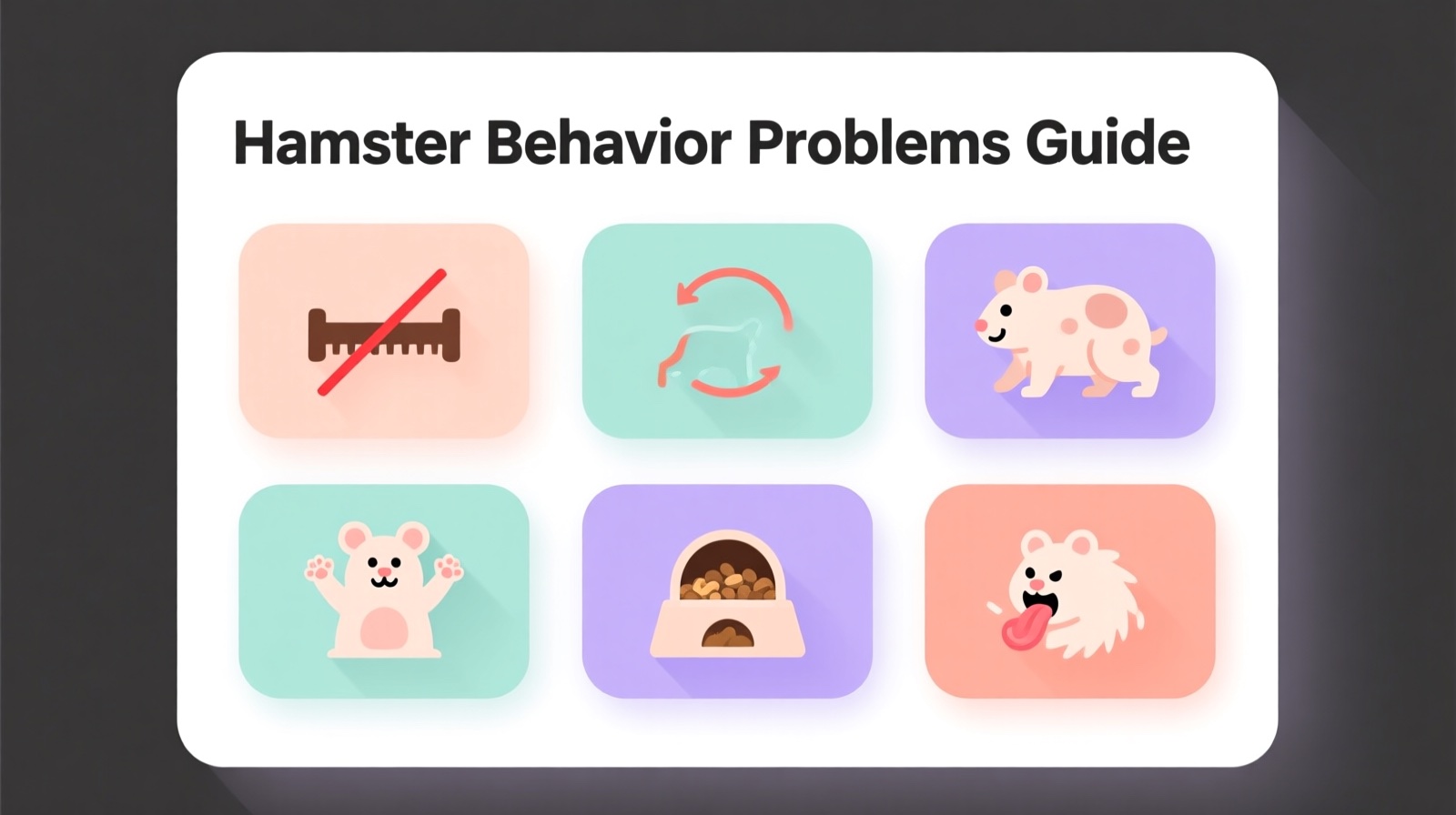 What separates normal behavior from genuine hamster behavior problems is the intensity, frequency, and context. Running on a wheel for two hours at night is normal. Running in tight circles for hours without stopping is not. Stashing food in a hideout is normal. Refusing all food for 24 hours is not. Understanding your individual hamster’s baseline — their typical activity level, eating habits, and personality — is the foundation for recognizing when something is wrong. This baseline varies by species too, which is important when evaluating potential hamster behavior problems. Syrian hamsters tend to be more docile and predictable, while dwarf hamsters are faster, more energetic, and sometimes more prone to behavioral quirks.
Cage Biting & Bar Chewing
This is probably the most common of all hamster behavior problems I encounter. The relentless gnawing sound of teeth against metal bars, sometimes lasting hours, is enough to drive any owner to frustration. Bar chewing is one of those hamster behavior problems that has a specific underlying cause about their environment.
Why It Happens
When diagnosing cage-related hamster behavior problems, the most common cause I find is a cage that’s simply too small. Many commercially sold hamster cages provide far less space than hamsters actually need. A Syrian hamster requires a minimum of 600 square inches of unbroken floor space, and dwarf hamsters need at least 450 square inches. When a hamster is confined to a space that feels cramped, bar chewing becomes an outlet for frustration and the natural urge to explore.
Boredom is the second major cause. Hamsters in the wild travel several miles each night searching for food. In captivity, if they don’t have enough enrichment — varied toys, tunnels, foraging opportunities, and a properly sized wheel — that pent-up energy turns into destructive behavior.
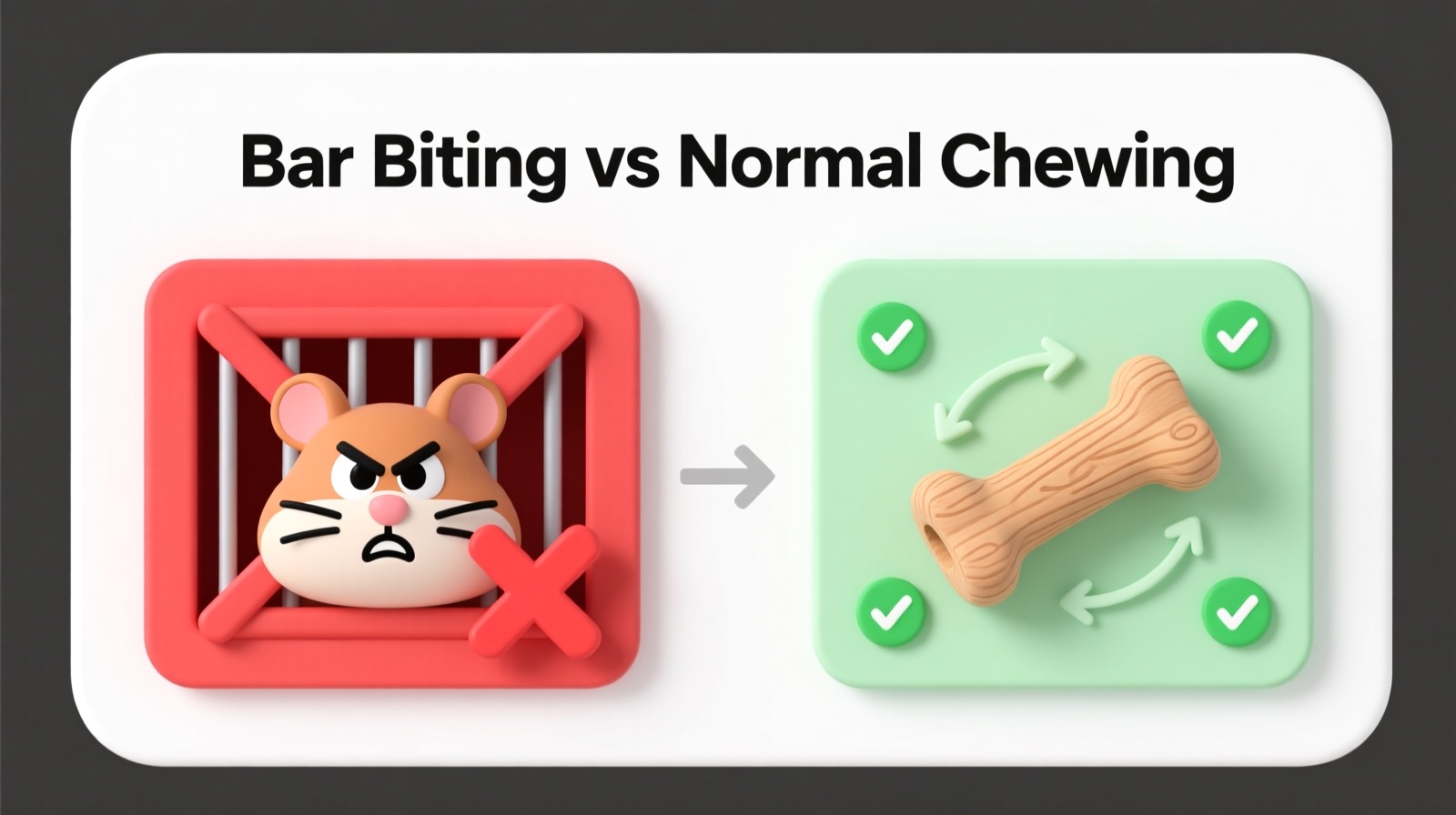
Bar chewing can also become a self-reinforcing habit. Even after you fix the underlying cause (upgrade the cage, add toys), the hamster may continue because the behavior itself has become comforting or attention-seeking. If you react to bar chewing by opening the cage, talking to the hamster, or offering treats, you’re accidentally rewarding the behavior.
How to Fix It
The single most effective solution is switching to a barless enclosure. Glass tanks, wooden bin cages, and acrylic enclosures eliminate the ability to bar chew entirely. I’ve seen hamsters that bar-chewed for months stop within days of being moved to a glass tank — the root cause was spatial frustration all along. The Niteangel Bigger World Terrarium is a solid glass option that provides ample floor space for Syrians and dwarfs alike.
If you can’t switch enclosures immediately, provide chew alternatives directly at the bar-chewing location. Place Niteangel Natural Chew Toys or VESPRO Hamster Chewing Accessories right where the hamster chews most. Apple wood sticks and loofah pieces work well because they satisfy the natural gnawing instinct that bar chewing partly fulfills. PINVNBY Fruitwood Chews are another good option since they’re 100% natural fruitwood with no additives.
For a deeper dive into this specific hamster behavior problem, see our dedicated guide on how to stop hamster cage chewing.
Aggression & Biting
A biting hamster is one of the more serious hamster behavior problems — not just because it hurts, but because aggression usually signals that something is fundamentally wrong with the hamster’s environment, health, or handling. Understanding the type and context of aggression is the first step toward fixing it.
Aggression Toward Humans
Among aggression-related hamster behavior problems, fear-based aggression is the most common type. A hamster that lunges, hisses, or bites when you reach into the cage is usually scared. This is especially common in newly acquired hamsters that haven’t been tamed yet, or in hamsters that were handled roughly in the past. The fix is patience — slow, consistent trust-building using treats, speaking softly, and never grabbing from above. See our hamster handling and taming guide for a step-by-step approach.
Pain-induced aggression is more urgent. Of all the hamster behavior problems that catch owners off guard, a formerly friendly hamster suddenly biting is one of the most alarming — pain is a likely cause. Dental problems (overgrown or broken teeth), injuries, abscesses, and conditions like wet tail can all make a hamster lash out when touched. I’ve seen cases where owners thought their hamster “turned mean” when the real problem was a broken tooth making eating painful. If biting is new and accompanied by other symptoms like reduced eating, hunched posture, or a messy coat, see a vet promptly.
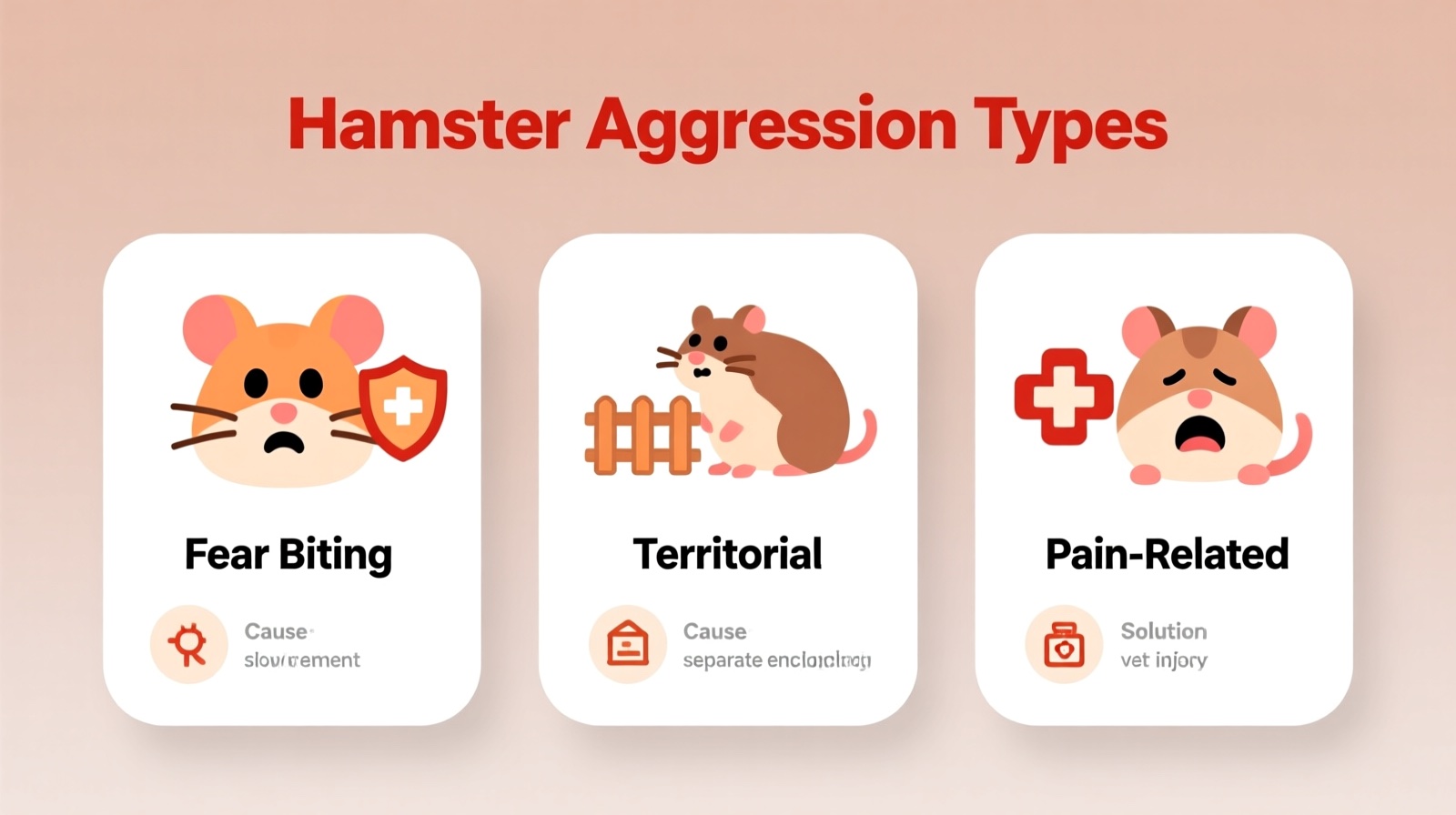
Territorial aggression occurs when a hamster defends their cage space. This is particularly common in Syrian hamsters, which are strictly solitary and territorial by nature. The solution is simple: interact with your hamster outside the cage in a neutral playpen area, where they’re less likely to feel the need to defend territory. A foldable playpen works well for this purpose.
Aggression Toward Other Hamsters
Hamsters are not social animals in the way guinea pigs or rats are. Syrian hamsters must always be housed alone — pairing them will result in fighting, often severe. Dwarf hamsters can sometimes coexist in pairs or small groups, but even they can develop territorial disputes that turn violent, especially as they mature.
Signs of hamster fighting include raised fur, aggressive chasing, biting that causes wounds, one hamster hiding constantly, weight loss in one animal, and squealing during interactions. Separation is the only safe solution for serious fighting. Even minor squabbles between dwarf pairs should be monitored closely. For more on appropriate housing, see our hamster cage setup guide.
Excessive Night Activity & Noisy Behavior
Hamsters are naturally active at night — this is biology, not one of the hamster behavior problems that needs fixing. Understanding the difference between normal activity and problematic noise is key to addressing the hamster behavior problems that disrupt your household — rather than fighting your hamster’s nature.
Normal vs Excessive Night Activity
Normal nighttime behavior — which shouldn’t be confused with hamster behavior problems — includes wheel running (1-5 miles per night), burrowing and rearranging bedding, exploring the cage, foraging for food, and occasional soft squeaking. These activities are healthy and should not be discouraged.
Excessive noise that might indicate a problem includes constant bar biting (covered above), loud squeaking or screaming (see stress section), persistent banging against cage objects, and wheel running so frantic it seems compulsive. If your hamster’s nighttime activity level suddenly increases dramatically, something in their environment or health has changed.
Making Nights Quieter
If the main noise source is a loud wheel, upgrading to a silent exercise wheel makes a significant difference. The Niteangel Super Silent Hamster Wheel uses dual ball bearings for near-silent operation, and the Kaytee Silent Spinner is another popular quiet option. A wheel that’s the wrong size can also cause noisy running — if the hamster’s back arches while running, the wheel is too small and needs to be replaced. Our hamster wheel size guide covers the right dimensions for each breed.
Beyond the wheel, you can reduce cage noise by placing the enclosure on a rubber mat or folded towel to absorb vibrations, using glass water bottles instead of ball-bearing ones that rattle, and avoiding wire shelves or platforms that hamsters can climb on noisily. The Choco Nose No-Drip Water Bottle has a small-diameter nozzle that reduces dripping noise compared to larger bottles.
Stress Signs & What They Mean
Stress is the single most common thread connecting most hamster behavior problems. Nearly every behavioral issue I’ve seen — from cage biting to aggression to food refusal — traces back to stress in some form. A stressed hamster may develop multiple problems simultaneously — aggression, appetite loss, and compulsive behaviors can all stem from the same stressor. Recognizing stress early allows you to address the cause before it escalates into a more serious issue.
Physical Stress Indicators
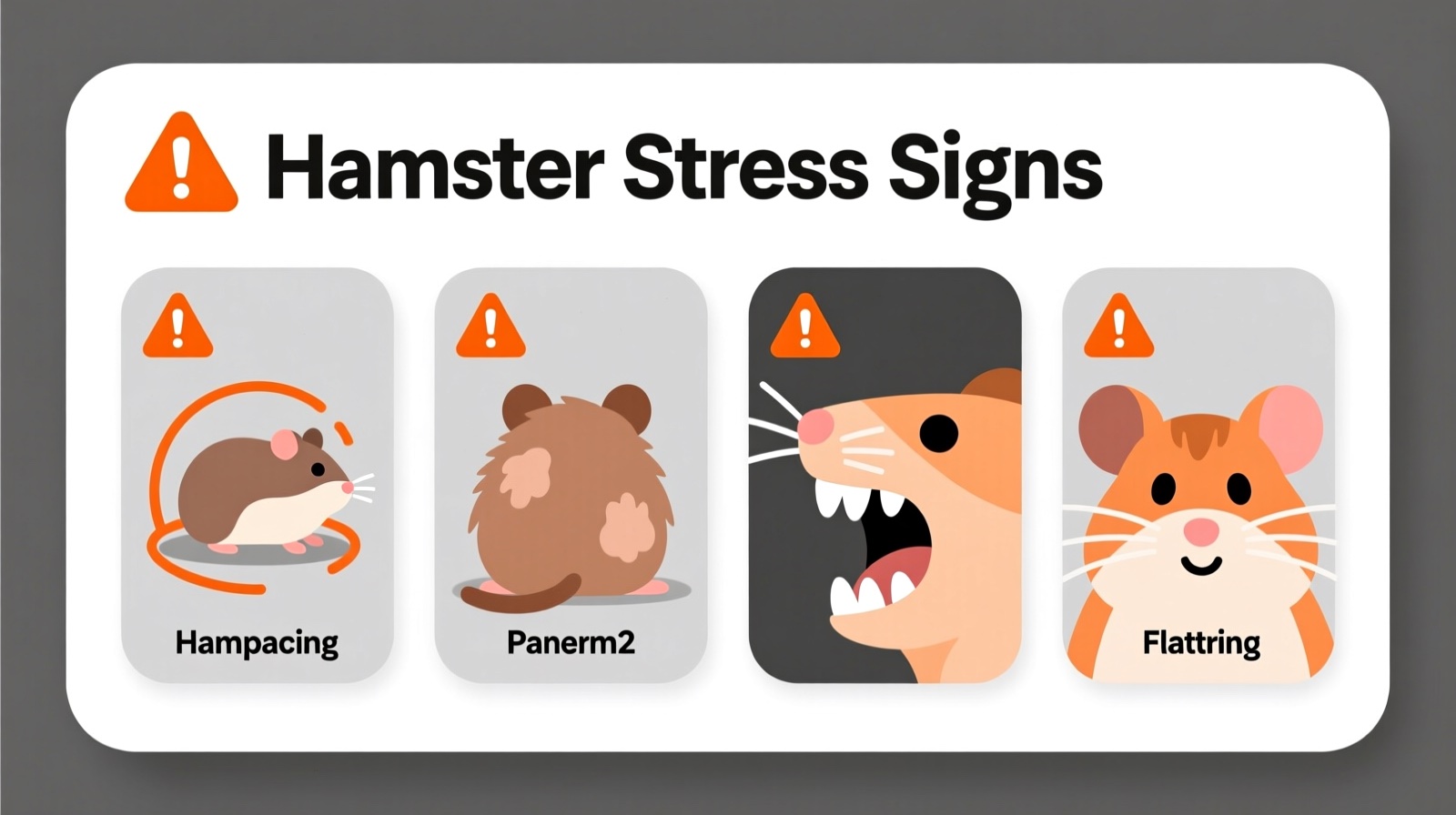
When monitoring for stress-related hamster behavior problems, watch for ears pinned flat against the head (a universal fear response in prey animals), a hunched posture with the fur slightly raised, rapid breathing or panting, over-grooming that creates bald patches on the flanks or belly, a wet or soiled rear end (which can indicate wet tail, a potentially fatal condition), and excessive lethargy or hiding that goes beyond normal sleep patterns.
Behavioral Stress Indicators
Behavioral signs include sudden aggression toward familiar people, refusal to leave the hideout even at night, excessive bar biting or cage climbing, repetitive pacing along the same path, food hoarding that seems frantic rather than normal, and freezing in place when you approach the cage. A hamster that used to come to the cage door when you walked by but now retreats to the back is telling you something is wrong.
Common Stress Sources and Solutions
When I troubleshoot hamster behavior problems with owners, cage size comes up as the single biggest stressor almost every time for captive hamsters. I’ve mentioned this repeatedly because it comes up in nearly every behavior problem. A hamster in a cage that’s too small is essentially living in chronic stress. The recommended minimums — 600 sq inches for Syrians, 450 for dwarfs — are minimums, not targets. More space is always better.
Other common stressors include cage placement near loud appliances or high-traffic areas, proximity to other pets (especially cats, whose scent triggers a prey response), lack of hiding spots, infrequent cage cleaning (or overly frequent cleaning that removes all familiar scents), and being housed near another hamster’s cage (hamsters can smell each other and may feel territorial). For cage enrichment ideas to reduce stress, see our guide.
Environmental enrichment is one of the most effective tools for preventing and resolving hamster behavior problems. A Niteangel Multi-Chamber Hamster Hideout provides a complex environment that encourages natural exploration behavior and gives the hamster multiple secure spaces to choose from, which significantly reduces stress-related behaviors.
Refusing Food or Water
A hamster that stops eating or drinking is experiencing one of the most urgent hamster behavior problems an owner can face. Hamsters have fast metabolisms and small bodies — they can’t go long without nutrition the way larger animals can. Of all hamster behavior problems, food and water refusal is the one where you absolutely cannot afford to wait rather than waiting to see if it resolves on its own.
Why Hamsters Stop Eating
Dental problems are a leading cause of appetite-related hamster behavior problems in hamsters. Their teeth grow continuously throughout their life, and if they don’t wear down properly through chewing, the teeth can overgrow, curve into the gums or roof of the mouth, and make eating painful. Broken teeth from chewing on cage bars or hard objects can have the same effect. If you notice your hamster approaching food but then backing away, or if they seem to be chewing on one side only, dental issues are a strong suspect.
Illness is the second major cause. Wet tail (proliferative ileitis), respiratory infections, pyometra in females, kidney disease, and intestinal parasites can all cause a hamster to stop eating. These conditions progress rapidly in hamsters, which is why food-refusal hamster behavior problems need immediate attention — what might take days to become serious in a dog or cat can become critical in a hamster within 24 hours. See our detailed guide on what to do when your hamster is not eating.
Stress from a major environmental change — moving to a new home, a complete cage cleaning, introducing new pets to the household — can cause temporary appetite loss. This type of appetite loss usually resolves within 24-48 hours and is one of the milder hamster behavior problems as the hamster adjusts. If it doesn’t, something else is going on.
Why Hamsters Stop Drinking
A hamster not drinking water is often harder to notice than one not eating, because hamsters get some moisture from fresh vegetables and fruit in their diet. However, prolonged dehydration is extremely dangerous. Common causes include a malfunctioning water bottle (the ball gets stuck, the nozzle clogs, or the bottle is empty), dental pain making the bottle nozzle uncomfortable to use, illness causing lethargy so severe the hamster doesn’t make the effort to drink, and environmental factors like heat stress.
Always check the water bottle first — gently tap the ball-bearing to confirm water flows freely. If the bottle is working and the hamster still isn’t drinking, try offering water from a shallow dish or a syringe. The Pet Feeding Syringe is useful for gently administering small amounts of water or electrolyte solution to a dehydrated hamster.
Emergency Steps
If your hamster hasn’t eaten or drunk in 24 hours, treat it as an emergency. Offer high-moisture foods like cucumber, watermelon (small amounts), or baby food. Provide Oxbow Critical Care, a recovery food designed for small herbivores and omnivores that can be mixed with water and syringe-fed if necessary. And schedule a vet appointment — do not wait. For hamsters showing lethargy along with appetite loss, see our guide on why your hamster is not moving.
Repetitive Behaviors
Repetitive behaviors — pacing, circling, backflipping, and compulsive bar chewing — rank among the most concerning hamster behavior problems because they can indicate either severe environmental stress or a neurological condition. When evaluating repetitive hamster behavior problems, distinguishing between environmental causes and neurological conditions is critical.
Pacing and Route-Tracing
Pacing follows a fixed path along the cage walls, often the same route repeatedly. This is almost always an environmental issue: the cage is too small, there isn’t enough to do, or the layout creates a narrow corridor that encourages the behavior. I’ve seen hamsters in tall cages with narrow floors pace endlessly because they literally have nowhere else to go.
The fix is straightforward: increase floor space and add environmental complexity. A cage with multiple levels isn’t a substitute for floor space — hamsters are ground-dwellers that need horizontal room. Adding tunnels, varied substrates for digging, and scatter-feeding instead of bowl-feeding gives the hamster more natural behaviors to engage in. Our hamster cage size guide breaks down appropriate dimensions.

Circling
Circling is more concerning than pacing because it can indicate neurological problems. There’s an important distinction: a hamster that circles when it encounters a barrier or is exploring a new space is normal. A hamster that circles continuously in open space, always in the same direction, may have a neurological issue.
Consistent one-directional circling, especially when accompanied by a head tilt, loss of balance, or falling over, points to an inner ear infection or a brain lesion. Ear infections are treatable with antibiotics if caught early, but they need prompt veterinary diagnosis. A brain lesion or tumor is more serious but the prognosis depends on the specific condition.
If the circling appears stress-related rather than neurological — the hamster circles for a while then stops to do other activities, the behavior isn’t constant, and there are no balance issues — try environmental improvements first: larger cage, more enrichment, and a quiet exercise wheel for healthy exercise. If the behavior persists or worsens, see a vet.
Backflipping
Backflipping is the most dramatic of the repetitive behaviors and usually indicates a neurological problem. A hamster that repeatedly flips backward onto its back, sometimes unable to right itself, may have a genetic neurological disorder, a brain tumor, an ear infection affecting balance, or in rare cases, a nutritional deficiency.
Some young hamsters backflip briefly during play or when startled, which is normal. But repeated, involuntary backflipping — especially if the hamster seems distressed or unable to stop — requires a vet visit. Unlike environmental hamster behavior problems, there’s no at-home fix for neurological backflipping, and some causes are progressive without treatment.
Stereotypic Behaviors in Context
All of these repetitive behaviors fall under the category of stereotypies — repetitive, seemingly purposeless actions that develop in response to stress or confinement. In animal welfare science, stereotypies are recognized as indicators of poor welfare. A hamster displaying stereotypic behavior is telling you their needs aren’t being met, whether that’s space, enrichment, social stability, or health care. With hamster behavior problems, addressing the root cause rather than just the symptom is the only effective approach.
When to See a Vet
When dealing with hamster behavior problems, knowing when to seek professional help is the most important skill an owner can develop. Hamsters are prey animals that instinctively hide signs of illness and weakness. By the time a behavioral problem becomes obvious enough for you to notice, the underlying issue may already be advanced. Knowing when a behavior problem needs professional veterinary attention — versus when environmental fixes are sufficient — can be the difference between life and death for your hamster.
Red Flag Behaviors That Need Immediate Vet Attention
Any sudden change in behavior in an otherwise normal hamster warrants concern. But these specific signs mean you should schedule a vet visit as soon as possible, ideally within hours, not days:
Refusal to eat or drink for more than 24 hours, especially combined with lethargy. As covered above, this is an emergency.
Consistent circling in one direction with head tilt or balance problems. This strongly suggests an inner ear infection or neurological issue.
Screaming or shrieking without an obvious external trigger. Pain is the most likely cause when a hamster screams without a clear environmental reason.
Seizures or backflipping. Any involuntary neurological symptom needs professional diagnosis.
Wet or soiled rear end combined with lethargy and loss of appetite. This is the classic presentation of wet tail, which can be fatal within 48 hours if untreated.
Complete cessation of wheel running or normal activity. If your hamster used to run every night and suddenly stops moving much at all, something is wrong.
Behaviors That Usually Don’t Need a Vet
Bar chewing, cage climbing, and mild food hoarding are typically environmental issues. Aggression in a newly acquired hamster that hasn’t been tamed yet is expected. Occasional squeaking during normal activity or brief periods of hiding after a cage cleaning are normal stress responses that resolve on their own.
Finding the Right Vet
When seeking help for hamster behavior problems, not all veterinarians treat hamsters. You need an exotic animal veterinarian — someone with specific training and experience in small mammals. Many standard small animal practices don’t have the equipment or knowledge to properly diagnose hamster conditions. Ask local hamster breeders or rescue organizations for recommendations, and establish a relationship with an exotic vet before you have an emergency.
Quick Reference: Problem → Likely Cause → First Step
| Hamster Behavior Problem | Most Likely Cause | First Step |
|---|---|---|
| Bar chewing | Cage too small or boredom | Upgrade enclosure size |
| Sudden biting | Pain or fear | Check for illness, see vet |
| Nighttime noise | Wrong wheel size or loud wheel | Upgrade to silent wheel |
| Hiding constantly | Stress or illness | Check environment, then vet |
| Not eating | Dental problems or illness | Vet visit within 24 hours |
| Pacing | Small cage, boredom | Increase space and enrichment |
| One-directional circling | Ear infection or neurological | Vet visit immediately |
| Screaming | Pain or extreme fear | Vet visit, check for injury |
| Backflipping | Neurological issue | Vet visit immediately |
| Aggression to cagemate | Territorial dispute | Separate immediately |
Related Articles: For understanding what your hamster’s normal behavior means, see our hamster behavior and body language guide. For comprehensive daily care, visit our hamster care guide. If you’re dealing with specific cage-related issues, our guides on hamster cage setup and Syrian hamster cage size requirements cover proper housing in detail. For food-related behavior changes, see why your hamster might not be eating and for activity-related concerns, why your hamster is not moving. To understand breed-specific behavior differences, check our Syrian hamster breed page and dwarf hamster overview.