
⚠️ Important: This article provides information only and does not replace veterinary advice. If your hamster shows signs of wet tail, contact your veterinarian immediately.
Emergency Warning: What Is Hamster Wet Tail?
Hamster wet tail is a life-threatening condition that requires immediate veterinary attention.
Wet tail, medically known as proliferative ileitis, is a severe bacterial infection affecting the ileum (the final section of the small intestine). This condition is not simply “diarrhea”—it’s a dangerous infection that can kill your hamster within 24 to 48 hours if left untreated.
Critical Facts:
- Mortality rate: 50-90% without treatment; 10-20% with early veterinary intervention
- Time window: 24-48 hours from symptom onset to potential death
- High-risk groups: Young hamsters (3-8 weeks old), Syrian hamsters
- Cause: Lawsonia intracellularis bacterial infection combined with stress
Why This Matters: Unlike common digestive upsets, wet tail rapidly causes severe dehydration, systemic infection, and organ failure. The bacteria multiply quickly in stressed hamsters, overwhelming their immune systems. Every hour counts when your hamster shows symptoms.
What You’ll Learn:
- 7 critical symptoms to recognize immediately
- Emergency treatment steps
- How to prevent outbreaks
- When veterinary care is mandatory
For comprehensive hamster health information, see our complete hamster health guide.
Hamster Wet Tail Signs: 7 Critical Symptoms to Watch
Recognizing hamster wet tail signs early can save your pet’s life. The condition progresses rapidly, so knowing what to look for is essential.
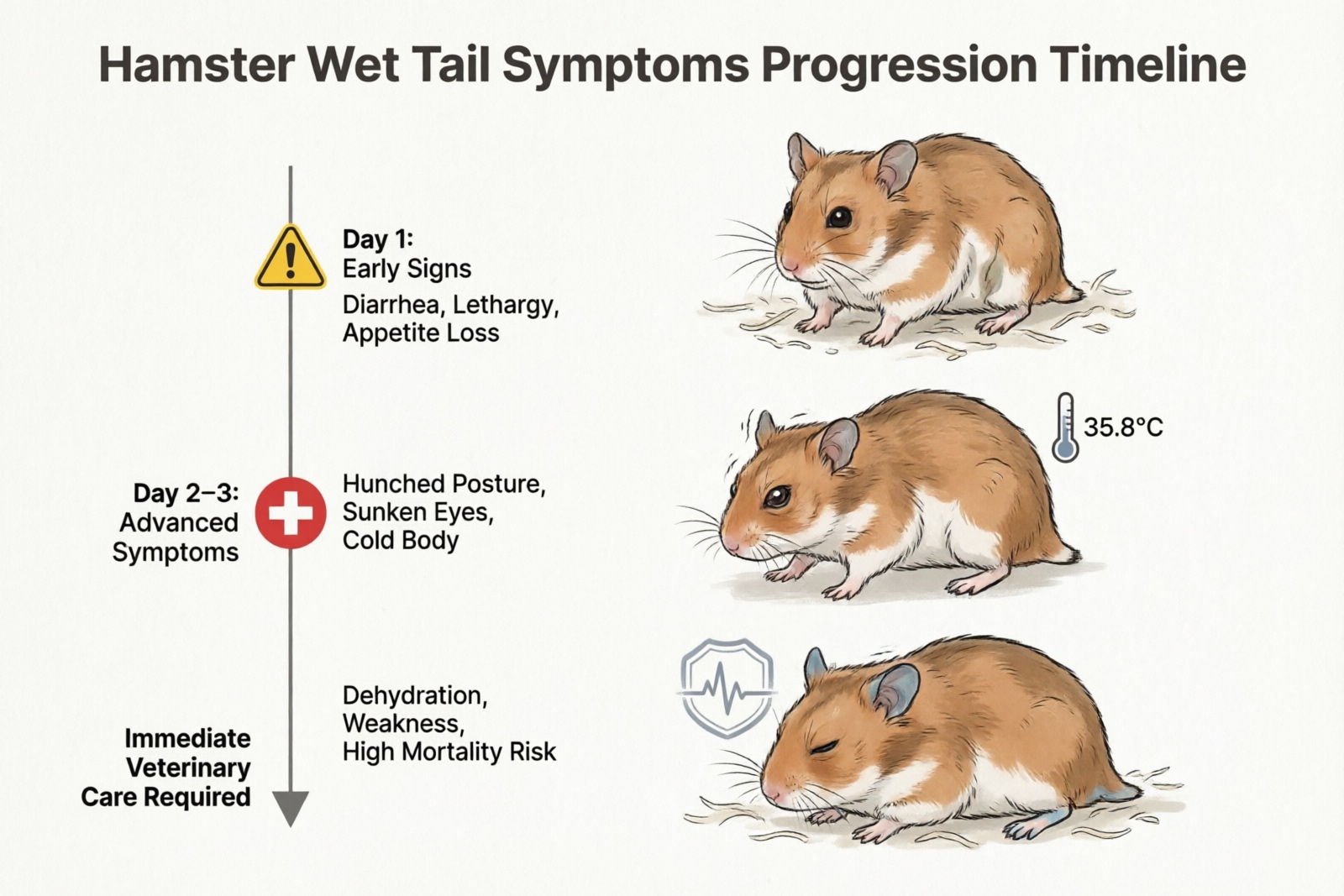
Early Warning Signs (Day 1)
1. Diarrhea and Wet Rear End
The most obvious sign is persistent diarrhea that causes the fur around your hamster’s tail and rear end to become wet, matted, and soiled. Unlike normal soft stool, this diarrhea is watery, frequent, and has a distinctly foul odor.
What to look for:
- Constantly wet, dirty fur around the tail area
- Soft or liquid stools (not formed pellets)
- Foul-smelling cage despite recent cleaning
- Your hamster struggling to keep clean
2. Lethargy and Reduced Activity
A sick hamster becomes noticeably less active. They may spend most of their time huddled in their hideout, showing little interest in exploring, playing with toys, or interacting with you.
What to look for:
- Reluctance to leave the nest or hideout
- Slow, sluggish movements
- Ignoring favorite treats or toys
- Sleeping more than usual
3. Loss of Appetite and Weight Loss
Affected hamsters often stop eating entirely or eat significantly less. Combined with diarrhea, this leads to rapid weight loss and dehydration—dangerous combinations that worsen the condition quickly.
What to look for:
- Food bowl remains full
- Refusing favorite treats
- Visible weight loss (spine or hip bones prominent)
- Dehydration signs (see below)
⚠️ Urgency Level: MODERATE — Contact your veterinarian immediately if you notice these early signs. Don’t wait to see if symptoms improve.
Advanced Symptoms (Day 2-3)
4. Severe, Persistent Diarrhea
As the infection progresses, diarrhea becomes constant and severe. The cage smells strongly despite cleaning, and your hamster’s entire hindquarters may be soaked with fecal matter.
5. Hunched Posture and Abdominal Pain
Your hamster may adopt a hunched position with their back arched, indicating significant abdominal discomfort. They may squeak or struggle when touched.
6. Sunken Eyes (Severe Dehydration)
Dehydration causes the eyes to appear sunken, dull, and half-closed. This is a critical warning sign that your hamster is in serious trouble and requires immediate emergency care.
7. Cold Body Temperature and Shock
In advanced stages, your hamster feels cold to the touch, particularly their extremities (ears, feet, tail). This indicates shock and circulatory failure—a life-threatening emergency.
🚨 Urgency Level: HIGH EMERGENCY — Seek emergency veterinary care immediately. Do not wait. Your hamster’s life is at risk.
Wet Tail vs. Normal Diarrhea
| Symptom | Wet Tail | Normal Diarrhea |
|---|---|---|
| Severity | Life-threatening | Usually minor |
| Duration | Worsens rapidly | Often resolves in 1-2 days |
| Other Symptoms | Multiple (lethargy, appetite loss, pain) | Usually just loose stool |
| Odor | Strong, foul smell | Mild or none |
| Urgency | Immediate vet care needed | Monitor for 24 hours |
| Treatment | Requires antibiotics | Often resolves on its own |
Key Difference: Wet tail involves multiple severe symptoms occurring together, while normal diarrhea typically presents as an isolated issue that resolves quickly.
For other hamster health issues, see our hamster health guide.
Hamster Wet Tail Treatment: What You MUST Do NOW
If you suspect wet tail, take immediate action. Every hour matters. How to treat wet tail effectively requires veterinary care.
Step 1: Seek Veterinary Care IMMEDIATELY
This is not optional. Hamster wet tail treatment requires prescription antibiotics that only a veterinarian can provide.
What to do right now:
- Call your veterinarian — Explain your hamster has wet tail symptoms; request an emergency appointment
- Contact an emergency exotic animal clinic if your regular vet is unavailable
- Do NOT wait to see if symptoms improve — they won’t without proper treatment
- Transport your hamster carefully — Keep them warm and minimize stress during travel
Veterinary Treatment Includes:
- Antibiotics (commonly Baytril/enrofloxacin or Trimethoprim-sulfa) to fight the bacterial infection
- Subcutaneous fluids to treat dehydration
- Supportive care to maintain hydration and nutrition
- Anti-diarrheal medications in some cases
⚠️ Critical Warning: Home remedies and over-the-counter products CANNOT cure wet tail. Without prescription antibiotics, the mortality rate is 50-90%. Professional veterinary treatment is essential.
Step 2: Supportive Care at Home (Alongside Veterinary Treatment)
While your hamster receives veterinary care, you can provide supportive treatment at home to aid recovery.
A. Hydration Support
Dehydration is the primary killer in wet tail cases. Encourage fluid intake:
Electrolyte Supplements:
-
Lanana Creek Zoom Boost Electrolyte ($29.99, 4.7⭐)
-
Natural carrot and ginger formula
-
Provides hydration support during treatment
-
No artificial ingredients or added sugar
-
Mix with water according to package instructions
-
Animal Juiced Electrolyte ($31.94, 4.8⭐)
-
Complete amino acid profile for recovery
-
Includes electrolytes and sea salt
-
Strawberry limeade flavor
-
Consult your vet for proper dosing for hamsters
Hydration Tips:
- Offer fresh, clean water at all times
- Monitor water consumption closely
- Consider offering water via syringe (without needle) if your hamster isn’t drinking
- Keep water bottles and bowls clean and accessible
B. Probiotic Support
Antibiotics can disrupt healthy gut bacteria. Probiotics help restore digestive balance:
Probiotic Recommendation:
- Marshall Pet Products Natural ProBiotic ($12.99, 4.6⭐, 🔥)
- Natural, chemical-free formula
- Easy to administer during treatment
- Supports digestive health during recovery
- Good value at under $13
Important: Always consult your veterinarian before adding supplements. Probiotics support recovery but do not cure the infection.
C. Stress Reduction
Minimize stress to support your hamster’s immune system:
- Keep the cage in a quiet, warm location (65-75°F)
- Reduce handling to essential care only
- Maintain consistent lighting and temperature
- Provide a secure hideout where your hamster feels safe
- Avoid loud noises and sudden movements near the cage
For nutrition information that supports digestive health, see our hamster diet guide.
Step 3: Cage Hygiene and Disinfection
Proper cage cleaning prevents the infection from spreading and reinfecting your hamster.
Daily Cleaning During Illness:
- Remove soiled bedding and droppings daily
- Clean food bowls and water bottles daily
- Replace wet bedding immediately
- Spot-clean contaminated areas
Cage Disinfectant:
- Amazing Small Animal Cage Cleaner ($24.99, 4.4⭐, 🔥)
- Safe for hamsters when used as directed
- Removes messes and eliminates odors
- Easy spray-and-wipe application
- Made in USA
Cleaning Safety:
- Always rinse thoroughly after using any cleaner
- Allow the cage to dry completely before returning your hamster
- Wash your hands thoroughly after cleaning
- Clean toys, wheels, and accessories regularly
For proper cage setup that promotes health, see our hamster cage setup guide.
Wet Tail Prevention: How to Protect Your Hamster
While not all cases are preventable, you can significantly reduce your hamster’s risk through proper care.
Reduce Stress (Key Prevention)
Stress is the primary trigger for outbreaks. Minimizing stress is your most effective prevention strategy.
Common Stressors and Solutions:
| Stressor | Prevention Strategy |
|---|---|
| New environment | Give your hamster 3-5 days to adjust before handling |
| Transportation | Minimize travel; keep carrier dark and quiet |
| Loud noises | Place cage in a quiet room away from TVs, speakers |
| Temperature changes | Maintain consistent 65-75°F temperature |
| Over-handling | Limit handling to 10-15 minutes initially |
| Diet changes | Transition foods gradually over 7-10 days |
The 3-3-3 Rule for New Hamsters:
- First 3 days: Let your hamster settle in; minimal disturbance
- Next 3 weeks: Gradually increase interaction and handling
- After 3 months: Your hamster should feel fully comfortable
Maintain a Clean Environment
Poor hygiene contributes to bacterial growth and stress.
Cleaning Schedule:
- Daily: Remove soiled bedding, clean food/water dishes
- Weekly: Full cage cleaning and bedding replacement
- Monthly: Deep clean and disinfect all accessories
Hygiene Tips:
- Use unscented, dust-free bedding
- Remove uneaten fresh food after 4 hours
- Keep the cage dry (wet bedding breeds bacteria)
- Wash your hands before and after handling
Monitor Health Regularly
Early detection saves lives. Make health checks part of your daily routine.
Daily Observation Checklist:
- Is your hamster active and alert?
- Are they eating and drinking normally?
- Is their fur clean and dry (especially around the tail)?
- Are their eyes bright and clear?
- Is their breathing normal (no wheezing)?
Weekly Weigh-Ins:
- Use a small scale to monitor weight
- Sudden weight loss indicates health problems
- Record weights to spot trends early
Regular Veterinary Checkups:
- Schedule wellness exams every 6-12 months
- Establish a relationship with an exotic animal vet
- Keep emergency vet contact information accessible
For comprehensive health monitoring, see our hamster health guide.
What Causes Hamster Wet Tail?
Understanding the hamster wet tail causes helps you prevent outbreaks.
Bacterial Infection
Primary Cause: Lawsonia intracellularis bacteria
This bacterium infects the ileum (lower small intestine), causing severe inflammation and disrupting normal digestive function. The infection spreads through the fecal-oral route—hamsters become infected by ingesting contaminated feces, food, or bedding.
How Infection Occurs:
- Hamster ingests bacteria from contaminated environment
- Bacteria multiply in the intestine (especially under stress)
- Inflammation causes severe diarrhea and dehydration
- Without treatment, infection becomes systemic and fatal
Risk Factors:
| Factor | Why It Matters |
|---|---|
| Age | Young hamsters (3-8 weeks) have immature immune systems |
| Species | Syrian hamsters are more susceptible than dwarf species |
| Stress | Stress weakens immune response, allowing bacteria to multiply |
| Poor hygiene | Contaminated cages increase bacterial exposure |
| Diet changes | Sudden dietary shifts disrupt gut bacteria balance |
| Overcrowding | Multiple hamsters increase stress and disease spread |
Stress-Related Factors
Stress doesn’t directly cause the condition, but it creates conditions where the bacteria thrive.
Major Stress Triggers:
1. Environmental Changes
- Moving to a new home
- Cage changes or rearrangements
- Temperature fluctuations
- Loud or unfamiliar noises
2. Social Stress
- Introduction of new cage mates
- Overcrowding
- Excessive handling by humans
- Lack of hiding spots
3. Dietary Disruptions
- Sudden food changes
- Poor-quality diet
- Nutritional deficiencies
- Excessive treats
Important: Stress reduction is your most powerful prevention tool. A calm, stable environment dramatically reduces risk.
Is Wet Tail Contagious? Critical Safety Information
Contagion Risk
Yes, wet tail is highly contagious among hamsters.
The bacteria spread through contaminated feces. If you have multiple hamsters, immediate action is essential to prevent an outbreak.
Transmission Routes:
- Direct contact with infected hamster
- Shared cage, bedding, or accessories
- Contaminated food or water
- Contact with feces during handling
Prevention Measures for Multi-Hamster Households
Immediate Actions:
- Isolate the infected hamster — Move them to a separate cage in a different room
- Use dedicated supplies — Separate food bowls, water bottles, and cleaning tools
- Wash hands thoroughly — After handling either hamster
- Clean and disinfect — The original cage and all accessories
- Monitor other hamsters — Watch for symptoms for 7-10 days (the incubation period)
Isolation Protocol:
- Keep the sick hamster in a separate room with the door closed
- Handle the healthy hamster first, then the sick one (or use disposable gloves)
- Clean the healthy hamster’s cage first, then the sick one
- Use separate cleaning supplies for each cage
If Other Hamsters Show Symptoms:
- Contact your veterinarian immediately
- Begin treatment as soon as possible
- Consider prophylactic treatment for exposed hamsters (consult your vet)
🚨 Critical: Never reintroduce hamsters until the infected hamster has fully recovered and been cleared by a veterinarian (typically 2-3 weeks after symptoms resolve).
When to See a Vet: Red Flags
Emergency Red Flags — Seek Immediate Care
Contact your veterinarian IMMEDIATELY if you observe:
🚨 Any symptoms of wet tail (don’t wait to see if they improve)
🚨 Severe diarrhea lasting more than 12 hours
🚨 Complete loss of appetite for more than 12 hours
🚨 Sunken eyes or signs of dehydration
🚨 Hunched posture with apparent pain
🚨 Cold body temperature or lethargy so severe your hamster won’t move
🚨 Blood in stool or around the vent
What NOT to Do:
- ❌ Do NOT “wait and see” — the condition progresses rapidly
- ❌ Do NOT try home remedies without veterinary guidance
- ❌ Do NOT assume it’s just “a little diarrhea”
- ❌ Do NOT delay until “tomorrow” — by then it may be too late
Treatment Timeline and Expectations
With Early Veterinary Treatment (within 24 hours of symptoms):
| Timeframe | What to Expect |
|---|---|
| Day 1 | Veterinary exam, antibiotics started, fluids given |
| Day 2-3 | Symptoms may begin to improve if treatment is working |
| Day 4-5 | Significant improvement; diarrhea should decrease |
| Day 7-10 | Full recovery if caught early and treated properly |
Recovery Signs:
- ✅ Diarrhea decreasing; stool becoming more formed
- ✅ Appetite returning; eating and drinking normally
- ✅ Activity level increasing; more alert and responsive
- ✅ Fur around tail drying and staying clean
- ✅ Weight stabilizing
If Your Hamster Isn’t Improving:
- Contact your veterinarian if no improvement after 48-72 hours of treatment
- Additional medications or supportive care may be needed
- Some severe cases may not respond to treatment despite best efforts
Success Rates:
- Early treatment (within 24 hours): 80-90% survival rate
- Delayed treatment (48+ hours): 50-60% survival rate
- No treatment: 10-50% survival rate
The message is clear: Time is your hamster’s most precious resource when wet tail strikes. Act immediately.
FAQ: Common Questions About Hamster Wet Tail
What are the signs of hamster wet tail?
The 7 critical signs are:
- Persistent diarrhea (wet, matted fur around the tail)
- Lethargy and reduced activity
- Loss of appetite and weight loss
- Severe, foul-smelling diarrhea
- Hunched posture indicating abdominal pain
- Sunken eyes from dehydration
- Cold body temperature and shock (advanced stage)
If you notice any of these symptoms, contact your veterinarian immediately.
How do you treat hamster wet tail?
Hamster wet tail treatment requires immediate veterinary care with prescription antibiotics (typically Baytril or Trimethoprim-sulfa). At home, you can provide supportive treatment:
- Offer electrolyte supplements for hydration
- Give probiotics to support gut health during antibiotic treatment
- Keep your hamster warm and stress-free
- Maintain excellent cage hygiene
Important: Home remedies cannot cure the infection. Professional veterinary care is essential for survival.
Is wet tail contagious to other hamsters?
Yes, highly contagious. It spreads through fecal contamination. If you have multiple hamsters:
- Immediately isolate the infected hamster in a separate room
- Use separate food bowls, water bottles, and cleaning supplies
- Wash hands thoroughly between handling each hamster
- Clean and disinfect the cage thoroughly
- Monitor other hamsters for 7-10 days
Never reintroduce hamsters until the infected hamster has fully recovered and been cleared by a veterinarian.
Can hamster wet tail be cured at home?
No. This condition requires prescription antibiotics that only a veterinarian can provide. Without proper treatment, the mortality rate is 50-90%.
Home care can support veterinary treatment but cannot replace it:
- Electrolytes help with dehydration
- Probiotics support digestive health
- Clean cages prevent reinfection
If you cannot afford veterinary care, contact local animal shelters, humane societies, or exotic animal rescues—some offer low-cost care or payment plans. Do not let your hamster suffer without treatment.
What causes hamster wet tail?
The condition is caused by Lawsonia intracellularis bacteria, which infects the intestinal tract. However, stress is the primary trigger that allows the infection to take hold.
Common stressors include:
- Moving to a new home or cage
- Transportation
- Loud noises or environmental changes
- Overcrowding or introduction of new cage mates
- Sudden diet changes
- Excessive handling
Young hamsters (3-8 weeks) and Syrian hamsters are most susceptible.
How long does it take for a hamster to recover from wet tail?
With early treatment: 7-10 days for full recovery Without treatment: 24-48 hours to death
The critical window is the first 24 hours. Hamsters treated within 24 hours of symptom onset have an 80-90% survival rate. Those treated after 48 hours have only a 50-60% survival rate.
Recovery timeline:
- Days 1-2: Antibiotics begin working
- Days 3-5: Symptoms should improve
- Days 7-10: Full recovery (if caught early)
If your hamster isn’t improving after 72 hours of treatment, contact your veterinarian.
Can I use over-the-counter medicine for hamster wet tail?
No. The infection requires prescription antibiotics. Over-the-counter products cannot cure the bacterial infection.
OTC products may help with supportive care:
- Probiotics support gut health during recovery
- Electrolyte supplements help with dehydration
- Cage cleaners prevent reinfection
These products do not treat the infection itself. Only a veterinarian can prescribe the antibiotics necessary for effective treatment.
Wet tail is a serious emergency, but with quick action and proper veterinary care, most hamsters can recover. Know the symptoms, act immediately, and always prioritize professional treatment over home remedies. Your hamster’s life depends on it.