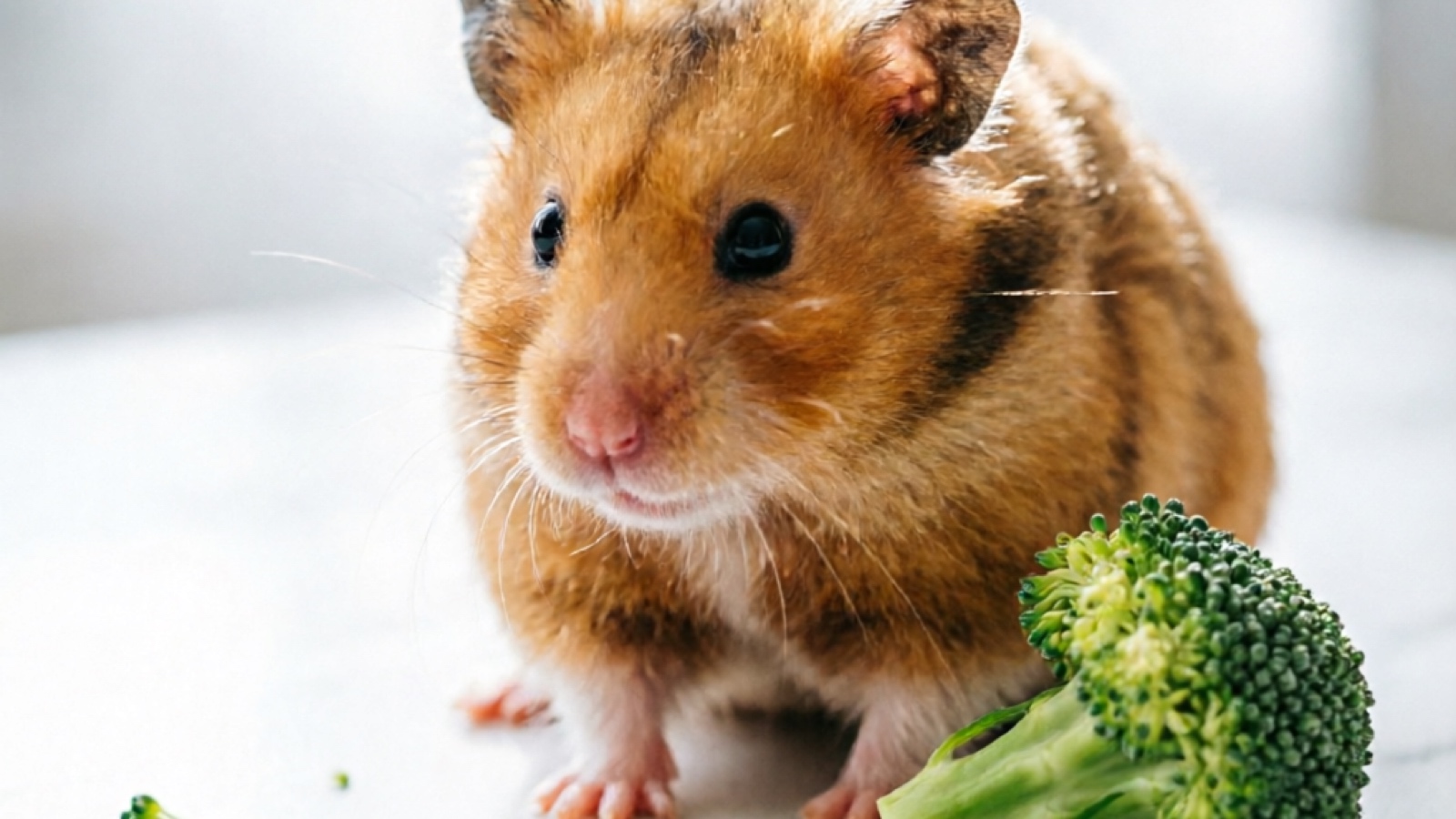
Quick Answer: Can Hamsters Eat Broccoli?
Yes, hamsters can eat broccoli — and it’s one of the healthier vegetables you can offer as a supplement to their regular diet. Raw broccoli is low in calories, high in vitamin C, and provides fiber that supports healthy digestion. The crunchy texture also helps wear down their continuously growing teeth. Feed in moderation: a thumbnail-sized piece for Syrians and a pea-sized piece for dwarfs, 2-3 times per week.
💡 TL;DR: Syrian hamsters: thumbnail-sized piece of raw broccoli, 2-3 times per week. Dwarf hamsters: pea-sized piece, 2 times per week. Always serve raw and washed. Avoid cooking with oil, salt, or seasonings.
I’ve been offering broccoli to my hamsters for years, and most of them enjoy it — though I’ve had a few picky eaters who turned their noses up at it. It’s a reliable staple in my vegetable rotation alongside carrots and the occasional small piece of strawberry. For a complete overview of what should make up the bulk of your hamster’s daily nutrition, our hamster diet guide covers everything you need to know.
Why Broccoli Is a Good Choice for Hamsters
Broccoli is often recommended by exotic vets as one of the safe vegetables for hamsters, and for good reason. It’s nutrient-dense without being calorie-dense — exactly the profile you want in a supplemental food. At only 34 calories per 100 grams and roughly 89% water, broccoli delivers vitamins and minerals without the sugar overload that comes with fruit treats.
Wild hamsters in their natural habitats across Syria, Turkey, and Central Asia do eat leafy greens and vegetable matter when available. While broccoli itself isn’t native to those regions, the nutritional profile of cruciferous vegetables closely matches the kinds of wild greens hamsters would encounter. Hamsters are opportunistic foragers — they eat what they find, and a diverse diet keeps them healthier than a monotonous one.
That said, broccoli should be a supplement, not a staple. A hamster’s base diet should always be a high-quality commercial pellet making up roughly 70-75% of total intake. Fresh vegetables like broccoli fill in the remaining 5-10%, with the rest being occasional fruit and protein treats like mealworms.
Nutritional Facts: Raw Broccoli for Hamsters
Here’s what a hamster gets when they eat raw broccoli, based on USDA FoodData Central USDA FDC ID 170379 — “Broccoli, raw”:
| Nutrient (per 100g) | Amount | Why It Matters for Hamsters |
|---|---|---|
| Energy | 34 kcal | Very low calorie — won’t contribute to obesity |
| Protein | 2.8g | Modest protein, supports muscle maintenance |
| Fat | 0.37g | Extremely low fat — well within safe range |
| Carbohydrate | 6.6g | Low carb, only 1.7g from natural sugars |
| Fiber | 2.6g | Supports healthy digestion, prevents constipation |
| Water | 89.3g | Provides hydration, but excess causes loose stool |
| Vitamin C | 89.2mg | Powerful antioxidant, supports immune function |
| Calcium | 47mg | Important for bones and teeth |
| Phosphorus | 66mg | Works with calcium; ratio is reasonable here |
| Potassium | 316mg | Supports heart and muscle function |
| Folate | 63µg | Supports cell growth and overall health |
The standout nutrient here is vitamin C. At 89.2mg per 100g, broccoli is one of the most vitamin C-rich vegetables available. While hamsters produce their own vitamin C (unlike guinea pigs, which cannot), additional dietary vitamin C still supports immune function and acts as an antioxidant. This is especially valuable for older hamsters or those recovering from illness.
The calcium-to-phosphorus ratio (47mg calcium to 66mg phosphorus) is roughly 1:1.4, which is much more balanced than many other foods. For comparison, cheese has a heavily skewed ratio. This makes broccoli a good complement to other foods in your hamster’s diet.
The main thing to watch is the water content. At 89.3%, broccoli is very hydrating, which sounds good but means large quantities cause loose stool. A thumbnail-sized piece of broccoli floret weighs only about 5-10 grams, so the actual water intake per serving is small and manageable.
Benefits of Broccoli for Hamsters
Vitamin C and Immune Support
Even though hamsters synthesize their own vitamin C, dietary supplementation provides additional antioxidant protection. Vitamin C supports wound healing, immune response, and iron absorption. I’ve found that hamsters who regularly receive vitamin C-rich vegetables like broccoli tend to recover faster from minor stress events like cage moves or vet visits.
Low Sugar Content
Unlike many fruits that hamster owners offer as treats, broccoli has only 1.7g of sugar per 100g. This is crucial for dwarf hamsters, who are genetically predisposed to diabetes and need to keep sugar intake as low as possible. Broccoli lets you offer variety without the sugar spike that comes from treats like grapes.
Dental Health
The crunchy texture of raw broccoli florets provides mild abrasion that helps wear down a hamster’s continuously growing incisors. It’s not a substitute for dedicated chew sticks or a properly sized exercise wheel, but every bit of natural dental wear helps. I’ve noticed that hamsters who get regular crunchy vegetables tend to have fewer dental issues over their lifetime.
Digestive Fiber
The 2.6g of fiber per 100g supports healthy gut motility and prevents constipation — a surprisingly common issue in hamsters fed only dry pellets. Fiber also feeds beneficial gut bacteria, which contributes to overall digestive health. Just don’t overdo it, as too much fiber too quickly can have the opposite effect and cause diarrhea.
Hydration
The high water content provides a secondary source of hydration, which is helpful during hot weather or if your hamster isn’t drinking enough from their water bottle. A small piece of broccoli can supplement water intake without replacing the need for a clean, fresh water supply.
Risks and Precautions
Gas and Bloating
This is the most commonly overlooked risk with broccoli. Like all cruciferous vegetables, broccoli contains raffinose — a complex sugar that humans and hamsters can’t fully digest. When raffinose reaches the large intestine, gut bacteria ferment it, producing gas. In humans, this causes flatulence. In a hamster’s tiny digestive system, excess gas can cause visible abdominal bloating and discomfort.
In my experience, most hamsters handle small amounts of broccoli without any gas issues. But if you notice your hamster’s belly looking distended after eating broccoli, or if they seem lethargic and uncomfortable, reduce the portion or switch to a milder vegetable.
Diarrhea from Excess Water and Fiber
The combination of high water content (89%) and fiber means that too much broccoli at once can cause loose stool or outright diarrhea. Diarrhea in hamsters is more serious than in many other pets because it can lead to dehydration quickly in such a small animal. A hamster weighs only 40-200 grams — losing even a few grams of fluid through diarrhea is significant.
The solution is straightforward: keep portions small and frequency moderate. If your hamster gets diarrhea, immediately remove all fresh food and offer only dry pellets and fresh water until stool returns to normal.
Pesticide Residue
Conventionally grown broccoli is one of the vegetables most likely to carry pesticide residue. While washing helps, it doesn’t remove everything. I’d recommend choosing organic broccoli when possible, or at minimum washing thoroughly under running water before serving. A quick soak in a bowl of water with a splash of vinegar, followed by a thorough rinse, is more effective than plain water alone.
Choking on Large Pieces
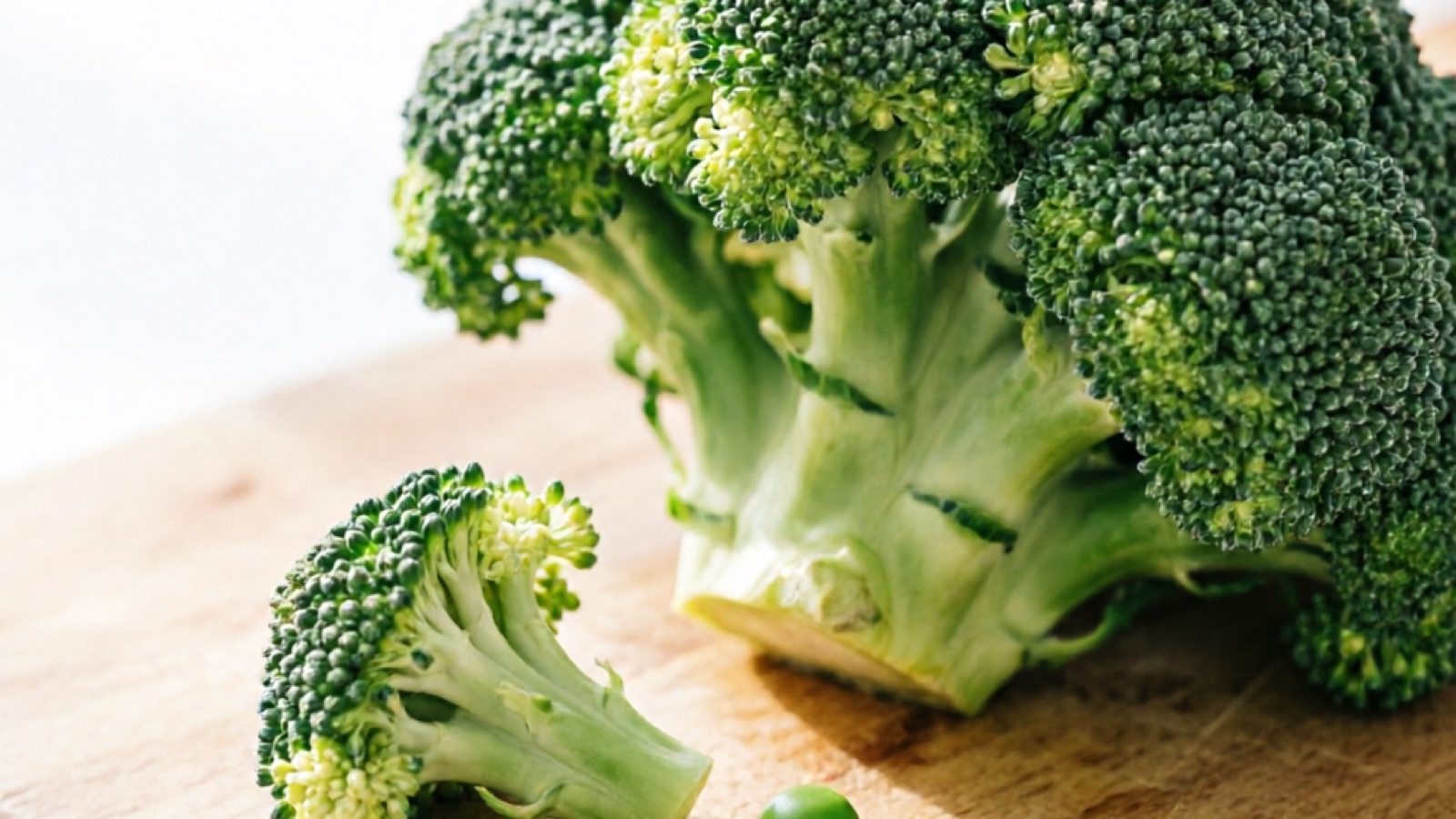
The thick stem at the base of broccoli is too dense and fibrous for hamsters to chew safely. Always use the florets and tender upper stems, cut into appropriately sized pieces. For dwarf hamsters, the pieces should be no larger than a green pea. A large chunk of stem could get lodged in a hamster’s cheek pouches or throat.
Spoilage
Fresh broccoli left in a warm cage environment spoils quickly. Uneaten broccoli should be removed after 1-2 hours to prevent bacterial growth. Hamsters sometimes stash fresh food in their cheek pouches or bury it in bedding, where it can rot and grow mold. Check your hamster’s stash spots regularly.
Serving Guide by Breed
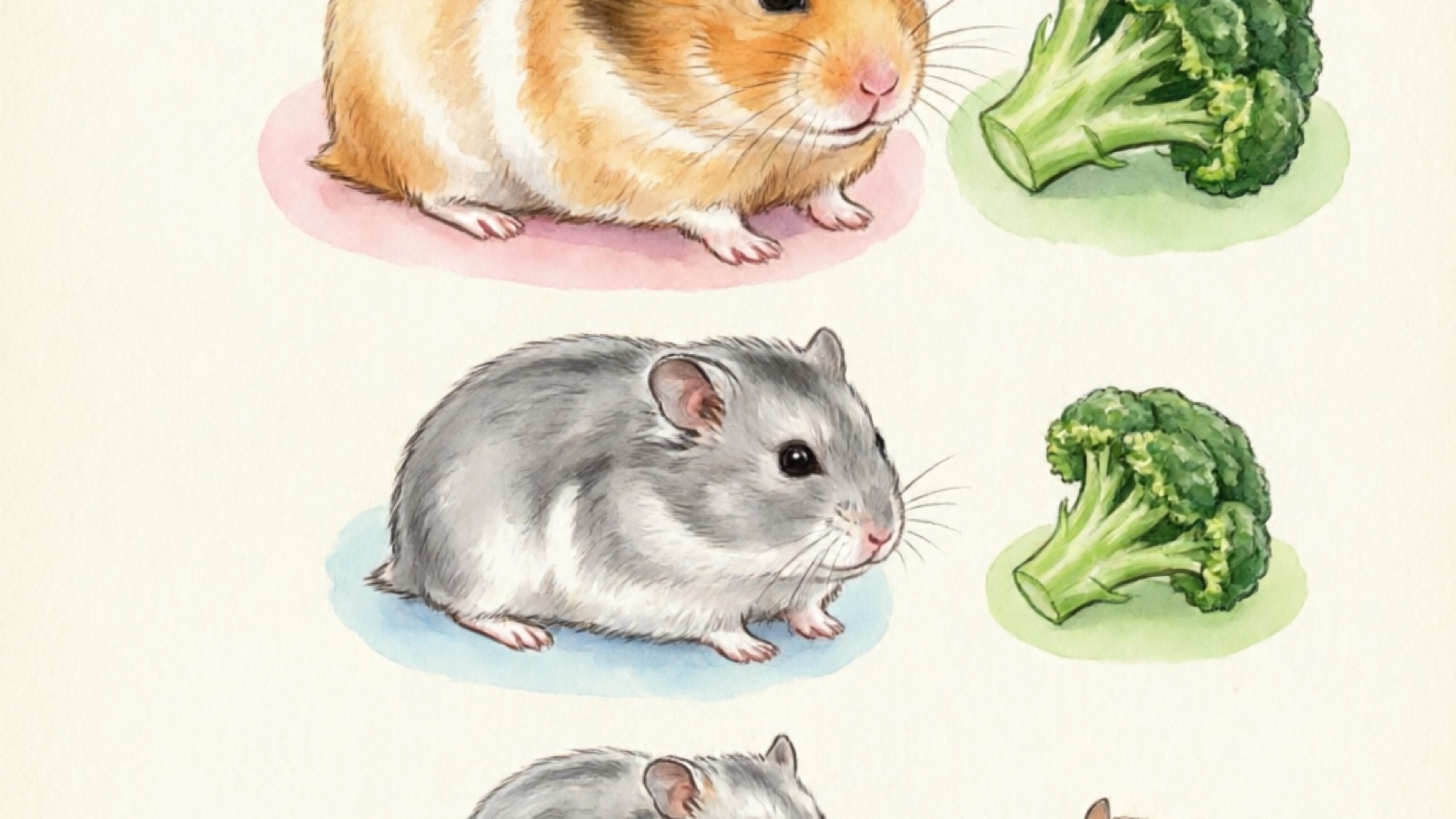
Syrian Hamsters (120-200g)
Syrians are the most forgiving breed when it comes to vegetables. Their larger body size and more robust digestive systems handle fiber and water content well.
- Amount: A piece about the size of a thumbnail (~5-10g), using the floret
- Frequency: 2-3 times per week
- Best part: Florets are ideal; tender upper stems are fine too
- Tips: Cut into pieces small enough to hold but large enough to require chewing
I typically include broccoli in my Syrians’ vegetable rotation two or three times a week, alternating with carrots and small amounts of cucumber. Variety within the vegetable category keeps things interesting for them.
Dwarf Hamsters — Winter White & Campbell’s (30-50g)
Dwarf hamsters need smaller portions due to their tiny digestive systems. They’re also more prone to both diabetes and digestive sensitivity.
- Amount: A piece no larger than a green pea (~2-3g)
- Frequency: 2 times per week maximum
- Best part: Small floret pieces only — avoid stems entirely
- Tips: Crush or break the floret into tiny pieces to prevent cheek pouch impaction
With dwarf hamsters, I’d recommend introducing broccoli more cautiously. Start with half a pea-sized piece and wait 48 hours before offering more. Their smaller systems are more sensitive to changes in diet.
Roborovski Dwarf Hamsters (20-30g)
Roborovskis are the smallest domestic hamster breed, so portions need to be particularly tiny.
- Amount: A piece roughly the size of a lentil (~1-2g)
- Frequency: 1-2 times per week
- Best part: Tiny floret pieces, crushed if needed
- Tips: Robos are fast eaters — offer small pieces to prevent them from stuffing too much into their pouches at once
Chinese Hamsters (30-50g)
Chinese hamsters fall between Syrians and dwarfs in terms of size and dietary tolerance.
- Amount: A piece between a pea and a thumbnail (~3-5g)
- Frequency: 2-3 times per week
- Best part: Florets and tender upper stems
- Tips: Chinese hamsters have slightly longer snouts that handle small floret pieces well
How to Prepare Broccoli for Your Hamster
Here’s the straightforward preparation routine I follow:
Step-by-Step Preparation
-
Wash thoroughly — rinse the broccoli under running water. For extra safety, soak for 2-3 minutes in a water-vinegar solution (roughly 1 part vinegar to 3 parts water), then rinse again.
-
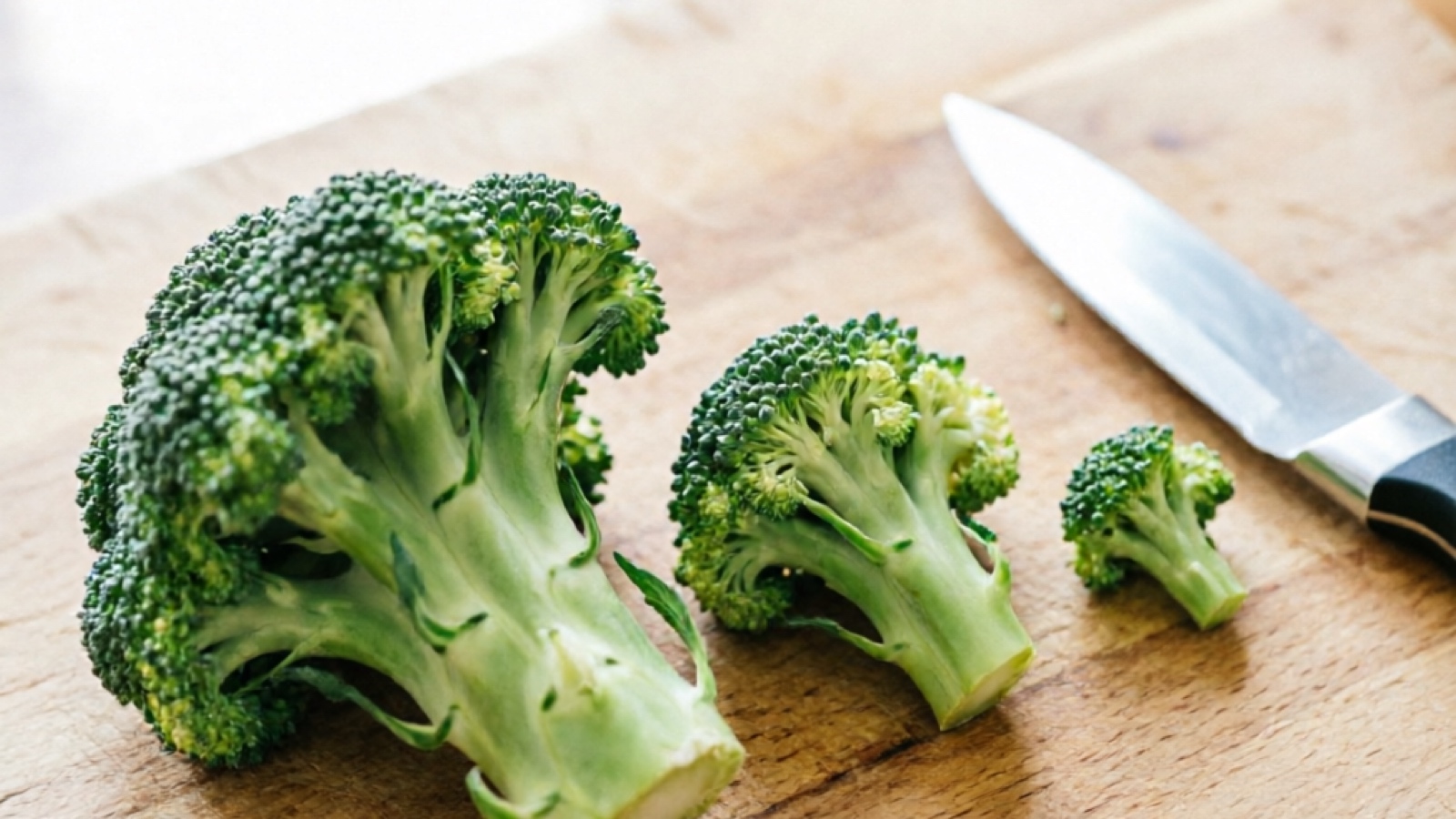
Select the right part — use the florets (the tree-like tops) and any tender green leaves near the top. The thick main stem at the base is too tough.
-
Cut to size — Syrian hamsters: thumbnail-sized pieces. Dwarf hamsters: pea-sized pieces. Roborovskis: lentil-sized pieces.
-
Serve raw — place the piece directly in the food bowl or offer by hand. Raw is always better than cooked for hamsters because it retains more nutrients and provides dental wear.
-
Remove uneaten portions — check the cage after 1-2 hours and remove any broccoli your hamster didn’t eat. Also check cheek pouches and common stashing spots.
Raw vs Cooked: Why Raw Wins
I mentioned this earlier but it’s worth emphasizing: raw broccoli is significantly better than cooked for hamsters. Cooking destroys roughly 30-50% of the vitamin C content [USDA FoodData Central — cooked vs raw broccoli comparisons]. Steaming preserves more nutrients than boiling, but you still lose the crunch factor that helps with dental wear.
If you do cook broccoli for some reason — perhaps your hamster is very old and has dental issues — steam it plain with absolutely no oil, salt, butter, garlic, or any seasonings. Boiled broccoli absorbs water and becomes mushy, which can actually increase the risk of diarrhea compared to raw.
Can You Freeze Broccoli for Hamsters?
Yes, frozen broccoli is safe as long as it’s plain — no added sauces, seasonings, or cheese. Thaw it completely and bring it to room temperature before serving. Cold food straight from the freezer can cause digestive upset in small animals. I’ve used frozen broccoli florets when fresh wasn’t available, and my hamsters ate them without issue once thawed.
What to Avoid
Cooking with Seasonings
Never offer broccoli that has been cooked with oil, butter, salt, garlic, onion, cheese sauce, or any other seasoning. These additions are either toxic (onion and garlic are dangerous for hamsters) or unhealthy (excess salt and fat). Even a small amount of butter or oil significantly increases the calorie density of an otherwise low-calorie vegetable.
The Thick Stem
The main stem of broccoli — the thick, woody base — is too dense and fibrous for hamsters to chew safely. It poses a choking risk and can get stuck in cheek pouches. Stick to the florets and tender upper stems only.
Overfeeding
More is not better with broccoli. Feeding it daily or offering portions that are too large leads to the gas, bloating, and diarrhea issues described above. Treat broccoli as a rotational vegetable — 2-3 times per week for Syrians, 2 times for dwarfs — not a daily food.
Spoiled or Wilted Broccoli
Don’t offer broccoli that has yellowing florets, a slimy texture, or an off smell. Wilted or spoiled vegetables can harbor harmful bacteria that cause serious digestive illness in hamsters. When in doubt, throw it out — fresh broccoli is inexpensive and easy to replace.
Feeding Only Vegetables
A common mistake among new hamster owners is feeding too many fresh vegetables and not enough pellets. Vegetables should supplement a balanced diet, not replace it. If your hamster fills up on broccoli and carrots and won’t eat their pellets, they’ll miss out on the complete nutrition that pellets provide. Keep fresh vegetables to roughly 5-10% of total daily intake.
Healthy Treat Alternatives to Rotate With Broccoli
Variety prevents dietary monotony and provides a broader range of nutrients. I rotate broccoli with these safe options:
Small pieces of carrot — slightly sweeter than broccoli but still low in sugar when fed in moderation. Good for vitamin A. See our carrot guide for breed-specific portions.
Dried vegetable treats — products like Small Pet Select dried bell pepper offer a crunchy, shelf-stable vegetable option with over 370 reviews and a 4.5-star rating. Check current price on Amazon.
Superfood treat sticks — the Kaytee Superfood treat stick with spinach and kale combines green vegetables into a chewable stick format that also provides gnawing enrichment. Check current price on Amazon.
Veggie pie treats — the Vitakraft Veggie & Fruity Pie with nearly 800 reviews and a 4.6-star rating is explicitly safe for hamsters and makes a nice occasional variety addition. Check current price on Amazon.
For protein-based treats to round out the rotation, a dried mealworm 1-2 times per week provides the animal protein that vegetables can’t deliver.
Other Foods Your Hamster Can Eat
Curious about other foods? Each link leads to a full safety breakdown with breed-specific serving recommendations.
🍓 Fruits
- Can Hamsters Eat Strawberries?
- Can Hamsters Eat Grapes?
- Can Hamsters Eat Blueberries? (Coming Soon)
- Can Hamsters Eat Bananas? (Coming Soon)
- Can Hamsters Eat Apples? (Coming Soon)
🥬 Vegetables
- Can Hamsters Eat Carrots?
- Can Hamsters Eat Broccoli? (Coming Soon)
- Can Hamsters Eat Cucumbers? (Coming Soon)
- Can Hamsters Eat Celery? (Coming Soon)
🧀 Proteins and Treats
- Can Hamsters Eat Mealworms?
- Can Hamsters Eat Eggs? (Coming Soon)
- Can Hamsters Eat Sunflower Seeds? (Coming Soon)
Frequently Asked Questions
Can hamsters eat broccoli?
Yes. Broccoli is one of the healthiest vegetables you can offer a hamster — low in calories, low in sugar, and rich in vitamin C and fiber. Serve it raw, washed, and cut into appropriately sized pieces. Syrians get a thumbnail-sized piece 2-3 times per week; dwarfs get a pea-sized piece twice per week. Always remove uneaten broccoli after 1-2 hours to prevent spoilage.
Can hamsters eat raw broccoli?
Yes, and raw is actually the preferred way to serve it. Raw broccoli retains significantly more vitamin C than cooked, and the crunchy texture provides dental wear that cooked broccoli can’t. Just wash it thoroughly and cut it into the right size for your hamster’s breed.
Can hamsters eat broccoli florets?
Yes, broccoli florets are the best part to feed. They’re softer and easier to chew than stems, and hamsters generally prefer them. The small tender leaves near the top of the floret are also safe to eat. Avoid the thick woody base stem entirely — it’s a choking hazard.
Can hamsters eat cooked broccoli?
It’s safe but not recommended. Cooking destroys vitamin C and eliminates the dental benefits of crunching. If you must cook it for a very old hamster with dental problems, steam it plain with zero seasonings. Never boil it (too mushy, increases diarrhea risk) or add any oil, salt, butter, or sauce.
Can baby hamsters eat broccoli?
No. Baby hamsters under 4 weeks should eat only mother’s milk and then transition to commercial pellets. After 4-5 weeks, you can introduce a tiny piece of raw broccoli — smaller than a pea — and wait 24 hours to monitor for any digestive reaction. Gradual introduction is key with any new food for young hamsters.
Can dwarf hamsters eat broccoli?
Yes, but in very small amounts. Offer a pea-sized piece of raw floret twice per week maximum. Dwarf hamsters have smaller digestive systems that are more sensitive to fiber and water content. Start with half the recommended portion and increase only if your dwarf tolerates it well with no signs of diarrhea or bloating.
How much broccoli can a hamster eat?
Syrian hamsters: a thumbnail-sized piece (~5-10g), 2-3 times per week. Dwarf hamsters: a pea-sized piece (~2-3g), 2 times per week. Chinese hamsters: between the two. Roborovskis: a lentil-sized piece, 1-2 times per week. Never feed broccoli daily — the fiber and raffinose content will cause digestive problems with daily feeding.
Why does my hamster get diarrhea from broccoli?
Broccoli is 89% water and contains raffinose, a sugar that ferments in the gut and produces gas. Together, these can cause loose stool and bloating if portions are too large or frequency too high. If your hamster gets diarrhea, stop all fresh vegetables immediately, offer only dry pellets and water, and once stool normalizes, reintroduce broccoli in a smaller portion or less frequently. If diarrhea persists beyond 24 hours, contact an exotic vet.