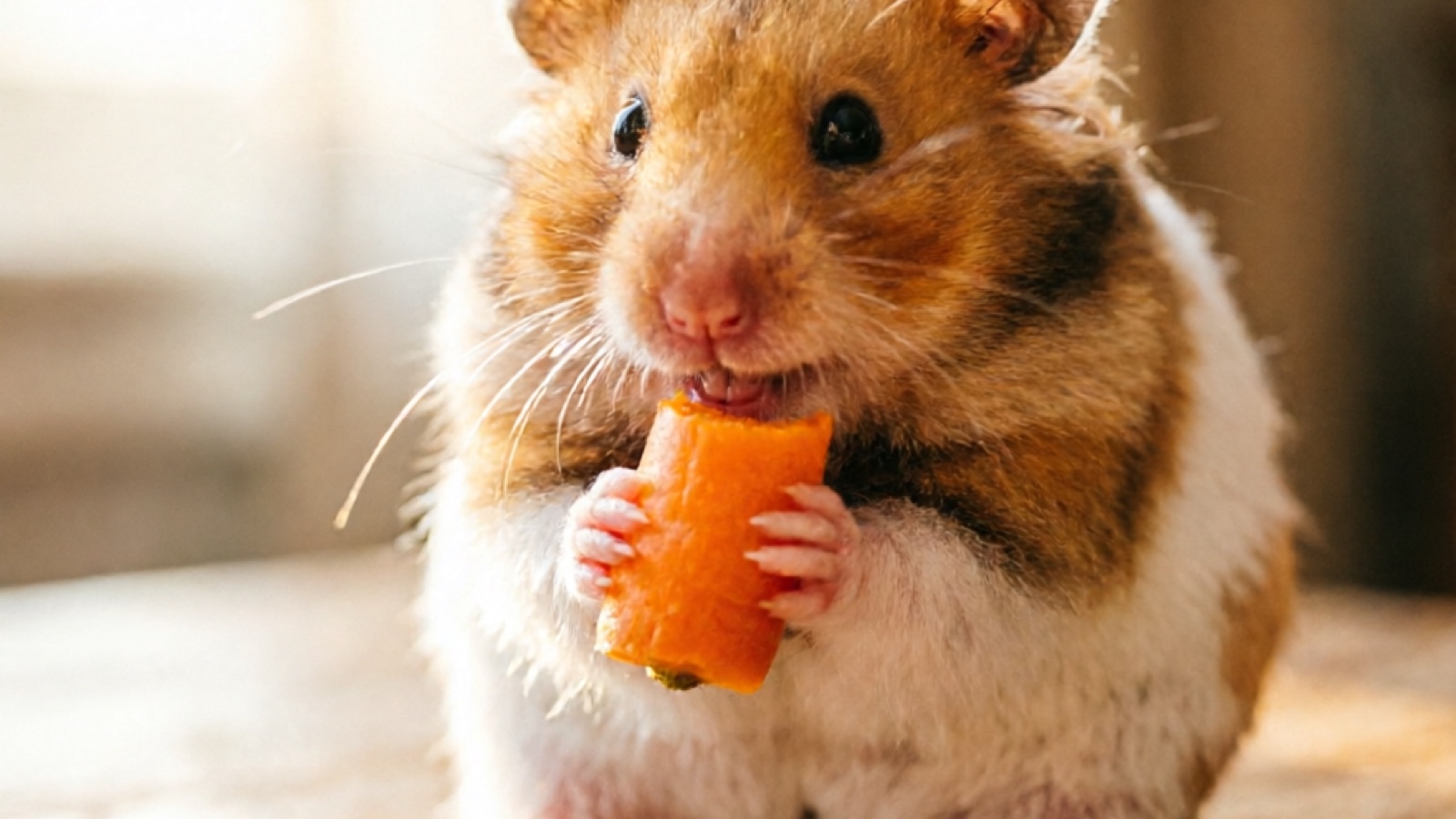
Quick Answer: Can Hamsters Eat Carrots?
Yes, hamsters can eat carrots — but only in moderation. Carrots are packed with beta-carotene, vitamin A, and fiber, making them a nutritious occasional treat when served raw and properly portioned. However, their natural sugar content means they should never become a dietary staple, especially for dwarf hamster breeds that are prone to diabetes.
💡 TL;DR: Feed your hamster 1 thin slice of raw carrot (about the size of a coin), once per week for Syrians or once every two weeks for dwarf hamsters. Always wash, peel if non-organic, and cut into bite-sized pieces. Raw is better than cooked.
I’ve been offering carrots to my hamsters for years, and they’re one of the most universally accepted treats I’ve found — even picky eaters usually go for a piece of carrot. But I’ve also learned that the crunch and sweetness make it easy to overfeed, and too much carrot leads to the same problems as any sugary treat. Let me walk through everything you need to know.
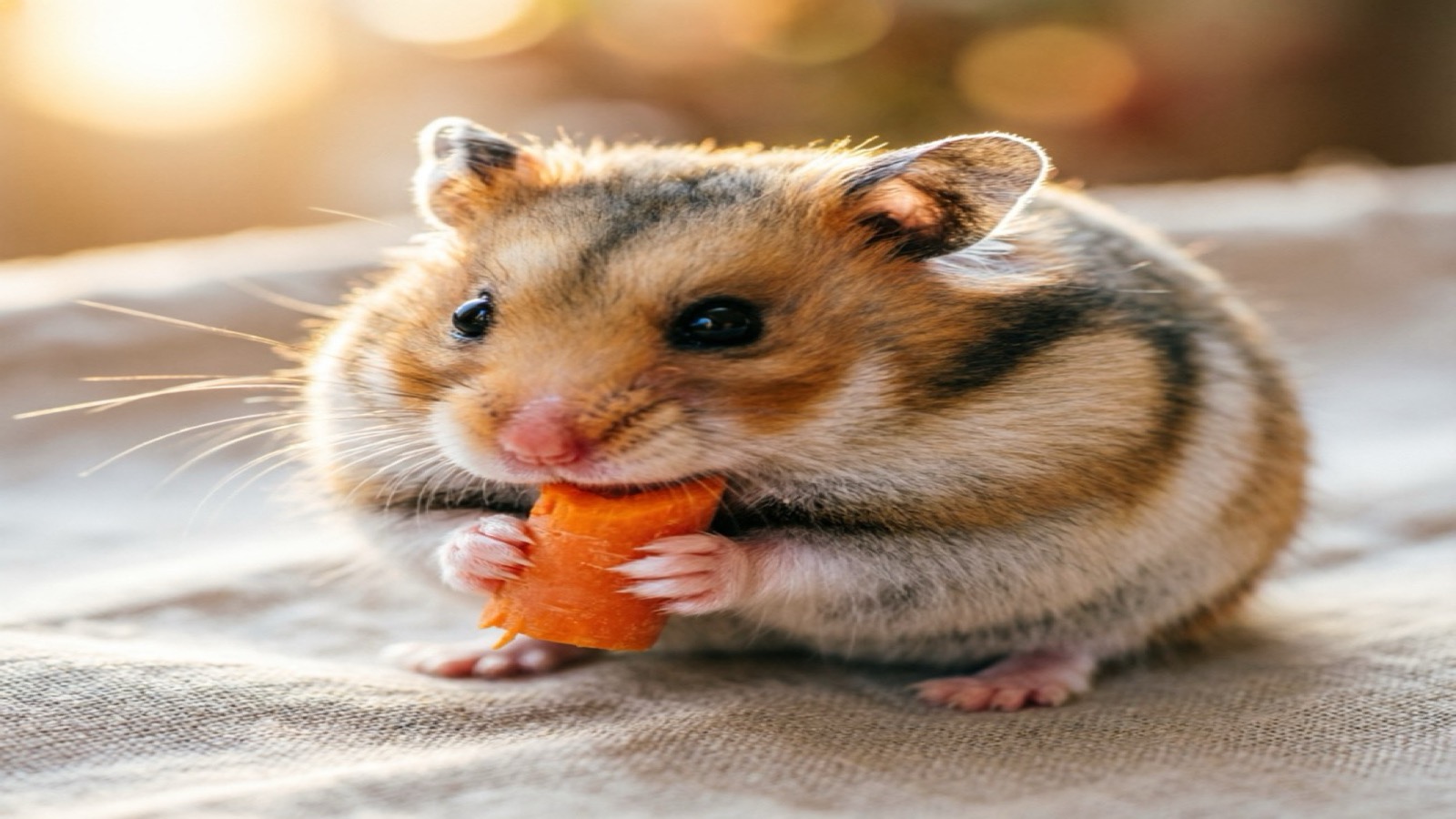
Nutritional Value of Carrots for Hamsters
Key Nutrients
Understanding what’s actually in a carrot helps you make informed decisions about how much to offer. Here’s a breakdown based on USDA data USDA FoodData Central — Carrots, raw:
| Nutrient | Per 100g Carrot | Per ~5g Piece (1 Serving) | Benefit for Hamsters |
|---|---|---|---|
| Calories | 41 kcal | ~2 kcal | Low calorie treat |
| Sugar | 4.7g | ~0.24g | Main concern — keep low |
| Vitamin A | 835 µg RAE | ~42 µg | Eye health, immune support |
| Beta-carotene | 8,285 µg | ~414 µg | Converts to vitamin A |
| Fiber | 2.8g | ~0.14g | Aids digestion |
| Vitamin C | 5.9 mg | ~0.3 mg | Immune system support |
| Potassium | 320 mg | ~16 mg | Heart & muscle function |
| Water | ~88% | ~4.4g | Hydration |
| Calcium | 33 mg | ~1.7 mg | Bone health |
A typical hamster serving is roughly a 5-gram piece — a thin coin-shaped slice. At that size, you’re looking at less than 0.25g of sugar per serving, which is manageable for most hamsters.
Where carrots really stand out compared to other vegetables is vitamin A content. A single serving delivers over 40 µg of retinol activity equivalents, which supports eye health, skin integrity, and immune function. For hamsters, whose eyesight is already poor, maintaining the vision they have matters.
Sugar Content: The Main Concern
Raw carrots contain about 4.7–6g of sugar per 100g depending on the variety [USDA]. Baby carrots tend to be sweeter than large heirloom varieties, so if you’re buying the pre-cut baby carrots, assume the higher end of that range.
Here’s why sugar matters for hamsters:
- Syrian hamsters tolerate sugar reasonably well. Their larger body size (120-200g) means a thin carrot slice has minimal impact on blood glucose.
- Dwarf hamsters (Winter Whites and Campbell’s) are genetically predisposed to diabetes. Even moderate sugar intake over time can push them toward this serious, irreversible condition.
- Chinese hamsters fall somewhere in between — more sensitive than Syrians but generally less prone than Campbell’s dwarfs.
The key takeaway: carrots are treats, not meal replacements. They should make up no more than 10% of your hamster’s total weekly food intake. The remaining 90% should come from a high-quality commercial hamster food formulated for your pet’s species. For guidance on choosing the right staple diet, see our best hamster food guide.
Can Syrian Hamsters Eat Carrots?
Yes — Syrian hamsters can eat carrots more freely than any other breed. Their larger body size and lower diabetes risk make them the best candidates for occasional root vegetable treats.
Recommended Serving for Syrians
- Amount: 1 thin slice, roughly ½ teaspoon grated or a 5mm coin-shaped piece
- Frequency: Once per week
- Preparation: Washed, peeled if non-organic, cut into small pieces
Syrians are the most forgiving when it comes to dietary variety. I’ve found that my Syrian hamsters handle carrots without any digestive issues at all, as long as I stick to the once-a-week limit. Some owners offer carrot pieces two or three times per week, but I’d recommend keeping it at once — there’s no nutritional reason to offer more, and the cumulative sugar adds up faster than most people realize.
One thing I’ve noticed with my own Syrians is that they seem to enjoy the crunch of raw carrot more than the taste. The act of gnawing on a firm vegetable serves a dual purpose — it provides mental enrichment and helps keep their continuously growing teeth at a healthy length. For dental health alone, raw carrots are one of the better treats you can offer.
How to Feed Carrots to Syrian Hamsters
- Pick a fresh, firm carrot (avoid rubbery, limp, or moldy ones)
- Wash it thoroughly under running water to remove dirt and pesticides
- Peel if not organic — most pesticide residue concentrates in the skin
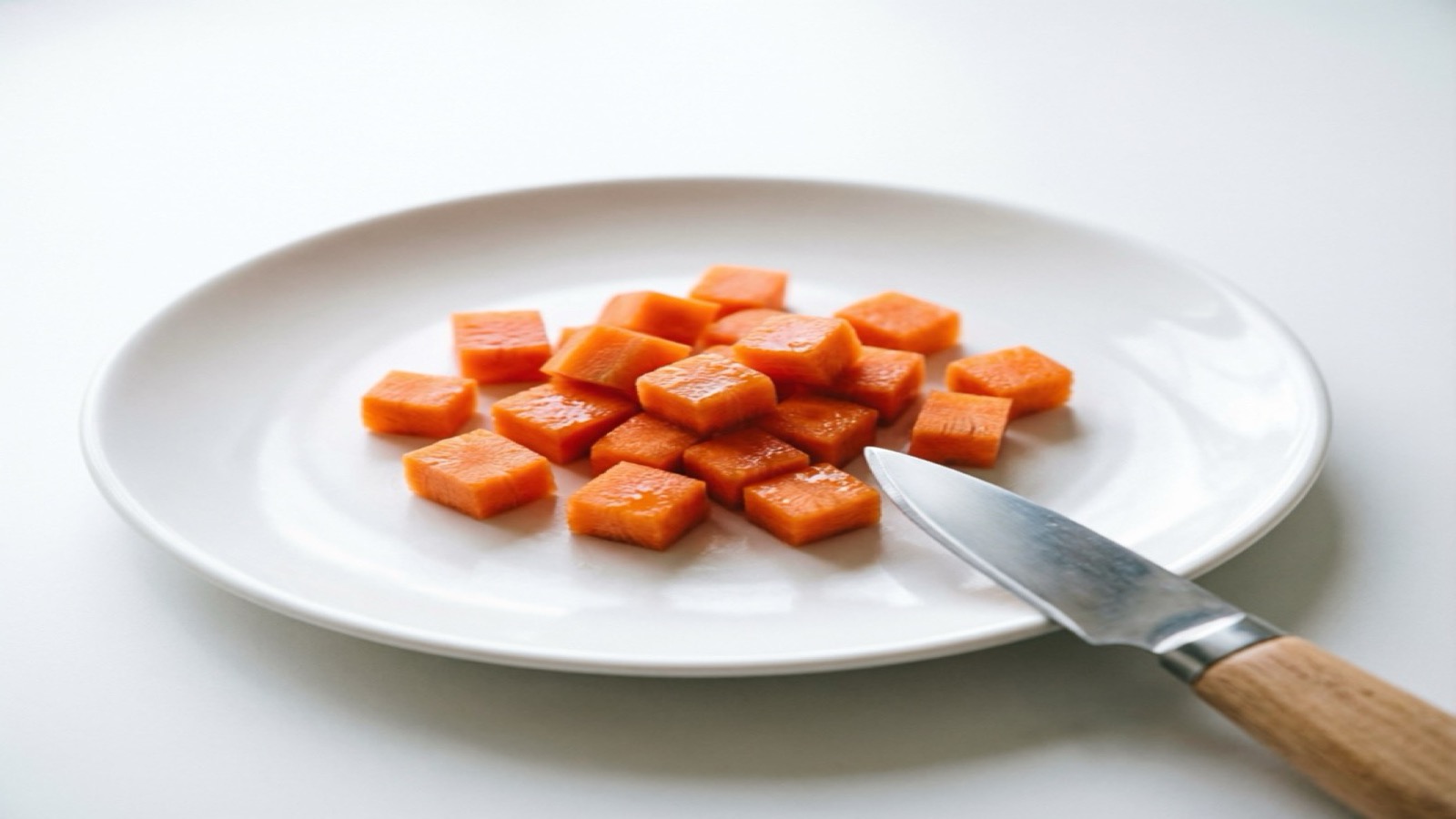
- Cut a thin slice about the size of a coin or 5mm thick
- Cut that slice into small, hamster-bite-sized pieces
- Place in the food bowl or offer by hand for bonding
If this is your hamster’s first time trying carrots, start with a piece half the recommended size and wait 24 hours. Watch for any signs of digestive upset (diarrhea, bloating) before offering the full portion.
Can Dwarf Hamsters Eat Carrots?
Yes, but with significant caution. Dwarf hamsters — which include Winter Whites and Campbell’s dwarfs — are the most diabetes-prone of all hamster species. This means every gram of sugar matters, and carrots contain more sugar than many people assume.
⚠️ Dwarf Hamster Diabetes Risk
Campbell’s dwarf hamsters in particular have an estimated diabetes incidence of 10-15% in captivity. The condition is progressive and irreversible — once a hamster develops diabetes, it requires lifelong management with a specialized low-sugar diet and regular glucose monitoring.
Because of this, I take a conservative approach with my dwarf hamsters:
- Amount: ½ a thin slice, roughly ¼ teaspoon grated
- Frequency: Once every two weeks maximum
- Preparation: Same as Syrians — washed, peeled, cut tiny
Some dwarf hamster owners choose to skip sweeter vegetables entirely and stick to low-sugar options like cucumber and broccoli. If your dwarf is already overweight, has a family history of diabetes, or shows increased thirst and urination, that’s a smart approach. Cucumber is essentially sugar-free and provides hydration without the glycemic risk.
My Experience with Dwarf Hamsters and Vegetables
I’ve kept several Campbell’s dwarfs over the years, and I’ve noticed they respond to sugary treats with an enthusiasm that makes portion control genuinely difficult. They’ll hoard carrot pieces in their cheek pouches and stash them for later eating, which means a single feeding session can result in multiple sugar exposures throughout the day. For this reason, I’d recommend removing any uneaten carrot after an hour — don’t let your dwarf hoard it.
Can Chinese Hamsters Eat Carrots?
Yes, in moderation. Chinese hamsters sit between Syrians and dwarfs on the diabetes risk spectrum — they’re more sensitive than Syrians but generally less prone than Campbell’s dwarfs.
Recommended Serving for Chinese Hamsters
- Amount: ¼ teaspoon grated or ½ a thin slice
- Frequency: Once every 1-2 weeks
- Preparation: Washed, peeled, cut into tiny pieces
Chinese hamsters are less commonly kept as pets, so there’s less anecdotal data about their dietary tolerances. Based on their body size (30-45g) and metabolic profile, I recommend treating them similarly to dwarf hamsters when it comes to any food with meaningful sugar content. Err on the side of caution, and if you notice any changes in your Chinese hamster’s water intake, energy levels, or weight after introducing carrots, discontinue them and consult your exotic vet.
How to Prepare Carrots for Your Hamster
Proper preparation is straightforward but there are a few details that matter. Here’s the process I follow:
Step 1: Choose the Right Carrot
Pick carrots that are:
- Firm and crisp — if it bends without snapping, it’s past its prime
- Bright orange — color intensity correlates with beta-carotene content
- Organic when possible — this significantly reduces pesticide exposure, which matters for a small animal
Avoid pre-cut baby carrots if you’re concerned about sugar — they’re often from sweeter varieties.
Step 2: Wash Thoroughly
Run the carrot under cool water for at least 15-20 seconds, scrubbing with a vegetable brush. Carrots grow underground and can carry soil-borne bacteria even when they look clean. Even organic carrots should be washed.
Step 3: Peel if Non-Organic
Carrot skin holds the majority of pesticide residue. If you’re not buying organic, peel the carrot before serving. Use a vegetable peeler and remove a thin layer — you don’t need to go deep, just enough to take off the outer surface.
If you are buying organic, you can leave the skin on for extra fiber and nutrients. Just wash it well.
Step 4: Cut into Tiny Pieces
This is critical. A hamster’s cheek pouches can stretch impressively, but stuffing a large piece of carrot in there creates a choking risk and can cause pouch impaction if the piece is too big. Cut a thin slice, then cut that slice into pieces no larger than a small pea. For dwarf hamsters, cut even smaller.
Step 5: Serve Raw
Raw carrots are the way to go. The crunch helps wear down teeth, and raw carrots retain their full vitamin C content, which is heat-sensitive. If you want to soften a piece for an elderly hamster with dental issues, you can lightly steam it — but plain steaming only, no butter or seasoning.
Step 6: Remove Uneaten Carrot After 2 Hours
Fresh vegetables spoil at room temperature. Any uneaten carrot should be removed from the enclosure within 2 hours to prevent bacterial growth and mold. This is especially important if your hamster has hoarded pieces in their bedding — check stash spots during cleaning.
Can Hamsters Eat Carrot Tops?
Yes — carrot tops (the leafy green foliage) are safe for hamsters and actually make a decent low-sugar alternative to the carrot root itself.
Carrot greens contain roughly 1-2g of sugar per 100g, significantly less than the root at 4.7-6g. They also provide vitamin C, calcium, and fiber. I’ve found that some hamsters enjoy the greens more than the carrot itself — it varies from animal to animal.
How to Feed Carrot Tops
- Wash thoroughly to remove dirt and pesticide residue
- Chop into small pieces to prevent choking and cheek pouch impaction
- Offer 1-2 small leaves once a week
- Remove uneaten greens after 2 hours
One caveat: if you’re buying carrots with tops attached from a grocery store, those tops may have been treated with post-harvest sprays that aren’t intended for consumption. Carrot tops from a farmers’ market or your own garden are the safest option.
How Often Can Hamsters Eat Carrots?
Here’s a quick reference table for all three hamster species:
| Breed | Frequency | Serving Size | Max Per Week | Notes |
|---|---|---|---|---|
| Syrian Hamster | 1x per week | ½ tsp grated (1 thin slice) | ½ tsp total | Most tolerant of sugar |
| Dwarf Hamster (WW/CC) | 1x every 2 weeks | ¼ tsp grated (½ thin slice) | ¼ tsp per 2 weeks | High diabetes risk — be conservative |
| Chinese Hamster | 1x every 1-2 weeks | ¼ tsp grated (½ thin slice) | ¼ tsp total | Moderate diabetes risk |
These recommendations assume your hamster is otherwise healthy and at a normal weight. If your hamster is overweight, diabetic, or has a history of digestive issues, reduce or eliminate carrots from their diet entirely and focus on low-sugar alternatives.
Signs Your Hamster Ate Too Many Carrots
Even with the best intentions, overfeeding happens. Maybe your hamster raided a forgotten stash, or a family member offered an extra piece. Here’s what to watch for:
Common Symptoms of Overindulgence
- Loose stool or diarrhea — the most common and earliest sign. Carrots contain more fiber than many people expect, and excess fiber can speed up gut transit.
- Bloating or a swollen belly — indicates gas buildup from excess sugar fermenting in the gut
- Orange-tinted skin — this sounds alarming but is actually harmless. Excess beta-carotene can temporarily tint your hamster’s fur and skin slightly orange. It resolves on its own once you reduce carrot intake and is not dangerous.
- Decreased appetite — your hamster may refuse their regular food if their stomach is upset from too much sugar
- Lethargy — a normally active hamster that suddenly seems sleepy or uninterested in exploring
- Increased thirst and urination — in dwarf hamsters, this can be an early warning sign of elevated blood sugar
When to See a Vet
Most mild cases of overindulgence resolve within 12-24 hours. Switch to a bland diet (pellets only, no treats) and ensure fresh water is always available.
Contact your exotic vet immediately if you notice:
- Diarrhea lasting more than 24 hours
- Blood in the stool
- Complete refusal to eat or drink
- Extreme lethargy or unresponsiveness
- A sunken, dehydrated appearance around the eyes
Hamsters are small, and they can deteriorate quickly. Don’t wait to see if things improve on their own if multiple symptoms appear simultaneously.
Better Alternatives to Carrots for Hamsters
While carrots are safe in moderation, there are vegetables I reach for more often — especially for my dwarf hamsters. Here are some alternatives that deliver nutritional benefits with less sugar risk:
Lower-Sugar Fresh Foods
- Cucumber — essentially zero sugar (1.7g per 100g) and about 96% water. One of the safest treats you can offer any hamster breed. Excellent for summer hydration.
- Broccoli florets — about 1.7g sugar per 100g, plus significant vitamin C and fiber. Steam lightly to soften for elderly hamsters, or serve raw for the dental benefit.
- Zucchini — low in sugar (2.5g per 100g), mild flavor that most hamsters accept readily, and high water content for hydration.
For more on safe fruit treats, see our guides on strawberries and grapes — both include breed-specific serving recommendations.
🛒 Recommended Safe Treats for Hamsters
If you’d rather go with commercially prepared treats that take the guesswork out of portioning, here are a few options I’ve used with my own hamsters:
-
Oxbow Simple Rewards Apple Banana Treats — These are freeze-dried with controlled portions. I use them sparingly — one piece per week as a bonding reward after nail trims or cage cleaning sessions.
-
Vitakraft Hamster Strawberry Drops — A yogurt-based drop with berry flavoring. My Syrians love these, but I treat them as special occasion rewards rather than regular treats — maybe once a week at most.
-
Kaytee Forti-Diet Pro Health — This is the staple pellet diet I feed alongside occasional vegetable treats. Having a solid, nutritionally complete base diet means treats like carrots stay in their proper place — as supplements, not substitutes.
We may earn a commission if you purchase through our links, at no extra cost to you.
Other Foods Your Hamster Can Eat
Carrots are just one of many foods you might be curious about. Here’s a quick guide to other common foods — each link leads to a full safety breakdown with breed-specific serving recommendations.
🍓 Fruits
- Can Hamsters Eat Strawberries?
- Can Hamsters Eat Grapes?
- Can Hamsters Eat Blueberries? (Coming Soon)
- Can Hamsters Eat Bananas? (Coming Soon)
- Can Hamsters Eat Apples? (Coming Soon)
🥬 Vegetables
- Can Hamsters Eat Broccoli? (Coming Soon)
- Can Hamsters Eat Cucumbers? (Coming Soon)
- Can Hamsters Eat Celery? (Coming Soon)
- Can Hamsters Eat Spinach? (Coming Soon)
🥜 Proteins & Treats
- Can Hamsters Eat Mealworms? (Coming Soon)
- Can Hamsters Eat Eggs? (Coming Soon)
- Can Hamsters Eat Sunflower Seeds? (Coming Soon)
Frequently Asked Questions
Can hamsters eat carrots?
Yes, hamsters can safely eat raw carrots in moderation. They provide beta-carotene, vitamin A, and fiber, along with a satisfying crunch that helps wear down continuously growing teeth. Their sugar content means they should be an occasional treat, not a dietary staple. Always wash, peel if non-organic, and cut into pieces no larger than a small pea before offering.
Can baby hamsters eat carrots?
No — baby hamsters under 4 weeks of age should not eat carrots or any fresh vegetables. Their digestive systems are still developing and cannot properly process the natural sugars and fiber. Stick to their mother’s milk (or a milk replacer if orphaned) and begin introducing a high-quality commercial hamster pellet around 3-4 weeks. You can start offering tiny pieces of vegetables after your hamster reaches 4 weeks, but introduce them one at a time and in very small amounts.
Can hamsters eat carrot tops (greens)?
Yes, carrot tops are safe and actually contain less sugar than the carrot root itself — roughly 1-2g per 100g compared to 4.7-6g in the root. They provide fiber, calcium, and vitamin C. Wash thoroughly, chop into small pieces, and offer 1-2 leaves once a week. I’ve found that some hamsters enjoy the leafy greens more than the carrot, while others ignore them entirely — it varies by individual.
Can hamsters eat cooked carrots?
Raw carrots are strongly preferred. Cooking softens the carrot, which removes the dental benefit of gnawing, and heat degrades some nutrients — particularly vitamin C, which is sensitive to temperature. If you do offer cooked carrots, they must be plain — no butter, oil, salt, spices, or seasonings of any kind. Steaming or boiling only. I’d only recommend this for elderly hamsters with dental problems that can’t handle raw vegetables.
What happens if a hamster eats too many carrots?
Overconsumption of carrots can lead to diarrhea from excess fiber, bloating from sugar fermentation in the gut, and weight gain over time. In dwarf hamsters, repeated sugar exposure increases diabetes risk. One harmless side effect you might notice is slightly orange-tinted skin or fur from excess beta-carotene — this resolves on its own and isn’t dangerous. If your hamster has loose stool lasting more than 24 hours or shows signs of dehydration, contact an exotic vet promptly.
Can Syrian hamsters eat carrots?
Yes — Syrian hamsters are the best-suited breed for occasional carrot treats. Their larger body size (120-200g) means they process sugar more efficiently than dwarf or Chinese hamsters. Offer one thin slice (about ½ teaspoon grated or a coin-sized piece) once per week. Syrians are less prone to diabetes, so the risk is lower, but moderation still matters for weight management.
Can dwarf hamsters eat carrots?
Yes, dwarf hamsters can have carrots, but I’d urge extra caution. Both Winter White and Campbell’s dwarf hamsters have a genetic predisposition to diabetes, and carrots contain more sugar than most people realize. Limit servings to half a thin slice once every two weeks. If your dwarf is overweight, shows increased thirst and urination, or has a family history of diabetes, skip carrots and offer cucumber or broccoli instead — both are significantly lower in sugar.
How much carrot can a hamster eat?
The safe amount depends on your hamster’s breed. Syrian hamsters can have about ½ teaspoon grated (one thin slice) once per week. Dwarf and Chinese hamsters should get ¼ teaspoon grated (half a thin slice) once every two weeks. These amounts assume the carrot is fresh, raw, washed, and cut into pieces no larger than a small pea. Remember — treats should never exceed 10% of your hamster’s total weekly food intake.