| Context | Typical range | What that number is |
|---|---|---|
| Captivity | 20–30 years | Household planning range. Wikipedia says 15–30 years with good care; Animal Diversity Web’s average in captivity is 20 years — not the same number. |
| Wild | 10–15 years | Predators, collection, and habitat. Animal Diversity Web’s wild average is 10 years. |
| Verified record | 62 years (59 at the Saint Louis Zoo) | Wikipedia, Ball python, “In captivity.” A zoo female, not a starter-kit mean. |
| Do not copy | “Over 40 years” as the record | Older care-FAQ wording. That is a lower bound, not the verified record. |
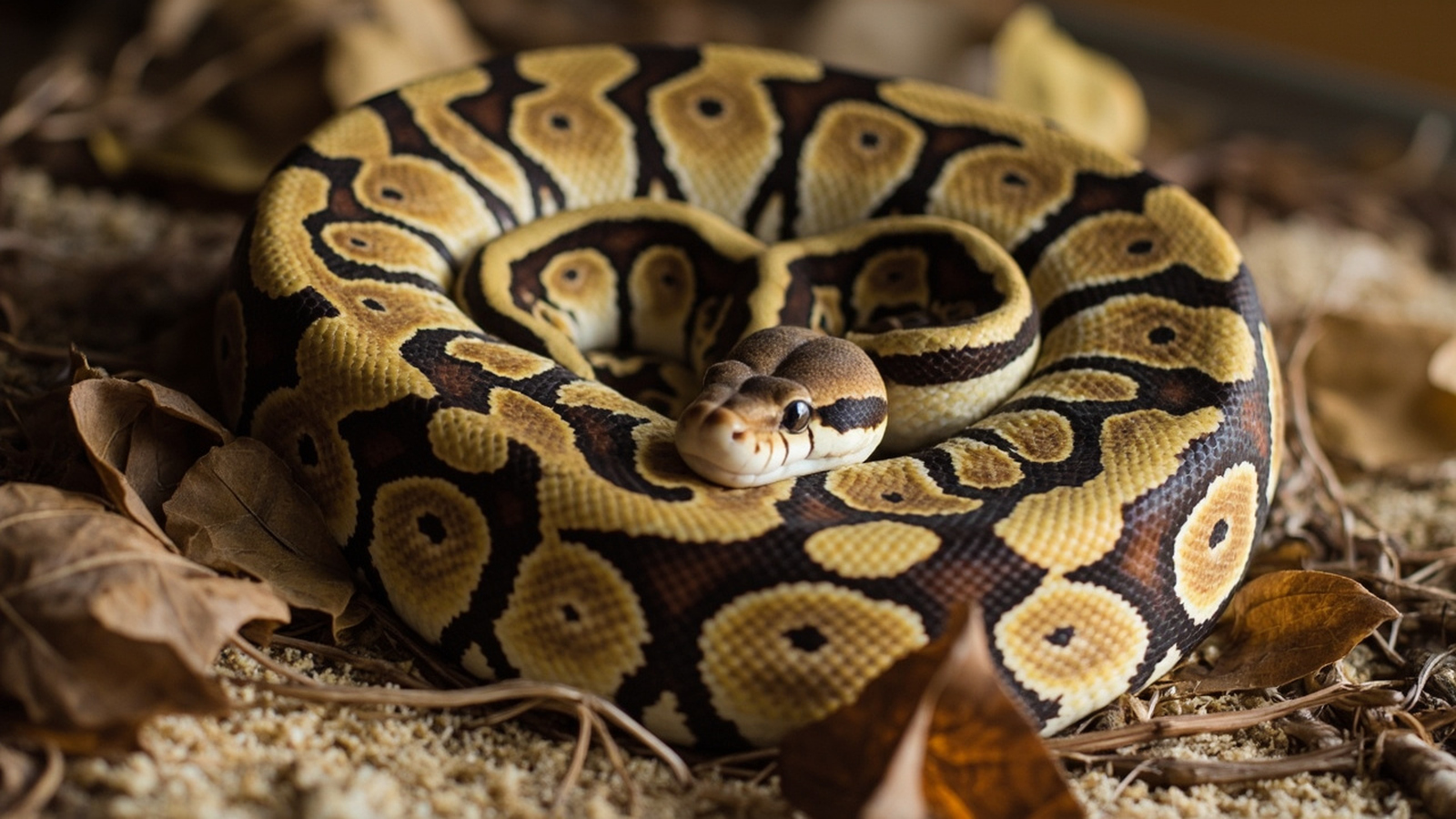
Ball python lifespan is the expected years a Python regius survives from hatch to death — captive 20–30 versus wild 10–15. Search “ball python lifespan” or “how long do ball pythons live” and you get a care sheet that says 20–30, or a forum post about a snake that “looks old.” Plan the apartment, the trips, and the rehoming clause around 8–10 years and you still have a 1.2 kg adult when the lease ends.
Skip a ball python if you cannot keep a hide and a thermostat running for 20 years — this is a dog-length pet, not a two-year impulse snake.
This page is years, the record with a source, and aging signs. It is not the ball python care handbook and not a morph price list. Plan on captive 20–30. 62 is a zoo record, not a household average.
Ball Python Lifespan Overview
Those two bands — captive 20–30 versus wild 10–15 — are the ones that matter. “Life expectancy” here is the same idea as years. Wikipedia’s captivity wording is “regularly living for 15–30 years with good care.” Animal Diversity Web’s captivity average is 20 years. Household planning should sit on 20–30, not on a mashed 15–20–30 blob.
This is weekly feeding, humidity checks, and a heat source that cannot fail while you are at work — for two decades. That is closer to a dog than to a hamster’s years. Size and morphs live on the ball python species guide. The years stay on this page.
Morphs are not a second lifespan table
Some designer morphs carry extra health load (neurological “wobble” lines are the usual example). There is no honest “albino lives X years” table — that number is not in the sources used here. Buy the animal for the animal, then keep heat, humidity, and weight in range. Genetics is a surcharge on husbandry, not a replacement for it.
Ball Python Lifespan in Captivity vs Wild
The title contrast is the whole point of this ball python lifespan page: captivity stretches the wild band, but only if the box is actually run.
Captivity (20–30)
Wikipedia (Ball python, “In captivity,” read 2026-08-29) describes animals regularly living 15–30 years with good care. Breeder copy often markets 20–30 or “30+.” Prefer Wikipedia plus the species-page band of 20–30 for what you tell a roommate or a landlord.
Animal Diversity Web’s captivity average of 20 years is a mean, not a ceiling. A mean of 20 and a typical range of 20–30 can both be true. They are not one number. Do not quote “average 20–30.”
Twenty years of captive care is not a weekend hobby. It is a hide that still fits, a thermostat that still clicks, and prey that still matches the snake — after you have moved house twice.
Wild (10–15)
Wild Python regius in West and Central African grassland and savanna do not get 20 quiet years. Predators, collection for the pet trade, and habitat pressure cut the curve. Animal Diversity Web lists a wild average of 10 years. The 10–15 band on the species page is the planning range; 10 is the academic average inside it.
Wild years are not a moral ranking. They are the baseline captivity is supposed to beat.
Why captive is not automatic
Unregulated heat, chronic low humidity, and weekly adult rats on a snake that already has a fat roll will not produce the Wikipedia band. Obesity and thermal burns kill faster than “old age.” The levers sit in the extend section below — thermostat, hide, measured humidity — not in a second care dump.
Male vs Female Ball Python Lifespan
Female adults run larger. That is mass, not a second clock.
A-Z Animals (read 2026-08-29) notes females are larger as adults and reports no significant lifespan difference by sex. The oldest estimated animal in that write-up was a female that had laid eggs. That is a sex of the record holder, not proof that females live longer.
Do not import chameleon math. Veiled and panther females can lose years to clutch after clutch. Ball pythons are not that species. Breeding females still take extra calcium and still risk egg-binding (dystocia). That is a husbandry and vet risk, not a proven 10-year sex gap.
Sex is not the main lever. Heat, humidity, and weight are. Grams by sex belong on the ball python weight page, not here.
If you are comparing decades across pets, a rabbit’s years are a different commitment shape — still long, still not a snake, still not an excuse to skip the thermostat.
Oldest Ball Python on Record
The number that belongs in a ball python lifespan citation is 62 years, 59 of them at the Saint Louis Zoo, a female, per Wikipedia’s Ball python page (“In captivity,” HTML read 2026-08-29). That is the canonical record on this site.
Older SmallPet care FAQ text that says the record is “over 40 years” is an outdated lower bound. It is not a second record. Do not treat 40 as the Wikipedia figure.
A-Z Animals estimates ~63 years for a St. Louis animal. Do not copy 63. Wikipedia says 62. An estimate is not a verification.
Optional named animals, none of which beat 62:
- About 47 years with official birth records (Philadelphia, A-Z Animals) — a documented long life, not the record.
- Animal Diversity Web compiles 28 years (Oakland Zoo) and up to 50 (Philadelphia). Fifty is not 62. Do not pick a “winner” from the older compilation and ignore the Wikipedia sentence.
- Animal Diversity Web also lists longevity-database rows (including 30.5 years for a captive male). Those rows are not pet-care advice. Leave them in the academic table.
Record is not a household average
62 is a zoo female with decades of staff, veterinary access, and no landlord. It is not a 4×2 PVC starter kit and a heat mat from a first paycheck. Plan 20–30. Treat 62 as the documented ceiling, the way you treat a 20-year-old cat as news, not as the kitten you just brought home.
How to Tell a Ball Python’s Age
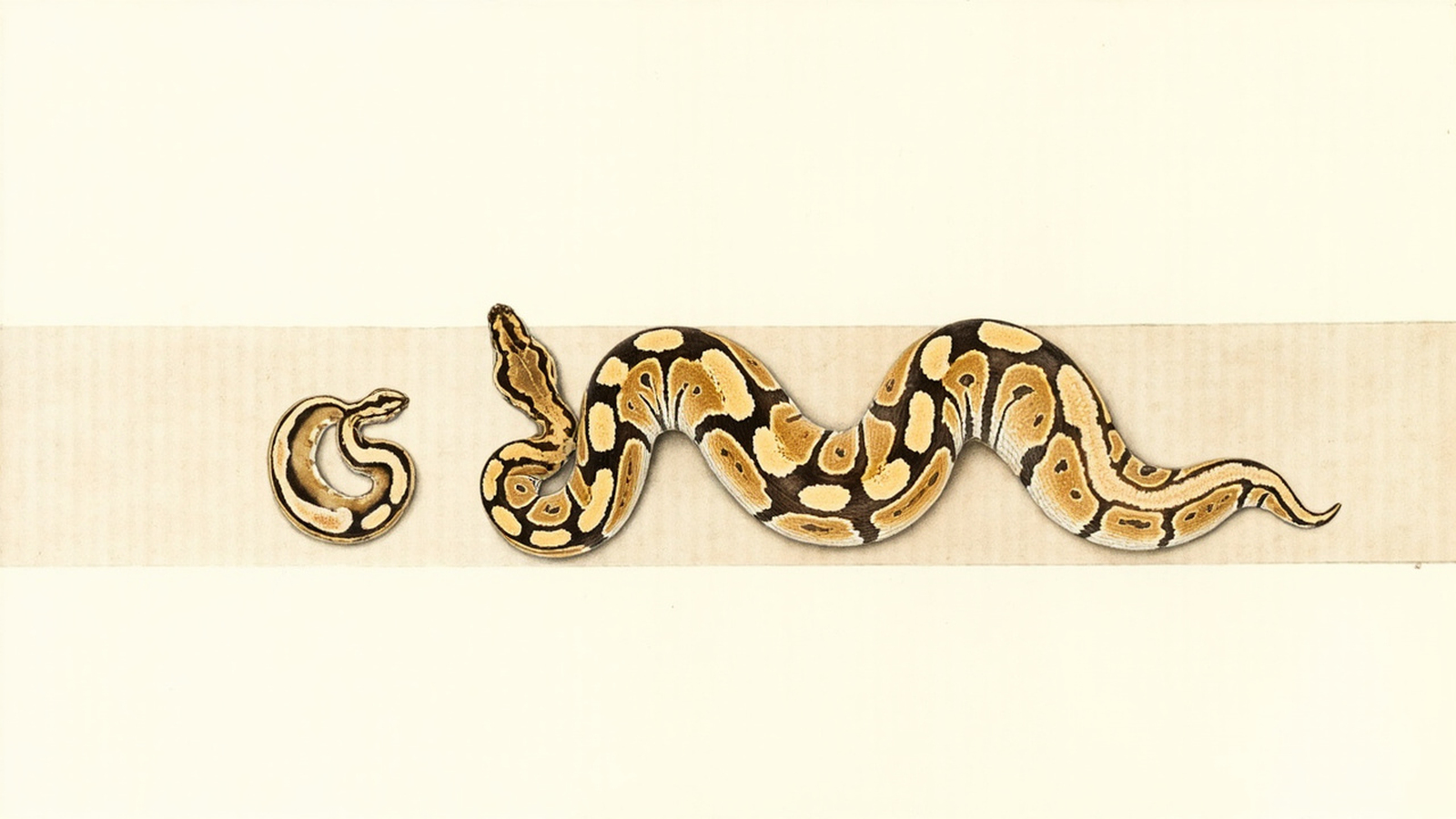
Most “how long do they live” pages skip how to tell ball python age, which is why keepers guess from Instagram.
Hatchling vs juvenile vs adult is a weight and length band, not a birthday. Use the chart on ball python weight. Do not paste that chart here. After about three years, size plateaus. You cannot age an adult by length alone. A 1,200 g male can be four or fourteen.
Paper beats eyeballs: breeder invoice, hatch date, PIT tag (the implanted microchip). Shed frequency and color are not a calendar. A snake that sheds “a lot” is not younger. A dull adult is not “20.”
- Check paperwork. Hatch date on the invoice or PIT (microchip) record is the only year you can defend.
- Weigh and measure against the weight page, not a forum photo of “a two-year-old.”
- Stop guessing after adult size. Treat an unknown adult as an adult, not as a year number.
If a seller says “about five” with no hatch date, believe “adult” and budget 15+ years of remaining care, not five.
How to Extend Ball Python Lifespan
Four levers, not a shopping roundup. Rule first, product second. If the rule is already met, skip the extra gadget.
Warm side 88–92°F (31–33°C). Ambient on the species page sits 75–80°F. Humidity 50–60% most of the time, 60–70% in a shed cycle. Full tank and feeding detail: ball python tank, ball python feeding (obesity and hunger strikes both shorten the curve).
| Product | Key Feature | Best For |
|---|---|---|
| LEOTERRA Large Snake Hide (L) | Top-seal cavity, snug adult fit | Security hide on both ends of the gradient |
| BN-LINK Reptile Thermostat | On/off control for mats and ceramic heat | Stop unregulated heat |
| JEDEW 2-Pack Digital Hygrometer | Two gauges, ~10-second refresh | Warm-hide and cool-hide humidity |
| Zoo Med New Zealand Sphagnum Moss | Holds moisture in one hide | Shed-cycle humid hide only |
Fit a snug hide
A ball python that cannot press both flanks against a cavity stays on alert. Chronic stress is not a dramatic death. It is skipped meals and a snake that never quite settles for 20 years.
Skip the hide if the opening is larger than the snake’s mid-body — security fails and you bought a cave, not a hide. Skip a one-hide box. The snake should not have to pick warmth or cover. Put one hide on the warm end and one on the cool end. Size options and cave vs box: best ball python hide.
The LEOTERRA Large Snake Hide (L) is a plastic top-seal hide sized for adult corn, king, and ball pythons. Owners report it as “perfect for our adult male ball to feel snug and secure.” Honest downsides: several buyers say the listed size is larger than what arrived, corners sometimes ship cracked, and one owner described plastic off-gassing — air the hide out before it goes in the enclosure. Check Price on Amazon →
Put heat on a thermostat
Don’t run a heat mat unplugged from a thermostat. Chronic burns and runaway hot spots shorten life faster than “old age.” A thermostat is the fail-safe, not a gadget. Pair the heat source with the heat lamp guide so wattage and fixture match the box.
The BN-LINK Reptile Thermostat is a simple on/off controller used on heat mats and ceramic emitters. It is not pulse-proportional, so I’d skip it for a deep heat projector that wants dimming or pulsing — those need a different class of thermostat. Probe placement still matters: measure at snake level, not on the glass. Check Price on Amazon →
Measure humidity
Guessing relative humidity (RH) from “the tank looks moist” is how you get stuck eye caps in year 12. Track a percentage. Details and ranges: ball python humidity.
Skip a single analog stick-on if you need a number at both hides — you cannot run a 20-year humidity plan off one cheap dial. The JEDEW 2-Pack Digital Hygrometer gives you two gauges so one can sit near each hide. One owner wrote it was “exactly what I needed for my bearded dragons tank” and noted spare batteries in the box. Honest downsides: keepers sitting two units side by side sometimes get different humidity readings; treat them as a trend, not a lab probe. Occasional dead-on-arrival reports exist. Skip JEDEW if you need a calibrated lab probe. Check Price on Amazon →
Damp one hide, not the tank
Don’t soak the whole enclosure with sphagnum. Scale rot is not longevity. Skip sphagnum as floor bedding — it is hide fill, not a carpet. Damp moss belongs in one hide during shed, moist enough to clump, not dripping. Floor substrate is a different job — see the substrate guide.
Zoo Med New Zealand Sphagnum Moss is the humid-hide fill, not a carpet. Replace it every few days so it does not sour. If ambient humidity is already 70% with poor airflow, adding wet moss is the wrong move — fix ventilation first. Check Price on Amazon →
Signs of Aging in Ball Pythons
Old is not the same as sick. Dedicated ball python lifespan pages skip this list; keepers still need it.
What “older” often looks like, once the snake is well into the second decade:
- Sheds slow down or come off in pieces more often, even when RH is in range.
- Spine and hip bones read clearer under the skin; muscle along the back looks thinner.
- Cloudy eyes that are not in a shed cycle (blue / opaque phase) deserve a vet, not a wait-and-see.
- Longer rest after a meal; less roaming on the cool side.
What is illness, not age: wheezing, mucus bubbles, mites, retained eye caps after a second shed, open-mouth breathing. Those go to ball python care and humidity, then to an exotic veterinarian. Do not diagnose from a photo in a group chat.
A senior still needs the same 88–92°F warm side. Dropping heat “because it is old” is how digestion fails.
Plan for 20–30 captive years
Cite 62 years at the Saint Louis Zoo as the record, not as typical
Keep heat on a thermostat
Use a snug hide and measured humidity for sheds
Budget 15+ remaining years for an unknown adult with no hatch date
Treat “over 40” on an old care FAQ as the record
Age an adult by length alone
Copy a 63-year estimate as verified
Turn a years page into a shopping roundup
Drop warm-side heat because the snake is old
A guinea pig’s years run shorter; the husbandry still fails the same way when people buy the animal before they buy the time.
Plan a ball python lifespan of 20–30 captive years if heat, humidity, and weight stay in range. Wild is 10–15 (Animal Diversity Web average 10). The record is 62 years, 59 at the Saint Louis Zoo (Wikipedia) — not your mean.
Keep the gradient, the two hides, and the prey size honest. Morph shopping belongs on the species page. For the same page type on a different lizard, see chameleon lifespan.