UVB for Ball Pythons: What Research Says
Ball python UVB requirement: Ball pythons are crepuscular snakes native to West and Central Africa. While they can survive without UVB lighting in captivity, modern reptile husbandry research strongly recommends providing low-intensity UVB.
Studies by Dr. Frances Baines (UV Guide UK) show that ball pythons in the wild experience Ferguson Zone 2 conditions (UVI 0.7 to 1.4, up to 3.0 maximum) (Baines, 2016 — UV Guide UK Ferguson Zone Classification). Benefits include Vitamin D3 synthesis, improved immune function, and better feeding response (Acierno et al., 2020 — Journal of Zoo and Wildlife Medicine).
Warning: Metabolic Bone Disease (MBD) — A progressive, often irreversible condition caused by inadequate calcium absorption due to Vitamin D3 deficiency. MBD causes soft, rubbery bones, spinal deformities, jaw malformation, tremors, and death. In snakes, MBD develops more slowly than in lizards but is equally devastating when untreated. UVB enables natural D3 synthesis, which is why proper ball python lighting prevents MBD (Merck Veterinary Manual).
UVB exposure also supports prevention of metabolic bone disease (MBD) and promotes more natural behavior patterns (Merck Veterinary Manual — Metabolic Bone Disease in Reptiles).
UVB is not optional for optimal health — it is recommended care.
Ball pythons were historically kept without UVB because they are nocturnal and “don’t need sun.” This outdated advice persists in many care sheets and pet store guidance. Modern ball python lighting standards have evolved significantly since the species entered the pet trade in the 1990s. The “survive vs thrive” distinction is critical here.
Ball pythons kept without UVB survive, but those with UVB show measurably better health markers across multiple veterinary studies.
The Reddit r/ballpython community debates this topic regularly, with threads regularly reaching 20 to 30 comments. Modern veterinary consensus from UV Guide UK and ARAV guidelines recommends low-level UVB as standard ball python care. For complete care beyond lighting, see our ball python care guide.

Understanding UVB for Ball Pythons
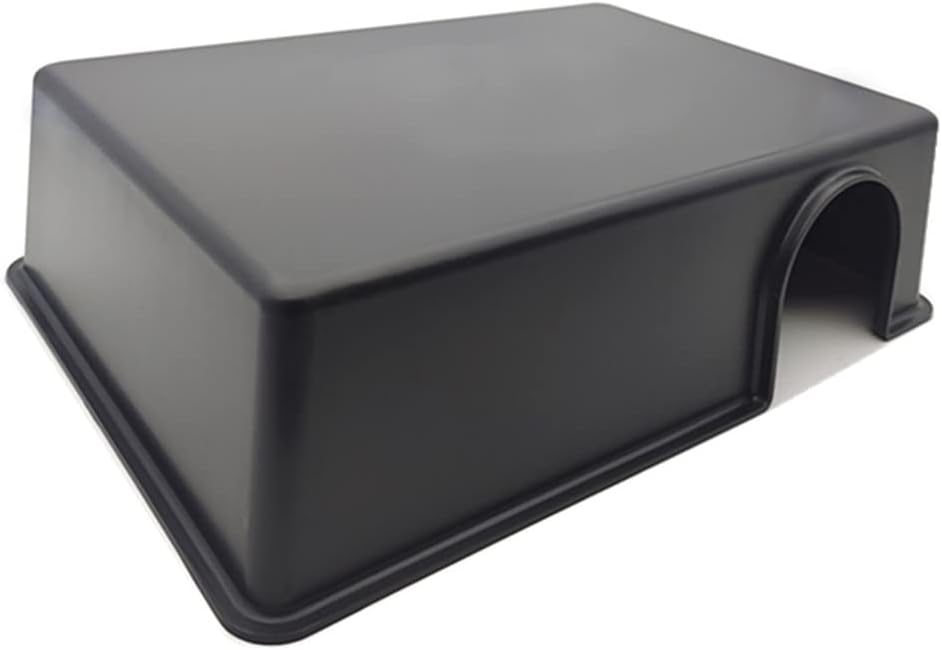
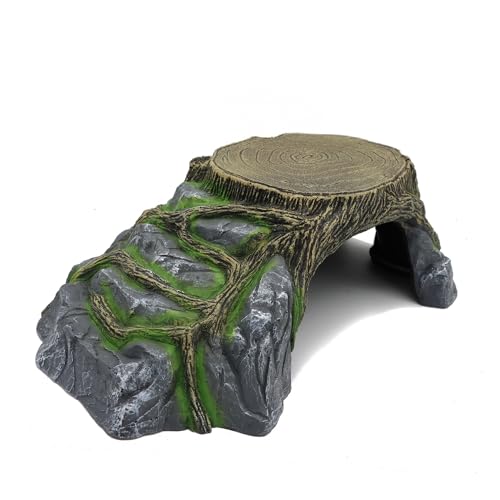
JIHAQUA Resin Reptile Cave → is a quality option worth considering for your setup.
Ball python UVB requirements are the foundation of proper ball python lighting — understanding how UVB works and why intensity matters. Not all UVB is the same — the wrong intensity or bulb type can cause health problems rather than prevent them.
Ball python UVB requirements are specific: UVB synthesizes Vitamin D3 for calcium metabolism — without adequate D3, dietary calcium cannot be absorbed, leading to MBD (VCA Hospitals — Vitamin D3 and Reptile Calcium Metabolism). UVA affects behavior, feeding response, and mood — snakes can perceive UVA wavelengths through specialized retinal cone cells (Gerrish et al., 2022 — Visual Pigments in Ball Pythons). All UVB bulbs also produce UVA, which is why proper lighting supports both physical and behavioral health.
Follow these four steps to select the right UVB setup for your ball python lighting system:
Warning: Ferguson Zone — A classification system developed by Dr. Gary Ferguson that categorizes reptile species by their natural UVB exposure in the wild. Zone 1 (shade-dwelling, UVI 0.0-0.7) through Zone 4 (full sun baskers, UVI 4.0-10.0+). Ball pythons occupy Zone 2 (crepuscular/shade-dwelling, UVI 0.7-1.4 typical, up to 3.0 maximum). The zone determines the appropriate UVB bulb intensity for captivity (Baines, 2016).
Step 1: Know your Ferguson Zone. Ball pythons are Zone 2 (crepuscular and shade-dwelling). Target UVI 0.7 to 3.0 at the basking zone (Baines, 2016 — Ferguson Zone classification system). This is low compared to bearded dragons (Zone 3 to 4, UVI 4 to 6) and much lower than desert species.
Step 2: Choose your bulb type. T5 HO fluorescent is the gold standard for reptile UVB — they produce consistent output across the tube length (ReptiFiles — T5 HO vs Compact Bulb Comparison). — they produce consistent output across the tube length, while coil and compact bulbs produce uneven UVB with dangerous hot spots. Mercury vapor bulbs are far too intense for ball pythons — they produce UVI 7+, which is Ferguson Zone 4 and dangerous for shade-dwelling species (ReptiFiles — Mercury Vapor Bulb Guidelines).
Step 3: Select the right ball python UVB percentage. For ball pythons in standard enclosures, 5 to 7 percent UVB in a T5 is ideal — the Arcadia ShadeDweller (7 percent) is designed for shade-dwelling reptiles, while Zoo Med ReptiSun 5.0 is the most widely available option. Higher percentages (10 percent and above) are for diurnal basking species and too intense.
Step 4: Position correctly. Mount the T5 fixture on the warm side of the enclosure, 8 to 12 inches above the snake’s highest climbing point. UVB output decreases sharply with distance — too close risks eye damage, too far means inadequate UVB (Gehrmann et al., 2004 — UVB Transmission Through Enclosure Materials). Use a Solarmeter 6.5 if available to verify UVI at the basking spot.
Bearded dragons need much higher UVB intensity (Zone 3 to 4). See our bearded dragon UVB guide for contrast.
UVB Bulb Recommendations for Ball Pythons
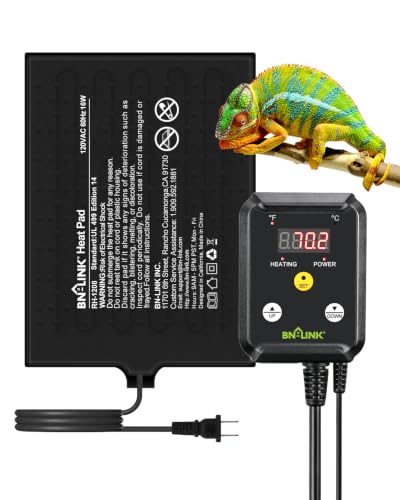
Many owners find that BN-LINK 8x12 Pad + Digital Thermostat → works well for their pet’s needs.
These bulbs are listed for informational purposes only. The best UVB for ball python enclosures depends on your ball python lighting setup type and dimensions.
| Bulb | Type | UVB % | Length | Best Enclosure | Notes |
|---|---|---|---|---|---|
| Arcadia ShadeDweller | T5 HO | 7% | 12/22/34 in | PVC 4x2x2+ | Designed for shade-dwelling snakes. Best overall option |
| Arcadia Forest 6% | T5 HO | 6% | 22/34 in | All types | Slightly lower output. Good for smaller enclosures |
| Zoo Med ReptiSun 5.0 | T5 HO | 5% | 14/22 in | Tubs, PVC, glass | Most widely available. Replace every 12 months |
| Exo Terra Repti-Glo 5.0 | T5 HO | 5% | 14/22 in | All types | Comparable to ReptiSun. Slightly less consistent QC |
| Arcadia ProT5 Kit | T5 HO + Fixture | 6% or 12% | 34 in | 4x2x2 PVC | All-in-one kit with reflector. Use 6% for ball pythons |
ALL UVB bulbs degrade over time. Replace every 10 to 12 months regardless of whether they still emit visible light (Arcadia Lighting — UVB Output Degradation Study).
UVB output drops to roughly 50 percent after 6 months and about 30 percent after 12 months in most T5 bulbs (Gardiner et al., 2009 — T5 Fluorescent UVB Degradation Over Time). Write the installation date on the bulb with a marker — this is the single most forgotten maintenance task in reptile lighting.
Leopard geckos have similar UVB requirements (Zone 1 to 2, 2 to 7 percent) — see our leopard gecko lighting guide for comparison. Use a thermostat to control heat sources alongside your lighting setup.
Ball Python Day-Night Cycle
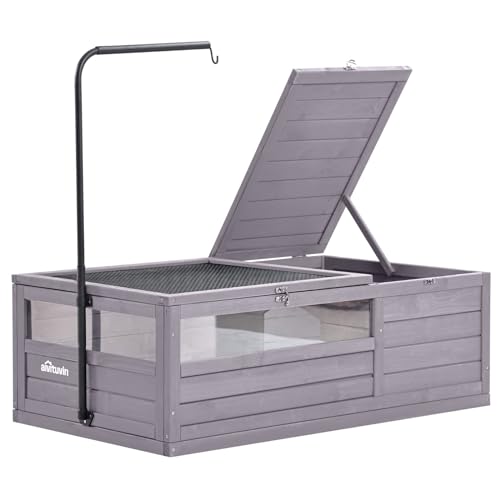
For this purpose, LEOTERRA Large Snake Hide (L) is a popular choice among pet owners.
A consistent ball python day night cycle is one of the most overlooked elements in ball python lighting husbandry. Ball pythons are crepuscular and nocturnal — they become most active during twilight hours and overnight (Merck Veterinary Manual — Ball Python Natural History). Their lighting setup must respect this natural rhythm.
Standard schedule: 12 hours light, 12 hours dark — this is the baseline for ball python care. Always use a timer rather than relying on manual switching, as keepers who switch to timers typically notice improved feeding consistency within the first month.
Seasonal variation (optional): Some keepers reduce to 11 hours light and 13 hours dark in winter, then increase to 13 on and 11 off in summer. This simulates natural photoperiod changes and can stimulate breeding behavior. Seasonal adjustment is not required for basic health.
Light source for day cycle: UVB bulb runs during the day period. Ambient room light supplements the enclosure illumination. Do NOT leave UVB on at night.
Nighttime: No light is needed — ball pythons are naturally active in darkness, and any visible light during the dark cycle disrupts sleep patterns, feeding behavior, and breeding cycles. > Warning: Ceramic Heat Emitter (CHE) — A screw-in heating element made of ceramic that emits infrared heat without producing any visible light. CHEs screw into standard incandescent fixtures, making them the simplest zero-light nighttime heating solution.
Warning: Radiant Heat Panel (DHP) — A flat, panel-style heater that produces directional infrared heat. DHPs are mounted inside enclosures and create a localized warm zone without light. More expensive than CHEs but more efficient and longer-lasting.
Use ceramic heat emitters (CHE) or radiant heat panels (DHP) for nighttime heating — these emit zero visible light.
No white light at night: This rule is non-negotiable. If you need nighttime heat, use a CHE or DHP. Never leave any bulb that emits visible light running after the day cycle ends.
Circadian rhythm affects feeding directly — photoperiod regulates melatonin production and metabolic cycling in snakes (VCA Hospitals — Circadian Rhythm in Reptiles). Ball pythons fed on a consistent light and feeding schedule show better feeding responses than those kept on irregular cycles.
Complete Lighting Setup by Enclosure Type
Ball python lighting setup varies significantly depending on your enclosure type — each configuration has distinct UVB mounting and heating constraints.
| Enclosure Type | UVB Practical? | Recommended UVB | Night Heat | Overall Recommendation |
|---|---|---|---|---|
| PVC (front-opening) | Yes | T5 HO 5-7%, 8-12 in above | CHE or DHP | Best choice — full lighting possible |
| Glass terrarium | Warning: Partial | T5 HO 5-7%, mount inside wall | CHE or DHP | Warning: OK — screen filters 30-50% UVB |
| Plastic tub | Warning: Difficult | Compact T5, 6-8 in above | Heat tape | Warning: Economy setup — limited UVB |
| Rack system | No | Not practical | Heat tape | Breeding only — no lighting |
Rack Systems
Rack systems use heat tape for belly heat. No overhead lighting is needed or recommended in most rack setups. UVB is not practical — UVB strips across tub fronts have been tried but are rarely effective due to distance and plastic UVB filtering.
Provide periodic supervised time in a UVB-equipped enclosure or outdoors (temperature permitting) for UVB exposure if your ball pythons live in racks full-time. Racks are breeding setups. For a single pet, a front-opening PVC enclosure with proper lighting is superior husbandry.
Plastic Tubs
Plastic tubs work similarly to racks — heat tape for belly heat with minimal to no overhead lighting. If the tub is modified with a screen section in the lid, a compact T5 can be mounted 6 to 8 inches above the snake. This is rare and generally not recommended for tub keeping.
Most keepers who use tubs do not add lighting. Tubs are economy and breeding setups where lighting takes a back seat to temperature and humidity management.
PVC Enclosures (Recommended)
This is where proper UVB lighting becomes practical and recommended. Mount a T5 HO fixture (Arcadia ShadeDweller 7 percent or ReptiSun 5.0) on the warm side, 8 to 12 inches above the highest branch or perch.
Full UVB setup is recommended here. Pair with a deep heat projector (DHP) or halogen bulb for basking heat.
Run the UVB fixture on a timer (12 hours on, 12 hours off). Use a DHP or CHE for nighttime heat with zero visible light.
This is the recommended setup for optimal ball python husbandry. For detailed enclosure setup beyond lighting, see our ball python tank guide. Substrate choice affects humidity which works alongside your lighting setup.
Glass Terrariums
Glass terrariums can use T5 HO fixtures in the mesh or screen top. However, glass and screen tops filter UVB — screen tops reduce UVB by 30 to 50 percent depending on mesh density. The plastic mesh used in most Exo Terra and Zoo Med screen tops is a significant UVB barrier.
Mount T5 HO fixtures inside the enclosure (on the warm side wall) rather than on top of the screen to minimize UVB loss. Account for 30 to 50 percent screen filtration when choosing your UVB percentage.
Glass terrariums have poor ventilation and temperature regulation overall. They are not recommended for ball pythons as primary enclosures.
Debated Topics: Red Lights and Colored Bulbs
The ball python red light debate is one of the most persistent myths in ball python lighting and reptile keeping overall. Understanding the science behind it will improve your husbandry decisions.
The Red Light Myth: Busted
Claim: “Snakes can’t see red light, so it’s safe for nighttime viewing.”
Fact: Modern research (Sillman et al., 2001; Gerrish et al., 2022) demonstrates that ball pythons have red-sensitive cone cells and CAN perceive red light (Sillman, 2001 — Spectral Sensitivity in Snake Photoreceptors). Red bulbs are NOT invisible to them.
Consequence: Red light at night disrupts sleep cycles, causes chronic stress, and alters feeding behavior — the exact opposite of what keepers intend. Keepers who switch from red bulbs to ceramic heat emitters frequently report noticeable improvements in their snake’s nighttime activity and feeding response (ReptiFiles — Nighttime Heating Without Light).
Alternative: Use ceramic heat emitters (CHE) or radiant heat panels (DHP) for nighttime heat. These produce zero visible light and zero circadian disruption.
Additional warning: Red, blue, and purple “night glow” bulbs all emit enough visible light to disturb nocturnal reptiles. “Moonglow” and “nightlight” bulbs are marketing terms, not husbandry science.
Colored Bulbs: Blue, Green, and Purple
All colored bulbs have the same problem — the ball python red light issue extends to blue, green, and purple variants — they are visible to snakes and disrupt circadian rhythms. These are sold as “nighttime viewing” solutions but provide minimal actual value for the snake’s wellbeing.
If you need to observe your snake at night, use a low-intensity flashlight briefly. A permanent colored bulb is not the answer.
UVB for Albino and Morph Ball Pythons
No scientific evidence shows that albino or leucistic ball pythons are harmed by standard low-level UVB (5 to 7 percent). Keepers report albino ball pythons showing no adverse reactions under 6 percent ShadeDweller fixtures. Albinos lack melanin but their eyes remain sensitive to bright light.
Use UVB at normal distances (8 to 12 inches) and observe for signs of discomfort — hiding, eye closing, or refusing to bask under the UVB fixture (Merck Veterinary Manual — Ocular Health in Reptiles). Avoid high-intensity UVB (10 percent or above) for albino morphs as a precaution. Stick with 5 to 7 percent and monitor the individual snake’s behavior.
This topic is debated in the community with no peer-reviewed studies specifically on ball python albinos and UVB. The conservative approach: use 5 to 7 percent UVB and monitor behavior. UVB aids in preventing stuck shed by supporting healthy skin cycles — see our bearded dragon shedding guide for more on UVB and skin health.

Common Lighting Mistakes
These six mistakes account for the majority of ball python lighting problems reported to exotic veterinarians.
Ball python lighting mistakes — avoid these to prevent health problems:
- Provide at least ambient room light on a 12-hour timer — even rack systems need a day-night signal for circadian rhythm
- Use dedicated T5 HO UVB bulb for UVB — standard heat bulbs produce negligible UVB and do not meet requirements
- Mount UVB 8-12 inches above highest climbing point — follow manufacturer guidelines; use Solarmeter 6.5 to verify UVI if available
- Replace UVB bulbs every 10-12 months — write installation date on bulb; output drops to 30% after 12 months (Gardiner et al., 2009)
- Run lights on a timer — 12 hours on, 12 hours off — manual switching causes irregular cycles and chronic stress
- Use CHE or DHP for nighttime heat — zero visible light preserves natural nocturnal activity
- Do NOT keep snakes in total darkness with no day-night cycle — causes circadian disruption, reduced feeding, behavioral issues
- Do NOT use coil/compact UVB bulbs — uneven UVB with dangerous concentrated hot spots (ReptiFiles)
- Do NOT mount UVB less than 6 inches from snake — causes photokeratitis and skin burns (VCA Hospitals)
- Do NOT mount UVB more than 15 inches away — output drops below Ferguson Zone 2; bulb becomes ineffective
- Do NOT leave lights on 24 hours — no dark period equals chronic stress and immune suppression
- Do NOT use red/blue/purple “night glow” bulbs — snakes perceive these wavelengths; disrupts sleep and feeding (Sillman, 2001)
Warning: Photokeratitis — Inflammation of the cornea caused by excessive UVB exposure, essentially “sunburn of the eye.” Symptoms include eye swelling, cloudiness, excessive blinking, and in severe cases permanent corneal damage. Reversible if caught early by removing the UVB source and consulting a reptile veterinarian (VCA Hospitals — Photokeratitis in Reptiles).
Ball python lighting, temperature, and humidity are interconnected — see our humidity guide and habitat guide for the complete picture.
Product Recommendations
Here are some products mentioned in this guide:
Frequently Asked Questions
Do ball pythons need light at night?
No. Ball pythons are crepuscular and nocturnal — naturally active in low light and complete darkness. For nighttime heating, use a ceramic heat emitter (CHE) or radiant heat panel (DHP), which produce zero visible light.
What UVB percentage do ball pythons need?
Ball pythons need low-intensity UVB at 5 to 7 percent in a T5 HO fluorescent tube. Arcadia ShadeDweller (7 percent) is designed specifically for shade-dwelling snakes. Zoo Med ReptiSun 5.0 is the most widely available option.
How long should UVB be on for a ball python?
Twelve hours on and 12 hours off, using a mechanical or digital timer for consistency. This supports natural circadian rhythms, feeding behavior, and breeding cycles.
Can I use a coil or compact UVB bulb instead of T5?
No. Coil and compact bulbs produce uneven UVB with dangerous concentrated hot spots. T5 HO tubes distribute UVB evenly across their entire length and are the veterinary-recommended choice.
Do ball pythons need UVB to survive?
Ball pythons can survive without UVB, but modern veterinary research by Dr. Frances Baines (UV Guide UK) recommends low-level UVB as standard husbandry. Studies show UVB-exposed ball pythons have higher Vitamin D3 levels and better immune function.