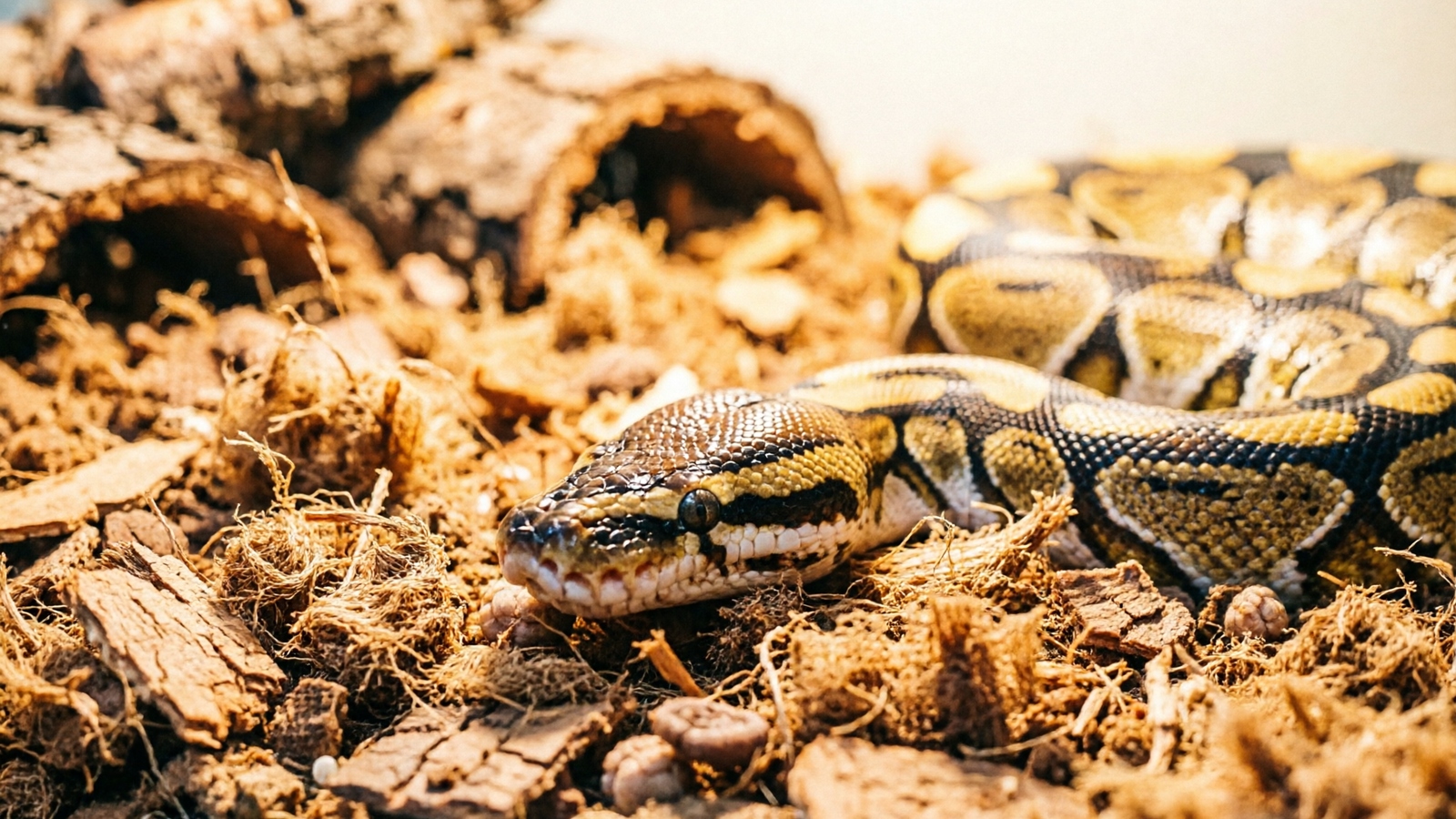
Best Substrate for Ball Python — Quick Picks
Ball python substrate is the ground material that lines the bottom of a reptile enclosure. The right choice maintains humidity, supports natural burrowing behavior, and keeps your snake safe from impaction and skin irritation.
| Category | Product | Best For |
|---|---|---|
| Top Pick | Zoo Med Eco Earth | Most keepers, humidity retention |
| Best Value | ReptiChip Premium Coconut Chip | Better drainage, holds burrows |
| Best Bioactive | Bio Dude Terra Sahara | Self-cleaning enclosures |
| Best Bark | Zoo Med Premium Reptile Bark | Natural forest floor look |
Coconut-based substrates dominate this list because the reptile community agrees they make the best ball python bedding available today. As the top reptile substrate for snakes per Reddit r/ballpython and reptile husbandry forums, coconut fiber and chips outperform every other option for humidity retention and burrowing support (ReptiFiles).
What You Need to Know About Ball Python Substrate
A ball python substrate is the ground material that lines the bottom of a reptile enclosure. It does more than cover the glass — it controls enclosure humidity, supports the natural instinct to burrow, and prevents the stress that bare floors cause — snakes without substrate show elevated corticosterone levels (Merck Veterinary Manual) (Merck Veterinary Manual — Snakes). In the wild, ball pythons burrow into termite mounds, forest floor debris, and underground cavities where humidity stays consistently high (ReptiFiles — Ball Python Husbandry). Choosing the wrong material can lead to impaction, respiratory infections, or chronic stress.
Key facts about ball python substrate requirements:
- Target humidity: 60-80% — coconut fiber maintains this range naturally (ReptiFiles)
- Depth: 2-4 inches for burrowing and spot-cleaning
- Spot-clean daily, full replacement every 3-4 months (ReptiFiles)
- When choosing a reptile substrate for snakes, avoid loose particles smaller than the snake’s head to prevent impaction (VCA Hospitals — Snake Husbandry)
- Always use a reptile thermostat to maintain proper ground temperatures alongside your substrate
Your ball python humidity requirements are directly tied to substrate choice. Ball python substrate humidity ranges from 50% with dry materials to over 80% with moist sphagnum moss. These materials naturally maintain the 60-80% ball python substrate humidity sweet spot. For a complete ball python care routine, substrate is one of the first decisions after choosing the enclosure itself.
Reading a species guide helps you understand why these snakes need humidity-retainng ground cover. In the wild, ball pythons burrow into termite mounds and forest floor debris where humidity stays consistently high (ReptiFiles).
Why Substrate Depth Matters
Two to four inches gives ball pythons enough material to burrow without creating impossible-to-clean deep zones. Hatchlings do well with two inches while adults need three to four inches for comfortable burrowing.
Any deeper than four inches and you risk anaerobic bacteria forming at the bottom of the enclosure (ReptiFiles). Measure from the substrate surface to the enclosure floor, not the depth of the glass.
Humidity Retention by Substrate Type
| Substrate | Humidity Holding | Burrowing | Spot-Clean |
|---|---|---|---|
| Coconut fiber | Excellent | Excellent | Easy |
| Coconut chips | Good | Excellent | Easy |
| Cypress mulch | Good | Moderate | Moderate |
| Fir bark | Moderate | Poor | Moderate |
| Bioactive mix | Excellent | Excellent | Self-cleaning |
| Paper towels | None | None | Easy |
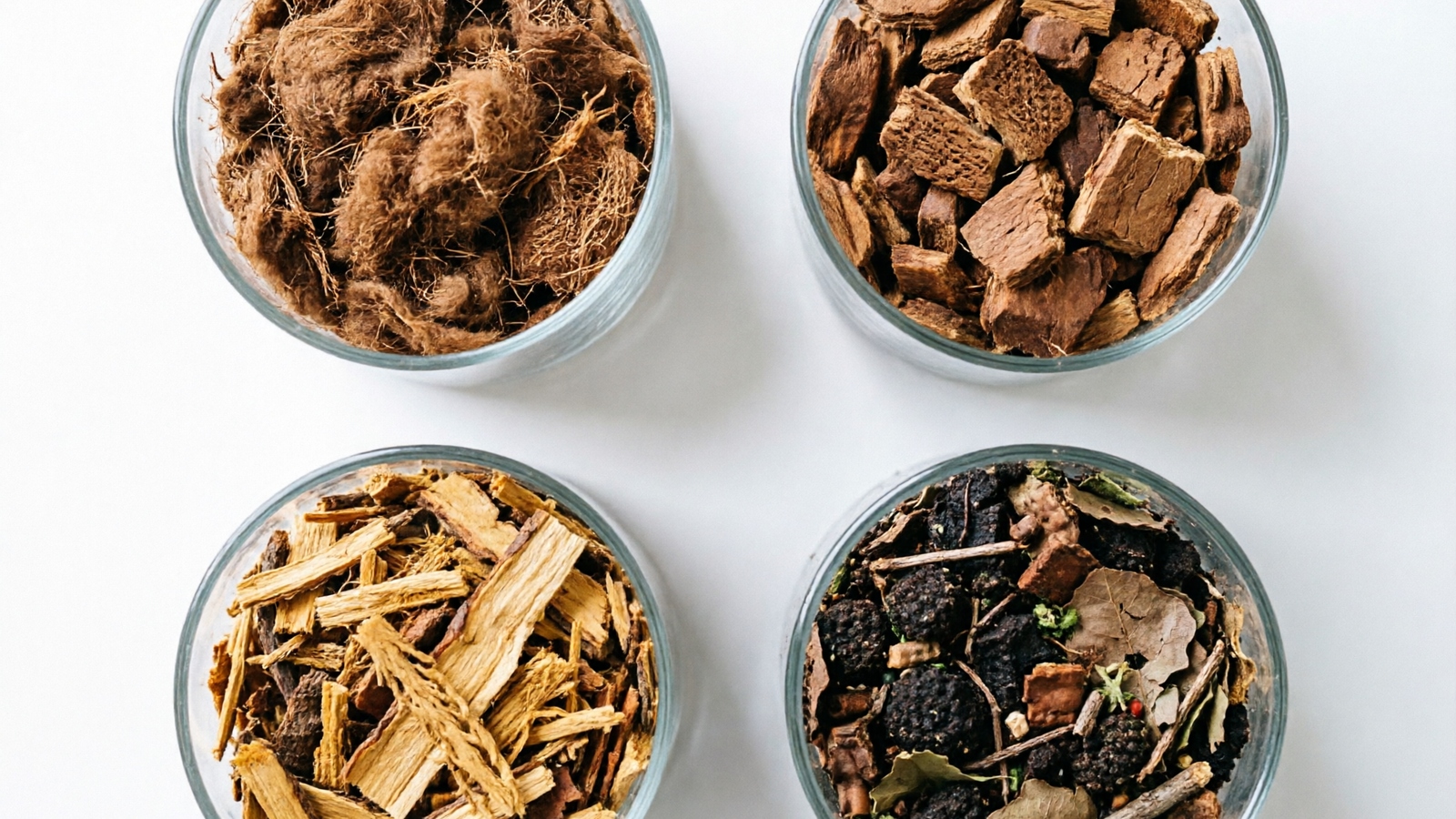
What to Avoid — Dangerous Substrates for Ball Pythons
Some bedding materials that work for other reptiles are dangerous for ball pythons. Knowing what to avoid is as important as picking the right product.
| Material | Risk | Verdict |
|---|---|---|
| Sand or gravel | Impaction — fatal intestinal blockages (also dangerous for hedgehog bedding) (VCA Hospitals) | AVOID |
| Pine or cedar shavings | Toxic phenol oils cause respiratory and hepatic damage in reptiles (Merck Veterinary Manual) | AVOID |
| Aspen bedding | Molds rapidly in 60-80% humidity | AVOID |
| Astro-turf or carpet | Abdominal irritation, bacterial trapping | AVOID |
| Newspaper or paper towels | No humidity, no burrowing — stress | TEMPORARY only |
| Walnut shells | Sharp edges, impaction risk | AVOID |
Can Ball Pythons Have Aspen Bedding?
Aspen bedding is popular for arid snakes but fails for ball pythons. The 60-80% humidity range that ball pythons need causes aspen to mold within days. Multiple keepers on reptile forums have reported white and green mold patches appearing within one week of using aspen in humid enclosures.
The mold releases spores that can cause respiratory infections in snakes (VCA Hospitals — Respiratory Infections in Reptiles). Unlike coconut fiber, which resists mold due to natural antifungal properties, aspen provides an ideal growing medium for fungi in warm, humid conditions.
Paper towels are acceptable during quarantine or medical treatment but should never be used long-term. They provide zero humidity support and prevent burrowing, which causes chronic stress (ReptiFiles). Other reptile keepers use sand for desert species, but ball pythons are not desert animals — sand causes fatal impaction when swallowed during feeding strikes.
Quick Comparison — All 10 Ball Python Substrates
When choosing a reptile substrate for snakes, humidity retention and safety are the two factors that matter most. Every substrate on this list was evaluated against real keeper reviews and safety data. The comparison below covers all ten products across five substrate types.
| # | Product | Type | Key Feature | Best For |
|---|---|---|---|---|
| 1 | Zoo Med Eco Earth | Coconut fiber | gold standard | Most keepers |
| 2 | ReptiChip Premium Coconut Chip | Coconut chips | chunky texture | Better drainage |
| 3 | ReptiChip Loose Coconut Chip | Coconut chips loose | ready-to-use | No-prep convenience |
| 4 | Zilla Coconut Husk Brick | Coconut brick | budget brick | Budget alternative |
| 5 | Zoo Med Premium Reptile Bark | Fir bark | forest floor | Natural appearance |
| 6 | Fluker’s Cypress Bedding | Cypress mulch | natural cypress | Cypress preference |
| 7 | Sukh Sphagnum Moss | Sphagnum moss | humid hides | Humid hide fill only |
| 8 | Bio Dude Terra Sahara | Bioactive | self-cleaning | Bioactive setups |
| 9 | MAQIHAN Oak Leaf Litter | Leaf litter | bioactive top | Bioactive top layer |
| 10 | Exo Terra Sub Stratum | Volcanic drainage | nutrient-rich | Bioactive drainage layer |
Coconut Fiber — The Gold Standard for Ball Python Bedding
When selecting a reptile substrate for snakes, coconut fiber (coco coir) is the most recommended ball python substrate across reptile forums, breeder communities, and veterinary care guides. It holds humidity, supports burrowing, resists mold, and costs less per quart than any other natural option. When setting up your ball python tank, ball python coconut fiber is the safest starting point for reliable humidity retention.
1. Zoo Med Eco Earth — Top Pick for Most Keepers
Zoo Med Eco Earth is the most proven ball python coconut fiber substrate. It comes in compressed bricks that expand when soaked in water, making storage easy before use. The fine texture holds humidity well and allows ball pythons to burrow naturally.
What we like: An owner confirmed: “Great product, used for python enclosure.” A buyer noted “quality of this was great.” The fine coconut fiber maintains consistent humidity in the 60-80% range that ball pythons need. The compressed brick format stores flat and expands to roughly eight quarts when hydrated.
What could be better: A reviewer called it “a real pain to prepare” because the bricks require soaking before use. A buyer warned about inconsistent compression, reporting they “bought two packages and one contained a single brick that was not compressed — it was loose coir.” Multiple keepers note the 3-pack comes as one large bag, not individually wrapped bricks.
For most ball python keepers, Zoo Med Eco Earth delivers the best balance of humidity retention, burrowing support, and value. The same best substrate for ball python works across multiple species — keepers who also maintain a bearded dragon substrate setup often stock Eco Earth for both enclosures.
2. Zilla Coconut Husk Brick — Budget Alternative
The Zilla Coconut Husk Brick is a budget-friendly alternative to Eco Earth with a similar compressed brick format. It expands when soaked and provides fine coconut fiber that works well for ball python enclosures.
What we like: An owner noted it expanded well: “great coco fiber, expanded to fill my 22G, good quality, not dusty.” A buyer called it “very good” and said it works “for a low price.” The coconut husk texture provides a slightly chunkier feel than Eco Earth, which some keepers prefer.
What could be better: A frustrated reviewer reported it “was full of strips of plastic.” A buyer found “rocks inside” the brick. A keeper warned it “smells horrible — it was moldy when I rehydrated it.” Quality control is inconsistent, and the hydration process can be messier than expected.
The Zilla brick works well for keepers who want a low-cost option with a slightly different texture than Eco Earth. Always inspect the expanded material for foreign objects before placing it in any enclosure.
3. ReptiChip Loose Coconut Chip — Ready-to-Use Convenience
ReptiChip’s loose coconut chip substrate skips the brick-soaking step entirely. It is the ready-to-use option for keepers who want chunky coconut bedding without the prep work.
What we like: An owner said it is “my favorite bedding for my ball python, the larger chunks seem to be most comfortable for him.” A buyer confirmed it “holds humidity for ball python.” The chunky ball python coconut fiber provides better drainage than fine fiber and holds burrow shapes well.
What could be better: Multiple reviewers found foreign material. A reviewer warned to “make sure to sift through before using — you do have to be mindful of small bits of plastic.” A buyer reported finding “pieces of metal” in the bag. Some keepers experienced mold issues in humid environments.
The loose format is convenient but always inspect and sift before adding to your enclosure. The chunky coconut chips work especially well for adult ball pythons that create and maintain burrow structures.
Coconut Chips — Better Drainage for Humid Enclosures
Coconut chips differ from fine coconut fiber in a way that matters for high-humidity enclosures. The larger chunk size allows excess water to drain through rather than pooling at the bottom. This prevents anaerobic bacteria and sour odor that can develop in fine fiber kept too wet.
4. ReptiChip Premium Coconut Chip — Best Drainage Option
ReptiChip Premium Coconut Chip is the most established coconut chip substrate. It comes in a compressed 72-quart format that expands significantly when hydrated, making it the highest-volume coconut chip option available.
What we like: A ball python breeder with 17 snakes confirmed: “Good stuff, perfect for ball pythons, great to keep humidity.” Another keeper called it “the best balance of value and quality.” The chunky chip texture drains excess water better than fine fiber while still maintaining ambient humidity.
What could be better: Contamination reports are the biggest concern. An owner warned: “This stuff has plastic pieces all through it.” A buyer reported “mites” after switching to ReptiChip. Several reviewers noted the hydration instructions are only available via YouTube, with nothing included in the package.
ReptiChip works best for keepers who maintain high-humidity enclosures and need better drainage than fine coconut fiber. Always inspect the expanded material and rinse before adding to your ball python enclosure. Chunky coconut chips reduce the frequency of full substrate changes because they resist compaction and maintain structure longer than fine fiber.
Ball Python Cypress Mulch — Natural Forest Floor
Ball python cypress mulch and bark substrates create a natural forest-floor aesthetic that transforms the look of an enclosure. They hold humidity and release a pleasant earthy scent. However, cypress mulch carries more controversy than coconut-based options due to mold risk and product quality concerns.
5. Zoo Med Premium Reptile Bark — Natural Bark Option
Zoo Med Premium Reptile Bark is a well-regarded bark substrate. Made from fir bark, it provides a natural forest-floor appearance with good humidity retention. A tortoise owner called it “best enclosure substrate there is.”
What we like: An owner confirmed their snake “LOVES the Reptibark compared to coconut substrate.” The natural bark pieces look professional in display enclosures. The earthy aroma is pleasant and the larger pieces resist being accidentally ingested during feeding.
What could be better: Dust is the most common complaint. A reviewer said it “works good but wish it wasn’t so dusty.” An alarming report noted finding “glochids” — tiny barbed spines from prickly pear cactus — embedded in the bark pieces. Most concerning, an owner reported that “after one and a half weeks in our ball python’s tank, it had molded” and their snake developed a skin infection. Moldy substrate is a documented cause of dermatitis and respiratory disease in captive snakes (Merck Veterinary Manual).
Reptile bark looks great but carries real risks in humid ball python enclosures. It works best for display tanks with moderate humidity or as a top layer over coconut fiber.
Inspect each piece for foreign objects before use. The mold risk means you need to monitor the substrate surface weekly for any signs of fungal growth.
6. Fluker’s Cypress Bedding — Budget Cypress Mulch
Fluker’s Cypress Bedding is the only dedicated cypress mulch product on this list . It provides a natural cypress appearance but carries the lowest rating of any product here.
What we like: A boa keeper noted it works well when “put on top of a layer of coconut coir bedding to enhance the humidity.” The natural ball python cypress mulch aroma is strong and pleasant. The mulch texture looks authentic in forest-themed enclosures.
What could be better: The most common complaint is weight fraud. Multiple reviewers reported receiving far less than the advertised 10 pounds. A reviewer said “these bags are not 10 pounds, not even close — 2 pounds at the most.” A buyer called it “very misleading and overpriced for what is delivered.” An owner warned “the mulch was way too sharp to use for reptiles without hurting them.”
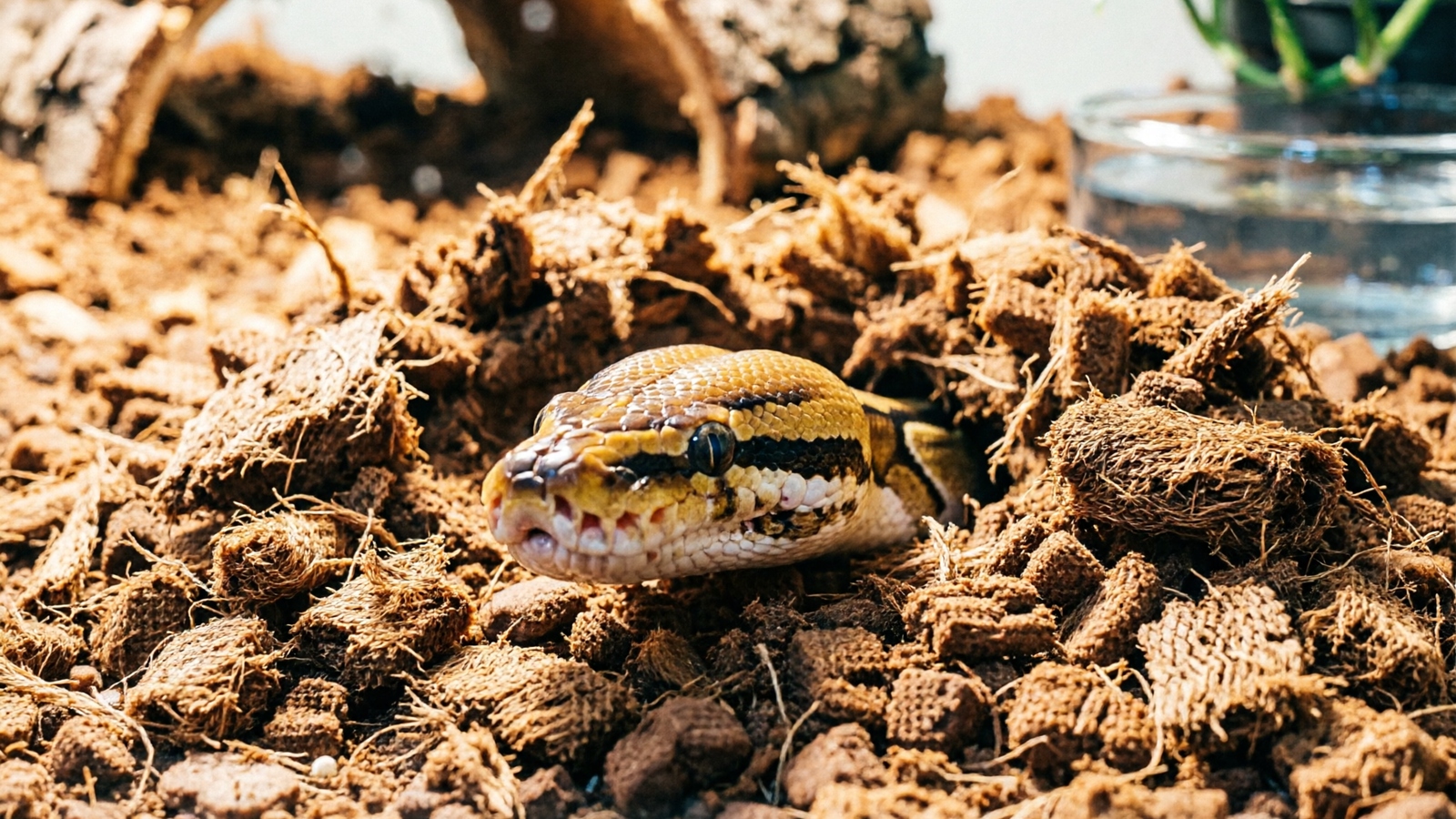
Bioactive and Specialty Ball Python Substrates
Bioactive substrate setups for ball python enclosures use live plants, microfauna like isopods and springtails, and layered materials to create a self-cleaning ecosystem. They represent the most advanced approach to reptile husbandry and are growing rapidly in popularity. Naturalistic setups pair especially well with the best ball python hides for a cohesive enclosure design.
A bioactive substrate ball python enclosure requires more initial investment but reduces long-term maintenance significantly. The cleanup crew handles waste breakdown while live plants oxygenate the substrate and maintain healthy bacteria levels (PetMD — Bioactive Reptile Enclosures).
7. Bio Dude Terra Sahara — Premium Bioactive Substrate
The Bio Dude Terra Sahara is a purpose-built bioactive substrate with the highest per-unit price on this list. It comes pre-mixed with the right ratio of soil, sand, and organic matter for arid and semi-arid bioactive setups.
What we like: An enthusiastic owner said “this substrate is absolutely amazing — I will never go through a different company for substrate.” A buyer confirmed their reptile “was immediately exploring her digs” after switching. The pre-mixed formula eliminates the guesswork of DIY bioactive recipes.
What could be better: The price is the most common complaint. Mold is another concern — a reviewer noted it “needs to be replaced every one to two months to avoid mold.” A keeper who received a damaged bag said “a lot of mine was lost in shipping” and the company never responded.
8. Exo Terra Sub Stratum — Volcanic Drainage Layer
Exo Terra Sub Stratum is a volcanic rock-based substrate designed as a drainage layer for bioactive setups. It is a specialty product for keepers building multi-layer bioactive enclosures.
What we like: An owner noted it is “lightweight and easy to use, allowing me to skip adding charcoal because the product already has beneficial nutrients.” A buyer confirmed “my isopods and small plants love this stuff.” The volcanic material provides excellent drainage and aeration for plant roots.
What could be better: The most common complaint is inaccurate sizing. A reviewer called it a “size scam” and reported getting “a tiny bag in the mail.” A buyer noted plants in this substrate “def grow slower” compared to other brands. At the price point, the volume inconsistency is frustrating.
9. Sukh Sphagnum Moss — For Humid Hides Only
Sukh Sphagnum Moss is the most widely discussed sphagnum product. It is essential for humid hides but should never be used as full enclosure substrate. The fine moss retains extreme moisture levels that are too wet for open enclosure floors.
What we like: An owner raved that “this stuff fluffed up way more than I thought” and confirmed it expanded to fill their entire 40-gallon tank setup. A buyer called it “10 out of 10, definitely would buy again.” The natural green color looks authentic in humid hide chambers.
What could be better: A reviewer who soaked the moss reported it “stinks so bad — the smell is so disgusting I had to throw it away.” Others found the vacuum-sealed packaging messy to open partially. The product dries out quickly outside of a humid hide, requiring frequent rehydration.
10. MAQIHAN Oak Leaf Litter — Bioactive Top Layer
MAQIHAN Oak Leaf Litter provides the decorative and functional top layer for bioactive enclosures. The dried oak leaves decompose slowly, feeding the cleanup crew while providing natural cover for your snake.
What we like: An owner said “it’s a good value for your money compared to other reptile stores.” A buyer confirmed “my critters love this” in their isopod tank. The whole oak leaves look natural and provide hiding spots for microfauna.
What could be better: Safety is the primary concern. Multiple reviewers found dangerous non-oak leaves mixed in. An owner warned they found what “looked and felt like a holly leaf in this pack — which is poisonous to reptiles.” A buyer reported “the majority of these leaves are sharp and pointy” with “incredibly sharp edges making this completely unsuitable.”
Coconut-based products dominate across the reptile hobby, from ball pythons to leopard gecko substrate setups, because they work for nearly every reptile.
How to Set Up Ball Python Substrate — Step-by-Step
Follow these steps for a safe, effective ball python substrate installation:
| Step | Action | Details |
|---|---|---|
| 1 | Clean the enclosure | Remove all old substrate. Wash the floor and walls with a 10% bleach solution, rinse thoroughly, and dry completely (Merck Veterinary Manual) |
| 2 | Add drainage layer (bioactive only) | Place 1-2 inches of expanded clay balls or Exo Terra Sub Stratum at the bottom, covered by a mesh screen barrier |
| 3 | Add base substrate | Spread 2-4 inches of coconut fiber or coconut chips evenly across the floor. Moisten with dechlorinated water until it holds shape when squeezed but does not drip (ReptiFiles) |
| 4 | Place hides and decor | Position warm hide over the heat source and cool hide on the opposite end. Substrate should come up to but not cover the hide entrances |
| 5 | Check humidity levels | Place a digital hygrometer at substrate level to monitor your ball python substrate humidity. Target 60-80% — add moisture if below 60% or increase ventilation if above 80% (ReptiFiles) |
| 6 | Introduce your snake | Allow the substrate to settle for 24 hours with the heat source running before placing your ball python in the enclosure |
| 7 | Establish a cleaning routine | Spot-clean waste daily with a scoop. Replace the top half of substrate every 2-3 months. Full replacement every 3-4 months (ReptiFiles) |
Key Takeaways
Coconut fiber remains the best substrate for ball python keepers who want proven humidity retention. Zoo Med Eco Earth is the most proven option. It holds humidity, supports burrowing, and costs less per quart than any natural alternative.
ReptiChip coconut chips offer better drainage for keepers who struggle with over-saturation. The chunky texture holds burrow shapes and reduces the risk of soggy bottom zones. Always inspect and sift any ReptiChip product before use.
A bioactive substrate ball python setup with Bio Dude Terra Sahara represents the advanced end of substrate care. The self-cleaning system with isopods and springtails reduces maintenance long-term. Pair a bioactive substrate ball python setup with natural hides and leaf litter for the most naturalistic enclosure possible.
Avoid sand, pine, cedar, and aspen entirely. Paper towels work only during quarantine. The best ball python substrate setup starts with coconut fiber and adjusts based on your humidity readings.
Ball Python Substrate Safety Checklist
Before placing any substrate in your ball python enclosure, verify these items:
✅ Use coconut fiber or coconut chips as primary substrate (ReptiFiles)
✅ Maintain 2-4 inches depth for burrowing (ReptiFiles)
✅ Target 60-80% ambient humidity at substrate level (ReptiFiles)
✅ Spot-clean waste daily, full replacement every 3-4 months
✅ Sift all coconut chip products for foreign objects before use
✅ Inspect bark and mulch products for sharp pieces or non-plant contaminants
✅ Place a humid hide with sphagnum moss on the warm side during shedding
✅ Verify substrate is damp but not dripping — squeeze test: holds shape, no water drips
❌ Never use pine or cedar shavings — toxic phenol oils cause liver and respiratory damage (Merck Veterinary Manual)
❌ Never use sand or gravel — fatal impaction risk when swallowed during feeding strikes (VCA Hospitals)
❌ Never use aspen bedding — molds rapidly in the 60-80% humidity ball pythons require
❌ Never use sphagnum moss as full enclosure substrate — too wet, causes respiratory issues
❌ Never use substrate deeper than 4 inches — anaerobic bacteria risk at the bottom (ReptiFiles)
❌ Never skip the quarantine substrate change — paper towels are temporary only, not permanent (VCA Hospitals)
❌ Never place food directly on substrate — use feeding tongs or a separate feeding tub to prevent ingestion
❌ Never reuse substrate from a sick snake enclosure — cross-contamination risk
Frequently Asked Questions
What is the best substrate for a ball python?
Coconut fiber is the community gold standard for ball python substrate. It holds humidity, supports burrowing, and is easy to spot-clean.
Zoo Med Eco Earth is the most proven option. Coconut chips like ReptiChip offer better drainage for keepers who over-saturate fine fiber. For advanced keepers, bioactive substrates create self-cleaning ecosystems.
Can ball pythons have aspen bedding?
Aspen bedding is not recommended for ball pythons. It molds quickly in the 60-80% humidity range that ball pythons require.
The mold releases spores that can cause respiratory infections. Unlike coconut fiber, which has natural antifungal properties, aspen provides an ideal growing medium for fungi in warm, humid conditions (ReptiFiles). Stick with coconut fiber, coconut chips, or cypress mulch instead.
How deep should ball python substrate be?
Two to four inches of substrate provides enough depth for burrowing while allowing spot-cleaning. Hatchlings do well with two inches while adults need three to four inches.
Any deeper than four inches and you risk anaerobic bacteria forming at the bottom. Measure from the substrate surface to the enclosure floor, not the depth of the glass.
Can I use paper towels as ball python substrate?
Paper towels are acceptable as temporary ball python bedding during quarantine or medical treatment only. They do not hold humidity, do not allow burrowing, and cause stress long-term.
Switch to coconut fiber or coconut chips as soon as quarantine ends. Long-term bare enclosures lead to retained shed, stress-related anorexia, and skin damage (VCA Hospitals). Bare enclosures or paper towels should never be permanent solutions for ball pythons.
What goes in a ball python humid hide?
Damp sphagnum moss placed inside a hide on the warm side creates a shedding microclimate. The moss should be moist enough to hold together when squeezed but not dripping wet.
Never use sphagnum moss as full enclosure substrate — it is too wet and can cause respiratory issues when used as floor covering. Replace the moss inside the hide every three to five days.