Introduction
One of the first questions every prospective rabbit owner asks: how long will my rabbit live? The answer might surprise you — pet rabbits can live 8–12 years on average, with some reaching 14 years or more. That’s longer than many dogs and cats, making rabbits a significant long-term commitment.
But there’s a catch. A rabbit’s lifespan varies dramatically based on breed, living situation, and care quality. A Flemish Giant might live 5–8 years, while a Holland Lop can reach 12 years. The average rabbit lifespan in captivity ranges from 5–8 years outdoors to 8–14 years indoors.
Understanding what affects rabbit longevity helps you make informed decisions and maximize your time together. This guide covers average lifespan data, breed-by-breed comparisons, the indoor vs outdoor debate, and practical steps to help your rabbit live a longer, healthier life.
Average Rabbit Lifespan — What to Expect
How Long Do Rabbits Live as Pets?
The average pet rabbit lives 8–12 years, with most reaching about 10 years with standard care. Compared to other small pets, rabbits are relatively long-lived:
| Pet | Average Lifespan |
|---|---|
| Hamster | 2–3 years |
| Guinea pig | 4–8 years |
| Ferret | 6–10 years |
| Rabbit | 8–12 years |
| Cat | 12–18 years |
This extended lifespan means bringing a rabbit home is a decade-long commitment — longer than many people realize.
Rabbit Life Expectancy by Living Situation
Where your rabbit lives dramatically affects how long they live:
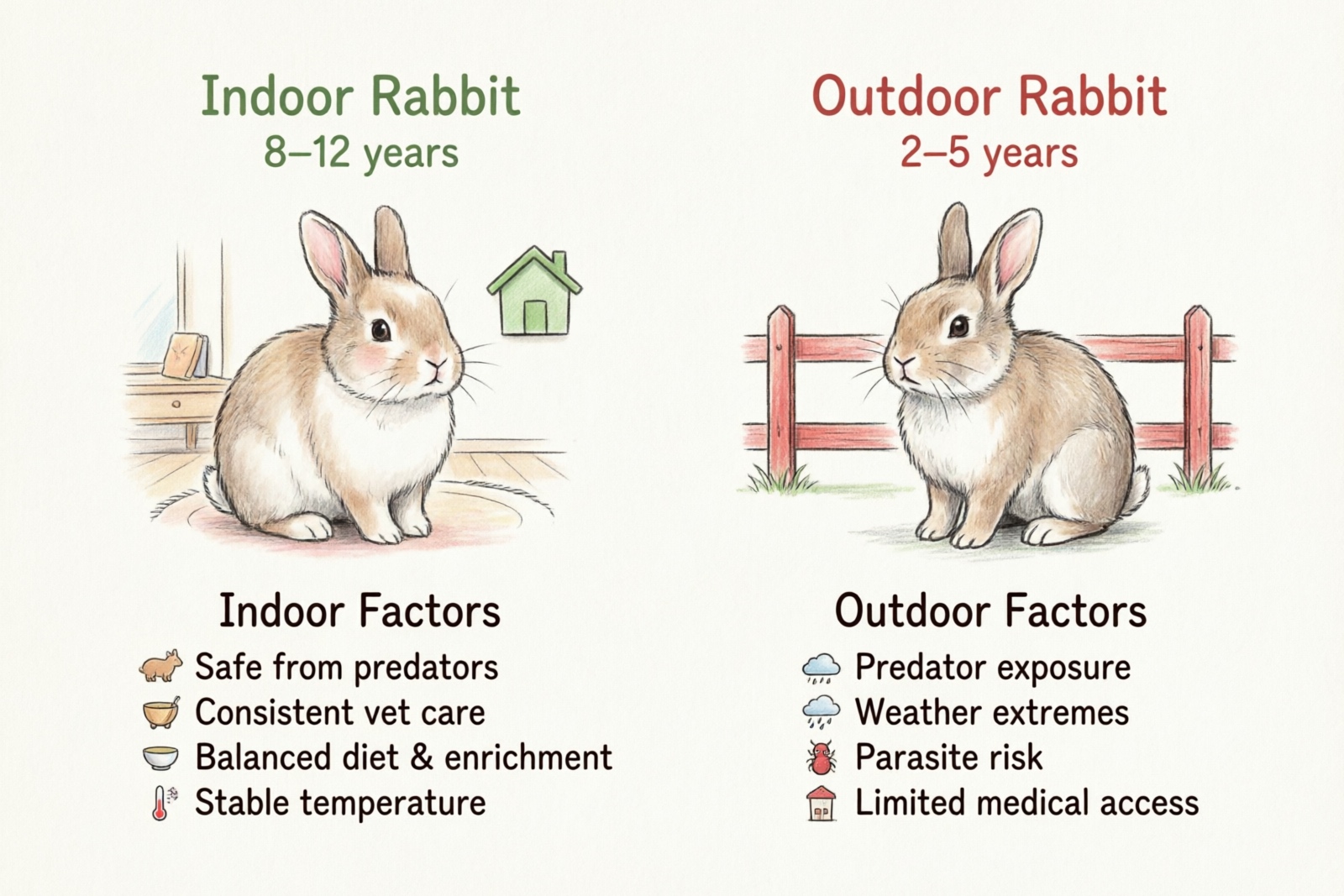
- Indoor pet rabbits: 8–14 years (longest lifespan)
- Outdoor rabbits with shelter: 5–8 years
- Wild rabbits: 1–2 years
The difference between indoor and outdoor rabbit lifespans can be 2–6 years. Temperature control, protection from predators, and easier health monitoring all contribute to indoor rabbits living significantly longer.
What Changed? The Lifespan Revolution
Rabbits haven’t always lived this long. In the 1960s, pet rabbits averaged only 5–6 years. Several factors have nearly doubled their lifespan since then:
- Better veterinary knowledge — Exotic pet medicine has advanced significantly
- Indoor living — More owners keep rabbits indoors, protecting them from extreme temperatures and predators
- Improved diet understanding — We now know hay should make up 80% of a rabbit’s diet
- Spaying and neutering — Routine sterilization eliminates reproductive cancer risks
Rabbit Lifespan by Breed — Complete Comparison
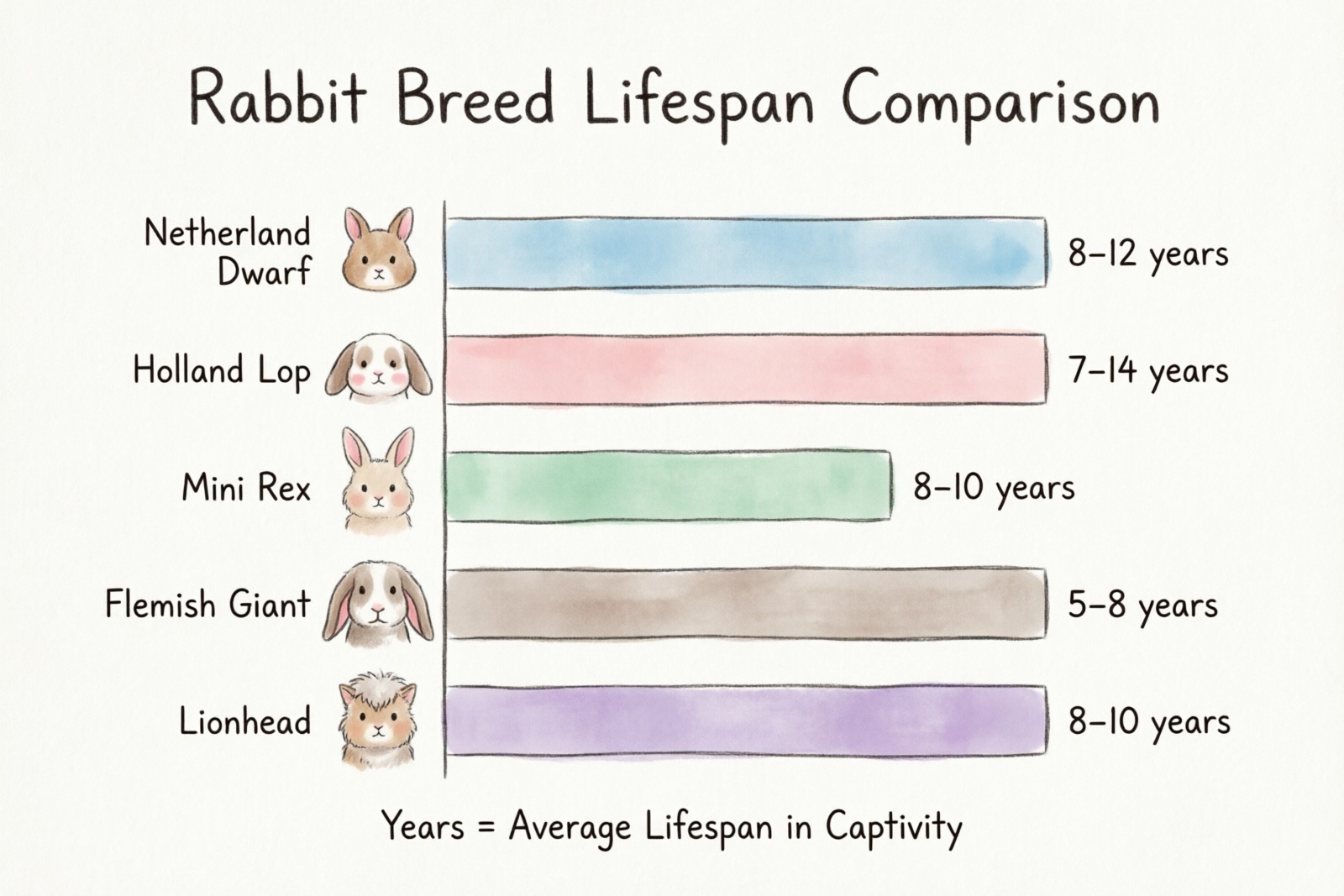
Not all rabbit breeds live equally long. In general, smaller breeds live longer than larger breeds, following a pattern seen across many animal species.
Flemish Giant Rabbit Lifespan
Lifespan: 5–8 years Size: 12–15+ lbs
The Flemish Giant is one of the largest rabbit breeds, and its size comes with a shorter lifespan. Large bodies put more strain on the heart and joints, leading to earlier onset of age-related problems. Despite their shorter years, Flemish Giants are known for their gentle, docile temperaments, making them wonderful companions.
Health risks: Joint problems (arthritis and sore hocks), heart disease, bloat (GI stasis — their large digestive system is vulnerable), and obesity
What you can do: Keep your Flemish Giant at a healthy weight, provide soft flooring to protect their hocks, and schedule more frequent vet visits. Even though their lifespan is shorter, attentive care can help them reach the upper end of their range.
Lionhead Rabbit Lifespan
Lifespan: 7–10 years Size: 2.5–3.5 lbs
Lionhead rabbits are small, compact breeds with distinctive wooly manes. Their smaller size contributes to a moderate lifespan. The main health concern with Lionheads is their long fur, which can cause wool block if they ingest too much while grooming.
Health risks: Wool block (hairballs), dental problems, matted fur
Daily brushing is essential for Lionheads to prevent wool block and skin issues. For complete grooming guidance, see our rabbit grooming guide.
Lop Rabbit Lifespan (Holland Lop / Mini Lop)
Lifespan: 7–12 years Size: 3–6 lbs (varies by variety)
Lop rabbits, especially Holland Lops and Mini Lops, are among the longest-lived breeds. Their moderate size and relatively healthy genetics contribute to their longevity. However, their characteristic droopy ears come with increased risk of ear infections.
Health risks: Ear infections (due to folded ear canal), dental malocclusion, GI stasis
Check your Lop’s ears weekly for signs of infection — redness, discharge, or head shaking.
Dwarf Rabbit Lifespan (Netherland Dwarf)
Lifespan: 7–10 years Size: 1.1–2.5 lbs
Netherland Dwarfs are tiny but feisty. Their small size usually means a longer lifespan, but their compact skulls can lead to dental problems because their teeth don’t always align properly.
Health risks: Dental malocclusion, fragile bones, heat sensitivity
Mini Rex Rabbit Lifespan
Lifespan: 8–10 years Size: 3.5–4.5 lbs
Mini Rex rabbits have a reputation for good health and moderate longevity. Their short, plush coat requires minimal grooming, which reduces the risk of wool block.
Health risks: Sore hocks (their feet lack fur pads), heat sensitivity
Provide soft flooring for Mini Rex rabbits to prevent pressure sores on their feet.
Indoor vs Outdoor Rabbit Lifespan
Indoor Rabbits Live Significantly Longer
The statistics are clear: indoor rabbits live 2–6 years longer than outdoor rabbits. If you want to learn how to extend rabbit lifespan, keeping them indoors is the single most effective decision you can make.
Why indoor rabbits live longer:
- Temperature control: Rabbits are extremely sensitive to heat. Temperatures above 80°F (27°C) can cause heatstroke, which is often fatal. Indoor environments stay cooler in summer.
- Predator protection: Outdoor rabbits face constant stress from nearby predators — foxes, hawks, neighborhood cats, and dogs. Even if a predator doesn’t get in, the stress weakens the rabbit’s immune system.
- Better health monitoring: Indoor rabbits are part of your daily life. You notice subtle changes in appetite, behavior, and litter box habits that signal early illness.
- Reduced disease exposure: Outdoor rabbits are exposed to more parasites, bacteria, and viruses.
Heatstroke is a leading cause of death in outdoor rabbits. Unlike humans, rabbits can’t sweat and can’t pant effectively. They rely on ear blood vessels to dissipate heat — and in a hot outdoor hutch, this isn’t enough.
If You Must Keep Your Rabbit Outdoors
If outdoor housing is your only option, take these precautions to improve safety:
- Provide shade and ventilation — Never place a hutch in direct sunlight
- Use cooling techniques — Frozen water bottles, ceramic tiles, and fans (not blowing directly on the rabbit)
- Predator-proof the hutch — Hardware cloth (not chicken wire), secure latches, elevated design
- Winter protection — Insulate the hutch; temperatures below 40°F (4°C) are dangerous
- Daily interaction — Spend time with your rabbit every day to monitor health and provide socialization
For outdoor housing guidance, see our DIY rabbit hutch guide. But remember: even the best outdoor setup can’t match the lifespan benefits of indoor living.
Factors That Affect Rabbit Lifespan
Diet and Nutrition
Diet is the foundation of rabbit health. A proper rabbit diet follows the 80-10-5-5 rule, which is essential for long-term health and longevity:
- 80% hay: Unlimited grass hay (timothy, orchard, meadow) keeps digestion moving and wears down constantly growing teeth
- 10% fresh vegetables: Leafy greens like romaine, cilantro, and parsley
- 5% pellets: High-quality, plain pellets (no seeds, nuts, or colored bits)
- 5% or less treats: Small pieces of fruit, carrots, or commercial treats
Hay is non-negotiable. Without enough fiber, rabbits develop GI stasis — a deadly condition where the digestive system stops moving.
We recommend Oxbow Garden Select Adult Rabbit Food ($21.67, 4.8 stars) as a high-quality pellet base. Pair it with Oxbow Orchard Grass Hay ($25.49, 4.6 stars) for variety and palatability. Use a Rabbit Hay Feeder with Metal Frame ($17.99, 4.6 stars) to keep hay clean and accessible. For complete dietary guidance, see our rabbit diet guide.
Exercise and Space
Rabbits need 3–4 hours of out-of-cage exercise daily. Without adequate activity, they become obese, develop weak bones, and may become depressed.
Provide a rabbit-proofed area where they can hop, binky, and explore. Some owners take rabbits outdoors on harnesses — the Niteangel Adjustable Soft Harness ($9.99, 4.1 stars) is designed for small animals. Important: Several users report rabbits can slip out of harnesses. Always test indoors first and supervise closely.
For enrichment ideas, see our rabbit toys guide.
Veterinary Care
Rabbits need regular veterinary care from an exotic animal specialist:
- Annual wellness exams for young rabbits
- Semi-annual exams starting at age 5
- RHDV2 vaccination — This deadly virus has spread across North America; vaccination is now recommended for all rabbits
- Blood work to detect early kidney or liver issues
Living Environment
A clean, spacious environment prevents respiratory infections and stress:
- Daily litter box cleaning prevents ammonia buildup
- Weekly full cage cleaning maintains hygiene
- Proper ventilation without drafts
Litter training your rabbit makes cage cleaning much easier. The Lixit Corner Litter Pan ($12.99, 4.4 stars) fits neatly in cage corners and many rabbits take to it quickly. See our rabbit litter training guide for step-by-step instructions. For cage setup, see our rabbit cage setup guide.
Spaying and Neutering
This is one of the most impactful lifespan decisions you can make:
- Unspayed female rabbits: 60–80% risk of uterine cancer by age 4
- Spayed females: Cancer risk eliminated; lifespan extended by 1–3 years
- Neutered males: Reduced aggression, no testicular cancer risk, easier litter training
Spaying isn’t just about preventing unwanted litters — it’s about preventing cancer. Most veterinarians recommend spaying females around 4–6 months of age.
Common Health Problems That Shorten Rabbit Lifespan
Understanding the most common rabbit health issues helps you catch problems early.
Digestive Issues (GI Stasis)
GI stasis is the #1 cause of death in pet rabbits. The digestive system stops moving, causing painful gas, toxins to build up, and liver damage. Without treatment, death can occur within 24–48 hours.
Symptoms: Not eating, reduced or no fecal pellets, hunched posture, loud tooth grinding (pain)
Prevention: Unlimited hay, daily exercise, monitoring food intake and fecal output
Dental Problems
Rabbit teeth grow continuously. Without enough hay to wear them down, teeth become overgrown, causing painful abscesses and preventing eating.
Symptoms: Drooling, dropping food, weight loss, reduced appetite
Prevention: Unlimited hay, chew toys, annual dental checks
The Grddaef 20 PCS Bunny Chew Toys ($9.99, 4.6 stars) provide safe gnawing material to help wear down teeth.
Respiratory Infections
Upper respiratory infections (“snuffles”) are common in rabbits kept in dirty environments.
Symptoms: Sneezing, nasal discharge, watery eyes
Prevention: Clean living environment, proper ventilation, low-stress conditions
Cancer
Uterine cancer is extremely common in unspayed females. Testicular cancer occurs in unneutered males.
Prevention: Spay and neuter
Obesity
Overweight rabbits develop joint problems, heart disease, and difficulty grooming, which leads to flystrike.
Prevention: Proper diet, unlimited hay, daily exercise
For comprehensive health information, see our rabbit health guide.
How to Help Your Rabbit Live Longer
Feed the Right Diet
- Unlimited grass hay (80% of diet) — the single most important factor
- High-quality pellets (5%) — plain, no seeds or treats mixed in
- Fresh vegetables (10–15%) — leafy greens daily
- Limited fruit/treats (<5%) — occasional small pieces
Oxbow Garden Select Rabbit Food ($21.67) and Oxbow Orchard Grass Hay ($25.49) form an excellent dietary foundation.
Keep Your Rabbit Active
- 3–4 hours daily of supervised free-roaming time
- Provide tunnels, platforms, and cardboard boxes to explore
- Consider safe outdoor time on a harness (test indoors first)
Maintain Clean Living Conditions
- Daily: Spot-clean litter box, refill hay, fresh water
- Weekly: Full cage clean, wash food bowls
- Use a Corner Litter Pan ($12.99) and Hay Feeder ($17.99) to keep food and waste separate.
Groom Regularly
- Weekly brushing (daily for long-haired breeds)
- Nail trimming every 4–6 weeks
- Check ears, teeth, and skin during grooming sessions
The Rabbit Grooming Kit ($8.99, 4.4 stars) includes a brush and nail clippers — the essentials for rabbit care.
Schedule Regular Vet Visits
- Annual exams for rabbits under 5
- Semi-annual exams for seniors (5+)
- RHDV2 vaccination
- Spay/neuter by 6 months
Signs Your Rabbit Is Aging
Physical Changes
As rabbits enter their senior years (typically 5–6 years and older), you may notice:
- Reduced activity and jumping — Less binkying, slower movements
- Weight changes — Weight gain from reduced activity or weight loss from health issues
- Coat quality decline — Duller, thinner fur
- Slower nail growth — Nails need trimming less frequently
- Graying fur — Especially around the face and paws
Behavioral Changes
- More sleeping — Senior rabbits rest more
- Less interest in interaction — May prefer quiet time
- Appetite changes — May become pickier about food
- Increased dependence — May seek more comfort from owners
What to Do When Your Rabbit Ages
- Increase vet visits to every 6 months
- Adjust diet — Softer hay, easier-to-chew vegetables if needed
- Provide lower platforms — Reduce jumping stress on joints
- Keep environment warm — Older rabbits feel cold more
- Monitor closely for signs of illness
Oldest Rabbits Ever Recorded
Record-Breaking Longevity
The Guinness World Record for the oldest rabbit is 18 years and 10 months, held by a rabbit named Flopsy in Australia. While extraordinary, this demonstrates what’s possible with exceptional care.
Common factors among the longest-lived rabbits include:
- Indoor living their entire lives
- High-quality diet with unlimited hay
- Regular veterinary care and early intervention for health issues
- Spaying/neutering
- Plenty of exercise and social interaction
What We Can Learn
The difference between a rabbit living 5 years versus 15 years comes down to care. The longest-lived rabbits share one thing in common: proactive, attentive owners who catch problems early and maintain strict dietary standards.
What Do Rabbits Usually Die From?
Most Common Causes of Death
Understanding the most common causes of death helps you focus on prevention. Many rabbit deaths are preventable with proper care and awareness.
- GI stasis — The leading cause of death in pet rabbits; often preventable with proper diet and early intervention. The digestive system slows or stops, causing painful gas and toxins to build up rapidly.
- Uterine cancer — Extremely common in unspayed females over 4 years, with 60–80% of unspayed does developing it. Spaying virtually eliminates this risk.
- Respiratory infections — Especially common in rabbits kept in dirty, poorly ventilated environments where ammonia from soiled bedding irritates their delicate respiratory tissues.
- Heart disease — Common in senior rabbits, particularly large breeds. Symptoms include exercise intolerance and breathing difficulty.
- Dental disease — Overgrown teeth cause pain and prevent eating, leading to weight loss, starvation, and secondary GI stasis.
- Accidents — Being stepped on, dropped from heights, or attacked by other household pets like cats and dogs.
- Heatstroke — A major killer of outdoor rabbits in summer. Rabbits cannot cool themselves effectively and can die within hours in hot conditions.
- RHDV2 virus — Rabbit Hemorrhagic Disease Virus Type 2 is highly contagious and often fatal. Vaccination is now widely available and strongly recommended.
Preventable vs Non-Preventable
Understanding which causes are within your control helps you focus your efforts on the most impactful prevention strategies.
Preventable:
- GI stasis (through unlimited hay and daily monitoring)
- Uterine cancer (through spaying females by 6 months)
- Heatstroke (through indoor living and temperature control)
- Most accidents (through supervision and rabbit-proofing your home)
Manageable but not fully preventable:
- Heart disease
- Age-related organ decline
- Some cancers
Common Questions About Rabbit Lifespan (FAQ)
How long do rabbits live as pets?
The average pet rabbit lives 8–12 years. With excellent care, many reach 10–14 years. The oldest recorded rabbit lived nearly 19 years.
What Is the Oldest Rabbit on Record?
The Guinness World Record is 18 years and 10 months, held by an Australian rabbit named Flopsy. Rabbits living 14–16 years are considered exceptional but not impossible.
Do indoor rabbits live longer than outdoor?
Yes. The indoor rabbit lifespan typically reaches 8–14 years, while outdoor rabbits average 5–8 years. Temperature control, predator protection, and better health monitoring all contribute to longer indoor lifespans.
Which rabbit breed lives the longest?
Lop rabbits and Mini Rex tend to live longer (7–12 years), while large breeds like Flemish Giants have shorter lifespans (5–8 years). In general, smaller breeds outlive larger breeds.
How can I tell my rabbit’s age?
Young rabbits are active, have smooth glossy coats, and move freely. Older rabbits show reduced activity, duller coats, graying fur (especially around the face), and may move more slowly or stiffly. Exact age determination without records is difficult.
Does spaying/neutering extend lifespan?
Yes. Spaying eliminates the 60–80% uterine cancer risk in females, potentially extending lifespan by 1–3 years. Neutering males prevents testicular cancer and reduces aggression-related injuries.
Conclusion
Pet rabbits live 8–12 years on average, making them a significant long-term commitment. But with the right care, many rabbits reach 10–14 years — and some have lived nearly 19 years.
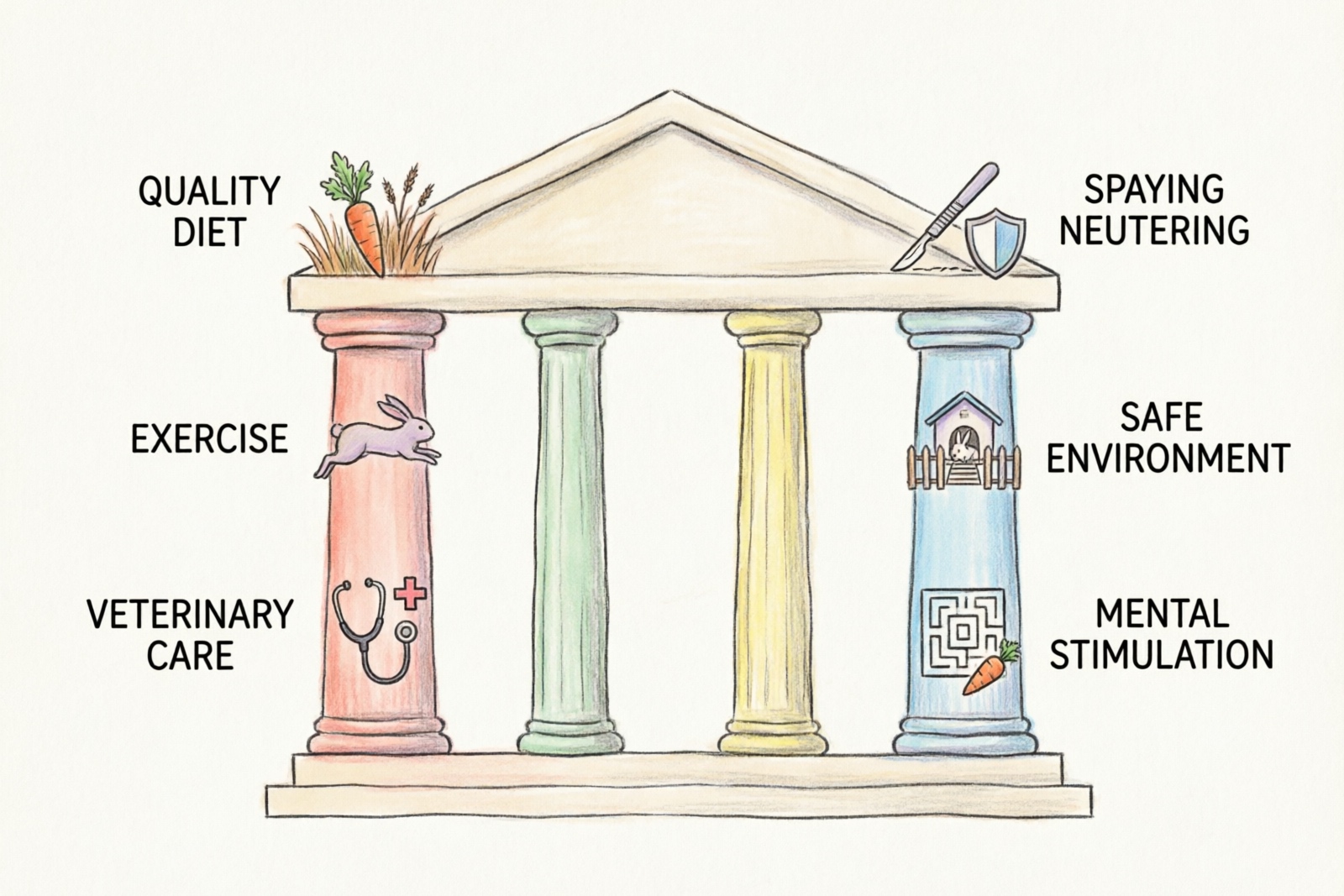
Six pillars of rabbit longevity:
- Diet — Unlimited hay (80% of diet), quality pellets, fresh greens
- Exercise — 3–4 hours daily of free-roaming time
- Environment — Indoor living for temperature control and safety
- Grooming — Regular brushing and nail trims
- Veterinary care — Annual exams, RHDV2 vaccination
- Spaying/neutering — Eliminates reproductive cancer risk
Key actions starting today:
- Keep your rabbit indoors
- Provide unlimited grass hay
- Schedule annual vet visits
- Spay or neuter by 6 months
- Monitor eating and bathroom habits daily
With proper care, your rabbit can be your companion for a decade or more — far longer than most people expect when they bring home that adorable bunny.