Why Your Ball Python Needs the Right Enclosure
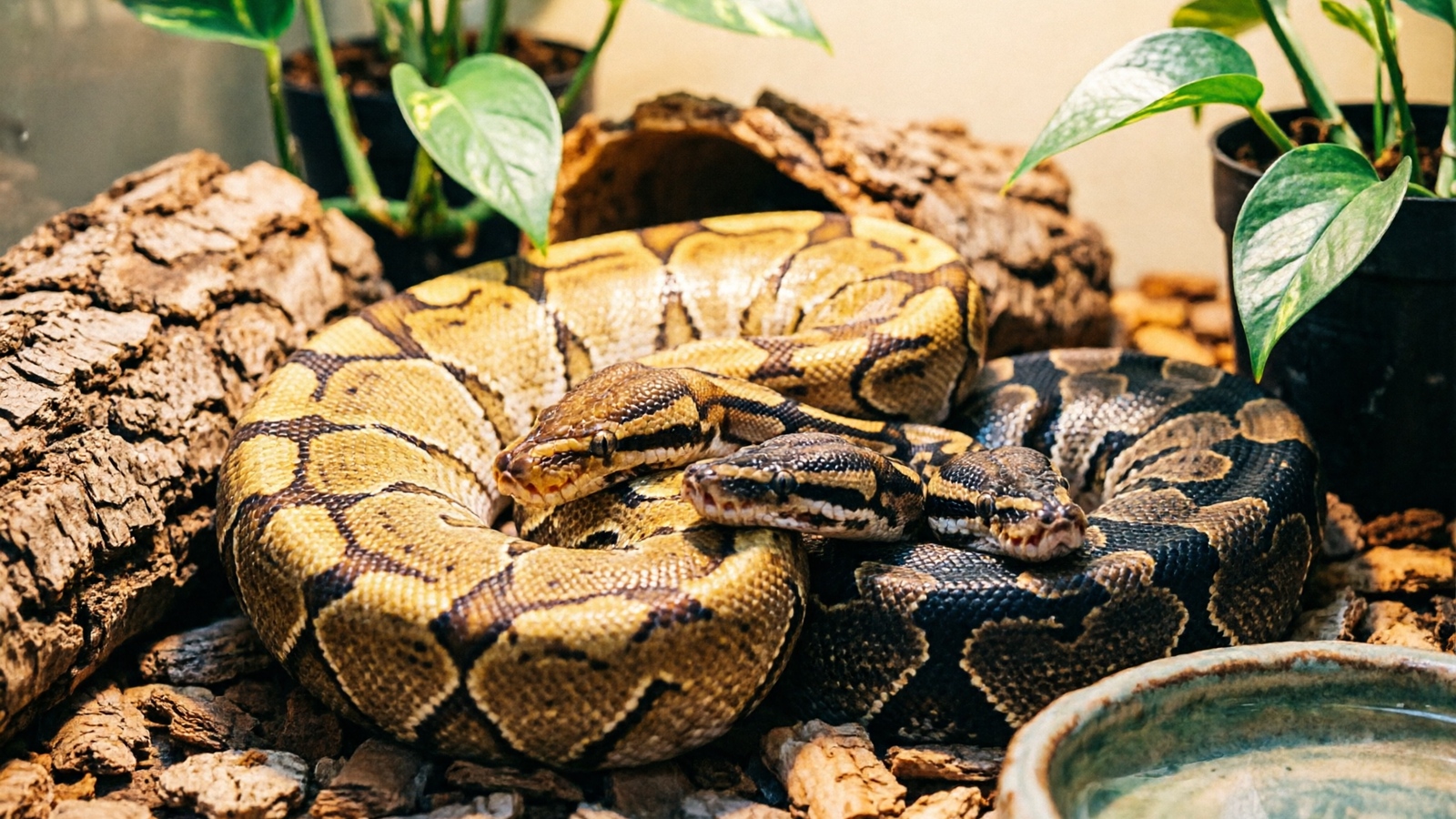
Ball pythons are terrestrial snakes that spend most of their time on or near the ground. In the wild, they inhabit savannas and grasslands across West and Central Africa, where they use rodent burrows and hollow logs for shelter. Replicating that environment in captivity means choosing the best ball python enclosure — one that provides adequate floor space, holds steady humidity, and maintains proper temperature gradients — all while keeping your snake secure.
A hatchling ball python weighs under 100 grams and fits comfortably in a 10 to 20 gallon enclosure. Within 12 to 18 months, that same snake will outgrow its starter tank. Adult males reach 800 to 1,500 grams and need at minimum a 36x18 inch enclosure. Adult females can reach 3,000 grams and require 48x18 inches or larger. For detailed growth expectations, see our ball python weight guide.
Standard glass aquariums designed for fish are a poor choice for ball pythons. They have screen tops that release humidity too quickly, lack front-opening doors for easy access, and are not designed to hold the thermal gradients ball pythons need. Purpose-built reptile enclosures address all of these problems. For a complete overview of ball python husbandry, see our ball python care guide.
Glass vs PVC vs Eco-Composite Enclosures
The material you choose affects humidity retention, visibility, weight, and cost. Here is how the three main types compare.
| Feature | Glass | PVC | Eco-Composite |
|---|---|---|---|
| Visibility | Excellent | Opaque panels | Fair to good |
| Weight | Heavy | Light | Medium |
| Heat Retention | Good | Excellent | Good |
| Humidity Control | Fair | Excellent | Good |
| Durability | Good (can break) | Excellent | Good |
| Scratch Resistance | Good | Fair | Fair |
| Aesthetics | Clean, modern | Utility look | Natural wood look |
| Best For | Display setups | Humidity control | Budget-conscious owners |

Glass Terrariums
Glass enclosures offer the best visibility — you can see your snake from any angle. They are easy to clean with standard glass cleaners (once the snake is removed) and are widely available at pet stores and online. The downsides are significant for ball python keepers: glass is heavy, retains less heat than PVC, and the screen ventilation top makes it difficult to maintain 50 to 60 percent humidity without modifications like covering part of the screen with acrylic or tape.
PVC Enclosures
PVC is the material of choice for serious ball python breeders and keepers who prioritize humidity control. PVC panels retain heat efficiently and hold humidity with minimal effort. The front-opening design provides excellent access for cleaning and handling. The tradeoff is reduced visibility — PVC panels are opaque on the sides — and a higher price point than glass at comparable sizes.
Eco-Composite Enclosures
Eco-composite enclosures blend recycled wood fiber with plastic polymers to create panels with a natural wood appearance. They are lighter than glass, more affordable than PVC, and appeal to keepers who want a natural aesthetic. The compromise is moderate humidity control — eco-composite falls between glass and PVC — and less visibility than glass. Some composite enclosures may need sealing along interior seams to prevent moisture absorption over time.
6 Best Ball Python Enclosures Compared
| # | Product | Key Feature | Best For |
|---|---|---|---|
| 1 | REPTI ZOO 35 Gallon Full Glass | Front-opening double doors, tempered glass | Best value glass |
| 2 | New Age Pet ECOFLEX Mojave Lounge | Recycled eco-flex material, wood appearance | Eco-friendly option |
| 3 | REPTI ZOO 50 Gallon PVC | PVC panels, excellent humidity retention | Humidity control |
| 4 | REPTI ZOO 67 Gallon Glass | 48-inch length, sliding doors with lock | Large females |
| 5 | SUKEOPET 50 Gallon Composite | Composite wood and plastic, mid-range price | Budget mid-range |
| 6 | REPTI ZOO 34 Gallon Glass | Compact size, affordable entry point | Juveniles and starters |
1. REPTI ZOO Full Glass 35 Gallon — Best Value Glass
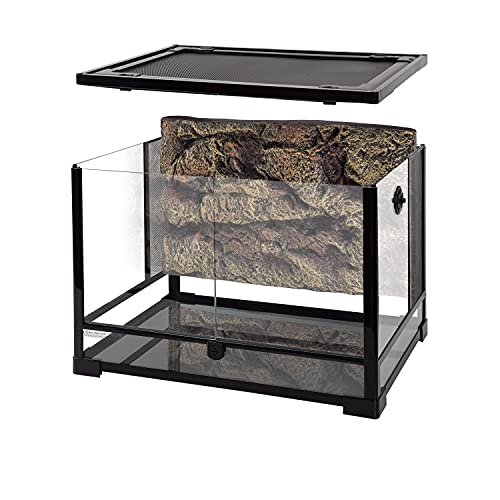
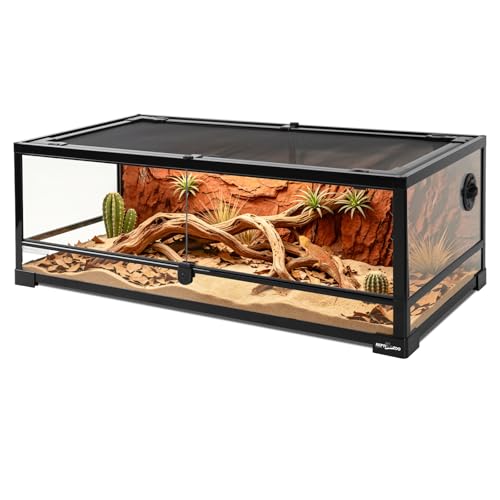
The REPTI ZOO Full Glass 35 Gallon Reptile Tank is the most well-rounded glass enclosure for a single adult male ball python. The 36x18x12 inch footprint meets the minimum size requirement for adult males, and the front-opening double doors make daily maintenance and handling straightforward. Full tempered glass construction provides clear viewing from three sides.
The built-in screen ventilation on top allows for heat lamp mounting while letting you cover a portion with acrylic or tape to boost humidity retention — a modification most ball python keepers end up making with glass enclosures.
What owners say: “Perfect size for my adult male. Doors open smoothly and the glass is crystal clear. I just cover half the screen top with plastic wrap and humidity sits right at 55%.”
The downside: there is no built-in lock — you will need to add a cabinet latch or aftermarket lock to prevent escapes. The glass is noticeably heavier than PVC alternatives at the same size, making repositioning difficult once set up. No background panel is included, so the back wall will be visible unless you add a backdrop or substrate against the rear glass.
2. New Age Pet ECOFLEX Mojave Lounge — Best Eco-Friendly
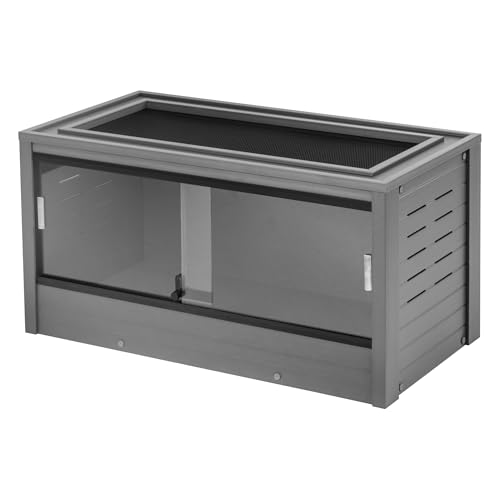
The New Age Pet ECOFLEX Mojave Lounge is constructed from eco-flex composite material made from recycled wood and plastic polymers. The 36x18x18 inch footprint accommodates an adult male comfortably, and the natural wood-grain appearance blends well with home decor in a way that standard glass or black PVC does not.
This enclosure is lighter than glass and easier to move during deep cleaning. The front-opening design provides good access, and ventilation is adequate for moderate-humidity environments.
What owners say: “Looks great in my living room — not an eyesore like most reptile tanks. The wood finish is surprisingly realistic and my ball python seems more active with the natural-looking surroundings.”
The downside: humidity control requires attention. The eco-flex material does not retain moisture as effectively as PVC, so keepers in dry climates may need to run a humidifier nearby or modify the enclosure with additional moisture-retaining substrate. The viewing window is smaller than full glass, and over time the composite material can develop a slight odor from moisture absorption if not sealed properly during initial setup.
3. REPTI ZOO 50 Gallon PVC — Best for Humidity Control
The REPTI ZOO 50 Gallon PVC Reptile Enclosure is the top pick for keepers who struggle to maintain humidity in glass tanks. PVC panels retain heat efficiently and hold humidity with minimal intervention — most keepers report stable 55 to 65 percent humidity without covering vents or adding extra moisture sources. The 36x18x18 inch dimensions provide adequate floor space for an adult male ball python.
The lightweight construction is a practical advantage over glass. A 50-gallon PVC enclosure weighs roughly half as much as a comparable glass tank, which matters during initial setup and periodic deep cleaning. Front-opening doors provide full access for substrate changes and handling.
What owners say: “Switched from a 40-gallon glass tank and my humidity problems disappeared overnight. PVC is the way to go if you live in a dry climate. Only wish the viewing panels were larger.”
The downside: PVC is more expensive than glass at equivalent sizes, and the opaque side panels mean you cannot see your snake unless it is near the front. PVC surfaces scratch more easily than glass — a determined snake with sharp claws or a rough decorative branch can leave marks over time. For detailed humidity management techniques, see our ball python humidity guide.
4. REPTI ZOO 67 Gallon — Best for Large Females
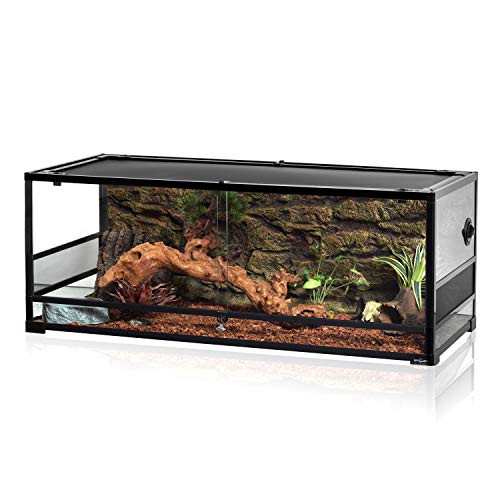
The REPTI ZOO 67 Gallon Large Terrarium provides the 48x18x18 inch floor space that large adult female ball pythons need. At 4 feet long, this enclosure allows your female to stretch out fully and provides room for multiple hide placements, a water dish large enough for soaking, and distinct warm and cool zones.
The sliding glass doors with built-in lock add security — ball pythons are known escape artists, and a lock prevents accidental openings. The generous volume also makes temperature gradient management easier because there is more distance between the heat source and the cool end.
What owners say: “My 2800-gram female finally has room to stretch out. The sliding doors are smooth and the lock gives me peace of mind. Worth the extra cost for a big girl.”
The downside: this is the most expensive option on the list. The 48-inch footprint requires a larger surface area — measure your available space before ordering. A 48-inch heat mat costs more than a 36-inch mat, and larger enclosures need proportionally more substrate. The glass construction also means the same humidity challenges as smaller glass tanks, amplified by the larger volume of air inside.
5. SUKEOPET 50 Gallon — Best Budget Mid-Range
The SUKEOPET 50 Gallon Composite Wood Reptile Tank delivers a 36x18x18 inch enclosure at a price point below most glass and PVC options at the same size. The composite wood and plastic construction provides reasonable insulation and a modern appearance that looks more refined than basic glass tanks.
Front-opening doors make daily maintenance manageable, and the construction is lighter than full glass at this size. The insulation properties are better than bare glass — not quite matching PVC, but adequate for most room environments. A 50-gallon capacity at this price range makes it a practical option for keepers who want adult-sized space without the premium price tag.
What owners say: “Great value for the size. Looks clean and modern in my setup. Doors work well and it holds humidity better than I expected for the price.”
The downside: SUKEOPET is a newer brand with a shorter track record than REPTI ZOO or Exo Terra. Some owners report that the composite material can absorb odors over time, particularly around the substrate area. The seams may need additional sealing with aquarium-safe silicone to prevent moisture from seeping into the composite layers in high-humidity setups. Plan to apply a thin bead of silicone along interior seams before your first use.
6. REPTI ZOO 34 Gallon Glass — Best Budget Starter
The REPTI ZOO 34 Gallon Glass Tank is the most affordable quality glass option and an appropriate starting point for hatchling and juvenile ball pythons. The 24x18x18 inch dimensions work well for snakes under 500 grams, and the compact size fits in smaller rooms or on sturdy shelving units.
Front-opening double hinge doors provide good access for a tank this size, and the full glass construction allows clear viewing. The screen ventilation top supports a small heat lamp.
What owners say: “Perfect starter tank for my baby ball python. Affordable and well-made. Knowing I will need to upgrade is fine — it was worth the low entry cost.”
The downside: this enclosure is too small for adult ball pythons. You will need to upgrade within 12 to 18 months as your snake grows. The 24-inch floor length limits your ability to create a proper temperature gradient — the warm and cool zones end up too close together. Think of this as a temporary setup, not a long-term home. For guidance on appropriate tank sizes at every life stage, see our ball python tank size guide.
What Size Enclosure Does a Ball Python Need?
By Age and Size
Ball python enclosure requirements change as the snake grows. Upgrading too early stresses the snake with excess space; upgrading too late restricts movement and thermoregulation.
| Life Stage | Weight | Minimum Enclosure | Minimum Floor Space |
|---|---|---|---|
| Hatchling | Under 200g | 10-20 gallon | 20x12 inches |
| Juvenile | 200-500g | 20-40 gallon | 24-18 inches |
| Adult male | 800-1,500g | 40 gallon | 36x18 inches |
| Adult female | 1,500-3,000g | 50-70 gallon | 48x18 inches |
Essential Features to Look For
Front-opening doors are non-negotiable for ball python enclosures. Top-opening tanks make it difficult to access the snake for handling without hovering over it — a position that triggers defensive behavior in ball pythons. Front access lets you reach in from the side, which is less threatening.
Adequate ventilation prevents stagnant air and respiratory infections, but excessive ventilation — like a fully open screen top — dumps humidity. The best enclosures strike a balance with adjustable vents or a partially coverable screen top.
Escape-proof latches are essential. Ball pythons are surprisingly strong and methodical about testing enclosure weaknesses. Sliding doors with locks or front-opening doors with secure latches are the minimum security standard.
A flat bottom accommodates under-tank heat mats, which are the primary heating method for ball pythons. Enclosures with raised frames or uneven bottoms create gaps that reduce heat mat contact and efficiency.
Setting Up Your Ball Python Enclosure

Proper setup turns an empty tank into a functional habitat. The order of setup matters — substrate goes in first, then heating, then decor and hides.
Step 1 — Substrate: Add 2 to 3 inches of substrate across the entire floor. Avoid cedar or pine — the aromatic oils are toxic to reptiles. Paper towels work for quarantine setups. For substrate recommendations, see our best ball python substrate guide.
Step 2 — Heat mat: Place the heat mat under one end of the enclosure — the warm side. The mat should cover roughly one-third of the floor area. Connect it to a thermostat to prevent overheating. For thermostat options, see our best reptile thermostat guide.
Step 3 — Thermometer and hygrometer: Position a digital probe thermometer on the warm side floor directly above the heat mat, and a second on the cool side floor. Place the hygrometer probe at mid-height in the warm zone. Do not rely on analog dial thermometers — they are inaccurate enough to be dangerous.
Step 4 — Hides: Provide at minimum two hides — one on the warm side and one on the cool side. Ball pythons are secretive snakes that spend most daylight hours in hides. A snake that cannot find a secure hide will become stressed, refuse food, and may develop respiratory infections. Both hides should be snug — the snake should fit inside with the walls touching its body on most sides. For hide options, see our best ball python hide guide.
Step 5 — Lighting: Ball pythons do not require UVB lighting, but a low-wattage overhead light on a 12-hour cycle helps establish a day-night rhythm. Avoid bright white lights — dim ambient lighting or a low-wattage incandescent bulb on the warm end is sufficient. For heat lamp recommendations, see our best ball python heat lamp guide.
Which Ball Python Enclosure Should You Buy?
The right enclosure depends on your snake’s size, your room’s humidity, and your budget.
Best overall: The REPTI ZOO 35 Gallon Full Glass offers the best balance of size, visibility, and value for an adult male ball python. It provides the minimum required 36x18 inch floor space at a mid-range price point with front-opening access.
Best for humidity: The REPTI ZOO 50 Gallon PVC is the pick if maintaining 50 to 60 percent humidity is your primary challenge. PVC holds humidity with minimal effort in dry environments.
Best budget starter: The REPTI ZOO 34 Gallon Glass is the right call for hatchlings and juveniles. Accept that you will upgrade within a year, but the low entry cost makes this a practical starting point.
Conclusion
The best ball python enclosure for your snake depends on three factors: the snake’s current size, your room’s ambient humidity, and your budget. Glass enclosures offer the best visibility and are the most affordable entry point, but they require humidity modifications that PVC enclosures eliminate entirely.
For most adult male ball pythons, the REPTI ZOO 35 Gallon Full Glass provides the right floor space at a fair price. If humidity is a persistent problem in your home, the REPTI ZOO 50 Gallon PVC solves it without extra effort. Hatchling keepers should start with the REPTI ZOO 34 Gallon Glass and plan to upgrade within 12 to 18 months.
Whichever enclosure you choose, pair it with proper substrate, reliable thermostats, secure hides, and correct temperature gradients. Maintain 50 to 60 percent humidity with a digital hygrometer, spot clean waste daily, and deep clean the entire enclosure every four weeks. The enclosure is the foundation of your ball python’s health — invest in getting it right from the start and your snake will thrive for decades.