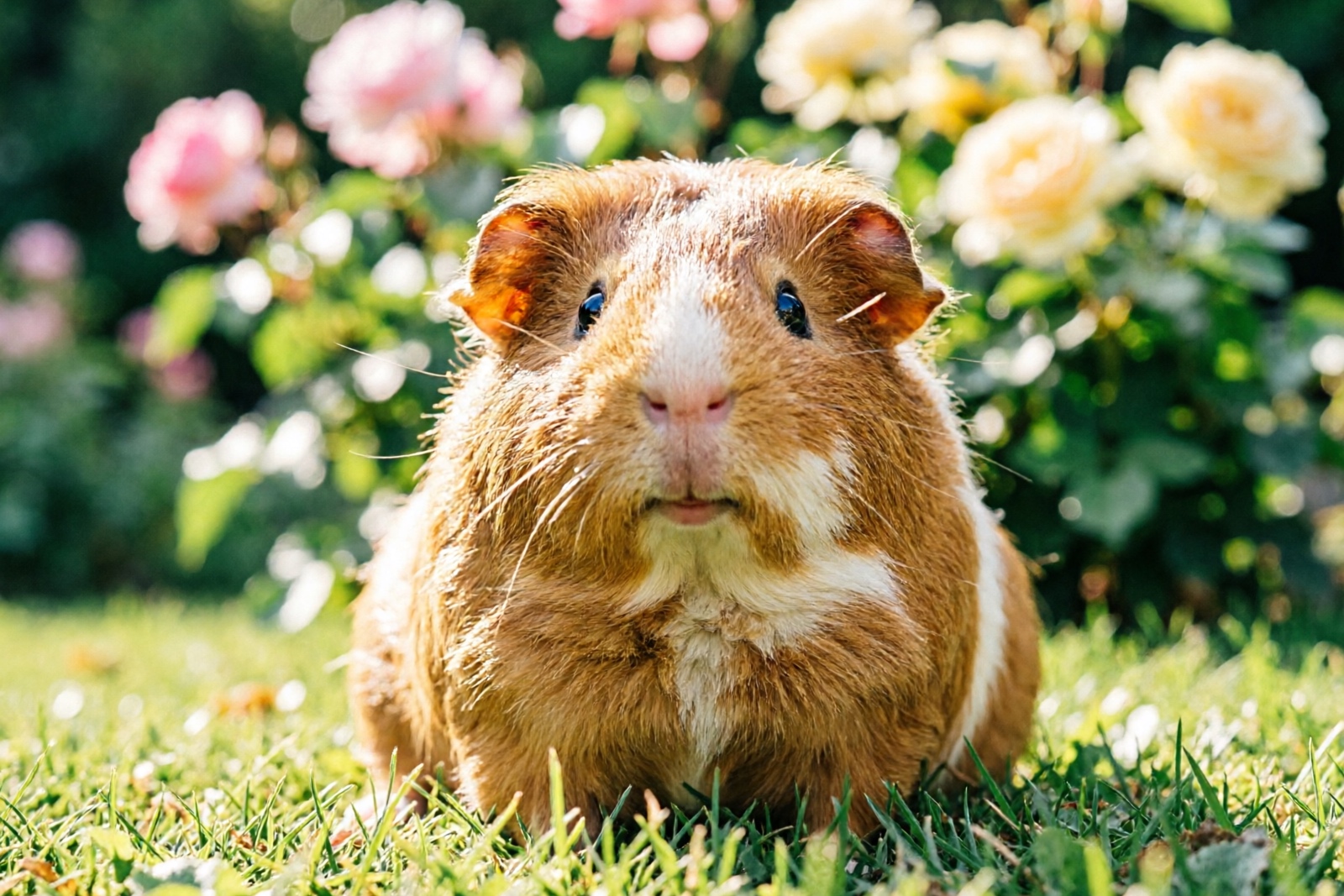
If you’re asking “how long do guinea pigs live,” you’re probably trying to understand what to expect from these lovable, vocal little pets. The answer matters — guinea pigs are a significant time commitment, and understanding their expected lifespan helps you prepare for the years ahead.
This guide covers everything that affects how long guinea pigs live: breed differences, diet, environment, veterinary care, and practical steps you can take to maximize your guinea pig’s longevity.
How Long Do Guinea Pigs Live?
The average guinea pig lifespan as a pet is 4-8 years, with most living 5-6 years given proper care. With exceptional care, some guinea pigs reach 10 years or beyond. In the wild, that number drops dramatically to just 1-4 years due to predators, disease, and environmental hazards.
The current Guinness World Record for the longest-lived guinea pig stands at an astonishing 14 years and 10 months — proof that excellent care can more than double the typical lifespan.
A guinea pig is not a short-term pet. When you bring one home, you’re committing to potentially 6-8 years of daily feeding, weekly cage cleaning, and regular veterinary visits. This long commitment is one of the most important things to understand before getting a guinea pig. For a complete health reference throughout your guinea pig’s life, see our guinea pig health guide.
Average Guinea Pig Lifespan: The Numbers
The guinea pig life expectancy varies based on several factors, but here are the baseline numbers for common breeds:
| Breed | Average Lifespan | Notes |
|---|---|---|
| American Shorthair | 5-7 years | Most common breed, hardy constitution |
| Abyssinian | 5-7 years | Active and playful |
| Peruvian | 5-7 years | Long coat requires extra grooming |
| Teddy | 5-6 years | Docile temperament |
| Silkie | 5-6 years | Long, flowing coat |
| Skinny Pig (hairless) | 4-6 years | Slightly weaker immune system |
Gender and Genetics
Some studies suggest female guinea pigs may live slightly longer than males, but the difference is small and individual care matters far more than gender. Purebred and mixed-breed guinea pigs show similar lifespans, so breed selection shouldn’t be based on longevity alone.
Indoor vs Outdoor Housing
Indoor guinea pigs consistently outlive outdoor ones. Temperature fluctuations, predators, and less consistent care all reduce outdoor lifespan. If you want your guinea pig to live as long as possible, keep them indoors in a climate-controlled environment.
Guinea Pig Lifespan in Captivity vs Wild
The difference between wild and pet guinea pig longevity is dramatic — and it illustrates how much protection and care matter.
Wild guinea pigs (cavies) typically live only 1-4 years. Their native environment in South America exposes them to predators (hawks, foxes, snakes, feral cats), parasites, unpredictable weather, and inconsistent food supply. Life in the wild is, simply put, harsh.
Pet guinea pigs live 4-8 years — roughly 2-4 times longer — because they have:
| Factor | Wild | Pet |
|---|---|---|
| Average lifespan | 1-4 years | 4-8 years |
| Predator risk | High | None |
| Food supply | Unstable | Consistent |
| Veterinary care | None | Available |
| Exercise | Abundant | Depends on owner |
| Social companionship | Natural herd | May be solitary |
However, pet guinea pigs face their own unique risks. Without enough space, they become sedentary and obese. Without companions, they experience chronic stress. Without proper diet — especially vitamin C — they develop life-threatening deficiencies. A guinea pig lifespan in captivity only exceeds wild longevity when owners actively meet all of their needs.
Guinea Pig Age in Human Years
Understanding guinea pig age in human years helps you relate to your pet’s life stage and adjust care accordingly. Guinea pigs age much faster than humans in their early years.
| Guinea Pig Age | Human Equivalent | Life Stage |
|---|---|---|
| 1 month | ~5 years | Baby |
| 3 months | ~10 years | Adolescent |
| 6 months | ~15 years | Young adult |
| 1 year | ~20 years | Adult |
| 2 years | ~28 years | Prime adult |
| 3 years | ~35 years | Middle-aged |
| 4 years | ~42 years | Senior |
| 5 years | ~50 years | Elderly |
| 6+ years | ~60+ years | Advanced age |
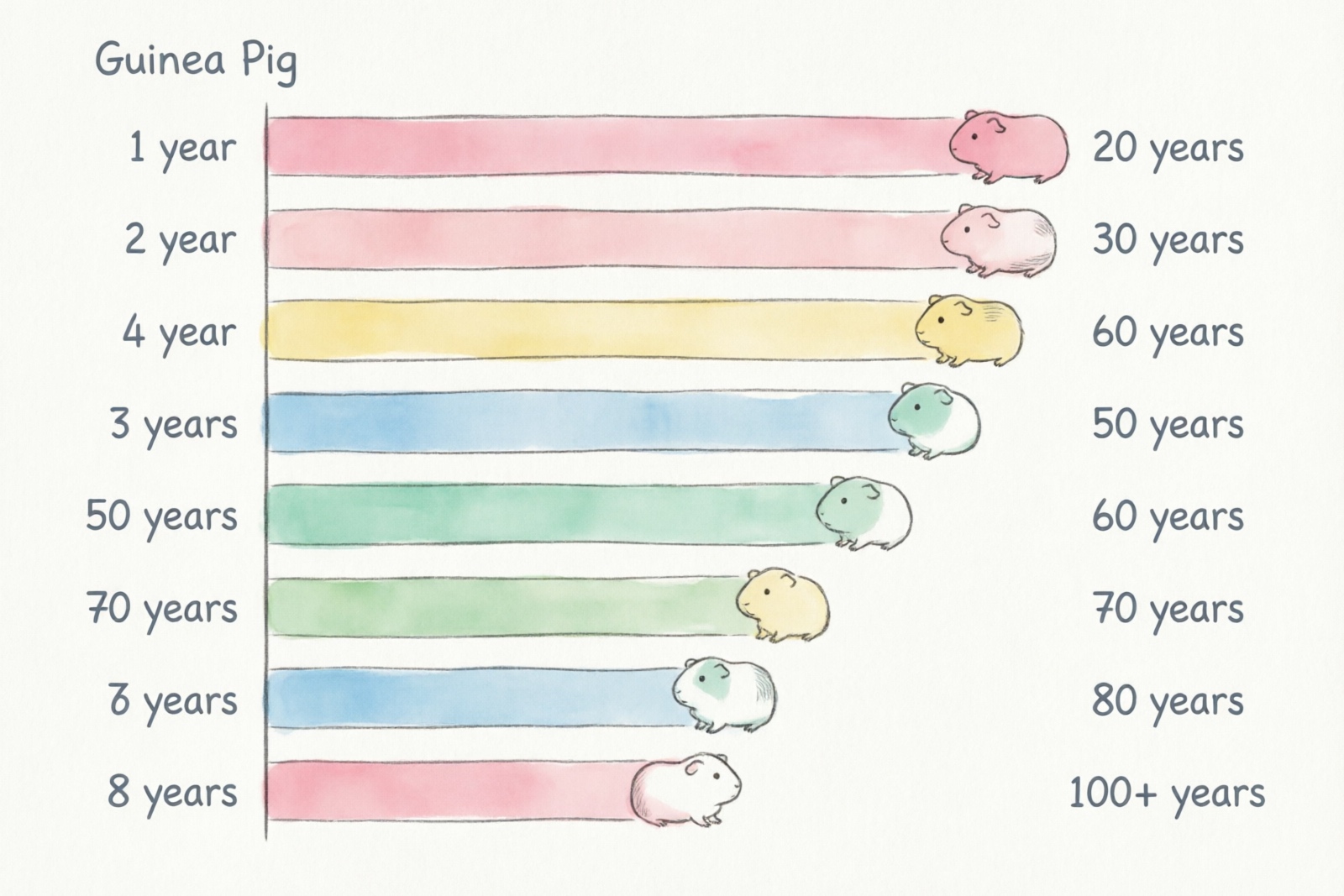
Keep in mind this is an approximation, not an exact science. The conversion helps you understand that a 4-year-old guinea pig is genuinely elderly and needs adjusted care — not that the numbers are biologically precise.
Factors That Affect Guinea Pig Lifespan
Five key factors determine how long your guinea pig will live. Diet is by far the most impactful, but environment, exercise, social companionship, and veterinary care all play essential roles.
1. Diet & Nutrition (The #1 Factor)
Diet is the single most important factor in guinea pig longevity. Unlike most mammals, guinea pigs cannot synthesize their own vitamin C. Without daily vitamin C intake, they develop scurvy — a potentially fatal condition that causes joint pain, lethargy, weight loss, and eventually death.
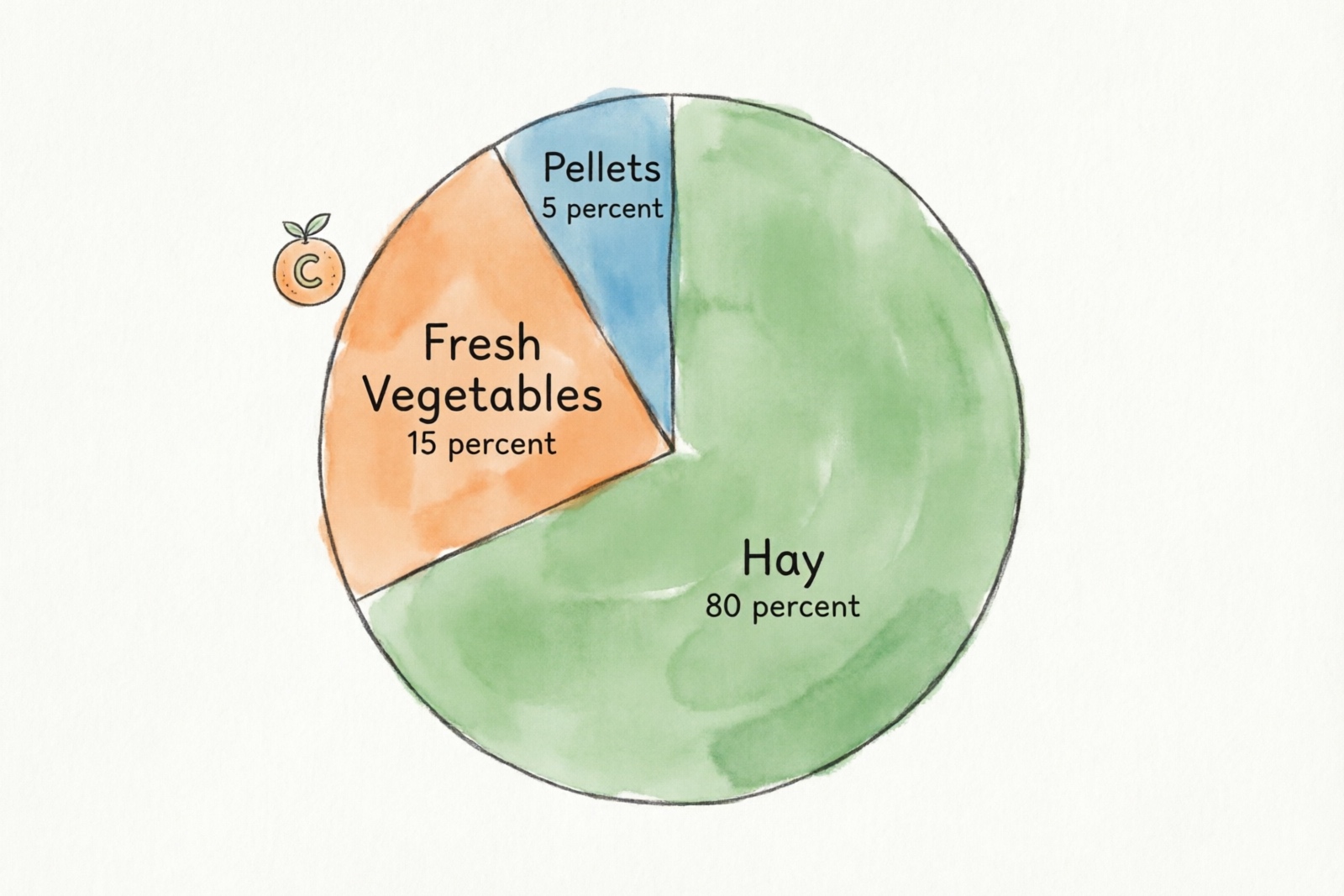
A proper guinea pig diet consists of:
- 80% Timothy hay — available 24/7 for digestive and dental health
- 10% fortified pellets — balanced nutrition with stabilized vitamin C
- 10% fresh vegetables — daily variety for additional vitamins and hydration
- Vitamin C supplement — insurance against deficiency
Recommended products:
Oxbow Essentials Guinea Pig Food ($34.99, ⭐4.6, 🔥) — The #1 veterinarian-recommended guinea pig food. Uniform Timothy hay pellets prevent selective eating, and stabilized vitamin C ensures consistent intake. One reviewer noted this food helped their guinea pigs reach almost 6 years in excellent health.
Oxbow Natural Science Vitamin C Supplement ($39.94, ⭐4.3, 🔥) — Vet-recommended daily vitamin C tablets made with a Timothy hay base. Guinea pigs typically eat them eagerly as treats, making supplementation effortless.
Oasis Vita Drops Pure C ($9.49, ⭐5.0, 🔥) — Liquid vitamin C drops for guinea pigs that refuse tablets. Add directly to vegetables rather than water for best results. A more affordable option at under $10.
Kaytee Premium Timothy Hay Chew-A-Bowl ($8.99, ⭐4.6, 🔥) — Natural Timothy hay with an included chew-proof bowl. Unlimited hay is non-negotiable for guinea pig health — it fuels digestion and wears down constantly growing teeth.
For a complete breakdown of what to feed your guinea pig, see our guinea pig diet guide and our detailed article on vitamin C for guinea pigs.
2. Living Environment (Cage & Bedding)
A proper living space directly impacts longevity. The minimum cage size for a pair of guinea pigs is 7.5 square feet, but 10.5+ square feet is strongly recommended. Cramped quarters cause stress, reduce activity, and increase territorial aggression.
Recommended products:
MidWest Homes for Pets Guinea Habitat Cage ($59.99, ⭐4.1, 🔥) — At 47.6” x 23.6”, this foldable habitat provides generous floor space with a washable PVC-lined canvas bottom. Top and front doors make access easy, and the modular design can be expanded by connecting multiple units for even more room.
carefresh 99% Dust-Free Paper Pet Bedding ($18.17, ⭐4.2, 🔥) — Respiratory infections are a leading cause of guinea pig death. This 99% dust-free bedding absorbs 3x its weight in liquid and controls odor for up to 10 days. Choosing the right bedding is critical — see our guinea pig bedding guide for full comparisons.
3. Exercise & Mental Stimulation
Guinea pigs need at least 1 hour of floor time daily outside their cage. Exercise prevents obesity, reduces stress, and provides mental enrichment. Tunnels, hideouts, and foraging toys keep them active and engaged. Without sufficient stimulation, guinea pigs become lethargic and depressed.
4. Social Companionship
Guinea pigs are herd animals — they should never be kept alone. A solitary guinea pig experiences chronic stress, which suppresses the immune system and measurably shortens lifespan. Keep at least two same-sex guinea pigs (or a neutered male with females). Introduce new companions gradually to prevent fighting. For enrichment ideas, see our guinea pig toys guide.
5. Veterinary Care
Guinea pigs are experts at hiding illness — by the time you notice symptoms, the condition is often advanced. Annual health checks with an exotic animal veterinarian catch problems early. Finding a vet who specializes in small mammals is worth the effort, as guinea pig anatomy and physiology differ significantly from cats and dogs.
How to Help Your Guinea Pig Live Longer
Here’s a prioritized action plan for maximizing your guinea pig’s lifespan:
| Priority | Action | Impact on Lifespan |
|---|---|---|
| 🔴 Highest | Daily vitamin C supplement | Prevents scurvy (fatal if untreated) |
| 🔴 Highest | Unlimited Timothy hay | Digestive health + dental wear |
| 🔴 Highest | Pair or group housing | Reduces chronic stress |
| 🟡 High | Appropriately sized cage | More space = less stress + more activity |
| 🟡 High | Annual vet checkups | Early disease detection |
| 🟡 High | Dust-free bedding | Prevents respiratory infections |
| 🟢 Medium | Daily floor time | Prevents obesity |
| 🟢 Medium | Fresh vegetables daily | Additional vitamins and hydration |
Quick product reference for longevity:
- Vitamin C: Oxbow Vitamin C Tablets ($39.94) or Oasis Vita Drops ($9.49)
- Pellets: Oxbow Essentials ($34.99)
- Hay: Kaytee Timothy Hay ($8.99)
- Cage: MidWest Guinea Habitat ($59.99)
- Bedding: carefresh Paper Bedding ($18.17)
Oldest Guinea Pigs Ever Recorded
The oldest guinea pig on record lived 14 years and 10 months, according to Guinness World Records. This remarkable guinea pig was from the United Kingdom and far exceeds the typical lifespan.
Other notable long-lived guinea pigs include:
| Name | Lifespan | Country | Notes |
|---|---|---|---|
| Snowball | 14 years, 10 months | UK | Guinness World Record holder |
| Sweetie | 12+ years | USA | Documented by community |
| Multiple unnamed | 10-12 years | Various | Reported on forums and rescue groups |
What do these exceptionally long-lived guinea pigs have in common? Their owners consistently report:
- Diet rich in fresh vegetables and unlimited hay
- Large living spaces with room to roam
- Companion guinea pigs (never housed alone)
- Regular veterinary checkups
- Indoor housing in a stable environment
These cases prove that 8 years is not a hard ceiling. With dedicated care, your guinea pig could exceed the average by several years.
Signs Your Guinea Pig Is Aging
Guinea pigs enter their senior years around 3-4 years of age. Recognizing the signs of aging helps you adjust care and catch age-related problems early.
Physical Signs of Aging
- Reduced activity — sleeping more, moving less enthusiastically
- Thinning or graying fur — coat changes are common in seniors
- Weight changes — unexplained weight loss or gain
- Joint stiffness — reluctance to climb ramps or move quickly
- Vision and hearing decline — may startle more easily
- Appetite changes — eating less or showing preference for softer foods
Caring for Senior Guinea Pigs (4+ Years)
Senior guinea pigs need adjusted care to maintain quality of life:
- More frequent vet visits — every 6 months instead of annually
- Low-entry food and water bowls — reduce neck strain
- Joint support supplements — glucosamine can improve mobility
- Softer, deeper bedding — cushion aging joints
- Temperature management — especially important for Skinny Pigs
- Gentle, continued exercise — don’t eliminate floor time, just slow it down
Oxbow Natural Science Joint Support ($18.82, ⭐4.5, 🔥) — Contains glucosamine and turmeric for joint health and anti-inflammatory support. Made with a Timothy hay base that most guinea pigs accept readily. One reviewer reported their immobile guinea pig was “running around and eating” within 5 days of starting this supplement.
Senior guinea pigs are also prone to bumblefoot in guinea pigs, a painful foot condition aggravated by hard or soiled surfaces. Regular foot checks and soft bedding help prevent this common issue.
Common Causes of Guinea Pig Death
Understanding the most common causes of guinea pig death helps you recognize warning signs early and take preventive action.
| Cause | Prevention | Early Warning Signs |
|---|---|---|
| Respiratory infections | Dust-free bedding, ventilation | Sneezing, nasal discharge, labored breathing |
| Scurvy (vitamin C deficiency) | Daily vitamin C supplement | Lethargy, swollen joints, poor appetite |
| Bloat (GI stasis) | Proper diet, unlimited hay | Distended belly, not eating, not passing stool |
| Skin parasites | Regular checks, clean environment | Excessive scratching, hair loss |
| Dental problems | Unlimited hay, dental checks | Drooling, weight loss, difficulty eating |
| Tumors | Regular vet exams | Unusual lumps or swellings |
| Kidney disease | Fresh water, vet monitoring | Increased/decreased water intake |
| Organ failure (seniors) | Joint support, senior care | Gradual weakness, weight loss |
Guinea pigs are prey animals, which means they instinctively hide signs of illness. By the time a guinea pig shows visible symptoms, the condition is often serious. This is why prevention — proper diet, clean environment, and regular vet visits — is far more effective than treatment.
Learning to recognize changes in guinea pig sounds can also help you detect illness early. Changes in vocalization patterns often signal pain or distress before physical symptoms become obvious.
FAQ: Guinea Pig Lifespan Questions
How long do guinea pigs live?
The average pet guinea pig lives 4-8 years, with most living 5-6 years. With excellent care, some reach 10 years or beyond.
What is the average lifespan of a guinea pig?
Most pet guinea pigs live 5-6 years. This average reflects typical pet ownership — dedicated owners who optimize diet, environment, and veterinary care often see 7-8 years.
How can I help my guinea pig live longer?
Three non-negotiables: daily vitamin C, unlimited Timothy hay, and companionship (never house alone). Beyond that, provide a large cage, dust-free bedding, annual vet checks, and daily floor time. The diet and supplement recommendations in this guide cover the essentials — start with Oxbow Essentials pellets and add a vitamin C supplement.
What do guinea pigs usually die from?
The most common causes are respiratory infections, scurvy (vitamin C deficiency), tumors, dental disease, and organ failure in seniors. Most of these are preventable or manageable with proper care.
How long do guinea pigs live as pets vs in the wild?
Pet guinea pigs live 4-8 years compared to 1-4 years in the wild. The difference comes from protection from predators, consistent food supply, and access to veterinary care.
What is the oldest guinea pig ever recorded?
The Guinness World Record for the oldest guinea pig is 14 years and 10 months, held by a guinea pig named Snowball from the UK.
Do guinea pigs need companions to live longer?
Yes. Guinea pigs are herd animals, and solitary housing causes chronic stress that weakens the immune system and shortens lifespan. Always keep at least two together.
At what age is a guinea pig considered senior?
Guinea pigs enter their senior years at 3-4 years of age. At this point, increase vet visit frequency to every 6 months and watch for signs of joint problems, weight loss, and reduced activity.
Conclusion: Giving Your Guinea Pig the Best Life
The average guinea pig life of 4-8 years is not fixed — it’s a range that reflects the quality of care you provide. Here are the five keys to a long, healthy guinea pig life:
- Average lifespan is 4-8 years, but excellent care can extend it to 10 years or beyond
- Vitamin C is the #1 life-saving nutrient — guinea pigs cannot produce it themselves
- Diet is foundational — unlimited Timothy hay, quality pellets, daily vegetables
- Social companionship is essential — never house a guinea pig alone
- Preventive veterinary care catches problems early when they’re treatable
Getting started checklist for new owners:
- Choose Oxbow Essentials Guinea Pig Food for daily nutrition
- Stock up on Kaytee Timothy Hay — always available
- Add a vitamin C supplement (tablets or liquid drops)
- Set up a spacious MidWest Guinea Habitat with carefresh bedding
- Find an exotic animal veterinarian and schedule a first checkup
For more detailed guidance on keeping your guinea pig healthy, explore our guinea pig health guide, complete diet guide, and vitamin C guide.