
How long do hamsters live? The answer depends on the breed, genetics, and — most importantly — the quality of care you provide. Most pet hamsters live 2 to 3 years, but with excellent care, some reach 4 years or beyond.
This guide covers everything that affects hamster lifespan: breed-by-breed breakdowns, the six key factors that determine how long your hamster lives, eight actionable tips to extend their life, common causes of death, and how to care for a senior hamster. If you’re a first-time hamster owner, understanding lifespan expectations helps you make better care decisions from day one.
Average Hamster Lifespan — How Long Do Hamsters Live?
Quick Answer
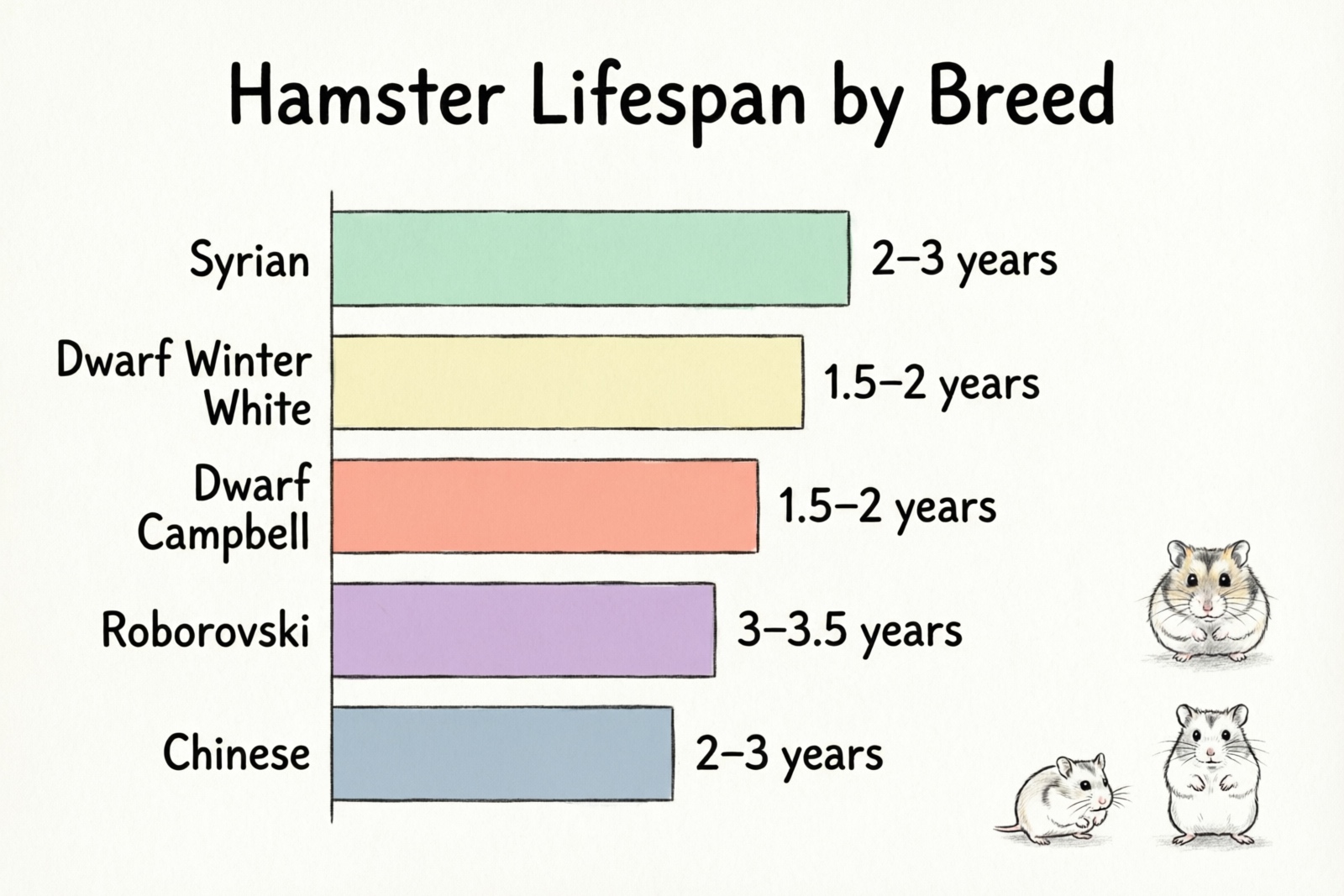
- Syrian hamster: 2-3 years
- Dwarf hamsters (Winter White & Campbell): 1.5-2 years
- Roborovski hamster: 3-3.5 years
- Chinese hamster: 2-3 years
Most pet hamsters fall within these ranges regardless of how well you care for them — genetics set the upper limit. But care quality determines whether your hamster reaches the lower end or the upper end of that range. A well-cared-for Syrian can live 3.5 years, while a neglected one might only reach 1.5 years.
Why Do Hamsters Live So Short?
Hamsters are small animals with fast metabolisms. Their hearts beat 300-500 times per minute, and their cells divide and age at an accelerated rate compared to larger mammals. This is a fundamental biological trade-off — small body size means fast metabolism means shorter lifespan.
As prey animals, hamsters evolved to reproduce quickly rather than live long. In the wild, most hamsters don’t survive their first year due to predators, disease, and food scarcity. Understanding this biology helps explain why even excellent care has limits — but it also shows why every improvement in diet, environment, and stress reduction genuinely matters. The good news: proper care can extend the hamster lifespan in captivity to 2-3 times longer than wild counterparts.
Hamster Lifespan by Breed — Syrian, Dwarf, Robo & Chinese
Syrian Hamster — 2 to 3 Years
The Syrian hamster (also called golden hamster or teddy bear hamster) is the most common pet hamster breed. They live 2-3 years on average, with the oldest recorded reaching 4.5 years. Syrians are the largest pet hamsters, which makes them more prone to tumors as they age — but their generally calm temperament means they experience less stress than smaller, more skittish breeds. A proper Syrian hamster cage size of at least 450 square inches is essential for their wellbeing.
Dwarf Hamsters (Winter White & Campbell) — 1.5 to 2 Years
Dwarf hamsters are smaller and have shorter lifespans than Syrians. Winter Whites typically live 1.5-2 years, while Campbell dwarfs average 1.5-2 years with a maximum of about 2.5 years. The most significant health risk for dwarf hamsters — especially Campbell dwarfs — is hamster diabetes. A low-sugar diet is critical for extending their lifespan. Campbell dwarfs are also more prone to nipping and territorial aggression, which can increase stress levels.
Roborovski Hamster — 3 to 3.5 Years
The Roborovski dwarf hamster is the longest-lived pet hamster breed, averaging 3-3.5 years with some reaching 4 years or more. Their wild relatives inhabit the harsh deserts of Central Asia, which may explain their hardiness. Robos are fast, energetic, and less handleable than other breeds — but if you want a hamster that lives the longest, this is the breed to choose.
Chinese Hamster — 2 to 3 Years
Chinese hamsters have a lifespan similar to Syrians (2-3 years) but are less common as pets. They have slender, mouse-like bodies and are generally gentle. Like dwarf hamsters, they are susceptible to diabetes, so diet management is important.
| Breed | Average Lifespan | Max Recorded | Key Risk | Temperament |
|---|---|---|---|---|
| Syrian | 2-3 years | 4.5 years | Tumors | Friendly, tame |
| Winter White | 1.5-2 years | 3 years | Diabetes | Friendly |
| Campbell | 1.5-2 years | 2.5 years | Diabetes | Can be nippy |
| Roborovski | 3-3.5 years | 4.5 years | Fewer issues | Fast, shy |
| Chinese | 2-3 years | 3.5 years | Diabetes | Gentle |
For a detailed comparison of all breeds including appearance and care requirements, see our complete hamster breeds guide.
Wild vs Captivity — Do Pet Hamsters Live Longer?
Wild hamsters typically survive less than 1 year. Predators, disease, food shortages, and harsh weather take a heavy toll. In captivity, hamsters live 2-3 years on average — roughly 3-4 times longer than their wild counterparts. Safe shelter, consistent food, and absence of predators make the biggest difference.
The Oldest Hamster Ever Recorded
The Guinness World Record for the oldest hamster is 4.5 years, set by a hamster in the UK. That’s roughly 50% longer than the average hamster lifespan. The owners of record-breaking hamsters consistently report three common factors: a spacious cage, a high-quality diet, and a low-stress environment — which confirms that care quality has a major impact on how long hamsters live.
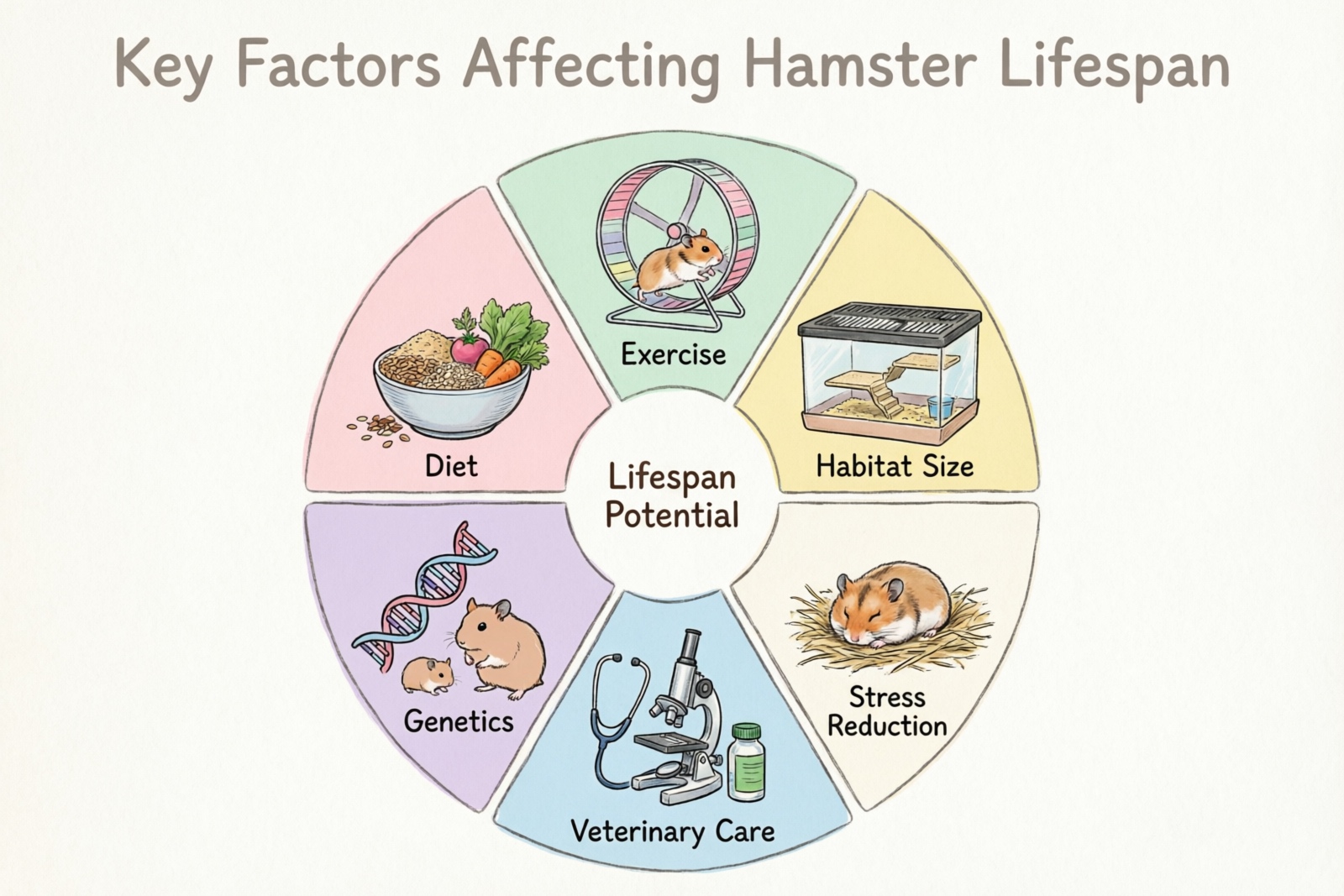
6 Key Factors That Affect Hamster Lifespan
Cage Size & Environment
Cage size is one of the most impactful factors you can control. Small cages cause chronic stress, which suppresses the immune system and shortens lifespan. The minimum recommended size is 450 square inches for Syrians and 360 square inches for dwarfs. Temperature is equally critical — hamsters are sensitive to extremes, and temperatures outside 65-75°F (18-24°C) can be fatal. See our hamster cage setup guide for detailed recommendations.
I’ve seen a noticeable difference in hamster behavior and health between small and large cages. Hamsters in adequate space are more active, less prone to bar biting, and generally seem more relaxed. If you’re currently using a cage under 450 square inches for a Syrian, upgrading is the single most impactful thing you can do for their longevity.
A large, chewproof cage like the Prolee Hamster Habitat ($119.99, 4.3 stars) provides the spacious environment that reduces stress and promotes longer lifespan. The chew-proof wire spacing prevents escapes, the deep base holds plenty of bedding for burrowing, and the openable top makes cleaning easy.
Diet & Nutrition
A balanced hamster diet with 16-18% protein is the foundation of health. Quality commercial pellets should form the bulk of the diet, supplemented with small amounts of fresh vegetables and minimal fruit (sugar risk for dwarf breeds). Hay provides essential fiber for digestion and promotes natural dental wear — overgrown teeth are a common cause of death in neglected hamsters.
I’d recommend Oxbow Orchard Grass Hay as a staple — it’s all-natural long-strand fiber that promotes healthy digestion and dental wear. Orchard grass is a good alternative to timothy hay for variety, and its slightly sweeter taste encourages consumption. At $11.89 for the Oxbow Orchard Grass Hay, it lasts a surprisingly long time for hamsters since they eat smaller quantities than rabbits or guinea pigs.
Exercise
Hamsters run 5-8 miles per night in the wild. Without a properly sized exercise wheel, captive hamsters become obese, which leads to diabetes, heart problems, and shortened lifespan. Syrian hamsters need wheels of at least 8.5 inches diameter, while dwarf hamsters need 6.5 inches minimum. A wheel that’s too small forces the hamster to run with an arched back, causing spinal problems. Learn more about hamster exercise requirements.
The Niteangel Super-Silent Hamster Exercise Wheel ($36.99, 4.7 stars) is my go-to wheel recommendation. The super-silent bearings won’t keep you awake at night, the smooth running surface prevents foot injuries, and multiple sizes fit both Syrian and dwarf hamsters. A properly sized wheel is non-negotiable for hamster health.
Stress Levels
Chronic stress elevates cortisol levels, which suppresses the immune system over time. Common stress sources include small cages, frequent loud noises, rough handling, and lack of hiding spots. Hamsters are prey animals — they need secure retreats to feel safe. A proper hamster cage enrichment setup with multiple hiding spots significantly reduces stress.
A wooden hideout like the Hamster Hideout House with Ladder ($17.99, 4.5 stars) provides a secure retreat that lowers cortisol levels. Natural wood is safe for chewing, and the ladder adds climbing enrichment. In my experience, hamsters with access to hiding spots show measurably lower stress indicators than those without.
Genetics & Breeding
Genetics play a significant role but are largely outside your control. Pet store hamsters from mass breeding operations often have weaker genetics than hamsters from reputable breeders. Inbreeding increases susceptibility to tumors, diabetes, and other genetic conditions. Color mutations (like albino) may carry associated health risks. When choosing a hamster, source matters — a healthy-bloodlined hamster from a good breeder has a better starting point for a long life.
Veterinary Care & Early Detection
Most hamster owners never take their pet to a vet — which means treatable conditions go unnoticed until it’s too late. Learning to recognize early signs of illness and seeking prompt veterinary care can add months to your hamster’s life. Temperature monitoring is also essential since temperature extremes are a leading cause of preventable death.
A Digital Thermometer & Hygrometer 2-Pack ($6.92, 4.4 stars) costs under $7 for a 2-pack and monitors both temperature and humidity — essential for preventing heatstroke in summer and hypothermia in winter. I’d put one inside the cage and one on the wall nearby to get an accurate picture of the environment your hamster is actually experiencing.
How to Extend Hamster Lifespan — 8 Actionable Tips
The Longevity Checklist
| # | Tip | Impact | Effort |
|---|---|---|---|
| 1 | Upgrade to a large cage (450+ sq in) | ⭐⭐⭐⭐⭐ | Medium |
| 2 | Provide a properly sized silent wheel | ⭐⭐⭐⭐⭐ | Low |
| 3 | Feed quality pellets + hay | ⭐⭐⭐⭐⭐ | Low |
| 4 | Keep temperature 65-75°F (18-24°C) | ⭐⭐⭐⭐ | Low |
| 5 | Add enrichment (toys, tunnels, hides) | ⭐⭐⭐⭐ | Low |
| 6 | Minimize stress (quiet location, gentle handling) | ⭐⭐⭐⭐ | Medium |
| 7 | Learn to spot illness early | ⭐⭐⭐⭐⭐ | Medium |
| 8 | Consider vitamin supplements | ⭐⭐ | Low |
Tips 1-3: The Big Three (Cage, Wheel, Diet)
These three factors have the highest impact on hamster lifespan. If you can only do three things, do these: provide a spacious cage, a properly sized silent wheel, and quality food with hay. The combination of adequate space for natural behaviors, nightly exercise for physical health, and proper nutrition for immune function addresses the three biggest killers — stress-related illness, obesity, and malnutrition. Adding hamster toys and enrichment further supports both physical and mental wellbeing.
Tips 4-5: Environment (Temperature & Enrichment)
Temperature monitoring and cage enrichment are low-effort, high-impact actions. A digital thermometer costs under $7 and can prevent fatal heatstroke. Chew toys and tunnels provide mental stimulation that prevents stress-related illness and dental problems.
The Grddaef 20 PCS Natural Chew Toys ($9.99, 4.6 stars) is a 20-piece variety pack with apple wood sticks, grass balls, and woven toys. At under $10, it’s an easy addition to any cage. The 100% natural materials are safe if ingested in small amounts, and the variety keeps hamsters from getting bored with a single texture.
Tips 6-8: Care Quality (Stress, Health Monitoring, Supplements)
Gentle handling, regular hamster health observation, and nutritional supplements round out a comprehensive longevity plan. Proper handling technique reduces stress — always approach from the side, never from above. Monitor your hamster daily for changes in eating, drinking, activity, and droppings. Any sudden change warrants closer observation.
I’d recommend the Oxbow Natural Science Multi-Vitamin Supplement ($7.74, 4.8 stars) for older hamsters or those with reduced appetite. It contains essential vitamins A, D, E, and B complex in a treat form that hamsters readily accept. This fills nutritional gaps that may exist in commercial food — especially important for aging hamsters.
What Do Hamsters Die From? Common Causes
Top 5 Causes of Death
| Cause | % of Deaths | Preventable? | Key Symptom |
|---|---|---|---|
| Old age / organ failure | ~40% | ❌ No | Gradual slowing down |
| Wet tail (diarrhea) | ~20% | ✅ Yes | Wet bottom, lethargy |
| Cancer / tumors | ~15% | ⚠️ Partially | Lumps, weight loss |
| Respiratory infection | ~10% | ✅ Yes | Sneezing, clicking breathing |
| Diabetes (dwarf breeds) | ~8% | ✅ Yes | Excessive drinking, weight loss |
Wet Tail — The Biggest Preventable Killer
Wet tail is a bacterial infection that primarily affects young hamsters (4-12 weeks old). It causes severe diarrhea, dehydration, and death within 24-72 hours if untreated — mortality reaches 90% without veterinary intervention.
What I’d look for: A wet, soiled area around the tail and bottom, lethargy, hunched posture, and loss of appetite. The smell is distinctive — noticeably worse than normal cage odors. If you see these signs, seek veterinary care immediately. This is not something that resolves on its own.
Prevention: Reduce stress (the primary trigger), maintain clean cage conditions with weekly bedding changes, quarantine new hamsters for at least 2 weeks before introducing them to other hamsters, and avoid pet store hamsters that appear stressed or sick in their enclosure. Wet tail is contagious between hamsters, so isolation is critical if one hamster shows symptoms.
See our detailed hamster wet tail guide for symptoms, treatment, and prevention.
Diabetes in Dwarf Hamsters
Campbell dwarf hamsters are particularly susceptible to diabetes. Prevention requires a strict low-sugar diet — avoid sugary fruits, limit commercial treats, and choose a pellet-based food formulated for dwarf hamsters.
Signs to watch for: Excessive water consumption (drinking noticeably more than usual), increased urination, unexplained weight loss despite normal eating, and a sweet-smelling odor from the urine. If you notice these signs, a vet can test blood glucose levels to confirm diagnosis.
Dietary management: I’d avoid all fruits, honey sticks, yogurt drops, and commercial treats with added sugar for Campbell dwarfs. Stick to plain pellets, vegetables like broccoli and cucumber (high water, low sugar), and occasional protein treats like mealworms. Some owners use keto-style test strips from the pharmacy to monitor glucose levels in urine — this is a practical at-home screening method. Our hamster diabetes guide covers dietary management and testing options in detail.
How to Recognize a Dying Hamster
It’s difficult to watch a hamster decline, but recognizing the signs of a natural end of life helps you provide comfort. A hamster dying of old age will gradually slow down, eat and drink less, sleep more, and become less responsive. Their coat may thin and lose its shine. These changes happen over weeks, not hours — unlike acute illness, which comes on suddenly.
I’d recommend focusing on comfort in the final weeks: keep the cage warm (older hamsters are more sensitive to cold), provide soft, easy-to-reach food, avoid unnecessary handling, and consult a vet if you’re unsure whether your hamster is suffering or simply aging.
Signs Your Hamster Is Aging & Senior Hamster Care
5 Signs Your Hamster Is Getting Old
- Reduced activity — Less time on the wheel, more time sleeping
- Coat changes — Thinning fur, loss of shine, white hairs appearing
- Decreased appetite — Eating less, gradual weight loss
- Sensory decline — Startled more easily, slower reactions
- Physical changes — Stiff joints, less agile movement
These changes typically begin around 18 months of age. They’re normal parts of aging, but some can also signal illness — the difference is gradual onset (aging) versus sudden onset (illness).
Senior Hamster Care Tips
Senior hamsters (18+ months) need adjusted care:
- Lower or remove tall platforms to prevent falls — I’d keep everything at ground level for hamsters over 20 months old
- Provide shallower food dishes for easier access
- Keep the environment warmer — older hamsters are more sensitive to cold; I’d aim for 70-75°F rather than the standard 65-75°F range
- Increase veterinary checkups to every 6 months
- Simplify the cage layout — fewer obstacles, wider pathways, easier access to essentials
- Softer bedding in the sleeping area — arthritic hamsters benefit from extra cushioning
- Monitor weight weekly — gradual weight loss is common in seniors, but rapid loss needs veterinary attention
Schedule regular hamster health assessments to catch age-related conditions early.
FAQ: Hamster Lifespan Questions
How long do hamsters live as pets?
Average 2-3 years depending on breed and care quality. Syrians live 2-3 years, dwarf hamsters 1.5-2 years, and Roborovskis 3-3.5 years.
How long do Syrian hamsters live?
Average 2-3 years, with the oldest recorded reaching 4.5 years. Syrians are the most common pet hamster and generally the easiest to care for.
How long do dwarf hamsters live?
Average 1.5-2 years. Roborovski dwarfs are the exception at 3-3.5 years. Winter Whites and Campbell dwarfs both average 1.5-2 years.
Do male or female hamsters live longer?
Gender has minimal impact on hamster lifespan. Care quality — diet, cage size, exercise, stress levels — matters far more than whether your hamster is male or female.
What Is the Oldest Hamster on Record?
The Guinness World Record is 4.5 years. Record-breaking hamsters typically share three conditions: spacious cages, high-quality diets, and low-stress environments.
Can a hamster live 5 years?
Extremely rare but theoretically possible. It would require exceptional genetics, perfect care, and luck. Focus on providing the best care possible rather than targeting a specific number — every extra month is a gift.
Should I get a hamster if I can’t commit to 3 years?
Hamsters require consistent daily care for their entire lifespan. If 2-3 years of responsibility seems like too much, I’d consider a shorter-lived pet or wait until you’re ready. Abandonment or neglect due to changing circumstances is unfortunately common with small pets.
Which hamster breed lives the longest?
Roborovski dwarf hamsters, averaging 3-3.5 years. If lifespan is your primary concern, a Roborovski is the best choice — though they’re faster and less handleable than Syrians, which is a trade-off worth considering.