Rabbit bonding is the process of introducing two rabbits so they accept each other as companions. Learning how to bond rabbits means accepting that a bonded pair shares food, sleeps curled together, and grooms one another — but reaching that point through successful rabbit bonding takes patience, planning, and careful supervision.
Most rabbit experts and rescues recommend keeping rabbits in pairs whenever possible. The House Rabbit Society — the largest rabbit welfare organization in the United States — notes that bonded rabbits show significantly lower stress hormone levels. Successful rabbit bonding is one of the most rewarding aspects of rabbit ownership. Bonded rabbits show lower stress levels, more active behaviors, and better overall health compared to solo rabbits. However, the bonding process itself is one of the most challenging aspects of rabbit ownership — many first-time owners underestimate how demanding rabbit bonding can be.
This guide covers the entire rabbit bonding process — from prerequisites and pair selection to step-by-step methods, behavior identification, and what to do when bonding fails.
Before You Start — Bonding Prerequisites
Skipping these prerequisites is the fastest path to a failed rabbit bond. Every item on this list matters for successful rabbit bonding. Every item on this list matters.
Both rabbits must be spayed or neutered. This is non-negotiable. Intact rabbits produce hormones that drive territorial aggression, urine spraying, and mounting behavior — all of which destroy bonding progress.
Wait at least four to six weeks after surgery before starting rabbit bonding. Hormones take time to normalize, and a recently fixed rabbit still carries enough hormonal drive to derail the process.
Age matters. Both rabbits should be at least four to six months old for safe rabbit bonding — past puberty and recovered from spay or neuter surgery. Bonding baby rabbits under four months often appears successful initially but fails once hormones activate. For this reason, bonding baby rabbits before puberty is strongly discouraged by most rescues.
Health check required. Ensure both rabbits are healthy before starting the rabbit bonding process.
Bonding a sick rabbit adds physical stress on top of the social stress of meeting a stranger. Quarantine any new rabbit for two weeks to rule out contagious illness.
Our rabbit health guide covers common issues to rule out before beginning the bonding process. The American Rabbit Breeders Association recommends a full veterinary check-up within 48 hours of any bonding attempt if aggression exceeds normal mounting behavior.
Time commitment. A common question among new owners is how long does it take to bond rabbits — expect two weeks to two months of daily supervised rabbit bonding sessions.
Each session runs 15 to 30 minutes on weekdays and can extend longer on weekends. Setbacks are normal in rabbit bonding — progress is rarely linear.
Patience. Rushing is the number one cause of bonding failure. Some pairs click in days, while others take months.
The owners who succeed are the ones who treat rabbit bonding as a long-term project rather than a weekend task.
Choosing the Right Pairing
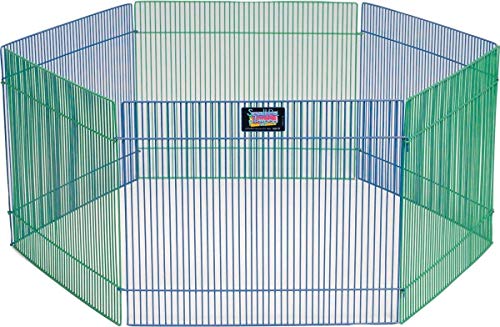
New World MidWest 30-Inch Exercise Pen is a quality option worth considering for your setup.
When bonding two rabbits, not all pairings have equal chances of success in rabbit bonding. The combination of sex, age, and size significantly affects your timeline and likelihood of a stable bond.
Pairing success by type:
| Pairing Type | Success Rate | Timeline | Notes |
|---|---|---|---|
| Male-Female (both fixed) | Highest (80%+) | 2-4 weeks | Most reliable pairing — natural social structure |
| Female-Female (both fixed) | High (70-80%) | 3-6 weeks | Second best — may require more patience |
| Male-Male (both fixed) | Moderate (50-70%) | 4-8 weeks | More territorial disputes — best if raised together |
| Baby-Baby (same litter) | High if kept together | N/A (automatic) | Littermates bond naturally — bonding baby rabbits from the same litter is the easiest path, but they must separate for surgery, re-bond after |
| Adult + Baby | Moderate (60-70%) | 4-6 weeks | Adult may dominance-mount baby — monitor closely. Bonding baby rabbits with adults requires extra supervision. |
| Senior + Adult | Low-Moderate | 4-8 weeks | Seniors tolerate less disruption — pair with a calm partner |
| Two dominant rabbits | Low (30-50%) | 2-3 months | Most difficult — both refuse to submit |
Male-female is the gold standard. Opposite-sex fixed rabbits have the highest success rate and the shortest timeline when bonding two rabbits. These success rates are based on aggregated data from rabbit rescue organizations including the House Rabbit Society and Rabbit Rescue groups across North America. This pairing mirrors rabbits’ natural social structure in the wild, where a dominant male and female form the core of a social group.
Size matters. Similar-sized rabbits bond more easily. A large rabbit paired with a much smaller one may intimidate or accidentally injure the smaller rabbit during dominance interactions.
Size mismatches also complicate shared housing, since smaller rabbits need escape routes that larger rabbits cannot follow.
Age gap matters. Keep the difference under two years when you ask can you bond rabbits of different ages. Pairing a senior rabbit (five or more years) with a baby under one year often fails due to energy mismatch — the baby wants to play while the senior needs rest.
Breed-specific considerations. Small breeds like Netherland Dwarfs and Holland Lops tend to be more territorial, which can slow bonding. Large breeds like Flemish Giants are generally more docile but require significantly more space.

The Bonding Process — Step by Step
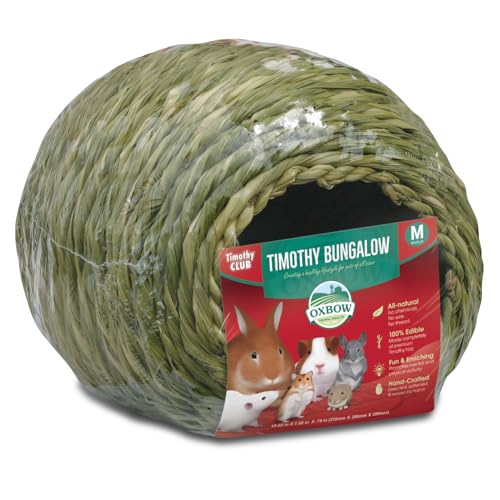
Many owners find that Oxbow Timothy Hay Bungalow works well for their pet’s needs.
Bonding sessions that look hopeless in week one can turn into rock-solid pairs by week four. The key is consistency — daily sessions, same routine, same neutral space.
Step 1: Set up neutral territory. Rabbit bonding neutral territory is the key to success. Choose a small, enclosed area that neither rabbit has ever entered. A bathroom, hallway, bathtub, or exercise pen works well.
Cover the floor with a clean blanket, linoleum, or vinyl — not carpet, which absorbs scent. Proper rabbit bonding neutral territory setup is essential.
Remove all objects except one litter box, one hay pile, and one water bowl. The space must feel completely unfamiliar to both rabbits. Any trace of scent from a previous resident triggers territorial behavior.
Step 2: Side-by-side housing (Week 1). Place rabbits in adjacent cages or divided sections with a wire barrier between them. They can see, smell, and hear each other but cannot make physical contact.
This builds familiarity and reduces the shock of first contact — an essential part of the rabbit bonding process. Swap sides daily so each rabbit experiences the other’s scent and living space.
Step 3: First meeting in neutral space (Week 2). Place both rabbits in the neutral area simultaneously. Stay in the room with a spray bottle and towel ready.
Keep initial sessions short — 10 to 15 minutes. Watch for positive signs (grooming, resting near each other, calm ignoring) and negative signs (aggressive charging, fur pulling, hard biting). End sessions on a positive note if possible, but always separate if aggression escalates.
Step 4: Gradual expansion. If sessions go well, extend the time gradually — 15 minutes to 20 to 30. Expand the space from a small pen to half a room to a full room over several sessions.
Add enrichment items like cardboard tubes and tunnels only after the pair is consistently calm together. New objects can trigger territorial disputes in rabbits who are not yet fully comfortable.
Step 5: Cement the bond (Weeks 3-4). Move both rabbits to a cleaned permanent shared cage. Wash everything with vinegar to remove previous territorial scent from either rabbit.
Supervise the first 48 hours together. If fighting occurs, separate immediately and return to Step 3.
Bonded pairs need more space — a minimum of 12 square feet for a pair versus 8 for a single rabbit. See our rabbit cage size guide for bonded pair recommendations.
Setting up the permanent shared space correctly prevents territorial disputes from re-emerging. See our rabbit setup guide for shared enclosure configuration.
Bonding Methods Compared
For this purpose, MidWest Small Animal Playpen is a popular choice among pet owners.
The neutral territory method described above is the standard approach for bonding two rabbits. However, alternative approaches exist for specific situations.
Method comparison:
| Method | How It Works | Best For | Pros | Cons |
|---|---|---|---|---|
| Neutral Territory | Meet in unfamiliar space, expand gradually | Most pairs (standard) | Most reliable, gentle, low injury risk | Slowest method (4-8 weeks), needs dedicated space |
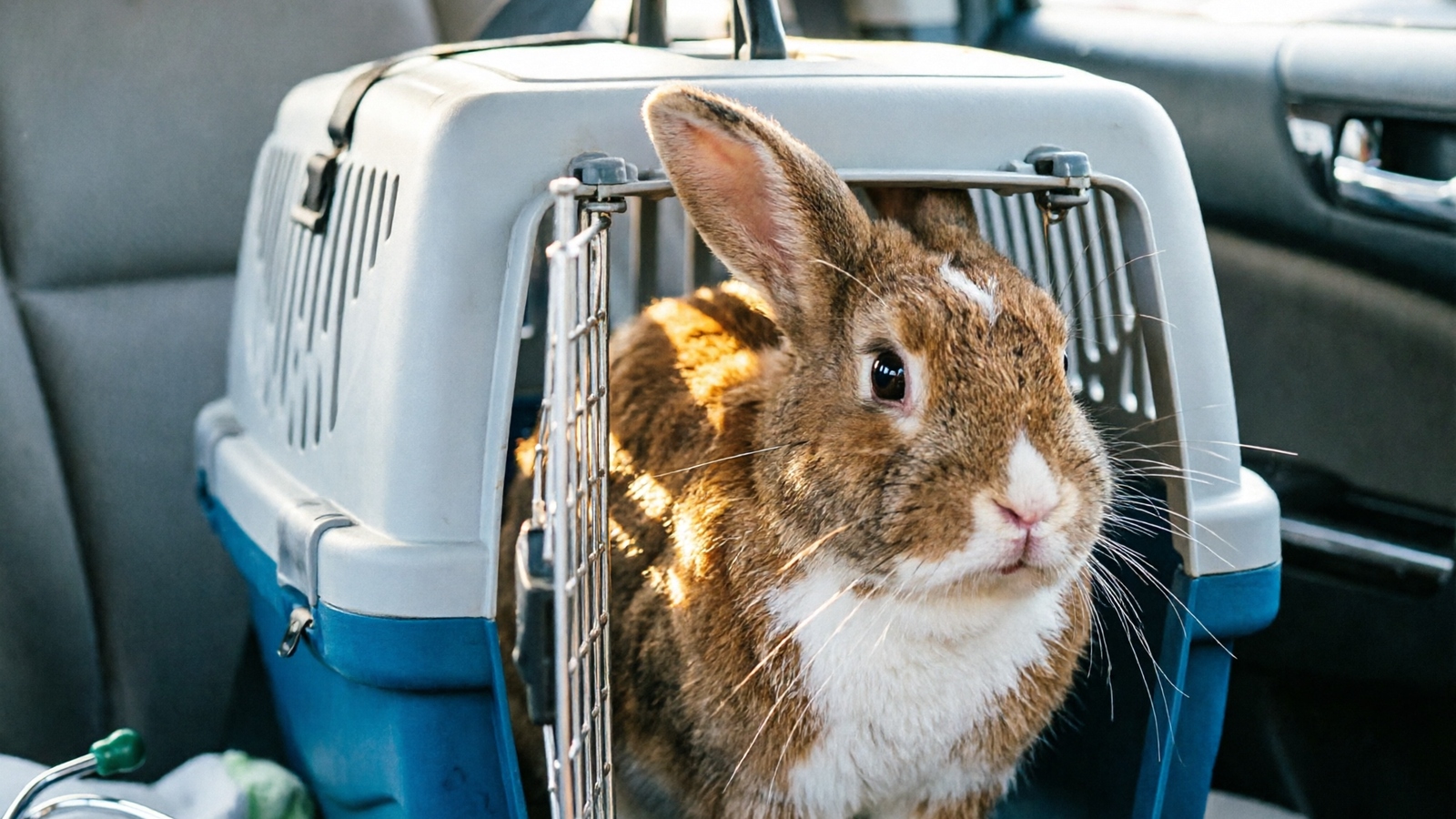
| Bonding Barrel/Car Ride | Both rabbits in carrier together during a car ride | Territorial or fighting pairs | Fast results, shared stress can build bond | High stress, injury risk in confined space, controversial |
| Side-by-Side Gradual | Adjacent cages with slow introduction over weeks | Anxious or fearful rabbits | Very low stress, good for nervous rabbits | Very slow (6-12 weeks), requires double housing |
| Pre-bonded Adoption | Adopt an already-bonded pair from a shelter | New rabbit owners | Instant bond, skip bonding entirely | Limited availability, surviving rabbit grieves if one dies |
Neutral territory is the recommended default. It works for the widest range of pairings with the lowest risk of injury.
The bonding barrel is a last resort. This method is controversial in the rabbit community.
Some rescues report success using a stressful shared experience to push rabbits together, but the risk of serious injury in a confined carrier is real. Only experienced owners should attempt this.
Pre-bonded pairs are ideal when available. Shelters often have bonded pairs surrendered together. Adopting a pre-bonded pair eliminates the entire bonding process and gives your rabbits instant companionship.
Fighting vs Playing — How to Tell the Difference

This is the most anxiety-inducing part of rabbit bonding for new owners. Knowing the difference between normal dominance behavior and dangerous fighting keeps both rabbits safe. Understanding rabbit bonding signs fighting vs playing is critical for every owner.
Behavior identification:
| Behavior | Playing (Normal) | Fighting (Intervene Immediately) |
|---|---|---|
| Chasing | Brief, alternating direction | One-sided pursuit, cornering victim |
| Mounting | Brief (5-10 seconds), then stops | Prolonged, aggressive, biting during mount |
| Fur pulling | None | Pulling clumps of fur — separate immediately |
| Biting | Gentle nips, no broken skin | Hard bites drawing blood — separate immediately |
| Ears flat back | Brief, returns to normal | Pinned back plus lunging — separate immediately |
| Circling | Both moving, following each other | One circles rapidly (dominance dance leading to fight) |
| Grooming | Licking each other’s head and ears | None during fighting |
| Spraying | May occur during initial meetings | Persistent spraying plus aggression |
| Posture | Relaxed, ears up, exploring | Tense, arched back, tail raised |
Understanding rabbit bonding signs fighting vs playing helps you decide when to intervene. Always have a spray bottle and towel ready during bonding sessions. The towel goes over the aggressive rabbit to break contact without putting your hands at risk. The spray bottle distracts rabbits mid-fight.
Some mounting is normal. Both males and females mount to establish hierarchy.
Brief mounting under 10 seconds without biting or aggressive behavior is fine. Prolonged mounting with biting means intervene immediately.
The dominance dance. When one rabbit circles the other rapidly and the second rabbit will not submit (lower its head, allow grooming), this situation will escalate to a fight. Intervene by placing your hand between them or spraying with the water bottle.
Warning: Never use your bare hands to separate fighting rabbits. They cannot distinguish your fingers from the other rabbit during a fight. Always use a towel or spray bottle.
What to Do When Bonding Fails
Not every rabbit pairing works out — and that is perfectly normal. Some individual rabbits simply prefer to live alone, and forcing rabbit bonding in these cases is counterproductive.
Try a different rabbit first. Sometimes the issue is the specific pairing rather than your technique.
Ask your local rescue about bonding dates — many shelters let you bring your rabbit to meet potential partners in a controlled setting.
Try a different method. If neutral territory fails after two months, switch to the side-by-side gradual approach. Some rabbits need extremely slow introductions that span several weeks of adjacent-only contact before any face-to-face meeting.
Permanent separation is a valid outcome. Not all rabbits are compatible — temperament varies as much in rabbits as in any other species. If bonding fails after consistent effort over two months, house rabbits in side-by-side cages.
They can still see and interact through the bars without physical contact. This provides social companionship without the risk of injury. Many rabbits live happy lives as neighbors rather than roommates.
Enrich your solo rabbit. A single rabbit needs more human interaction — aim for two to three hours daily.
Rotate toys weekly to prevent boredom. Provide digging boxes, tunnels, and foraging opportunities. Treats help build positive associations during bonding sessions — see our rabbit treats guide for rabbit-safe options.
Bonded rabbits live longer on average due to reduced stress and increased activity. But even a solo rabbit can thrive with proper care and attention — see our rabbit lifespan guide.
Rabbit Bonding FAQ
What is the timeline for bonding rabbits?
Two weeks to two months on average. Male-female pairs bond fastest (two to four weeks). When considering how long does it take to bond rabbits, while same-sex and difficult pairings can take two to three months.
Is it possible to bond rabbits of different ages?
Yes — keep the age gap under two years. Bond an adult with a baby only after both are spayed or neutered and the baby is at least four months old. The ideal pairing is two young adults of similar size.
Can you bond rabbits without neutral territory?
No — neutral territory is essential. Rabbits are extremely territorial, and introducing them in either rabbit’s established space triggers aggressive defense. The neutral space must be completely unfamiliar to both.
Should I let my rabbits fight it out?
Never. Unlike some animals, rabbits do not resolve dominance through fighting — it only escalates and can cause serious injuries. Separate immediately with a towel if you see fur pulling, blood, or prolonged aggressive mounting.
Can bonded rabbits live in the same cage?
Yes — once bonded, rabbits should live together in a shared space with a minimum of 12 square feet. Include two litter boxes, two water bowls, and multiple hiding spots to prevent resource guarding.