Warning: Medical Disclaimer: This article is not a substitute for professional veterinary care. If your rabbit is showing signs of illness, consult a qualified exotic veterinarian.
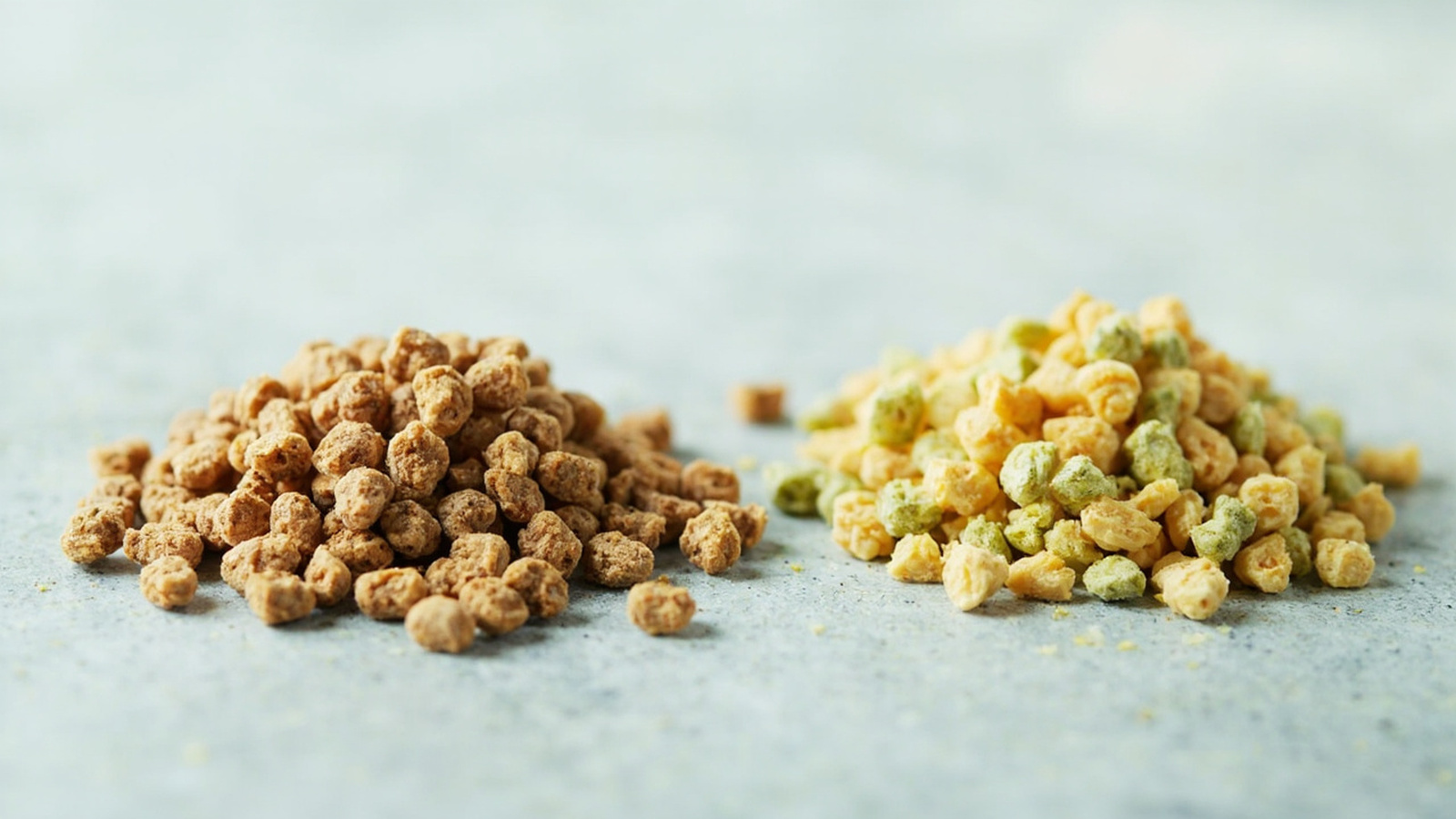
Most pet-store rabbit food is a blend of pellets, seeds, corn, and dyed nuggets, and a rabbit will eat the fun parts and leave the nutrition on the floor of the bowl. The eight pellets below are uniform, hay-based formulas scored on the same five label numbers, so you can pick one without guessing.
| Pick | Product | Best For | Key Feature |
|---|---|---|---|
| Best Overall | Oxbow Essentials Adult Rabbit Food | Adult rabbits on a plain Timothy diet | Uniform Timothy pellets with prebiotics |
| Best for Picky Eaters | Oxbow Garden Select Adult Rabbit Food | Rabbits who tire of plain pellets | Timothy, oat, and orchard hay blend |
| Best for Baby Rabbits | Oxbow Essentials Young Rabbit Food | Kits under 6 months | Alfalfa-based formula for growth |
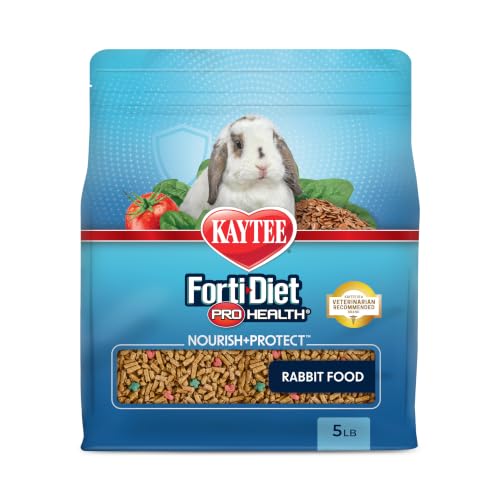
| Best Value | Kaytee Forti-Diet Pro Health Nourish+Protect | Budget-conscious homes with several rabbits | Probiotics and antioxidants at the lowest cost per pound |
| Best Simple Formula | Kaytee Timothy Complete | Owners who want plain Timothy and nothing else | Hand-selected Timothy as the first ingredient |
| Best Small-Batch | Small Pet Select Rabbit Food Pellets | Owners who care about milling and shipping dates | Milled in small batches and shipped fresh |
| Best Grain-Free | Sherwood Pet Health Adult Timothy Hay Pellet | Rabbits that do not settle on grain or soy | Hay-based, grain-free, and soy-free |
| Best Rescue-Grade | Mazuri Timothy Hay-Based Rabbit Food | Rescues and multi-rabbit groups | Nutritionally complete with live probiotics |
Amazon moves prices constantly, so the table stays price-free and each pick below carries the price captured on November 20, 2026 as a snapshot. This page covers one decision: which pellet to buy. Hay ratios, daily amounts, and vegetables live in our rabbit diet guide. Everything here comes from manufacturer labels, published guidance, and owner feedback.
What Makes the Best Rabbit Pellets? The 5-Point Label Checklist
Pellets are the vitamin and mineral top-up on a hay-based diet, so the label decides more than price or packaging does. Five lines separate a rabbit food from a treat.
- Fiber of 18 to 25 percent. Fiber keeps the gut moving, and low-fiber food is the classic setup for GI stasis, the condition where a rabbit’s gut slows down or stops. Accept 18 percent as the floor and aim closer to 25 percent. A rabbit that stops eating hay or producing droppings for 12 hours needs an exotic-savvy vet the same day.
- Calcium at or under 1 percent for adults. Adult rabbits do not need a growth-level mineral load, and calcium above 1 percent pushes toward bladder sludge, the calcium paste that collects in the bladder, and urinary stones. The rabbit health guide covers the warning signs.
- Timothy hay as the first ingredient. Adult pellets should be built on grass hay, not on paper or on a grain base. Alfalfa has a place in a young rabbit’s diet and none in a mature one.
- A uniform pellet. One shape, one formula, every piece the same. Mixed bags of seeds, corn, nuts, and dyed bits cause selective eating, where a rabbit sorts the bowl and eats only the tasty bits. Selective eating leaves a rabbit eating starch and missing the balanced pellet.
- Protein between 12 and 16 percent for adults, 16 to 18 percent for kits. Adult kidneys do not need more, and a kit’s bones do.
Check the species line first. Guinea pig pellets add vitamin C a rabbit does not need, and hamster food runs higher in protein and fat. Both sit on the same shelf row, and neither substitutes for rabbit food.
| Label line | Adult target | Kit target | Why it matters |
|---|---|---|---|
| Crude fiber | 18–25% | 18–25% | Gut motility and tooth wear |
| Crude protein | 12–16% | 16–18% | Muscle maintenance versus growth |
| Calcium | Under 1% | Higher by design | Bladder sludge and stones in adults |
| Base ingredient | Timothy or orchard grass | Timothy or alfalfa | Hay-driven fiber, low starch |
| Pellet shape | Uniform | Uniform | Prevents selective eating |
Timothy vs. Alfalfa Pellets: Which Does Your Rabbit Need?
The base hay decides what the pellet is for, and it is the one switch not to rush.
Adult Rabbits (6+ Months): Timothy-Based Pellets
Past six months, a rabbit needs a plain Timothy or orchard-grass base. That hay fraction keeps fiber high and calcium low, and it pairs with the grass hay that should always be available. See our guide to the best Timothy hay for rabbits for the main course the pellet tops up.
Baby and Young Rabbits (Under 6 Months): Alfalfa-Based Pellets
Kits are building bone and muscle fast enough that alfalfa-based pellets earn their higher calcium and protein. That is the argument for Oxbow Essentials Young Rabbit Food, which the manufacturer describes as an alfalfa-based formula for growth through the first year. Its uniform pellets stop a young rabbit sorting the bowl. Serve the same measured portion an adult gets, in the higher-mineral pellet.
Switching at the 6-Month Mark
Moving from alfalfa to Timothy is a diet change like any other, and rabbits notice. Run it over a week to ten days rather than overnight, hold hay and vegetables steady while the pellet swaps, and expect a few days of ignored pellets. Kits that are late to develop can stay on the young formula longer, but a growing rabbit on alfalfa past six months is the most common avoidable cause of adult bladder problems.
The 8 Best Rabbit Pellets of 2026, Ranked by Brand
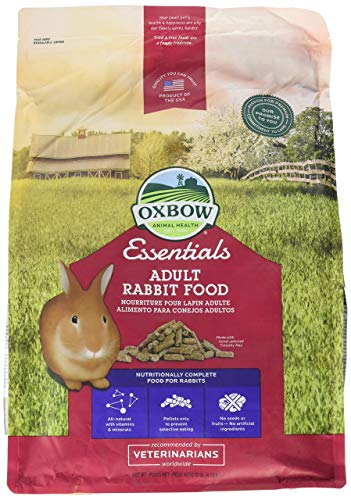
1. Oxbow Essentials Adult Rabbit Food — Best Overall
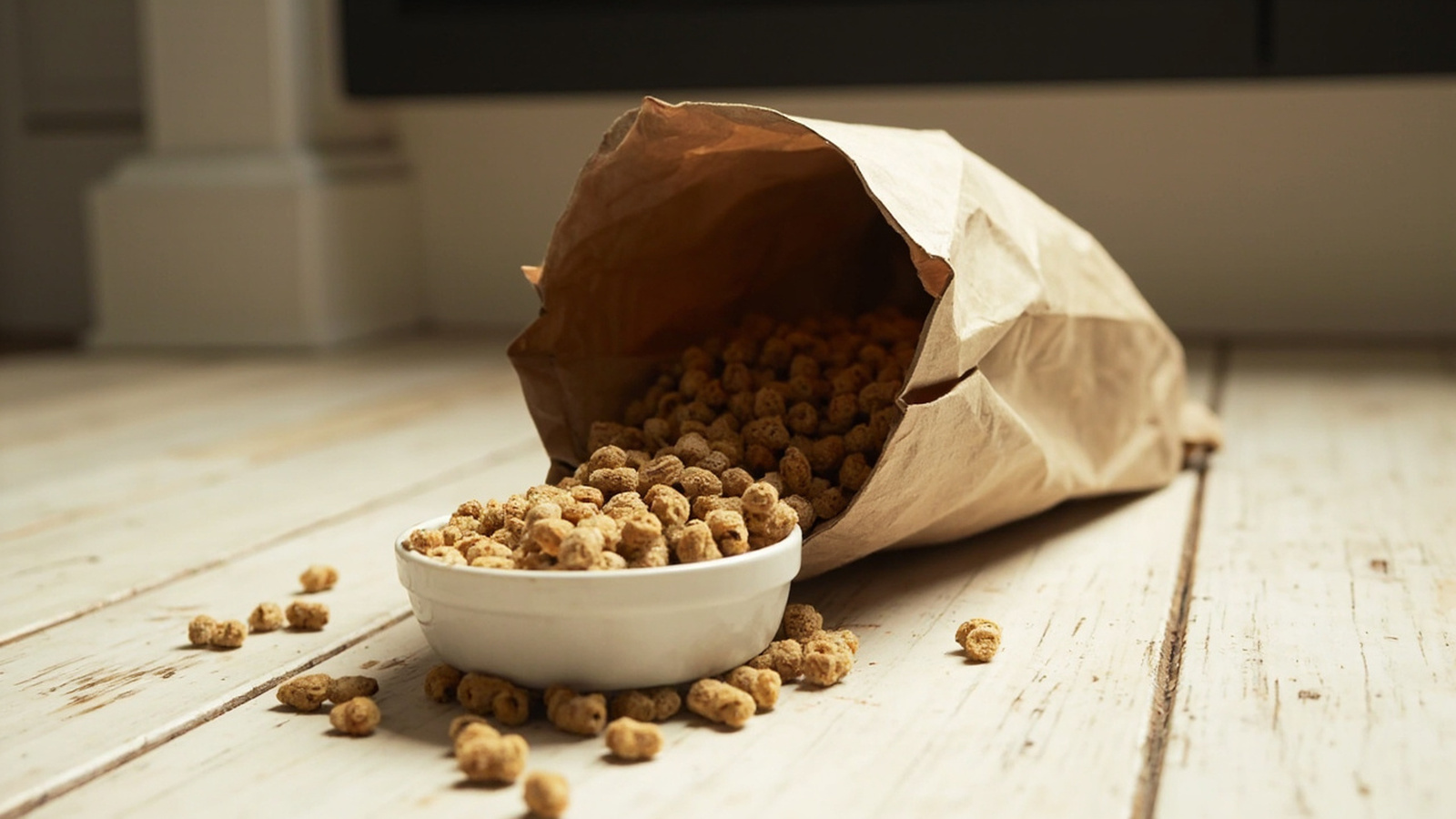
This is the plain Timothy option most rabbit keepers end up on. The label lists Timothy hay, prebiotics, and chelated minerals, no artificial preservatives or colors, and a 10 lb bag that read 21.67 US dollars on November 20, 2026. The manufacturer claims a full complement of daily vitamins and minerals in every bite, and the uniform extruded shape means a picky rabbit cannot pick around the nutrition.
Owners are uncommonly happy with the consistency. One calls the ingredient quality outstanding and says it has never caused a problem. Another reports the big bag costs less than the same food at a pet store. A third says their vet recommended the brand years ago.
What to watch for: this is the pellet most often declined on principle. One owner with two Holland Lops reports that neither six-month-old would touch it even though the vet had recommended it. Another says a rabbit that used to eat everything left this one alone. A delivery also arrived torn once with pellets spilled across the box. Skip it if your rabbit is a pellet refuser and you have not yet run a ten-day transition — refusal is a taste verdict, not a quality verdict.
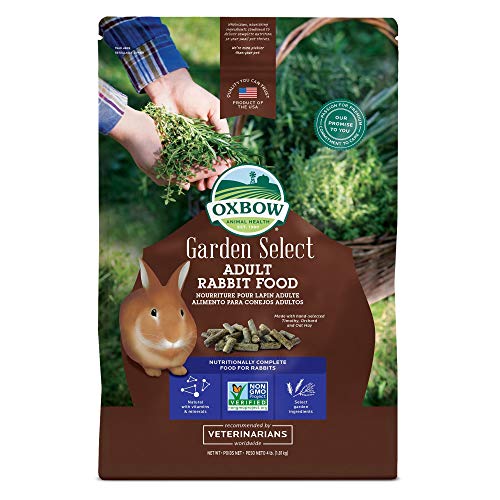
2. Oxbow Garden Select Adult Rabbit Food — Best for Picky Eaters
Where the first pick is uniform and monotonous, this one is uniform and fragrant. The label lists Timothy, oat, and orchard grass, and the formula is soy-free. The 4 lb bag read 12.74 US dollars on November 20, 2026, or 3.19 US dollars per pound. The hay blend adds aroma without seeds or dyed pieces, which is exactly the gap a bored rabbit leaves.
The strongest owner feedback is about consistency over time. One buyer has ordered it every third month for more than five years without a quality problem, and another says the rabbit never tires of it and treats a spoonful as a bonus.
What to watch for: freshness is the recurring complaint. One buyer says the first shipment arrived dust-free with long pellets, while a later one came full of dust with much smaller pieces. A long-term owner reports a rabbit who had eaten the brand her whole life refused the newest bag. Skip it if you cannot store a partly used bag airtight, because a bag that sits open for a month turns to powder.
3. Oxbow Essentials Young Rabbit Food — Best for Baby Rabbits
The alfalfa slot, and the only pick here you should not hand to an adult rabbit. The label lists alfalfa as the special ingredient, a soy-free formulation, and a 5 lb bag that read 11.04 US dollars on November 20, 2026. The manufacturer describes it as an alfalfa-based formula supporting growth through the first year, with uniform pellets that keep a young rabbit from sorting the bowl.
Owners report that it works. One says it suits young rabbits and that the food lasts a long time, and another is happy with the long, thin pellet shape.
What to watch for: delivery and pellet size. One buyer reports two shipping delays and plans to buy elsewhere, another calls the protein low and the pricing uncompetitive, and a third found the bag taped shut on arrival. Two other owners say the pellets are too small and thin for their rabbits, who wanted the bigger pieces and left the rest. Skip it if your kit is already past six months, and treat alfalfa pellets as a growth food with an end date.
4. Kaytee Forti-Diet Pro Health Nourish+Protect — Best Value
The cheapest way to feed several rabbits well. The listing shows a 5 lb bag at 10.41 US dollars on November 20, 2026, or 2.08 US dollars per pound, the lowest cost per pound of the eight picks here. The manufacturer adds prebiotics and probiotics, antioxidants, and crunchy pieces for chewing, on a Timothy base the label confirms.
This is the pick that rescues a picky rabbit on a budget. One owner reports a fussy rabbit who shunned fruit and vegetables regained healthy weight on it. Another credits the new velcro-style resealable closure with closing the gaps that used to let insects in.
What to watch for: the formula has changed more than once, and owners have noticed. One buyer says the pellets and colored pieces got smaller after a switch and that droppings changed with them. Another says the rabbit now eats only the green and blue pieces and leaves the plain ones behind. Skip it if your rabbit sorts its bowl, and expect some dust from the crunchy pieces.
5. Kaytee Timothy Complete Rabbit Food Pellets — Best Simple Formula
Nothing but Timothy, and the label backs it up. The guaranteed analysis lists crude protein of at least 13.0 percent, crude fat of at least 1.5 percent, and crude fiber between 20.0 and 25.0 percent. Calcium runs between 0.25 and 0.75 percent. The 4.5 lb bag read 9.95 US dollars on November 20, 2026, or 2.21 US dollars per pound. The manufacturer names hand-selected Timothy hay as the first ingredient.
It converts reluctant eaters more often than the price suggests. One owner with a picky 9.5 lb rabbit is amazed at how readily it is eaten, and another says the bag arrived well sealed with a long date on it.
What to watch for: several owners found something wrong inside the bag. One reports a delivery that was almost a quarter crushed dust, and another found a peanut mixed into the pellets after years of buying the same bag. A third counted hundreds of tiny bugs and stopped ordering. A separate owner flagged the bag’s own suggestion of a third to a half cup for small breeds as the cause of soft cecotropes, the nutrient-rich droppings rabbits re-eat. Skip it if you cannot sift a bag, and measure the portion instead of trusting the printed cup.
6. Small Pet Select Rabbit Food Pellets — Best Small-Batch
Freshness is the whole pitch, and the numbers back the fiber claim. The guaranteed analysis lists crude fiber of at least 25.0 percent, crude protein of at least 14.0 percent, and crude fat of at least 2.0 percent. Calcium runs between 0.4 and 0.6 percent. The 5 lb bag read 19.99 US dollars on November 20, 2026, or 4.00 US dollars per pound. The manufacturer says the pellets are milled in small batches from hand-selected Timothy and shipped fresh.
The strongest owner story is about a rabbit who refused everything else. One buyer explains that a fussy rabbit turned down Oxbow and took to these instead, and another likes the fresh color and the ingredient list.
What to watch for: packaging and the occasional bad batch. It arrives in a cardboard box with no sealed plastic liner, and one buyer says the box looked opened and had been retaped. Another found small black bugs in a delivery and moved to another retailer, and a third says the feed molds quickly once opened. A longer-term buyer says the quality has slipped and the bag is mostly crumb. Skip it if you cannot move it straight into an airtight container.
7. Sherwood Pet Health Adult Timothy Hay Pellet — Best Grain-Free
The cleanest ingredient list of the eight. The label calls the formula hay-based, grain-free, and soy-free, with Timothy hay, high fiber prebiotics covering both short and long strand fiber, and natural vitamins, minerals, and antioxidants. The label also lists omega-3 and omega-6 fatty acids. The 4.5 lb bag read 26.95 US dollars on November 20, 2026, the highest cost per pound here at 5.99 US dollars.
Owners notice results rather than ingredients. One says an aging rabbit’s digestion improved noticeably within weeks of the switch, and another says a rabbit with recurring diarrhea settled once the food changed.
What to watch for: cost and transit. One buyer says a bag arrived torn open with food on the bottom of the box. Another received a bag that smelled rancid, and the rabbits would not touch it. A third warns that ordering this from Amazon leaves the bag loose in a box until half of it is dust, and recommends buying from the maker instead. Skip it if per-pound cost matters more than a short ingredient list.
8. Mazuri Nutritionally Complete Timothy Hay-Based Rabbit Food — Best Rescue-Grade
The institutional formula, and the one shelters buy by the case. The listing describes a nutritionally complete Timothy hay-based feed with no need to add vitamins or minerals, live probiotics including Lactobacillus and Enterococcus, natural vitamin E, and flaxseed as an omega source. The price shown on November 20, 2026 was 33.98 US dollars for a two-pack of 5 lb bags, or 3.40 US dollars per pound.
The owner story here starts with a rabbit found abandoned. One buyer took him in with no time to research and bought this as a stopgap. It became the permanent choice after the vet approved it. Another says a rabbit with digestive trouble on its previous food cleared up.
What to watch for: pack size and thin feedback. It is sold as a two-pack, so a single-rabbit household buys ten pounds it may not finish. One buyer notes the maker’s own store sells the same food far cheaper. This pick also carries the smallest pool of owner feedback of the eight. Skip it if you have one rabbit and a small budget.
Brand Showdown: Oxbow vs. Kaytee vs. Small Pet Select
Three companies, three philosophies, and a price gap wider than the quality gap.
Oxbow builds for the label. Uniform extruded pellets on a Timothy base, with the vitamin and mineral load already complete. Oxbow takes three slots in this list because the segmentation is genuine: plain adult, a hay blend for fussy eaters, an alfalfa formula for kits. It is the most expensive mainstream tier here, and the one owners describe as the last pellet they will change.
Kaytee builds for the budget and the shelf. Forti-Diet Pro Health is the cheapest per pound here and adds probiotics and antioxidants, while Timothy Complete is the stripped-down version with a plain label. The trade is that Kaytee reformulates more often, and owners notice when the pellet shape or the colored pieces shift under the same name.
Small Pet Select builds for freshness. The pellets are milled in small batches and shipped rather than warehoused, and the fiber guarantee is the highest on the page. Cost per pound sits between Oxbow and Sherwood; the weak point is a cardboard box instead of a sealed liner.
Sherwood and Mazuri are the specialist ends. Sherwood is the grain-free and soy-free option at the top of the price range, and Mazuri is the nutritionally complete institutional formula sold in a two-pack. Both make sense for a rabbit with a specific dietary constraint or a group that eats through bags faster than a household can store them.
How Much Pellet Should You Feed? Portions by Weight & Age
Pellets are the smallest part of the diet and the easiest part to overfeed. Hay takes up most of what a rabbit eats, and pellets fill the vitamin and mineral gaps hay alone leaves open.
- Adults: roughly an eighth to a quarter cup per 6 lb of body weight each day.
- Small breeds such as Holland Lops and Mini Lops: closer to an eighth cup, since they are prone to obesity.
- Large breeds such as Flemish Giants: a quarter to a half cup, with a 10 lb bag lasting three to four weeks.
- Kits under 6 months: the same portion, served as the alfalfa-based pellet.
- Seniors: the adult portion, with weight checked weekly and trimmed if the rabbit is gaining.
Measure with a scoop and feed twice a day rather than topping the bowl up. Free-feeding pellets is the fastest route to a fat rabbit with a dentist’s bill behind it. The full daily framework, including how much to feed your rabbit daily and the seven-day switch-over table, is in our rabbit food guide.
Rabbit Pellet FAQs
How do I switch my rabbit to a new pellet brand?
Mix the two foods in the same bowl and change the ratio every two or three days, starting mostly old and finishing on the new pellet by day seven or ten. Watch the litter box as you go: smaller or softer droppings mean the switch should slow down. A rabbit with a sensitive stomach can take two to three weeks, and that is fine.
Are colorful mixed rabbit foods and muesli-style blends okay for daily feeding?
No. A blend of pellets, seeds, corn, and dyed pieces lets a rabbit eat the starch and leave the balanced part. That is how a rabbit ends up with all the disadvantages of muesli, a loose mix of seeds and flakes, and none of the nutrition. Some owners mix a blend into uniform pellets and get away with it, but the honest answer is that the blend is a treat and the uniform pellet is the meal.
Can a rabbit live on pellets alone?
No, and this is the mistake behind most diet-related illness in pet rabbits. Grass hay should fill roughly four-fifths of the diet, pellets about a tenth, and fresh vegetables the rest. Hay wears the continuously growing teeth down and keeps the gut moving, so a rabbit on pellets alone is heading toward stasis.
What should adult rabbits avoid in a pellet?
Avoid a formula led by alfalfa, since a mature rabbit does not need the growth-level calcium, and avoid seeds, nuts, corn, added sugar, molasses, and calcium above one percent. Also avoid anything listing a vitamin or mineral dose for another species, and skip a bag whose feeding chart suggests a third to a half cup for a small breed.
How long does a bag of rabbit pellets stay fresh, and how should it be stored?
Buy the size your rabbit will finish in a few weeks, check the date on every bag, and move the pellets into an airtight container the moment you open it. Pellets left in an open bag lose their vitamins, and dust in a bag is both a waste and a sign of poor storage. Owners have reported everything from bugs in an opened bag to feed that molded within days.
Conclusion: The Safest Pellet Is a Boring Pellet
The formula that keeps a rabbit healthy is not exciting: one hay base, a low calcium level for adults, and a uniform pellet that leaves nothing to pick around. For most owners that is Oxbow Essentials Adult Rabbit Food, plain Timothy pellets with a complete vitamin and mineral load. On a tight budget, Kaytee Forti-Diet Pro Health covers the same ground for the lowest cost per pound. For a rabbit under six months, the alfalfa-based Oxbow Essentials Young Rabbit Food is the right box, and only until the six-month switch.
Whatever you choose, the pellet is the smallest part of the diet and the hay is the dish it sits in. For housing, handling, and the rest of the setup, start with our complete rabbit care guides.