Why Hay Is Non-Negotiable for Guinea Pigs
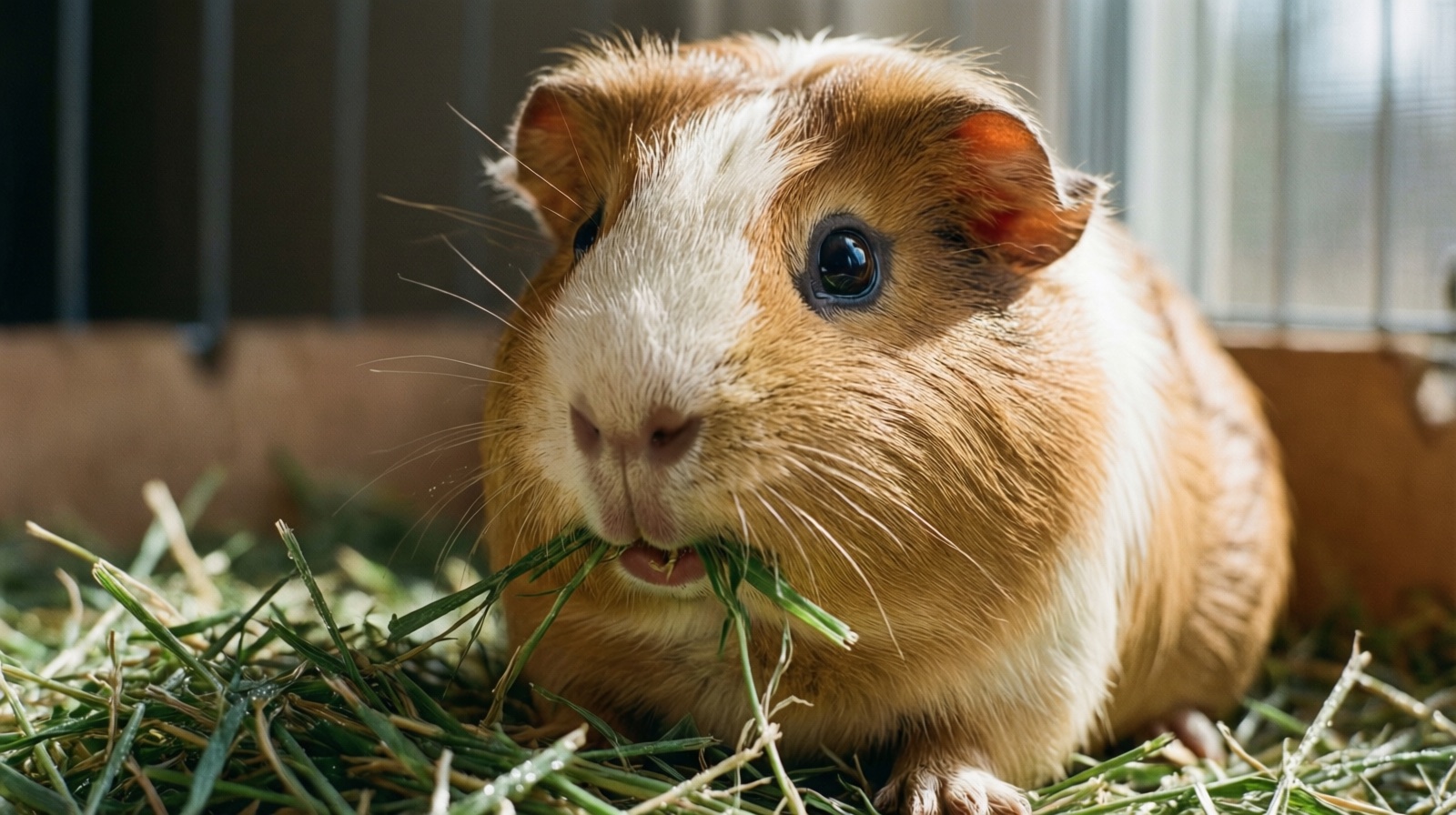
Hay is dried grass that makes up 80% of a guinea pig’s diet. Unlike pellets, long-strand hay provides the fiber needed for gut motility and the abrasive texture that keeps continuously growing teeth from overgrowing. Without adequate hay, a guinea pig will develop serious and potentially fatal health problems.
Finding the best guinea pig hay is one of the most impactful decisions you’ll make for your pet’s long-term health. The right hay prevents dental disease, supports digestion, and provides the enrichment your guinea pig needs to thrive.
A guinea pig’s digestive system is designed to process constant fiber. In the wild, guinea pigs graze on grasses for 6-8 hours per day. This continuous intake keeps the gut moving — a process called peristalsis — and prevents GI stasis, a condition where the digestive system simply stops. GI stasis is painful and can be fatal within 12-24 hours if untreated.
Dental health depends equally on hay. Guinea pig teeth grow continuously throughout their lives — roughly 3-4 inches per year. The lateral (side-to-side) grinding motion required to chew long-strand hay wears teeth down to the proper length. Without this constant grinding, teeth develop spurs that cut into the tongue and cheeks, making eating painful and leading to weight loss and starvation.
The 80/10/10 rule is the gold standard:
To meet this standard, you need the best guinea pig hay available — not just any bag from the pet store.
| Component | Percentage | What It Provides |
|---|---|---|
| Hay | 80% | Fiber for digestion, dental wear, gut motility |
| Vegetables | 10% | Vitamin C, hydration, variety |
| Pellets | 10% | Concentrated vitamins and minerals |
For the complete dietary framework, see our guinea pig diet guide. For dental and digestive health details, see our guinea pig health problems guide.
Quick Comparison: 7 Best Guinea Pig Hay Brands Tested
To identify the best guinea pig hay on the market, we researched the top-selling brands across quality, freshness, value, and guinea pig acceptance rate.
| # | Product | Type | Price | Reviews |
|---|---|---|---|---|
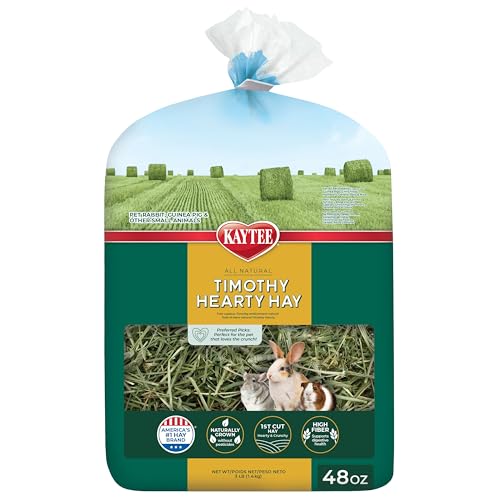
| Kaytee Timothy Hay | Timothy | $12.95 | 13,769 | Best Overall |
| Small Pet Select Orchard Grass Hay | Orchard Grass | $34.99 | 6,838 | Best Orchard Grass |
| Oxbow Western Timothy | Timothy | $21.68 | — | Best Per-Pound Value |
| Kaytee Timothy Plus Carrots | Flavored Timothy | $11.99 | 7,951 | Best for Picky Eaters |
| Kaytee Timothy Plus Marigolds | Flavored Timothy | $11.99 | 3,618 | Variety Option |
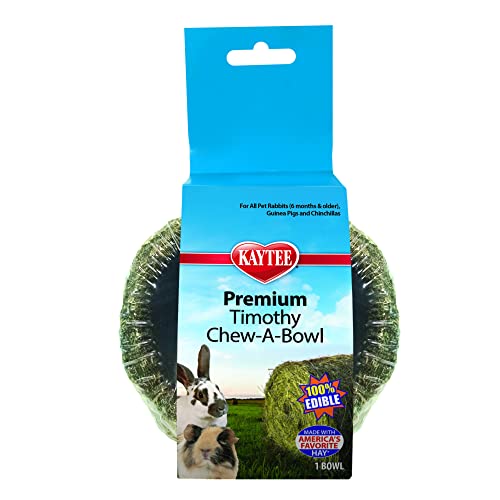
| Kaytee Chew-A-Bowl | Compressed Bowl | $8.99 | 4,066 | Best Convenient |
| Kaytee Timothy Blend Cubes | Compressed Cubes | $11.99 | 10,711 | Best Compressed |
For pellet recommendations to complement your hay, see our best guinea pig food guide.
In-Depth Brand Reviews
Kaytee — The Most Accessible Brand
When ranking the best guinea pig hay brands, Kaytee consistently comes out on top: wide availability, consistent pricing, and a product line that covers nearly every need. Their standard Timothy Hay ($13.95) is the best overall choice for most guinea pig owners — affordable, widely available, and accepted by the vast majority of guinea pigs. For many owners searching for the best guinea pig hay, Kaytee is the default starting point.
The main criticism of Kaytee is batch inconsistency. Some bags arrive green and fragrant; others are more yellow and dusty. I’ve found that Kaytee batches purchased in late summer and fall tend to be the freshest, likely because they’re harvested during peak growing season and spend less time in warehouse storage.
Kaytee’s strength is product variety: the Plus Carrots ($11.99) and Plus Marigolds ($11.99) lines add variety for picky eaters. The Chew-A-Bowl ($8.99) doubles as food and enrichment toy, while the Timothy Blend Cubes ($11.99) are convenient for travel.
Caveat: The carrot and marigold varieties should be supplemental, not primary. The added carrots increase sugar content, and some guinea pigs learn to pick out the carrots while ignoring the hay — defeating the purpose entirely.
Small Pet Select — The Vet-Recommended Standard
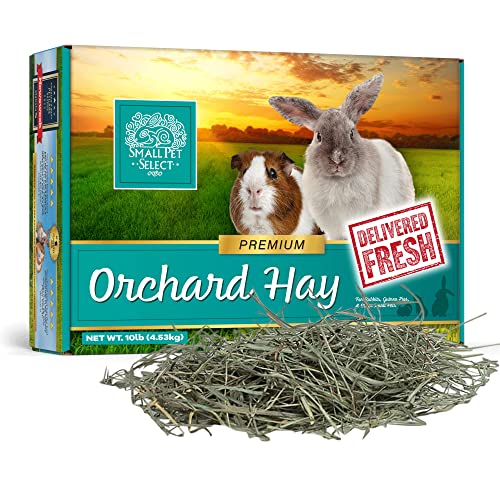
Small Pet Select is widely considered the best guinea pig hay brand by veterinarians, and their Orchard Grass Hay ($34.99) represents the premium end of guinea pig hay. The quality is noticeably more consistent than Kaytee — less dust, greener color, and better leaf-to-stem ratio across batches.
The higher price is the main drawback. SPS ships directly from their warehouse, so delivery takes longer than Amazon Prime. For guinea pigs with respiratory sensitivity (dusty hay triggers guinea pig sneezing), the lower dust content of SPS may justify the premium.
Oxbow Western Timothy — Best Per-Pound Value
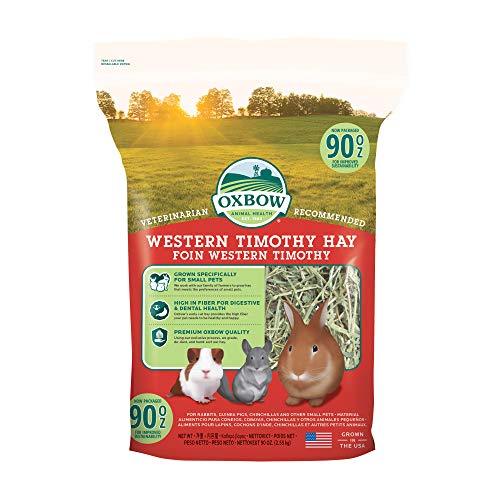
Oxbow Western Timothy Hay ($21.68) is a premium-brand staple at a working price point. The 90-ounce bag works out to roughly $3.85 per pound — cheaper per pound than the smaller Kaytee bags on this list. For owners seeking the best guinea pig hay value, Oxbow delivers high-fiber, USA-grown Timothy without the boutique price.
The tradeoff is bag size for households with one pig — 90 ounces is a lot of hay for a single guinea pig, and it needs cool, dry storage to stay fresh before you finish the bag.
Brands Worth Considering (Beyond Amazon)
The best guinea pig hay isn’t limited to Amazon. Two brands frequently recommended in the guinea pig community deserve mention:
Small Pet Select sells directly through their website with a subscription model. Their hay is shipped fresh from the farm, and they offer organic certification options. The 30-day freshness guarantee is appealing — if your guinea pig won’t eat it, they’ll send a replacement. If freshness is your top priority when choosing the best guinea pig hay and you don’t mind ordering outside of Amazon.
KMS Hayloft is a small family farm in California that hand-sorts their hay. The guinea pig community on Reddit’s r/guineapigs frequently recommends KMS for exceptional quality and consistency. The personal touch of hand-selection means fewer stems and more of the leafy portions that guinea pigs prefer. Among the best guinea pig hay sources for quality-conscious owners, KMS is worth the effort to source.
For daily care routines that complement proper hay feeding, see our guinea pig care guide.
Timothy Hay Cuts Explained: 1st vs 2nd vs 3rd Cutting
The best guinea pig hay for your pet depends heavily on the cut you choose. Understanding hay cuts is one of the most overlooked aspects of guinea pig nutrition. The “cut” refers to when the hay is harvested during the growing season, and it dramatically affects the texture, fiber content, and nutritional profile.
Key facts about Timothy hay cuts:
- 1st cut has the highest fiber content (30-34%) and the thickest, coarsest stems
- 2nd cut is what most vets recommend as the gold standard for adult guinea pigs
- 3rd cut is the softest and most leafy but has the lowest fiber content
1st Cutting — Best for Dental Wear
First cutting Timothy hay is harvested earliest in the season. It has thick, coarse stems with fewer leaves. The high fiber content (30-34%) makes it excellent for dental wear — the tough stems require significant grinding force. The downside is that many guinea pigs find 1st cut less appealing and may eat around the stems.
Best for: The best guinea pig hay for dental wear — adult guinea pigs who need extra grinding, overweight pigs who need maximum fiber with minimum calories.
2nd Cutting — The Gold Standard
Second cutting is the most balanced option. It has moderate stem thickness, a good leaf-to-stem ratio, and fiber content around 28-32%. Most veterinarians and experienced guinea pig owners recommend 2nd cut as the default choice for healthy adult guinea pigs. It provides enough fiber for digestion while being palatable enough that guinea pigs actually eat it.
Best for: The best guinea pig hay for most adult guinea pigs (6 months to 5 years), everyday feeding.
3rd Cutting — Best for Picky Eaters and Seniors
Third cutting is harvested latest, producing the softest, most leafy hay with thin stems. Fiber content drops to around 25-28%. Guinea pigs almost universally prefer 3rd cut — it’s the most tender and easiest to eat. However, the lower fiber means it’s less effective for dental wear and gut motility.
Best for: The best guinea pig hay for picky eaters and senior guinea pigs with sensitive teeth, recovering pigs, and as a topper mixed with 2nd cut to encourage hay consumption.
A practical approach is to use 2nd cut as the base hay in the rack and sprinkle a handful of 3rd cut on top. Guinea pigs will typically eat through the softer top layer and then continue with the 2nd cut below — a useful strategy for transitioning picky eaters to higher-fiber hay.
For dental and digestive health details, see our guinea pig health problems guide.
Hay Types Compared: Timothy vs Orchard Grass vs Meadow vs Alfalfa
Choosing the best guinea pig hay means understanding the differences between each type.
| Type | Fiber | Calcium | Protein | Best Age | Key Characteristic |
|---|---|---|---|---|---|
| Timothy Hay | 28-34% | 0.2-0.4% | 7-11% | Adult (6+ months) | Gold standard, balanced nutrition |
| Orchard Grass | 28-32% | 0.2-0.3% | 7-10% | Adult (6+ months) | Softer, less dusty, good alternative |
| Meadow Hay | 25-30% | Variable | 6-9% | Adult | Mixed grasses, less consistent nutrition |
| Alfalfa | 20-28% | 1.2-1.5% | 15-20% | Baby (under 6 months) | High calcium and protein — adults limited |
Timothy Hay — The Gold Standard
Timothy hay (Phleum pratense) is the most widely recommended hay for adult guinea pigs. Its balanced fiber-to-protein ratio, moderate calcium content, and wide availability make it the best guinea pig hay for most situations. Both Kaytee and Standlee offer reliable Timothy options on Amazon.
Orchard Grass — The Best Alternative
Orchard grass (Dactylis glomerata) is increasingly popular as a Timothy alternative. It is softer, slightly sweeter, and produces less dust — making it the best choice for guinea pigs with respiratory sensitivity. The best orchard grass hay for guinea pigs comes from Oxbow, though Standlee also offers an orchard grass option. Many owners rotate between Timothy and orchard grass weekly to provide variety while maintaining consistent nutrition.
For guinea pigs with allergies or respiratory sensitivity, orchard grass is often the solution. The lower dust content reduces respiratory irritation, and the softer texture is easier on sensitive mouths. When searching for the best guinea pig hay for allergies, orchard grass consistently ranks as the top recommendation among veterinarians and experienced owners.
Meadow Hay — Good for Variety
Meadow hay is a mix of various grass species harvested from natural meadows. The nutritional content varies by harvest because the exact grass composition differs. It is safe and provides good variety, but the inconsistency makes it better as a rotation option rather than the primary source when selecting the best guinea pig hay. When considering meadow hay vs timothy hay for guinea pigs, Timothy wins for consistency.
Alfalfa Hay — Only for Growing Guinea Pigs
Alfalfa hay (Medicago sativa) is fundamentally different from grass hays. It is a legume, not a grass, which means much higher calcium (1.2-1.5% vs 0.2-0.4% for Timothy) and protein (15-20% vs 7-11%). These elevated levels make alfalfa the best guinea pig hay for growing guinea pigs under 6 months, but dangerous for adults.
Long-term alfalfa feeding in adult guinea pigs leads to bladder stones and sludge — painful calcium deposits in the urinary tract. The alfalfa hay vs timothy hay for guinea pigs comparison is clear: alfalfa for babies, Timothy for adults, with a gradual transition between 4-6 months of age.
For vitamin C considerations (which hay alone cannot adequately provide), see our guinea pig vitamin C needs.
Best Hay by Age and Health Needs
Baby and Young Guinea Pigs (Under 6 Months)
The best guinea pig hay for baby guinea pigs is alfalfa, which provides the extra calcium and protein in best alfalfa hay for guinea pigs. Alfalfa supports rapid bone development and muscle growth during the first 6 months. At around 4 months, begin mixing in small amounts of Timothy hay — roughly 25% Timothy, 75% alfalfa. By 6 months, fully transition to Timothy or orchard grass.
The Abyssinian guinea pig and other larger breeds may benefit from a slightly longer alfalfa period (up to 8 months), while smaller breeds can transition earlier.
Adult Guinea Pigs (6 Months to 5 Years)
Best hay for adult guinea pigs is 2nd cut Timothy hay, with unlimited access at all times. This is the best guinea pig hay for maintaining long-term health. Orchard grass makes an excellent rotation option. The goal is consistent, high-fiber intake that supports digestion and dental health. Expect your adult guinea pig to eat roughly 80-100g of hay per day.
Senior Guinea Pigs (5+ Years)
The best guinea pig hay for senior guinea pigs needs to be soft. Senior guinea pigs often have dental wear that makes chewing coarse hay difficult. Best hay for senior guinea pigs is 3rd cut Timothy or orchard grass — both are softer and easier to chew. Monitor weight closely, as seniors may lose weight if hay becomes too difficult to eat. Mixing 3rd cut with 2nd cut provides fiber while maintaining accessibility.
A guinea pig’s guinea pig lifespan typically ranges from 5-7 years with proper diet and care. Senior dietary adjustments, including softer hay, can significantly improve quality of life in the final years.
Skinny Pigs (Hairless Breed)
Best hay for skinny pigs follows the same age-based guidelines as haired guinea pigs, with one important difference: skinny pigs have higher metabolisms because they lack fur insulation. They burn more calories maintaining body temperature, which means they need more total food intake — both hay and pellets. Some owners supplement with a small amount of alfalfa mixed into Timothy for the extra calories. See our Skinny Pig breed info for complete care details.
For breed-specific dietary considerations, see our guinea pig breeds guide.
How to Buy, Store, and Test Hay Quality
4-Step Hay Quality Test
-
Smell test — Fresh hay should smell grassy and pleasant, like a sunny field. If it smells musty, moldy, or dusty, discard it immediately. Mold spores can cause serious respiratory infections in guinea pigs.
-
Visual check — Look for bright green color (some yellowing at the base is normal). Check for white or gray spots, which indicate mold. Hold the bag up to light and shake — excessive dust particles floating means poor quality or overly dry hay.
-
Feel test — Good hay should feel slightly flexible, not brittle or powdery. Rub a handful between your fingers — it should have some spring and resilience. Hay that crumbles to dust has lost too much moisture and nutritional value.
-
Taste test (by your pig) — The ultimate quality indicator. If your guinea pig eagerly eats the leafy portions and some stems, the hay is good quality. If they only pick at it or leave most behind, the hay may be stale, dusty, or simply a cut they don’t prefer.
Storage Best Practices
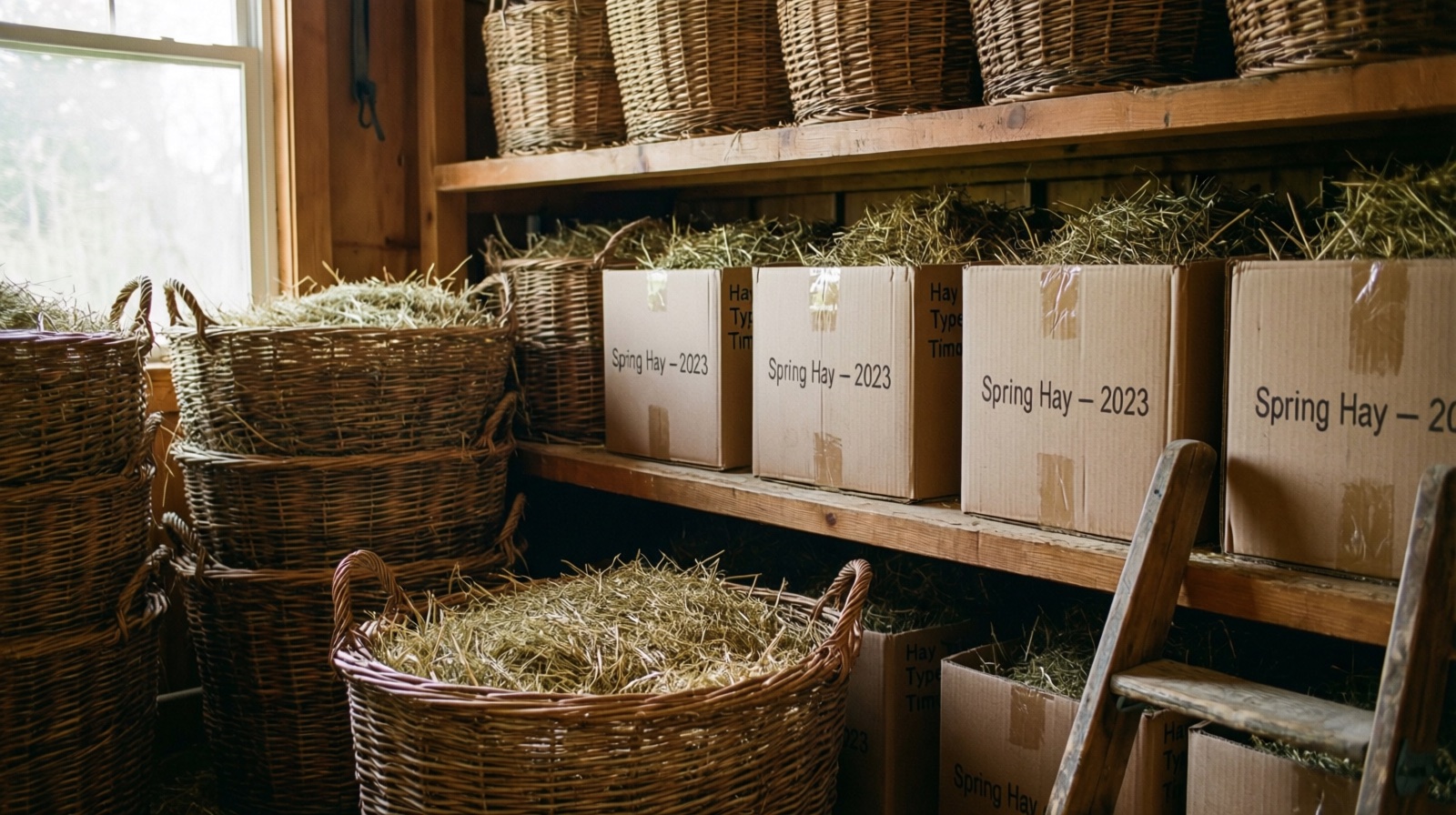
Store hay in a cool, dry, well-ventilated area. Never seal hay in airtight plastic containers or bags — trapped moisture promotes mold growth. A cardboard box with the top open, or a mesh bag, allows airflow while keeping hay contained. Even the best guinea pig hay loses quality over time. Peak freshness lasts 3-6 months from the harvest date.
Buying in bulk saves money significantly. A 25 lb box of Standlee Timothy costs roughly one-third the per-ounce price of small bags. However, only buy in bulk if your guinea pig will consume it within 3 months — stale hay loses nutritional value and palatability.
Small Pet Select’s subscription model is worth considering for consistent freshness — hay arrives at your door on a regular schedule, eliminating the risk of running out or storing excess.
The placement of your hay rack matters too. Position it in the best guinea pig cage away from the litter area to prevent urine contamination. Soiled hay produces ammonia, which damages the respiratory tract. For the difference between hay and cage lining, see our guinea pig bedding guide.
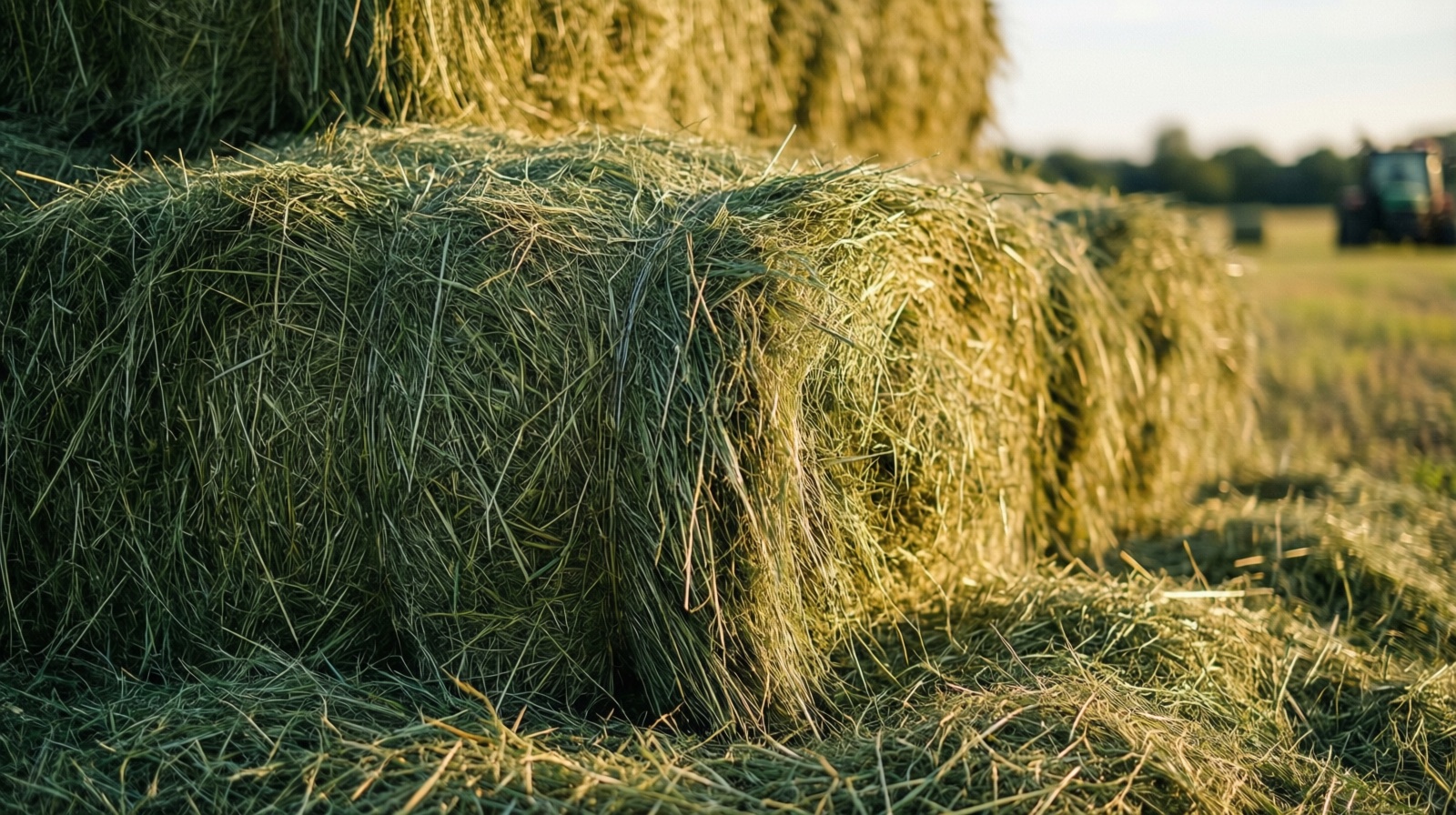
Hay Feeders and Accessories
The best guinea pig hay deserves a good feeder. A hay feeder keeps hay clean, accessible, and off the cage floor. The best hay feeder for guinea pigs depends on your cage setup and your guinea pig’s habits.
Wall-mounted racks are the most popular option. They attach to the cage bars and hold hay at a comfortable eating height. Choose a rack with large enough openings that your guinea pig can pull hay through without struggling.
Corner feeders fit snugly in cage corners, saving floor space. They work well in smaller cages where wall mounting isn’t practical.
Box feeders sit on the cage floor and hold larger quantities. The downside is that guinea pigs may climb inside and soil the hay.
Hanging bags are mesh bags that suspend from the cage top. They’re inexpensive and effective, but the mesh can snag claws if the openings are too large.
Never feed hay directly on the floor — it absorbs urine, becomes a bacterial breeding ground, and contributes to bumblefoot in guinea pigs from standing on soiled bedding. An appropriately sized guinea pig cage with a proper feeder keeps hay accessible and clean.
Common Hay Problems and Solutions
Even when you’ve found the best guinea pig hay, problems can still arise. Here’s how to handle the most common issues.
My guinea pig won’t eat hay — Even the best guinea pig hay won’t help if your pig refuses to eat. This is the most serious hay problem. If your guinea pig stops eating hay for more than 12 hours, it warrants immediate attention. Try switching to a softer cut (3rd cut or orchard grass), offering a flavored variety (Kaytee Plus Carrots), or mixing in fresh herbs like cilantro to stimulate appetite. If the problem persists, see a vet — dental issues are the most common medical cause. For detailed troubleshooting, see our guinea pig not eating guide.
Hay is too dusty — Excess dust irritates the respiratory tract, causing sneezing and nasal discharge. Switch to Small Pet Select Orchard Grass (lower dust than Timothy), try a different brand, or sift the hay through a colander before serving to remove loose dust.
Hay smells musty — Musty odor means mold. Discard the entire bag immediately — mold spores spread through the batch and cannot be removed by picking out affected pieces. Moldy hay causes respiratory infections that can be fatal.
My guinea pig only eats leaves, not stems — This is common with 1st cut Timothy, which has thick, tough stems. Switch to 2nd or 3rd cut, or mix orchard grass in to improve the leaf-to-stem ratio. Guinea pigs naturally prefer the leafier portions — a mix ensures they get fiber from stems while enjoying the taste of leaves.
My guinea pig is eating less hay than usual — Monitor closely for 24 hours. Reduced hay intake can be an early sign of dental problems (tooth spurs making chewing painful), respiratory irritation from dusty hay, or simply too many treats and vegetables reducing appetite. Ensure hay is fresh and try a different brand or cut. If intake doesn’t return to normal within 24 hours, consult a veterinarian — GI stasis can develop quickly when fiber intake drops.
Conclusion
The best guinea pig hay for most owners is 2nd cut Timothy — specifically Kaytee Timothy Hay for value or Small Pet Select Orchard Grass for premium quality. For babies, alfalfa hay provides essential calcium and protein for the first 6 months.
Whatever stage your guinea pig is at, the best guinea pig hay will always be fresh, high-fiber, and available in unlimited quantities.
Rotate between Timothy and orchard grass for variety. Always ensure unlimited access. Test quality with the four-step method (smell, visual, feel, taste). And consider non-Amazon brands like Small Pet Select and KMS Hayloft if freshness is your priority.
For the complete dietary framework, see our guinea pig diet guide. For daily care best practices, our guinea pig care guide covers everything from diet to housing to health checks. For safe vegetables for guinea pigs that complement a hay-based diet, see our vegetable guides. And if you’re considering a guinea pig as a family pet, our guinea pigs for kids guide covers age-appropriate care responsibilities.