I’ve tested the best guinea pig bedding options on this list at some point, either for my own guinea pigs or while helping other owners set up their cages. Bedding is one of those decisions that seems minor until you’re dealing with it every single week — spot cleaning, full changes, laundry, odor management. Choosing the best guinea pig bedding makes your life significantly easier and your guinea pigs significantly healthier.
After years of testing and comparing, these are the ten options that make the cut as the best guinea pig bedding available, each suited to different situations and budgets. I’ve evaluated each on absorbency, odor control, comfort, dust levels, and long-term value. Your priorities might differ depending on your budget, how many pigs you have, and whether anyone in your household has respiratory sensitivities.
Why bedding choice matters more than you’d think: Guinea pigs spend their entire lives in contact with their bedding. The wrong choice can cause respiratory infections from dust, skin problems from rough or wet surfaces, and stress from living in odorous conditions. I’ve seen guinea pigs with chronic sneezing and wheezing improve dramatically within days of switching to a low-dust bedding. Conversely, I’ve seen healthy pigs develop foot sores and skin irritation from bedding that was too rough or stayed wet too long. This isn’t a trivial decision — it directly affects your guinea pig’s quality of life every single day.
For a deeper dive into finding the best guinea pig bedding for your needs, see our guinea pig bedding guide, fleece bedding guide, and bedding options comparison. For cage setup and sizing, our guinea pig cage size guide covers minimum space requirements that affect bedding performance. For overall care essentials, our guinea pig care guide covers everything from diet to health checks.
Quick Comparison
| Bedding | Type | Absorbency | Odor Control | Comfort | Monthly Cost* | Best For |
|---|---|---|---|---|---|---|
| Carefresh Natural | Paper (fluffy) | Excellent | Good | Excellent | $40-60 | Most owners |
| Carefresh Confetti | Paper (colored) | Excellent | Good | Excellent | $25-50 | Cage aesthetics |
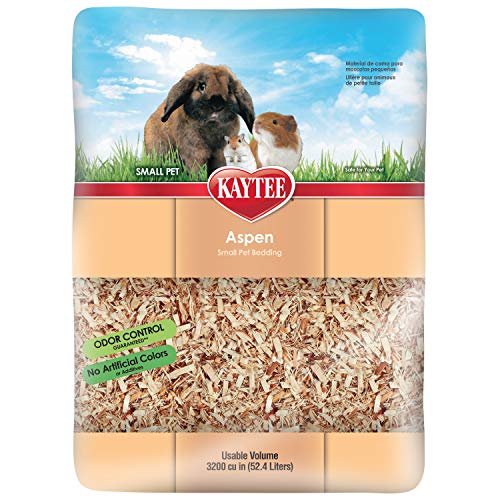
| Kaytee Aspen | Wood (aspen) | Good | Fair | Good | $7-15 | Natural wood lovers |
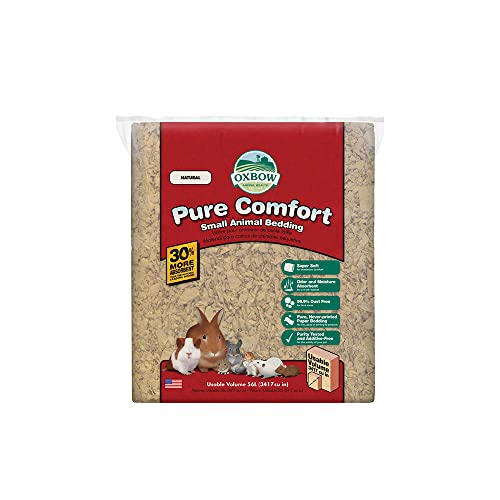
| Oxbow Pure Comfort | Paper (pellets) | Excellent | Excellent | Good | $30-40 | Litter box use |
| Fresh News | Paper (pellets) | Very Good | Very Good | Good | $24.98 / 40L | Eco-conscious / odor |
| Aubiose Hemp | Hemp | Excellent | Excellent | Good | $25-35 | Odor control |
| GuineaDad Fleece | Fleece (premium) | Good | Fair | Excellent | $10-15† | Long-term savings |
| Amakunft Fleece | Fleece (budget) | Good | Fair | Good | $8-12† | Budget fleece |
| Pine Pellets | Wood (pellets) | Excellent | Good | Fair | $6-10 | Extreme budget |
*Estimated for a standard 2×4 C&C cage with 2 guinea pigs. †Fleece costs are per month after initial purchase of 2-3 sets.
Warning: Bedding Safety: What to Avoid
Before getting into the best options, I want to be clear about what you should never use. Some products marketed as the best guinea pig bedding are actively dangerous, and I still see them recommended in old care guides.
Cedar shavings — These are toxic to guinea pigs. Cedar contains phenolic oils that cause respiratory damage, liver enzyme elevation, and neurological problems. Even short-term exposure can harm your guinea pig. Never use cedar shavings, regardless of how cheap or available they are.
Pine shavings (NOT kiln-dried pellets) — Pine shavings contain harmful aromatic oils similar to cedar. The key distinction: pine pellets that have been kiln-dried or heat-treated are safe because the process removes the phenolic oils. But pine shavings from the pet store still contain these oils and should be avoided.
Clumping cat litter — Dangerous if ingested. Guinea pigs nibble on their environment, and clumping litter expands in the digestive tract, causing potentially fatal intestinal blockages.
Corn cob bedding — Molds when wet and can cause intestinal blockages if eaten. I’ve also seen corn cob cause impaction in guinea pigs who accidentally ingested it.
Sawdust — Fine particles cause respiratory inflammation. It’s essentially the dust that responsible bedding manufacturers remove during processing.
Scented bedding — Artificial fragrances like lavender, eucalyptus, or “fresh scent” irritate guinea pig respiratory systems. Stick to unscented products only.
If your guinea pig is sneezing frequently on bedding that was supposed to be the best guinea pig bedding, has crusty eyes, or develops bald spots on their feet, your current bedding might be the culprit. See our guinea pig sneezing guide and guinea pig health page for diagnosis help. For foot sores caused by wet bedding, our bumblefoot guide covers prevention and treatment.
1. Carefresh Natural Paper Bedding
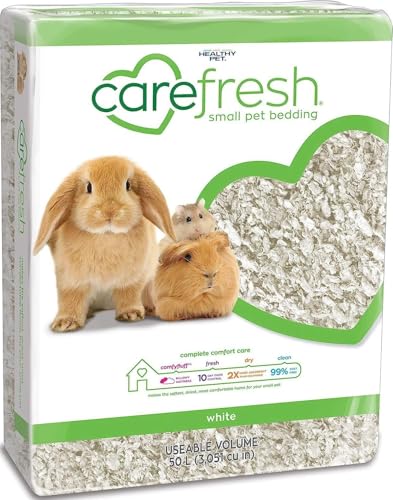
If I had to pick the single best guinea pig bedding for a new owner who just wants something reliable, it would be Carefresh Natural. It’s made from 100% recycled paper, is 99.9% dust-free, absorbs roughly twice as much as wood shavings, and is safe if ingested — which matters, since guinea pigs sometimes taste their bedding.
I’ve used Carefresh in multiple cages and it consistently performs well across the board. It holds up to three times its weight in liquid, keeps the surface dry for 5-7 days, and has a soft, fluffy texture that guinea pigs seem comfortable walking and resting on. The near-zero dust level is a big deal for guinea pigs with sensitive respiratory systems.
The main trade-off is cost. At roughly $40-60/month for a standard 2×4 cage, it adds up over a guinea pig’s 5-8 year lifespan. Some batches also vary in quality — occasionally you’ll get a bag that’s more compressed or less fluffy than usual. But for consistent, reliable performance with minimal hassle, Carefresh is hard to beat as the best guinea pig bedding.
One thing I’ve learned from using the best guinea pig bedding: the depth matters. I use at least 2-3 inches of bedding across the cage floor, with deeper piles (4-5 inches) in corners where my guinea pigs tend to urinate most. Thinner layers don’t absorb effectively and need changing more often, which actually costs more in the long run.
Best for: First-time owners, guinea pigs with respiratory sensitivities, anyone who wants a dependable no-fuss option.
2. Carefresh Confetti Paper Bedding
The Carefresh Confetti is essentially the same proven formula as Carefresh Natural, but with a vibrant mixed-color blend that makes your cage look genuinely attractive. In my experience, the performance is identical — same 99% dust-free rating, same absorbency, same safety profile. You’re paying extra for aesthetics.
If you care about how your guinea pig cage looks in your living space, the Confetti version is worth the premium as the best guinea pig bedding for aesthetics. The mixed colors hide light soiling better than plain paper and keep the cage from looking like a pile of shredded newspaper.
Best for: Owners who want the best guinea pig bedding that also looks great in their home.
3. Kaytee Aspen Bedding
For owners searching for the best guinea pig bedding in natural wood, aspen is the only safe choice. Unlike pine and cedar, aspen doesn’t contain toxic phenolic oils. Kaytee’s kiln-dried aspen has low dust and a pleasant natural wood scent.
I find aspen works well as a base layer under paper bedding or fleece. On its own, it’s less absorbent than paper or hemp, so you’ll need to do full changes every 5-6 days. The texture isn’t as soft as paper — some guinea pigs don’t mind, but others with sensitive feet might prefer something fluffier. It can also be tracked outside the cage more easily than larger-chip options.
Where aspen shines is value. At around $14-18 for a large bag that lasts 2-3 weeks, it’s one of the most affordable safe options. If you’re on a budget but want to avoid the hardness of pine pellets, aspen is a solid middle ground for the best guinea pig bedding on a budget.
A practical tip for getting the best guinea pig bedding from aspen: fluff it up after pouring. The compressed packaging makes it settle flat, which reduces absorbency. Running your hands through it to create air pockets makes a noticeable difference in how long it stays fresh. I also recommend spot-cleaning wet areas daily.
Best for: Budget-conscious owners, use as a base layer, natural material preference.
4. Oxbow Pure Comfort Paper Pellets
When ranking the best guinea pig bedding by veterinary recommendation, Oxbow stands out, and their Pure Comfort paper pellets are a vet-recommended option for guinea pig bedding. The pellet form makes them ideal for litter box training — they absorb moisture on contact and contain it rather than spreading.
I’ve found Oxbow pellets particularly effective in litter boxes. They expand when wet, maximizing their surface area for absorption. The pellet density also means superior odor control compared to loose-fill paper bedding. At 99.9% dust-free, they’re safe for guinea pigs with respiratory issues.
The main limitation is that pellets don’t provide the soft, comfortable surface that guinea pigs prefer for walking and resting. I wouldn’t use pellets as the sole best guinea pig bedding across the entire cage floor. Instead, use them in the litter box area with a softer material over the rest of the cage.
Best for: Litter box training, vet-recommended preference, respiratory-sensitive pigs.
5. Fresh News Recycled Paper Bedding
Fresh News is among the best guinea pig bedding for odor control by adding baking soda directly into the paper pellets. In multi-pig households where ammonia builds up fast, I’ve found the baking soda in Fresh News makes it some of the best guinea pig bedding for multi-pig homes — cages with Fresh News stay fresher between cleanings compared to standard paper bedding.
It’s made from 100% post-consumer recycled paper, which appeals to eco-conscious owners. The non-toxic formula is safe if ingested, and at roughly three times more absorbent than traditional wood shavings, it holds up well in busy cages. No aromatic oils or artificial additives — just paper and baking soda.
The pellet form has the same comfort limitation as Oxbow — not ideal as the sole cage floor covering. But for litter boxes or as a base layer under fleece, Fresh News delivers some of the best guinea pig bedding value at $24.98 for a 40L bag.
Best for: Eco-conscious owners, multi-pig households, odor control on a budget.
6. Aubiose Hemp Bedding
Hemp bedding is the best guinea pig bedding for odor control I’ve tested. The natural antibacterial properties in hemp suppress ammonia far better than any other bedding type. In my experience, a hemp-bedded cage stays noticeably fresher between cleanings — sometimes up to 10 days.
It’s extremely absorbent (holding up to four times its weight in liquid) and virtually dust-free. The environmental footprint is excellent since hemp grows quickly and requires minimal processing. Over time, hemp is actually cost-effective because it lasts roughly twice as long between changes as paper bedding.
The downsides are availability and initial texture. The best guinea pig bedding in hemp form can be harder to find — I usually order it online, and stock can be inconsistent. When first poured, the texture is coarser than paper, though it softens as it absorbs moisture. Some guinea pigs take a few days to adjust to the different feel. The upfront cost per bag is higher than paper, though the longer replacement cycle offsets this.
One thing that surprises people about hemp: it actually smells quite pleasant. The natural hemp aroma is earthy and mild. I’ve had apartment-dwelling owners tell me that switching to hemp was the difference between their roommate tolerating the guinea pig and asking them to rehome it.
Best for: Multiple guinea pig households, small apartments where odor matters, owners willing to order online.
7. GuineaDad Fleece Liners
For the best guinea pig bedding in fleece form, GuineaDad liners are what I use personally, and the GuineaDad liners are the best guinea pig bedding in fleece form I’ve tested. They have a built-in absorbent middle layer and waterproof backing, so you don’t need a separate underpad — just lay the liner down and you’re set.
The long-term economics are compelling. A set of GuineaDad liners costs more upfront than a bag of paper bedding, but they’re reusable for years. I’ve calculated savings of $300-500 per year compared to disposable options. You do need 2-3 sets to rotate while washing, which increases the initial investment.
The comfort is outstanding — fleece is by far the softest option, and guinea pigs with sensitive feet or skin issues do much better on fleece than on any disposable bedding. It’s also completely dust-free, which makes it the best choice for guinea pigs with chronic respiratory problems.
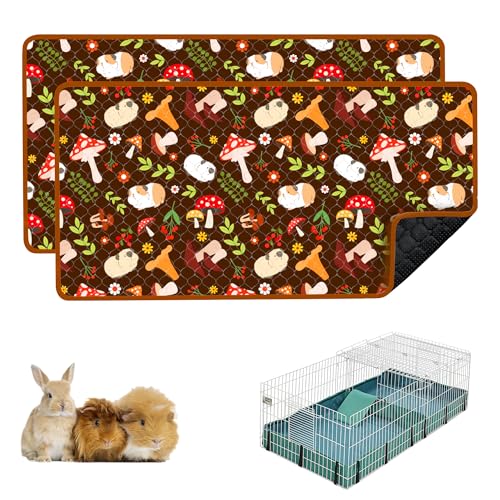
The maintenance requirement is the main trade-off when choosing the best guinea pig bedding in fleece. Fleece needs washing every 2-3 days, and you should spot-clean debris (hay, poop) daily. A handheld vacuum makes daily spot cleaning much faster. Some guinea pigs enjoy digging and bunching up fleece, which can expose the waterproof bottom — using larger liners that tuck under the cage walls helps.
A mistake I made when I first switched to the best guinea pig bedding in fleece form: I didn’t use enough absorbent layers underneath. GuineaDad liners have a built-in absorbent layer, but if you’re making your own or using other brands, you need a proper absorbent middle layer between the fleece top and the waterproof bottom. Without it, urine pools on the waterproof layer and creates a mess. Also, wash fleece with unscented detergent only — fabric softener clogs the wicking properties and reduces absorbency. For detailed setup and maintenance, see our fleece bedding guide.
Best for: Long-term owners wanting to save money, guinea pigs with respiratory issues, anyone willing to commit to regular laundry.
8. Amakunft Washable Fleece Liner
If GuineaDad is the premium choice for the best guinea pig bedding in fleece, Amakunft is the smart budget pick. At $13.99 for a 2-pack, it’s a fraction of the GuineaDad price while still offering the core benefits of fleece bedding: zero dust, reusable, and soft on guinea pig feet.
The Amakunft liners have a waterproof PEVA bottom layer that prevents urine soak-through and a soft fleece top. Having two liners means you always have a clean one ready while the other is in the wash. They’re machine washable and designed to last months with regular use.
The trade-offs compared to GuineaDad for the best guinea pig bedding budget option: the absorbent middle layer is thinner, so you may need to change more frequently in multi-pig cages. Durability is also less — I’ve heard from owners who found the stitching starts to come apart after 4-6 months of regular washing, compared to GuineaDad’s 1-2 year lifespan. But at this price point, replacing them twice a year is still cheaper than disposable bedding.
Best for: First-time fleece users, budget-conscious owners wanting fleece benefits without the GuineaDad price tag.
9. Pine Pellets (Equine Bedding)
Pine pellets are one of the best guinea pig bedding options for tight budgets. The pellets are made from compressed pine sawdust that’s been kiln-dried to remove harmful phenolic oils. When wet, they expand and break down into a soft, absorbent material. You can find them at Tractor Supply, feed stores, and online. If you don’t have feed store access, Fresh News and Oxbow pellets are available on Amazon as paper-based alternatives.
For the best guinea pig bedding economics, pine pellets are unmatched — a 40-pound bag typically costs $6-10 and lasts 3-4 weeks in a standard cage. That drops monthly bedding costs to roughly $6-10, compared to $40-60 for paper bedding.
The catch is comfort. The pellets are hard before they get wet, and I wouldn’t recommend using them as the sole bedding surface. I’ve found the best approach is using pine pellets in the litter box area with a softer material (fleece or paper) over the rest of the cage floor.
An important distinction for the best guinea pig bedding: pine pellets are safe, but pine shavings are not. The kiln-drying process removes the harmful phenolic oils from pellets. Always verify you’re getting kiln-dried or heat-treated pellets, not shavings.
One technique I like: lightly misting the pine pellets with water when you first put them in. This jump-starts the expansion process so they soften faster, rather than waiting for your guinea pig to urinate on them first.
Best for: Tight budgets, use as litter box substrate under fleece, owners with feed store access.
Fleece vs Paper Bedding: Which Is Better?
When people ask me to compare the best guinea pig bedding types, this is the question I get most often, and the answer depends entirely on your situation. Here’s a direct comparison:
| Factor | Fleece | Paper Bedding |
|---|---|---|
| Upfront cost | High ($40-80 for sets) | Low ($15-25 per bag) |
| Long-term cost | Low ($10-15/month) | High ($30-60/month) |
| Maintenance | Wash every 2-3 days, daily spot clean | Full change every 5-7 days |
| Dust | Zero | Low (quality brands) |
| Comfort | Excellent (softest) | Good to Excellent |
| Odor control | Fair (needs frequent washing) | Good to Excellent |
| Best for | Long-term, respiratory issues | New owners, convenience |
Choose fleece as the best guinea pig bedding if: You’re committed long-term, your guinea pig has respiratory issues, or you’re willing to do regular laundry. Fleece pays for itself in 3-4 months.
Choose paper as the best guinea pig bedding if: You’re a new owner who prefers disposable bedding, you don’t want a laundry routine, or convenience is your top priority.
Choose hemp as the best guinea pig bedding if: Odor control is your number one concern — hemp outperforms both fleece and paper on this metric.
Many experienced owners combine both: fleece over the cage floor with paper pellets or hemp in the litter box area. This gives you the comfort of fleece where your guinea pigs walk and sleep, with the superior odor absorption of paper/hemp where they eliminate. For detailed fleece setup instructions, see our fleece bedding guide.
How to Choose Based on Your Situation
New guinea pig owner: For the best guinea pig bedding to start with, go with Carefresh Natural. It’s the most forgiving option — hard to use wrong, consistent quality, and widely available.
Multiple guinea pigs: The best guinea pig bedding for multiple pigs is hemp or fleece. More pigs means more waste, and these options handle it best. Consider a larger cage too — see our best guinea pig cages guide.
Small apartment: The best guinea pig bedding for apartments is hemp, or fleece if you don’t mind laundry.
Very tight budget: The best guinea pig bedding on a tight budget is Oxbow paper pellets as a base layer, or Amakunft fleece for budget fleece benefits.
Respiratory issues: The best guinea pig bedding for respiratory issues is fleece, no question. Zero dust, zero particles.
Odor problems: The best guinea pig bedding for odor problems is hemp (Aubiose). Fresh News (baking soda) is a solid alternative.
Long-term commitment: The best guinea pig bedding for long-term owners is fleece. The upfront investment pays for itself within 3-4 months.
Environmentally conscious: The best guinea pig bedding for eco-conscious owners is fleece (reusable, minimal waste) or hemp (sustainable, biodegradable).
What I’ve Learned About Managing Bedding
After years of dealing with guinea pig bedding on a weekly basis, a few practical insights stand out that don’t usually make it into product descriptions. Even the best guinea pig bedding is only as good as how you manage it.
When choosing the best guinea pig bedding, cage size matters more than the bedding itself. I’ve seen owners blame their bedding for odor and wetness problems when the real issue is an undersized cage. A pair of guinea pigs in a cage that’s too small produces waste faster than any bedding can manage. Bigger cages stay cleaner longer regardless of what bedding you use. See our cage size guide for specifics.
Litter training makes the best guinea pig bedding perform even better. Guinea pigs tend to eliminate in specific corners. If you put a litter box filled with pine pellets or paper bedding in their preferred corner, most guinea pigs will use it consistently. This dramatically reduces the area of soiled bedding. I’ve had about 70% success rate.
The poop situation is manageable. Guinea pigs poop constantly — that’s just reality. With disposable bedding, you’re picking up dozens of poops daily during spot cleaning. With fleece, same thing but using a vacuum or dustpan. I’ve found that a small handheld vacuum (the kind meant for car interiors) is the single best tool for fleece maintenance. It turns a 10-minute spot cleaning into a 2-minute job.
Seasonal adjustments matter when managing the best guinea pig bedding. In summer, bedding stays fresher longer due to lower humidity. In winter, moisture evaporates more slowly and odors build up faster. I typically need to change disposable bedding a day or two sooner in winter.
Don’t forget the hay factor. Most of the waste in a guinea pig cage is actually hay, not poop or urine. Guinea pigs waste a lot of the hay they’re given — they pick through it, trample it, soil it. Using a hay rack positioned over the litter box area catches much of this waste. See our best guinea pig hay guide for hay management tips. This single change extended the life of the best guinea pig bedding by 30-40%.
Your nose is the best indicator that it’s time to replace even the best guinea pig bedding. If you notice any ammonia odor when you walk into the room, it’s time for a change — no matter what the calendar says. Guinea pigs have much more sensitive respiratory systems than we do, so by the time you can smell it, the air quality has already been poor for them.