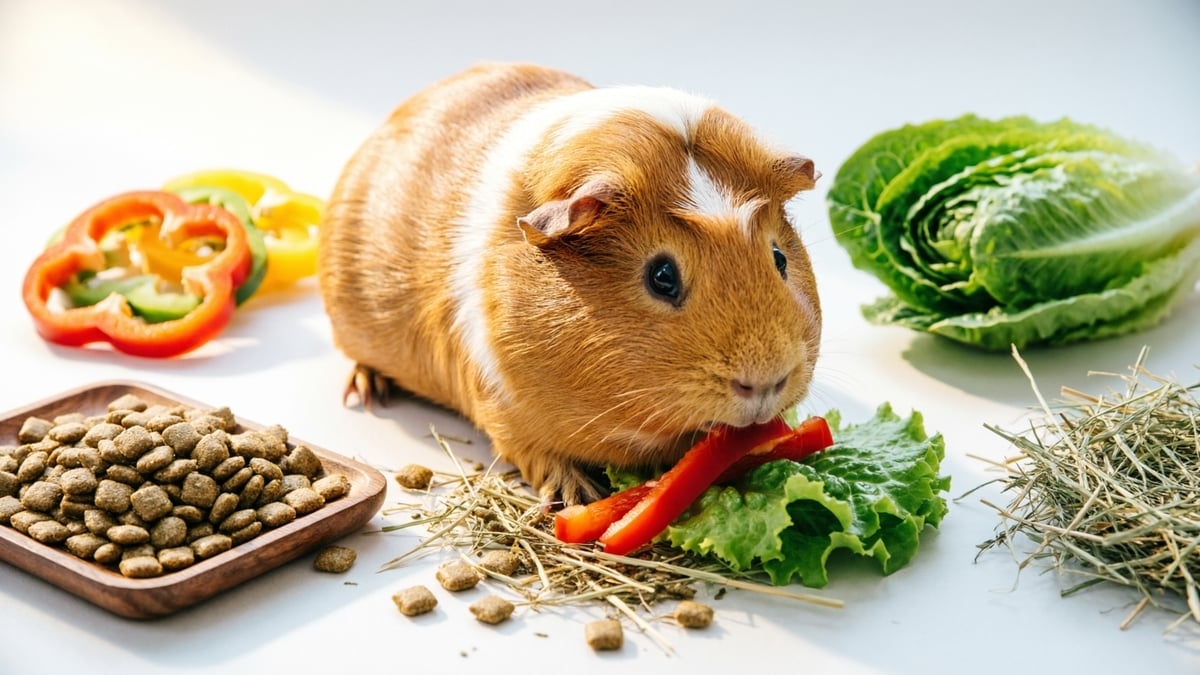
Guinea pigs have unique dietary requirements that differ from other small pets. Unlike most animals, they cannot manufacture their own vitamin C, making proper nutrition critical for preventing scurvy and other health problems. This comprehensive guide covers everything you need to know about feeding your guinea pig a healthy, balanced diet.
Understanding Guinea Pig Nutritional Needs
Why Guinea Pigs Are Special
Guinea pigs (cavies) are hindgut fermenters with unique dietary needs:
- Cannot synthesize vitamin C (like humans, they must get it from food)
- Require high fiber for digestive health
- Need constant grazing (their teeth never stop growing)
- Prone to obesity if overfed
Essential Nutrients
Vitamin C (Critical)
- Requirement: 25-40mg per day for adults
- Pregnant/nursing: 50-100mg per day
- Growing pigs: 25-50mg per day
- Deficiency: Scurvy (joint pain, bleeding, lethargy, poor wound healing)
Learn about Guinea Pig Vitamin C Requirements in detail.
Fiber (Essential)
- Requirement: 18-20% minimum
- Source: Grass hay (unlimited)
- Function: Digestive health, dental wear
Protein
- Adults: 16-18%
- Growing pigs: 18-20%
- Source: Quality pellets, some vegetables
Calcium/Phosphorus
- Ratio: 1.5:1 to 2:1
- Important: Prevents bladder stones
- Avoid over-supplementation
The Guinea Pig Food Pyramid
Level 1: Hay (80-85% of Diet) - MOST IMPORTANT
Why Hay Is Critical:
- Provides essential fiber for digestion
- Wears down continuously growing teeth
- Prevents GI stasis
- Encourages natural foraging behavior
Types of Hay:
Timothy Hay (Recommended for Adults)
- Stage: 2nd cutting (best balance)
- Fiber: High
- Protein: Moderate
- Calcium: Low
- Best For: Adult guinea pigs (6+ months)
Kaytee Premium Timothy Hay ($8.99, 4.7⭐, 🔥)
Alfalfa Hay (For Young Pigs Only)
- Calcium: Very high
- Protein: High (18-20%)
- Best For: Pigs under 6 months, pregnant/nursing sows
- Avoid For: Adults (causes bladder stones)
Other Grass Hays
- Orchard grass - Softer, good alternative
- Meadow hay - Variety, natural
- Botanical hay - Added herbs for variety
- Oat hay - Occasional treat
Hay Feeding Guidelines:
- Amount: Unlimited (always available)
- Freshness: Replace if soiled or stale
- Storage: Cool, dry place in breathable container
- Quality: Sweet-smelling, green, not dusty
Level 2: Vegetables (10-15% of Diet)
Daily Amount: 1-2 cups of mixed vegetables
Vitamin C-Rich Vegetables (Daily)
-
✅ Bell Peppers (Red/Yellow/Green)
-
Vitamin C: 120mg per cup (excellent source!)
-
Amount: 1-2 slices daily
-
Note: Remove seeds
-
✅ Kale
-
Vitamin C: 80mg per cup
-
Amount: 1-2 leaves daily
-
Caution: High in calcium, feed moderately
-
✅ Parsley
-
Vitamin C: 80mg per 1/2 cup
-
Amount: Small handful
-
Caution: Very high in calcium
-
✅ Broccoli
-
Vitamin C: 80mg per cup
-
Amount: Small floret
-
Caution: Can cause gas, introduce slowly
-
✅ Cilantro (Coriander)
-
Vitamin C: 10mg per 1/4 cup
-
Amount: Small handful
-
Benefits: Most pigs love it
-
✅ Romaine Lettuce
-
Vitamin C: 10mg per cup
-
Amount: 1-2 leaves
-
Note: Avoid iceberg lettuce (low nutrition)
-
✅ Spinach
-
Vitamin C: 8mg per cup
-
Amount: Small amount
-
Caution: High in oxalates, feed sparingly
Other Safe Vegetables (Rotate Regularly)
- ✅ Cucumber - Hydrating, low calorie
- ✅ Zucchini - Low calorie, good for overweight pigs
- ✅ Carrots - High in vitamin A, limit to small piece (high sugar)
- ✅ Tomatoes - Vitamin C (remove leaves/stems)
- ✅ Celery - Cut into small pieces (strings can be choking hazard)
- ✅ Corn silk - Pigs love it
- ✅ Fresh herbs - Basil, mint, dill, thyme
Level 3: Pellets (5% of Diet)
Why Pellets Are Important:
- Provide balanced nutrition
- Vitamin C supplementation
- Ensure complete diet
Choosing Quality Pellets:
Look For:
- ✅ Timothy-based (for adults)
- ✅ Vitamin C fortified (check expiration date)
- ✅ No seeds/nuts/colored bits
- ✅ Uniform pellets (prevents selective feeding)
- ✅ 18-20% fiber minimum
Avoid:
- ❌ Alfalfa-based for adults (too much calcium)
- ❌ Seed/nut mixes (choking hazard, unhealthy)
- ❌ Colored pellets (artificial colors)
- ❌ Low fiber (<18%)
Daily Amount:
- Adults: 1/8 cup (30-40g) per day
- Young pigs (under 6 months): Unlimited
- Overweight pigs: Reduce to 1/8 cup maximum
Top Pellet Brands:
- Oxbow Essentials Cavy Cuisine (Adults)
- Oxbow Essentials Young Guinea Pig (Under 6 months)
- Small Pet Select Guinea Pig Food
- Sweet Meadow Farm Guinea Pig Pellets
Level 4: Fruits (Occasional Treats - <5%)
Why Limit Fruit:
- High in sugar
- Can cause obesity, digestive upset
- Should not replace vegetables
Safe Fruits (Small pieces, 1-2 times per week):
🍎 Apple (no seeds)
- Amount: Small wedge
🍓 Strawberries
- Amount: 1 small berry
🫐 Blueberries
- Amount: 2-3 berries
🍊 Orange
- Amount: Small section (vitamin C!)
🍈 Cantaloupe
- Amount: Small cube
🍑 Peach (no pit)
- Amount: Small slice
🍐 Pear (no seeds)
- Amount: Small slice
Avoid:
- ❌ Grapes/raisins (some sources say toxic)
- ❌ Fruit seeds/pits (cyanide)
- ❌ Dried fruits (too concentrated in sugar)
Vitamin C Supplementation
Do Guinea Pigs Need Vitamin C Supplements?
Maybe - Depends on diet quality
If feeding:
- Fresh vegetables daily
- Quality pellets with vitamin C (check expiration)
- Fresh hay
Then: Probably sufficient
If your pig:
- Is recovering from illness
- Is pregnant/nursing
- Is elderly
- Has limited vegetable intake
- Shows signs of deficiency
Then: Consider supplementation
Forms of Vitamin C
Liquid Vitamin C:
- Pros: Easy to dose, accurate
- Cons: Must be given daily
- Products: ChildLife Vitamin C, Oxbow Vitamin C
- Oxbow Natural Science Vitamin C Supplement ($6.39, 4.8⭐, 🔥)
Vitamin C Tablets:
- Pros: Convenient, stable
- Cons: Some pigs won’t eat them
- Products: Oxbow GTN-50C
Vitamin C Drops (Water):
- Not recommended: Vitamin C degrades quickly in water/light
Signs of Vitamin C Deficiency (Scurvy)
-
⚠️ Early Signs:
-
Lethargy
-
Rough coat
-
Reduced appetite
-
Joint pain/stiffness
-
⚠️ Advanced Signs:
-
Bleeding gums
-
Swollen joints
-
Difficulty moving
-
Wounds not healing
-
Diarrhea
If you see these signs: See a veterinarian immediately!
Dangerous Foods: What NOT to Feed
❌ Toxic Foods (Never Feed)
- 🚫 Chocolate - Theobromine is toxic
- 🚫 Onions/garlic/chives - Cause anemia
- 🚫 Potatoes/potato skins - Toxic
- 🚫 Rhubarb - Toxic
- 🚫 Avocado - Toxic to guinea pigs
- 🚫 Iceberg lettuce - Very low nutrition, causes diarrhea
- 🚫 Mushrooms - Some are toxic
- 🚫 Seeds/nuts - Choking hazard, high fat
- 🚫 Dairy products - Guinea pigs are lactose intolerant
- 🚫 Meat/fish - Guinea pigs are herbivores
- 🚫 Bread/pasta - Low nutrition, digestive issues
- 🚫 Beans (raw) - Toxic
❌ Unhealthy Foods (Avoid)
- 🚫 Sugary foods - Obesity, dental problems
- 🚫 Salty foods - Health issues
- 🚫 Processed foods - Unhealthy ingredients
- 🚫 Cereals/grains (as main food) - Low nutrition
- 🚫 Treat sticks with seeds/honey - Unhealthy
⚠️ Foods to Limit
- ⚠️ Carrots - High sugar (small piece, 2-3x per week)
- ⚠️ Fruits - High sugar (1-2x per week maximum)
- ⚠️ Spinach/parsley - High calcium (feed moderately)
- ⚠️ Broccoli/cauliflower - Can cause gas (introduce slowly)
- ⚠️ Alfalfa hay - High calcium (adults only as treat)
Feeding Schedule and Routine
Daily Feeding Schedule
Morning:
- Fresh hay (top up)
- 1/8 cup pellets
- Fresh water
- Check food bowls
Evening:
- Fresh vegetables (1-2 cups)
- Top up hay
- Fresh water
Weekly Rotation Example
Monday:
- AM: Timothy hay, pellets
- PM: Bell pepper, cucumber, romaine lettuce
Tuesday:
- AM: Timothy hay, pellets
- PM: Kale, cilantro, zucchini
Wednesday:
- AM: Timothy hay, pellets
- PM: Bell pepper, parsley, tomato
Thursday:
- AM: Timothy hay, pellets
- PM: Romaine lettuce, broccoli (small), cucumber
Friday:
- AM: Timothy hay, pellets
- PM: Bell pepper, cilantro, celery
Saturday:
- AM: Timothy hay, pellets
- PM: Kale, cucumber, carrot (small piece)
Sunday:
- AM: Timothy hay, pellets
- PM: Bell pepper, romaine lettuce, blueberry (treat)
Top 10 Guinea Pig Food Recommendations
Oxbow Western Timothy Hay
Rating: ⭐⭐⭐⭐⭐ Price: $11-12 for 40 oz Quality: Premium
Why It’s #1: Consistent quality, perfect for adult guinea pigs, fresh and fragrant
Oxbow Essentials Guinea Pig Food (Cavy Cuisine)
Rating: ⭐⭐⭐⭐⭐ Price: $12-13 for 5 lbs Type: Timothy-based pellets
Why It’s Great: Complete nutrition, vitamin C fortified, uniform pellets
Small Pet Select Timothy Hay
Rating: ⭐⭐⭐⭐⭐ Price: $35-40 for 12 lbs Quality: Premium, fresh
Why It’s Excellent: Hand-packed, very fresh, excellent quality
Oxbow Organic Meadow Hay
Rating: ⭐⭐⭐⭐ Price: $12-13 for 40 oz Type: Mixed grasses
Why It’s Great: Adds variety, encourages eating, aromatic
Oxbow Essentials Young Guinea Pig Food
Rating: ⭐⭐⭐⭐ Price: $9-10 for 5 lbs Type: Alfalfa-based pellets
Why It’s Good: Perfect for young guinea pigs (under 6 months), high protein
Oxbow Natural Science Vitamin C Supplement
Rating: ⭐⭐⭐⭐⭐ Price: $7-9 for 4.2 oz Type: Supplement
Why It’s Essential: For pigs needing extra vitamin C, high-fiber timothy hay base
Kaytee Timothy Hay Plus Carrots
Rating: ⭐⭐⭐⭐ Price: $8-10 for 24 oz Quality: Good
Why It’s Good: Affordable option, added carrots for variety
Buy on Amazon - $8.95 Quality: Premium
Why It’s Excellent: Farm-fresh, very high quality, excellent nutrition
American Pet Diner Timothy Hay
Rating: ⭐⭐⭐⭐ Price: $15-20 for 10 lbs Quality: Good
Why It’s Good: Affordable, good quality, long strands
Standlee Timothy Grass Hay ($19.99, 4.4⭐, 🔥)
Special Dietary Considerations
Baby Guinea Pigs (Under 6 Months)
- Alfalfa hay (higher calcium/protein)
- Unlimited pellets (alfalfa-based)
- Smaller vegetables (introduce slowly)
- Extra vitamin C (30-50mg/day)
Senior Guinea Pigs (Over 5 Years)
- Maintain timothy hay
- Monitor weight (may need more/less pellets)
- Softer vegetables if dental issues
- Extra vitamin C (immune support)
Pregnant/Nursing Sows
- Alfalfa hay (extra calcium/protein)
- Unlimited pellets
- Extra vitamin C (50-100mg/day)
- More vegetables for hydration
Overweight Guinea Pigs
- Unlimited hay (no restriction)
- Reduce pellets to 1/8 cup or less
- Low-calorie vegetables (cucumber, zucchini, lettuce)
- Limit fruits completely
- Increase exercise
Guinea Pigs with Bladder Stones
- Low-calcium diet
- Avoid alfalfa completely
- Limit high-calcium vegetables (kale, parsley, spinach)
- Plenty of water
- Consult vet for specific diet
Water: Essential for Health
Water Requirements
- Amount: 50-100ml per day (varies with diet, temperature, size)
- Source: Fresh, clean water always available
Water Bottle vs. Bowl
Water Bottle (Most Common):
- ✅ Keeps water clean
- ✅ Easy to monitor intake
- ❌ Can leak, clog, or malfunction
- Check daily that it’s working
Water Bowl:
- ✅ Natural drinking position
- ✅ Easy access
- ❌ Gets dirty, can tip
- Clean daily
Best Practice: Provide both if possible
Water Quality
- Change daily regardless of amount left
- Use filtered water if tap water has chlorine
- Clean bottle/bowl weekly with hot water and vinegar
- Avoid distilled water (lacks minerals)
Common Feeding Mistakes
1. Not Enough Hay
Problem: Dental problems, GI stasis, digestive issues Solution: Unlimited hay, always available
2. Too Many Pellets
Problem: Obesity, reduced hay intake Solution: Limit to 1/8 cup daily for adults
3. Not Enough Vitamin C
Problem: Scurvy, health problems Solution: Fresh vegetables daily, quality pellets
4. Feeding Iceberg Lettuce
Problem: Diarrhea, low nutrition Solution: Use romaine, red leaf, green leaf lettuce
5. Too Much Fruit
Problem: Obesity, digestive upset, dental issues Solution: Limit to 1-2x per week, small amounts
6. Inconsistent Feeding
Problem: Stress, digestive upset Solution: Feed at regular times, consistent amounts
7. Not Providing Variety
Problem: Nutritional deficiencies, boredom Solution: Rotate vegetables, offer variety. Keep your pig active with best guinea pig toys for mental stimulation between meals. Complete their home with our guinea pig bedding guide.
8. Overlooking Water Quality
Problem: Dehydration, illness Solution: Fresh water daily, clean containers weekly
Signs of Poor Nutrition
Obesity
- Difficulty moving
- Fat deposits
- Reduced activity
- Cannot see ribs when feeling sides
Malnutrition
- Weight loss
- Dull coat
- Lethargy
- Poor muscle tone
Vitamin C Deficiency (Scurvy)
- Lethargy
- Rough coat
- Bleeding gums
- Swollen joints
- Poor wound healing
Dental Problems
- Dropping food
- Difficulty eating
- Weight loss
- Overgrown teeth
Digestive Issues
- Diarrhea
- Reduced fecal output
- Lethargy
- Loss of appetite
What I’ve Learned About Feeding Guinea Pigs
After years of helping guinea pig owners sort through diet questions, a few practical lessons stand out that don’t always make it into the textbooks.
Hay quality matters more than most people realize. I’ve seen guinea pigs refuse to eat hay that’s sat in a bag for months. Fresh hay should smell slightly sweet and feel slightly springy. If it’s dusty, yellowed, or smells musty, your guinea pig probably won’t eat enough of it — and that’s where health problems start. I buy hay in smaller quantities and store it in a cool, dry place, replacing it every 2-3 months.
The vegetable rotation isn’t just about nutrition — it’s about enthusiasm. Guinea pigs get bored eating the same vegetables every day. I’ve watched pigs excitedly popcorn (jump in the air) when I introduce a new vegetable they haven’t had before. A varied diet keeps them interested in eating, which is especially important for picky eaters or pigs recovering from illness. My rotation includes bell peppers (high in vitamin C), leafy greens (romaine, cilantro, parsley), and occasional treats like cucumber or blueberry.
Pellet portions are easy to overdo. The biggest feeding mistake I see is free-feeding pellets. Most guinea pigs will happily eat pellets all day if given the chance, which crowds out hay consumption and leads to obesity. I measure out exactly 1/8 cup of pellets per pig per day — no more. If your pig finishes their pellets and seems hungry, that’s fine. They should be filling up on hay.
Water bottle hygiene gets overlooked. I replace water bottles weekly (not just refill them) because algae and bacteria build up in the nozzle and ball bearing. I’ve seen guinea pigs develop mouth infections from dirty water bottles. A quick scrub with hot water and a bottle brush takes two minutes and prevents problems.
Watch the poops. I know it sounds gross, but your guinea pig’s droppings tell you a lot about their diet. Healthy poops are oval, dark brown, and slightly moist. If they’re small, dry, or misshapen, your pig probably isn’t getting enough water or hay. If they’re soft or misshapen, you may be feeding too many vegetables or fruit. Changes in poop consistency are often the first sign of a dietary problem.
For more on guinea pig health, see our guinea pig health guide.
Conclusion
A healthy guinea pig diet consists of:
- 80-85% Grass hay (unlimited, always available)
- 10-15% Fresh vegetables (1-2 cups daily)
- 5% Quality pellets (1/8 cup daily)
- <5% Fruits (occasional treats)
Key Takeaways:
- Hay is most important - Unlimited timothy hay for adults
- Vitamin C is critical - Fresh vegetables daily, quality pellets
- Avoid dangerous foods - Onions, garlic, potatoes, iceberg lettuce
- Monitor weight and health - Adjust diet as needed
- Provide variety - Rotate vegetables for balanced nutrition
- Fresh water always - Change daily, clean weekly
FAQ
Q: How much should I feed my guinea pig daily?
A: Unlimited hay, 1/8 cup pellets, and 1-2 cups of mixed vegetables daily. Adjust pellet amount based on weight.
Q: Can guinea pigs eat carrots every day?
A: No. Carrots are high in sugar. Feed a small piece 2-3 times per week maximum.
Q: Do guinea pigs really need vitamin C supplements?
A: If feeding quality vegetables and pellets with vitamin C, probably not. However, pregnant, elderly, or recovering pigs may benefit.
Q: Why does my guinea pig eat its poop?
A: This is normal! They produce special soft feces called cecotropes that contain essential nutrients. This is called coprophagy and is healthy.
Q: Can guinea pigs eat lettuce?
A: Yes, but choose romaine, red leaf, or green leaf lettuce. Avoid iceberg lettuce - it’s mostly water with little nutrition and can cause diarrhea.
Q: How do I know if my guinea pig is getting enough vitamin C?
A: Signs of deficiency include lethargy, rough coat, swollen joints, and bleeding gums. If you see these, see a vet immediately. Prevention is key.
Q: Can guinea pigs eat fruit?
A: Yes, in very small amounts as occasional treats (1-2 times per week). High-sugar fruits should be limited.
Q: Why is hay so important?
A: Hay provides essential fiber for digestion and wears down their continuously growing teeth. Without enough hay, guinea pigs develop dental and digestive problems.
Q: Can guinea pigs drink tap water?
A: If your tap water is chlorinated, use filtered or bottled water. Change water daily regardless of source.
Q: Should I choose pellets or seed mixes?
A: Always choose uniform pellets over seed mixes. Seed mixes allow selective feeding and contain unhealthy ingredients like seeds and nuts.