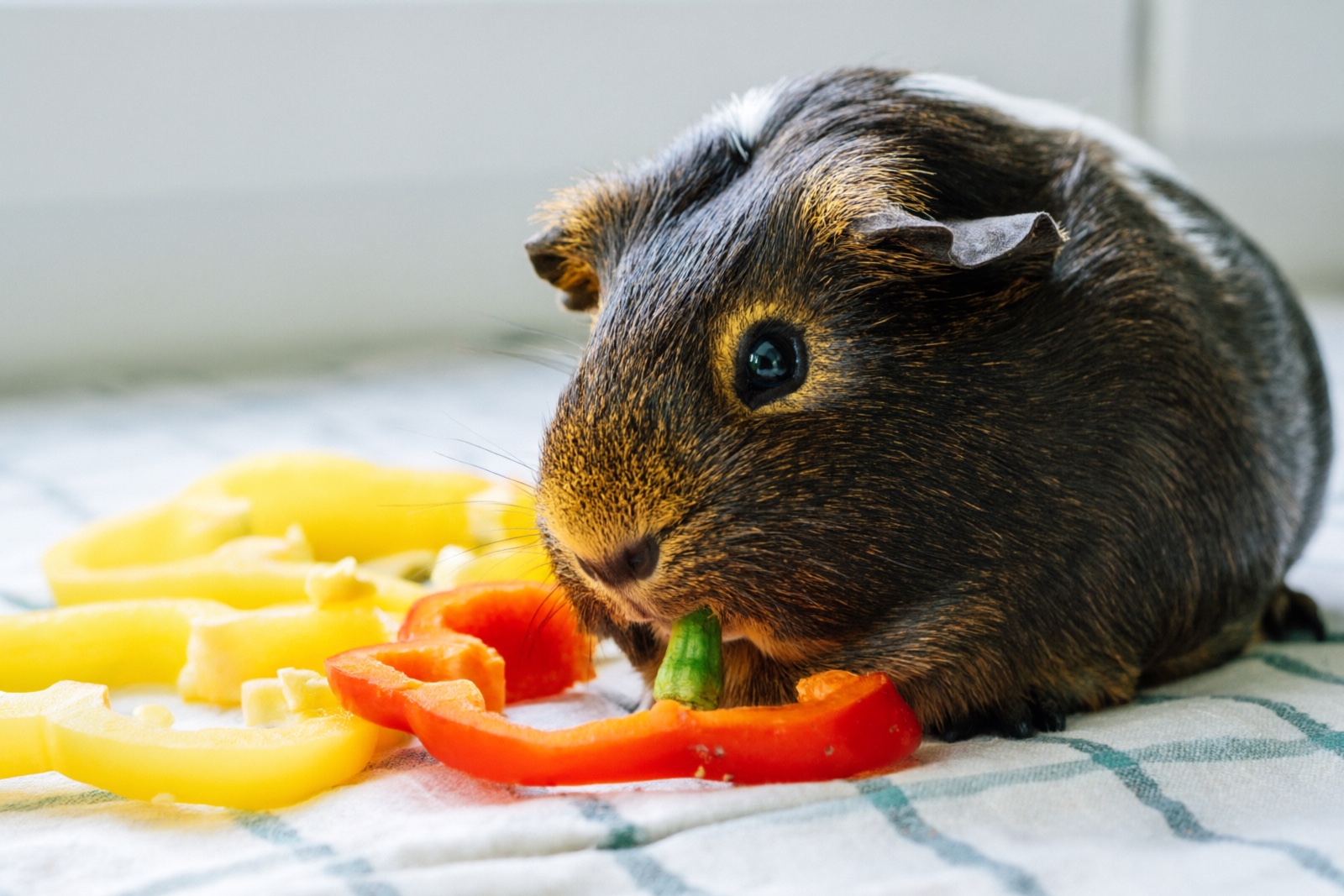
Vitamin C is critical for guinea pig health. Unlike most mammals, guinea pigs cannot manufacture their own Vitamin C—they must obtain it from their diet every single day. Without adequate Vitamin C, guinea pigs develop scurvy, a serious and potentially fatal condition. This guide covers everything you need to know about Vitamin C for guinea pigs.
Why Guinea Pigs Need Vitamin C
Unique Biology
Guinea pigs (and humans, primates, some bats) are among the few animals that cannot synthesize Vitamin C.
Most animals:
- Produce their own Vitamin C in liver
- Don’t need dietary source
Guinea pigs:
- Cannot manufacture Vitamin C
- Must obtain from food
- Cannot store Vitamin C (unlike fat-soluble vitamins)
- Need daily intake
Critical: Guinea pigs need Vitamin C every single day. They cannot store it, and deficiency symptoms appear within 2-4 weeks of inadequate intake.
What Vitamin C Does
Vitamin C (ascorbic acid) is essential for:
- Collagen production:
- Structural protein in skin, blood vessels, bones, joints
- Wound healing
- Healthy skin and coat
- Immune function:
- Fighting infections
- White blood cell function
- Antioxidant protection
- Iron absorption:
- Helps absorb iron from food
- Prevents anemia
- Hormone production:
- Stress response hormones
- Various metabolic functions
- Joint health:
- Cartilage maintenance
- Prevents arthritis
Without enough Vitamin C: All these systems fail → scurvy develops.
Daily Vitamin C Requirements
Recommended Daily Intake
Maintenance dose (healthy adult guinea pig):
- 10-25 mg per day [University of Edinburgh Guinea Pig Nutrition Study]
- Most sources recommend 20-30 mg/kg body weight per day
Example:
- 1 kg (2.2 lb) guinea pig: 20-30 mg Vitamin C per day
- Average adult guinea pig: 900g-1.2kg: 10-30 mg per day
Pregnant, nursing, growing, or ill guinea pigs:
- Higher requirement: 30-50 mg per day
- Stress increases Vitamin C needs
Safe Upper Limit
Vitamin C is water-soluble:
- Excess is excreted in urine
- Very difficult to overdose (unlike fat-soluble vitamins)
- High doses may cause digestive upset (diarrhea) but not toxicity
- Safe to provide slightly more than needed
Better to provide a bit extra than not enough. Excess is simply excreted.
Best Vitamin C Sources
Fresh Vegetables (Best Source)
High Vitamin C Vegetables (per 100g):
| Vegetable | Vitamin C (mg) | Serving Size | Daily % |
|---|---|---|---|
| Red bell pepper | 127 mg | 1-2 strips | 500-600% |
| Green bell pepper | 80 mg | 1-2 strips | 300-400% |
| Parsley | 133 mg | Small handful | 600%+ |
| Kale | 120 mg | 1-2 leaves | 500-600% |
| Broccoli | 89 mg | Small floret | 400%+ |
| Cauliflower | 48 mg | Small floret | 200%+ |
| Spinach | 28 mg | Few leaves | 100-150% |
| Tomato | 14 mg | Small slice | 50-70% |
| Cucumber | 2.8 mg | Few slices | 10-15% |
| Carrot | 5.9 mg | Small piece | 20-30% |
Top picks: Red bell pepper, green bell pepper, parsley, kale. These provide the most Vitamin C per bite.
Recommended Daily Vegetable Portions
Adult guinea pig (per day):
- 1/4 to 1/2 cup mixed vegetables
- Include 1-2 high-Vitamin C vegetables daily
- Variety is key for overall nutrition
Example Daily Menu:
- Morning: Small strip of red bell pepper + baby carrot
- Evening: Small kale leaf + few parsley sprigs
Total: ~25-30 mg Vitamin C (meets daily requirement)
Fruits (Occasional Treats)
Fruits are high in Vitamin C but high in sugar:
- Limit fruit to small amounts, 1-2 times per week
- High-Vitamin C fruits: Kiwi, orange, strawberries, kiwi
Fruits (per 100g):
- Kiwi: 93 mg (small slice occasionally)
- Orange: 53 mg (small wedge, occasional)
- Strawberry: 59 mg (1 berry, occasional)
- Tomato (technically fruit): 14 mg (small slice)
Caution: Fruits are high-sugar. Too much causes obesity and digestive upset. Use as treats only.
Commercial Pellets
Many guinea pig pellets are fortified with Vitamin C, but:
- Vitamin C degrades over time (light, heat, air)
- After 3 months, Vitamin C content is significantly reduced
- Don’t rely solely on pellets for Vitamin C
Check pellet bag:
- Look for Vitamin C content (ascorbic acid)
- Check manufacture date
- Store in cool, dark place
- Use within 90 days of opening
Pellets are a backup, not the primary source. Fresh vegetables are more reliable.
Vitamin C Supplements
When to use:
- Guinea pig won’t eat vegetables
- Illness (increased Vitamin C requirement)
- Pregnancy/nursing (higher demand)
- Scurvy treatment (vet-supervised)
- Stress (new home, travel, new cage-mate)
Types of Supplements:
1. Liquid Vitamin C Drops ⭐⭐⭐⭐
Best option for daily supplementation
- Oxbow Vitamin C Drops
- Add to water or food
- Price: $10-15
- Buy on Amazon - $6.99
Dosage: Follow package instructions (usually 25-50 mg per day)
Advantage: Easy to administer, accurate dosing
Disadvantage: Vitamin C degrades in water within hours (change water frequently)
2. Vitamin C Tablets (Chewable)
- Oxbow GTN-50C Vitamin C Tablets
- Guinea pig-specific
- Price: $15-20
- Buy on Amazon - $6.99
Advantage: Exact dosing, stable
Disadvantage: Some guinea pigs won’t eat them
3. Multivitamins with Vitamin C
- Not recommended as sole source
- Lower Vitamin C concentration
- May have unnecessary additives
Tip: Liquid drops added to a small amount of water (or food) are the easiest way to supplement — use a 1ml syringe for precise dosing.
Foods LOW in Vitamin C
Don’t rely on these for Vitamin C:
- Lettuce (mostly water, very little Vitamin C)
- Carrots (minimal Vitamin C)
- Celery (minimal Vitamin C)
- Commercial treats (often negligible Vitamin C)
- Hay (no Vitamin C)
These foods are fine as part of a varied diet, but don’t count toward Vitamin C requirement.
Signs of Vitamin C Deficiency (Scurvy)
Early Symptoms (2-4 weeks of deficiency)
Mild deficiency:
- Lethargy: Less active, sleeping more
- Reduced appetite: Eating less, weight loss
- Rough coat: Fur looks dull, unhealthy
- Slow wound healing: Cuts/scratches don’t heal
- Swollen joints: Mild lameness, reluctance to move
- Diarrhea: Digestive upset
If you notice these signs: Increase Vitamin C immediately and see vet if symptoms don’t improve in 2-3 days.
Advanced Scurvy (4+ weeks of severe deficiency)
Severe deficiency (Scurvy):
- Severe lethargy: Barely moving, very weak
- Anorexia: Not eating at all
- Weight loss: Significant
- Joint pain: Difficulty walking, swollen joints
- Bleeding gums: Gums are red, swollen, bleeding
- Loose teeth: Teeth may fall out
- Internal bleeding: Bruising, blood in urine/stool
- Skin sores: Wounds that won’t heal
- Rough, patchy coat: Hair loss, poor coat quality
- Sudden death: Can be fatal
Emergency: Advanced scurvy is a medical emergency. See vet immediately. Without treatment, scurvy is fatal.
Treatment for Scurvy
If you suspect scurvy:
- See vet immediately (this is serious)
- Vet will give: Injectable or oral Vitamin C (high dose)
- At home: Provide high-Vitamin C foods + supplement
- Recovery: With treatment, improvement in 3-7 days
- Full recovery: 2-4 weeks with proper care
Do NOT wait to see if it gets better on its own. Scurvy progresses rapidly and can be fatal.
Causes of Vitamin C Deficiency
1. Inadequate Diet
Most common cause:
- No fresh vegetables
- Only low-Vitamin C vegetables (lettuce, cucumber)
- Old pellets (Vitamin C degraded)
- No supplementation
Solution: Provide high-Vitamin C vegetables daily.
2. Improper Storage
Vitamin C degrades when exposed to:
- Light: Store pellets in opaque container
- Heat: Cool, dry storage
- Air: Seal container tightly
- Time: Use within 90 days of opening
Solution: Store pellets properly, use fresh vegetables.
3. Increased Demand
Guinea pigs need MORE Vitamin C when:
- Pregnant or nursing
- Growing (under 6 months)
- Ill or recovering
- Stressed (new home, new cage-mate, travel)
- Elderly (less efficient absorption)
Solution: Increase Vitamin C during these times.
4. Malabsorption
Some conditions reduce Vitamin C absorption:
- Dental problems (eating less)
- Digestive issues
- Other illnesses
Solution: Supplement with liquid Vitamin C (easier to absorb).
5. Water Bottle Issues
If adding Vitamin C to water:
- Vitamin C degrades in water (within hours)
- Light exposure accelerates degradation
- Guinea pig may not drink enough
Solution: Add fresh Vitamin C to water daily, use dark water bottle, don’t rely solely on water supplementation.
How to Ensure Adequate Vitamin C
Daily Routine
Morning:
- Fresh vegetables (include high-Vitamin C option)
- Example: Small strip of bell pepper + baby carrot
Evening:
- More fresh vegetables (different high-Vitamin C source)
- Example: Few parsley sprigs + small kale leaf
Total daily: 1/4 - 1/2 cup mixed vegetables per guinea pig
High-Vitamin C Schedule (Example)
Monday: Red bell pepper + baby carrot Tuesday: Green bell pepper + parsley Wednesday: Kale + small broccoli floret Thursday: Red bell pepper + cauliflower floret Friday: Green bell pepper + spinach Saturday: Broccoli + parsley Sunday: Mix of favorites
Variety ensures overall nutrition and prevents boredom.
Supplements: When and How
Add supplement if:
- Not eating enough vegetables
- Pregnant, nursing, growing
- Ill or recovering
- New guinea pig (stress of new home)
- Signs of deficiency
How to supplement:
- Liquid drops in water: Add to small amount of water (change daily)
- Liquid drops on food: Add to small piece of favorite veggie
- Chewable tablets: Offer directly or crush into food
Dosage:
- Follow package instructions
- General guideline: 25-30 mg per day for healthy adult
- Higher for: Pregnancy, illness, deficiency (50+ mg)
Don’t Forget Hay and Water
Essential (but don’t provide Vitamin C):
- Unlimited grass hay: Timothy, orchard, meadow hay
- Fresh water: Always available
- Small amount of pellets: For additional nutrients
Hay is critical for digestion and dental health, even though it doesn’t contain Vitamin C.
Special Considerations
Baby Guinea Pigs (Under 6 months)
Higher Vitamin C needs:
- Growing rapidly
- Provide 30-50 mg per day
- Introduce vegetables gradually (start at 3-4 weeks old)
- Monitor for deficiency (rapid growth = high demand)
Pregnant and Nursing Sows
Significantly increased needs:
- 50-75 mg per day during pregnancy
- Nursing sows need even more (milk production)
- Provide high-Vitamin C foods + supplement
- Monitor closely for deficiency signs
Ill or Recovering Guinea Pigs
Increased demand:
- Immune system needs extra Vitamin C
- Supplement 50+ mg per day
- Liquid form is best (easier to absorb)
- Consult vet for specific dosing
Senior Guinea Pigs (5+ years)
May need more:
- Less efficient nutrient absorption
- Monitor for deficiency signs
- Ensure easy access to vegetables
- Consider supplement if not eating well
Multiple Guinea Pigs
Ensure each pig gets enough:
- Provide multiple food dishes
- Watch for food competition
- Bully pigs may prevent others from eating
- Separate if needed during vegetable feeding
Myths About Vitamin C
Myth 1: “Guinea pigs get enough Vitamin C from pellets”
Reality: Pellet Vitamin C degrades quickly. After 3 months, content is minimal. Fresh vegetables are essential.
Myth 2: “I can just put Vitamin C in the water”
Reality: Vitamin C degrades in water within hours. Light and heat accelerate this. Don’t rely solely on water supplementation.
Myth 3: “My guinea pig eats oranges, that’s enough”
Reality: Fruit should be limited (high sugar). One orange slice is not enough daily Vitamin C. Vegetables are better sources.
Myth 4: “You can overdose on Vitamin C”
Reality: Vitamin C is water-soluble. Excess is excreted. Very difficult to overdose. Better to provide a bit extra than not enough.
Myth 5: “Guinea pigs don’t need vegetables if they have pellets”
Reality: Guinea pigs need fresh vegetables for multiple nutrients, not just Vitamin C. Vegetables are essential for overall health.
Vitamin C Quick Reference
Daily Requirement
- Healthy adult: 10-30 mg
- Growing, pregnant, nursing, ill: 30-50+ mg
Best Sources (Daily)
- Red bell pepper (1-2 small strips)
- Green bell pepper (1-2 small strips)
- Parsley (small handful)
- Kale (1-2 small leaves)
- Broccoli (small floret)
Signs of Deficiency
- Early: Lethargy, reduced appetite, rough coat
- Advanced: Swollen joints, bleeding gums, weight loss, difficulty walking
What to Do If Deficient
- See vet (especially if advanced symptoms)
- Increase high-Vitamin C vegetables immediately
- Add supplement (liquid drops or tablets)
- Monitor closely for improvement
Frequently Asked Questions (FAQ)
1. How much Vitamin C does my guinea pig need daily?
10-30 mg for healthy adult. Provide more (30-50+ mg) for growing, pregnant, nursing, or ill guinea pigs.
2. Can I give my guinea pig too much Vitamin C?
Very difficult to overdose. Vitamin C is water-soluble; excess is excreted in urine. Better to give slightly more than not enough.
3. What’s the best source of Vitamin C for guinea pigs?
Red bell pepper, green bell pepper, parsley, kale. These have the highest concentrations per bite.
4. Do I need to supplement if I feed vegetables?
Not necessarily. If your guinea pig eats 1/4-1/2 cup of high-Vitamin C vegetables daily, they likely get enough. Supplement if they won’t eat vegetables or have increased needs.
5. How quickly does scurvy develop?
2-4 weeks of inadequate Vitamin C intake produces early symptoms. 4+ weeks can produce severe, potentially fatal scurvy.
6. Can I give my guinea pig orange juice for Vitamin C?
Not recommended. Juice is high in sugar and low in fiber. Offer small orange slice occasionally instead. Better to use bell pepper.
7. Why is my guinea pig’s Vitamin C water turning brown?
Vitamin C oxidizes in water (turns brown). This means it’s degrading. Change water daily, use dark bottle if possible, don’t rely solely on water supplementation.
8. Do I need to give Vitamin C to baby guinea pigs?
Yes! Growing guinea pigs have higher needs (30-50 mg/day). Introduce vegetables gradually starting at 3-4 weeks old.
9. Can guinea pigs recover from scurvy?
Yes, with treatment. See vet for high-dose Vitamin C. Provide high-Vitamin C foods and supplement. Improvement in 3-7 days, full recovery in 2-4 weeks.
10. How do I store pellets to preserve Vitamin C?
Cool, dark, dry place in airtight container. Use within 90 days of opening. Check manufacture date when buying.
11. Can guinea pigs get Vitamin C from hay?
No. Hay (timothy, orchard, meadow) contains no Vitamin C. It’s essential for fiber and dental health, but Vitamin C must come from other sources.
12. What if my guinea pig won’t eat vegetables?
Try different vegetables (some pigs are picky), offer vegetables multiple times, try fresh vs. frozen, hand-feed small pieces. If pig absolutely refuses vegetables, supplement with liquid Vitamin C (consult vet for dosage).
13. How do I know if my guinea pig’s Vitamin C water is working?
You can’t tell by looking. Vitamin C degrades quickly in water. Best practice: Don’t rely on water supplementation alone. Use fresh vegetables as primary source.
14. Can I give my guinea pig a multivitamin instead of separate Vitamin C?
Not recommended. Multivitamins often have low Vitamin C concentration and may contain unnecessary ingredients. Use specific Vitamin C supplement if needed.
15. Why does my guinea pig’s urine look different when taking Vitamin C supplements?
Normal. Excess Vitamin C is excreted in urine, which may appear slightly darker or more concentrated. As long as pig is eating, drinking, and acting normally, this is fine.
16. Can baby guinea pigs (pups) eat the same vegetables as adults?
Yes, but introduce gradually starting at 3-4 weeks old. Start with small amounts of gentle vegetables (bell pepper, small lettuce). Avoid giving too much too soon.
17. What’s the difference between liquid Vitamin C and tablets?
Liquid: Faster absorption, easier to add to food/water, good for syringe feeding sick pigs. Tablets: More stable, exact dosing, some pigs like chewing them. Both are effective—choose based on preference.
18. How do I get my guinea pig to take Vitamin C supplement?
Try: Adding drops to favorite vegetable, mixing small amount into wet food, offering tablet as treat (some pigs like them), syringe feeding (for sick pigs).
19. Can I give my guinea pig orange slices?
Occasionally, in small amounts. Oranges are high in sugar, so limit to small wedge once or twice a week maximum. Better Vitamin C sources: bell peppers (less sugar, more C).
20. My guinea pig had scurvy and was treated. Will they be okay?
Yes, with proper treatment. Most guinea pigs fully recover from scurvy if caught early and treated. Permanent damage is rare with prompt vet care and diet correction. Ensure adequate Vitamin C going forward.
Real-World Examples
Example 1: Healthy Adult Guinea Pig
Guinea pig: 2-year-old, 1kg (2.2 lbs)
Daily Vitamin C sources:
- Morning: 1 strip red bell pepper (15mg C)
- Evening: Small kale leaf + few parsley sprigs (15mg C)
- Total: ~30mg Vitamin C
Result: Shiny coat, good energy, healthy weight, never had deficiency signs
Example 2: Guinea Pig Recovering from Illness
Guinea pig: 3-year-old, recovering from URI (upper respiratory infection)
Daily Vitamin C sources:
- Morning: 1 strip green bell pepper (10mg C) + liquid supplement (25mg)
- Evening: Small broccoli floret (8mg C) + few parsley sprigs (5mg C)
- Total: ~48mg Vitamin C
Result: Faster recovery, increased energy, maintained weight during illness
Example 3: Pregnant Sow
Guinea pig: 1.5-year-old, pregnant (2 weeks before due date)
Daily Vitamin C sources:
- Morning: Red bell pepper strip (15mg C) + kale leaf (15mg C)
- Evening: Broccoli floret (8mg C) + parsley (5mg C) + supplement (15mg)
- Total: ~58mg Vitamin C
Result: Healthy pregnancy, healthy pups, no complications
Expert Tips
From Guinea Pig Veterinarians
-
Don’t rely solely on pellets: “I see many cases of scurvy from owners who only feed pellets. Fresh vegetables are essential.” - Dr. Susan Brown, exotic animal vet
-
Variety is key: “Rotate high-Vitamin C vegetables daily. This ensures consistent intake and prevents boredom.” - Dr. Vicki Watkins, guinea pig specialist
-
Supplement during stress: “Any stress—illness, new home, new cage-mate—increases Vitamin C needs. Add supplement during these times.” - Dr. Mary C. Smith, exotic animal vet
-
Check produce quality: “Wilted or old vegetables have less Vitamin C. Always feed fresh.” - Veterinary nutritionist
From Experienced Guinea Pig Owners
- “I feed bell peppers daily—my pigs love them, and they’re the best Vitamin C source” - Sarah, 15-year pig owner
- “I supplement during winter when fresh produce quality is lower” - Mike, 10-year pig owner
- “Keep a list of high-Vitamin C foods on your fridge—it makes meal planning easy” - Jen, 8-year pig owner
Signs Your Guinea Pig Is Getting Enough Vitamin C
Physical Signs
- ✅ Bright, clear eyes
- ✅ Shiny, smooth coat
- ✅ Healthy weight (ribs palpable with slight fat)
- ✅ Firm, well-formed stool
- ✅ Good appetite
- ✅ Active and alert
- ✅ Healthy gums (pink, not red or bleeding)
Behavioral Signs
- ✅ Popcorning (happy jumps)
- ✅ Wheeking (excited vocalizations)
- ✅ Exploring and foraging
- ✅ Good appetite (eats hay, pellets, vegetables eagerly)
If You’re Unsure
Consult vet for:
- Annual check-up (includes health assessment)
- Questions about diet
- Any signs of deficiency
- Weight loss or gain
- Changes in appetite or behavior
Seasonal Considerations
Winter
Challenges:
- Fresh produce may be lower quality
- Fewer vegetable options available
- Prices may be higher
Solutions:
- Supplement with liquid Vitamin C
- Choose frozen vegetables (can retain Vitamin C well)
- Stock up on bell peppers when available
- Use quality pellets (check freshness date)
Summer
Advantages:
- Wide variety of fresh vegetables
- Better quality produce
- Lower prices
Tips:
- Visit farmer’s markets for fresh, local produce
- Grow your own parsley, kale, peppers
- Feed vegetables at their peak freshness
Cost Considerations
Daily Cost of Vitamin C Sources
Fresh vegetables:
- Bell peppers: $0.10-0.20 per strip
- Kale: $0.05-0.10 per leaf
- Parsley: $0.02-0.05 per sprig
- Daily total: $0.15-0.35 per pig
Supplements:
- Liquid drops: $0.05-0.10 per dose
- Tablets: $0.10-0.15 per tablet
Monthly cost:
- Fresh vegetables only: $5-10 per pig
- Vegetables + supplement: $7-15 per pig
Investment in Vitamin C is investment in health: Preventing scurvy is much cheaper than treating it (vet bills can be $200-500+).
Quick Reference: Vitamin C Content of Common Foods
Highest (feed daily):
- Red bell pepper: 127mg/100g
- Parsley: 133mg/100g
- Kale: 120mg/100g
High (feed daily):
- Green bell pepper: 80mg/100g
- Broccoli: 89mg/100g
Moderate (feed occasionally):
- Cauliflower: 48mg/100g
- Spinach: 28mg/100g
- Tomato: 14mg/100g
Low (don’t rely on for Vitamin C):
- Carrot: 6mg/100g
- Cucumber: 3mg/100g
- Lettuce: 2-4mg/100g