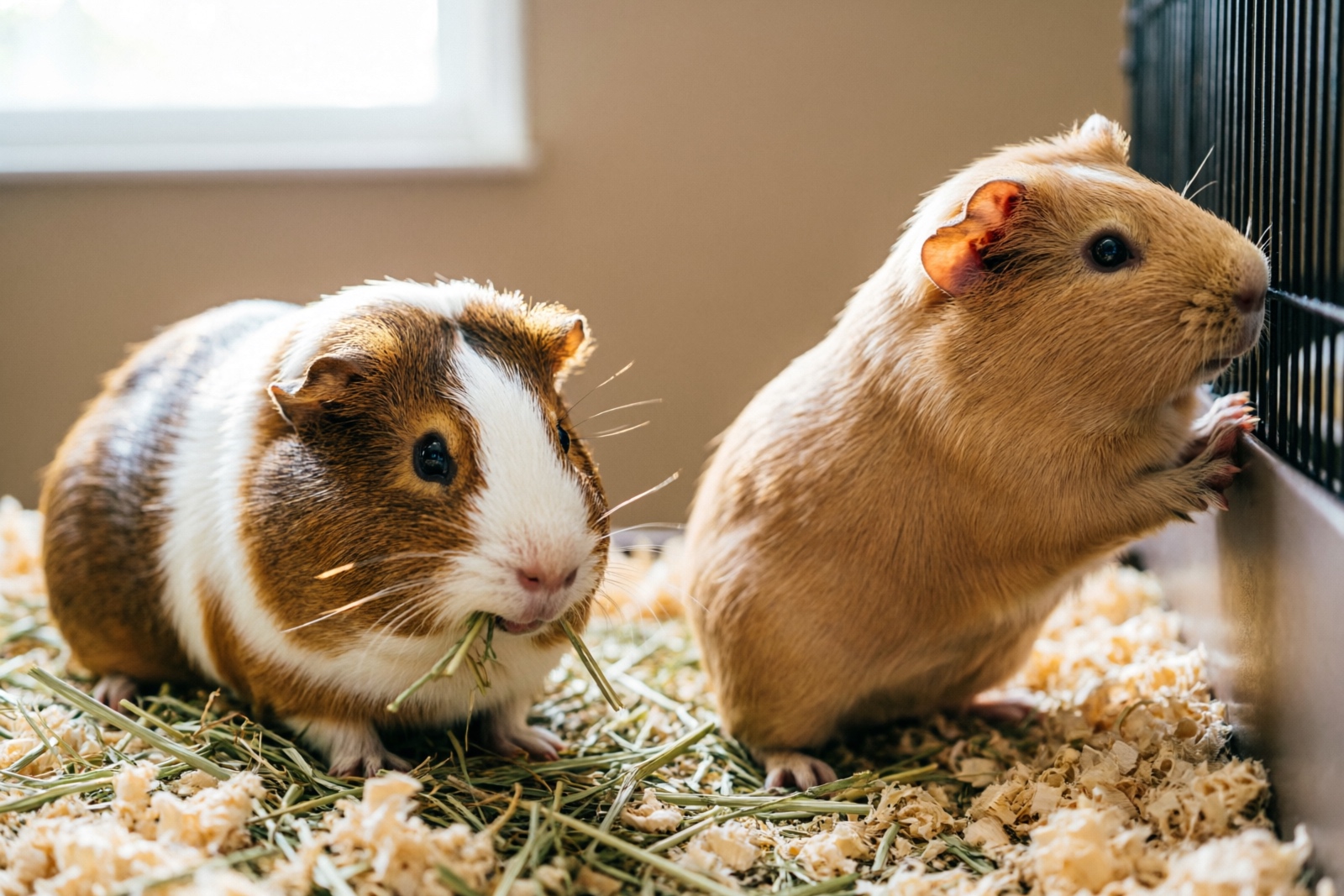
I have helped several families choose their first guinea pig, and I have noticed the same pattern every time. The kids are excited, the parents are hopeful, and nobody has any idea what they are actually signing up for. A guinea pig for kids sounds like the perfect starter pet, and in many ways it is, but only if you go in with realistic expectations. Choosing a guinea pig for kids means committing to daily care, a companion animal, and a five to seven year responsibility. This guide covers everything a parent needs to know before bringing a guinea pig home, from age readiness and costs to the exact supplies you need on day one.
Are Guinea Pigs Good Pets for Kids?
The short answer is yes, guinea pigs are one of the best small pets for children, but they are not low-maintenance. I think the reason they work so well for families is a combination of temperament and biology. Guinea pigs are diurnal, meaning they are active during the day when your kids are awake and want to interact. Hamsters, by contrast, are nocturnal, which means the main interaction window is after bedtime. That alone makes a guinea pig for kids a more natural fit for a household with children.
They are also incredibly gentle. In all my years of keeping small pets, I have rarely been bitten by a guinea pig, and I cannot say the same for hamsters. Guinea pigs rarely nip, and when they do, it is usually because a finger smells like food rather than aggression. They are vocal and expressive in ways that delight kids. They squeak when they hear the fridge open, purr when you pet them, and popcorn, which is a joyful little jump that means they are happy. Kids respond to that feedback in a way they do not with fish or silent pets.
The lifespan is another factor to consider seriously. Guinea pigs live five to seven years, which is longer than most hamsters and about the same as a small dog. That longevity teaches children real commitment, not the fleeting responsibility of a pet that passes in two years. For more context on what to expect over the years, our guinea pig lifespan guide covers the full picture from puppyhood through senior care.
That said, I want to be honest about the trade-offs. Guinea pigs need 30 to 45 minutes of daily care. They need a companion because they are herd animals. They need fresh vegetables every single day, not just dry food from a bag. They need a large cage, much larger than most parents expect. And they need regular vet visits from an exotic animal vet, which costs more than a standard dog or cat visit. For a complete overview of health considerations, our guinea pig health guide is worth reading before you commit. Some organizations argue against guinea pigs as starter pets, and while I think their concerns about impulse purchases are valid, the solution is education, not avoidance.
What Age Is Right for a Guinea Pig?
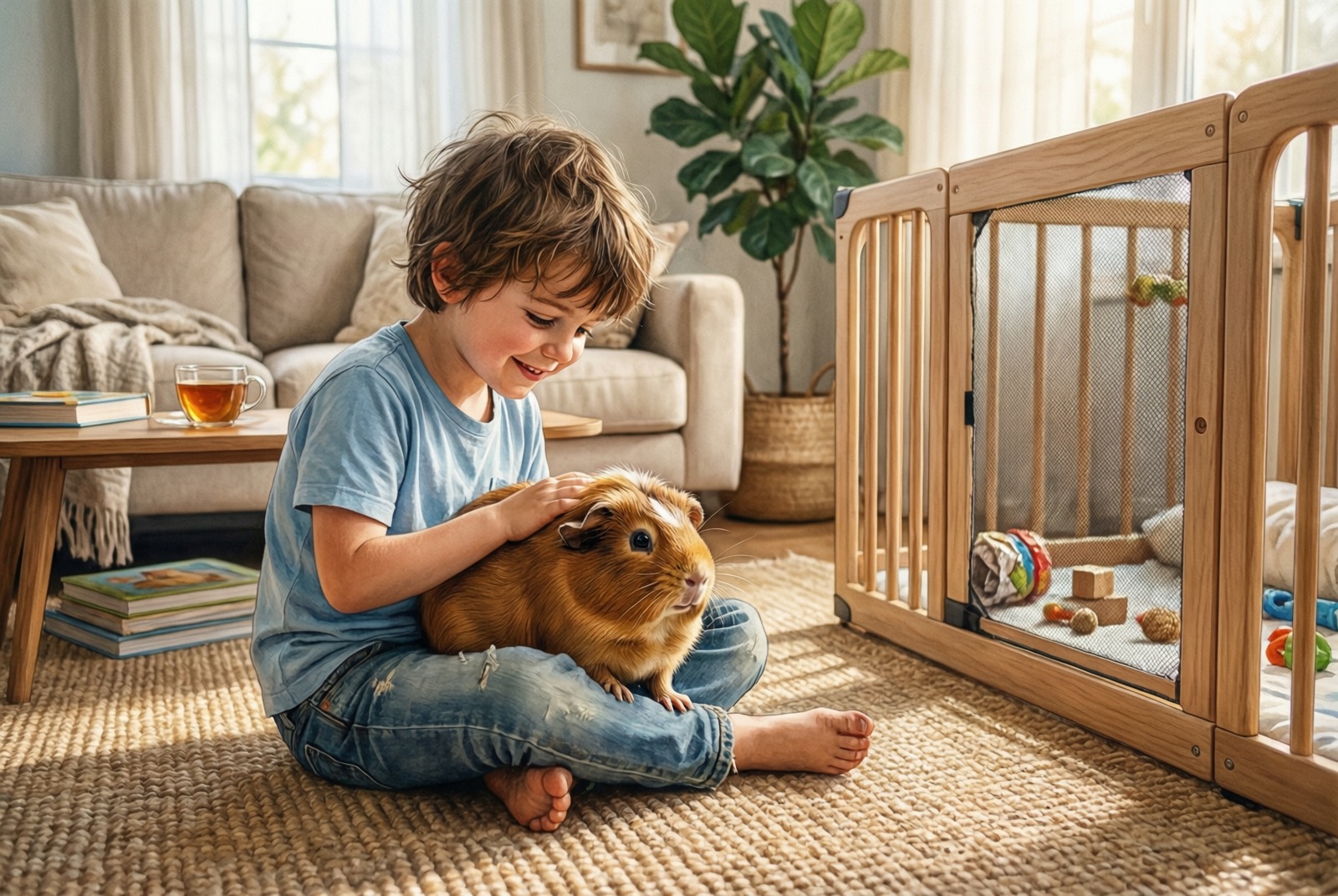
This is the question I get most often from parents, and my answer always depends on the individual child. That said, I have found that guidelines based on what age is good for a guinea pig are helpful as a starting point. The table below reflects what I have seen work in real families, not just theoretical advice.
| Age | Role | What They Can Handle | Supervision Level |
|---|---|---|---|
| 4-6 years | Observer | Gentle petting with a parent right there | Constant, hands-on |
| 7-9 years | Helper | Fresh food, water bottle, gentle holding | Always nearby |
| 10-12 years | Co-caretaker | Daily feeding, spot cleaning, brushing | Daily check-in |
| 13+ years | Primary caretaker | All daily care, cage cleaning, vet trips | Weekly check-in |
The most important thing I want parents to understand is that the parent is always the ultimate caregiver, regardless of the child’s age. No five-year-old can be expected to remember to feed a pet every day or notice subtle signs of illness. That responsibility falls on you. The child’s role grows as they mature, but the safety net is always the adult.
I look for a few specific signs that tell me a child is ready. Consistent interest is the big one. If your child has been asking about guinea pigs for months, not just after seeing a YouTube video, that is a good sign. Being naturally gentle with animals matters too. A child who grabs at the family dog or cat roughly is probably not ready for a small prey animal. Understanding that the pet needs daily care, even on days when the child is tired or busy, shows the maturity required.
Guinea Pig vs Hamster vs Rabbit for Kids
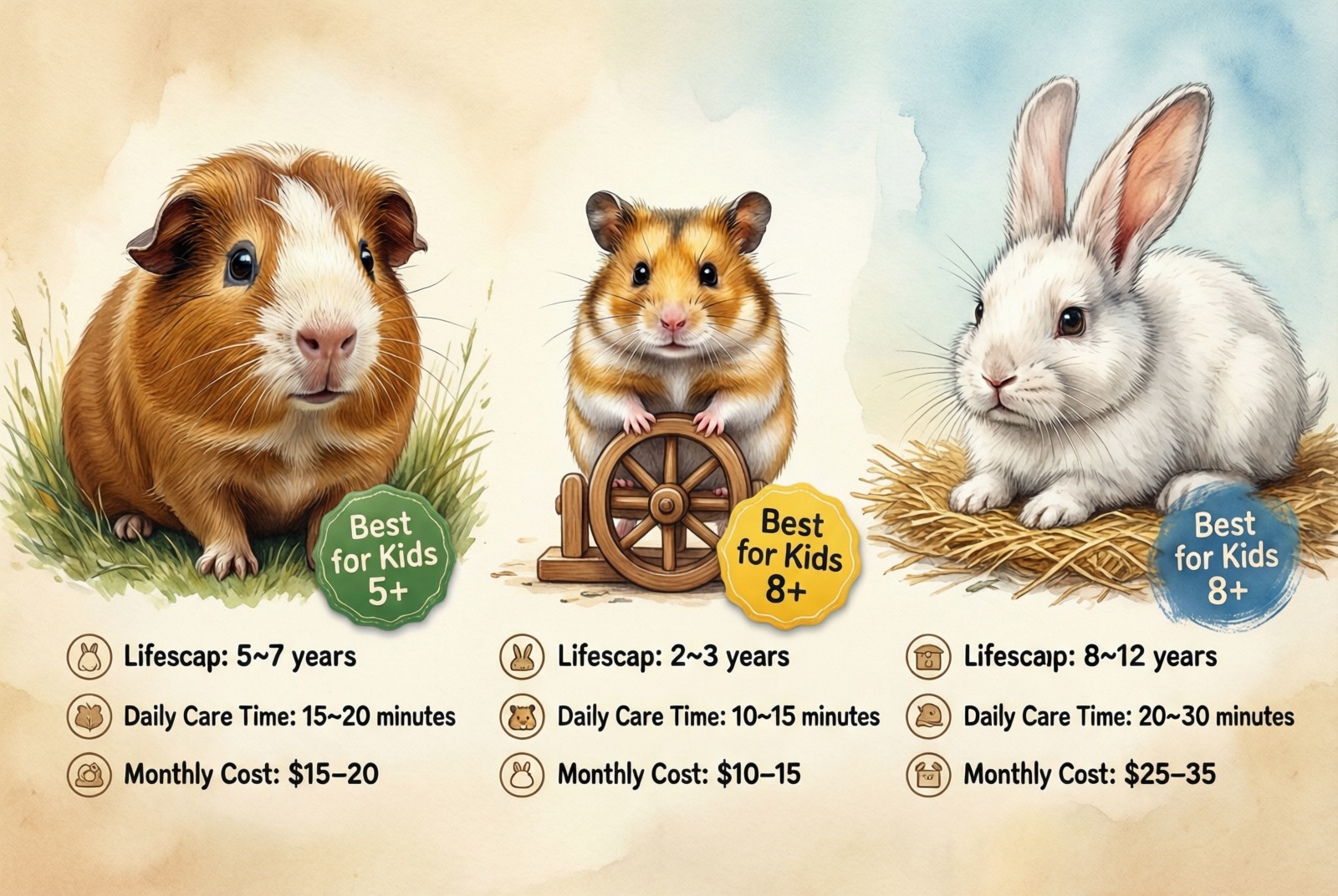
Parents often ask me to compare these three popular small pets, and the guinea pig vs hamster for kids debate comes up more than any other. I have put together a side-by-side breakdown based on my experience keeping all three. Each one has strengths, but for most families with younger children, a guinea pig comes out on top.
| Feature | Guinea Pig | Hamster | Rabbit |
|---|---|---|---|
| Best age for child | 5+ years | 8+ years | 8+ years |
| Lifespan | 5-7 years | 2-3 years | 8-12 years |
| Daily care time | 30-45 min | 15-20 min | 45-60 min |
| Handling | Gentle, rarely bites | Can nip, fragile | Can kick or scratch |
| Active when | Daytime | Night and early morning | Morning and evening |
| Social needs | Needs a companion | Solitary | Needs a companion |
| Space needed | Large, 7.5+ sq ft | Medium, 450+ sq in | Very large, 32+ sq ft |
| Monthly cost | $40-60 | $15-25 | $50-80 |
| Noise level | Moderate squeaks | Quiet night wheel | Quiet |
| Kid-friendliness | High | Moderate | Moderate |
In my experience, guinea pigs are the best first pet for most families because they are awake when kids are, they are gentle, and they actively seek out interaction. If you are looking for a guinea pig for kids specifically, you will find that daytime activity and gentle temperament make all the difference. A hamster is the better choice if you have limited space or a tighter budget, and our first-time hamster owner guide covers everything you need to know about that route. Rabbits are wonderful pets for older children, but they need significantly more space and their long lifespan of eight to twelve years is a major commitment.
Guinea Pig Starter Kit — What to Buy Before Day One
Getting the supplies right before your guinea pig arrives makes the transition smoother for everyone. I have learned that having everything set up in advance reduces stress for both the family and the animal. A proper guinea pig starter kit for beginners covers four essentials: housing, feeding, bedding, and food. Here is a step-by-step walkthrough of what you need and the products I would actually recommend.
Step 1: Choose the Right Cage or Playpen
Guinea pigs need at least 7.5 square feet for one and 10.5 square feet for a pair. Traditional small animal cages sold in pet stores are almost always too small. Playpens are an excellent alternative for families because they are affordable, easy to clean, and expandable. When you are looking for the best guinea pig cage for beginners, I recommend starting with a playpen rather than a traditional cage. The SONGMICS Pet Playpen is the option I recommend most often to new families. At $49.99 backed by 🔥, it has earned a strong reputation in the hamster and guinea pig community. The waterproof base means you can set it up on any floor, and the panels connect with zip ties so you can adjust the shape to fit your space. You can find it here. If you want something that comes with a matching floor mat included, the Kaytee Pet-N-Playpen at $69.51 is a solid step up. Kaytee is a well-known brand in the small pet world, and the included mat saves you from buying one separately. It folds flat for storage and works indoors or outdoors, which is nice if you want to let your guinea pig enjoy some supervised time on the grass. You can find it here. For detailed space requirements, our guinea pig cage size guide covers the specifics.
Step 2: Set Up Feeding Stations
Your guinea pig needs constant access to hay and fresh water. Rather than buying these separately, the SANGLE Feeding Set bundles a hay feeder and a 350ml water bottle together for $18.99. I like this set for families because kids can easily help refill the water bottle and restock the hay rack as part of their daily routine. The hay feeder reduces waste, which saves money over time. You can pick one up here. Our guinea pig food guide has more details on daily nutrition.
Step 3: Add Bedding or Fleece Liners
I switched to fleece liners years ago and never went back. They are reusable, cost-effective over time, and much easier for kids to help maintain than loose bedding. The YUEPET 3-Pack Waterproof Fleece Liners at $13.99 is the best value I have found. You get three liners so one is always ready while the others are in the wash. The waterproof inner layer prevents urine from soaking through, and they are machine washable. With 4.7 stars 🔥, the quality speaks for itself. You can find them here. Our guinea pig bedding guide compares fleece, paper, and wood options.
Step 4: Choose the Right Food
Guinea pigs cannot manufacture their own vitamin C, so their food needs to include it. This is non-negotiable. The Oxbow Garden Select Guinea Pig Food is what I feed my own animals and what I recommend to every new owner. Oxbow is a vet-trusted brand, this formula uses timothy hay as the base, and it includes stabilized vitamin C in every pellet. At around $25 with a 4.8-star rating 🔥, it comes widely recommended by exotic vets. You can find it here.
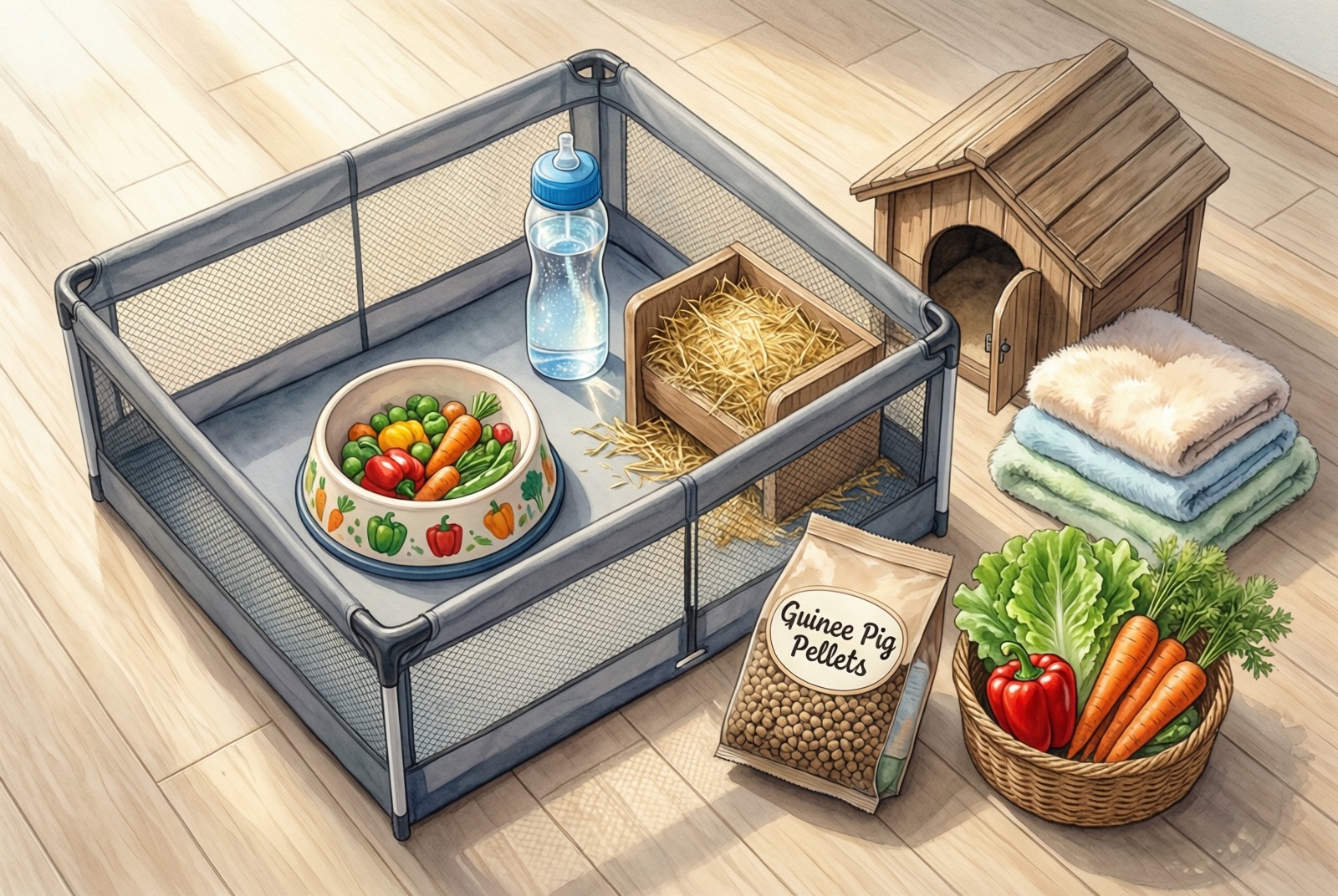
Your total starter kit cost comes to roughly $108 to $128 depending on which playpen you choose. That covers the essentials for day one.
How Much Does a Guinea Pig Cost?
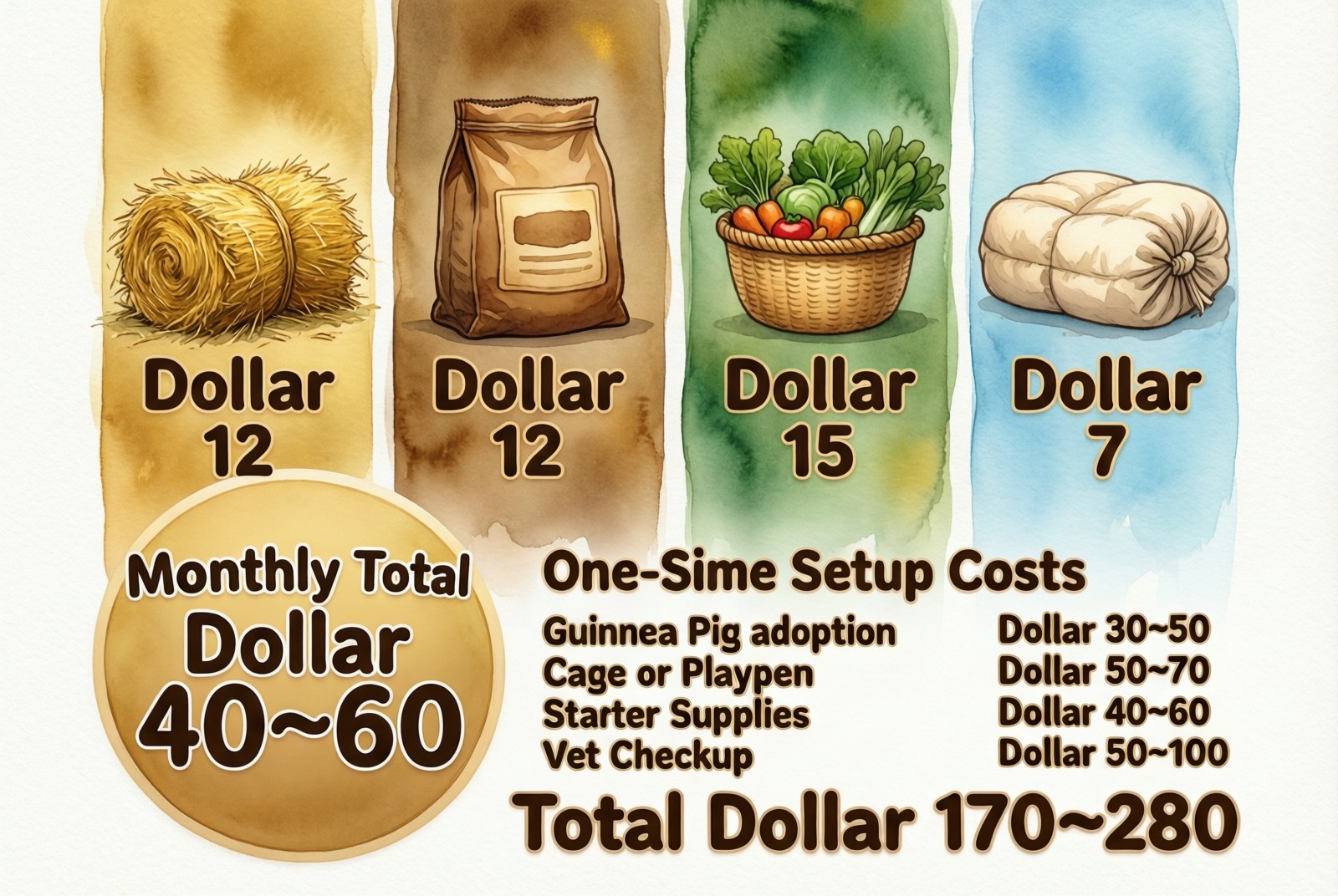
Money is one of those topics parents need a clear answer on, and I find that most people underestimate how much does a guinea pig cost for kids over the long run. The table below breaks down what you should expect to spend.
| Expense | One-Time Cost | Monthly Cost |
|---|---|---|
| Guinea pig, adoption fee | $30-50 | — |
| Cage or playpen | $50-70 | — |
| Starter supplies | $40-60 | — |
| Hay | — | $10-15 |
| Pellets | — | $10-15 |
| Fresh vegetables | — | $10-20 |
| Bedding or fleece liners | — | $5-10 |
| Vet checkups | $50-100 per year | — |
| Emergency vet fund | $200-500 set aside | — |
| Total first month | $170-280 | — |
| Monthly ongoing | — | $40-60 |
| Annual total | — | $500-750 |
I always tell parents to adopt rather than buy from a pet store when choosing a guinea pig for kids. Shelters and rescues charge $30 to $50 per guinea pig, and the animals are usually already health-checked and socialized. Pet store guinea pigs are sometimes missexed, which leads to unexpected litters, or they arrive with health issues that surface weeks later. Our guinea pig breeds guide can help you understand the different types if you are looking for a specific variety.
The biggest hidden cost is vet care. Exotic animal veterinarians charge more than standard dog and cat vets, and not every town has one. I strongly recommend setting aside $200 to $500 as an emergency fund before you bring a guinea pig home. For more on what to expect with vet visits, our guinea pig health guide covers common conditions and typical treatment costs.
One more thing: always get two guinea pigs. They are herd animals and become depressed when kept alone. A same-sex pair, two females or two males from the same litter, share the same cage, food, and supplies, so the ongoing cost of keeping a guinea pig for kids does not double. The initial adoption fee does increase, but the daily care burden stays roughly the same.
Teaching Kids to Care for a Guinea Pig
Getting children involved in daily care is where the real learning happens, and a guinea pig for kids needs to be structured by age. In my experience, forcing too much responsibility too early backfires and makes the child resent the pet.
For young kids between four and seven, I suggest keeping it simple and positive. Hand-feeding vegetables is usually the favorite activity. Let them refill the water bottle with your help. Gentle petting while the guinea pig is on the floor builds trust on both sides. Keep sessions short, five to ten minutes, and always end on a positive note.
Kids aged eight to twelve can take on more meaningful tasks. Daily feeding, spot cleaning soiled areas, brushing the coat, and even helping with nail trimming under supervision. I have found that creating a simple chore chart with checkboxes makes this feel rewarding rather than like a chore. Our guinea pig toys guide has enrichment ideas that kids can help set up.
For teenagers thirteen and older, the full range of care is appropriate. Weekly cage cleaning, health monitoring, and even vet visit coordination. At this age, I have seen young people develop genuine expertise and a deep bond with their animals.
One thing I want to emphasize is teaching kids to read guinea pig body language. A happy guinea pig popcorns, which is that adorable little hop, and purrs when petted. A scared guinea pig freezes or hides. A hungry one wheeks, which is that loud, demanding squeak. Our guinea pig sounds and meanings guide helps kids learn to communicate with their pet. Never force interaction if the guinea pig wants to be left alone. Let the animal come to the child on its terms.
Safety Tips for Kids and Guinea Pigs
I have seen too many preventable injuries, so I am going to be direct about safety. The most important rule is that children under eight should never handle a guinea pig without an adult right there. Drops are the number one cause of injury, and they happen in a split second.
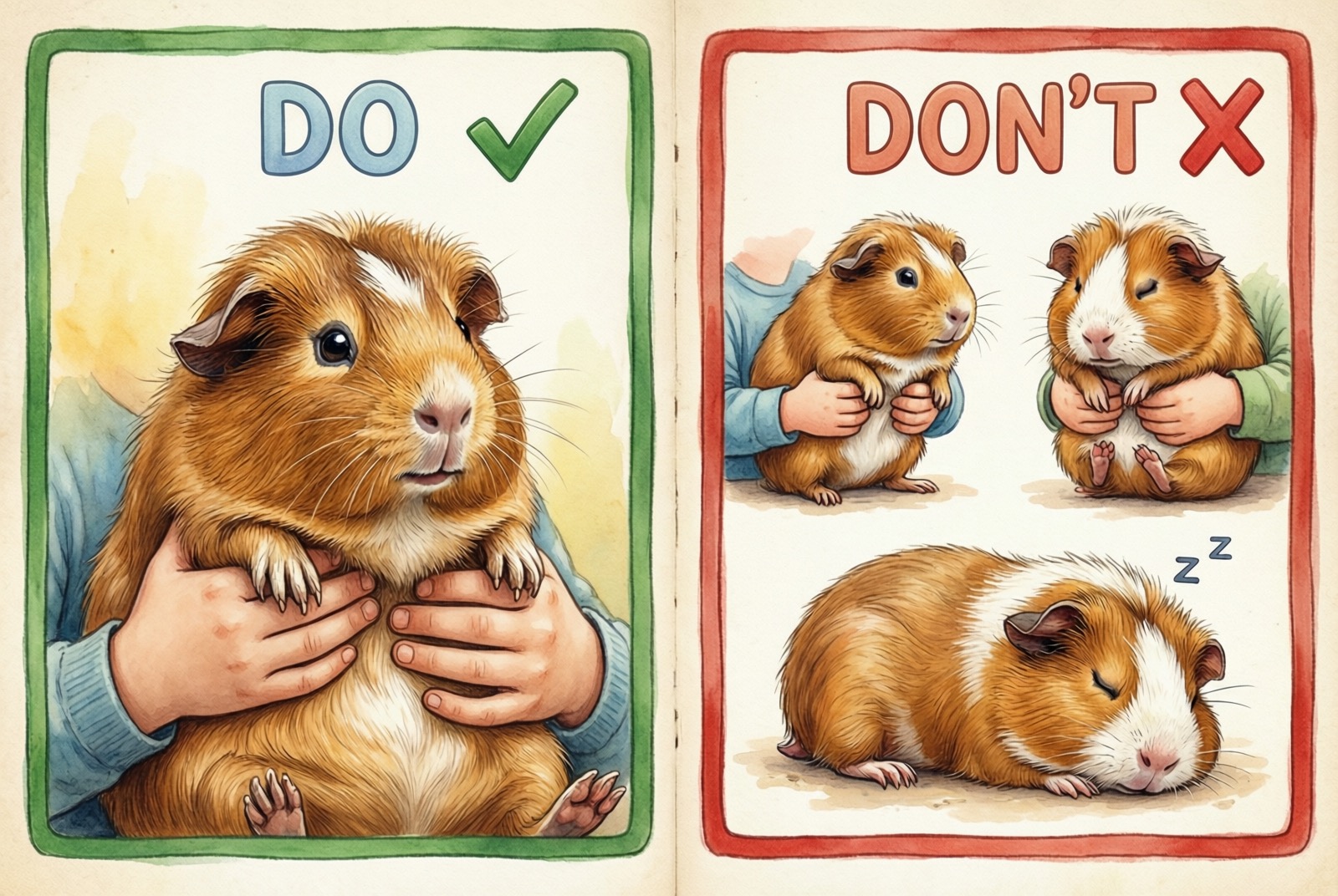
Here is how to hold a guinea pig properly. Approach calmly and let the animal smell your hand first. Slide one hand under the chest and the other under the hindquarters. Hold the guinea pig close to your body so it feels supported and secure. Never squeeze, never grab by the scruff, and never hold by the legs. Sitting on the floor during handling sessions is the safest approach because there is no height to fall from.
Keep handling sessions to ten or fifteen minutes. Guinea pigs are prey animals, and even a gentle child can feel like a predator if the interaction goes on too long. Let the guinea pig take breaks in a hide or back in the cage.
There are a few things kids should never do. Never chase the guinea pig. Never wake a sleeping one. Never put fingers near the mouth. Never pick up by the stomach or legs. And never use the guinea pig as a show-and-tell prop for friends. Our guinea pig vitamin C guide covers the nutritional side of keeping your pet healthy, which is just as important as safe handling.
One common question is whether guinea pigs can share a bedroom with a child. In my experience, yes, this works fine. Guinea pigs are relatively quiet at night. Place the cage in a calm corner away from the bed, keep the room temperature between 65 and 75 degrees Fahrenheit, and avoid drafts. Some guinea pigs do wheek in the early morning for breakfast, which families either find charming or annoying depending on whether you are a morning person.
Frequently Asked Questions
Are guinea pigs good pets for kids?
Yes, they are one of the best small pets for children ages five and up. As a guinea pig for kids, they are gentle, active during the day, rarely bite, and enjoy human interaction. They do require 30 to 45 minutes of daily care, a companion, and live five to seven years. The parent should always be the primary caregiver regardless of the child’s age.
What age should a child get a guinea pig?
Age five and up for gentle interaction with constant supervision. Age eight and up for helping with daily care tasks. Age ten and up for co-caretaker responsibilities. Age thirteen and up can serve as the primary caretaker with light parental oversight. The real indicator is whether the child has shown consistent, lasting interest rather than a passing fascination.
Are guinea pigs or hamsters better for kids?
Guinea pigs are generally better for younger children because they are awake during the day, they are gentle, and they rarely bite. A guinea pig for kids offers that daytime interaction window that hamsters simply cannot provide. Hamsters are nocturnal, which means they are active when kids are sleeping. Hamsters can nip when startled and are more fragile to handle. That said, hamsters need less space and cost less per month, so they may be the better choice for families with tighter budgets or smaller living spaces.
How much does a guinea pig cost per month?
Expect to spend $40 to $60 per month on hay, pellets, fresh vegetables, and bedding. First-month setup costs including the cage, supplies, and adoption fees run $170 to $280. I recommend setting aside $200 to $500 as an emergency vet fund because exotic animal veterinarians are more expensive than standard vets.
Do guinea pigs like to be held by kids?
Most guinea pigs learn to tolerate and even enjoy gentle handling once trust is established, but they are prey animals and may be nervous at first. Building trust takes time. Start with hand-feeding vegetables and calm, short interactions. Some guinea pigs never love being held, and that personality difference needs to be respected. Always supervise children under eight during handling.
Can guinea pigs and kids sleep in the same room?
Yes, this usually works well. Guinea pigs are mostly quiet at night. Place the cage in a calm corner away from the child’s bed. The main considerations are room temperature, which should stay between 65 and 75 degrees Fahrenheit, and avoiding drafty areas. Some guinea pigs wheek for breakfast in the morning, which can double as a natural alarm clock.
Can a 5 year old take care of a guinea pig?
A five-year-old can participate in simple tasks like hand-feeding vegetables and gentle petting, but they absolutely cannot be the primary caregiver of a guinea pig for kids. They should only handle the guinea pig while sitting on the floor with an adult directly beside them. The parent must handle all feeding, cleaning, and health monitoring. Think of the five-year-old as a helper, not an owner.
Do I need to get two guinea pigs?
Yes, this is strongly recommended. Guinea pigs are social herd animals and can become depressed, lethargic, or stressed when kept alone. Get a same-sex pair, either two females or two males from the same litter. The initial cost is higher for two, but the ongoing care is nearly the same since they share a cage, food, and supplies.