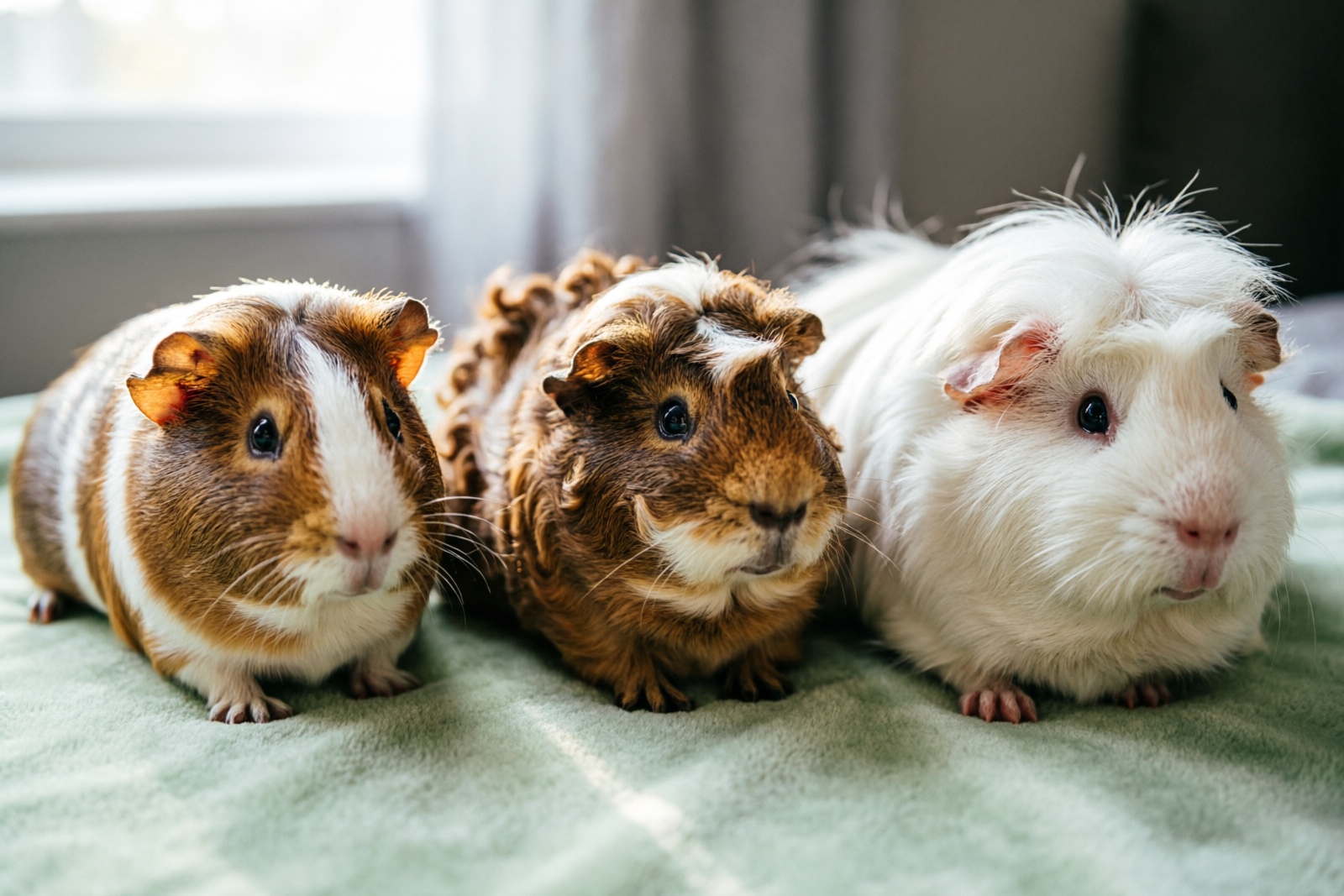
Choosing the right guinea pig breed matters more than most new owners realize. Different breeds have dramatically different grooming requirements, temperaments, and health considerations. A Peruvian guinea pig needs daily brushing sessions that take 15 to 20 minutes, while an American guinea pig needs little more than a weekly once-over. A Skinny Pig requires careful temperature control year-round, while a Teddy thrives in standard room conditions. Among small guinea pig breeds, the American and Abyssinian are popular compact choices.
This guinea pig species guide covers all major types of guinea pigs, organized by coat type, with guinea pig breeds with pictures, with specific care recommendations for each. It includes the 13 breeds recognized by the American Cavy Breeders Association (ACBA) for showing, plus rare guinea pig breeds like the Skinny Pig and Baldwin that are not ACBA-recognized but are popular guinea pig breeds for pets. Whether you are a first-time owner choosing your first piggy or an experienced keeper considering adding a new breed to your herd, you will find the detailed guinea pig breed comparison and practical advice you need.
How Many Guinea Pig Breeds Are There?
The American Cavy Breeders Association (ACBA), the governing body for cavy showing in the US, currently recognizes 13 breeds — these include the American, Abyssinian, Peruvian, Silkie, Teddy, White Crested, and Coronet, plus their satin varieties. Skinny Pigs and Baldwins are popular breeds but are not ACBA-recognized for showing.
The Three Main Categories
Short-haired breeds are the most popular and the easiest to care for. Their coats stay clean with minimal grooming, and they are generally the most affordable to maintain. The American, Teddy, and White Crested are the most widely available short-haired breeds, and they make up the majority of pet guinea pigs worldwide.
Long-haired breeds are prized for their dramatic appearance but require substantial grooming commitment. The Peruvian can grow hair up to 20 inches long, and the Abyssinian develops distinctive rosette patterns that tangle easily if neglected. These breeds are best suited for owners who enjoy grooming as a bonding activity and have the time to maintain their coat daily.
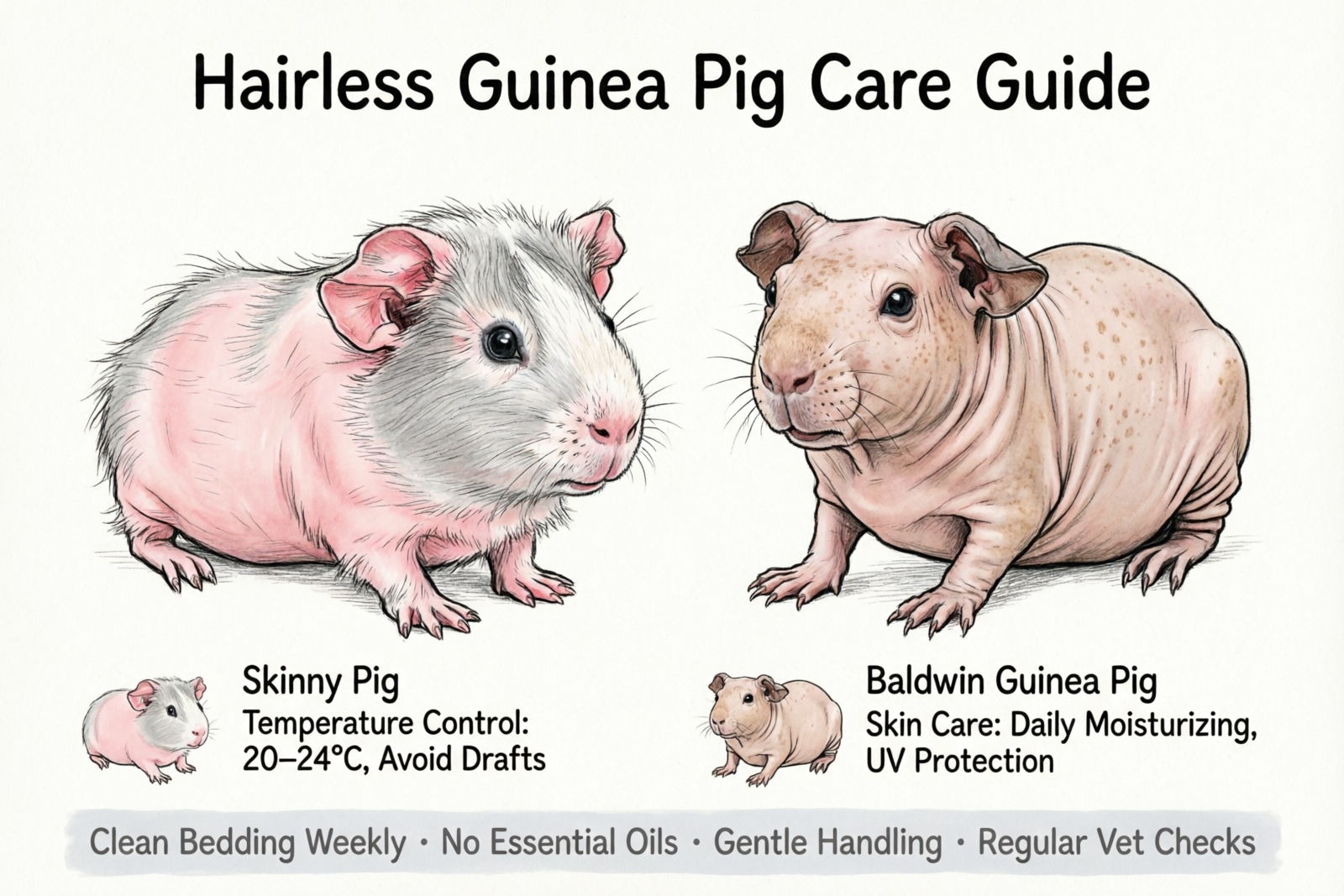
Hairless breeds are the most specialized category. Skinny Pigs and Baldwins lack the protective coat that all other breeds rely on, which means they need controlled temperatures, skin protection, and a higher-calorie diet to compensate for heat loss. These breeds are fascinating and affectionate, but they are not recommended for first-time owners.
Lifespan varies slightly between breeds — most guinea pigs live 5 to 7 years with proper care. For detailed lifespan information by breed, see our guinea pig lifespan guide.
Short-Haired Guinea Pig Breeds
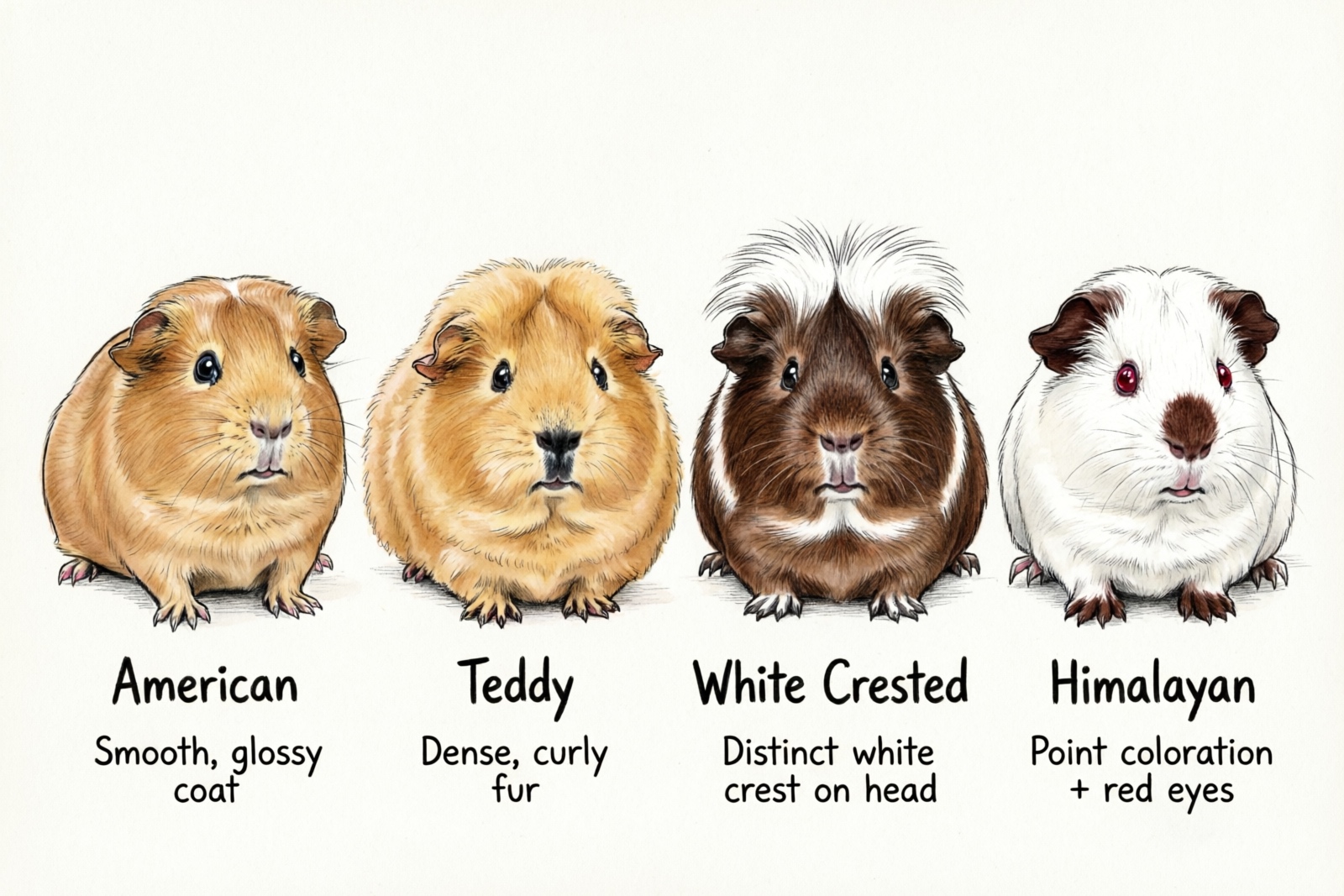
Short-haired guinea pigs are the most practical choice for most owners. Their coats require minimal maintenance, they are less prone to skin issues caused by trapped moisture, and they are generally the easiest to find at breeders, shelters, and pet stores. Here are the three most popular short-haired breeds.
American Guinea Pig
The American is the most common guinea pig breed in the world, and for good reason. They have a smooth, short coat that lies flat against the body, requiring nothing more than a quick brushing once or twice a week. Their temperament is consistently described as gentle, docile, and easy to handle — they rarely bite or scratch, and they warm up to new owners quickly.
Americans typically weigh between 1.5 and 2.5 pounds and live 5 to 7 years. They come in a wide variety of colors and patterns, including solid, agouti, dalmatian, and tortoiseshell. Their availability is unmatched — you can find American guinea pigs at virtually any shelter, rescue, or breeder.
Teddy Guinea Pig
The Teddy guinea pig gets its name from its dense, plush coat that feels like a teddy bear. Unlike the American’s smooth coat, the Teddy’s fur is wiry and stands upright, giving them a rounded, fluffy appearance. Their upright ears and broad, rounded face add to the teddy bear resemblance.
Personality-wise, Teddies are more energetic and curious than Americans. They are playful and interactive, which makes them popular with families who want a guinea pig that actively engages with its environment. Their grooming needs are slightly higher than the American — the dense coat can trap debris and needs brushing two to three times per week — but they do not require the intensive daily sessions that long-haired breeds demand.
White Crested Guinea Pig
The White Crested is visually distinctive because of the single white rosette on top of its head — a “crown” of white fur that contrasts with the rest of the coat. The ARBA standard requires the crest to be pure white with no other white on the body, which makes finding a show-quality White Crested challenging. Pet-quality White Cresteds are more relaxed in their color requirements and easier to find.
Their care needs are nearly identical to the American — weekly brushing, standard diet, and normal cage requirements. Their temperament is friendly and social. The main difference is their relative rarity, which can make them harder to find and slightly more expensive to purchase.
Long-Haired Guinea Pig Breeds
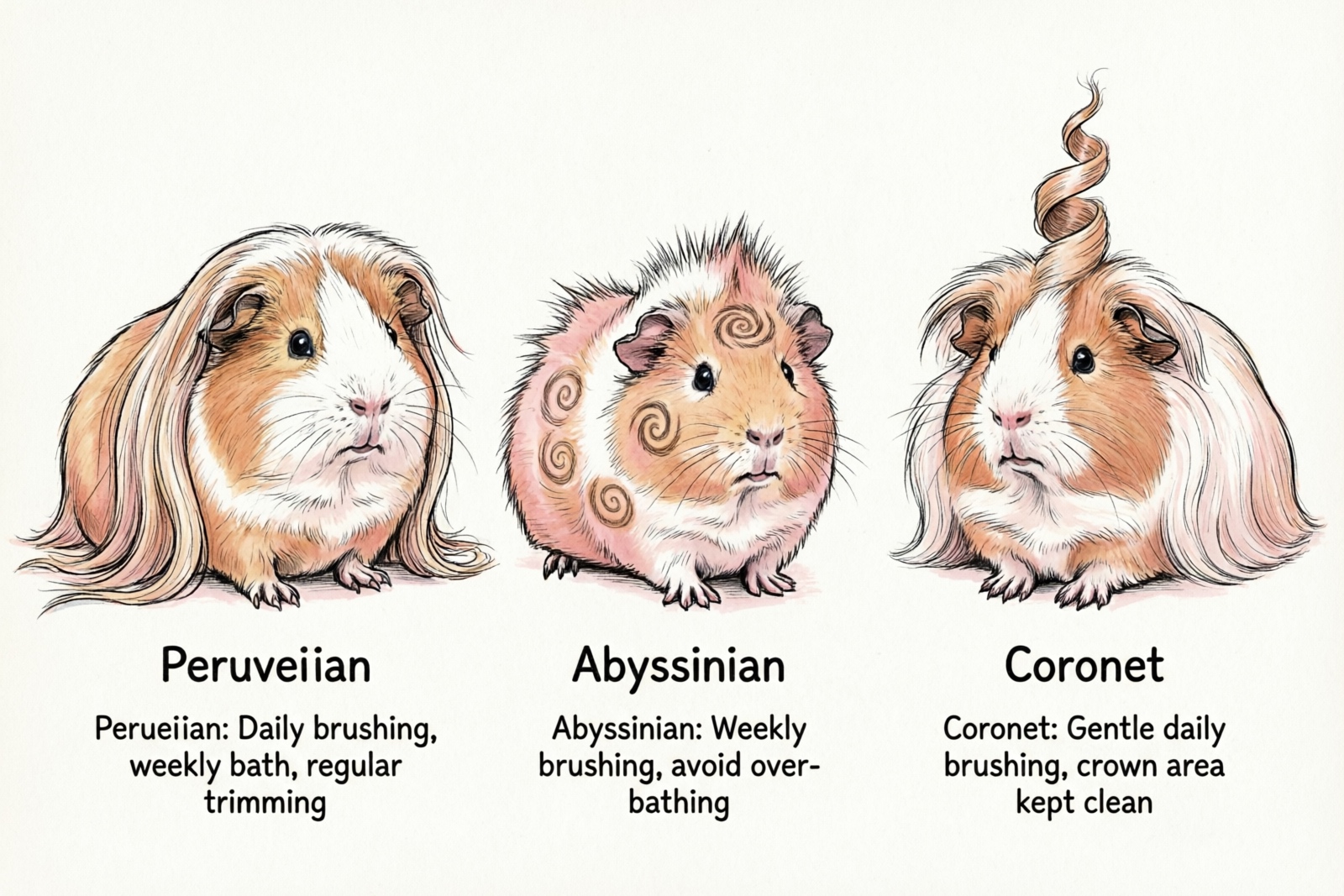
Long-haired guinea pig breeds are the most visually striking category, but they come with significant grooming responsibilities. If you are considering a long-haired breed, be honest with yourself about whether you can commit to daily grooming before bringing one home. Matted fur is not just unsightly — it can cause skin infections, restrict movement, and create serious health problems.
Abyssinian Guinea Pig
The Abyssinian is the most recognizable guinea pig breed thanks to its rosettes — circular swirls of hair that create a textured, patterned appearance across the entire body. A show-quality Abyssinian should have 8 to 10 clearly defined rosettes arranged in a symmetrical pattern. Their coat is medium length rather than truly long, but the rosettes make it prone to tangling if not maintained.
Abyssinians are known as the most energetic and personality-rich guinea pig breed. They are active explorers, bold around humans, and surprisingly vocal — their range of sounds includes wheeks, purrs, rumbles, and teeth chattering. If you want a guinea pig with character, the Abyssinian delivers. Their coat requires brushing every 2 to 3 days to keep the rosettes defined and tangle-free.
Peruvian Guinea Pig
The Peruvian has the longest coat of any guinea pig breed, with hair that can reach 20 inches or more. The coat grows continuously from a central part on the back, draping over the sides like a curtain, with a frontal “forelock” that falls forward over the face. Peruvians are the most demanding breed to groom — daily brushing is mandatory, and many owners trim the coat periodically to keep it manageable.
Despite the high maintenance, Peruvians have a calm and docile temperament. They are less active than Abyssinians and tend to be content sitting quietly during grooming sessions, which makes the daily routine easier than it would be with a fidgety breed. Peruvians are primarily kept by experienced owners and are frequently shown in competitions.
Silkie (Sheltie) Guinea Pig
The Silkie, also called the Sheltie, has long, flowing hair that grows backward from the head in a smooth teardrop shape — unlike the Peruvian, whose coat grows forward over the face. This growth pattern means Silkies do not develop the face-covering forelock that Peruvians have, which makes them slightly easier to maintain. Their coat feels silky to the touch, which is how the breed got its name.
Silkies need daily brushing to prevent tangles, but their coat direction is more predictable than the Peruvian’s, which makes the grooming process more straightforward. They have a gentle, laid-back temperament and are popular with owners who want a long-haired breed without the extreme maintenance of the Peruvian.
Coronet Guinea Pig
The Coronet is essentially a Silkie with a crown — a single rosette on top of the head, similar to the White Crested’s crest. The rest of the coat is long, smooth, and flows backward like a Silkie’s. This combination of the flowing Silkie coat and the distinctive coronet makes the Coronet one of the most visually striking guinea pig breeds.
Their grooming needs are identical to the Silkie’s — daily brushing with attention to the area around the coronet, where the different hair growth directions can cause tangling. Long-haired breeds like the Coronet are also more susceptible to skin issues if the coat is not kept clean and dry. For more on keeping your guinea pig healthy, see our guinea pig health guide.
Grooming tools for long-haired breeds matter. The Small Pet Select Hair Buster Comb ($19.99, 4.6★, 🔥) is specifically designed for long-haired small pets. Its smooth, rounded teeth remove loose hair and detangle without pulling — multiple reviewers note that even guinea pigs who hated other brushes tolerate this one well. At under $20, it is the single most important tool for any long-haired guinea pig owner.
For a complete starter set, the KALAMANDA 6-Piece Grooming Kit ($8.99, 4.4★, 🔥) includes a brush, comb, nail clippers, scissors, and more — everything you need for routine maintenance at an excellent price. One reviewer who bought it for a long-haired Peruvian guinea pig confirmed that the pink-handled brush works particularly well for getting tangles close to the skin.
Hairless Guinea Pig Breeds
Hairless guinea pig breeds are the most unusual and specialized category. They are not hypoallergenic — they still produce dander and allergens — but their lack of fur means they require a completely different approach to housing, diet, and health monitoring. These breeds are best suited for experienced owners who understand the extra responsibility involved.
Skinny Pig
The Skinny Pig is the most well-known hairless guinea pig breed. They have a mostly hairless body with small patches of fuzz on their nose, feet, and sometimes along the spine. Their skin is smooth, warm to the touch, and comes in a range of colors and patterns that are visible on the skin itself — you can see a “broken” or “Dalmatian” Skinny Pig just as clearly as you can see a coated one.
Skinny Pigs need a stable room temperature between 65 and 75°F (18–24°C). They cannot tolerate drafts, direct sunlight, or cold surfaces. Many owners provide fleece blankets and covered hideouts to help them regulate their body temperature. Their higher metabolic rate means they eat more than coated breeds — roughly 20 to 30 percent more food to maintain body heat. Our guinea pig health article covers common skin issues that Skinny Pigs are particularly vulnerable to, including dry skin, fungal infections, and sunburn.
Baldwin Guinea Pig
The Baldwin is a completely hairless breed that is born with a full coat of fur, which begins falling out at around one week of age. By the time a Baldwin is two to three months old, it is entirely bald. This gradual hair loss distinguishes them from Skinny Pigs, which are born hairless.
Baldwins are even rarer than Skinny Pigs and can be difficult to find outside of specialized breeders. Their care requirements are similar to the Skinny Pig’s but slightly more demanding — their skin tends to be more sensitive, and they are more susceptible to sunburn and abrasions. Both hairless breeds have higher vitamin C requirements than coated breeds because their immune systems work harder without the protective barrier of fur. For detailed vitamin C supplementation guidance, see our guinea pig vitamin C guide.
Diet for hairless breeds needs extra attention. The Oxbow Essentials Guinea Pig Food ($21.68, 4.8★, 🔥) is fortified with stabilized vitamin C and made with timothy hay for digestive health. At 4.8 stars, it is the highest-rated guinea pig food on Amazon and the most widely recommended by exotic veterinarians. The stabilized vitamin C is particularly important for Skinny Pigs and Baldwins, whose higher metabolic rate depletes vitamin C faster.
Unlimited hay is essential for all guinea pig breeds, but especially for hairless ones who need the extra calories and fiber. The Oxbow Orchard Grass Hay ($25.49 for a 2-pack, 4.6★, 🔥) is a sweeter, softer alternative to timothy hay that many guinea pigs prefer. Orchard grass is also lower in dust, which is beneficial for Skinny Pigs and Baldwins whose exposed skin is more sensitive to environmental irritants.
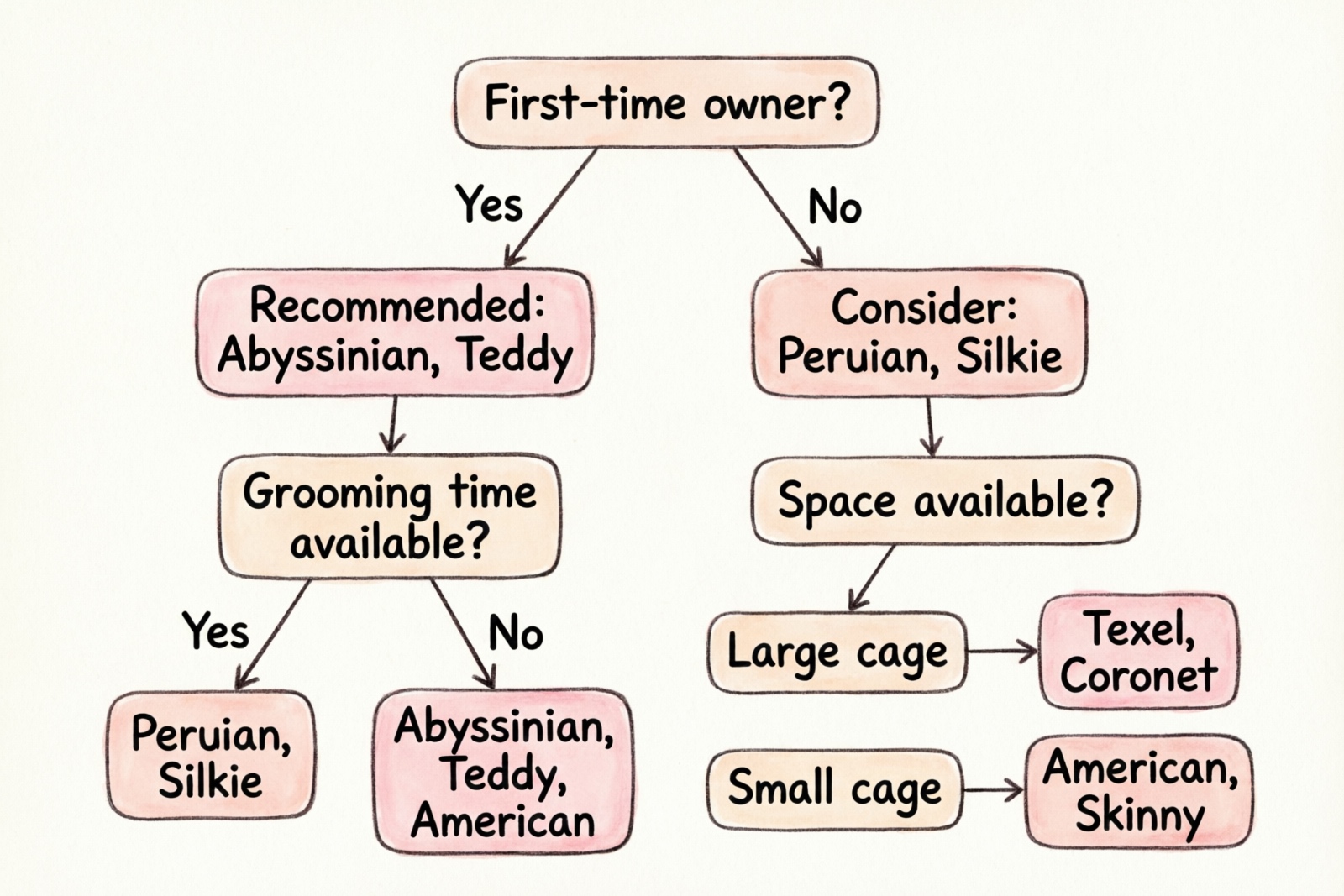
Best Guinea Pig Breed for Beginners
The best guinea pig breed for a first-time owner is one that matches your available time, living situation, and expectations. Here are specific recommendations based on common scenarios.
Top 3 Beginner-Friendly Breeds
1. American — The overall best choice for first-time owners. Their short, smooth coat requires brushing just once or twice a week. Their gentle temperament makes them easy to handle, and they bond quickly with new owners. They are the most widely available breed, so you can find one at a local shelter rather than waiting for a breeder.
2. Teddy — A great second choice for families with children. Their teddy bear appearance and playful personality make them engaging pets for kids, while their grooming needs remain manageable at two to three brushings per week. They are slightly more energetic than Americans but still easy to handle.
3. Abyssinian — The right choice if you want a more interactive, personality-driven guinea pig. Abyssinians are bold, vocal, and entertaining to watch. Their rosetted coat requires brushing every 2 to 3 days, which is more than short-haired breeds but far less than long-haired ones. They are a good stepping-stone breed for owners who may want to try long-haired breeds in the future.
Breeds to Avoid as a First-Time Owner
Peruvian and Coronet guinea pigs require daily grooming sessions of 15 to 20 minutes, plus periodic trimming. If you fall behind even a few days, the coat becomes matted and can require professional grooming or shaving to resolve. Skinny Pigs need careful temperature monitoring, special skin care, and a higher-calorie diet — experience with guinea pig health issues is valuable before taking on these extra challenges.
Quick Comparison Table
| Breed | Coat Type | Care Level | Temperament | Best For |
|---|---|---|---|---|
| American | Short | Easy | Gentle, friendly | First-time owners |
| Teddy | Short/Plush | Easy-Medium | Playful, curious | Families with kids |
| Abyssinian | Medium/Rosettes | Medium | Energetic, bold | Active owners |
| Peruvian | Long | Difficult | Calm, docile | Experienced groomers |
| Skinny Pig | Hairless | Specialized | Affectionate | Experienced owners |
For any breed, a proper cage is non-negotiable. The Ferplast Cavie Guinea Pig Cage ($99.74, 4.5★, 🔥) is the most popular indoor guinea pig cage on Amazon. It arrives as a complete kit with a food bowl, water bottle, hay rack, and hiding house — everything you need for day one. The deep plastic base holds generous bedding, and the 1-year Ferplast warranty provides peace of mind. For cage size guidelines specific to your chosen breed, see our guinea pig cage size article.
Every guinea pig also needs a hideout — it is not optional. Guinea pigs are prey animals that need a secure retreat to feel safe. The Niteangel Wood House with Window ($26.99, 4.7★, 🔥) is the highest-rated hideout available. Its window design provides ventilation while letting you check on your pig, and the natural wood is safe to chew. Multiple reviewers call it the best wooden house they have found after trying several alternatives.
For a budget-friendly option that doubles as enrichment, the Wooden Hideout House with Ladder ($17.99, 4.5★, 🔥) features a multi-level design with a ladder for climbing. Guinea pigs enjoy using the platform as a lookout point, and the included food dish is a practical bonus.
Breed-Specific Care Differences
While all guinea pig breeds share the same fundamental care requirements, the differences in coat type, metabolism, and health vulnerability mean that your daily routine will vary depending on which breed you choose.
Grooming Needs by Coat Type
| Coat Type | Brushing Frequency | Special Care | Tools Needed |
|---|---|---|---|
| Short-haired | 1–2x per week | Basic nail trims | Soft brush |
| Long-haired | Daily | Detangling, trimming | Hair Buster Comb + scissors |
| Hairless | Weekly skin checks | Temperature control, moisturizer if needed | Soft cloth |
Long-haired breeds also need periodic trimming around the rear end to keep the area clean. Hairless breeds need weekly skin checks for dryness, redness, or signs of fungal infection. For a complete guide to what your guinea pig is communicating through sounds and body language — which varies subtly by breed — see our guinea pig sounds article.
Diet and Health Differences
All guinea pig breeds share the same core diet: unlimited hay, fortified pellets, fresh vegetables, and daily vitamin C. But the proportions and supplements vary by breed. Hairless breeds need roughly 20 to 30 percent more calories than coated breeds. Long-haired breeds benefit from extra fiber to help prevent hairball issues, since they may ingest hair during grooming. For a complete dietary breakdown, see our guinea pig food guide.
Health conditions like bumblefoot can affect any breed, but hairless and long-haired breeds are slightly more susceptible due to their specialized needs. Our guinea pig bumble-foot article explains prevention strategies that are especially important for breeds that spend more time on bare surfaces.
Environment Needs
Every guinea pig needs at minimum 7.5 sq ft of cage space per pig — pairs need 10.5 sq ft or more. All breeds benefit from soft, absorbent bedding; fleece liners are a popular choice. For bedding recommendations, see our guinea pig bedding guide. Environmental enrichment through tunnels, hideouts, and chew toys is essential for mental stimulation regardless of breed — see our guinea pig toys article for breed-appropriate options.
FAQ: Guinea Pig Breed Questions
How many guinea pig breeds are there?
The American Cavy Breeders Association (ACBA) recognizes 13 breeds for showing: American, Abyssinian, Peruvian, Silkie, Teddy, White Crested, Coronet, and their satin varieties. New color varieties and coat patterns continue to emerge within these recognized breeds. Skinny Pigs and Baldwins are popular pets but are not ACBA-recognized.
What is the friendliest guinea pig breed?
American guinea pigs are widely regarded as the friendliest breed. They are gentle, easy to handle, and quick to bond with their owners. Teddy and Abyssinian guinea pigs are also very social but tend to be more energetic. Individual temperament matters more than breed — a well-socialized guinea pig of any breed can be extremely friendly.
What is a skinny pig?
A Skinny Pig is a hairless guinea pig breed with smooth, warm skin and small patches of fuzz on the nose and feet. They require a stable temperature between 65 and 75°F, protection from sunburn, a higher-calorie diet, and regular skin checks. They are affectionate and social but need experienced owners who can manage their specialized care requirements.
Which guinea pig breed lives the longest?
All breeds have similar average lifespans of 5 to 7 years with proper care. Hairless breeds may have slightly shorter average lifespans due to their increased health vulnerabilities, but individual care quality has a far greater impact on longevity than breed.
Do different guinea pig breeds have different dietary needs?
The core diet is the same for all breeds — unlimited hay, vitamin C-fortified pellets, fresh vegetables, and clean water. Hairless breeds need more calories to maintain body temperature. Long-haired breeds benefit from extra fiber to prevent gastrointestinal issues from ingested hair. All breeds need consistent vitamin C supplementation.
What is the rarest guinea pig breed?
The Baldwin guinea pig is among the rarest breeds. Born with a full coat that completely falls out within the first few months of life, Baldwins are difficult to find outside of specialized breeders. Skinny Pigs are more common but still rare compared to short-haired breeds like the American.
The best guinea pig breed is the one that fits your lifestyle, your schedule, and your willingness to commit to breed-specific care. For most first-time owners, the American or Teddy is the right starting point. If you have grooming experience and want a show-stopping pet, the Silkie or Coronet will reward your effort with one of the most beautiful small animals you can keep. Whatever breed you choose, invest in quality food, a spacious cage, and proper veterinary care — that is what makes the difference between a guinea pig that survives and one that truly thrives.