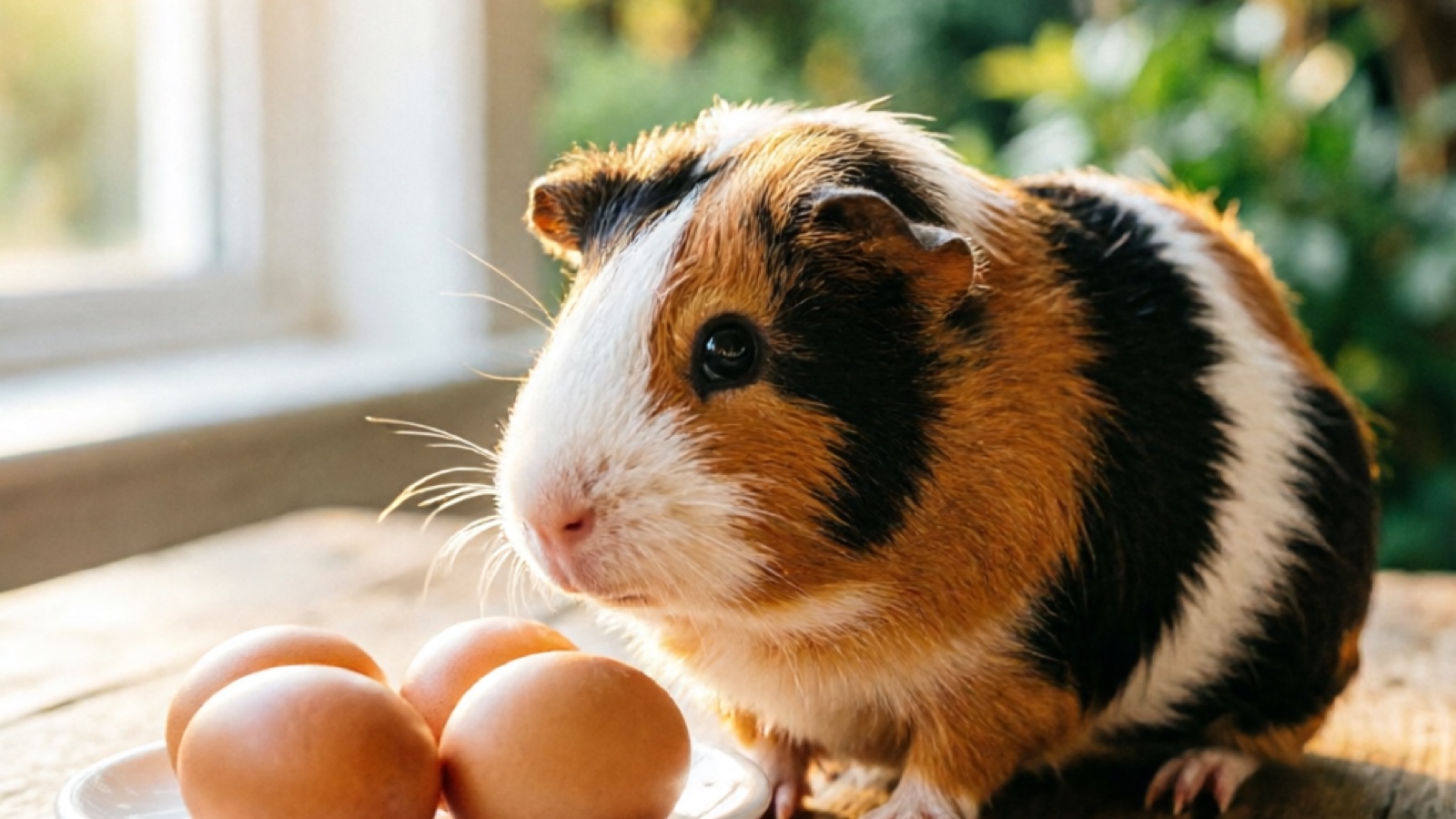
As of 2026, the consensus on guinea pig nutrition has only grown clearer: these animals are strict herbivores, and no amount of preparation makes animal protein appropriate for their digestive systems. While social media trends occasionally resurface suggesting eggs as a protein supplement for guinea pigs, the biological reality hasn’t changed — guinea pigs are strict herbivores whose digestive systems are exclusively designed to process plant matter. Eggs contain animal protein and fat that a guinea pig’s body cannot properly digest or utilize.
💡 TL;DR: The recommended amount of egg for a guinea pig is zero. Whether raw, boiled, scrambled, or egg whites only, eggs are biologically inappropriate for guinea pigs. If your guinea pig accidentally ate a small piece, monitor for 24 hours and contact your exotic vet if symptoms develop.
I’ve seen this question pop up more than you’d think, especially from new guinea pig owners who understandably want to offer their pets a varied diet. Eggs are cheap, widely available, and packed with protein — so it’s natural to wonder if can guinea pigs eat eggs would be a good supplement. But the answer is a definitive no, and the reasoning goes deeper than simply “it’s not recommended.” It comes down to fundamental biology: guinea pigs are built to eat plants, and their bodies literally cannot process what eggs contain. If you’re researching can guinea pigs eat eggs because you want to diversify your pet’s meals, the better question is which safe vegetables to add instead.
For a complete breakdown of what guinea pigs should actually eat, see our guinea pig diet guide.
Why Guinea Pigs Can’t Eat Eggs — The Strict Herbivore Problem
Kaytee Extreme Odor Control is a quality option worth considering for your setup.
Guinea pigs are strict herbivores — their digestive system is designed exclusively for processing plant material. This isn’t a preference, it’s a hardwired biological requirement.
Their digestive system works like a specialized fermentation machine built around fiber:
- Teeth — Hypsodont (continuously growing) teeth designed for grinding fibrous plant material, not tearing meat.
- Stomach — A simple, single-chamber stomach with low acidity. It produces enzymes for plant carbohydrates but lacks the protease enzymes needed to digest animal protein.
- Enlarged cecum — A large fermentation chamber where symbiotic bacteria break down plant fiber into volatile fatty acids, providing up to 70% of daily energy. This system is tuned exclusively for plant fiber, not animal protein.
- Coprophagy — Guinea pigs re-ingest specialized soft fecal pellets (cecotropes) containing B vitamins, vitamin K, and beneficial bacteria synthesized during plant fiber fermentation.
What Happens When a Guinea Pig Eats Egg
When egg enters this system, the results are predictable:
- Stomach overload — The 12.56g of protein and 9.51g of fat per 100g of egg far exceeds what a guinea pig’s enzymes can process. Undigested protein and fat pass into the intestines largely intact.
- Cecal disruption — Animal protein entering the cecum disrupts the balance of fermentation bacteria, leading to dysbiosis — a dangerous gut flora imbalance.
- Gas and bloating — Improperly digested material ferments abnormally, producing excess gas that can progress to GI stasis, a life-threatening emergency.
- Kidney and liver strain — High protein forces the kidneys to excrete excess nitrogen, and the liver must process fats it isn’t adapted to handle.
Whether you’re asking can guinea pigs eat eggs or can guinea pigs eat any animal product, the answer is the same: their body cannot handle it. Can guinea pigs eat eggs in an emergency? No — there is no situation where animal protein becomes appropriate for a strict herbivore.
Egg Nutrition vs Guinea Pig Needs
Many owners find that Kaytee Aspen Small Animal Bedding works well for their pet’s needs.
USDA nutritional data — chicken egg, whole, raw, per 100g USDA FDC ID 01123 — “Egg, whole, raw, fresh”:
| Nutrient | Per 100g Egg | Guinea Pig Daily Need | Problem |
|---|---|---|---|
| Protein | 12.56g | 4-6g (from plant sources) | 2-3x the requirement — excess strains kidneys |
| Total Fat | 9.51g | Minimal (from hay/pellets) | Far too high — causes GI distress |
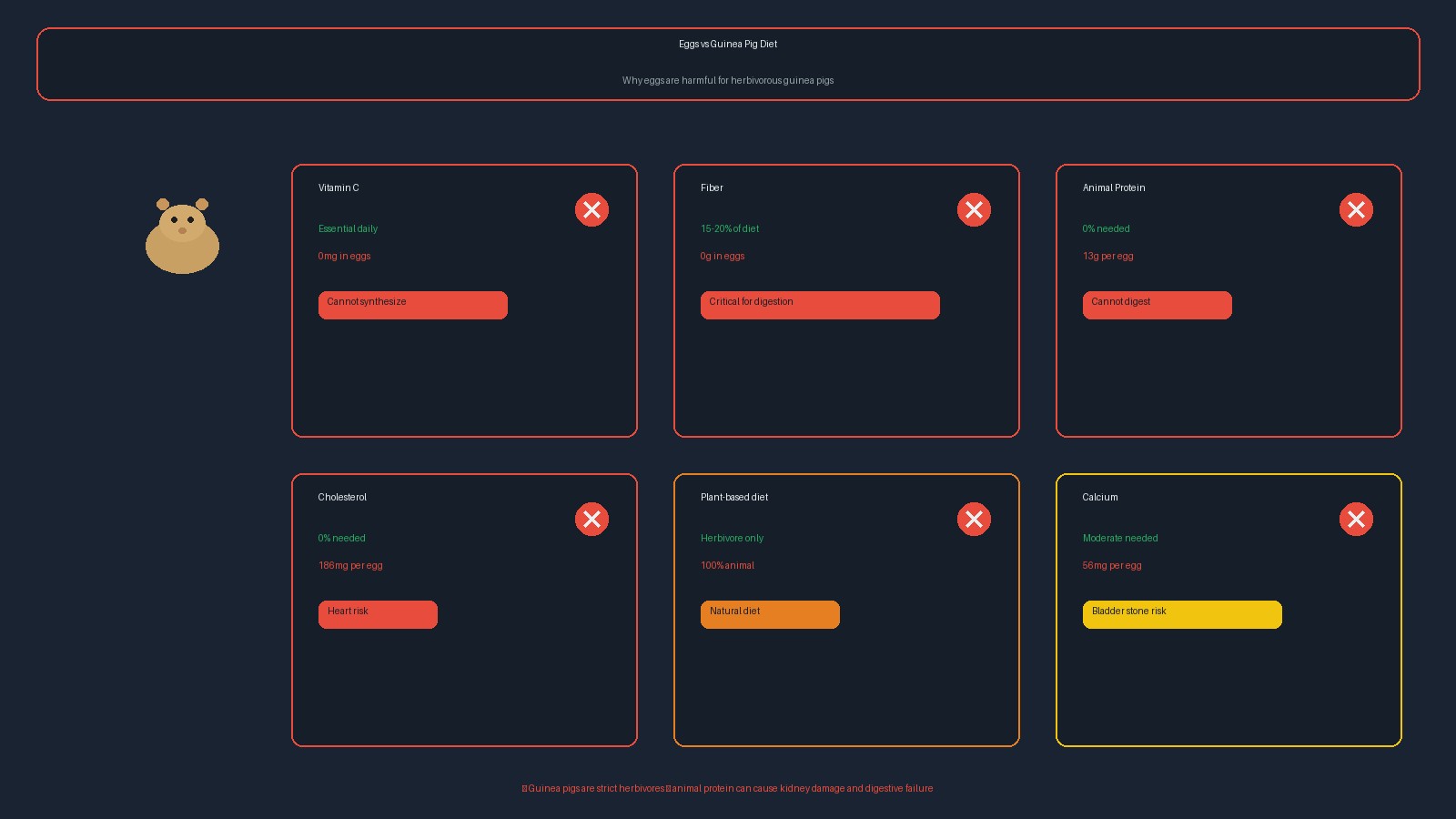
| Cholesterol | 373mg | Not applicable (herbivores) | Dangerously high — no herbivore pathway to process |
| Calcium | 56mg | Adequate from pellets/hay | Excess calcium contributes to bladder stones |
| Vitamin C | 0mg | 30-50mg (cannot synthesize) | Zero benefit — eggs provide no vitamin C |
| Fiber | 0g | 20-30g (critical for digestion) | Zero fiber — essential for gut motility |
| Vitamin A | 520 IU | Adequate from vegetables | Excess preformed vitamin A (retinol) is stored and can become toxic |
| Water | 75.5g | From water bowl + fresh veggies | Less hydrating than vegetables |
The table tells the whole story. Every nutrient that matters to a guinea pig is either absent or present in the wrong form. The protein is animal-based (guinea pigs need plant protein), there’s zero fiber (critical for their digestion), zero vitamin C (the one vitamin they can’t make themselves), and dangerously high cholesterol (which herbivore bodies have no efficient pathway to eliminate).
In my experience, when owners ask can guinea pigs eat eggs for protein, they’re usually worried their guinea pig isn’t getting enough. But a quality guinea pig pellet provides 16-20% protein from plant sources, and unlimited timothy hay supplies the rest. Guinea pigs do not need animal protein supplementation — ever.
Benefits of Eggs for Guinea Pigs
For this purpose, Check Price is a popular choice among pet owners.
There are none. Every claimed benefit falls apart under scrutiny:
- “Eggs have protein” — Guinea pigs get all the protein they need from pellets and hay. The protein in eggs is animal-based, which their digestive system cannot process.
- “Eggs have vitamins” — Eggs contain vitamins A, D, E, and B12, but guinea pigs get these from their plant-based diet. Eggs contain zero vitamin C — the one vitamin guinea pigs critically need. See our guinea pig vitamin C guide for proper sources.
- “My guinea pig likes the taste” — Guinea pigs are curious foragers that will taste almost anything. Appetite does not equal nutritional suitability.
Risks and Precautions
Gastrointestinal Distress and GI Stasis
This is the most immediate and common risk. Introducing 9.5g of fat and 12.5g of animal protein per 100g into a guinea pig’s plant-based digestive system causes diarrhea, bloating, and abnormal stool. In guinea pigs, diarrhea is especially dangerous — it can lead to rapid dehydration and electrolyte imbalance.
If undigested material reaches the cecum, it disrupts fermentation bacteria, which can slow or stop gut motility entirely. This is GI stasis — a potentially fatal condition and one of the most common causes of death in guinea pigs. The cycle accelerates quickly: disrupted bacteria → slowed fermentation → food and gas accumulate → the guinea pig stops eating → dehydration worsens. GI stasis is a veterinary emergency. For more on health emergencies, see our guinea pig health guide.
Kidney, Liver, and Bladder Stone Risk
Guinea pig kidneys are adapted to excrete the moderate nitrogen load from plant protein metabolism. The concentrated animal protein in eggs significantly increases nitrogen waste, forcing the kidneys to work overtime. Similarly, the liver must process 9.51g of fat and 373mg of cholesterol per 100g of egg using metabolic pathways designed for plant-based fats.
Eggs also contain 56mg of calcium per 100g. Guinea pigs are already prone to calcium oxalate bladder stones, and excess dietary calcium is a known contributing factor. Adding more calcium through inappropriate foods increases this risk.
Obesity and Nutritional Displacement
At 143 calories per 100g, eggs are calorie-dense. Even a small piece represents significant calories with zero nutritional benefit. Worse, guinea pigs have small stomachs and need to eat frequently to maintain gut motility. If a guinea pig fills up on egg — which provides zero fiber and zero vitamin C — it eats less hay, fewer pellets, and fewer vegetables, missing out on everything it actually needs.
What About Different Egg Preparations?
Some owners wonder if a specific preparation method might make can guinea pigs eat eggs safer. The short answer is no — cooking method doesn’t change the fundamental biological incompatibility.
- Raw eggs — The most concentrated risk. Raw egg whites contain avidin, which binds to biotin and can cause deficiency. Raw eggs also carry salmonella risk.
- Boiled eggs — Boiling doesn’t change the fundamental problem. Eggs are still animal protein and fat that a guinea pig can’t digest. The issue isn’t digestibility — it’s that their system isn’t built for animal products at all.
- Scrambled eggs — Arguably worse, because they typically include butter, oil, milk, salt, and sometimes cheese — all harmful to guinea pigs.
- Egg yolks only — The most concentrated source of fat (9.51g) and cholesterol (373mg) per 100g. Feeding just the yolk concentrates the most problematic nutrients.
- Egg whites only — Still pure animal protein (10.9g per 100g) that guinea pigs cannot use, plus avidin interference with biotin absorption.
Serving Guide — The Only Safe Amount
The recommended serving size of egg for a guinea pig is zero.
When you search online for can guinea pigs eat eggs, you might find conflicting information from forums or social media. I’d encourage you to trust veterinary science over anecdotal accounts. The physiological evidence is clear: guinea pigs are strict herbivores, and eggs are animal protein.
I understand this might feel restrictive if you’re exploring can guinea pigs eat eggs because you want to offer variety. But there are far better ways to diversify your guinea pig’s diet that align with their biology.
If Your Guinea Pig Accidentally Ate Egg
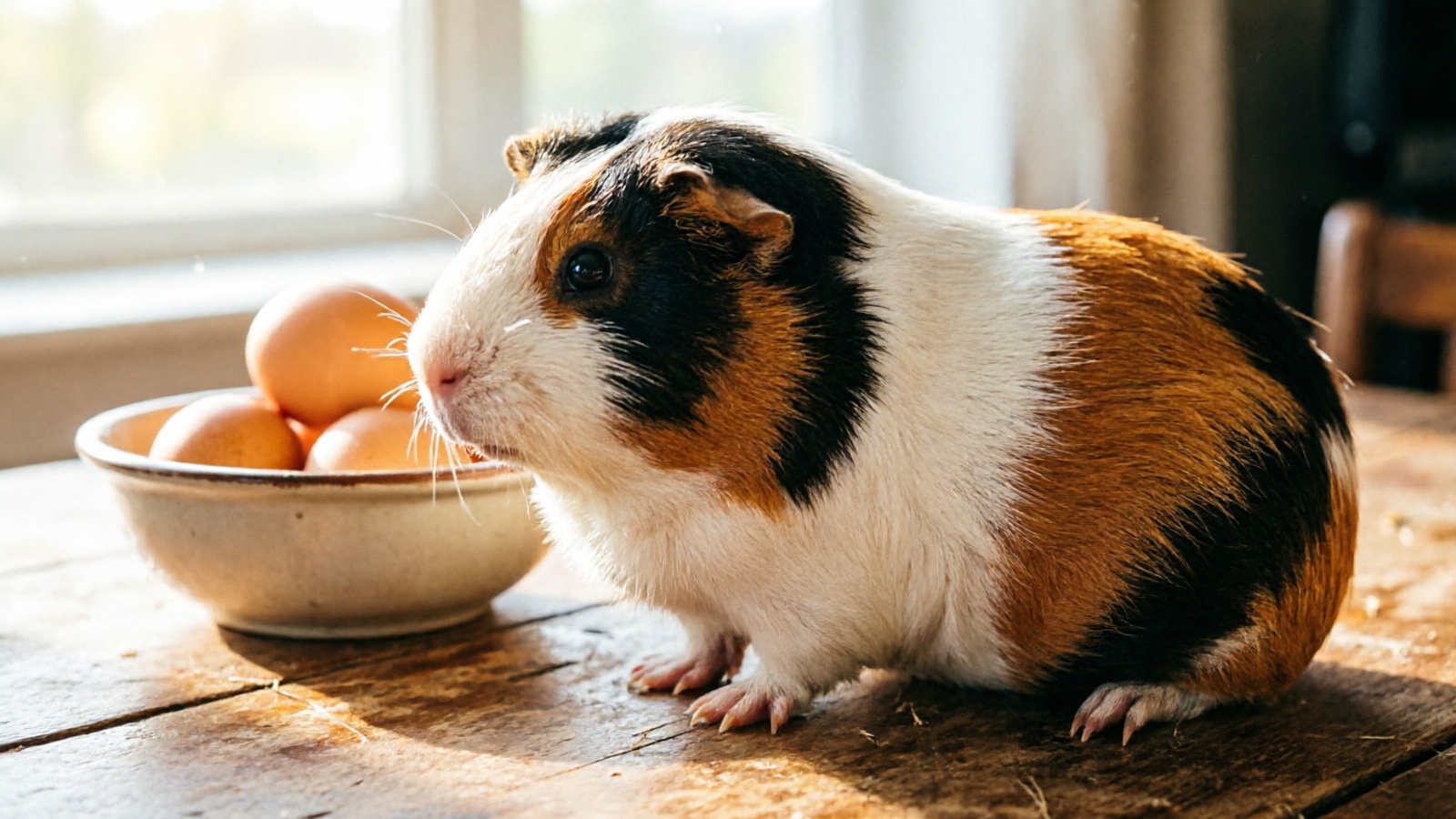
If your guinea pig got hold of a piece of egg — perhaps dropped on the floor during breakfast or snatched from a plate — here’s what to do:
- Remove all remaining egg immediately
- Monitor for 24 hours, watching for:
- Diarrhea (soft or watery stool)
- Bloating or a firm, distended belly
- Lethargy or hiding more than usual
- Loss of appetite or refusal to eat hay
- Excessive drinking or reduced water intake
- Ensure unlimited hay access — continuous fiber intake supports normal gut motility
- Provide fresh water — helps flush the digestive system
- Contact your exotic vet if any symptoms develop
A tiny accidental taste (a lick or a crumb-sized piece) will likely pass without incident. But if your guinea pig ate a meaningful amount — anything larger than a pea — I’d recommend calling your vet for guidance rather than waiting to see what happens.
What to Avoid
- Mayonnaise, pasta, baked goods, and salad dressings — All contain eggs and are inappropriate for guinea pigs
- Processed meats (sausage, meatballs, deli meats) — Often contain eggs as binders, doubly inappropriate
- All other animal products — Meat, poultry, fish, dairy, insects, bone broth, and cooking fats are all unsafe for the same biological reasons
- Common myths:
- “Wild guinea pigs eat insects” — No credible scientific evidence supports this. Wild cavies eat grasses, herbs, and leafy plants exclusively.
- “Egg protein helps sick guinea pigs recover” — No veterinary literature supports this. Sick guinea pigs need vet care, not animal protein.
- “A tiny bit won’t hurt” — A single tiny accidental exposure likely won’t cause serious harm, but this reasoning normalizes inappropriate feeding and can lead to larger amounts over time.
Safe Protein Alternatives for Guinea Pigs
Guinea pigs get all the protein they need from plant sources:
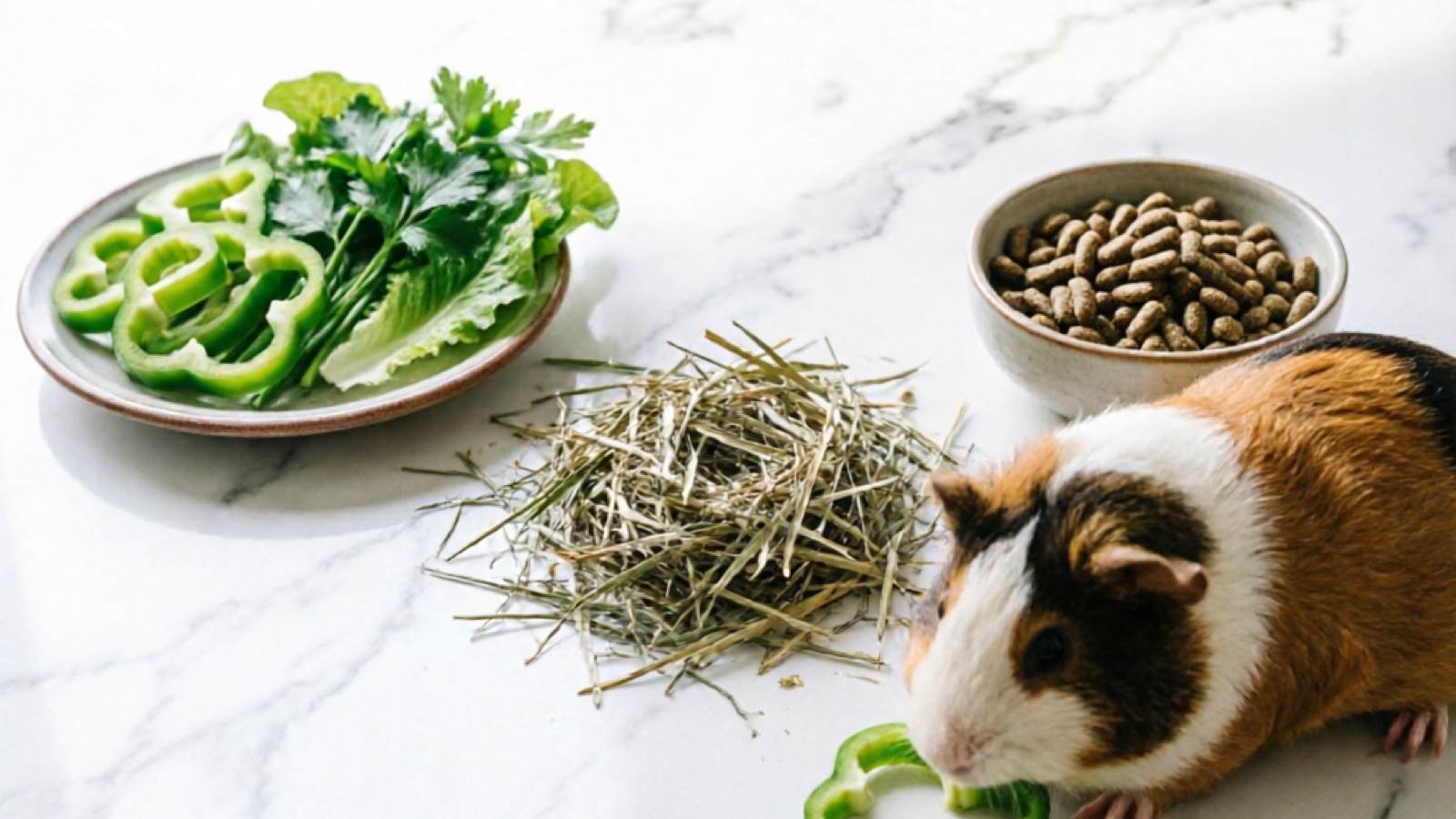
- Quality guinea pig pellets — Provide 16-20% plant-based protein (about 1/8 cup daily). For recommendations, see our best guinea pig food guide.
- Timothy hay — The diet foundation. Unlimited hay provides moderate protein (6-8%) and critical fiber. See our best hay guide.
- Fresh vegetables — Bell peppers, broccoli, kale, and romaine lettuce contribute plant protein alongside vitamin C and minerals. Bell peppers are an excellent daily staple. Carrots make a good occasional treat.
- Guinea pig treats — Should be plant-based with no animal products, dairy, honey, or added sugar. See our best guinea pig treats guide.
Other Foods Your Guinea Pig Can Eat
Fruits (Moderation — High Sugar)
- Can Guinea Pigs Eat Strawberries? — Yes, 1-2 halves per week
- Can Guinea Pigs Eat Bananas? — Yes, thin slice weekly
- Can Guinea Pigs Eat Blueberries? — Yes, 2-3 berries per week
- Can Guinea Pigs Eat Grapes? — Yes, 1-2 small grapes weekly
- Can Guinea Pigs Eat Tomatoes? — Yes, small cherry tomato daily
Vegetables (Daily Staples)
- Can Guinea Pigs Eat Bell Peppers? — Excellent daily vitamin C source
- Can Guinea Pigs Eat Cucumber? — Great for hydration
- Can Guinea Pigs Eat Carrots? — Treat, not daily (sugar)
- Can Guinea Pigs Eat Celery? — Yes, cut into short pieces
- Can Guinea Pigs Eat Lettuce? — Romaine yes, iceberg no
- Can Guinea Pigs Eat Spinach? — Occasionally (high calcium)
Core Guides
- Guinea Pig Diet Guide | Best Guinea Pig Food
- Guinea Pig Care Guide | Guinea Pig Health
- Guinea Pig Lifespan | Vitamin C Guide
- Best Hay | Best Guinea Pig Cage
- Guinea Pig Sounds | Best Guinea Pig Treats
- Guinea Pig Breeds | Not Eating
- Bumblefoot | Bedding Guide
Product Recommendations
Here are some products mentioned in this guide:
Frequently Asked Questions
Can guinea pigs eat eggs?
No. Guinea pigs are strict herbivores that cannot digest animal protein or fat. Their digestive system is designed exclusively for plant matter — grasses, hay, vegetables, and occasional fruit. Eggs contain 12.56g of protein and 9.51g of fat per 100g, which a guinea pig’s body cannot process safely. Feeding eggs can cause diarrhea, GI distress, and with repeated exposure, organ strain.
Are eggs toxic to guinea pigs?
Not acutely toxic like rat poison or chocolate, but biologically dangerous. The high protein, fat, and cholesterol in eggs cannot be processed by a guinea pig’s herbivore digestive system. Even a small amount can trigger gastrointestinal upset. Repeated exposure risks long-term kidney and liver damage.
Can guinea pigs eat egg whites?
No. Egg whites are pure animal protein (10.9g per 100g) that a guinea pig’s digestive system cannot break down. Raw egg whites also contain avidin, which binds to biotin and can cause a deficiency. There is no form or preparation of egg that is safe for guinea pigs.
Can guinea pigs eat scrambled eggs or boiled eggs?
No. Cooking does not make eggs suitable for guinea pigs. Scrambled eggs are worse because they often contain butter, oil, milk, and salt — all harmful. Boiled eggs are still concentrated animal protein and fat. No preparation method makes eggs safe.
What should I do if my guinea pig ate egg?
Monitor your guinea pig for 24 hours. Watch for diarrhea, bloating, lethargy, loss of appetite, or changes in stool. Provide unlimited fresh hay and water. A tiny accidental taste likely passes without issue, but if symptoms develop or your guinea pig ate a significant amount, contact your exotic vet immediately.
Why can’t guinea pigs eat animal protein?
Guinea pigs are strict herbivores with a digestive system designed around plant fiber fermentation. They have an enlarged cecum for fermenting plant fiber, but lack the enzymes and gut bacteria needed to process animal protein. Their kidneys and liver are adapted to handle plant-based nutrients, and the concentrated protein and cholesterol from animal products strains these organs.
What are good protein sources for guinea pigs?
Quality guinea pig pellets (16-20% plant protein), unlimited timothy hay (6-8% protein), and fresh vegetables like bell peppers, broccoli, and romaine lettuce. Guinea pigs get all the protein they need from a proper plant-based diet. Animal protein supplementation is never necessary or safe.
Can guinea pigs eat egg yolks for protein?
No. Egg yolks are the worst part of the egg for guinea pigs — 9.51g of fat and 373mg of cholesterol per 100g. Guinea pig pellets and hay provide all necessary protein from safe plant sources. Egg yolks place unnecessary strain on a guinea pig’s liver and kidneys while providing zero benefit.