Can Guinea Pigs Eat Grapes?
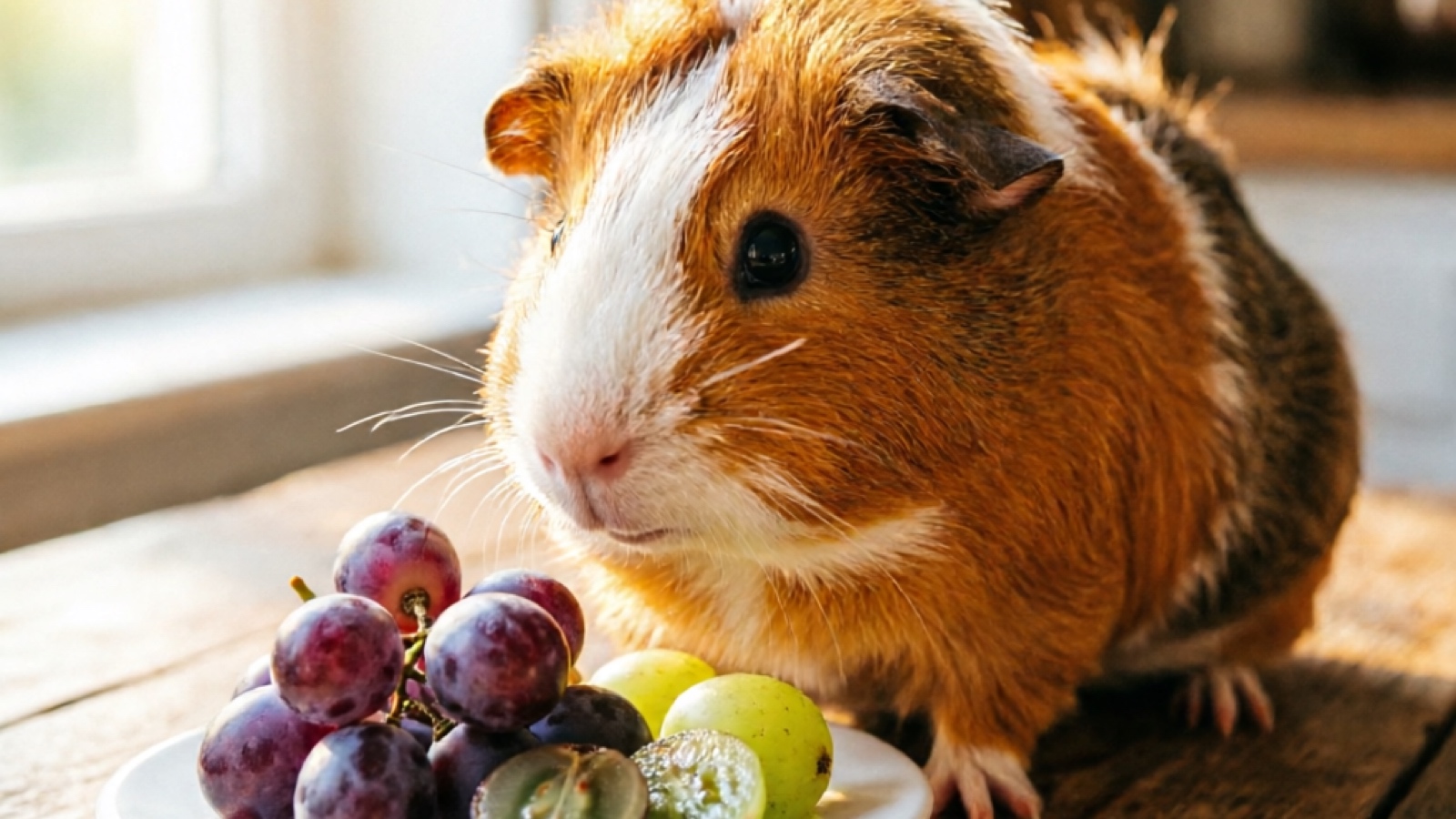
Yes, guinea pigs can eat grapes — but they should be one of the rarest treats in your pig’s diet, not a regular snack. One small grape, once or twice per week, is the absolute maximum.
⚠️ Medical Disclaimer: This article is not a substitute for professional veterinary care. If your guinea pig is showing signs of illness, consult a qualified exotic veterinarian.
Grapes occupy a tricky spot in guinea pig nutrition. They do offer some vitamin C — which matters enormously because guinea pigs cannot produce their own and need 30-50mg daily from their diet. But at 15.5g of sugar per 100g, grapes are among the highest-sugar fruits commonly fed to small pets. That sugar content is more than triple that of strawberries (4.9g) and more than double that of blueberries (10g).
In my experience, grapes are the treat that guinea pig owners most frequently overfeed. Pigs love them — the sweetness and juiciness make them irresistible. But loving a food and being able to safely eat it daily are two very different things. I’d recommend thinking of grapes the way you’d think of dessert for yourself: enjoyable in small amounts, problematic as a daily habit.
For a complete guide to proper guinea pig nutrition, see our guinea pig food guide and best guinea pig food recommendations. Since grapes are high-sugar treats, monitoring your pig’s weight is especially important — our guinea pig weight tracker helps you catch weight changes from overfeeding early.
Nutritional Benefits of Grapes for Guinea Pigs
Paw Inspired PopCorner Liner is a quality option worth considering for your setup.
USDA nutritional data — raw grapes (red or green, European type such as Thompson seedless), per 100g USDA FoodData Central FDC ID 09052:
| Nutrient | Amount per 100g | Per Small Grape (~5g) | Relevance to Guinea Pigs |
|---|---|---|---|
| Calories | 69 kcal | 3.5 kcal | ⚠️ Moderate — portion control needed |
| Water | 80.5g (80.5%) | 4.0g | ✅ Good hydration |
| Fiber | 0.9g | 0.045g | ⚠️ Low fiber |
| Sugar | 15.5g | 0.78g | ⚠️ High — the primary concern |
| Vitamin C | 3.2mg | 0.16mg | ⚠️ Low — not a significant source |
| Vitamin K | 14.6µg | 0.73µg | ✅ Supports blood clotting |
| Vitamin A | 66 IU | 3.3 IU | ⚠️ Low |
| Potassium | 191mg | 9.6mg | ✅ Heart and muscle function |
| Calcium | 10mg | 0.5mg | ✅ Low — minimal bladder stone risk |
| Resveratrol | Present in skins | Trace | ✅ Antioxidant (red grapes) |
The Numbers That Matter Most
15.5g sugar and 3.2mg vitamin C. Those two numbers define grapes’ role in a guinea pig’s diet — and they tell a story that’s not as favorable as many owners assume.
The sugar is the dominant concern. A single small grape contains roughly 0.78g of sugar. For a guinea pig that weighs 2-3 pounds, that’s a meaningful sugar load. For context, a guinea pig’s entire daily vegetable portion should ideally contain less than 2-3g of total sugar. One grape uses up roughly a quarter to a third of that budget.
The vitamin C contribution is disappointing. At 3.2mg per 100g, a single grape provides only about 0.16mg of vitamin C — less than 1% of the daily 30-50mg requirement. Compare that to strawberries (4.1mg per strawberry) or bell peppers (up to 184mg per 100g). Grapes are a poor vitamin C source relative to their sugar cost.
Grapes vs Other Fruits for Guinea Pigs
| Fruit | Sugar (g/100g) | Vitamin C (mg/100g) | Vitamin C per Serving | Frequency |
|---|---|---|---|---|
| Grapes | 15.5g | 3.2mg | ~0.16mg (1 grape) | 1-2x/week |
| Strawberries | 4.9g | 58.8mg | 4.1mg (1 half) | 1-2x/week |
| Blueberries | 10.0g | 9.7mg | ~0.5mg (2 berries) | 1x/week |
| Bananas | 12.2g | 8.7mg | ~1.0mg (1 thin slice) | 1-2x/month |
| Cucumber | 1.7g | 2.8mg | ~0.3mg (1 slice) | 3-4x/week |
| Bell peppers | 2.4g | 80-184mg | 27-62mg (1 slice) | Daily |
The table tells the story clearly. Strawberries deliver 25 times more vitamin C per serving than grapes, with a third of the sugar. Bell peppers deliver over 100 times more vitamin C per serving with a fraction of the sugar. If you’re feeding grapes for their vitamin C content, you’re getting a very poor return on the sugar investment.
Grapes are an enjoyable treat, not a nutritional supplement. Their value is the joy your guinea pig gets from eating them — not the vitamins they provide.
Benefits of Grapes for Guinea Pigs
Many owners find that Kaytee Extreme Odor Control works well for their pet’s needs.
Hydration
At 80.5% water, grapes provide decent hydration. During warm weather or for guinea pigs that don’t drink enough from their water bottle, grapes can supplement fluid intake. However, cucumber (95% water) and celery (95% water) are better hydration options with far less sugar.
Potassium
At 191mg per 100g, grapes provide meaningful potassium for heart and muscle function. This is a secondary benefit given the small serving size, but it’s there.
Antioxidants (Red Grapes)
Red grape skins contain resveratrol, a polyphenol with antioxidant and anti-inflammatory properties. If you’re going to feed grapes, red varieties have a slight nutritional edge. The antioxidant benefit is modest at guinea pig serving sizes, but every bit helps.
Vitamin K
At 14.6µg per 100g, grapes contribute moderate vitamin K for blood clotting and bone metabolism. Leafy greens provide far more, but as a supplementary source, grapes contribute something.
Enrichment and Bonding
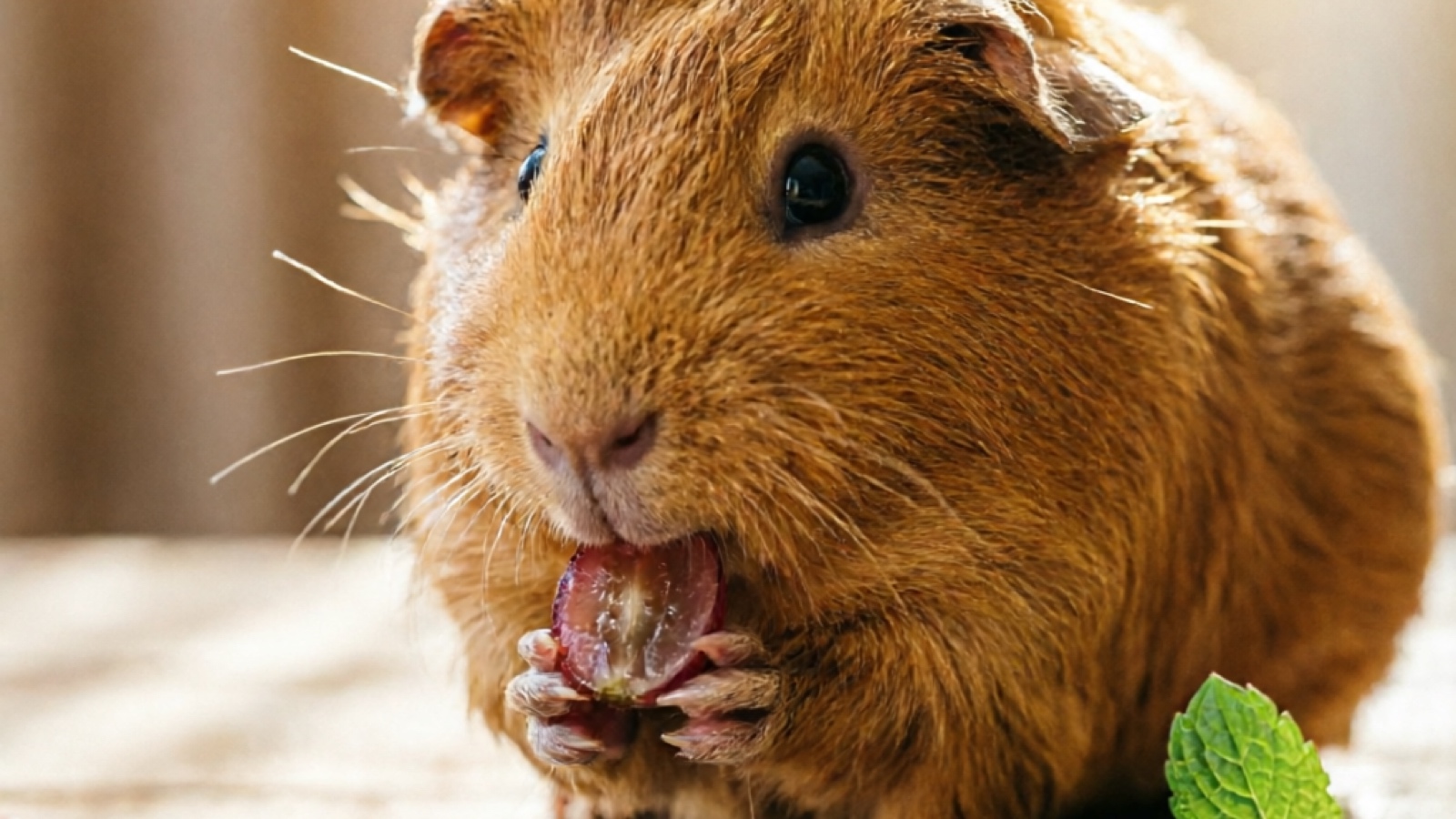
This is the most practical benefit. Guinea pigs genuinely love grapes. The sweetness makes them one of the most effective bonding treats available. I’ve used tiny grape pieces to coax nervous rescue pigs out of hiding — it works almost every time. As an occasional reward for nail trims, cage cleaning cooperation, or just because, a small piece of grape can strengthen the bond between you and your pig.
Risks and Precautions
For this purpose, Check Price is a popular choice among pet owners.
High Sugar — The Primary Concern
At 15.5g per 100g, grapes have the highest sugar content of any fruit commonly fed to guinea pigs. The consequences of overfeeding are serious:
-
Obesity: Guinea pigs are naturally sedentary animals. In the wild, they spend most of their time foraging — but in a cage with unlimited food, activity levels are much lower. Extra sugar calories accumulate quickly. An overweight guinea pig faces shortened lifespan, reduced mobility, difficulty grooming, and increased susceptibility to respiratory infections. If you can’t easily feel your guinea pig’s ribcage, they may be overweight.
-
Dental disease: Sugar feeds oral bacteria that cause tooth decay and gum infections. Guinea pig teeth grow continuously throughout their lives, and dental problems can become life-threatening if they prevent normal eating. Dental disease often requires expensive veterinary treatment under anesthesia — not something to take lightly with a small animal.
-
Digestive upset: Guinea pig digestive systems are adapted to a high-fiber, low-sugar diet of grasses and leafy plants. Excess sugar disrupts the balance of gut bacteria, leading to bloating, gas, diarrhea, and in severe cases, GI stasis — a potentially fatal condition where the digestive system slows or stops completely.
-
Food preference displacement: This is the sneaky one. Guinea pigs that regularly eat sweet treats may start refusing hay and vegetables in favor of waiting for the next grape. Since hay should make up 80% of a guinea pig’s diet, any reduction in hay consumption is a serious health concern. Breaking a sweet food habit takes weeks and is stressful for both pig and owner.
Grape Seeds — Choking and Amygdalin Risk
Grape seeds contain amygdalin, a cyanogenic glycoside that can release small amounts of hydrogen cyanide when digested. While acute cyanide poisoning from a few grape seeds is unlikely in a guinea pig, the cumulative effect of regular seed consumption is a concern. More practically, grape seeds are a choking hazard for an animal that gulps food rather than chewing thoroughly.
The safest approach: use seedless grape varieties and check each piece before serving. If you only have seeded grapes, cut each one open and remove every seed with the tip of a knife.
Pesticide Residue
Grapes consistently rank among the most pesticide-contaminated fruits. The USDA Pesticide Data Program has found residue on over 99% of conventional grape samples. For a 2-3 pound guinea pig, proportional exposure is much higher than for humans.
Thorough washing is essential:
- Remove grapes from the stem
- Rinse under cool running water for 15-20 seconds
- Soak in 1:3 vinegar-water solution for 2-3 minutes
- Rinse again thoroughly under running water
- Organic grapes are strongly preferred
Low Fiber
At 0.9g per 100g, grapes provide very little fiber. Guinea pigs need a high-fiber diet (hay should be 80% of intake) to maintain proper gut motility. Low-fiber, high-sugar foods work against this need. This is why grapes should supplement, not replace, the daily vegetable and hay rotation.
Serving Guide by Guinea Pig Type
Standard Adult Guinea Pigs (2-3 lbs / 900-1400g)
Breeds: American, Abyssinian, Teddy, Silkie, Peruvian
- Amount: One small grape, cut into 3-4 pieces
- Frequency: Once or twice per week
- Note: This covers the vast majority of pet guinea pigs. Even at this size, one grape per serving is plenty.
Small Guinea Pigs (Under 2 lbs / Under 900g)
Breeds: Smaller individuals, young adults, some American lines
- Amount: Half a small grape, cut into 2-3 pieces
- Frequency: Once per week
- Note: Smaller body mass means less tolerance for sugar. I’d lean toward once per week for pigs under 2 pounds.
Large Guinea Pigs (3+ lbs / 1400g+)
Breeds: Larger Peruvians, some Rex lines
- Amount: One medium grape, cut into pieces
- Frequency: Once or twice per week
- Note: Even large guinea pigs shouldn’t exceed this. The sugar content is the limiting factor, not body size.
Baby Guinea Pigs (Under 12 Weeks)
Baby guinea pigs should not eat grapes. Their digestive systems are developing and cannot handle concentrated sugar:
- 0-3 weeks: Mother’s milk + alfalfa hay
- 3-6 weeks: Pellets introduced, weaning begins
- 6-12 weeks: Safe vegetables introduced gradually — start with romaine lettuce and bell pepper strips
- 12+ weeks: If introducing grapes, start with a quarter grape, wait 24 hours, and monitor stool before offering more
Senior Guinea Pigs (4-5+ Years)
Senior guinea pigs are more susceptible to dental disease and digestive problems. If your senior pig has any history of dental issues, obesity, or GI problems, eliminate high-sugar treats like grapes entirely. See our guinea pig lifespan guide for senior care considerations.
Pregnant and Nursing Sows
Pregnant sows have higher calorie and vitamin C needs (requirement doubles to 60-80mg/day). However, grapes are not an efficient way to meet these needs — the sugar far outweighs the modest vitamin C contribution. Meet higher demands primarily through increased pellets, extra bell peppers, and additional hay. Grapes can continue at the same frequency (1-2x/week) but should not be increased.
How to Prepare Grapes for Your Guinea Pig
Step 1: Choose the Right Grapes
- Seedless varieties only — Thompson Seedless, Flame Seedless, or any labeled seedless
- Red or green — both safe; red has slightly more antioxidants
- Firm and plump — no wrinkles, soft spots, mold, or discoloration
- Organic preferred — grapes are a Dirty Dozen regular
- Avoid grapes with powdery white coating — natural “bloom” is fine, but thick coatings may indicate pesticide residue
Step 2: Wash Thoroughly
Because of grapes’ high pesticide contamination rate:
- Remove all grapes from the stem
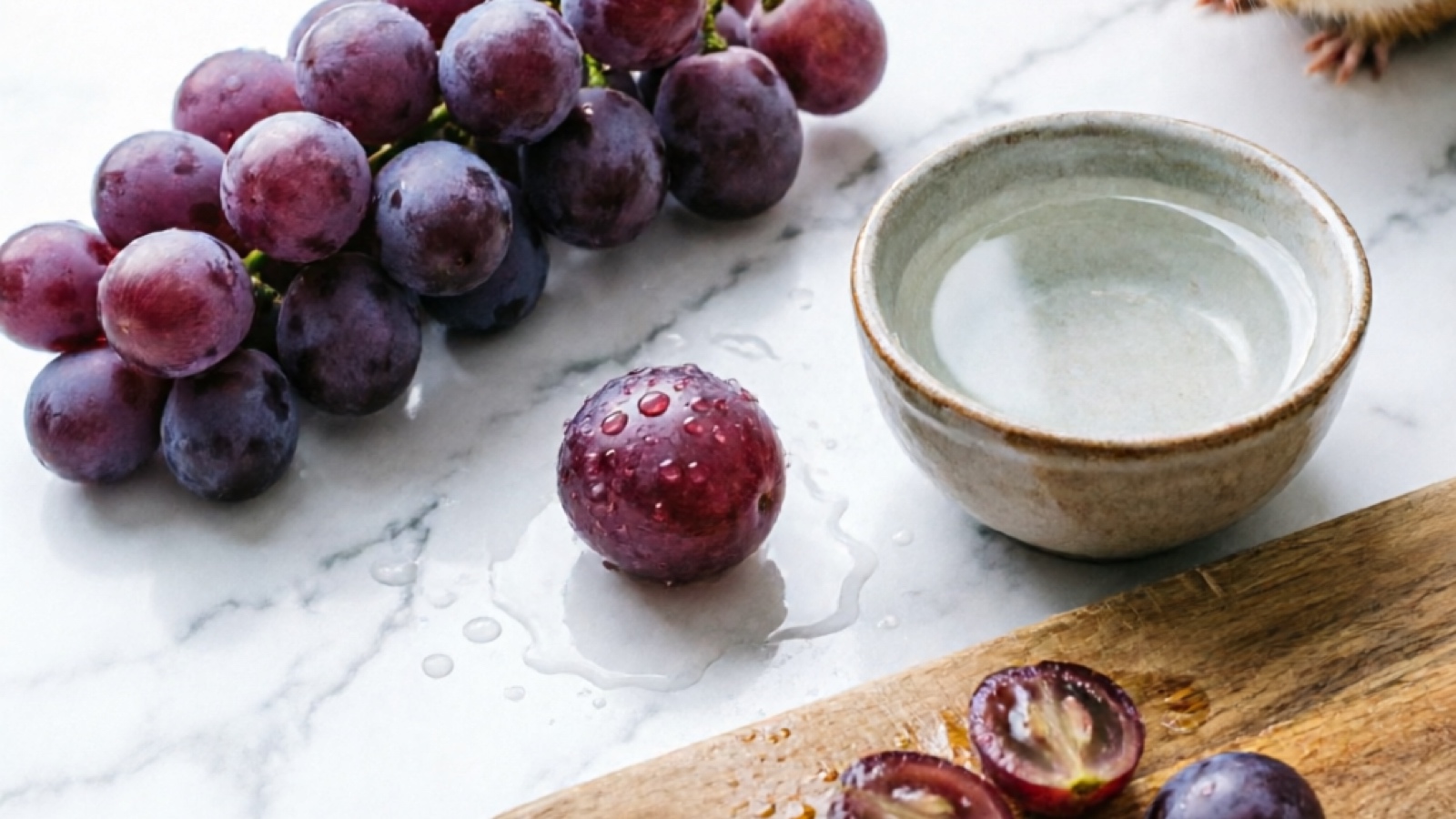
- Rinse under cool running water for 15-20 seconds, rubbing each grape
- Soak in 1:3 vinegar-water solution for 2-3 minutes
- Rinse again thoroughly
- Pat dry with a clean paper towel
Step 3: Remove Seeds (Even for “Seedless”)
Even seedless varieties can occasionally contain small, underdeveloped seeds:
- Cut the grape in half
- Inspect both halves for seed remnants (small white or green dots)
- Remove any found with the tip of a knife
Step 4: Cut Into Small Pieces
Never serve a whole grape. Cut into 3-4 small pieces roughly the size of a pea. This prevents choking and makes portion control easier.
Step 5: Serve at Room Temperature
Don’t serve grapes straight from the refrigerator. Cold fruit can cause temporary digestive slowdown. Let pieces sit at room temperature for 5-10 minutes before offering.
Step 6: Remove Uneaten Pieces After 1-2 Hours
Grapes spoil quickly at room temperature. Uneaten pieces can harbor bacteria and attract fruit flies. Remove any leftovers promptly.
What to Avoid
Raisins and Dried Grapes
Raisins contain roughly four times the sugar concentration of fresh grapes — about 60g per 100g. At that concentration, even a single raisin represents a dangerous sugar load for a guinea pig. Additionally, dried fruit can be sticky, potentially causing dental problems or crop impaction. Avoid all dried grapes and raisins.
Grape Juice
Grape juice is concentrated sugar without the fiber that slows absorption. Even 100% pure, no-sugar-added grape juice causes rapid blood sugar spikes. Fresh fruit in tiny portions is always better than juice.
Grapes with Additives
Any prepared grape product is unsafe: candied grapes, grape jam, grape jelly, grape-flavored foods, wine grapes, or grapes treated with sulfites or other preservatives. Plain, raw, washed grapes only.
Daily Feeding
The most common mistake with grapes is frequency. “My pig loves grapes so I give him one every day” is a direct path to obesity and dental problems. Once or twice per week maximum — and if you’re already feeding other fruit treats (strawberries, blueberries, bananas), reduce grape frequency further to keep total weekly sugar within safe limits.
Unwashed Grapes
Given the pesticide contamination rate on conventional grapes, skipping the washing step is irresponsible. The vinegar-water soak followed by thorough rinsing should be non-negotiable.
Feeding as a Main Vitamin C Source
Grapes provide only 3.2mg of vitamin C per 100g — one of the lowest among common fruits. A single grape delivers less than 1% of the daily requirement. Relying on grapes for vitamin C will result in deficiency and scurvy. Use bell peppers, strawberries, and quality pellets as your primary vitamin C sources.
Safer Alternatives to Grapes
If your guinea pig enjoys fruit, there are options that provide more nutrition with less sugar risk.
Best Fruit Treats (1-2 Times Per Week)
- Strawberries — the best fruit choice. Low sugar (4.9g), excellent vitamin C (58.8mg). One small half per serving.
- Blueberries — good antioxidants, moderate sugar (10g). Two small berries per serving.
Occasional Fruit Treats (1-2 Times Per Month)
- Bananas — very high sugar (12.2g) but many pigs love them. One thin slice only.
- Grapes — one small grape, 1-2x/week. Higher sugar than strawberries, lower vitamin C.
Daily Vegetables (No Limit Concerns)
- Bell peppers — the single best daily food for vitamin C. 80-184mg per 100g with only 2.4g sugar.
- Romaine lettuce — daily staple, excellent hydration, low oxalates.
- Cilantro — very low sugar, aromatic, most pigs enjoy it.
- Cucumber — 95% water, excellent for hydration.
Sample Weekly Fruit Rotation
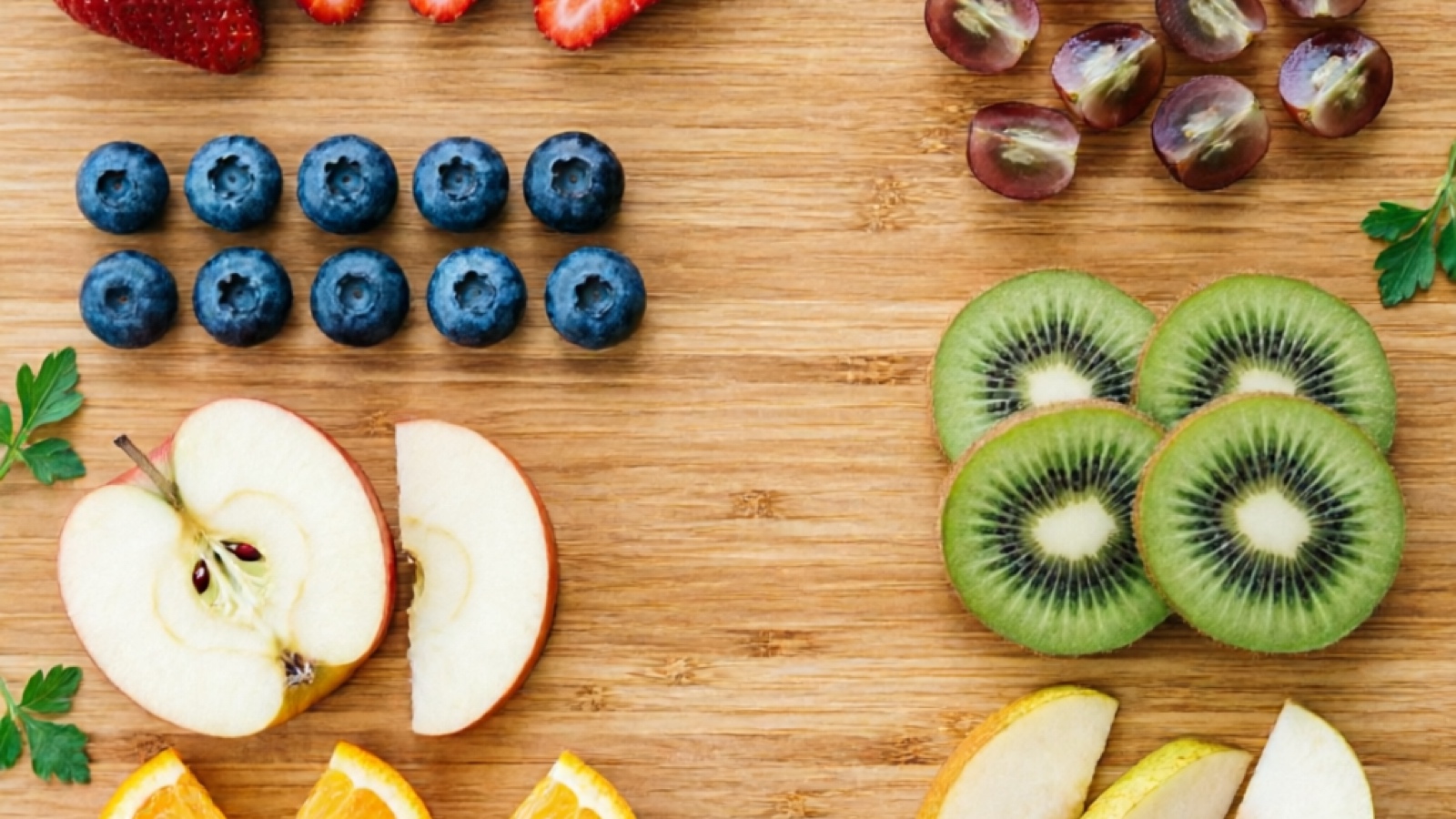
Monday: no fruit Tuesday: 1 strawberry half Wednesday: no fruit Thursday: 1 grape (small, cut up) Friday: no fruit Saturday: 2 blueberries Sunday: no fruit
This rotation provides variety while keeping total sugar intake well within safe limits. Vegetables (especially bell peppers and romaine lettuce) should be offered daily. For comprehensive care guidance, see our guinea pig care guide, health guide, cage setup, bedding guide, and best treats.
Other Foods Your Guinea Pig Can Eat
Each link leads to a full safety guide with serving recommendations.
Fruits
Vegetables
- Can Guinea Pigs Eat Bell Peppers?
- Can Guinea Pigs Eat Lettuce?
- Can Guinea Pigs Eat Carrots?
- Can Guinea Pigs Eat Cucumber?
- Can Guinea Pigs Eat Celery?
- Can Guinea Pigs Eat Tomatoes?
Core Guides
- Guinea Pig Food Guide | Best Guinea Pig Food
- Guinea Pig Care Guide | Guinea Pig Health
- Guinea Pig Lifespan | Vitamin C Guide
- Best Guinea Pig Cage | Cage Size Guide
- Best Guinea Pig Bedding | Best Guinea Pig Treats
- Best Hay | Best Water Bottle
- Guinea Pig Sounds | Guinea Pig Breeds
Product Recommendations
Here are some products mentioned in this guide:
Frequently Asked Questions
Can guinea pigs eat grapes?
Yes, in strict moderation. One small grape, cut into pieces, once or twice per week. Grapes provide some vitamin C (3.2mg per 100g) and hydration, but the high sugar content (15.5g per 100g) makes them an occasional treat only. Remove seeds before feeding.
Can guinea pigs eat grapes everyday?
No. Daily sugar at this level leads to obesity, dental disease, digestive upset, and food preference issues where pigs refuse hay and vegetables. Once or twice per week maximum.
Can guinea pigs eat grape seeds?
Grape seeds pose a choking hazard and contain amygdalin, a cyanogenic compound. Remove all seeds before feeding. Seedless grape varieties eliminate this concern entirely.
Can guinea pigs eat red grapes or green grapes?
Both are safe. Red grapes have slightly more antioxidants (resveratrol), green grapes are slightly lower in sugar. The difference is minor. Choose seedless varieties of either color.
How much grape can a guinea pig eat?
One small grape per serving, cut into pieces, once or twice per week. For smaller guinea pigs under 2 lbs, half a grape is more appropriate. Never exceed two grapes per week total.
Can baby guinea pigs eat grapes?
No, under 12 weeks. Their digestive systems cannot handle the sugar. After 12 weeks, introduce gradually starting with a quarter grape and monitor for 24 hours for diarrhea or bloating.
Can guinea pigs eat grapes with skin?
Yes, grape skin is safe and contains the highest antioxidant concentration. Wash thoroughly to remove pesticide residue — organic grapes are preferred.
Can guinea pigs eat raisins?
No. Raisins have roughly four times the sugar concentration of fresh grapes (60g vs 15.5g per 100g). The concentrated sugar causes rapid blood sugar spikes, digestive upset, and contributes to obesity. Fresh fruit only.