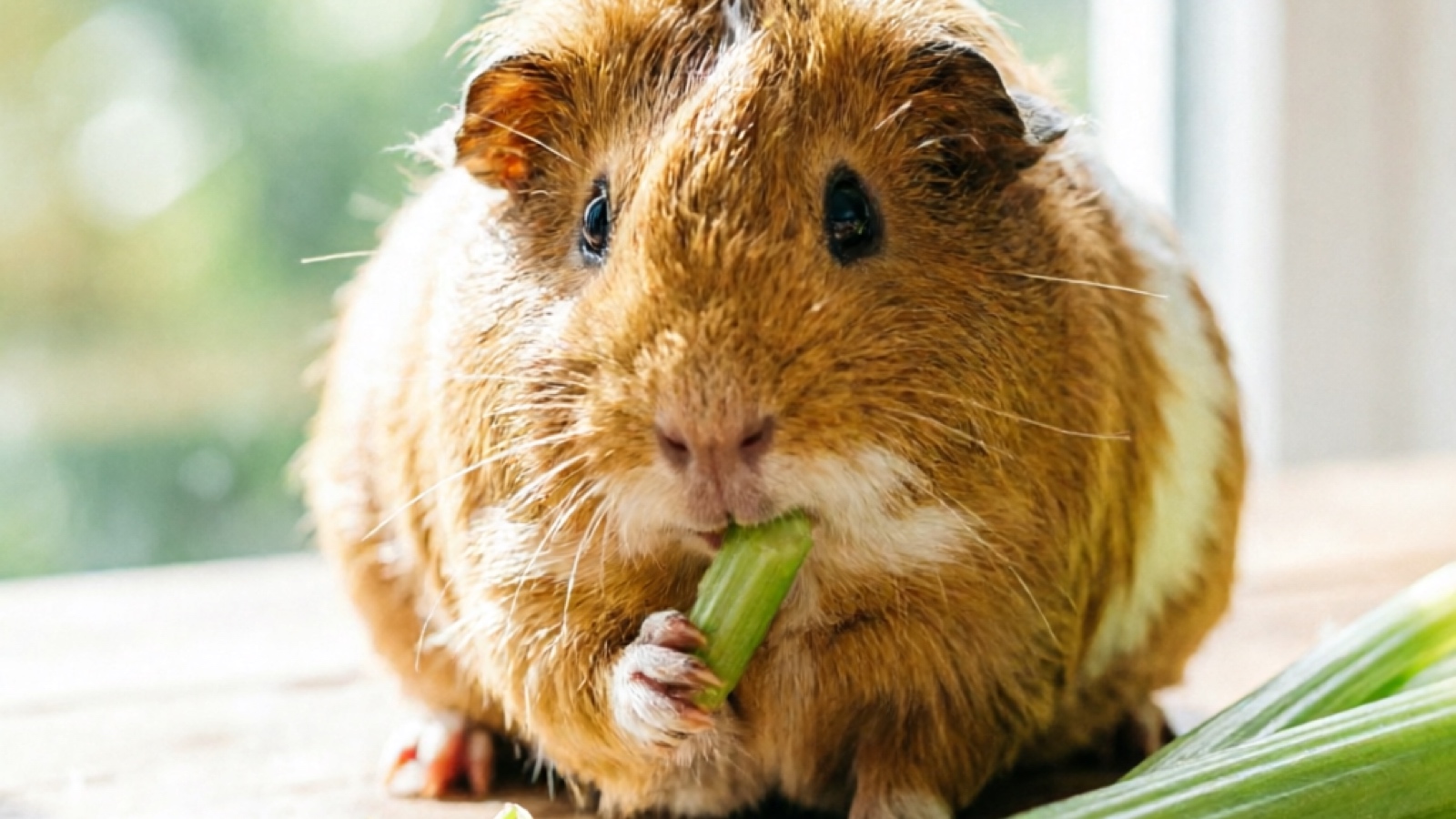
Can Guinea Pigs Eat Celery? | Vet-Reviewed

by Small Pet Expert Team
Can Guinea Pigs Eat Celery? | Vet-Reviewed

Quick Answer: Can Guinea Pigs Eat Celery?

Yes, guinea pigs can eat celery — but in moderation, cut into small pieces, and only 1-2 times per week. Celery provides hydration and fiber, but it has a poor calcium-to-phosphorus ratio and tough stringy fibers that can be a choking hazard. The key rules: cut it small, don’t overfeed, and never let it replace vitamin C-rich staples like bell peppers.

💡 TL;DR: Adult guinea pigs: 1-2 small segments (2-3cm), 1-2 times per week. Cut into small pieces to prevent choking on strings. Wash thoroughly. Celery leaves are safe in small amounts. Not a substitute for vitamin C-rich vegetables.

I’ve offered celery to my guinea pigs for years, and their reaction has always been mixed — some devour it eagerly, others take a few bites and move on. The crunch seems to be the main attraction. But I’ve also learned that celery requires more preparation care than most vegetables. Those tough, stringy fibers that humans barely notice can cause real problems for a guinea pig’s small throat and digestive system. If you’re building a balanced diet for your guinea pig, our guinea pig food guide covers the complete nutritional framework, and our best guinea pig food recommendations include pellet options that provide essential daily nutrients.


Understanding Celery’s Place in a Guinea Pig’s Diet

Celery is one of those vegetables that seems like an obvious safe choice — it’s green, it’s crunchy, and it’s healthy for humans. But guinea pigs have very specific nutritional requirements that make some vegetables better choices than others.

The most important thing to understand: guinea pigs cannot synthesize vitamin C. They need 30-50mg per day from their diet to prevent scurvy. This single fact determines which vegetables should be dietary staples and which should be occasional treats. Bell peppers deliver 128-184mg of vitamin C per 100g — making them a daily staple. Celery, at only 3mg per 100g, barely registers on the vitamin C scale.

Hay should make up 80-90% of a guinea pig’s diet, supplemented with a cup of fresh vegetables daily and a small amount of fortified pellets. Celery fits into that vegetable rotation as an occasional treat, alongside options like cucumber, carrots, lettuce, and strawberries. For more on managing your pig’s vitamin C intake, see our dedicated vitamin C guide.


Nutritional Facts: Raw Celery

Here’s what celery offers per 100g, based on USDA FoodData Central USDA FDC ID 11143 — “Celery, raw”:

Nutrient (per 100g)AmountWhy It Matters for Guinea Pigs
Energy16 kcalVery low calorie
Protein0.69gMinimal protein
Fat0.17gNegligible fat
Carbohydrate3.0gLow carb
Fiber1.6gModerate fiber — supports digestion
Sugar1.3gLow sugar
Water95.4gHigh hydration — excess causes diarrhea
Calcium40mgLow calcium
Phosphorus115mgHigh phosphorus — poor Ca:P ratio
Potassium260mgGood for heart and muscle function
Vitamin C3.0mgLow — only 6-10% of daily 30-50mg need
Vitamin A22 µgLow
Vitamin K29.3µgSupports blood clotting

The Numbers That Matter Most

Calcium-to-phosphorus ratio: This is celery’s biggest nutritional red flag. At 40mg calcium to 115mg phosphorus per 100g, the ratio is approximately 1:3. Guinea pigs ideally need a Ca:P ratio closer to 1.5:1 or 2:1. When phosphorus significantly exceeds calcium over time, it can interfere with calcium absorption and contribute to bladder stone formation — a common and painful condition in guinea pigs.

Vitamin C at 3mg per 100g: This covers only 6-10% of a guinea pig’s daily vitamin C requirement. Celery is not a meaningful source of vitamin C and cannot replace high-C vegetables in the diet.

Water at 95.4%: Similar to cucumber at 96%, the high water content provides hydration but also means overfeeding causes loose stool and diarrhea.

Celery vs Other Safe Vegetables

VegetableVitamin CFiberSugarWaterCa:P RatioBest For
Celery3.0mg1.6g1.3g95.4%1:3 (poor)Hydration, crunch
Bell pepper128-184mg2.1g4.2g92%1:1.3 (good)Vitamin C staple
Cucumber2.8mg0.5g1.7g96%1:1.5 (fair)Pure hydration
Carrots5.9mg2.8g4.7g88%3:3.5 (fair)Vitamin A, crunch
Lettuce9.2mg1.3g2.9g95%2:2.5 (fair)Daily staple
Strawberry58.8mg2.0g4.9g91%1:1.4 (good)Vitamin C treat

Celery falls firmly in the “occasional treat” column — it doesn’t excel at anything nutritionally except providing a crunchy, hydrating snack. Bell peppers are the clear winner for daily feeding due to their exceptional vitamin C content.


Benefits of Celery for Guinea Pigs

Hydration Support

At 95.4% water, celery is an effective hydration source. In my experience, celery is especially useful during hot summer months when guinea pigs may drink less from their water bottle. The high water content helps supplement their fluid intake without adding significant calories or sugar.

Low Calorie and Low Sugar

At only 16 calories and 1.3g of sugar per 100g, celery is one of the safest vegetables for weight-conscious guinea pigs. Unlike fruits such as bananas (12.2g sugar per 100g), celery won’t contribute to weight gain or blood sugar spikes in the moderate portions recommended.

Fiber for Digestive Health

The 1.6g of fiber per 100g supports healthy gut motility. While not as fiber-rich as carrots (2.8g) or bell peppers (2.1g), celery still contributes to the daily fiber intake that keeps a guinea pig’s digestive system running smoothly. Remember, though — nothing replaces the bulk fiber from hay, which should always be 80-90% of the diet. See our best hay guide for recommended options.

Dental Wear

The crunchy texture of celery provides natural dental wear. Guinea pig teeth grow continuously throughout their lives, and crunchy vegetables help keep incisors at a healthy length. Celery isn’t as effective as dedicated chew toys or hay for this purpose, but the satisfying crunch adds a small benefit. In my experience, guinea pigs seem to enjoy gnawing on celery stalks, which provides both dental exercise and mental enrichment.

Potassium and Vitamin K

Celery provides 260mg of potassium per 100g, which supports heart and muscle function. The vitamin K content (29.3µg per 100g) aids in blood clotting and bone metabolism. While these aren’t the headline nutrients guinea pigs need most, every little bit contributes to overall health.


Risks and Precautions

Poor Calcium-to-Phosphorus Ratio

This is the most significant nutritional concern with celery. The 1:3 Ca:P ratio (40mg calcium to 115mg phosphorus per 100g) is far from ideal. Guinea pigs need adequate calcium for bone health, but when phosphorus consistently outweighs calcium in the diet, the body may leach calcium from bones to maintain blood calcium levels. Over time, this imbalance can contribute to:

  • Bladder stones — one of the most common health problems in guinea pigs, often requiring surgery
  • Urinary tract issues — excess calcium and phosphorus can crystallize in the bladder
  • Bone weakness — if calcium is continuously pulled from skeletal stores

This doesn’t mean celery is dangerous — it means it shouldn’t be a daily vegetable. Feeding it 1-2 times per week as part of a varied rotation keeps the phosphorus load manageable. If your guinea pig has a history of bladder stones, I’d recommend avoiding celery entirely and focusing on calcium-balanced vegetables. See our guinea pig health guide for more on bladder stone prevention.

Stringy Fibers — Choking Hazard

The fibrous strings that run the length of celery stalks are tough enough that they can get caught in a guinea pig’s throat or cause digestive blockage. This is the most practical safety concern with celery. The solution is straightforward: cut celery into small pieces (1-2cm) across the grain so that the stringy fibers are severed into short, manageable lengths.

I’ve seen guinea pigs try to stuff a whole celery stalk into their mouth, and it’s a genuinely scary moment. Always cut before serving — never offer a full stalk.

High Water Content — Diarrhea Risk

At 95.4% water, celery shares the same diarrhea risk as cucumber. Guinea pigs have sensitive digestive systems, and excess water intake from vegetables causes loose stool. If your guinea pig develops diarrhea after eating celery:

  1. Remove all fresh vegetables immediately
  2. Provide only unlimited hay and fresh water
  3. Monitor stool for 24 hours
  4. If diarrhea persists, contact an exotic vet — dehydration develops quickly in guinea pigs

Pesticide Residue

Celery consistently appears on the Environmental Working Group’s “Dirty Dozen” list for pesticide residue. The porous stalks can absorb chemicals from the soil. Washing alone may not remove all residue. If you’re feeding conventional celery, I’d recommend:

  • Soaking in a 1:3 vinegar-water solution for 3-5 minutes
  • Scrubbing under running water with a vegetable brush
  • Peeling the outer stalks if you’re concerned about residue

Organic celery is the safest option, especially if you plan to feed the leaves.

Nutritional Displacement

Celery fills the stomach without providing meaningful nutrition. If your guinea pig fills up on celery, they may eat less hay (essential for digestion) or fewer vitamin C-rich vegetables (essential for immune health). This is why portion control matters — celery should supplement the diet, not compete with its core components.


Serving Guide

Adult Guinea Pigs

  • Amount: 1-2 small segments, each about 2-3cm long
  • Frequency: 1-2 times per week
  • Preparation: Washed thoroughly, cut into small pieces across the grain
  • First time: Offer just one small piece and wait 24 hours to monitor stool

Baby Guinea Pigs (Under 6 Months)

Baby guinea pigs should not eat celery. Their digestive systems are still developing, and the stringy fibers are too difficult to process. Stick to:

  • Mother’s milk (if available)
  • Alfalfa hay (higher calcium for growing bones)
  • Guinea pig pellets
  • Small amounts of gentle vegetables like lettuce or cucumber

After 6 months, you can introduce celery in tiny pieces and monitor for any digestive reaction. Start with a piece smaller than a thumbnail and wait 48 hours before offering more.

Senior Guinea Pigs

Senior guinea pigs can eat celery in the same portions as adults, but with extra attention to dental health. Older guinea pigs may have weaker teeth that struggle with the crunch. If your senior pig seems to have difficulty chewing celery, cut it into thinner, shorter pieces or offer softer alternatives like cucumber.

Guinea Pigs Prone to Bladder Stones

If your guinea pig has a history of bladder stones or calcium-related urinary issues, I’d recommend skipping celery entirely. The poor Ca:P ratio (1:3) is not worth the risk for pigs already predisposed to stone formation. Focus on calcium-balanced vegetables like bell peppers and lettuce instead.


How to Prepare Celery for Your Guinea Pig

Step 1: Choose Fresh Celery

Select firm, crisp stalks with bright green leaves. Avoid celery that is limp, yellowed, or has brown spots. The stalks should snap cleanly when bent — if they bend without breaking, the celery is past its prime. Fresh celery is not only more nutritious but also more appealing to guinea pigs due to the satisfying crunch.

Step 2: Wash Thoroughly

Rinse each stalk under cool running water. Use a vegetable brush to scrub the surface, especially if using conventional celery. For extra safety, soak in a 1:3 vinegar-water solution for 3-5 minutes, then rinse clean. Pat dry with a clean towel.

Step 3: Separate Stalks and Leaves

Celery leaves are safe for guinea pigs and actually contain more calcium, vitamin C, and antioxidants than the stalks. However, the higher calcium content means leaves should be offered sparingly — a small handful once or twice a week is plenty. Separate the leaves from the stalks so you can control the portions of each.

Step 4: Cut Into Small Pieces

This is the most important step. Cut the celery stalks into pieces about 1-2cm long, cutting across the grain (perpendicular to the length of the stalk). This severs the stringy fibers into short segments that are easy to chew and safe to swallow. Never offer a full stalk or a long piece that a guinea pig could choke on.

Step 5: Serve at Room Temperature

Don’t serve celery straight from the refrigerator. Cold vegetables can cause digestive upset in guinea pigs. Let the pieces sit at room temperature for 5-10 minutes before offering.

Step 6: Remove Uneaten Pieces After 2-3 Hours

Fresh celery wilts and becomes limp quickly at room temperature. Check food bowls and cage floor for uneaten pieces. Guinea pigs sometimes hoard food in their favorite corners — forgotten celery creates bacteria and mold.


What to Avoid

Whole Stalks

Never offer a full celery stalk. The long, stringy fibers are a genuine choking hazard. Always cut into small pieces across the grain before serving. This is non-negotiable — I’ve seen guinea pigs struggle with even medium-length pieces.

Cooked or Seasoned Celery

Guinea pigs should only eat raw vegetables. Cooking destroys nutrients, changes the texture, and makes celery harder to digest. Seasonings like salt, butter, garlic, or any sauce are harmful to guinea pigs. If you’re preparing celery for your own meal, set aside a small raw portion for your guinea pig before cooking.

Celery Juice

Celery juice concentrates the nutrients and minerals — including the problematic phosphorus — while removing the fiber that helps balance digestion. The concentrated phosphorus is worse for the Ca:P ratio, and the lack of fiber means the sugar (even at 1.3g per 100g) hits the system faster. Stick to whole celery pieces.

Pickled Celery

Pickled celery contains high amounts of sodium, vinegar, and spices — all harmful to guinea pigs. This includes celery in salads, relishes, antipasto, or any preserved form. Only raw, fresh celery is safe.

Overfeeding

Even though celery is low in calories, feeding it too frequently causes problems: the poor Ca:P ratio accumulates, the high water content leads to diarrhea, and nutritional displacement reduces intake of hay and vitamin C-rich vegetables. One to two times per week is the maximum.

Celery as a Vitamin C Source

Some owners mistakenly believe celery provides adequate vitamin C. At 3mg per 100g, it covers only 6-10% of the daily 30-50mg requirement. If celery is displacing bell peppers (128-184mg vitamin C per 100g) in your guinea pig’s diet, your pig is at serious risk for scurvy. See our vitamin C guide for proper supplementation strategies.


Safe Vegetable Alternatives

For variety in your guinea pig’s vegetable rotation, these options offer better nutritional profiles than celery:

Daily staples (feed every day):

  • Bell peppers — the best vitamin C source available, 128-184mg per 100g depending on color
  • Romaine lettuce — safe daily green with good vitamin A and K

Regular treats (2-3 times per week):

  • Cucumber — pure hydration, very low calorie
  • Carrots — vitamin A and satisfying crunch
  • Strawberries — excellent vitamin C at 58.8mg per 100g

Occasional treats (1-2 times per week):

  • Tomatoes — moderate vitamin C, low sugar
  • Bananas — higher in sugar, offer sparingly
  • Spinach — another leafy green to consider, but high in calcium so feed sparingly

A good rotation might look like: daily bell peppers + lettuce, 2-3x per week cucumber or carrots, 1-2x per week celery or strawberries. This ensures variety without overloading any single nutrient or mineral ratio. If you’re monitoring your pig’s weight or adjusting their diet, our guinea pig weight tracker makes it easy to log daily weights and spot trends. For the complete dietary framework, our care guide covers all aspects of guinea pig nutrition and daily care.


Other Foods Your Guinea Pig Can Eat

Each link leads to a full safety guide with serving recommendations.

Vegetables

Fruits

Core Guides


Frequently Asked Questions

Can guinea pigs eat celery?

Yes, guinea pigs can eat celery in moderation. It provides hydration (95% water), moderate fiber (1.6g per 100g), and some vitamins. However, the poor calcium-to-phosphorus ratio (1:3) and tough stringy fibers mean it should only be an occasional treat. Feed 1-2 small segments (2-3cm) 1-2 times per week, always cut into small pieces across the grain.

Can guinea pigs eat celery leaves?

Yes, celery leaves are safe and actually more nutrient-dense than the stalks — they contain more calcium, vitamin C, and antioxidants. However, the higher calcium content means you should offer leaves sparingly, especially for guinea pigs prone to bladder stones. A small handful of leaves once or twice a week is a good amount.

Can guinea pigs eat celery every day?

No. Daily celery feeding overloads the phosphorus relative to calcium (1:3 ratio), which can contribute to bladder stones over time. The high water content also risks diarrhea with frequent feeding. Limit celery to 1-2 times per week and rotate with other vegetables for a balanced diet.

Can baby guinea pigs eat celery?

No. Guinea pigs under 6 months should not eat celery. Their digestive systems are still developing, and the stringy fibers are too difficult to process. Feed alfalfa hay, pellets, and mother’s milk. After 6 months, introduce celery in tiny pieces and monitor for digestive issues.

How much celery can a guinea pig eat?

Adult guinea pigs should have 1-2 small segments (2-3cm each), 1-2 times per week. Always cut into small pieces across the grain to sever the stringy fibers. For the first feeding, offer just one small piece and wait 24 hours to check for any digestive issues before increasing the amount.

Can guinea pigs eat cooked celery?

No. Guinea pigs should only eat raw vegetables. Cooking changes the texture and can make celery harder to digest. Their digestive systems are designed for raw plant material. Never feed cooked, boiled, steamed, or seasoned celery.

Is celery good for guinea pigs?

Celery offers some benefits — hydration, low calories, low sugar, moderate fiber, and dental wear from the crunch. But nutritionally, it’s not a strong contributor. With only 3mg of vitamin C per 100g (6-10% of the daily 30-50mg requirement), celery cannot replace vitamin C-rich vegetables. It’s a decent occasional treat, not a dietary staple.

Why is the calcium-phosphorus ratio in celery a concern?

Celery has roughly 40mg calcium to 115mg phosphorus per 100g — a 1:3 ratio. Guinea pigs ideally need closer to a 1.5:1 or 2:1 Ca:P ratio. When phosphorus consistently exceeds calcium, it can interfere with calcium absorption and contribute to bladder stone formation, which is one of the most common and painful health conditions in guinea pigs. This is why celery should be fed in moderation, not daily.

Written by Small Pet Expert Team

Last updated: April 26, 2026

Affiliate Disclosure: As an Amazon Associate, we earn from qualifying purchases. Some product links on this page are affiliate links, which means we may receive a commission if you make a purchase. This comes at no extra cost to you.

🐟 Get expert pet care tips weekly

Care guides, health updates, and new articles — straight to your inbox.