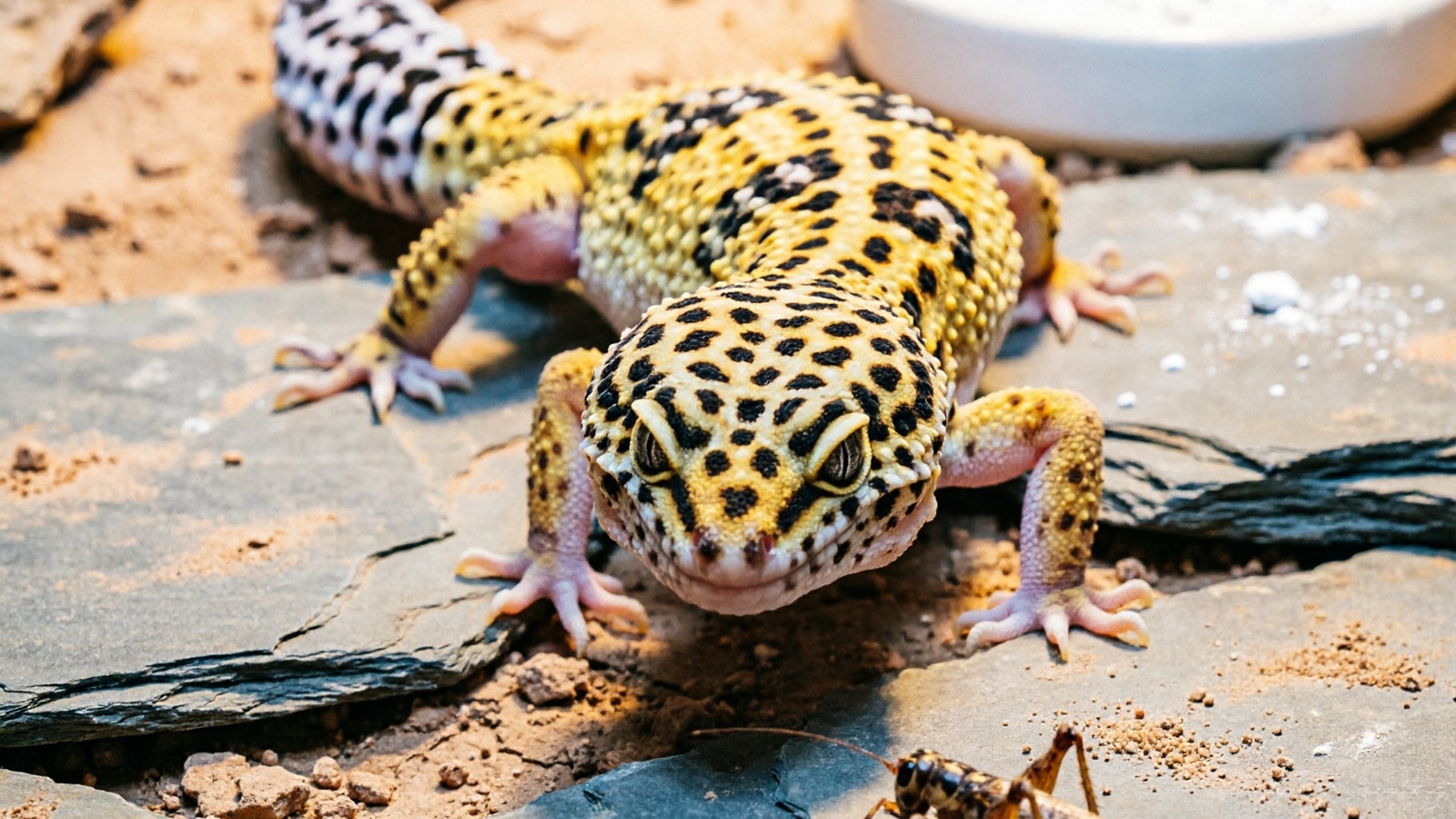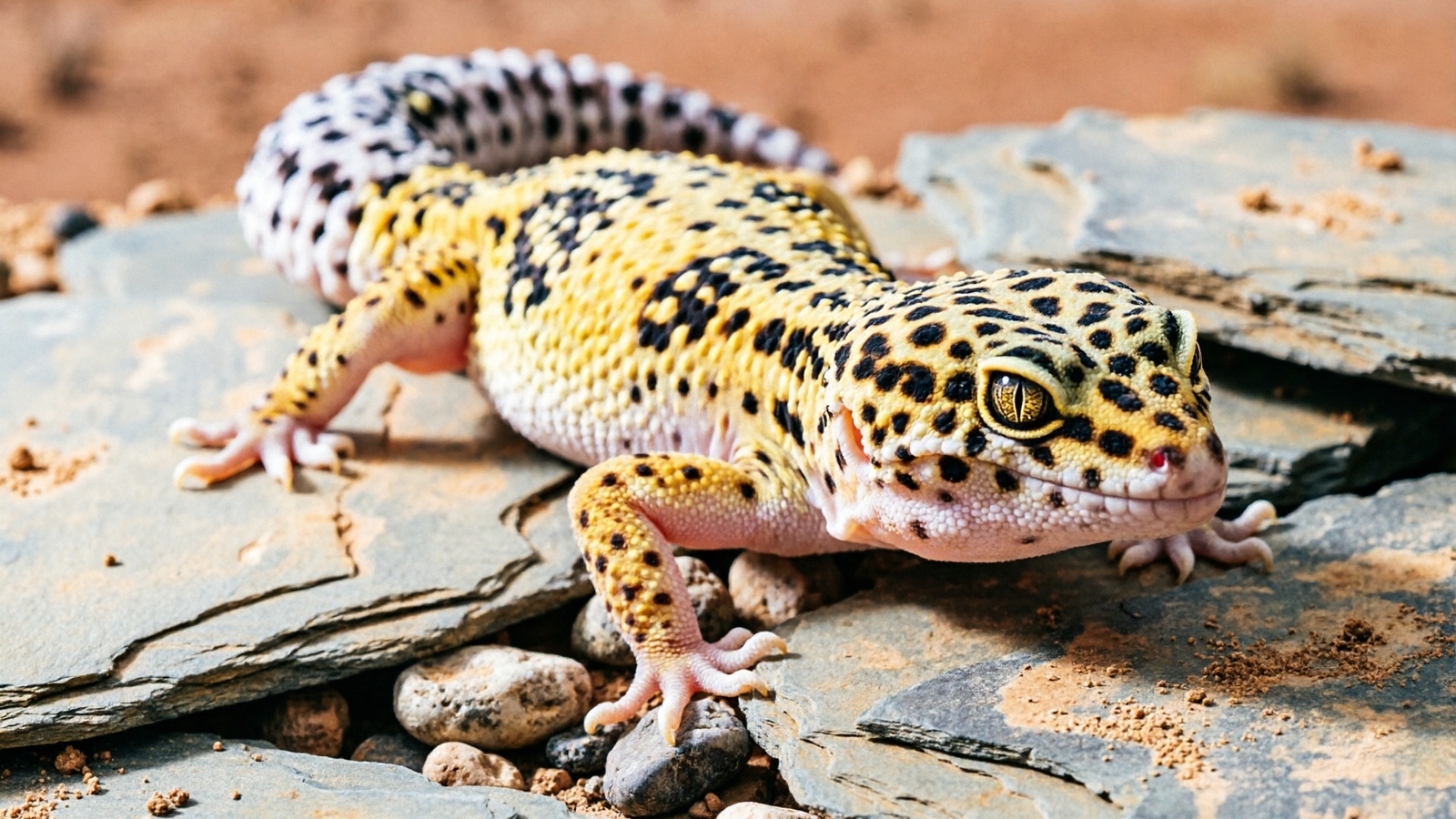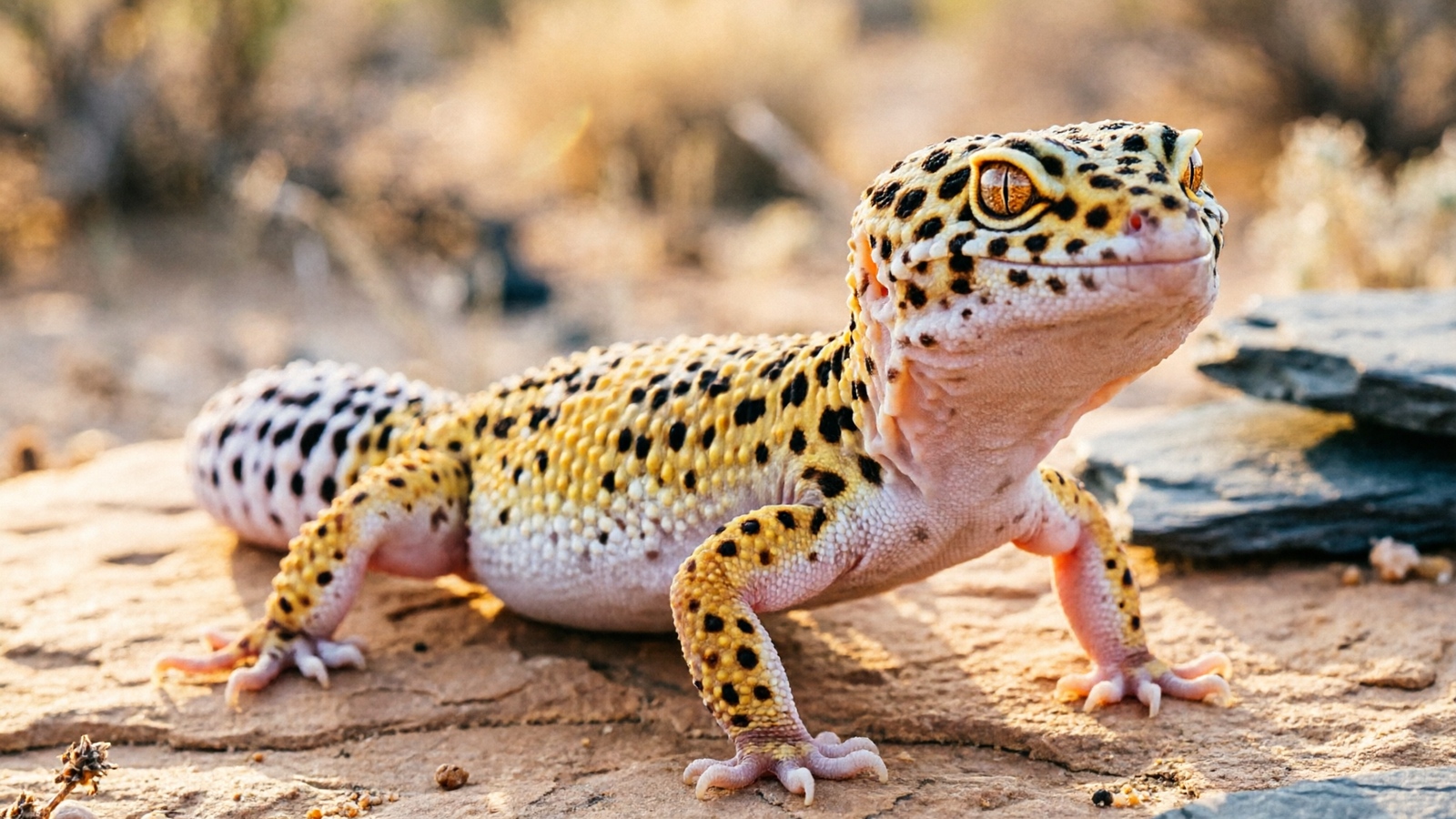
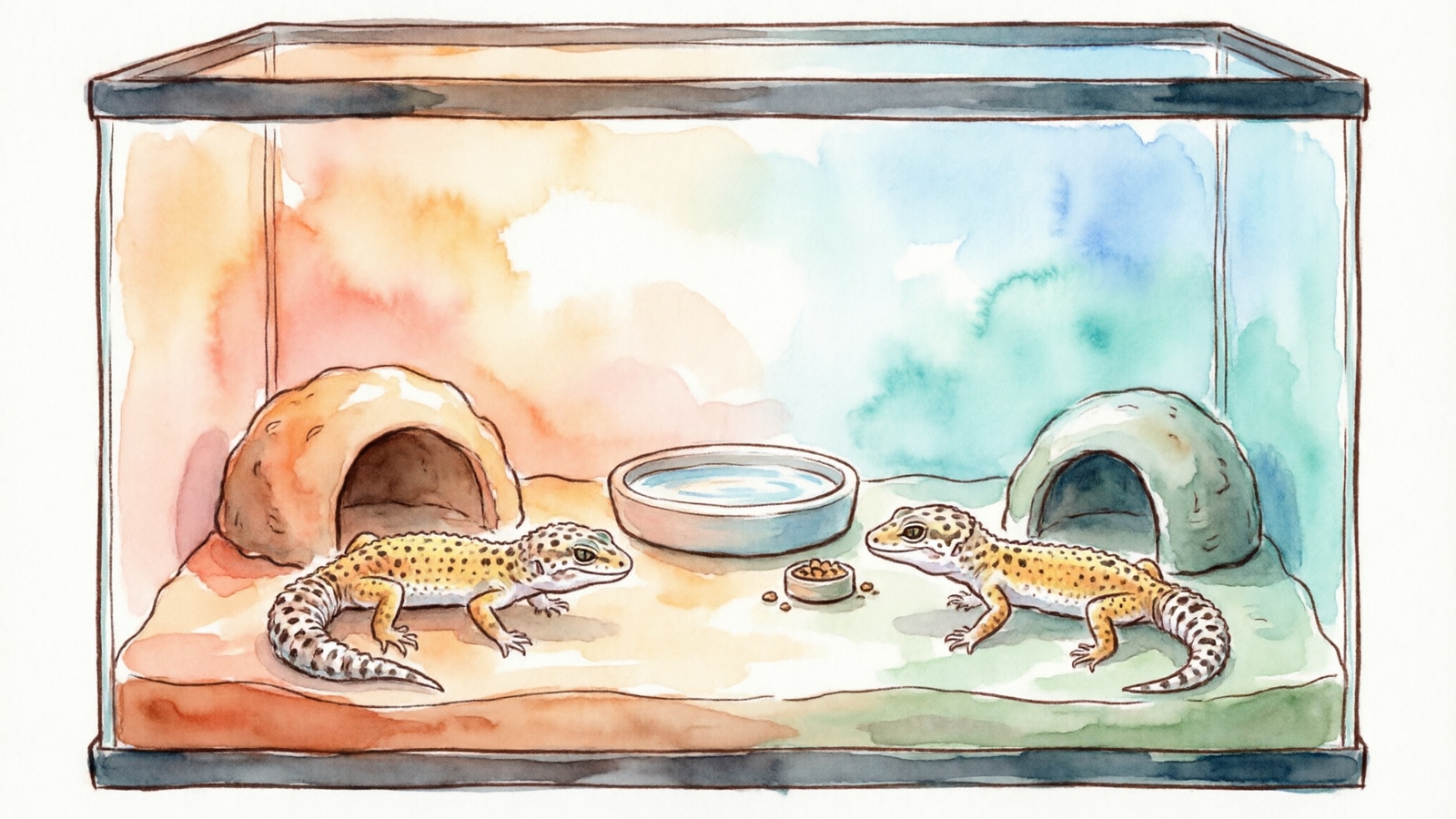
Leopard geckos are terrestrial reptiles — they prowl across the desert floor, not climb into the canopy. That means floor space matters far more than height when you are choosing their enclosure. A tall tank wastes vertical space your gecko will never use, while a wide, low-profile habitat lets them establish a proper warm-side and cool-side temperature gradient, hunt naturally, and explore.
The wrong tank size or material can lead to poor thermoregulation, stress, and even metabolic bone disease over time. I have kept leopard geckos in glass aquariums, PVC enclosures, and composite habitats over the years, and the differences in heat retention, humidity control, and daily maintenance are significant.
This guide covers nine enclosures across every size tier — from compact 10-gallon starter habitats to spacious 50-gallon breeder setups — so you can match the right tank to your gecko’s current life stage and budget.
For the full picture on gecko husbandry beyond just the tank, check our complete leopard gecko care guide.
What to Look for in a Leopard Gecko Enclosure
Tank Size — How Much Space Does Your Gecko Need?
Leopard geckos are ground-dwellers, so horizontal floor dimensions are the single most important spec. A common mistake new keepers make is buying a tall aquarium that looks impressive but offers minimal usable surface area.
Here is a quick reference for matching tank size to your gecko’s life stage:
| Gecko Stage | Minimum Size | Recommended | Why |
|---|---|---|---|
| Hatchling / Juvenile | 10 gallon | 10–20 gallon | Easy to monitor feeding; less space to lose crickets |
| Sub-adult | 20 gallon | 20–30 gallon | Room for proper temperature gradient |
| Adult (single) | 20 gallon | 20–40 gallon | Full enrichment, natural behavior |
| Adult (pair, females only) | 40 gallon | 40–50 gallon | Enough territory to reduce stress |
| Breeder setup | 50+ gallon | Stackable units | Efficient use of space for multiple geckos |
Adults can technically survive in a 20-gallon long tank (30 x 12 inches), but the reptile-keeping community has increasingly moved toward 40 gallons as the new standard. The extra room lets you create a richer environment with multiple hides, varied terrain, and a wider temperature range.
Tank Material — Glass, PVC, or Composite?
The material you choose affects heat retention, weight, durability, and viewing angles. Here is how the three main options compare:
| Material | Heat Retention | Weight | Viewing | Best For |
|---|---|---|---|---|
| Glass | Poor | Heavy | Excellent (360 degrees) | Display setups, easy monitoring |
| PVC / Wood | Excellent | Lightweight | Front only | Desert species, heat efficiency |
| ECOFLEX Composite | Good | Medium | Front only | Budget builds, durability |
Glass tanks are the most popular choice for first-time keepers — they are easy to clean, offer crystal-clear viewing from every angle, and work with under-tank heaters. The trade-off is poor heat retention: glass radiates warmth quickly, which means your heating equipment works harder. They are also heavy and fragile during shipping.
PVC and wood enclosures are the go-to for experienced keepers, especially in cooler climates. They hold heat beautifully, are much lighter than glass, and typically feature front-opening doors that make feeding and cleaning easier. The downside is limited viewing angles — you see your gecko only through the front.
Temperature and Ventilation
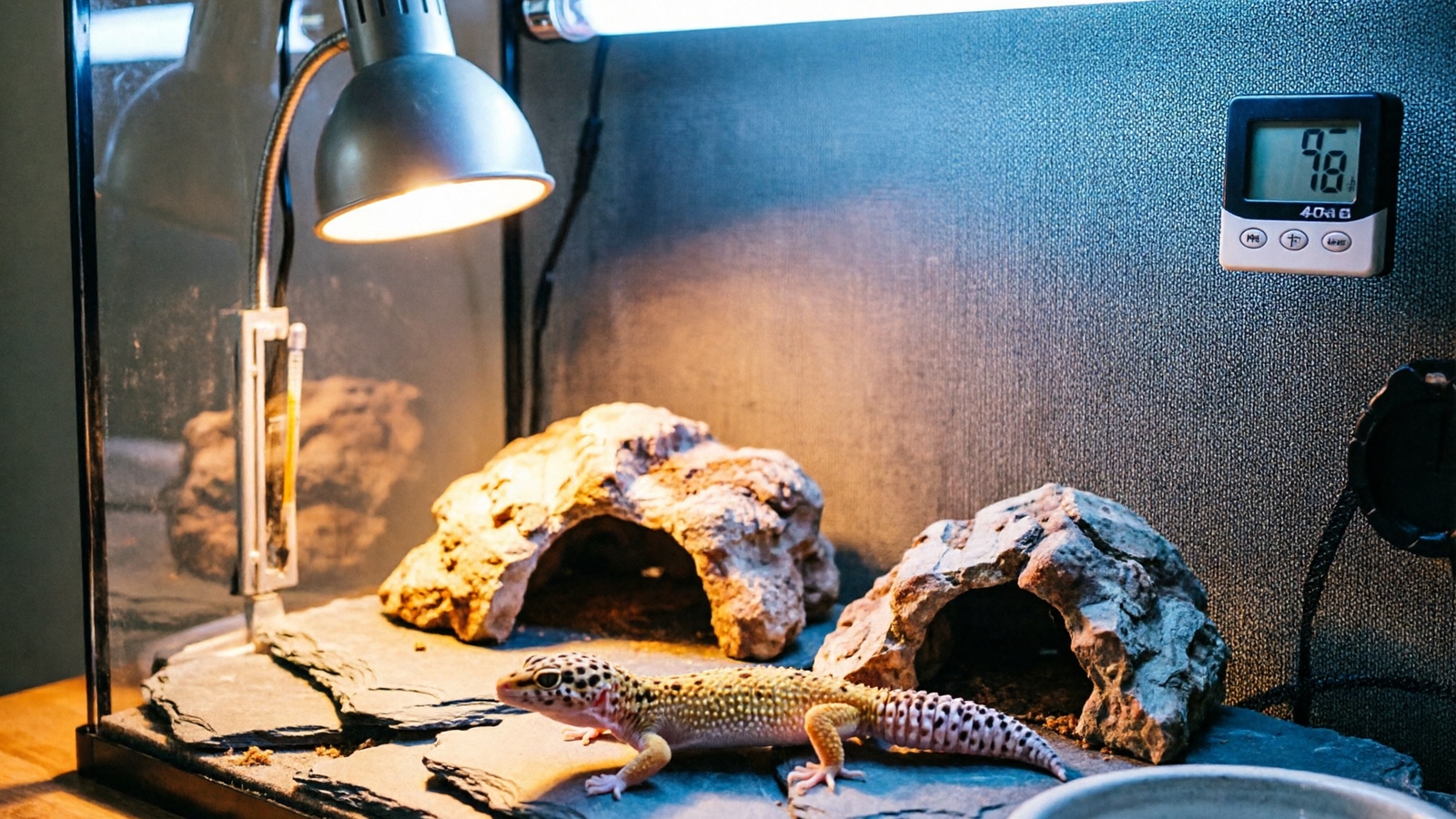
Leopard geckos need a temperature gradient spanning roughly 90–95°F on the warm side down to 75–80°F on the cool side. The Association of Reptilian and Amphibian Veterinarians (ARAV) recommends maintaining a thermal gradient for all captive reptiles so they can self-regulate body temperature — a critical factor for digestion and immune function. The tank you choose directly affects how easily you can maintain this range.
Screen-top tanks (traditional aquariums) allow excellent ventilation but lose heat rapidly — plan for a slightly stronger heating setup. Front-opening terrariums with sealed sides and screen-top vents offer a better balance, retaining warmth while still allowing air circulation.
For detailed heating and UVB guidance, see our leopard gecko lighting guide.
Our Top Picks at Every Size
We evaluated nine enclosures covering every gallon tier — from 10-gallon hatchling tanks to 50-gallon breeder setups. The comparison table below lets you scan all options at a glance, followed by detailed reviews of our top seven picks.
| # | Product | Key Feature | Best For |
|---|---|---|---|
| 1 | REPTI ZOO 35 Gallon Wide & Low | Wide, low profile (36 x 18 x 12 in) | Best overall — maximum floor space |
| 2 | Reptile Growth 10 Gallon | Highest owner-rated, budget price | Juveniles, hatchlings, tight budget |
| 3 | REPTI ZOO 20 Gallon Front Opening | Front-opening doors with lock | Standard minimum for one adult |
| 4 | Herture 40 Gallon w/ Cabinet | 40-gallon size with storage base | Keepers wanting ideal size plus storage |
| 5 | New Age Pet ECOFLEX 24” | No-tools assembly, composite build | Budget-conscious keepers, easy setup |
| 6 | Phailozoo 50 Gallon Stackable | Stackable PVC, 4 x 2 x 2 ft | Breeders, multiple gecko setups |
| 7 | unipaws 50 Gallon PVC/Wood | Wood-grain finish, superior heat retention | Desert species, heat efficiency |
| 8 | REPTI ZOO 50 Gallon Glass | Double-hinge glass doors, 36 x 18 x 18 in | Large glass display setups |
| 9 | REPTI ZOO 34 Gallon w/ Backgrounds | Includes foam backgrounds | Value all-in-one with natural look |
1. REPTI ZOO 35 Gallon Wide & Low — Best Overall
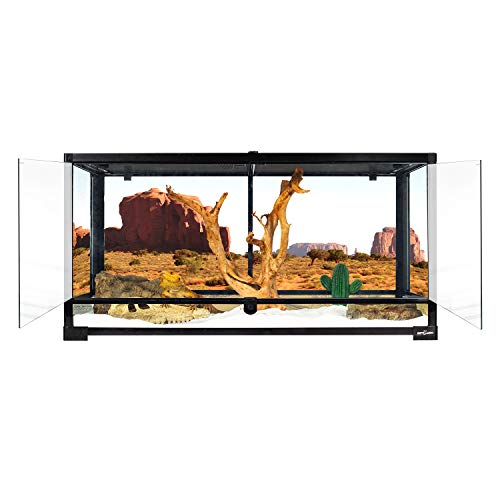
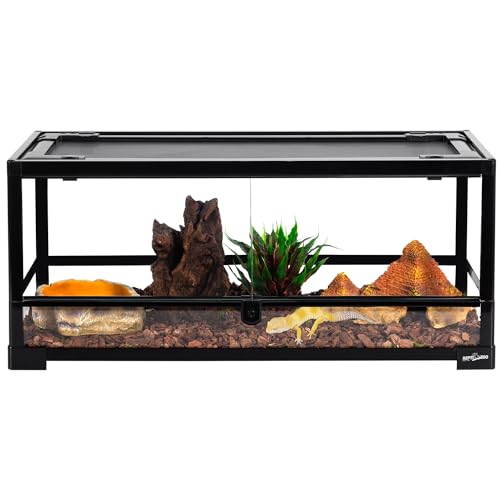
The REPTI ZOO 35 Gallon Wide & Low is our top pick for one simple reason: its dimensions are purpose-built for terrestrial geckos. At 36 x 18 x 12 inches, it delivers 648 square inches of floor space — more than any other tank on this list. Leopard geckos do not climb, so that extra horizontal real estate translates directly into more room for hides, a wider temperature gradient, and richer enrichment.
The full-glass construction gives you a clear view from any angle, and the front-opening hinged doors with a locking mechanism make daily feeding and cleaning effortless. Wire access holes on the side let you route thermostat probes and heater cables cleanly without propping the lid open.
I would be dishonest if I did not mention the drawbacks. Assembly requires patience — the knock-down glass panels must be pressed firmly into the aluminum frame, and some owners report it takes significant force. Glass panels can also arrive cracked in shipping, so inspect the package immediately. Several owners describe it as the “sturdiest enclosure yet” once properly assembled, but others warn to “open immediately to make sure all pieces are ok” given the shipping risk.
Best for: Adult leopard geckos that need maximum floor space. The wide, low profile is the ideal shape for this species.
2. Reptile Growth 10 Gallon — Best for Juveniles and Budgets
If you are bringing home a hatchling or need a quarantine enclosure, the Reptile Growth 10 Gallon is the smartest entry point. It carries the highest owner rating in our entire selection, and its compact 20 x 10 x 11-inch footprint keeps prey items concentrated so baby geckos can hunt efficiently.
The secure locking mechanism and glass construction give you peace of mind, and the price sits firmly in the budget tier — making it an easy decision for first-time keepers who want to start small and upgrade later.
The honest limitation is size: 10 gallons is too small for an adult gecko. You will need to upgrade to at least 20 gallons within six months. Some owners also report that “plastic tabs failed on the top,” so handle the lid mechanism carefully. One reviewer noted it is “great for creatures that do not depend on temperature control,” meaning you may need to monitor heat closely in this smaller volume.
Best for: Hatchlings, juveniles under six months, quarantine setups, and keepers on a tight budget.
3. REPTI ZOO 20 Gallon Front Opening — Best 20 Gallon Standard
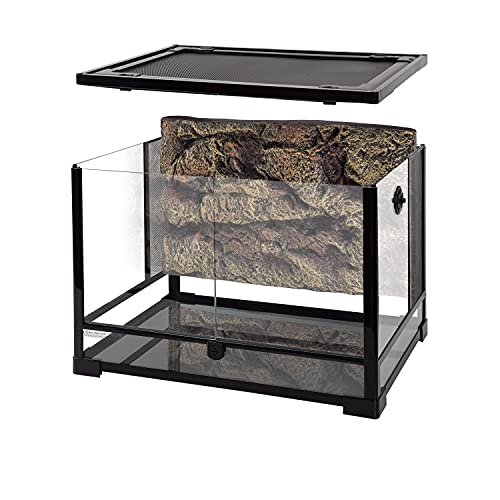
The REPTI ZOO 20 Gallon hits the sweet spot for a single adult leopard gecko. At 30 x 12 x 12 inches, it provides the minimum recommended floor space, and the front-opening sliding doors with a safety lock mean you never have to reach in from above — a movement that can startle geckos into defensive posturing.
The top screen ventilation prevents escapes while allowing adequate airflow, and the clear glass panels let you observe your gecko’s behavior from any angle. This is the 20 gallon leopard gecko tank most first-time owners should start with for an adult.
The main complaint from owners centers on assembly: instructions are vague, and some describe the feel as “flimsy for the price” relative to larger REPTI ZOO models. One owner reported that a “snake got out and lost within three days,” though this appears tied to improper assembly rather than a design flaw. Take your time putting it together and double-check every seam.
Best for: A single adult leopard gecko — the standard minimum size with front-opening convenience.
4. Herture 40 Gallon with Cabinet — Best 40 Gallon Upgrade
The Herture 40 Gallon with Cabinet is the only enclosure on this list that bundles a storage base into the design — a genuinely useful feature for keepers who want their supplies (substrate bags, feeder tubs, cleaning tools) tucked neatly underneath. Forty gallons is the size most experienced keepers now recommend for adult leopard geckos, and this unit delivers it at a competitive mid-tier price point.
The front-opening design and glass construction follow the same proven formula as the other REPTI ZOO-style tanks on this list.
I have to be upfront about the quality concerns, though. This tank carries the lowest owner rating in our selection. Multiple owners report needing to “buy sealant for windows and doors,” and some units arrive with chips or damaged parts. The assembly quality varies between units. One owner summed it up as “not worth the price” due to these issues. If you go with this option, budget time for potential touch-up sealing and inspect all parts on arrival.
Best for: Keepers who want the modern 40-gallon standard and value the built-in storage cabinet.
5. New Age Pet ECOFLEX 24” — Best Budget Enclosure
The New Age Pet ECOFLEX stands out for one thing above all: it is the most-reviewed reptile enclosure on Amazon, with a review base that dwarfs every other product here. That kind of track record does not happen by accident. The ECOFLEX composite material will not warp, rot, or absorb moisture — a real advantage in humid climates or bioactive setups — and the entire unit assembles without tools in under 30 minutes.
At a budget-friendly price, it undercuts every glass terrarium on this list while still offering a front glass panel for viewing. It is an excellent choice for juvenile geckos or as a secondary quarantine tank.
The trade-offs are real, though. Shipping damage is the most common complaint — one owner reported receiving a “product damaged and unusable” due to poor packaging. You will also need to apply silicone sealant along the interior seams for proper humidity control, as the composite panels are not watertight out of the box. Some owners note that “suction cups won’t stick to walls,” limiting decor mounting options.
Best for: Budget-conscious keepers and anyone who wants tool-free assembly and a weatherproof composite build.
6. Phailozoo 50 Gallon Stackable — Best Premium and Breeder Pick
If you keep multiple geckos or breed, the Phailozoo 50 Gallon Stackable solves a real logistics problem. Its 48 x 24 x 24-inch footprint gives each animal a palace of floor space, and the stackable PVC design means you can house several geckos vertically in the same floor area a single glass tank would occupy. Assembly takes roughly 20 minutes, and the lightweight PVC construction means you can reposition the unit without a second person.
The front-opening doors make feeding and cleaning simple, and PVC’s superior heat retention is a genuine advantage for desert species like leopard geckos — your heating equipment runs less, saving energy.
On the downside, the plastic side panels scratch relatively easily from reptile claws over time. Some owners report that “sliding glass doors can be unstable,” and the color options are limited. At the premium end of the price spectrum, a few owners felt it was “lacking quality for the price, even on sale.” Still, for breeders who need stackable efficiency, there is no better option on this list.
Best for: Breeders, multi-gecko households, and experienced keepers who want PVC heat efficiency at a large scale.
7. unipaws 50 Gallon PVC/Wood — Best for Heat Retention
The unipaws 50 Gallon enclosure occupies a unique niche: it combines the heat-retention benefits of PVC with a wood-grain aesthetic that blends into home decor better than bare plastic. At 36 x 17.5 x 18 inches, it offers generous floor space, and the escape-proof glass sliding doors with a metal lock provide security. Four cable management holes let you route thermostats, probes, and lighting cleanly.
For leopard gecko keepers in cooler homes, the superior insulation of this engineered-wood-and-PVC build means a more stable warm-side temperature with less energy consumption.
Be aware that this is a newer product with limited review history, so long-term durability data is thin. The unit is made of particle board rather than solid wood, and one owner flagged a “possible safety risk” related to door gaps. Another noted “inadequate instructions and no video available,” so plan for a more involved assembly process. This is a solid mid-tier option if heat retention is your top priority and you are comfortable with some assembly legwork.
Best for: Keepers in cooler climates who prioritize heat retention and want a tank that looks like furniture.
Budget, Mid-Range, or Premium — Which Tier?
Price tiers set expectations for construction quality, included features, and how long the enclosure will serve you.
| Tier | Typical Range | Products in This Guide | Best For |
|---|---|---|---|
| Budget | Entry-level | Reptile Growth 10 gal, New Age Pet ECOFLEX | First-timers, juveniles, quarantine |
| Mid-Range | Moderate | REPTI ZOO 20 gal, REPTI ZOO 34 gal, unipaws 50 gal, Herture 40 gal | Most adult gecko setups |
| Premium | Higher-end | REPTI ZOO 35 gal, REPTI ZOO 50 gal, Phailozoo 50 gal | Display tanks, breeders, long-term investment |
Value analysis: The best dollar-per-gallon value belongs to the REPTI ZOO 34 Gallon with foam backgrounds — it includes decorative backgrounds that other tanks sell separately. For long-term investment, the Phailozoo 50 Gallon stackable is hard to beat if you plan to keep multiple geckos, since a single unit can serve several animals over its lifespan.
In my experience, most keepers end up upgrading within the first year. If your budget allows, starting at the 35- to 40-gallon tier saves you from buying twice. If you need to start small, the Reptile Growth 10 gallon is a reliable temporary home — just plan the upgrade timeline before your gecko outgrows it.
Must-Have Accessories for Your Setup
A tank is just the shell. What goes inside determines whether your leopard gecko thrives. Here is a quick-reference checklist of essentials and items to avoid:
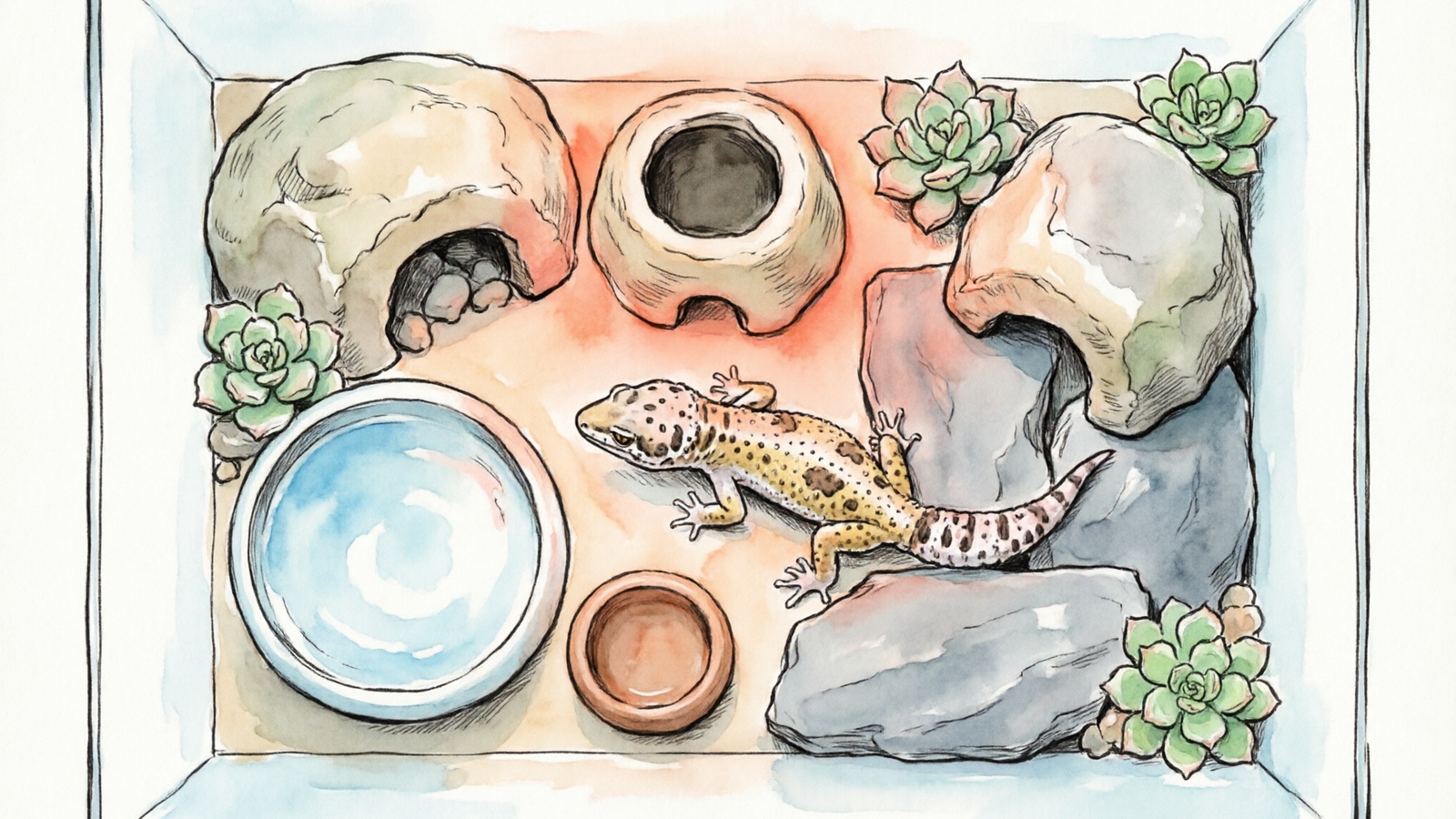
Three or more hides — one on the warm side, one on the cool side, and a humid hide for shedding
Under-tank heater with a thermostat — belly heat is how geckos digest food
Digital thermometer with two probes — measure both warm and cool sides
Shallow water dish — deep enough to drink from, shallow enough to prevent drowning
Food dish — keeps feeder insects contained and supplements contained
Loose sand or calcium sand — impaction risk if accidentally ingested
Heat rocks — notoriously unreliable, can cause severe thermal burns
Sharp decorations — can injure your gecko’s delicate skin
Cohabiting multiple males — they will fight and injure each other
For safe substrate recommendations beyond this checklist, read our leopard gecko substrate guide.
How to Set Up Your Enclosure
Step-by-Step Setup
- Position the tank away from direct sunlight, drafty windows, and exterior walls. Sunlight can overheat the enclosure and create dangerous hot spots, while drafts disrupt your temperature gradient.
- Install the under-tank heater on the outer bottom of one-third of the tank — this creates your warm zone. Always connect it through a thermostat set to 90–95°F surface temperature.
- Add substrate. Slate or ceramic tile is the safest option — zero impaction risk, easy to clean, and it conducts belly heat efficiently. Paper towels work for quarantine periods.
- Place three hides (warm, cool, humid) at opposite ends, then add a shallow water dish and food dish. The humid hide should contain damp sphagnum moss to aid shedding.
Bioactive Tank Setup
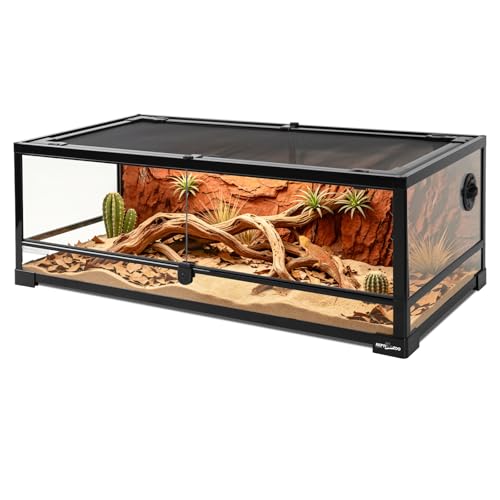
A bioactive leopard gecko tank is a self-sustaining ecosystem where beneficial microorganisms and cleanup crews (like isopods and springtails) break down waste naturally. Arid-climate plants such as succulents and air plants add visual appeal and contribute to air quality.
The payoff: a naturalistic environment, less long-term maintenance (the cleanup crew handles organic waste), and more stimulation for your gecko. However, bioactive setups require careful humidity management — too wet and you risk respiratory infections; too dry and your cleanup crew dies off.
Bioactive is an advanced option best suited for experienced keepers. For a detailed walkthrough of bioactive and naturalistic setups, see our guide to the best leopard gecko terrarium.
Conclusion
The REPTI ZOO 35 Gallon Wide & Low is our overall top pick because its 36 x 18-inch floor space is purpose-built for a terrestrial species. For budget-conscious keepers or those starting with a juvenile, the Reptile Growth 10 Gallon delivers the highest rating in our lineup at a price anyone can justify. And if you are planning for multiple geckos, the Phailozoo 50 Gallon Stackable offers unmatched scalability.
Whatever tank you choose, the principles stay the same: maximize floor space, maintain a proper temperature gradient, and prioritize secure construction. Once your enclosure is set up, the next step is nutrition — explore our guide to the best leopard gecko food to round out your gecko’s care.
For keepers housing different small pets, you may also find our guides to the best guinea pig cage, the best rabbit hutch, and the best hamster cage useful for comparing housing approaches across species.