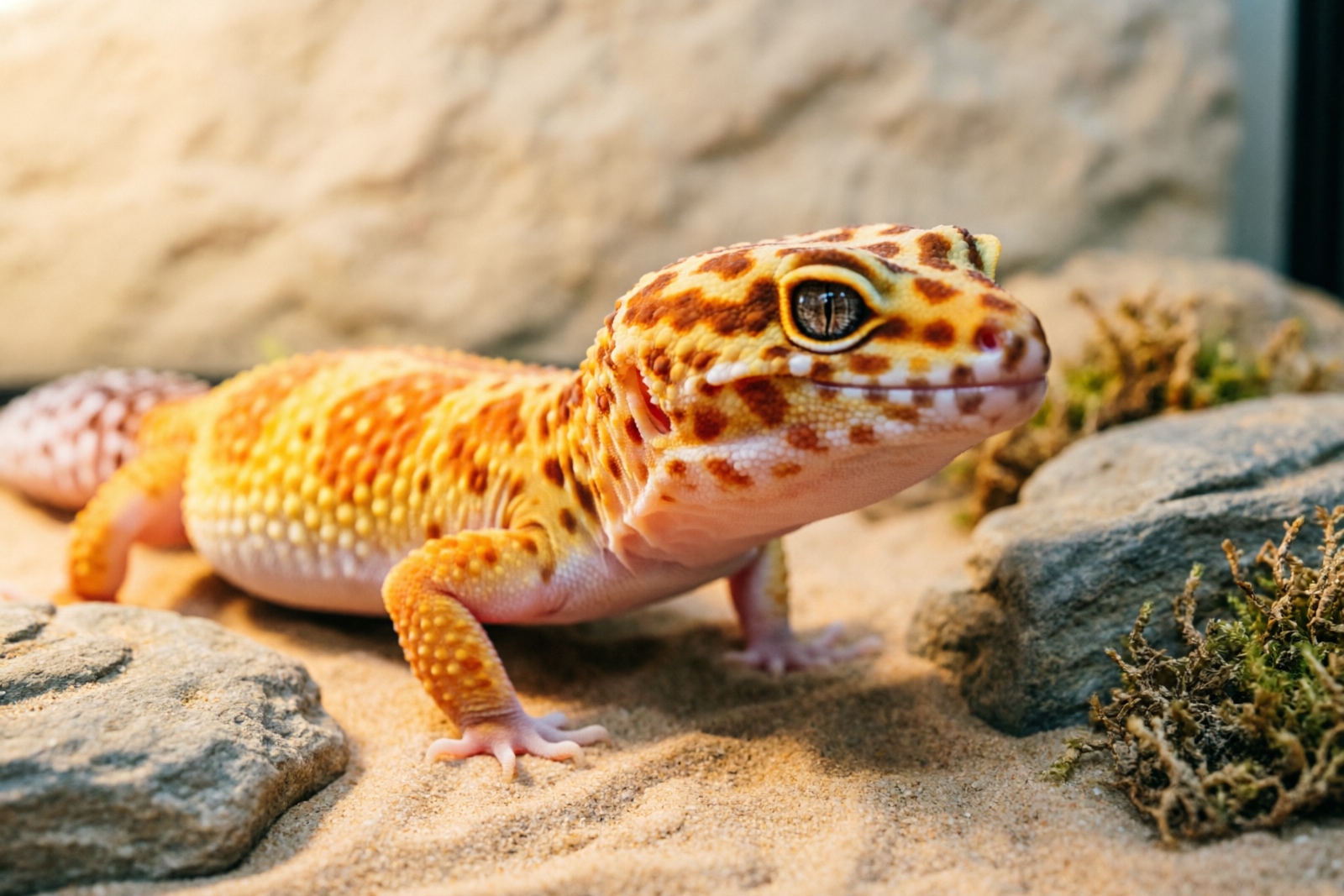
Where Are Leopard Geckos From?
Understanding where these reptiles come from in the wild is essential for providing proper care in captivity. These fascinating creatures have evolved over millions of years to thrive in some of the harshest environments on Earth, and replicating these conditions in your home is the foundation of successful keeping.
Natural Habitat in the Wild
Leopard geckos (Eublepharis macularius) are native to the arid and semi-arid regions of Afghanistan, Pakistan, Iran, and northwestern India. They inhabit dry, rocky grasslands and desert edges where temperatures fluctuate dramatically between day and night. Unlike many gecko species, they are terrestrial — they live on the ground rather than climbing trees or walls.
Geographic Distribution:
- Primary Range: Southern Afghanistan, Pakistan, and northwestern India
- Elevation: Typically found at elevations up to 6,500 feet
- Terrain: Rocky outcrops, dry grasslands, and scrubland with loose soil
Climate Conditions:
- Daytime temperatures: 85-95°F (29-35°C) in summer
- Nighttime temperatures: Can drop to 60-70°F (15-21°C)
- Annual rainfall: Very low (4-8 inches per year)
- Humidity: Naturally low, typically 30-40%
In the wild, these reptiles spend their days hiding in burrows, rock crevices, or under stones to escape the intense heat. They emerge at dusk to hunt insects, taking advantage of cooler temperatures and higher humidity. This nocturnal behavior is hardwired into their biology and influences their care requirements in captivity.
How This Affects Captive Care
Understanding the natural habitat directly informs how we set up captive environments:
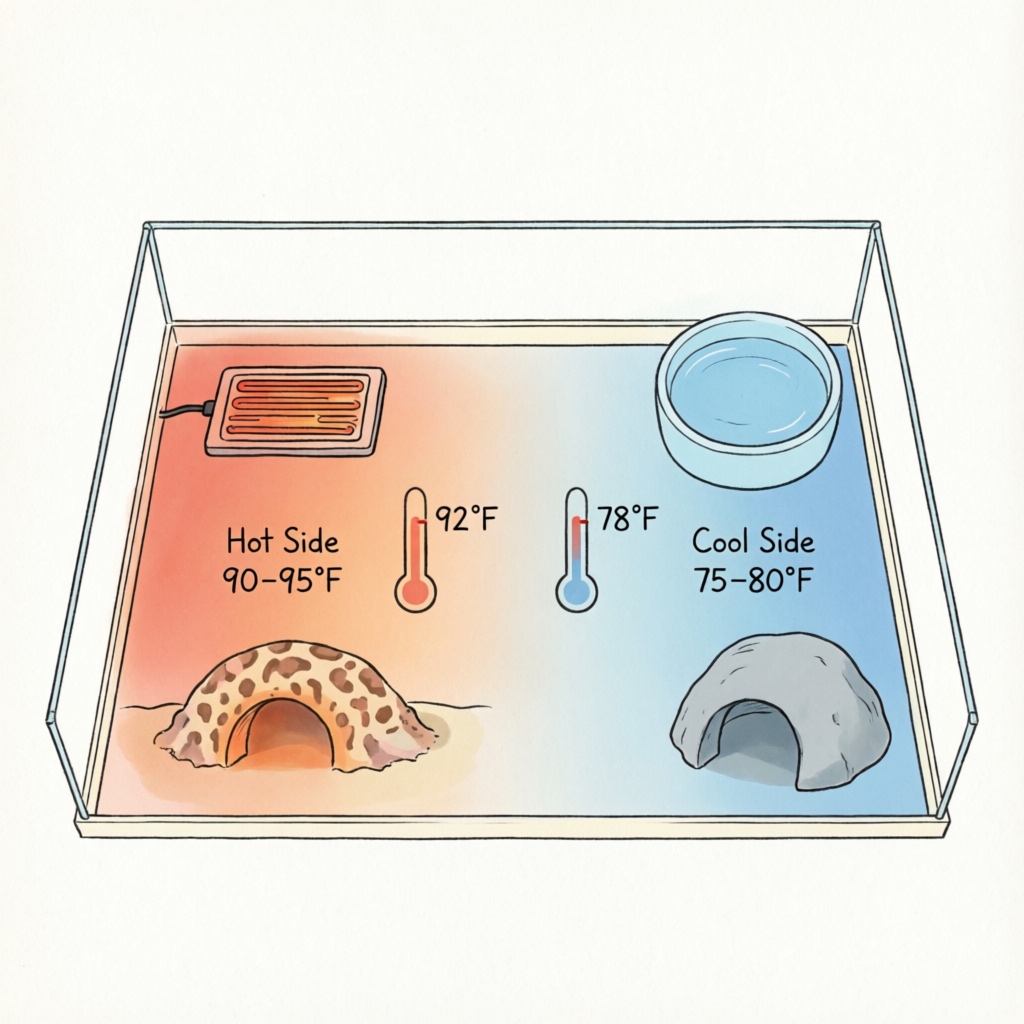
Temperature Requirements: Your gecko’s enclosure must replicate the natural temperature gradient. Provide a hot side (90-95°F) where it can digest food properly, and a cool side (75-80°F) where it can retreat to avoid overheating. This temperature gradient allows thermoregulation just as it would in the wild.
Humidity Considerations: Despite coming from arid regions, these reptiles need access to humid microclimates — particularly for shedding. In nature, they seek out damp burrows or crevices. In captivity, a humid hide filled with moist substrate replicates this essential feature.
Substrate Selection: While wild populations live on packed earth and rocky terrain, they don’t naturally encounter loose sand in the quantities found in pet stores. This is why many experienced keepers recommend solid substrates rather than loose sand, which can cause impaction if ingested.
For more information on creating appropriate habitats, see our guide on reptile habitat basics.
Leopard Gecko Tank Setup Guide
Setting up the proper enclosure is the single most important step in caring for these reptiles. A well-designed tank not only keeps your pet healthy but also makes maintenance easier and allows you to observe natural behaviors.
Tank Size Requirements
The size of your tank directly impacts your pet’s quality of life. While these reptiles don’t need massive enclosures, they do require adequate floor space for a proper temperature gradient and enrichment.
Minimum Tank Sizes:
| Age | Minimum Size | Dimensions |
|---|---|---|
| Juvenile (under 6 months) | 10 gallons | 20” x 10” x 12” |
| Adult (6+ months) | 20 gallons | 30” x 12” x 12” |
| Multiple geckos | 40+ gallons | 36” x 18” x 12” |
Important: A 10-gallon tank is too small for adults. Plan to upgrade to at least 20 gallons when your gecko reaches 6 months of age.
REPTI ZOO 20 Gallon Glass Terrarium — Best Tank
REPTI ZOO 20 Gallon Glass Terrarium ($168.13, 4.0⭐)
I’d recommend this as the best tank for adult geckos. The front-opening design makes access easy and reduces stress during handling or maintenance. The top screen ventilation provides excellent airflow while the glass construction maintains proper temperatures. At $168.13, it’s a significant investment, but a quality enclosure lasts for years and is the foundation of your gecko’s health.
The main trade-off is the weight — glass this size is heavy and requires assembly. Some owners find the price steep for a beginner setup. If you’re on a tighter budget, the REPTI ZOO 10 Gallon Reptile Tank ($60.99, 4.6⭐) works well for juveniles or as a quarantine tank, but you’ll need to upgrade once your gecko reaches 6 months.
Bioactive Leopard Gecko Tank
Bioactive enclosures have become increasingly popular, and for good reason. These self-sustaining ecosystems create a more natural environment while dramatically reducing maintenance.
What Is a Bioactive Setup?
A bioactive terrarium is a living ecosystem that includes:
- Live plants that help maintain humidity and air quality
- Cleanup crew (isopods and springtails) that break down waste
- Natural substrate layers that support beneficial bacteria
Benefits of Bioactive Enclosures:
- Reduced maintenance: Cleanup crews process waste naturally
- Natural environment: Mimics wild habitat more closely
- Mental enrichment: Live plants and varied terrain stimulate natural behaviors
- Better humidity control: Plants and substrate layers maintain appropriate moisture
Setup Steps:
- Add 2-3 inches of clay balls to the tank bottom for drainage
- Cover with mesh screen to separate drainage from substrate
- Add 3-4 inches of bioactive substrate mix
- Plant live plants and add hardscape (rocks, driftwood)
- Add leaf litter and introduce cleanup crew
- Allow the ecosystem to establish for 2-4 weeks before adding your gecko
Note: Bioactive setups require UVB lighting for plant health, which also benefits calcium metabolism.
Essential Equipment Checklist
Beyond the tank itself, you’ll need several essential items:
| Equipment | Purpose | Price Range |
|---|---|---|
| Under Tank Heater | Provide belly heat for digestion | $9.99-12.99 |
| Thermometer/Hygrometer | Monitor temperature and humidity | $10-20 |
| Thermostat | Regulate heater temperature | $30-50 |
| Hides (minimum 3) | Security and thermoregulation | $10-20 each |
| Water Dish | Fresh water access | $5-10 |
| Food Dish | Prevent feeder escape | $5-10 |
Heating
An under-tank heating pad is the most common heat source for leopard gecko enclosures. The Aiicioo Reptile Heating Pad 8W ($12.99, 4.4⭐) is a reliable, affordable option for 10-20 gallon tanks. However, you must always use a thermostat with any heating pad to prevent dangerous temperature spikes — I’ve seen pads malfunction and reach 120°F+ without a thermostat, which can be fatal.
For more reptile care information, see our guide on bearded dragon care.
Leopard Gecko Substrate Options
Choosing the right substrate is crucial for your gecko’s health. The wrong choice can lead to impaction, respiratory issues, or bacterial infections.
Safe Substrate Choices
Reptile Carpet
The 2PCS Reptile Carpet for 20 Gallon ($18.99, 3.6⭐) provides a washable, reusable option that eliminates impaction risk. The 3.6-star rating reflects mixed experiences with cleaning difficulty — waste gets trapped in the fibers and some owners find scrubbing necessary. It comes with tweezers, which is a nice touch. I’d recommend having two sets so you can swap a clean one in while washing the other.
Zilla Reptile Bedding Liner
The Zilla Reptile Bedding Liner ($7.49, 4.4⭐) is a disposable liner that’s easy to replace — cut it to size and swap it out when soiled. At $7.49, it’s the most affordable safe option and ideal for quarantine setups or beginners. The main trade-off is that it needs frequent replacement and isn’t reusable.
Other Safe Options:
- Paper Towels: Free, easy to replace, perfect for quarantine
- Ceramic or Slate Tile: Permanent, easy to clean, natural appearance, retains heat well
- Shelf Liner: Non-adhesive, washable, affordable
Substrates to Avoid
| Substrate | Risk Level | Why It’s Dangerous |
|---|---|---|
| Loose Sand | HIGH | Causes impaction if ingested during feeding or exploration |
| Calcium Sand | VERY HIGH | Geckos may eat it intentionally for calcium, causing impaction |
| Wood Shavings | HIGH | Can cause impaction and respiratory issues |
| Bark Chips | HIGH | Sharp edges, impaction risk, harbors bacteria |
| Gravel | HIGH | Impaction risk, can’t be digested |
The Impaction Risk:
Impaction occurs when a gecko swallows substrate that cannot pass through its digestive system. This creates a blockage that can be fatal without veterinary intervention. Young geckos and those with calcium deficiencies are particularly susceptible.
Signs of Impaction: Not eating, not pooping for extended periods, visible lump in the belly, lethargy, straining to defecate.
Prevention: Use solid substrates (tile, carpet, paper towels). If using loose substrate, feed in a separate container. Ensure proper calcium supplementation. Monitor for substrate eating behavior.
Leopard Gecko for Sale: Where to Buy & Price Guide
Where to Buy Leopard Geckos
1. Reputable Breeders (Recommended)
Professional breeders are the best source for healthy, well-socialized pets. They provide complete health history, genetic information, care advice, and health guarantees. Find breeders through reptile expos, online directories (FaunaClassifieds, MorphMarket), local reptile clubs, and veterinarian recommendations.
2. Reptile Expos
Reptile expos allow you to see geckos in person, talk directly with breeders, and often get better prices than pet stores. You can inspect the animal’s health before purchasing.
3. Pet Stores (Use Caution)
Pet stores often source from mass breeders with questionable practices. If you choose a pet store, research their supplier, ask for health records, quarantine for 30-60 days, and have a veterinarian check the gecko.
Leopard Gecko Price Guide
| Type | Price Range | Notes |
|---|---|---|
| Normal/Wild Type | $30-50 | Basic coloration, great for beginners |
| Common Morphs (Mack Snow, Tangerine) | $50-150 | Popular color variations |
| High-End Morphs | $150-500+ | Rare patterns and colors |
| Rare/Designer Morphs | $500-3,000+ | Breeding quality, unique genetics |
Total Setup Costs:
| Item | Budget Option | Premium Option |
|---|---|---|
| Gecko | $30-50 | $150-300 |
| Tank (20 gallon) | $61 (REPTI ZOO 10gal) | $168 (REPTI ZOO 20gal) |
| Heating | $10-15 | $40-60 (with thermostat) |
| Substrate | $7 (liner) | $20+ (bioactive) |
| Hides & Decor | $20-30 | $50-100 |
| Total Initial Cost | $130-150 | $430-630 |
Signs of a Healthy Gecko
Before purchasing, check for these health indicators:
Healthy Signs: Bright, clear eyes; fat tail (fat storage); clean vent; alert behavior; clean skin with no stuck shed; all toes present; proper weight (hip bones shouldn’t be prominent); clear nostrils.
Warning Signs: Sunken eyes or visible hip bones (underweight); stuck shed, especially around toes and eyes; lethargy or unresponsiveness; visible wounds, swellings, or discharge; kinked tail or spine.
What Do Leopard Geckos Eat?
Leopard geckos are insectivores — they eat exclusively insects. Providing a varied, nutritious diet is essential for their health and longevity.
Staple Feeder Insects
| Insect | Nutrition | Best For | Notes |
|---|---|---|---|
| Crickets | Excellent protein | All ages | Most common, active prey stimulates hunting |
| Dubia Roaches | Highest protein | All ages | Excellent nutrition, easy to keep, can’t infest |
| Mealworms | Good protein | Adults only | High fat, hard shell — avoid for juveniles |
| Black Soldier Fly Larvae | High calcium | All ages | Excellent calcium source, promotes digestion |
Secondary/Treat Feeders: Waxworms (high fat, treat only), Superworms (adults only, high fat), Hornworms (occasional treat, high moisture).
Feeding Guidelines by Age
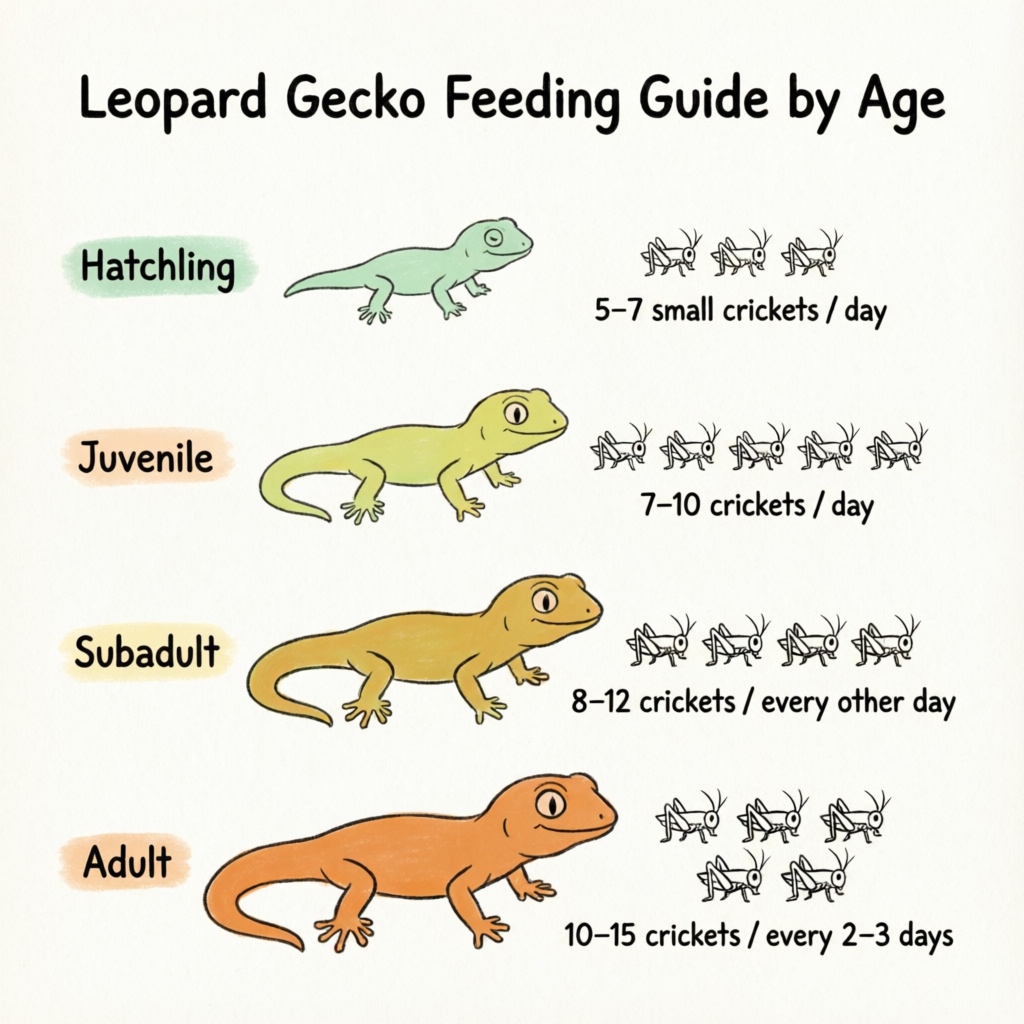
| Age | Feeding Frequency | Amount per Feeding |
|---|---|---|
| Hatchling (0-3 months) | Daily | 5-7 small crickets |
| Juvenile (3-6 months) | Daily | 7-10 small-medium crickets |
| Subadult (6-12 months) | Every other day | 8-12 medium crickets |
| Adult (12+ months) | Every 2-3 days | 10-15 medium-large crickets |
Feeding Tips: Feed in the evening when geckos are naturally active. Never leave uneaten crickets in the tank (they can bite your gecko). Gut-load insects 24-48 hours before feeding. Use an escape-proof feeding dish. Monitor your gecko’s tail thickness — it should be plump but not dragging.
Supplements and Gut Loading
| Supplement | Frequency | Purpose |
|---|---|---|
| Calcium (without D3) | Every feeding for juveniles, every other for adults | Bone health, prevents MBD |
| Calcium (with D3) | Once weekly | If no UVB lighting |
| Multivitamin | Once weekly | Overall health, trace nutrients |
Gut load insects 24-48 hours before feeding with dark leafy greens, carrots, sweet potatoes, and commercial gut-load products. Avoid citrus fruits, iceberg lettuce, and avocado.
Leopard Gecko Humid Hide & Shedding
Proper shedding is critical for leopard gecko health, and a humid hide is the key to successful sheds.
Why Humid Hides Are Essential
Leopard geckos shed their skin approximately every 4-6 weeks for adults, more frequently for growing juveniles. Without adequate humidity during this process, shed can become stuck — leading to lost toes, eye damage, and infections. A humid hide provides a microclimate with 70-80% humidity.
How to Set Up a Humid Hide
The Exo Terra Gecko Cave Medium ($14.99, 4.4⭐) is designed specifically for geckos. The cave design retains humidity well, and the natural rock appearance looks great in any setup. Fill it with moist sphagnum moss or paper towels and place it on the warm side of the tank.
DIY option: A simple plastic container (like a Tupperware) with a hole cut in the lid makes an inexpensive humid hide. Fill with moist sphagnum moss. Total cost: approximately $5.
Never pull stuck shed forcefully — this can damage the new skin underneath. If shedding problems persist, consult a reptile veterinarian.
Leopard Gecko Care Basics
Daily Care Routine
- Check temperature: Verify hot side is 90-95°F and cool side is 75-80°F
- Fresh water: Replace water daily
- Spot clean: Remove feces and any shed skin
- Observe behavior: Note appetite, activity level, any changes
- Feed: According to age-based schedule
Temperature and Humidity Management
| Area | Temperature | Purpose |
|---|---|---|
| Hot side (hide) | 90-95°F (32-35°C) | Digestion, thermoregulation |
| Cool side | 75-80°F (24-27°C) | Prevent overheating |
| Night | 70-75°F (21-24°C) | Natural temperature drop |
Humidity: Ambient 30-40%, humid hide 70-80%. Too high (>50%) causes respiratory infections. Too low (<20%) causes shedding problems.
Common Health Issues
Metabolic Bone Disease (MBD) — Caused by calcium and/or vitamin D3 deficiency. Symptoms: weak bones, tremors, rubbery jaw. Prevention: proper calcium supplementation, UVB lighting.
Impaction — Caused by ingesting substrate or too-large prey. Symptoms: not eating, not pooping, lethargy, visible lump. Prevention: safe substrate, appropriate prey size, proper hydration.
Respiratory Infection — Caused by temperatures too low or humidity too high. Symptoms: wheezing, bubbles from nose, open-mouth breathing. Prevention: proper temperature gradient, appropriate humidity.
When to See a Vet
Not eating for more than 2 weeks, significant weight loss, visible injuries or swellings, eye problems, difficulty breathing, not pooping for extended periods, or behavioral changes (lethargy, loss of balance). Find a qualified reptile vet before you need one — not all veterinarians treat reptiles.
For more information on habitat management, see our guide on reptile habitat basics.
Leopard Gecko FAQ: Common Questions Answered
How long do leopard geckos live?
With proper care, leopard geckos typically live 15-20 years in captivity. Some have been known to live 25+ years. This makes them a significant long-term commitment — longer than many dogs or cats.
Do leopard geckos like to be held?
It depends on the individual gecko. Some tolerate handling well, while others prefer minimal contact. They are not naturally social animals. Start slowly — 5 minutes at a time initially, let the gecko walk onto your hand rather than grabbing, and always support the entire body, especially the tail. Handle during evening hours when they’re naturally active.
Why is my leopard gecko not eating?
Possible causes include shedding (geckos often stop eating before and during shedding), breeding season, cool temperatures, age (adults eat less frequently), or illness. Check temperatures first, then look for signs of impending shed. If not eating for more than 2 weeks, consult a veterinarian.
What I’d do: check temperatures first — use a digital thermometer with a probe on the hot side floor surface. The surface temperature where your gecko basks should be 90-95°F. Many owners measure air temperature, which can be significantly different from surface temperature. If temperatures are correct, look for signs of impending shed (dull, grayish coloration). If not eating for more than 2 weeks, consult a veterinarian — reptiles can deteriorate slowly over weeks, and by the time you notice severe weight loss, the situation may be critical.
What size tank does a leopard gecko need?
Juveniles (under 6 months): minimum 10 gallons, but 20 gallons is better. Adults (6+ months): minimum 20 gallons (30” x 12” footprint). Multiple geckos: 40+ gallons, and only house females together. Floor space matters more than height.
How much does a gecko cost?
Gecko: $30-300+ depending on morph. Initial setup: $130-630 depending on quality. Monthly costs: $20-50 for food, substrate, and supplements. Annual veterinary care: $50-150 for checkups.
For feeding, factor in the cost of maintaining a cricket or dubia roach colony, or purchasing feeders regularly. I’ve found that keeping a small dubia roach colony is more cost-effective than buying crickets weekly — dubia roaches are easy to care for, don’t smell, and can’t escape like crickets can. A starter colony costs about $30-50 and becomes self-sustaining within a few months.
These reptiles make excellent pets for those willing to provide proper care. Their docile nature, manageable size, and straightforward requirements have made them popular worldwide. By understanding their natural history and replicating key elements of their environment, you can provide a happy, healthy life for 15-20 years.
Key Care Points:
- Temperature gradient: Hot side 90-95°F, cool side 75-80°F
- Safe substrate: Avoid loose sand; use tile, carpet, or paper products
- Humid hide: Essential for proper shedding
- Proper diet: Insectivores requiring varied, gut-loaded prey with supplements
- Regular observation: Daily checks catch problems early
- Long-term commitment: These pets live 15-20 years
For more reptile care information, explore our guides on reptile habitat basics and bearded dragon care.