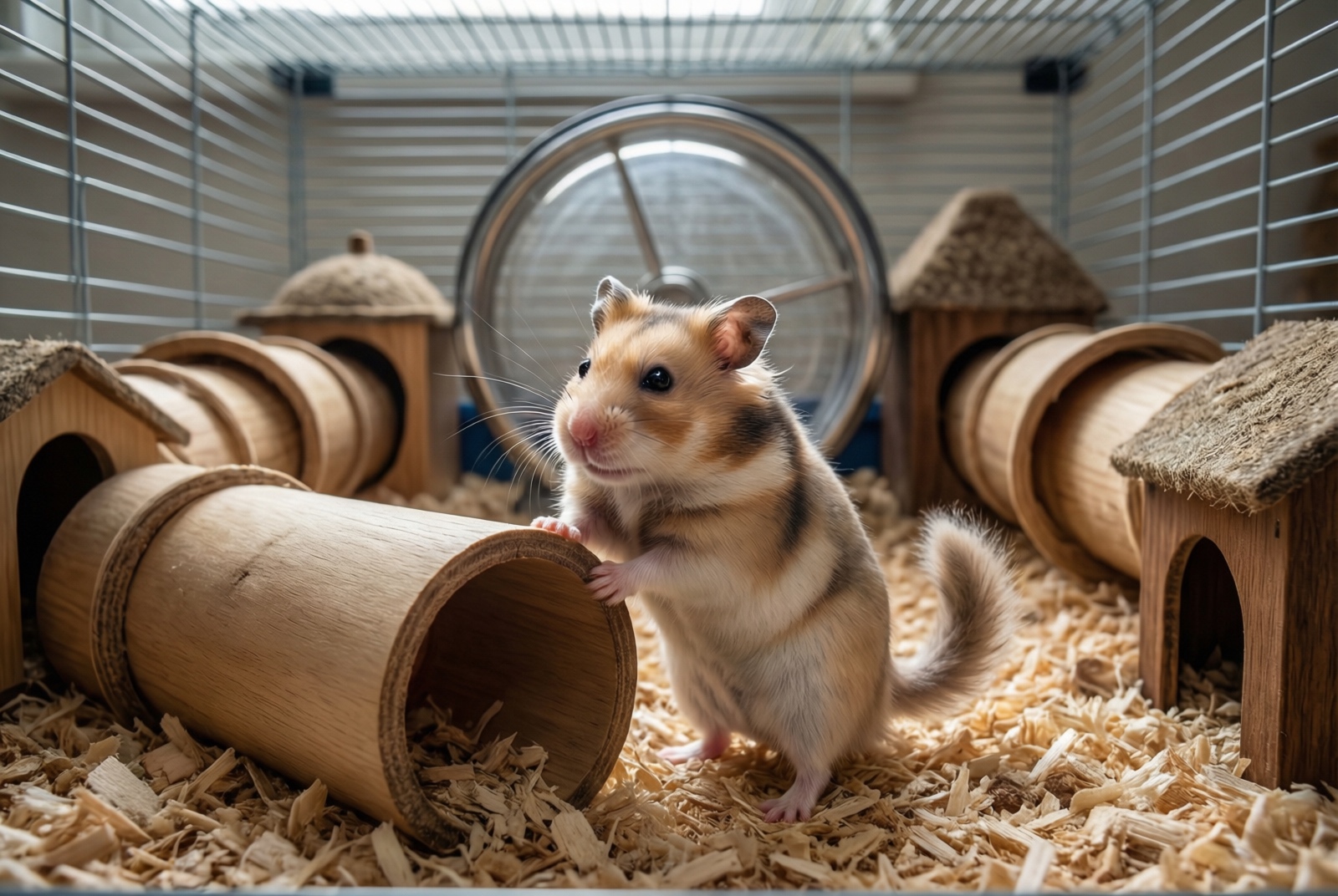
Choosing the best hamster cage is the most important decision you will make for your hamster. The cage determines everything — how much your hamster can run, dig, and explore, whether it stays healthy or develops stress behaviors, and whether you will deal with constant escape attempts or a content, active pet.
After testing and reviewing dozens of cages and analyzing thousands of owner reports, these are the nine best hamster cage 2026 options available. I have included a best hamster cage option for every budget — whether you are looking for the best hamster cage for beginners or an upgrade, with honest assessments of what each one does well and where it falls short.
For the best large hamster cage experience, the absolute minimum floor space is 450 square inches for dwarf hamsters and 600 square inches for Syrian hamsters. Floor space matters far more than height when choosing the best hamster cage — hamsters are ground-dwellers that run and burrow, not climbers. For a detailed best hamster cage setup guide and these requirements, see our proper hamster enclosure guide.
Quick Comparison: 9 Best Hamster Cages
| Cage | Type | Price | Best For | Buy |
|---|---|---|---|---|
| Prolee Chewproof 32” | Acrylic | $129.99 | Best overall | Link |
| Ferplast Combi 2 | Plastic | $139.98 | Runner-up, modular | Link |
| BUCATSTATE Metal 2.0 | Wire/Metal | $145.99 | Syrian hamsters | Link |
| Savic Spelos | Plastic | $45.95 | Dwarf hamsters | Link |
| 20 Planes Enclosed | Wire | $37.99 | Budget under $50 | Link |
| 2-Level Habitat | Wire | $40.68 | Budget with accessories | Link |
| OIIBO Glass Tank | Glass | $74.60 | Burrowing | Link |
| 32” Wooden Chewproof | Wooden | $103.49 | Aesthetic/furniture | Link |
| 5-Floor Mansion | Wire | $57.68 | Multi-level climbing | Link |
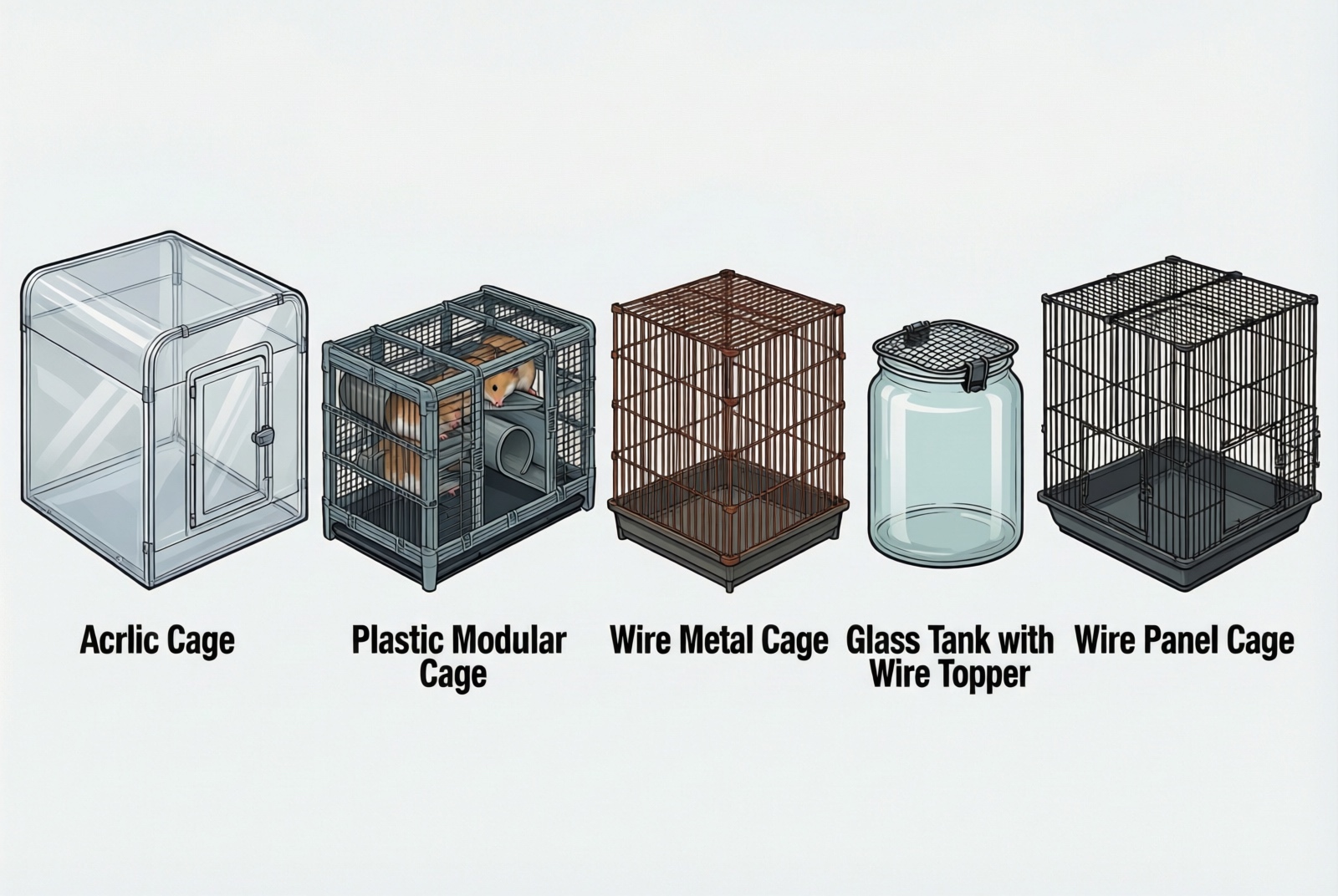
Best Overall: Best Hamster Cage Picks
Best Overall: Prolee Chewproof 32” Acrylic Cage
The Prolee Chewproof 32” Hamster Cage is the best all-around hamster cage for most owners. At $129.99 with a rating backed by 🔥, it offers a chew-proof acrylic design that works for both Syrian and dwarf hamsters. The openable top makes cleaning and decorating easy, and the waterproof base supports deep bedding for burrowing.
I have recommended this cage to several first-time hamster owners and the feedback has been consistently positive. In my experience, the Prolee is the safest bet for first-time owners because it avoids the two most common problems — bar spacing and plastic chewing — in a single design. The acrylic panels give a clear view of your hamster without the bar spacing concerns of wire cages. One thing to note: a few owners report that the front acrylic panel can be less secure than expected — I would check the latches periodically and consider adding a secondary lock if you have other pets in the home. Some owners also recommend adding extra ventilation holes, as the sealed design can limit airflow.
For cage setup tips once you have your enclosure, see our hamster cage setup guide. For another unique cage option, our dinosaur hamster cage guide covers a fun alternative design.
Runner-up: Ferplast Combi 2
The Ferplast Combi 2 is the most reviewed hamster cage on the market with a rating backed by 🔥. Its standout feature is the modular design — you can connect multiple Combi units together to create a larger habitat, and the external exercise wheel is a clever space saver.
However, I need to be honest about its limitations. The Combi 2 is too small as a standalone cage for Syrian hamsters. I have seen Syrians in Combi 2 cages and they look cramped — they cannot even stretch out properly. Multiple owners have reported this. It works well as a modular add-on for dwarf hamsters or as part of a connected system, but on its own it does not meet the 450 square inch minimum. If you choose this cage, plan to connect at least two units or use it as a supplement to a larger primary enclosure.
Best Hamster Cage for Syrian Hamsters
Syrian hamsters are the largest common pet hamster species, reaching 6 to 7 inches in length. They need more floor space than dwarfs — minimum 600 square inches — and they are stronger chewers that can dismantle flimsy cages. I have found that Syrians will chew through thin plastic overnight, so metal or acrylic construction is essential.
Best for Syrians: BUCATSTATE Metal 2.0
The BUCATSTATE Metal 2.0 is the best cage specifically designed for Syrian hamsters. At $145.99 with a rating backed by 🔥, it features a fully chew-proof metal frame — no plastic for your Syrian to destroy. The front-access door makes feeding and handling convenient, and the large interior fits multiple accessories including two wheels and several hides.
I have seen this cage described as “surprisingly easy to assemble” by some owners and as an “assembly nightmare” by others. The inconsistency suggests quality control issues with the instructions and hole alignment. If you are comfortable with basic DIY assembly, this is a minor inconvenience for a cage that otherwise delivers excellent space and durability. The Prolee Chewproof from the previous section is also a strong choice for Syrians if you prefer an acrylic design over wire.
For Syrian-specific cage size requirements, see our Syrian hamster cage size guide.
Best Hamster Cage for Dwarf Hamsters
Dwarf hamsters — including Winter Whites, Campbell’s, Chinese, and Roborovski — are smaller (3 to 4 inches) but still need a minimum of 450 square inches. The critical difference is bar spacing: dwarfs can squeeze through gaps larger than 0.5 inches, so wire cages must be checked carefully. From my experience working with dwarf hamsters, bar spacing is the number one thing people overlook — I have heard too many stories of escaped dwarfs from cages that looked perfectly fine.
Best for Dwarfs: Savic Spelos
The Savic Spelos at $45.95 was designed specifically for dwarf hamsters and mice. It includes a connecting tube for enrichment and the compact size matches dwarf space needs well. However, with a rating and only 🔥, it has some real limitations — the plastic is thin and can crack during assembly, and several owners report it being too small even for dwarf hamsters by current welfare standards.
I would recommend the Savic Spelos primarily as an add-on module to a larger enclosure rather than a standalone cage. For a dwarf-specific deep dive, see our dwarf hamster cage guide.
Best Budget: Best Hamster Cage Under $50
Budget cages come with a significant caveat: most of them fall below the minimum size requirements recommended by the RSPCA and HamsterWelfare. I am including these options because I know many first-time owners start with a limited budget, but I want to be transparent — these are temporary or supplemental solutions, not long-term homes.
Best Budget: 20 Planes Enclosed Cage
The 20 Planes Enclosed Cage at $37.99 is the best quality option under $50. Its 20-panel design creates customizable enclosed space, and the waterproof liner makes cleaning easier. With a rating backed by 🔥, it is decent for the price. The modular panels let you configure the shape to fit your space — you can make it wider, longer, or even add height. The main downside is that once assembled, it is difficult to move and hard to reach into far corners for cleaning. Some owners also report receiving panels with chipped paint or bent connectors, so check the pieces carefully during assembly.
Budget Runner-up: 2-Level Habitat
The 2-Level Habitat at $40.68 is a widely purchased budget cage backed by 🔥, though its rating reflects some real quality issues. It comes with everything you need to get started — wheel, water bottle, food dish, and platforms — which is appealing for beginners. The problems: flimsy construction, poor instructions, and some owners report escape risk at the connection points.
A better budget alternative: a DIY bin cage made from a 110+ quart storage bin costs $15 to $25, exceeds minimum size requirements, and is genuinely chew-proof. I have helped friends set up bin cages and they consistently provide more usable floor space than any commercial cage under $50. The process takes about an hour with basic tools — a drill, wire cutters, and zip ties. See our DIY bin cage guide for step-by-step instructions.
One important thing I want to emphasize: a budget cage is not a permanent solution. If you are starting with a cage under $50, plan to upgrade within a few months. A hamster in a cage that is too small will develop stress behaviors — bar biting, pacing, and excessive climbing — that do not resolve until the space problem is fixed. The sooner you can provide adequate space, the better off your hamster will be.
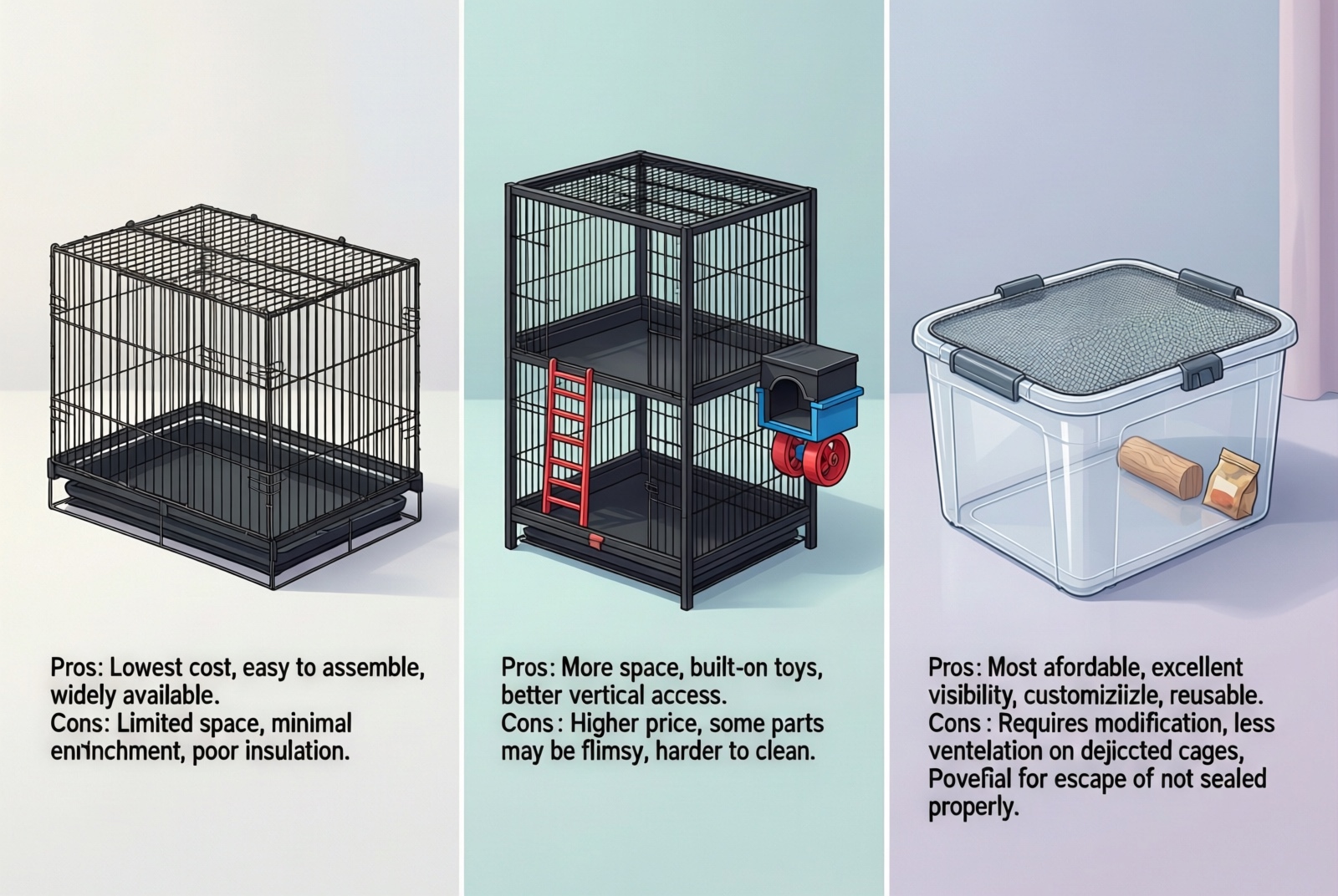
Best Glass & Wooden: Best Hamster Cage Alternatives
Best Glass Tank: OIIBO 3-Tier Glass Cage
The OIIBO 3-Tier Glass Cage at $74.60 is the best glass tank option for hamster owners. The deep glass base allows natural burrowing behavior — you can provide 8 to 12 inches of bedding, which is impossible in most wire cages. The wire topper adds ventilation and climbing space across three tiers. With a rating backed by 🔥, the concept is well-received.
One veterinarian reviewer with 32 years of experience called this “not many products are impressive — this one is,” which carries real weight. The downsides are significant though: it is heavy (33 pounds), the glass can shatter during cleaning if not handled carefully, and some owners report difficulty accessing the hamster for feeding and handling. This is a cage for serious hamster owners who prioritize burrowing over convenience.
Best Wooden Cage: 32” Wooden Chewproof Enclosure
The 32” Wooden Chewproof Enclosure at $103.49 is the newest trend in hamster housing. The 270-degree panoramic acrylic view gives a clear look at your hamster, and the wooden exterior looks like actual furniture rather than a pet cage. The chew-proof design uses bite-resistant wood and acrylic construction.
With only 🔥 and a rating, this is a promising new best wooden hamster cage design and the sample size is small — screw holes not lining up, rough wooden edges needing sanding, and minimal instructions. I would consider this a promising design that needs more time in the market to prove its durability. If aesthetics matter to you and you are comfortable troubleshooting assembly, it is worth considering.
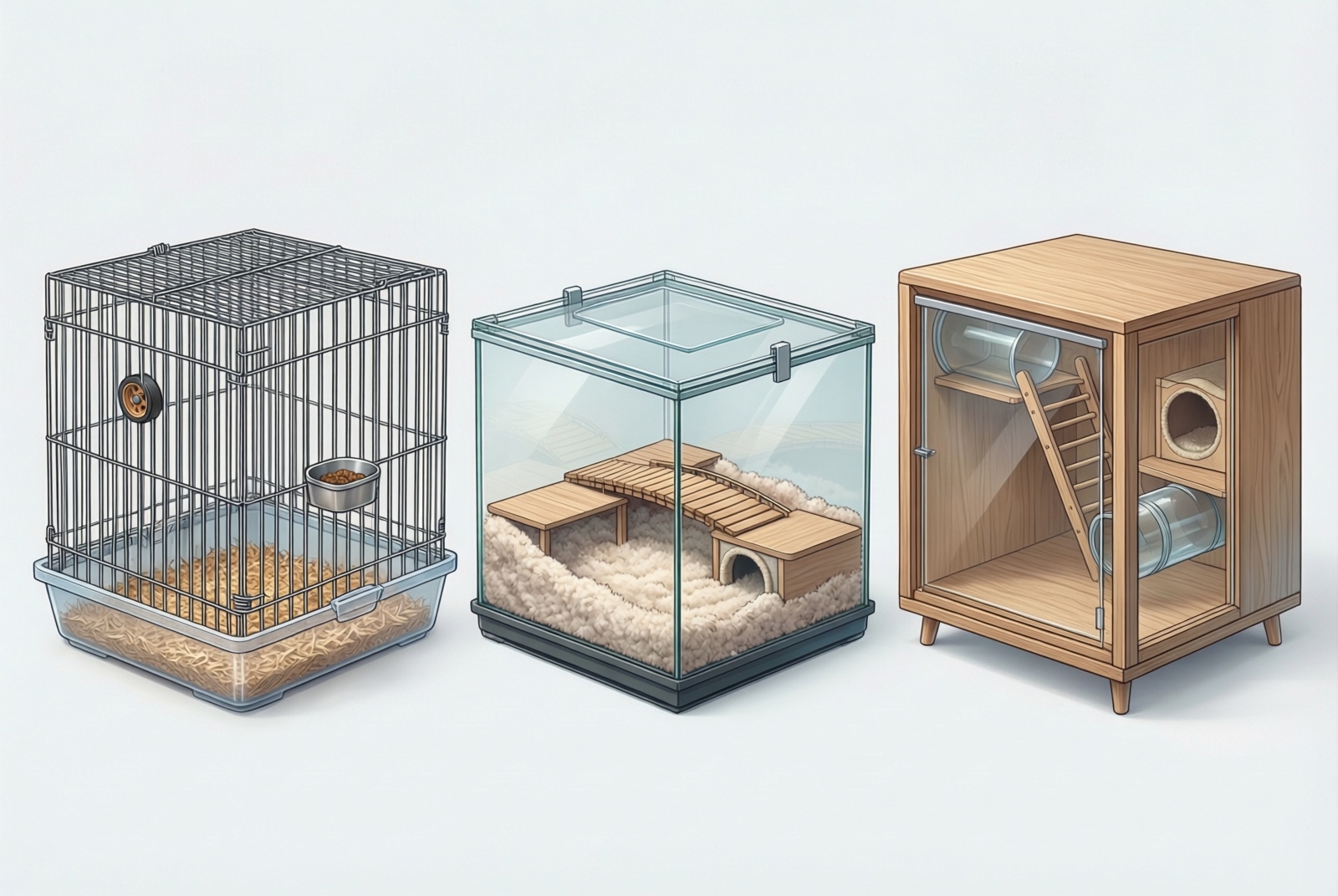
Wire vs Glass vs Wooden: Which Cage Type Is Right for You?
| Feature | Wire Cage | Glass Tank | Wooden Enclosure |
|---|---|---|---|
| Ventilation | Excellent | Moderate | Moderate |
| Bedding depth | Limited | Deep (ideal for burrowing) | Deep |
| Bar spacing concern | Yes — must check | None | None |
| Weight | Light | Heavy (30+ lbs) | Medium |
| Price range | $35-$150 | $70-$150 | $100-$200 |
| Chew-proof | Bars only, not plastic | Glass is chew-proof | Wood + acrylic |
| Aesthetic | Industrial/cage-like | Basic/functional | Furniture-like |
| Cleaning | Easy access | Difficult — heavy | Moderate |
| Best for | Budget buyers | Burrowers | Home decor priority |
My personal preference is glass tanks for burrowing species — there is nothing quite like watching a hamster dig a tunnel system in 10 inches of bedding, and glass makes that possible in a way wire cages simply cannot. Wire cages are acceptable if they meet minimum size requirements and have safe bar spacing, but they cannot match the burrowing depth and security of a solid-walled enclosure.
For owners who want maximum vertical space on a budget, the Large 5-Floor Hamster Mansion at $57.68 offers five levels of climbing space with safety rails on the platforms. Backed by 🔥, it is extremely popular. However, at, the reviews reveal consistent quality issues — floors that collapse under weight, gaps at connection points that allow escapes, and instructions that are essentially useless. I would only consider this for dwarf hamsters in same-sex pairs who actively enjoy climbing. I would skip multi-level cages for Syrian hamsters — they can fall from the upper levels and get injured, and Syrians are not natural climbers anyway.
For more on maximizing your cage setup, see our cage enrichment guide and proper enclosure guide. To keep an eye on your hamster’s nighttime activity, a pet camera is a worthwhile addition to any cage setup.
Best Hamster Cage Size Requirements by Breed
The right cage size depends on which breed you are keeping. Here are the specific requirements. For the full breakdown of proper wheel diameter by breed, see our hamster wheel size chart.
| Breed | Min Floor Space | Min Dimensions | Bar Spacing | Wheel Size |
|---|---|---|---|---|
| Syrian | 600 sq in | 36” x 18” | 0.7” or less | 8.5-10” |
| Winter White / Campbell’s | 450 sq in | 30” x 15” | 0.5” or less | 6.5-7” |
| Chinese | 450 sq in | 30” x 15” | 0.5” or less | 7-8” |
| Roborovski | 450 sq in | 30” x 15” | 0.4” or less | 6-6.5” |
Floor space matters far more than height. A tall, narrow cage does not compensate for insufficient floor area. Hamsters run along the ground in the wild and dig horizontal burrow systems — vertical space is largely unused except for a thin layer of bedding. Height should be at least 12 inches to accommodate 6 or more inches of bedding for burrowing, but beyond that, additional height adds little value.
When measuring cage size, count continuous, unbroken floor space. Multi-level cages with tubes and platforms do not count the upper levels toward the floor space minimum. A cage with 300 square inches at the base and 200 square inches of shelf space does not meet the 450 square inch requirement — only the base counts. I have seen cages marketed as “500 square inches” that include shelf space in the calculation, which is misleading.
The reason floor space is so important comes down to hamster biology. In the wild, Syrian hamsters cover several miles of ground per night in their foraging territory. They dig horizontal burrow systems that extend three feet or more. They do not climb trees or scale vertical surfaces. A tall cage with multiple platforms does not replicate their natural environment — a wide, low cage with deep bedding does.
A common question is whether two hamsters can share a cage. Syrian hamsters must always live alone — they are strictly solitary and will fight, often fatally, if housed together. Some dwarf species can coexist in same-sex pairs if introduced young, but even this carries risk and requires a backup plan to separate if fighting occurs. When in doubt, house separately.
For breed-specific cage size details, see our Syrian hamster cage size guide and dwarf hamster cage guide.
Best Hamster Cage: FAQ
What is the best cage for a Syrian hamster?
The BUCATSTATE Metal 2.0 ($145.99) is the best cage specifically for Syrian hamsters — it is fully chew-proof, spacious, and has excellent ventilation. The Prolee Chewproof 32” ($129.99) is a strong alternative with an acrylic design. Syrian hamsters need a minimum of 600 square inches of floor space and larger accessories than dwarf hamsters, including a wheel of at least 8.5 inches in diameter — check our hamster wheel size guide for breed-specific recommendations.
What size cage does a hamster need?
Minimum 450 square inches for dwarf hamsters and 600 square inches for Syrian hamsters, based on HamsterWelfare and RSPCA guidelines. Floor space matters more than height. The enclosure should be at least 12 inches tall to accommodate 6 or more inches of bedding for burrowing. Most commercially sold “hamster cages” provide only 200 to 300 square inches, which is below the minimum.
Are wire cages or glass tanks better for hamsters?
For the best glass hamster tank, glass tanks are better for burrowing because they allow deep bedding and have no bar spacing concerns, but they are heavy and harder to clean. Wire cages offer better ventilation and are lighter but bar spacing must be checked carefully. Wooden enclosures combine the aesthetic appeal of furniture with chew-proof construction. For most owners serious about their hamster’s welfare, a glass tank or wooden enclosure is the better long-term choice.
What is the best budget hamster cage?
The 20 Planes Enclosed Cage ($37.99) is the best hamster cage under 50 option, but most budget cages fall below minimum size requirements. A better budget alternative is a DIY bin cage made from a 110+ quart storage bin — it costs $15 to $25, exceeds minimum size, and is genuinely chew-proof. See our bin cage guide for instructions.
Can two hamsters live in the same cage?
Syrian hamsters must always live alone — they are territorial and will fight. Dwarf hamsters (Winter Whites, Campbell’s) can sometimes coexist in same-sex pairs if introduced young, but this carries risk and requires a backup plan. Roborovski hamsters can live in pairs or small groups. If you are unsure, house separately — it is always safer.
How much does a good hamster cage cost?
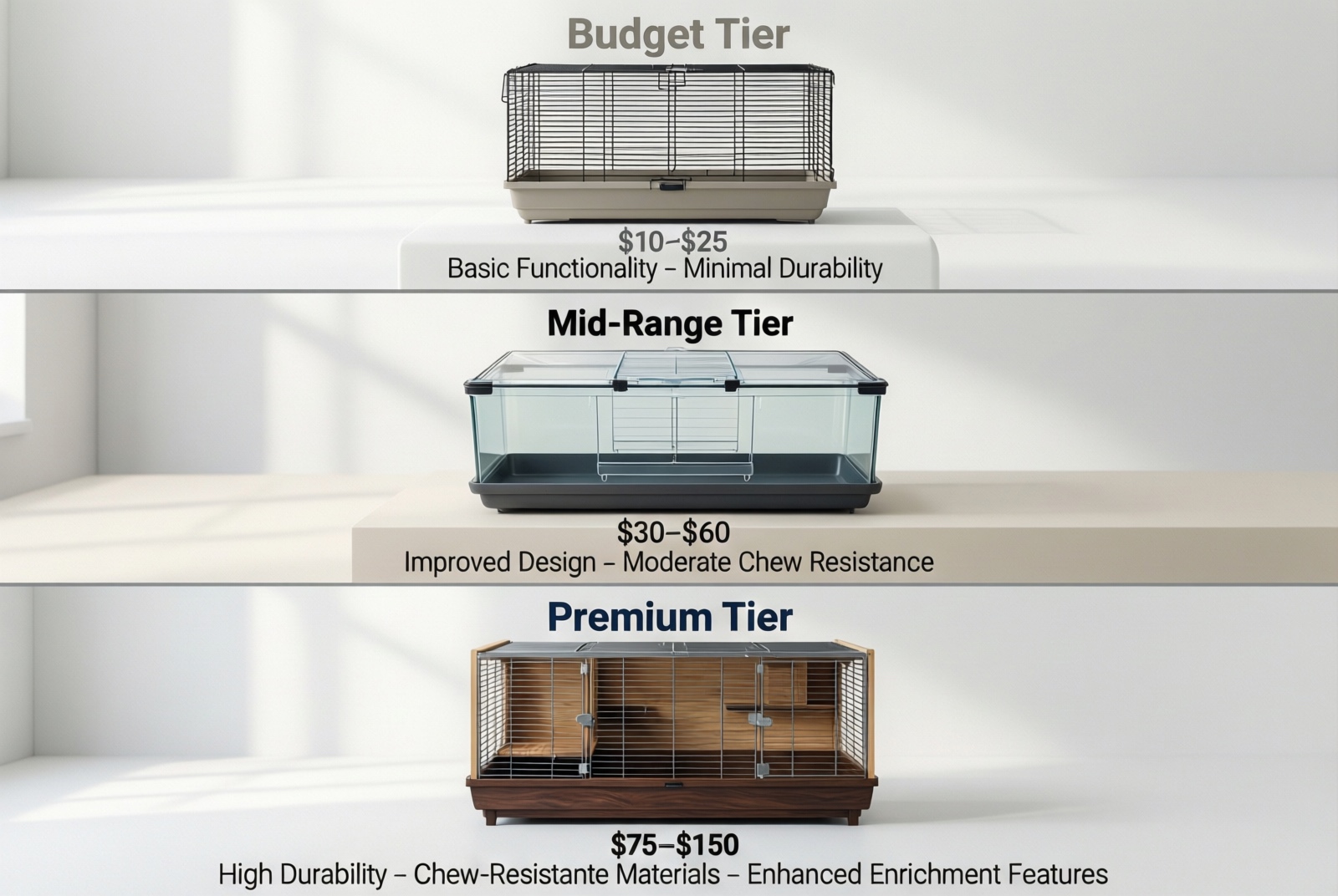
Budget cages ($35-50) are below minimum size requirements and should only be temporary. Mid-range options ($75-130) include decent glass tanks and acrylic cages. Premium enclosures ($130-200) offer large, chew-proof designs. Expect to spend $100 to $150 for a cage that properly meets minimum requirements. Ongoing monthly costs for food, bedding, and toys run $15 to $30. I would recommend spending a bit more upfront rather than replacing a cheap cage in three months. The cage is a one-time investment that will last for years, and your hamster will spend its entire life in it.