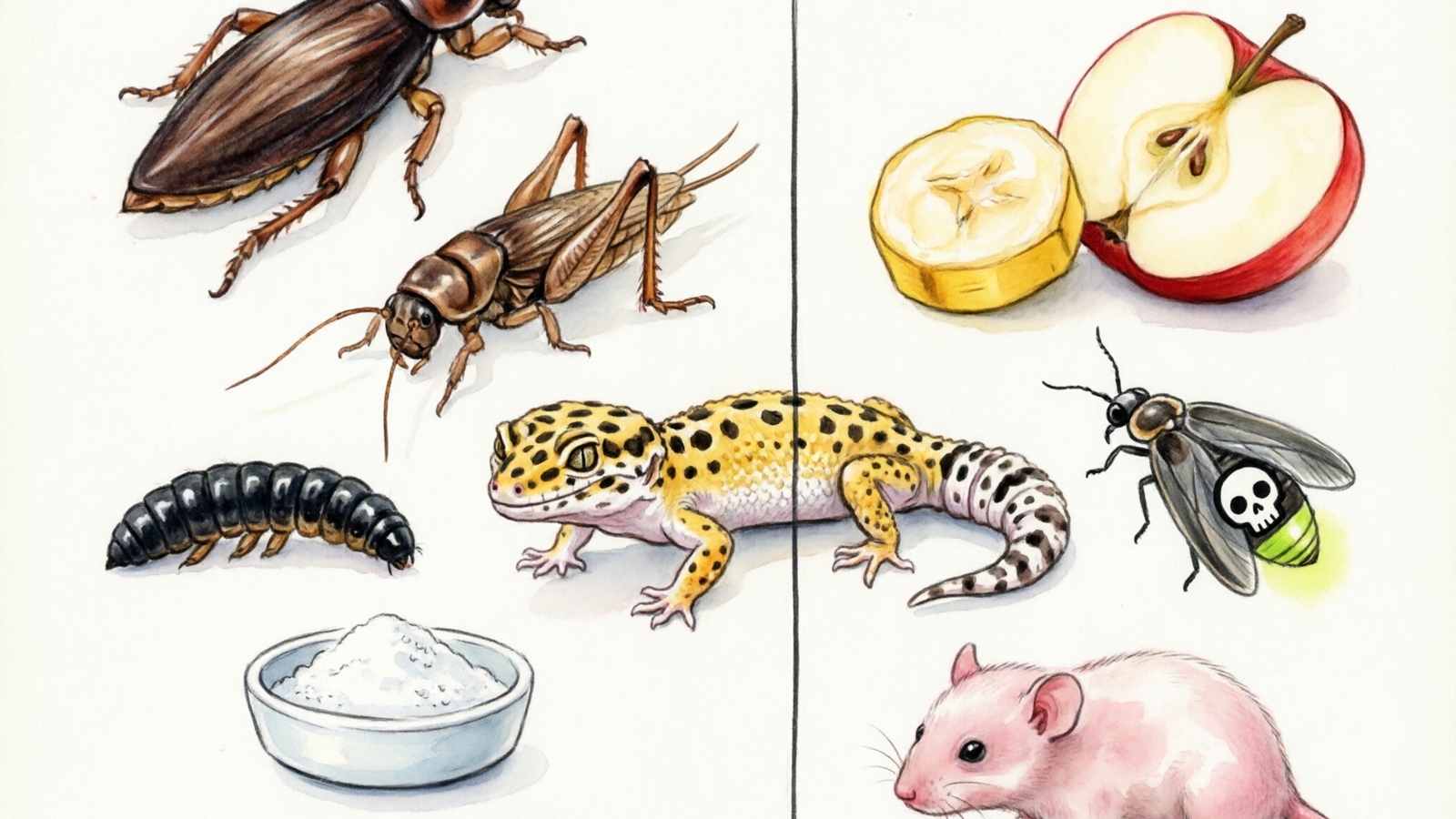
Leopard geckos are strict insectivores — they eat only live insects in the wild and cannot digest fruit, vegetables, or plant matter. The best leopard gecko food staples are Dubia roaches and crickets (high protein, low fat), with mealworms and black soldier fly larvae as alternatives. Waxworms and hornworms are treats only (high fat). Every leopard gecko food feeding must include calcium supplementation — without it, geckos develop metabolic bone disease (MBD), which causes weak, bent bones. Feed hatchlings and juveniles daily, adults every 2-3 days. Commercial leopard gecko food gel diets exist but many geckos refuse them — live leopard gecko food insects remain the gold standard. Never feed fireflies (toxic), wild-caught insects (pesticides/parasites), or pinkie mice (unnecessary).
What Do Leopard Geckos Eat?
Obligate insectivore: An animal whose digestive system is exclusively adapted to process insect protein, unable to derive nutrition from plant matter, fruit, or vertebrate prey. According to the Association of Reptilian and Amphibian Veterinarians (ARAV), leopard geckos (Eublepharis macularius) are strict obligate insectivores — their short gastrointestinal tract lacks the enzymes (cellulase, amylase) and gut flora necessary to break down plant carbohydrates. The ARAV notes that feeding plant matter to leopard geckos provides zero nutritional value and can cause gastrointestinal impaction, as undigested plant fiber accumulates in the tract. A nutritionally complete captive diet requires live feeder insects supplemented with calcium and vitamin D3 to prevent metabolic bone disease, the most common preventable nutritional disorder in insectivorous reptiles.
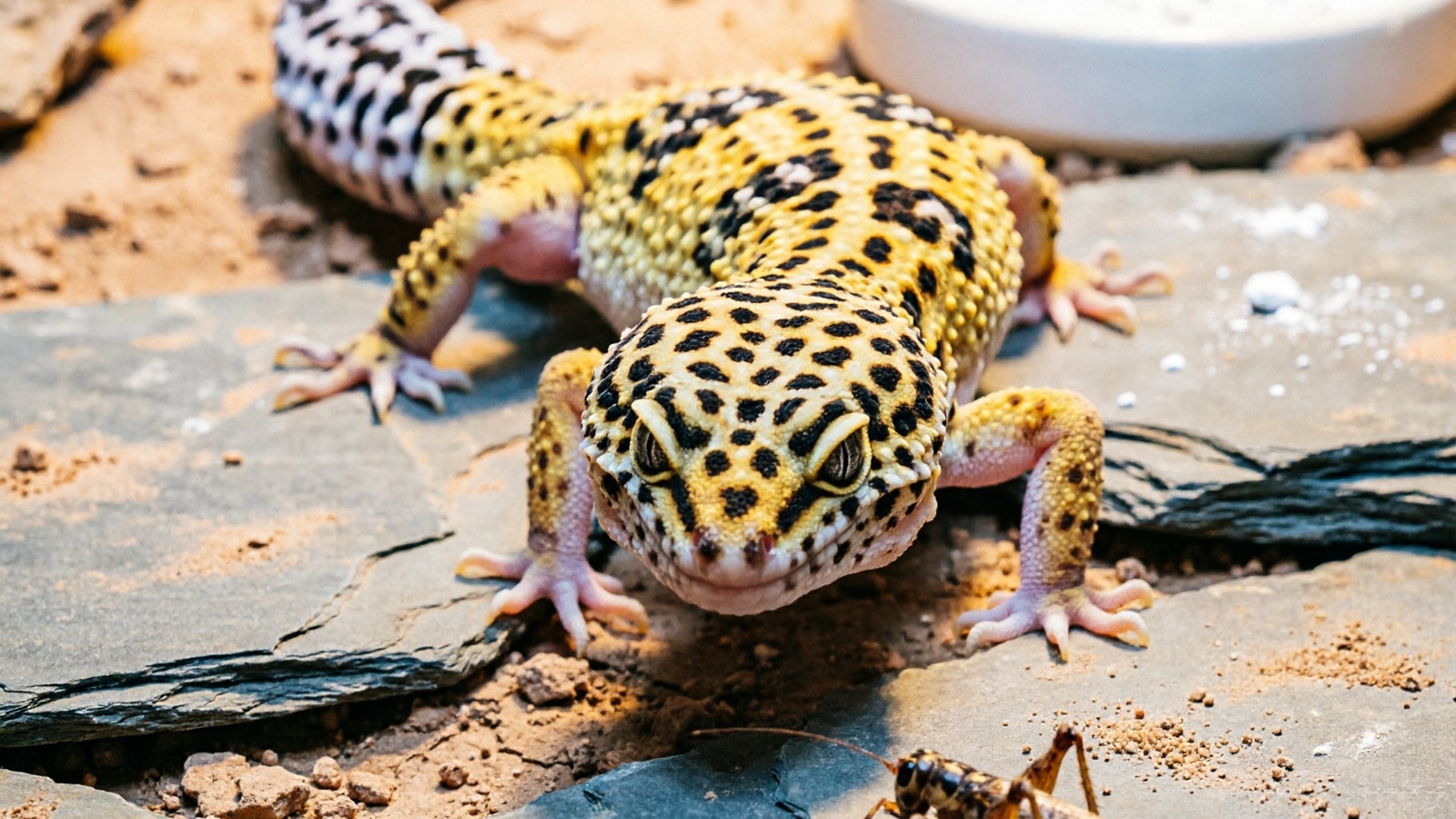
Leopard geckos (Eublepharis macularius) are obligate insectivores, meaning their digestive system is adapted exclusively to process insect protein. Unlike bearded dragons or crested geckos, they cannot digest plant matter, fruit, or vegetables. Their short digestive tract and lack of plant-digesting enzymes make plant foods useless at best and harmful at worst.
In the wild, leopard geckos inhabit arid and semi-arid regions of Afghanistan, Pakistan, India, and Iran. They are nocturnal hunters that ambush crickets, beetles, spiders, grasshoppers, termites, and other small invertebrates near rocky outcrops and burrow entrances.
A complete leopard gecko food diet consists of live feeder insects plus calcium and vitamin supplements. No fruit, no vegetables, no plant matter, no pinkie mice.
Common misconception: Some pet stores sell “leopard gecko food pellets” or “gecko fruit mixes.” These are formulated for other gecko species and are not proper leopard gecko food (crested geckos, day geckos) and should not be fed to leopard geckos. For a complete overview of the species and its natural history, see our leopard gecko species guide.
Best Feeder Insects for Leopard Geckos
Not all insects are equal when it comes to leopard gecko food nutrition. The table below compares the seven most common leopard gecko food options by their macronutrient profile and role in a leopard gecko’s diet.
| Insect | Protein | Fat | Moisture | Role | How Often |
|---|---|---|---|---|---|
| Dubia roaches | ~35% | ~6% | ~61% | Best staple | 2-4x/week |
| Crickets | ~20% | ~5% | ~75% | Staple | 2-3x/week |
| Black soldier fly larvae (BSFL) | ~17% | ~14% | ~61% | Staple | 2-3x/week |
| Mealworms | ~19% | ~13% | ~62% | Secondary staple | 1-2x/week |
| Phoenix worms (Calci worms) | ~17% | ~14% | ~61% | Good variety | 1-2x/week |
| Hornworms | ~9% | ~3% | ~85% | Treat | 1-2x/week |
| Waxworms | ~14% | ~25% | ~59% | Treat only | 1x/week max |
Dubia roaches are the best staple leopard gecko food feeder — highest protein (~35%), lowest fat (6%), easy to gut-load, and they cannot climb smooth surfaces. 100 Extra Small Live Dubia Roaches ($22) — ships with a heat pack for cold weather.
Easy to breed at home, which reduces long-term cost. Be aware of occasional shipping issues (DOA, ant contamination reported by some buyers).
Crickets are a solid leopard gecko food staple that encourages natural hunting behavior. The main drawbacks: they can bite sleeping geckos if left overnight, they are noisy, and they escape easily. Never leave uneaten crickets in the enclosure.
Black soldier fly larvae (BSFL) are naturally high in calcium, making them excellent leopard gecko food, which means they do not need calcium dusting as often. Excellent for growing juveniles. Phoenix worms are the same species sold under a different name.
Mealworms are convenient leopard gecko food but higher in fat and have harder chitin than roaches or crickets. Feed in a dish — they burrow into loose substrate and become impossible for the gecko to find. Loose substrate plus burrowing mealworms creates an impaction risk. See our leopard gecko substrate guide for safe substrate options.
Hornworms are 85% moisture, making them excellent leopard gecko food for dehydrated geckos. Low protein, so they are a hydration treat rather than a nutritional staple.
Waxworms are the “junk food” of leopard gecko food options at 25% fat. Geckos can become addicted and refuse other food after regular waxworm exposure. Use only for underweight geckos that need to gain weight, maximum once per week.
Prey size rule: insect length should not exceed the distance between the gecko’s eyes. This prevents choking and impaction.
Can Leopard Geckos Eat Fruit? (And What NOT to Feed)
No. Leopard geckos cannot eat fruit — this is not leopard gecko food. They are strict insectivores. Their digestive system lacks cellulase and amylase — the enzymes needed to break down plant matter. Fruit causes digestive impaction, diarrhea, and gut flora disruption.
| Food | Why Dangerous |
|---|---|
| All fruit (banana, apple, berries) | Cannot digest — causes impaction and diarrhea |
| All vegetables | Same — undigestible cellulose |
| Fireflies / lightning bugs | Lethally toxic — contain lucibufagins (cardiotoxins) |
| Wild-caught insects | Pesticides, parasites, disease risk |
| Pinkie mice | Too large, too fatty, not part of natural diet |
| Processed human food | Salt, preservatives, seasonings — all harmful |
| Dog or cat food | Wrong protein profile, not insect-based |
| Avocado | Contains persin — toxic to reptiles |
Firefly warning is the most critical safety item on this list. Fireflies contain lucibufagins, potent cardiotoxins identified in Photinus species (Eisner et al., 1978). Experienced keepers mention this in forums, but it is rarely highlighted in beginner care sheets. A single firefly can kill a leopard gecko within hours. If your gecko accidentally ingests fruit, monitor for impaction signs (loss of appetite, lethargy, abnormal poop) and consult a vet if symptoms persist beyond 48 hours.
Best Leopard Gecko Food — Insects, Diets & Supplements
Commercial Leopard Gecko Food Diets
Commercial leopard gecko food gel diets offer convenience but have a significant acceptance problem. Most leopard geckos prefer live insects and will refuse gel food outright.
| Product | Price | Type | Acceptance Rate | Best For |
|---|---|---|---|---|
| Hikari LeopaGel 2.11oz | ~$13 | — | ~50-60% | Convenient backup for geckos that accept gel |
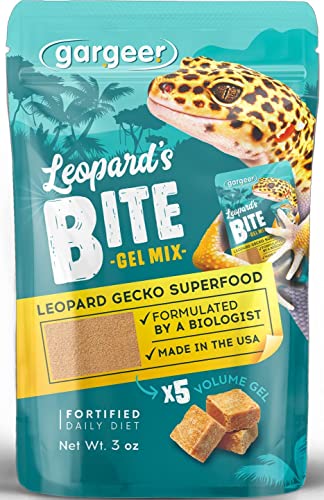
| Gargeer Complete Gel 3oz | ~$17 | — | ~30-50% | Sick geckos — can be syringe-fed |
| Repashy Grub Pie 6oz | ~$20 | — | ~40-60% | Recovery feeding, underweight geckos |
Hikari LeopaGel (~$13) — ready-to-use with no mixing required.
Many geckos eat it readily, but strong odor and a known package swelling issue are drawbacks. Keep refrigerated after opening.
Gargeer Complete Gel Diet (~$17) — the only commercial diet that can be syringe-fed to sick or anorexic geckos, which is a unique advantage.
Very strong smell during preparation. Low acceptance rate — some keepers report only 3 out of 10 geckos will eat it.
Repashy Grub Pie (~$20) — from a trusted reptile nutrition brand.
Most of these reviews come from axolotl and blue-tongued skink owners rather than leopard gecko keepers, so the leopard gecko-specific acceptance rate may be lower than the overall rating suggests.
Commercial diet verdict: Live leopard gecko food insects remain the gold standard. No gel diet matches the acceptance rate or nutritional completeness of a varied live insect diet. Use commercial leopard gecko food as backup for travel, emergencies, or recovery feeding only.
Dried Feeder Insects
Dried leopard gecko food insects are convenient but nutritionally inferior to gut-loaded live insects. Use as leopard gecko food treats or emergency backup, not as a staple diet.
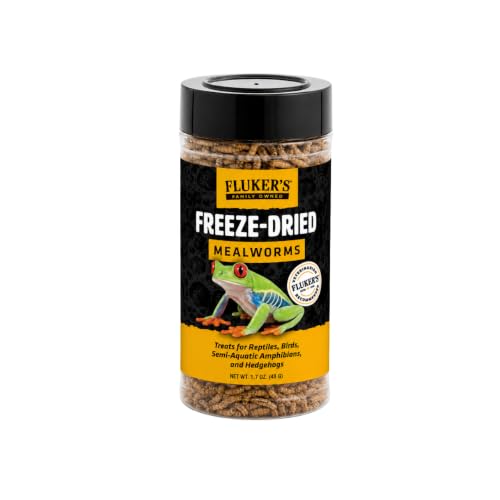
Fluker’s Freeze Dried Mealworms 1.7oz (~$9) — a widely used dried feeder.
Long shelf life and easy to store.
Some powder residue at the bottom of the container.
Many geckos prefer live mealworms over dried.
Fluker’s Freeze Dried Crickets 1.2oz (~$8) — good for adding variety.
No odor, easy storage.
Packaging seal issues reported — check on delivery.
Supplements
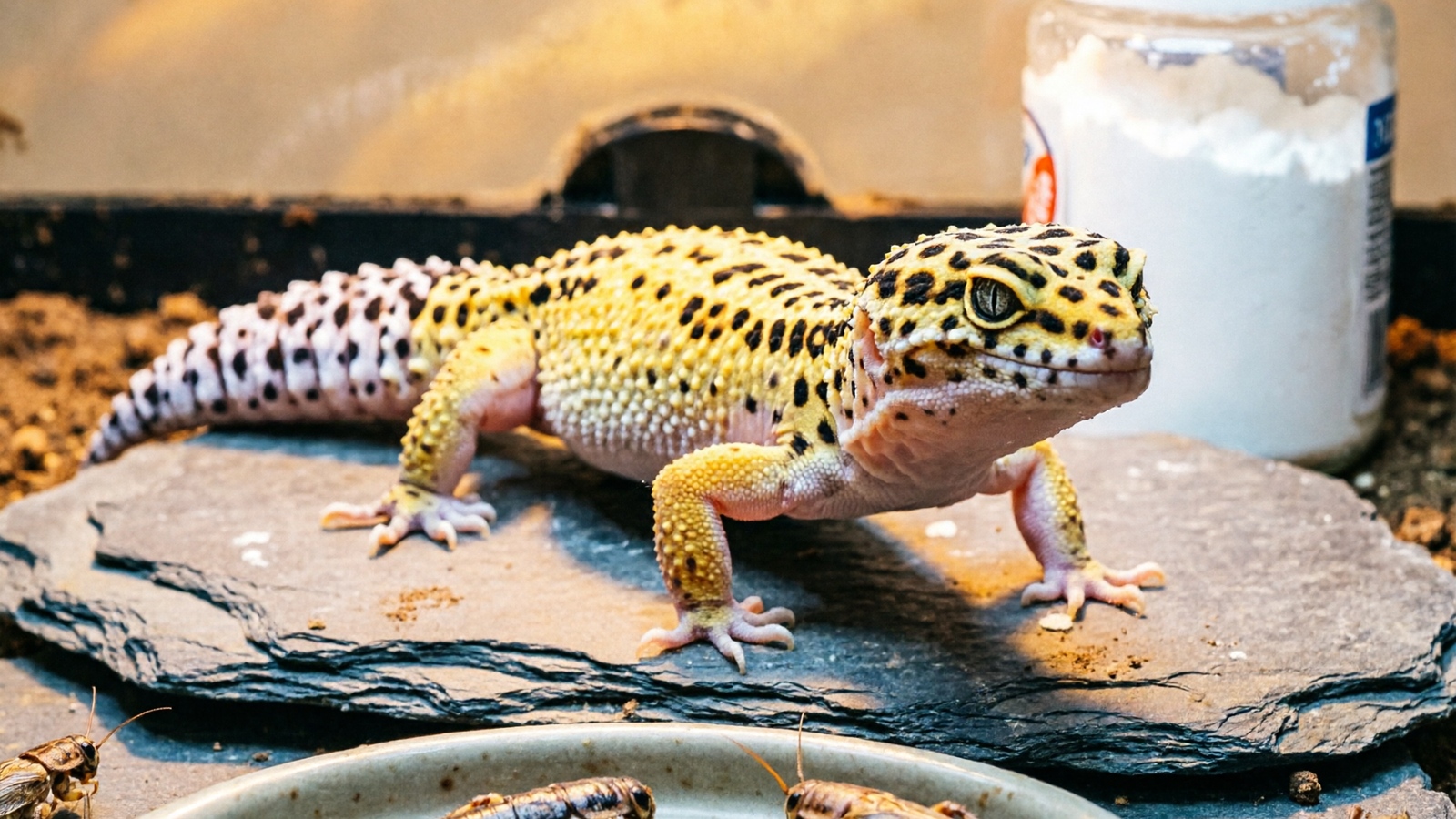
Leopard gecko food supplementation is not optional. Without calcium in their leopard gecko food, leopard geckos develop metabolic bone disease (MBD), which causes soft, bent bones and can be fatal.
| Product | Price | Type | Key Feature |
|---|---|---|---|
| Zoo Med Calcium with D3 | ~$9 | — | Calcium + D3 |
| Repashy Calcium Plus | ~$16 | — | All-in-one |
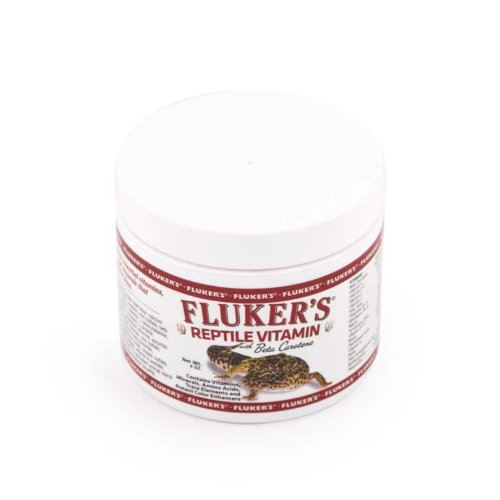
| Fluker’s Repta Vitamin | ~$9 | — | Multivitamin |
| Zoo Med Reptivite | ~$10 | — | Multivitamin |
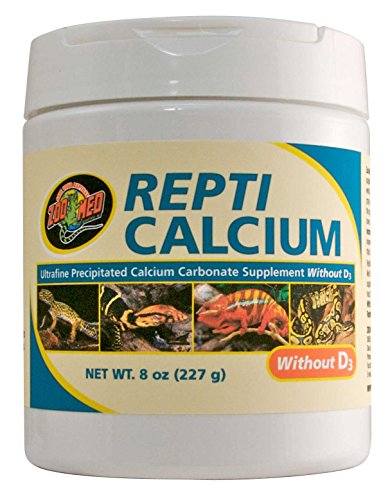
Zoo Med Reptile Calcium with Vitamin D3 (~$9) — the most widely used calcium supplement.
Fine powder adheres well to feeder insects. Prone to clumping in humid environments. An 8oz jar lasts months for a single gecko.
Repashy Calcium Plus (~$16) — an all-in-one supplement containing calcium, vitamins, and minerals.
Does not contain D3, making it safer for setups with UVB lighting. Recommended by reptile veterinarians. More expensive per ounce than standalone calcium.
Critical supplement safety issue — beta carotene vs preformed vitamin A:
Fluker’s Repta Vitamin (~$9) uses beta carotene as its vitamin A source.
Leopard geckos cannot efficiently convert beta carotene to active vitamin A (retinol).
Chronic deficiency leads to eye problems, poor shedding, and weakened immune function.
Even Fluker’s own customer reviews note this: “This is a pretty outdated multivitamin… it does not have true vitamin A, just beta carotene, which leopard geckos cannot convert.”
Zoo Med Reptivite (~$10) contains preformed vitamin A (retinol) — the correct form that leopard geckos can actually use.
This is the better standalone multivitamin choice.
Supplement schedule: Calcium with D3 every feeding (no UVB) or 2-3x/week (with UVB). Multivitamin (Reptivite) 1x/week. Leave a small dish of plain calcium (no D3) in the enclosure for self-regulation.
Leopard Gecko Feeding Schedule by Age
The leopard gecko diet chart below outlines feeding frequency and supplement needs by age group.
Leopard gecko food frequency and portion size change as your gecko grows. Juveniles need daily meals for rapid growth, while adults thrive on every-other-day or every-third-day feeding.
| Age | Frequency | Insects/Meal | Calcium D3 | Multivitamin |
|---|---|---|---|---|
| Hatchling (0-2 months) | Daily | 4-6 small | 4-5x/week | 1x/week |
| Juvenile (2-6 months) | Daily | 5-8 medium | 3-4x/week | 1x/week |
| Sub-adult (6-12 months) | Every other day | 6-8 medium | 2-3x/week | 1x/week |
| Adult (1-5 years) | Every 2-3 days | 6-10 large | 2x/week | 1x/week |
| Senior (5+ years) | Every 3 days | 5-8 adjusted | 2x/week | 1x/week |
Feed as many appropriately-sized insects as the gecko eagerly eats in 10-15 minutes. Remove uneaten insects after that window.
A healthy adult leopard gecko weighs 45-65 grams. Overweight indicators: tail wider than the head, fat rolls above the legs. Underweight: visible hip bones, thin tail.
Sample weekly leopard gecko food meal plan for an adult:
| Day | Food | Quantity | Supplement |
|---|---|---|---|
| Monday | Dubia roaches | 6-8 | Calcium with D3 |
| Tuesday | BSFL | 8-10 | None (naturally calcium-rich) |
| Wednesday | Crickets | 6-8 | Multivitamin (Reptivite) |
| Thursday | Fasting day | — | — |
| Friday | Dubia roaches | 6-8 | Calcium with D3 |
| Saturday | Hornworm (treat) | 1-2 | None |
| Sunday | BSFL + mealworms | 5-6 total | Plain calcium (no D3) |
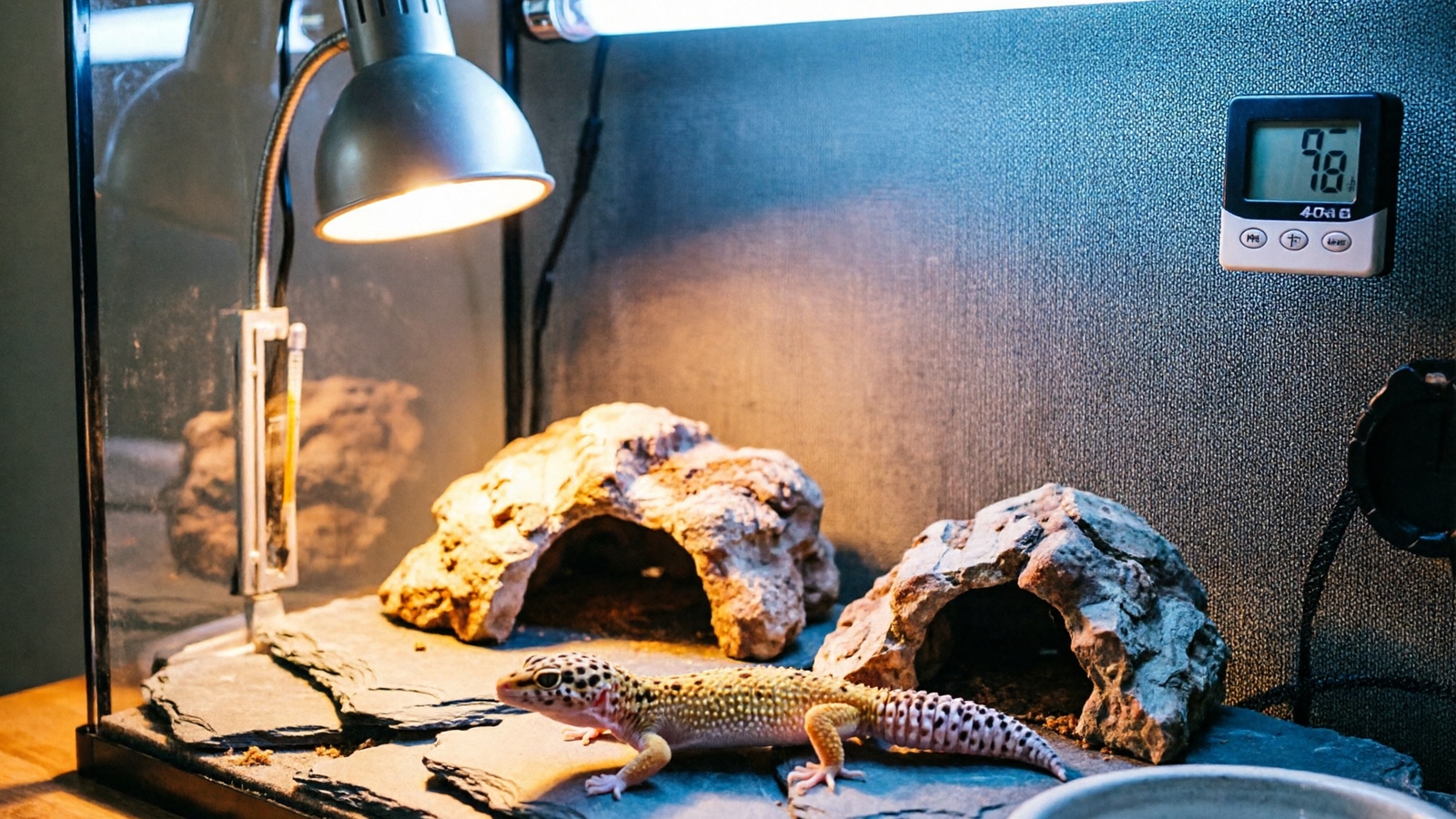
Proper temperature is critical for digestion — geckos cannot process food if the enclosure is too cold. See our reptile habitat setup guide for temperature requirements, and our reptile thermostat guide for reliable temperature control.
How to Gut-Load Feeder Insects
Gut-loading transforms empty-calorie leopard gecko food insects into nutrient delivery vehicles. Un-gut-loaded crickets have minimal nutritional value — “you are what your prey ate.” Gut-loading is not optional for leopard gecko food staple feeders.
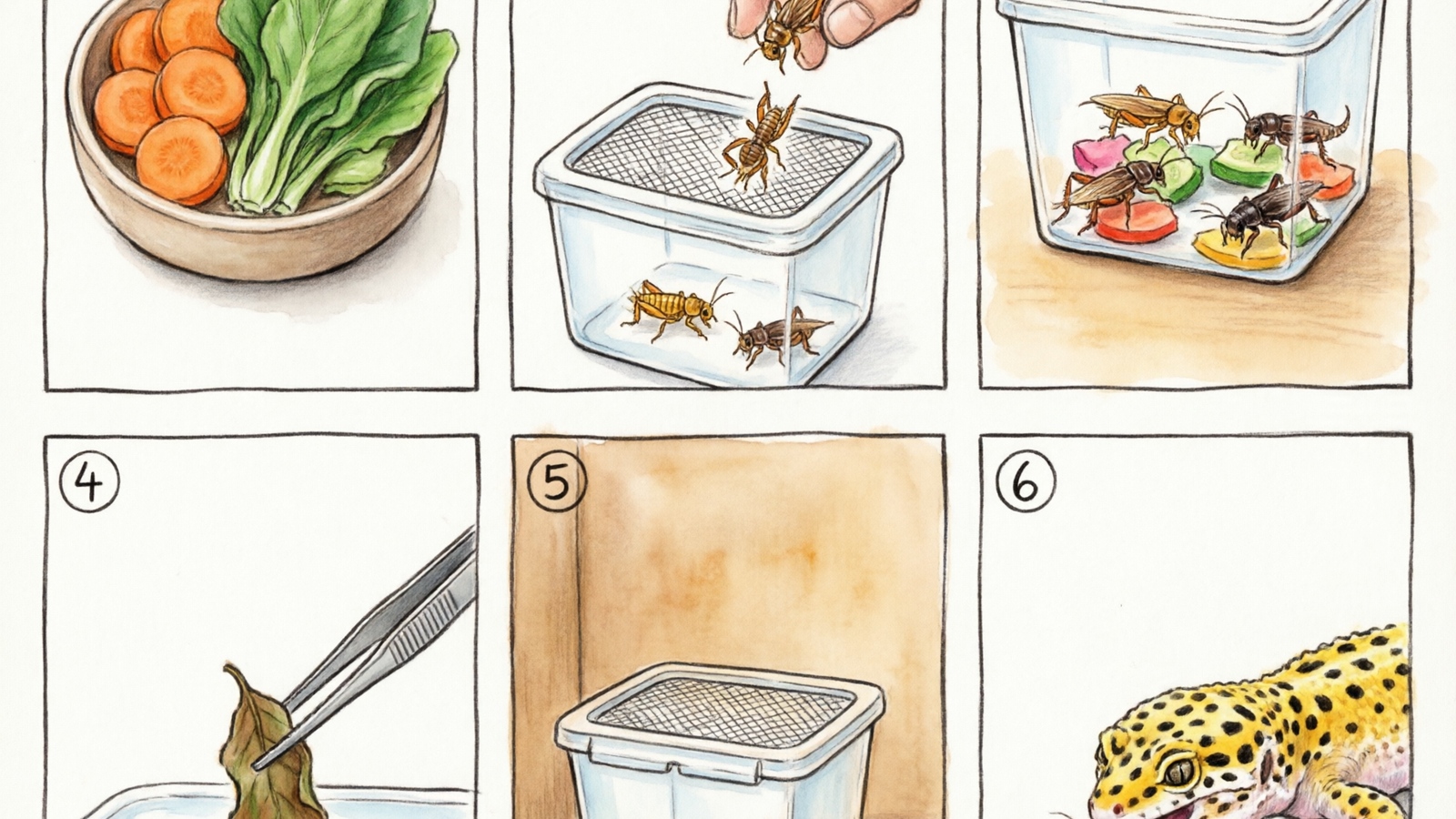
Step 1: Prepare gut-load food 24-48 hours before feeding. Use a mix of dark leafy greens (collard greens, dandelion, kale), orange vegetables (carrots, sweet potato), and whole grains (oats, wheat bran). Commercial gut-load formulas like Repashy Bug Burger or Fluker’s Cricket Quencher also work well.
Step 2: Place insects in a clean, ventilated container. A plastic critter keeper or glass jar with mesh lid works. Do not overcrowd.
Step 3: Offer gut-load food alongside a moisture source. Carrot slices and potato wedges provide both nutrition and hydration without the drowning risk of a water dish.
Step 4: Remove uneaten food after 12 hours. Old food molds quickly and can harm the insects.
Step 5: Keep at room temperature. Most feeder insects (crickets, roaches) thrive at 70-80°F.
Step 6: Feed gut-loaded insects to your gecko within 48 hours. Nutrient content peaks 24-48 hours after feeding and declines after that.
For extra calcium content, offer phosphorus-free calcium powder alongside the gut-load food. The insects will consume it and pass the calcium to your gecko.
Leopard gecko feeding checklist:
- Staple leopard gecko food: Dubia roaches, crickets, or BSFL — varied diet
- Calcium + D3 supplement at every feeding — dust insects lightly
- Gut-load insects 24h before feeding — dark greens, grains, carrots
- Feed in evening — geckos are nocturnal hunters
- Remove uneaten insects after 15–20 minutes — prevent bites
- Fresh water daily — shallow dish, changed every day
- Insect size ≤ space between gecko’s eyes — prevent choking
- Never feed fruit or vegetables — cannot digest plant matter
- Never feed pinkie mice — unnecessary fat, not natural prey
- Never feed wild-caught insects — pesticide/parasite risk
- Never use gecko pellets or fruit mixes — wrong species formulation
- Never feed insects wider than gecko’s head — impaction risk
Frequently Asked Questions
What do leopard geckos eat?
Leopard geckos are strict insectivores — they eat only live insects. The best leopard gecko food staples are Dubia roaches and crickets (high protein, low fat), supplemented with mealworms and black soldier fly larvae.
Waxworms and hornworms are treats only due to high fat content. They cannot eat fruit, vegetables, or plant matter. Every feeding should include calcium supplementation to prevent metabolic bone disease.
How much should you feed a leopard gecko?
Feed as many appropriately-sized insects as your gecko will eat in 10-15 minutes. Hatchlings and juveniles need daily feeding (4-8 small insects).
Adults need feeding every 2-3 days (6-10 medium-large insects).
A healthy adult weighs 45-65 grams — if the tail is wider than the head, you are overfeeding.
Can leopard geckos eat fruit?
No. Leopard geckos are obligate insectivores and cannot digest fruit, vegetables, or any plant matter.
Their digestive system lacks the enzymes needed to break down plant cellulose.
Feeding fruit can cause digestive impaction, diarrhea, and disrupts gut bacteria.
Stick to live feeder insects supplemented with calcium and vitamins.
What is the best food for leopard geckos?
The best leopard gecko food is a varied diet of live, gut-loaded feeder insects — primarily Dubia roaches and crickets as staples, with black soldier fly larvae and mealworms as secondary options. Dust every feeding with calcium powder (with D3 if no UVB) and add a multivitamin once per week. Commercial gel diets are convenient but most geckos prefer live insects — use gels as backup or recovery food only.