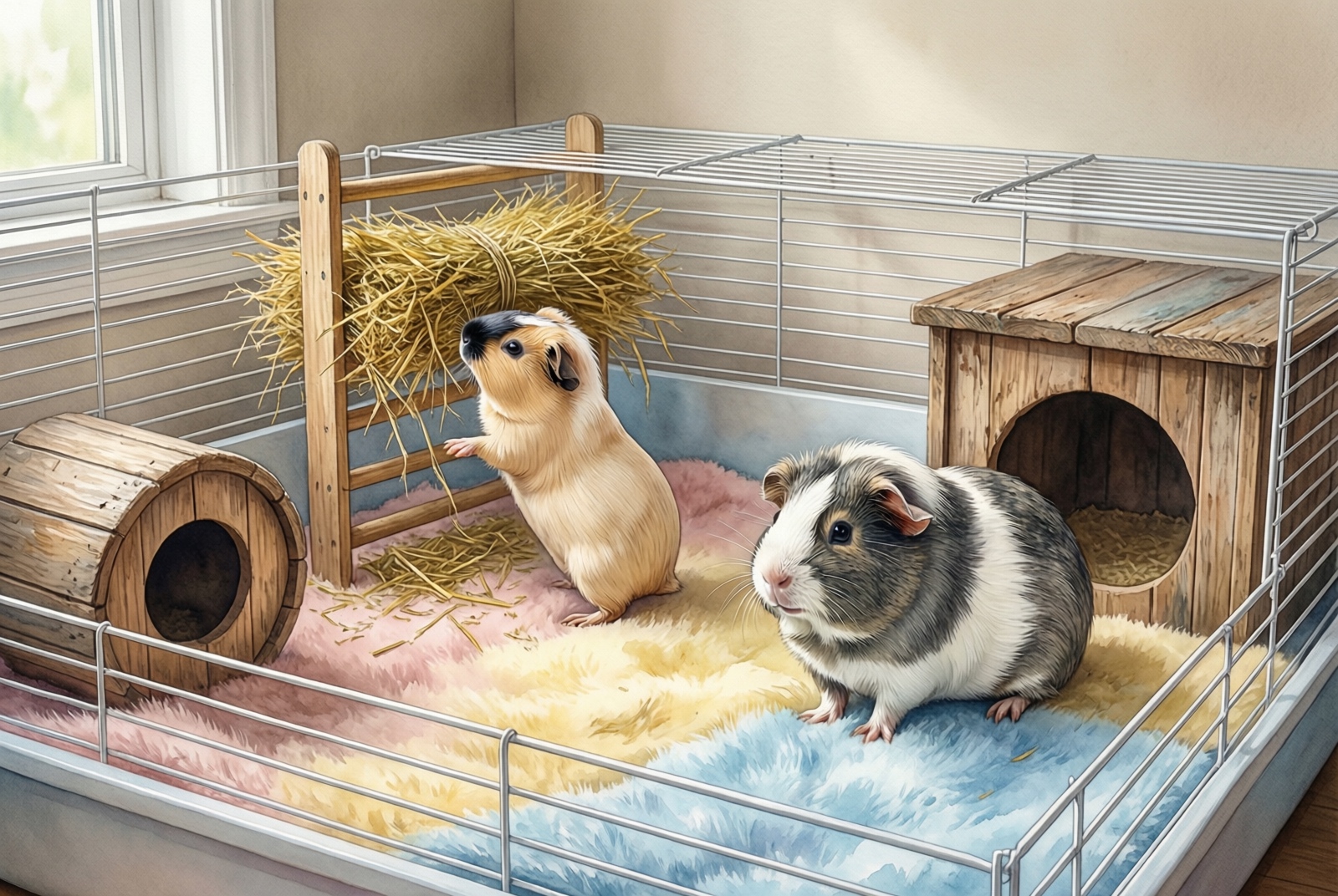
The guinea pig cage market has seen meaningful improvements in 2026. C&C (cube-and-coroplast) cages have become more mainstream, with several Amazon sellers now offering complete kits that eliminate the need to source materials separately. Midwest’s Guinea Habitat remains the top starter option, but the gap between budget cages and premium options has narrowed significantly — today’s $60 cage offers features that were only available at $120 two years ago. With veterinary guidelines on minimum cage sizes continuing to emphasize floor space over frills, the options in 2026 give guinea pig owners more flexibility than ever.
Choosing the best guinea pig cage is one of the most important decisions you’ll make as an owner — and it’s also one of the areas where most people get it wrong. Pet store cages are notoriously undersized, and the cute multi-level hutches that look great in photos are actually dangerous for guinea pigs. After years of keeping and rehabilitating guinea pigs, I’ve learned that floor space is everything, and the difference between the best guinea pig cage and a bad one directly affects your pigs’ health, behavior, and lifespan.
This best guinea pig cage 2026 guide covers the top options available, broken down by herd size — whether you have a single pig, a pair, or a growing group. I’ve also included a deep dive into C&C cages (the community gold standard), size requirements backed by veterinary guidelines, and a complete cage setup guide. For the full details on minimum dimensions, see our guinea pig cage size guide.
Quick Comparison: 8 Best Guinea Pig Cages
The right cage is the same regardless of breed — an energetic Abyssinian Guinea Pig needs the same floor space as any other breed. Before diving into detailed reviews, here’s a snapshot of every cage covered in this guide. A few things about the best guinea pig cage: guinea pigs are ground-dwellers, which means floor space matters far more than height. Multi-level cages are not recommended — guinea pigs are poor climbers and ramps cause falls and injuries. And bar spacing should be 1 inch or less for adults (even smaller for babies).
| Cage | Type | Price | Best For |
|---|---|---|---|
| MidWest Guinea Habitat | Open Top | $62.99 | Best Overall for 1-2 Pigs |
| Ferplast Cavie 80 | Enclosed | $69.95 | Best Starter Kit |
| MidWest Deluxe XL | Wire Top | $99.74 | Best for 2-3 Pigs |
| Indoor Cage with Chew-Proof Edges | Chew-Proof | $109.99 | Best Chew-Proof Design |
| GuineaLoft Acrylic 4x2 | C&C Style | $39.97 | Best C&C Style |
| Midlee Grid Panels | C&C DIY | $29.99 | Best C&C Grids (DIY) |
| Prevue Pet Rolling | Rolling | $159.99 | Best Large/Mobile |
| PawHut 35” Rolling | Rolling | $94.99 | Best Budget Rolling |
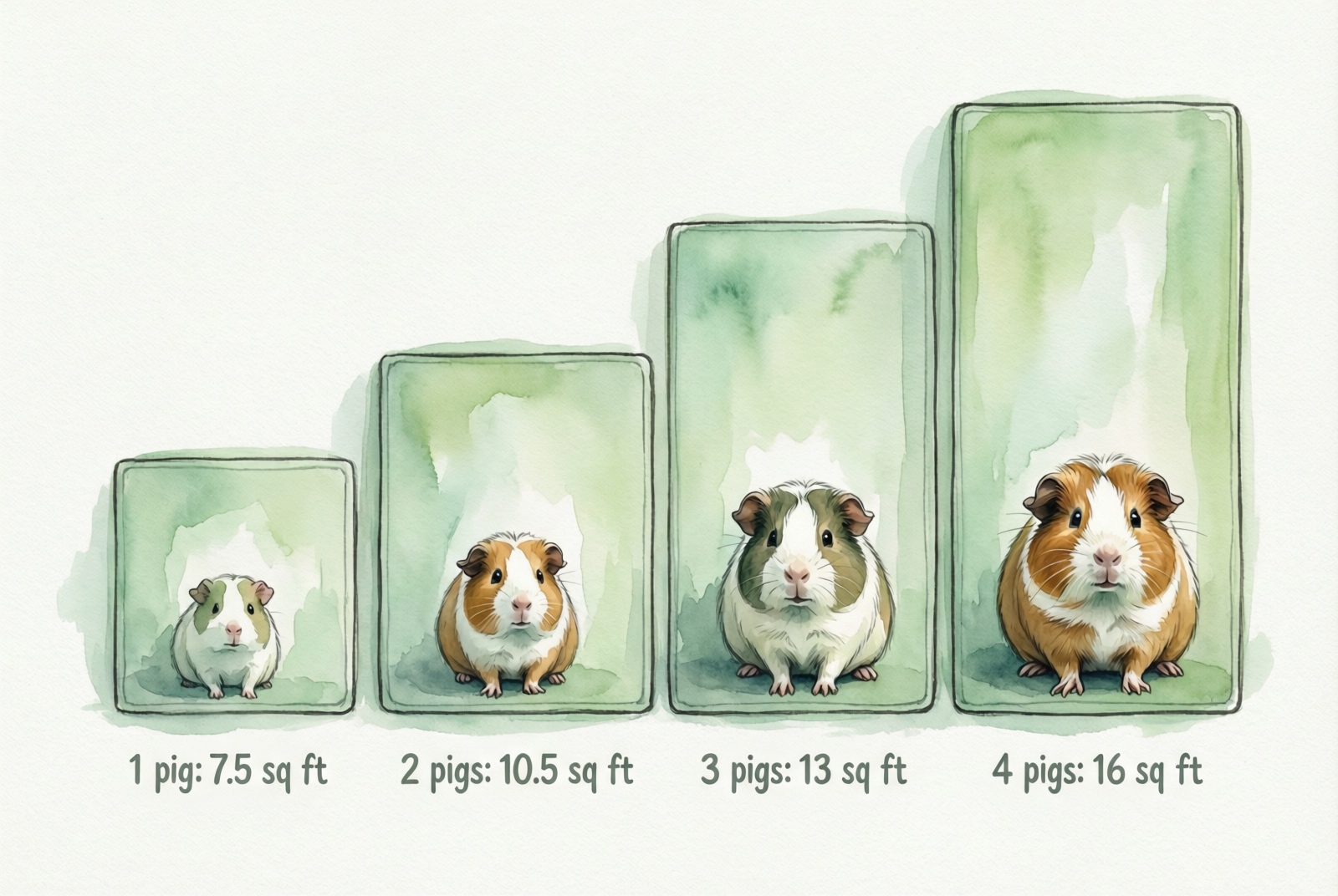
The non-negotiable starting point: The best guinea pig cage has minimum 7.5 square feet for one guinea pig, 10.5 square feet for a pair (RSPCA guidelines). If a cage doesn’t meet these minimums, it is not the best guinea pig cage, it’s not suitable — regardless of how affordable or attractive it looks.
Best Overall Guinea Pig Cages
These are the cages I’d recommend to most first-time and intermediate guinea pig owners. They offer the best balance of size, quality, price, and ease of use.
MidWest Guinea Habitat — If you’re looking for the best guinea pig cage, this is the one I’d suggest. With over 5 on Amazon, it’s the most reviewed best guinea pig cage for good reason. The foldable design with a washable PVC canvas bottom makes it practical for cleaning and storage, and it includes a divider panel if you need to separate pigs temporarily. It comes in two sizes — I’d go with the 47-inch Plus version if you have two pigs, as the 34-inch standard size is on the tighter side for a pair.
The main downside I’ve encountered is that the canvas bottom is vulnerable to chewing. Several owners report their pigs chewing through it within two months, and the canvas holds smells over time if not washed frequently. The wire frame can also bend if you move it around a lot. If your guinea pigs are heavy chewers, consider adding a rigid coroplast liner underneath the canvas for extra protection.
MidWest Guinea Habitat on Amazon
Ferplast Cavie 80 — This is the cage I’d point a complete beginner toward if they want everything in one box. Ferplast is a well-respected European pet brand, and the Cavie 80 includes absolutely everything you need to get started: a hideout, food bowl, water bottle, and hay feeder. Assembly is straightforward with clip-together panels. At $69.95 with over 5,000 ratings and a 4.6-star rating, it’s competitively priced for what you get.
I need to be upfront about the limitations, though. This cage is adequate for one guinea pig but tight for two adults — you’ll want to upgrade as they grow. The included water bottle is a common source of complaints (leaking is reported frequently), and some owners have found the slat spacing too wide for young or small pigs. If you’re considering guinea pigs for kids, this starter kit covers the basics — see our guide on guinea pigs for kids for child-friendly care tips.
Best Guinea Pig Cage for 2 Pigs
Guinea pigs are herd animals — in the wild, they live in groups of 10-15 individuals. Keeping a single guinea pig alone is generally not recommended unless there are exceptional circumstances (health issues, severe aggression). A pair of same-sex or neutered pigs is the standard. The best guinea pig cage for a pair needs more space, and pairs need significantly more space than singles to avoid territorial disputes.
The minimum for two pigs is 10.5 square feet (RSPCA), but For the best guinea pig cage, I’d recommend aiming for 13 square feet or more. The best guinea pig cage for two pigs needs room for separate food and water stations, multiple hiding spots, and enough open floor space to run and “popcorn” (the happy jumping behavior guinea pigs do when excited) without constantly bumping into each other.
MidWest Deluxe XL — With over 8 — more than any other cage on this list — the MidWest Deluxe XL has the longest track record of any pre-made best guinea pig cage. The X-Large wire-top construction with secure latches provides a sturdy, escape-proof enclosure for two to three pigs. Assembly is straightforward and the wire construction holds up well over time.
The most common complaints I’ve seen are shipping-related — units arriving bent or with missing/duplicate parts. MidWest’s quality control seems inconsistent in this regard. The open wire sides mean you need to double-check that latches are fully secured, as determined pigs have been known to push them open. For the price ($99.74) and the proven design, it’s still a solid best guinea pig cage choice for pair owners who want a pre-made solution.
Indoor Cage with Chew-Proof Edges — For owners dealing with persistent chewers, this cage features reinforced chew-proof edges and a clean deep tray that contains bedding better than standard flat-bottom designs. The deep tray design means less scattered bedding on your floor, and the chew-proof construction holds up well against guinea pigs that like to gnaw on their enclosure.
The trade-off is assembly complexity and weight. Several owners note the cage is heavier than expected once assembled, and the deep tray makes spot-cleaning slightly more involved than with open-top designs. At $109.99, it sits in the mid-premium range.
Indoor Cage with Chew-Proof Edges on Amazon
For feeding your pair, proper nutrition is essential — see our guinea pig food guide for diet recommendations that support two pigs’ needs.
C&C Guinea Pig Cages: Are They Worth It?
If you spend any time in guinea pig communities — GuineaLynx, the Guinea Pig Cages forum, Reddit’s r/guineapigs — you’ll see C&C cages recommended over and over again. C&C stands for Cubes and Coroplast: storage cube grids form the walls, and corrugated plastic (coroplast) sheets form the base. It’s a DIY concept that’s become the gold standard best guinea pig cage, and for good reason.
Why C&C cages dominate: They offer unlimited floor space customization at a fraction of the cost of pre-made cages. A standard 2×4 grid C&C cage (roughly 28”×56”, about 10.8 square feet) costs $50-80 total — grids plus coroplast — compared to $100-160 for a pre-made cage that’s often smaller. You can build any size or shape: L-shaped, U-shaped, divided for introductions, or expanded as your herd grows. The open-top design provides excellent ventilation and easy access.
The trade-offs: C&C cages look more DIY than polished. The coroplast base eventually wears and needs replacing (every 1-2 years depending on cleaning habits). And they require assembly — cutting coroplast to size, connecting grids with zip ties or connectors. It’s not difficult, but it’s more effort than unfolding a pre-made cage.
GuineaLoft Acrylic 4x2 — This is a modern take on the C&C concept that solves the aesthetics problem. Instead of wire grids, it uses clear acrylic panels connected with bolts, giving you 360-degree visibility and a much cleaner look. At 4×2 feet, it provides ample space for one or two pigs. The acrylic panels also serve a practical purpose I really appreciate — they block cats and other pets from reaching in, which is a real concern with traditional open C&C grids. With nearly at $39.97, it’s an affordable best guinea pig cage option for what it offers.
I should mention two recurring issues from owners: the connecting bolts come loose frequently (several people report losing bolts within weeks), and you need to buy a separate liner since one isn’t included. There are also a few reports of thin panels posing a paw-trapping risk for very small pigs. I’d recommend checking the panel connections weekly and using thread-locking compound on the bolts if loosening becomes a problem.
GuineaLoft Acrylic 4x2 on Amazon
Midlee Grid Panels — For the pure DIY approach, these 12-pack grid panels at $29.99 are the cheapest way to build the best guinea pig cage. You connect them with zip ties (or the included connectors), add a coroplast base ($10-20 at any sign shop or hardware store), and you’ve got a fully customizable best guinea pig cage. With nearly , they work as advertised.
However, I have a significant safety concern to raise. Multiple reviewers — including experienced guinea pig owners — report that the grid spacing (approximately 1.4 inches) is too large for many guinea pigs, especially younger or smaller ones. One reviewer’s pig “zipped right through it,” and several others describe their pigs getting their heads stuck in the openings. This is a genuine safety hazard. I’d only recommend these grids if your pigs are full-grown adults large enough that they can’t fit through, and even then I’d double-check by measuring your pig’s head width against the grid openings. For a safer alternative, look for grids with 9×9 internal squares specifically marketed as guinea-pig safe.
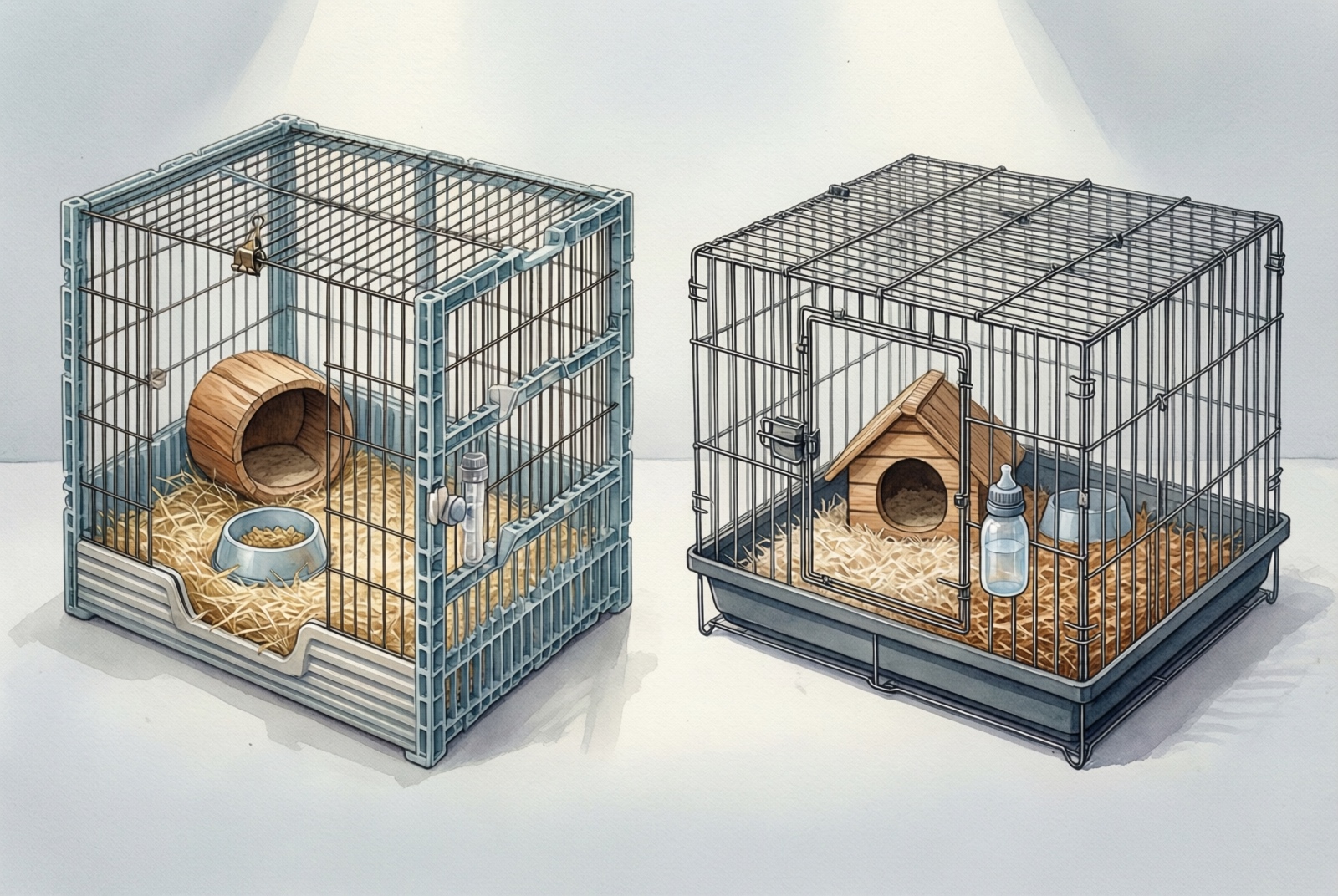
Here’s how C&C cages compare to traditional pre-made options across the factors that matter most:
| Feature | C&C Cage | Traditional Cage |
|---|---|---|
| Floor space | Unlimited — build any size | Fixed (often too small) |
| Customization | Any shape or configuration | Fixed design |
| Total cost | $30-80 | $70-160 |
| Visibility | Open top, full access | Bars or wire block view |
| Cleaning | Easy — lift pigs out, wipe down | Varies by model |
| Durability | Coroplast base wears over time | Wire and plastic last longer |
| Aesthetics | DIY appearance | Cleaner, more polished |
| Setup effort | Requires assembly | Ready out of the box |
| Pet safety (cats/dogs) | Wire grids can be reached through | Enclosed models protect better |
For bedding choices in C&C cages — fleece liners work particularly well with flat coroplast bases — see our guinea pig bedding guide.
Best Large Guinea Pig Cages for 3+ Pigs
Three or more guinea pigs need a minimum of 13 square feet, ideally 16 or more. At this herd size, pre-made cages start to struggle — most commercial options simply aren’t large enough. The most practical approach for 3+ pigs is usually a large C&C cage (2×5 or 2×6 grids), but there are a couple of pre-made options worth considering.
Herd dynamics matter more as group size increases. With three or more pigs, you need multiple hiding spots (at least one per pig), two separate food and water stations to prevent resource guarding, and enough open space that subordinate pigs can avoid dominant ones. If you notice persistent chasing, teeth chattering, or cornering, the cage may be too small for the group size regardless of what the tape measure says.
Prevue Pet Rolling Cage — At $159.99, this is the most expensive best guinea pig cage on the list, and the rolling design with lockable casters is its main selling point. If you need to move your pigs’ cage frequently — for cleaning, room changes, or seasonal repositioning — the wheels make a real difference. The removable bottom tray simplifies cleaning, and the overall construction is spacious enough for a small herd. It has over .
I have to be honest about the quality concerns, though. Multiple owners who’ve owned older Prevue models note that the current version uses thinner plastic and less sturdy wire than previous generations. One reviewer compared their new cage to an older one they’d owned for years and found the newer model “slightly smaller and certain components are not sturdy compared to the ones I already have.” The plastic base has also been reported to crack after a few months of regular cleaning. If you buy this cage, inspect it carefully on arrival — several people reported receiving cracked or broken trays.
Prevue Pet Rolling Cage on Amazon
PawHut 35” Rolling Cage — At $94.99, this is the highest-rated budget best guinea pig cage with rolling capability. It comes with a food dish and water bottle, and the lockable wheels make it genuinely easy to move around. For a single pig or a temporary setup, it’s decent value.
The reality is that 35 inches is small for three or more adult guinea pigs long-term. One reviewer summed it up well: “It’s not horrible but it’s small and poorly made. Not big enough for your guinea pig to live forever.” The ramp doesn’t stay attached reliably, and the included water bottle has leakage issues. I’d view this as a starter cage for one pig or a temporary/travel setup rather than a permanent home for a herd. For 3+ pigs, I’d strongly recommend building a C&C cage instead — you’ll get significantly more space for less money.
PawHut 35” Rolling Cage on Amazon
For detailed size requirements regardless of herd size, our guinea pig cage size guide has the complete breakdown with dimension recommendations.
Guinea Pig Cage Size Requirements
Getting the size right is the key to the best guinea pig cage. A $200 cage that’s too small is never the best guinea pig cage than a $50 DIY setup that meets minimum space requirements. Here are the numbers you need, based on RSPCA guidelines and the Guinea Pig Cages community standards:
| Number of Pigs | Minimum Floor Space | Recommended Space | Minimum Dimensions |
|---|---|---|---|
| 1 pig | 7.5 sq ft | 10.5 sq ft | 30” × 36” |
| 2 pigs (pair) | 10.5 sq ft | 13 sq ft | 42” × 36” |
| 3 pigs | 13 sq ft | 16 sq ft | 48” × 48” |
| 4+ pigs | +3 sq ft per additional pig | +4 sq ft per additional pig | Add 18” width per pig |
Why floor space dominates: Guinea pigs are ground-dwellers. They don’t climb, they don’t burrow (in captivity), and they spend virtually all their time at ground level. A tall cage with multiple levels is wasted space at best and dangerous at worst. Unlike hamsters and rats, guinea pigs have heavy bodies, poor climbing ability, and no depth perception to speak of — ramps and platforms lead to falls and injuries. I’ve seen guinea pigs fracture teeth and suffer sprained joints from falling off second levels. Stick to single-level, wide enclosures.
Bar spacing: Maximum 1 inch for adult guinea pigs. For babies and young juveniles, spacing should be 0.8 inches or less — they can squeeze through surprisingly small gaps. If you can see a gap and think “there’s no way a pig could fit through that,” test it anyway. They will surprise you.
Open top versus enclosed: For the best guinea pig cage indoors, I’d recommend open-top designs. Open tops provide better air circulation, easier access for cleaning and handling, and more natural light. The only reason to choose an enclosed cage is if you have free-roaming cats or dogs that could access the cage — in that case, a wire-top or acrylic-walled design is essential.
Guinea Pig Cage Setup Guide
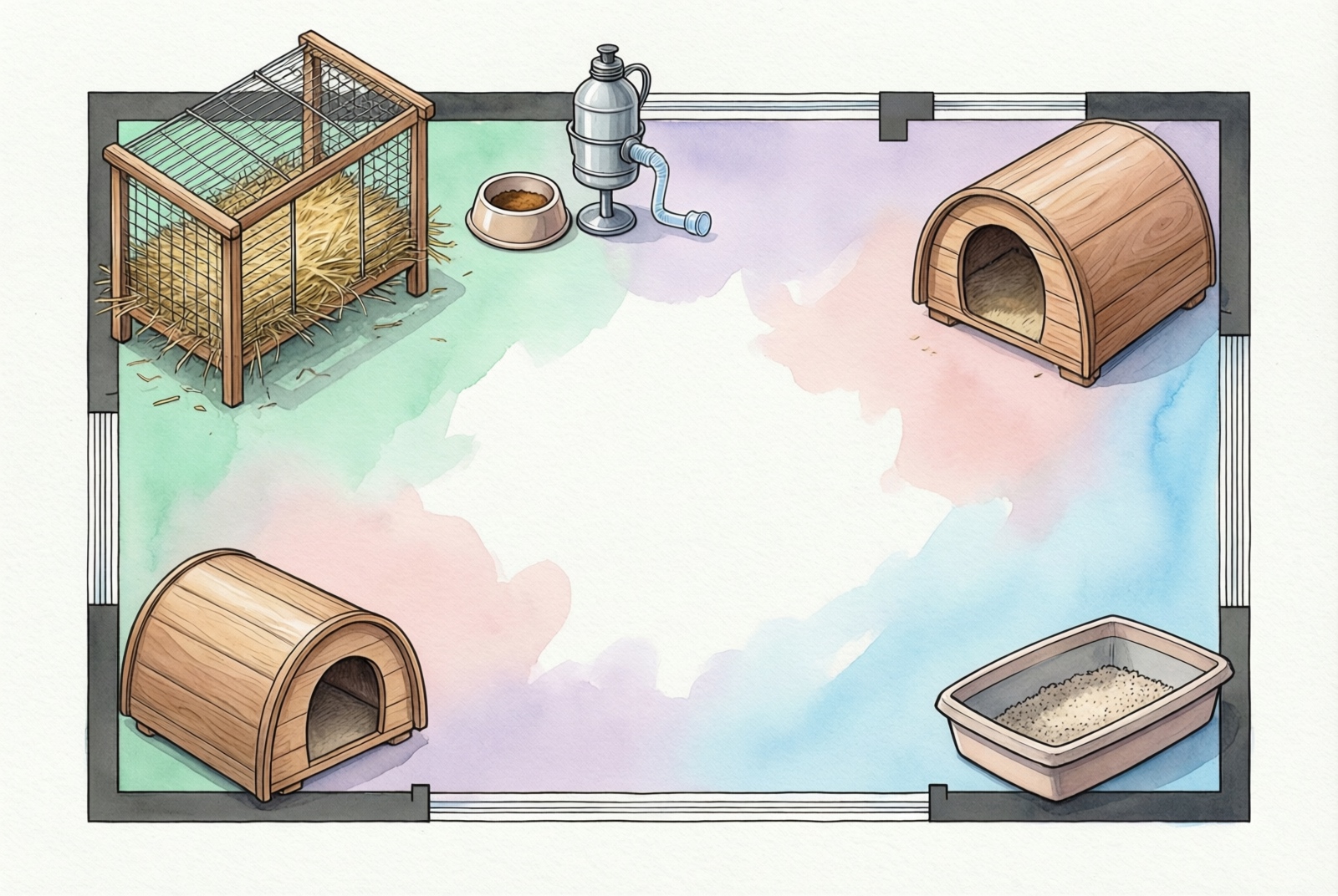
A good cage is just the container — what you put inside it determines whether your guinea pigs thrive or just survive. Here’s how I set up a cage for optimal health and enrichment:
The cage stays home; vet days need a separate carrier that two pigs can hide in.
Bedding layer (2-3 inches deep): This is the foundation. For the best guinea pig cage bedding, fleece liners are the most popular choice for indoor cages — they’re washable, cost-effective over time, and allow you to see your pigs’ droppings (useful for health monitoring). Paper bedding (carefresh or similar) works well too. Avoid cedar and pine shavings — the phenols cause respiratory problems. Whichever bedding you choose for your best guinea pig cage, layer it 2-3 inches deep for adequate absorption and comfort. Our guinea pig bedding guide covers the pros and cons of each option in detail.
Hiding spots (one per pig minimum): Guinea pigs are prey animals, and they need places to retreat when they feel insecure. Place at least one hideout per pig in different corners of the cage — this prevents dominant pigs from guarding a single hideout. I’ve found that having an even number of hideouts (two for a pair, four for a group) works better than an odd number, since it prevents one pig from being left out.
Food and water stations: Place hay (the staple of their diet — 80% of daily intake), pellets, and fresh vegetables in one zone, and the water bottle in another. Separating food and water encourages natural foraging behavior and prevents a dominant pig from guarding both resources simultaneously. Our guinea pig food guide has detailed dietary recommendations for maintaining proper nutrition.
Enrichment items: Tunnels, chew toys, and foraging toys prevent boredom and encourage natural behaviors. Rotate toys every week or two to keep things interesting. Cardboard tubes stuffed with hay make excellent cheap foraging toys. See our guinea pig toys guide for specific product recommendations. Pairing the right cage with proper guinea pig food and enrichment creates the foundation for a healthy, happy herd.
Litter training: Guinea pigs can be litter trained to use one corner, which dramatically reduces cleaning effort. Place a small litter box (a shallow cat litter pan works) in the corner where they naturally eliminate, line it with paper bedding, and transfer some soiled bedding into it to establish the scent. Most pigs catch on within a week or two.
Temperature and placement: Keep the cage at 65-75°F (18-24°C), away from drafts, direct sunlight, and heat sources. Guinea pigs are sensitive to temperature extremes — above 80°F can cause heatstroke, and below 60°F can lead to colds. Avoid placing the cage near windows, air conditioning vents, or radiators.
Frequently Asked Questions
What is the best cage size for 2 guinea pigs?
For a pair of guinea pigs, the minimum recommended floor space is 10.5 square feet (RSPCA guideline), but experienced owners and welfare organizations recommend at least 13 square feet for optimal health. A C&C cage with two 2x3 grids is the most cost-effective way to achieve this. Cramped cages lead to stress, fighting, and health problems including obesity and bumblefoot.
Are C&C cages better than store-bought cages?
C&C cages are widely considered superior to commercial pet store cages for several reasons: they provide significantly more floor space at a lower cost per square foot, they are fully customizable to fit your available room, and they allow easy expansion as your herd grows. The only downside is assembly time and the need to replace the coroplast base periodically. For a detailed breakdown, see our cage size guide.
Can guinea pigs live in multi-level cages?
Guinea pigs are not natural climbers like rats or ferrets. While a single low ramp to a second level is acceptable, multi-level cages with steep ramps are dangerous — guinea pigs can injure their backs or fall. Floor space is far more important than vertical space. The best cage prioritizes a large, flat footprint over multiple levels.
How often should I clean my guinea pig cage?
Spot clean daily by removing soiled bedding and uneaten fresh food. Full bedding replacement should happen every 3-5 days for paper bedding, or weekly for fleece liners (wash in hot water). A dirty cage leads to ammonia buildup, respiratory infections, and bumblefoot. The right bedding choice makes cleaning easier — see our bedding guide for options.