What Is a Winter White Hamster?
The Winter White hamster (Phodopus sungorus) is a small dwarf hamster species native to the steppes of Siberia, Kazakhstan, and Mongolia. Also known as the Siberian dwarf hamster or Djungarian hamster, it is named for its remarkable ability to change its coat color from dark gray to nearly white during winter months. For the complete breed profile, see our Winter White Dwarf Hamster page.
In the wild, they survive brutal Siberian winters where temperatures drop well below freezing. Their winter coat change is an evolutionary adaptation that provides camouflage against snow — a trait that no other commonly kept hamster species possesses. This makes the species one of the most unique small pets available.
One important caveat: many pet stores sell hybrid hamsters labeled as “Winter Whites” that are actually crosses between Winter Whites and Campbell’s dwarf hamsters. Purebred Winter Whites are less common in the pet trade. The hybrids may or may not exhibit the winter coat change, and their temperaments can be less predictable. When possible, seek out a reputable breeder who can confirm lineage.
For an overview of all hamster species, see our guide to dwarf hamster breeds.
| Attribute | Detail |
|---|---|
| Scientific name | Phodopus sungorus |
| Also known as | Siberian dwarf hamster, Djungarian hamster |
| Adult size | 3-4 inches (8-10 cm) |
| Adult weight | 1.5-2 oz (40-60 g) |
| Lifespan | 1.5-2 years (up to 3 with excellent care) |
| Activity pattern | Crepuscular (most active dawn/dusk) |
| Temperament | Friendly, curious, relatively easy to tame |
Winter White Hamster Lifespan
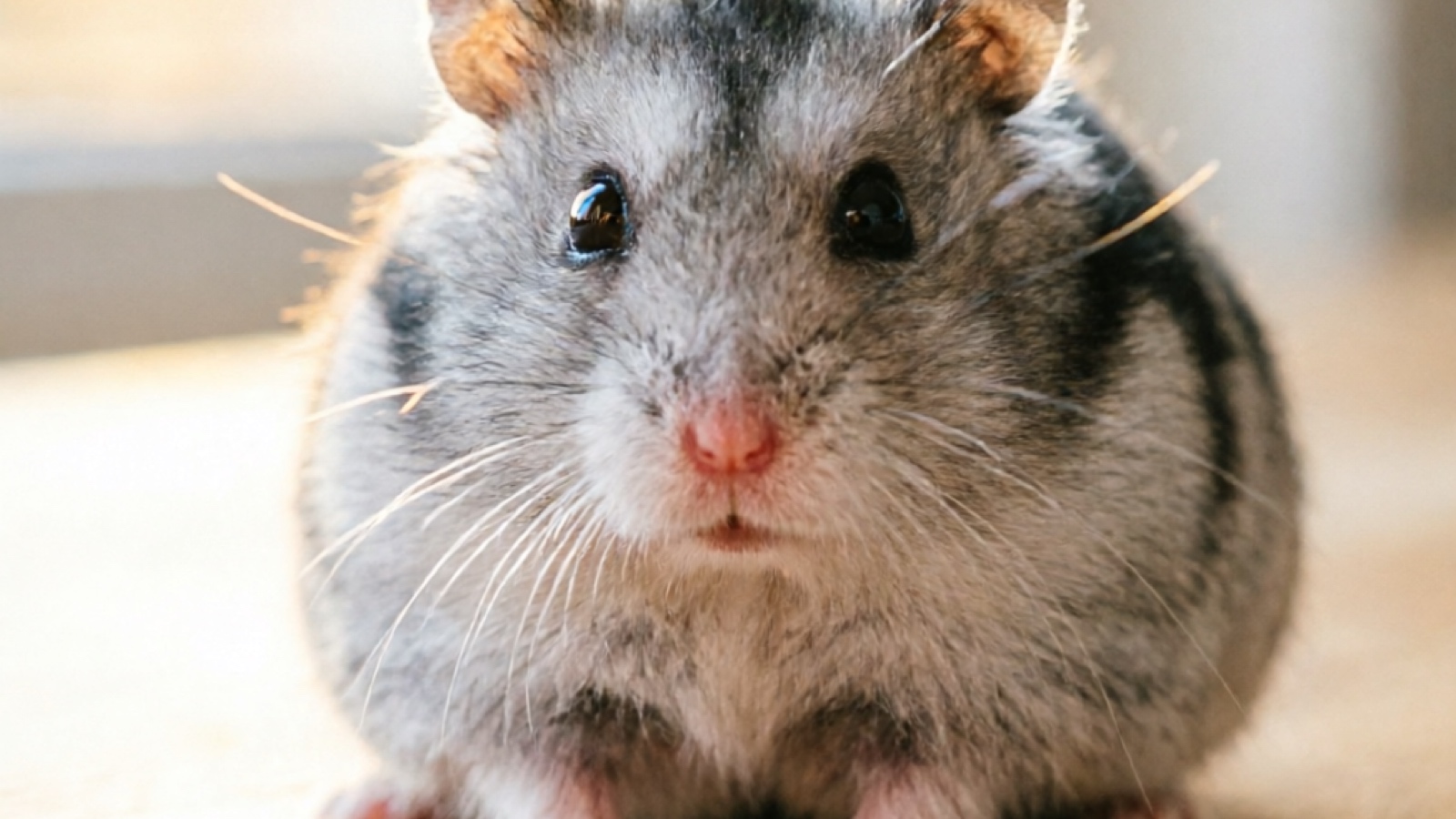
The winter white hamster lifespan averages 1.5 to 2 years, with exceptional individuals reaching 2.5-3 years. This is shorter than Syrian hamsters (2-3 years) and Roborovski hamsters (3-3.5 years), but similar to Campbell’s dwarf hamsters.
Several factors influence how long a Winter White lives:
-
Genetics — the most significant factor. A hamster from healthy breeding stock will generally outlive one from a pet store with unknown lineage. Hybrid hamsters (Winter White × Campbell’s crosses) may have shorter lifespans due to genetic complications.
-
Diet quality — low-sugar diets reduce diabetes risk, which is a leading cause of premature death in dwarf hamsters species. Uniform pellets prevent selective feeding and ensure balanced nutrition.
-
Exercise — a proper wheel and large cage encourage natural activity levels. Sedentary hamsters develop obesity, heart problems, and joint issues.
-
Stress levels — chronic stress from small cages, loud environments, or aggressive cage mates suppresses the immune system and shortens lifespan.
For a comprehensive breakdown of lifespan across all hamster species, see our hamster lifespan guide.
Winter White Hamster Size & Weight
Adults measure 3-4 inches (8-10 cm) in body length, making them roughly half the size of a Syrian hamster. The winter white hamster weight ranges from 1.5 to 2 ounces (40-60 grams), with males tending to be slightly larger and heavier than females.
A healthy Winter White should feel firm and solid when you hold it, not bony or excessively round. You should be able to feel the ribs with gentle pressure but not see them through the fur. Sudden weight changes — gain or loss — warrant a vet visit, as they often indicate underlying health problems.
For a dwarf vs Syrian hamster size comparison, the difference is significant: Syrians reach 6-7 inches, more than double the Winter White’s length. This size difference affects everything from cage requirements to wheel size to handling technique.
Winter White Hamster Colors & Coat Variations
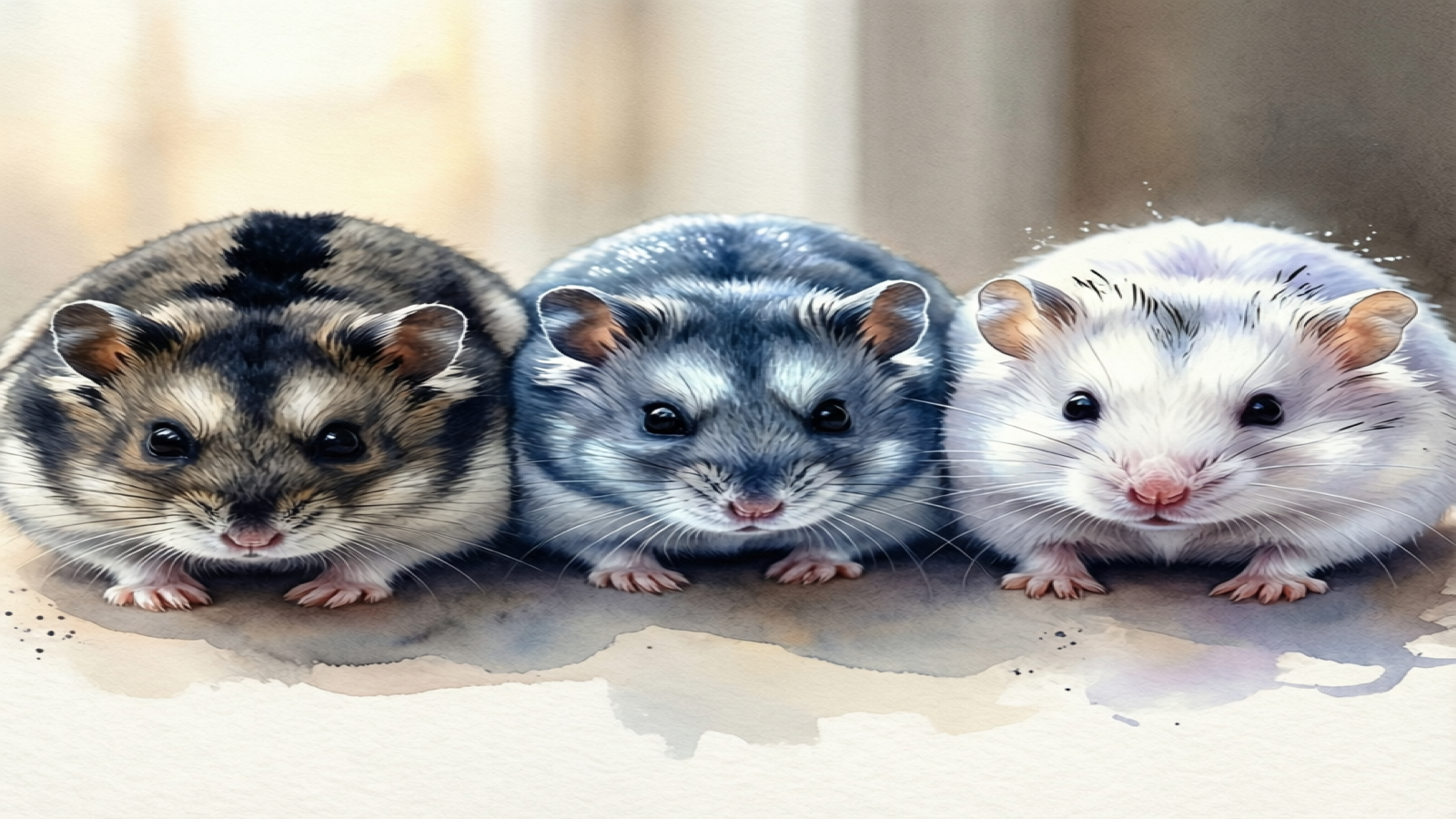
The winter white hamster colors are one of this species’ most appealing features. Unlike Syrian hamsters, which come in dozens of color mutations, They have a smaller but more distinctive color palette — anchored by their unique winter coat change.
Natural Coat Color (Agouti)
The wild-type coat is a dark grayish-brown with a distinct black dorsal stripe running from the neck to the tail. The belly fur is white, and the sides have a subtle ticked pattern. This is the most common color in pet stores and the starting point for understanding all other variations.
Sapphire
Sapphire Winter Whites have a blue-gray overall coat with a reduced dorsal stripe. The blue-gray tone comes from a dilution of the dark pigment in the agouti coat. This is one of the most popular color variations because of its unusual and attractive appearance.
Pearl
Pearl Winter Whites have a predominantly white coat with scattered dark guard hairs throughout, creating a “frosted” or “salt-and-pepper” appearance. The dorsal stripe is typically reduced or absent. Pearl is a visually striking variation that makes the hamster look almost entirely white even without the winter coat change.
Imperial Winter White
Imperial is the rarest recognized color variation — an extremely pale silver-white coat with minimal dark pigmentation. Some Imperial Winter Whites look nearly identical to a fully winter-coat-changed hamster year-round. Finding a purebred Imperial can be difficult, as many are actually light sapphires or hybrids.
The Winter Coat Change
The winter coat change is triggered by photoperiod (day length), not temperature. When daylight hours drop below 8 hours per day for 2-3 consecutive weeks, the coat gradually transitions from its normal dark coloration to almost completely white. This process takes approximately 4-6 weeks to complete and reverses when daylight increases in spring.
This is the Winter White’s most remarkable trait — and the one that sets it apart from every other pet hamster species. In the wild, the white coat provides camouflage against Siberian snow, protecting the hamster from predators like owls and foxes.
The challenge for pet owners: most pet Winter Whites never experience the coat change. Indoor lighting — even from windows — typically provides more than 8 hours of light per day year-round, which prevents the trigger. The hamster’s biological clock reads “eternal summer” and maintains the dark coat permanently.
How to try triggering the change at home: Place the hamster’s cage in a room where you can control light exposure. Starting in late autumn, limit all light (natural and artificial) to 8 hours or less per day for 2-3 weeks. This means covering windows and turning off room lights early. The change is gradual — you’ll first notice lighter patches on the shoulders and flanks before the full white coat develops. If you want to reverse it, gradually increase light back to 12+ hours per day in spring.
Important: Campbell’s dwarf hamsters cannot change coat color. If you have a hybrid (Winter White × Campbell’s cross), the winter coat change may be partial or absent. This is one way to help identify whether your hamster is a purebred Winter White.
| Color | Appearance | Dorsal Stripe | Rarity |
|---|---|---|---|
| Normal (Agouti) | Dark gray-brown with white belly | Prominent black stripe | Common |
| Sapphire | Blue-gray overall | Reduced/gray stripe | Moderate |
| Pearl | White with dark guard hairs | Reduced or absent | Moderate |
| Imperial | Very pale silver-white | Minimal or absent | Rare |
| Winter White | Nearly pure white | Faint or absent | Seasonal (wild/purebred) |
Winter White Hamster Behavior & Temperament
Personality Traits
The winter white hamster personality is one of its strongest selling points. These hamsters are generally calmer, more docile, and easier to tame than Campbell’s dwarf hamsters. They are curious and active without being as skittish or fast-moving as Roborovskis. Many experienced keepers consider them the friendliest dwarf hamster species.
I’ve found that Winter Whites respond well to patient, consistent handling. Start by offering treats from your fingers to build trust, then progress to gently scooping them up with both hands. Keep initial handling sessions to 5-10 minutes, always during their active hours (early morning or evening). Never wake a sleeping hamster to handle it — this causes stress and defensive biting.
Social Behavior
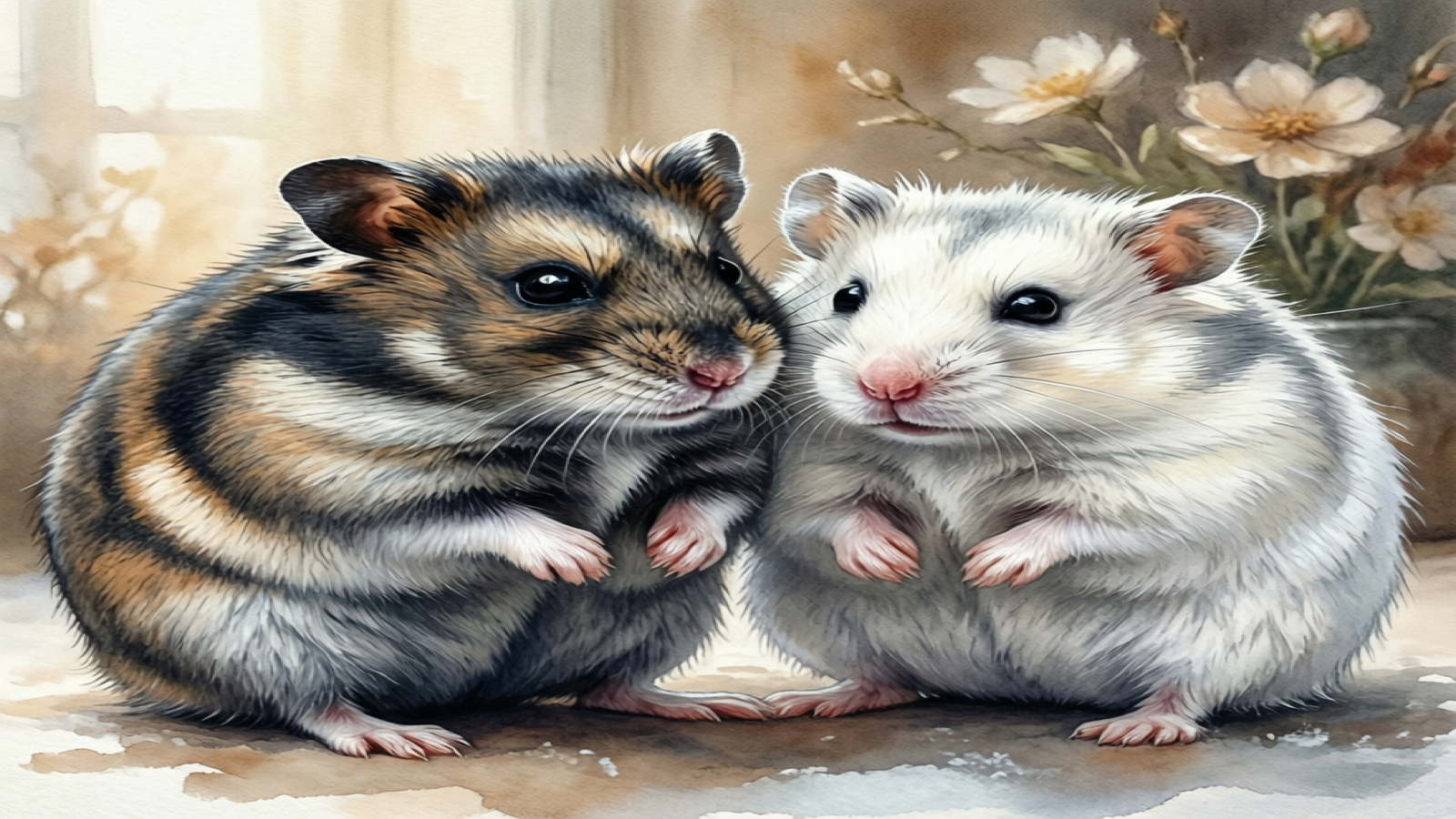
In the wild, Winter Whites live in small family groups. In captivity, they can sometimes coexist in same-sex pairs if introduced as littermates. However, many experienced keepers recommend housing them singly because even bonded pairs can suddenly fight, sometimes seriously. If you choose a pair, always provide a large cage (600+ sq inches) with two of everything — two wheels, two hideouts, two food bowls — to reduce territorial conflict.
Activity Patterns
Winter Whites are crepuscular — most active at dawn and dusk. They tend to be more visible during daytime than Syrian hamsters, which appeals to owners who want to observe their pet during the day. Expect peak activity between 6-9 AM and 6-10 PM.
For a deeper understanding of hamster behavior across species, see our hamster behavior guide.
Winter White Hamster Diet & Nutrition
In the wild they eat seeds, insects, and vegetation. The winter white hamster diet in captivity should replicate this balance while accounting for their moderate diabetes risk (lower than Campbell’s, but still present).
Staple Diet
I recommend Oxbow Essentials Hamster & Gerbil Food as the staple diet. It’s a uniform pellet — every piece has identical nutrition — which prevents selective feeding where hamsters pick out the tasty seeds and leave the healthy portions behind. Oxbow is formulated with exotic veterinarians, provides 15-16% protein, and contains no added sugars, artificial colors, or seeds. For a dwarf hamster species with diabetes risk, a low-sugar uniform pellet is the safest choice.
Safe Fresh Foods
Supplement pellets with small amounts of safe vegetables daily: broccoli, cucumber, bell pepper, and zucchini are all well-tolerated. For more on specific foods, see our guides on safe vegetables like celery and safe fruits like strawberries.
Foods to Avoid
Due to their moderate diabetes risk, limit sugary fruits to once per week at most — and in tiny portions. Avoid citrus fruits (too acidic), onions and garlic (toxic), chocolate (theobromine poisoning), and all seeds with high fat content. Sunflower seeds should be an occasional treat, not a dietary staple.
Feeding Schedule
Feed in the evening when your Winter White becomes active:
- 1 tablespoon of pellets in a heavy ceramic bowl
- Thumb-sized piece of safe vegetable (broccoli, cucumber, or bell pepper)
- Fresh water — changed daily
- Protein treat 2-3 times per week (dried mealworm, tiny piece of boiled egg white)
| Food Category | Examples | Frequency |
|---|---|---|
| Safe daily | Timothy hay, pellets, broccoli, cucumber, bell pepper | Daily |
| Safe treats | Dried mealworms, boiled egg white, rolled oats | 2-3x/week |
| Limit strictly | Apple, blueberry, strawberry (tiny piece) | 1x/week max |
| Never feed | Citrus, onion, garlic, chocolate, seeds as staple, junk food | Never |
For the best hamster food recommendations with detailed brand comparisons, see our food guide.
Winter White Hamster Cage Size & Setup
The winter white hamster cage size requirement is a minimum of 450 square inches of uninterrupted floor space, though 600+ square inches is strongly recommended. Despite their small size, they are active climbers and runners that need space to explore.
Essential Setup Items
Bedding: Provide 6+ inches of paper-based bedding or aspen shavings. This depth allows natural burrowing behavior, which is essential for a hamster’s psychological wellbeing. Never use pine or cedar shavings — the aromatic oils cause respiratory damage.
Wheel Size
The winter white hamster wheel size is minimum 6.5 inches in diameter with a solid running surface. Use our wheel size calculator to verify the right fit for your hamster. A Niteangel 6.5-inch Silent Hamster Wheel is a solid choice — the silent bearing design won’t disturb your sleep, and the smooth running surface prevents the foot injuries that wire or mesh wheels can cause. For any dwarf that runs several miles per night, a quiet, safe wheel matters. See our best hamster cages for enclosure recommendations with wheel space.
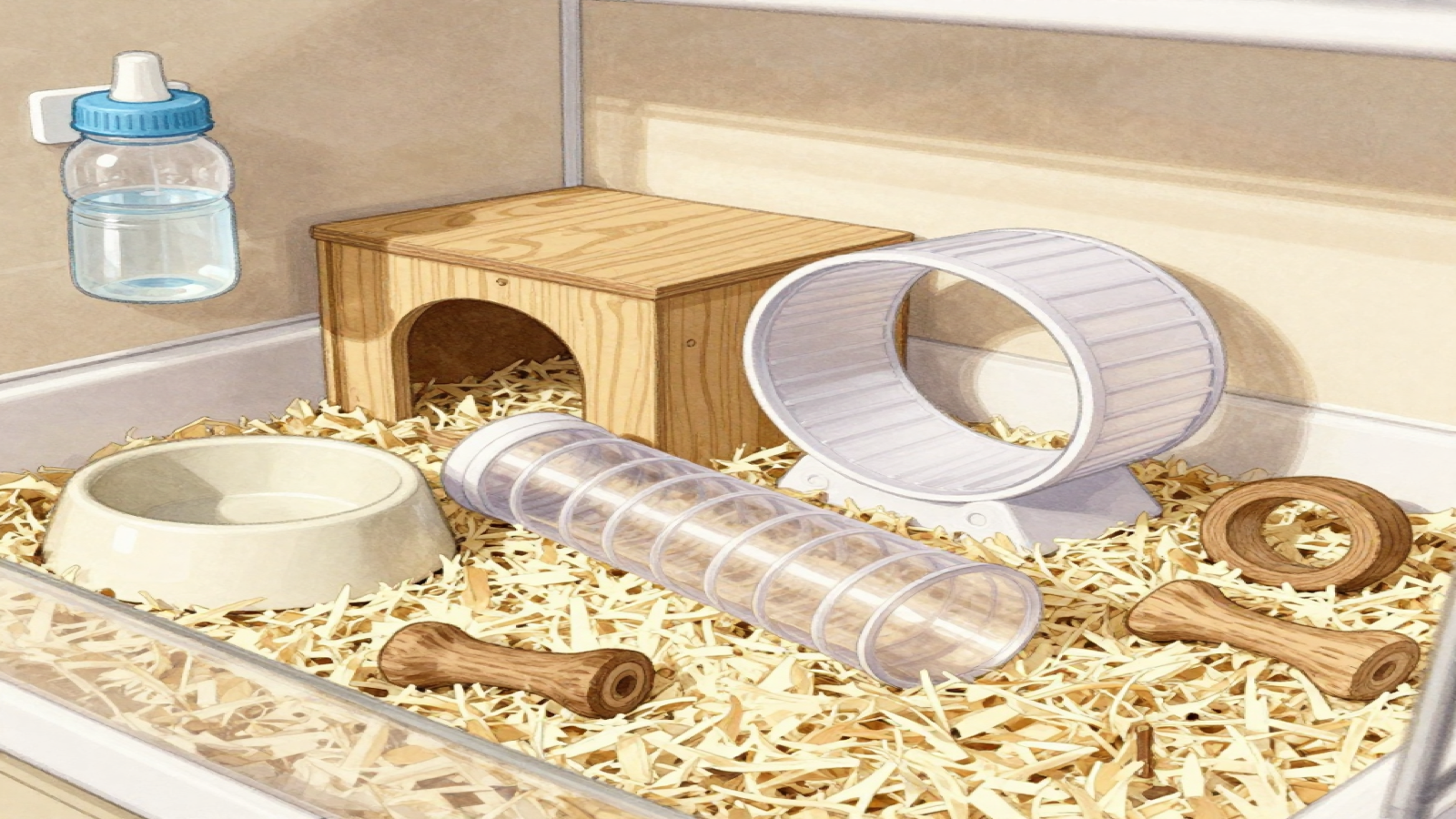
Hideouts: Provide at least two — one in the burrowing zone and one elevated. Wooden or ceramic hideouts work best; avoid plastic, which hamsters may chew.
Enrichment: Cork logs, tunnels, bridges, and apple wood branches provide climbing opportunities and safe chewing surfaces. Rotate enrichment items every 1-2 weeks to prevent boredom.
Temperature Requirements
The ideal temperature range for this species is 65-75°F (18-24°C). Temperatures below 50°F (10°C) can trigger the winter coat change but are dangerously cold for sustained periods. Above 80°F (27°C) risks heatstroke. Avoid placing the cage near windows, heaters, or air conditioning vents.
Bar Spacing
Maximum bar spacing for dwarf hamsters is 0.4 inches (1 cm). Winter Whites can squeeze through gaps that look deceptively small. If using a wire cage, verify every panel. Many cages marketed for hamsters have bar spacing designed for Syrian hamsters (0.5-0.7 inches) — too wide for a dwarf.
For a complete hamster cage setup guide with detailed bedding and enrichment recommendations, see our setup guide. For dwarf-specific requirements, see our dwarf hamster cage requirements.
Health & Common Issues
Diabetes
Winter Whites have a moderate diabetes risk — lower than Campbell’s dwarves but higher than Syrians. Symptoms include excessive drinking and urination, sudden weight changes, and a sweet-smelling odor from the urine. Prevention is straightforward: feed a low-sugar uniform pellet diet, avoid sugary treats, and provide daily exercise via a proper wheel.
Wet Tail
Wet tail (proliferative ileitis) is a severe bacterial infection of the digestive tract that requires immediate veterinary treatment. Symptoms include a wet, soiled tail area, lethargy, loss of appetite, and hunched posture. It is often fatal within 24-48 hours if untreated. For detailed symptom recognition and emergency response, see our wet tail symptoms and treatment.
Respiratory Infections
Sneezing, wheezing, or clicking breathing sounds may indicate a respiratory infection. Common causes include dusty bedding (switch to paper-based), ammonia buildup from soiled bedding, or drafty cage placement. If symptoms persist for more than 48 hours, consult an exotic vet. See our hamster diabetes prevention guide for related dietary health management.
Dental and Skin Issues
Like all hamsters, Winter Whites have continuously growing teeth. Provide safe chew toys — apple wood, hazelnut branches, or commercial chew sticks — to prevent overgrowth. Signs of dental problems include drooling, difficulty eating, and weight loss despite normal appetite. Mites and fungal infections can cause fur loss and scratching. Regular cage cleaning is the best prevention.
Breed Comparison
Winter White vs Syrian
The winter white hamster vs syrian comparison comes down to size and social preference. Syrians are larger (6-7 inches), strictly solitary, and easier for beginners. They are smaller (3-4 inches), can potentially live in pairs, and offer the unique winter coat change. Syrians need larger wheels (8-11 inches).
Winter White vs Campbell’s
The winter white hamster vs campbell distinction — often searched as “winter white hamster vs russian dwarf hamster” — is important because these two species are frequently confused and hybridized in pet stores. They have rounder faces, calmer temperaments, can change coat color, and have lower diabetes risk. Campbell’s have pointed faces, are more territorial, cannot change coat color, and carry higher diabetes risk.
Winter White vs Roborovski
The winter white hamster vs robo comparison highlights different strengths. Roborovskis are smallest (2 inches), fastest, and longest-lived (3-3.5 years) but notoriously difficult to handle. This species is larger, calmer, much easier to tame, and more interactive.
| Feature | Winter White | Syrian | Campbell’s | Roborovski |
|---|---|---|---|---|
| Size | 3-4” | 6-7” | 3-4” | 2” |
| Lifespan | 1.5-2 yrs | 2-3 yrs | 1.5-2 yrs | 3-3.5 yrs |
| Temperament | Calm, friendly | Docile, easy | Territorial | Skittish, fast |
| Diabetes risk | Moderate | Low | High | Low |
| Can pair? | Sometimes | No | Sometimes | Sometimes |
| Taming difficulty | Easy | Easy | Moderate | Difficult |
| Winter coat change | ✅ Yes | ❌ No | ❌ No | ❌ No |
Male vs Female Winter White Hamsters
Males tend to be slightly larger and rounder with a more prominent scent gland. They are generally calmer and easier to handle but produce a stronger musky odor. Females are slightly smaller and leaner, more active and exploratory but can be slightly nippier. For first-time owners, a male is usually the easier choice.
Conclusion
The Winter White hamster is one of the best dwarf hamster species for both beginners and experienced keepers. Their calm temperament, manageable size, and unique winter coat change make them genuinely special pets. The key to a healthy Winter White is straightforward: a low-sugar uniform pellet diet, a 6.5-inch or larger wheel, 450+ square inches of cage space with deep bedding, and minimal stress.
For enclosure recommendations, see our best hamster cages. For complete dietary guidance with brand comparisons, see our best hamster food recommendations. If you’re a new hamster owner, our first-time hamster owner guide covers everything from day-one setup to daily care routines.