Introduction
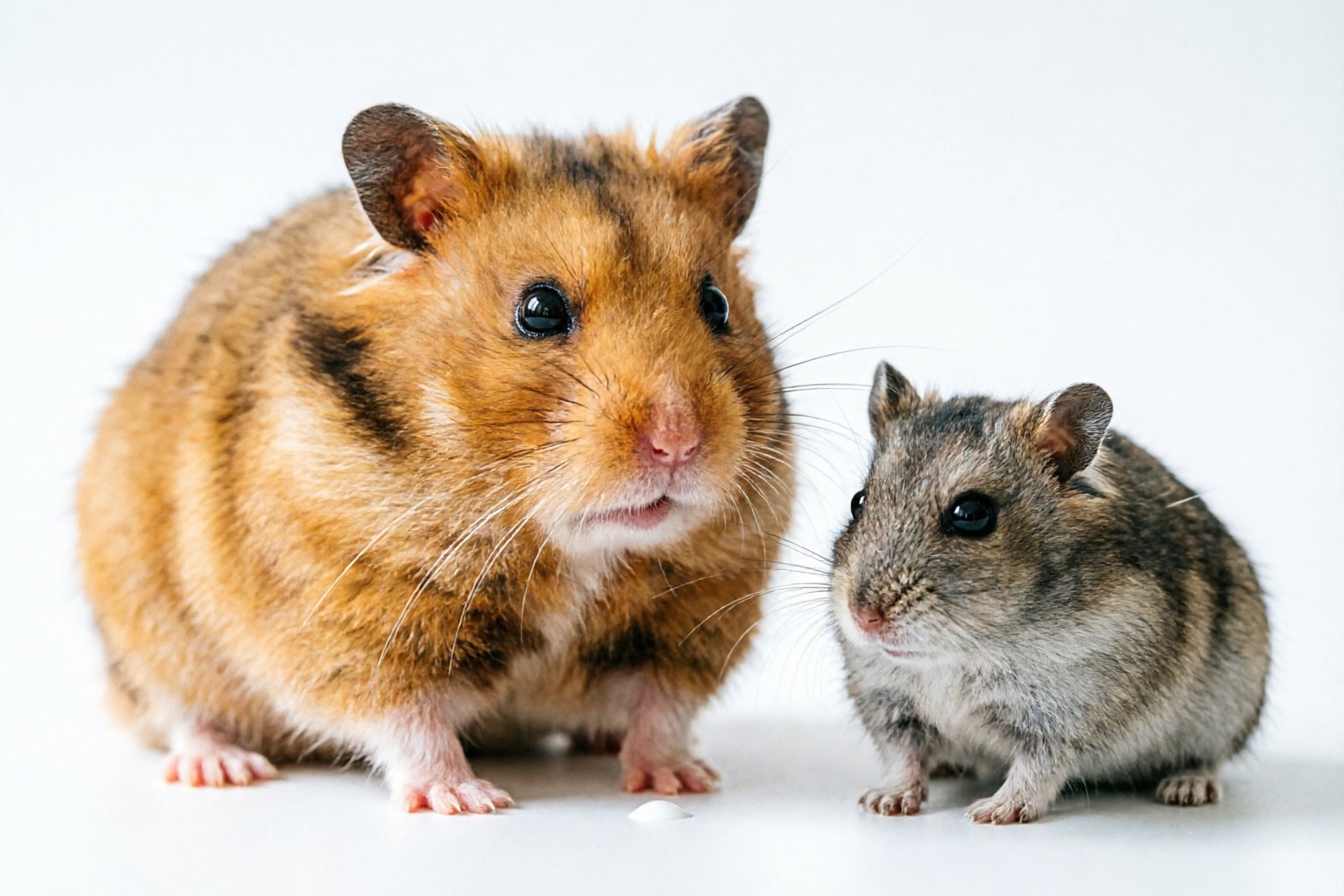
Thinking about getting a hamster but unsure which of the types of hamsters is right for you? You’re not alone — with five different pet hamster species available, each with vastly different sizes, temperaments, and care requirements, choosing can feel overwhelming.
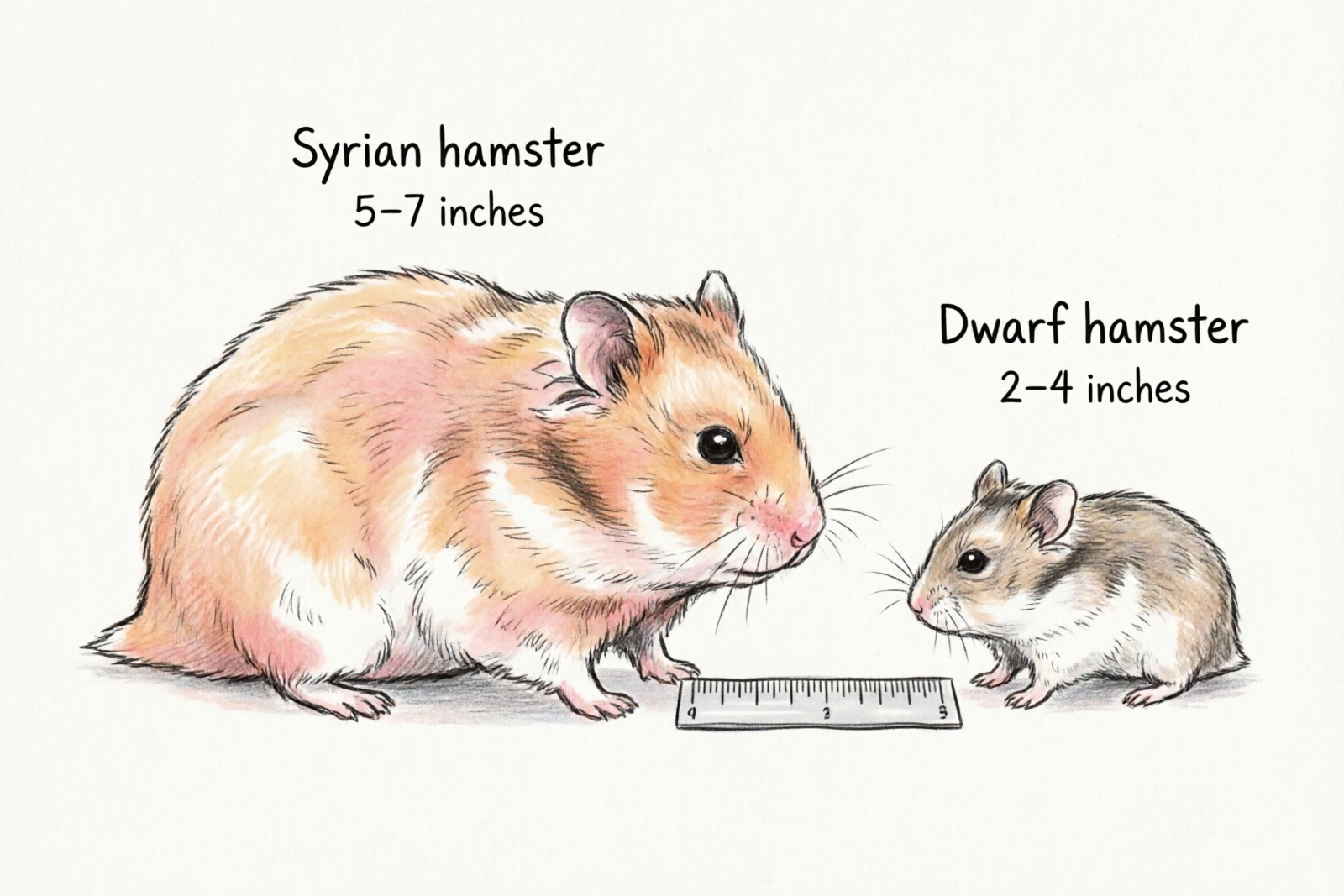
The truth is, not all hamsters make equally good pets for every situation. A Syrian hamster grows to seven inches and needs a large cage; a Roborovski dwarf barely reaches two inches and is too fast for most people to handle. Some breeds are perfect for first-time owners, while others require experienced care.
This hamster species guide covers all five pet hamster breeds in detail: Syrian (Golden), Roborovski dwarf, Campbell’s dwarf, Winter White dwarf, and Chinese hamster. You’ll find a complete comparison table, visual identification tips, breed-specific product recommendations, and a decision flowchart to help you choose the perfect hamster for your lifestyle.
How Many Hamster Breeds Are There?
Pet Hamsters vs Wild Hamsters
In the wild, there are over 20 recognized hamster species across several genera. However, only a handful have been domesticated and are commonly kept as pets. This guide focuses exclusively on the five species you’ll find in pet stores and from reputable breeders.
The 5 Popular Pet Hamster Breeds
The five hamster breeds commonly kept as pets are:
- Syrian Hamster (Golden Hamster, Teddy Bear Hamster) — the largest and most popular
- Roborovski Dwarf Hamster — the smallest and fastest
- Campbell’s Dwarf Hamster — active and prone to diabetes
- Winter White Dwarf Hamster — known for seasonal coat color changes
- Chinese Hamster — mouse-like appearance with a longer tail
Each breed has unique characteristics, care requirements, and personality traits. Understanding these differences is essential before bringing a hamster home.
Syrian Hamster (Golden Hamster) — The Giant Teddy Bear
The Syrian hamster is the most popular pet hamster breed — and for good reason. They’re large, docile, and typically the easiest to tame, making them ideal for first-time owners and families with children.
Physical Characteristics
When comparing Syrian hamster vs dwarf hamster breeds, Syrians are the largest of all:
- Body length: 5–7 inches (13–18 cm)
- Weight: 120–150 grams
- Lifespan: 2–3 years
- Appearance: Stout, round body with short tail. Available in short-hair (classic Golden), long-hair (Teddy Bear or Fancy Bear), and various color patterns including satin, rex, and hairless varieties.
The long-haired Syrian varieties are often sold as “Teddy Bear hamsters” or “Fancy Bear hamsters” — these are simply Syrian hamsters with a long-hair gene, not a separate species. If you’re looking for fluffy hamster breeds, the long-haired Syrian is your best option.
Temperament and Behavior
Syrian hamsters are known for their calm, docile temperament:
- Generally friendly and tolerate handling well once tamed
- Solitary by nature — they must live alone after 6–8 weeks of age
- Nocturnal — most active in the evening and night
- Slower moving than dwarf breeds, which makes them easier to handle
Their larger size and slower speed make Syrian hamsters the best choice for children and people who want a hamster they can interact with regularly.
Syrian Hamster Care Requirements
Because of their larger size, Syrian hamsters need appropriately sized equipment:
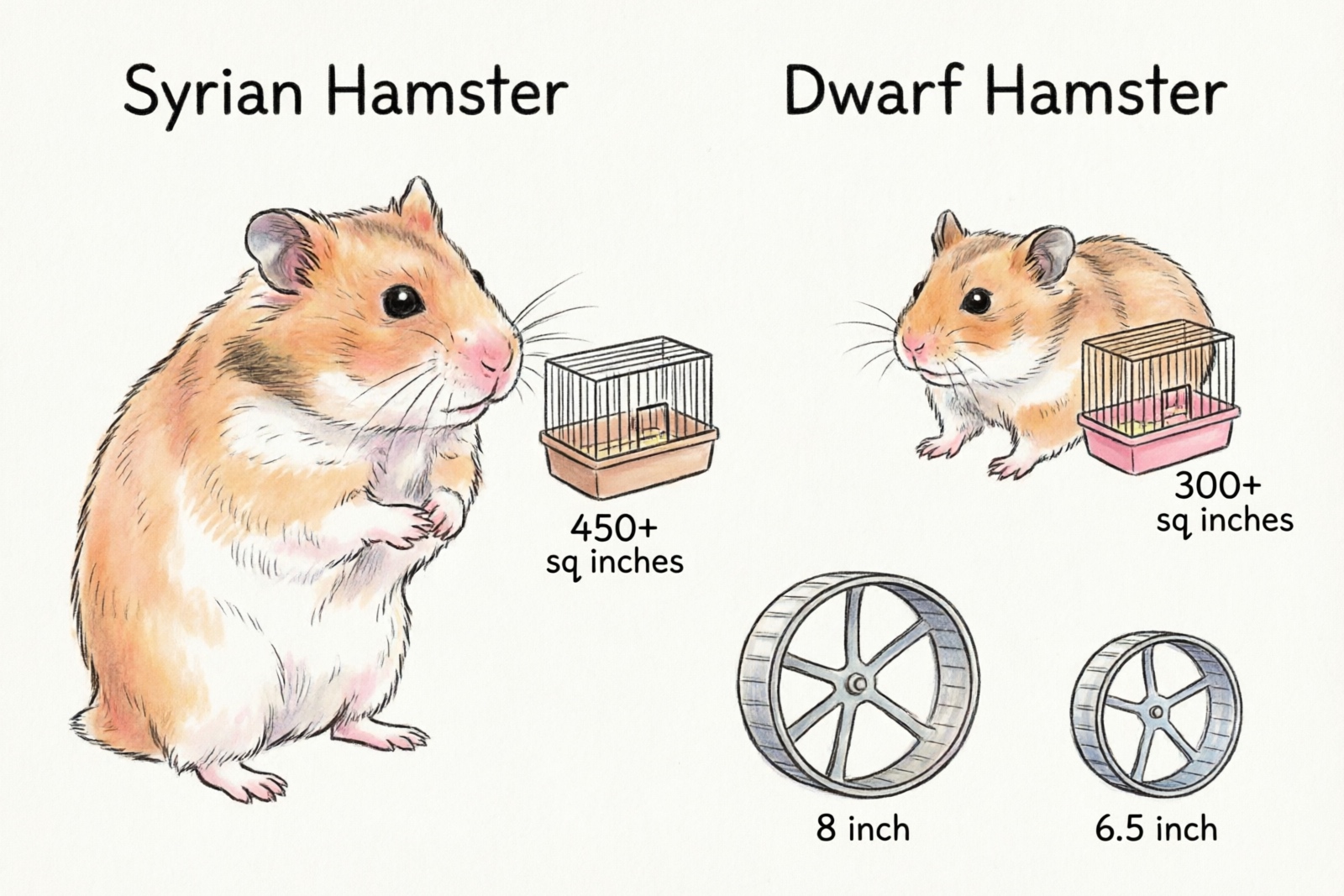
- Cage size: Minimum 100 × 50 cm (approximately 40 × 20 inches) of continuous floor space
- Wheel size: 8.5–12 inches in diameter (smaller wheels cause spinal arching)
- Bedding depth: At least 6 inches for burrowing
For housing, many Syrian owners use large DIY bin cages. The Sterilite 116 Quart Ultra Latch Box ($26.20) provides excellent floor space at a budget-friendly price. See our Syrian hamster cage size guide for detailed recommendations.
For exercise, the Niteangel Super-Silent Hamster Wheel (10.5”) ($36.99) is an excellent choice for Syrians. The 10.5-inch diameter prevents the spinal curvature that occurs when large hamsters run on too-small wheels.
Is Syrian Hamster Right for You?
✅ Choose Syrian if you:
- Are a first-time hamster owner
- Want a hamster you can handle regularly
- Have space for a larger cage
- Have children who want to interact with their pet
❌ Consider another breed if you:
- Want to keep multiple hamsters together (Syrians are strictly solitary)
- Have limited cage space
- Prefer watching over handling
Small Hamster Breeds: Dwarf Hamsters — Tiny but Energetic
Dwarf hamsters are significantly smaller than Syrians and have different care requirements. There are four dwarf hamster species commonly kept as pets, each with unique characteristics.
Roborovski Dwarf Hamster
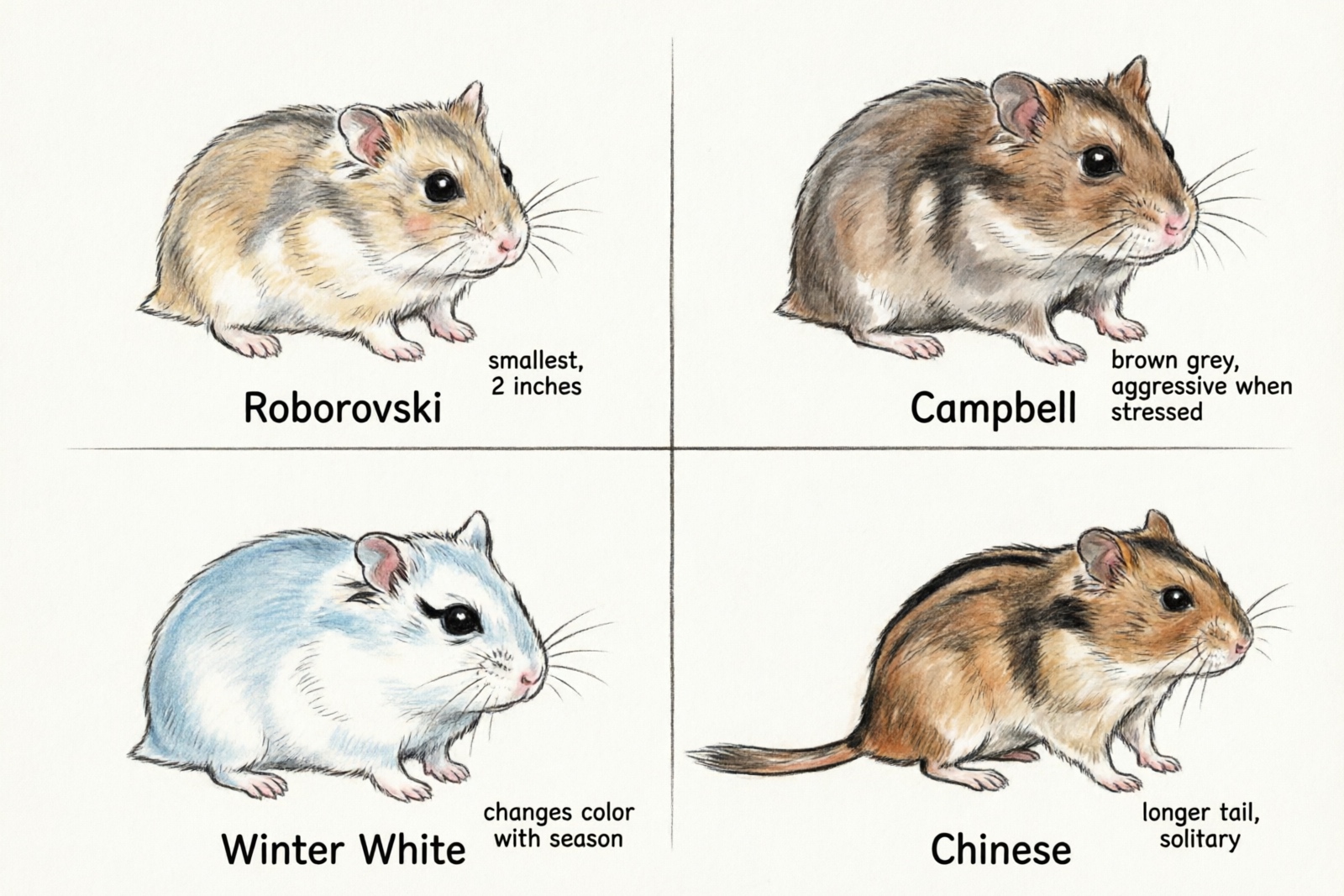
The Roborovski (often called “Robo”) is the smallest and fastest hamster breed:
- Body length: 2–2.5 inches (5–6 cm)
- Weight: 20–25 grams
- Lifespan: 3–3.5 years (longest of all hamster breeds)
- Appearance: Sandy/golden brown with white “eyebrow” markings
Temperament: Robos are extremely fast and generally do not enjoy being held. They’re best suited as “look but don’t touch” pets for people who enjoy watching their energetic behavior. Their speed and small size make them difficult for children to handle safely.
Best for: Experienced owners who want an entertaining, active pet to observe rather than cuddle.
Campbell’s Dwarf Hamster
Campbell’s dwarf hamsters are slightly larger than Robos and more tolerant of handling:
- Body length: 3–4 inches (8–10 cm)
- Weight: 30–50 grams
- Lifespan: 1.5–2 years
- Appearance: Gray-brown fur with a dark dorsal stripe
Temperament: Active and curious, Campbell’s dwarfs can be tamed with patience, though they’re generally more skittish than Syrians.
Important health note: Campbell’s dwarf hamsters have a genetic predisposition to diabetes. If you choose this breed, you must feed a low-sugar diet from day one. For detailed information about managing this risk, see our guide to hamster diabetes.
Winter White Dwarf Hamster
Winter Whites are similar in size to Campbell’s but have a unique seasonal trait:
- Body length: 3–4 inches (8–10 cm)
- Weight: 30–50 grams
- Lifespan: 1.5–2 years
- Appearance: Gray with dark dorsal stripe; in winter, some turn nearly white (hence the name)
Temperament: Generally calmer and gentler than Campbell’s dwarfs, making them one of the better dwarf breeds for handling. They’re still fast, so supervision is important during interaction.
Note: Many hamsters sold as Winter Whites in pet stores are actually Campbell’s/Winter White hybrids. Purebred Winter Whites are increasingly rare in the pet trade.
Chinese Hamster
Chinese hamsters are technically not true dwarf hamsters, but they’re often grouped with them due to their similar size:
- Body length: 3–4 inches (8–10 cm)
- Weight: 30–45 grams
- Lifespan: 2–3 years
- Appearance: More mouse-like with a longer, visible tail
Temperament: Calm and docile, Chinese hamsters can become quite tame. They’re excellent climbers and benefit from vertical cage space.
Important: Chinese hamsters are solitary and must be housed alone. Additionally, some U.S. states require permits to own them, so check local regulations before getting one. This makes them one of the rare hamster breeds in the pet trade.
Dwarf Hamster Care Requirements
All dwarf hamsters need smaller equipment than Syrians:
- Cage size: Minimum 80 × 40 cm (approximately 31 × 16 inches) of continuous floor space
- Wheel size: 6–8 inches in diameter
- Bedding depth: At least 6 inches for burrowing
- Social housing: Unlike Syrians, some dwarf breeds can potentially be housed together if they’re same-sex littermates introduced young — but this is not guaranteed, and fights can occur
For housing, the Sterilite 32-Quart Clear View Latch Box ($34.99) works well as a DIY dwarf hamster cage. For detailed instructions, see our DIY bin cage tutorial.
For exercise, the Niteangel Super-Silent Hamster Wheel (8.5”) ($33.99) is appropriately sized for dwarf breeds.
Hamster Breed Comparison Table
The table below provides a quick comparison of all five pet hamster breeds to help you make an informed decision.
| Breed | Size | Lifespan | Temperament | Handling Difficulty | Social Needs |
|---|---|---|---|---|---|
| Syrian | 5–7” | 2–3 years | Docile, friendly | Easy | Solitary (alone) |
| Roborovski | 2–2.5” | 3–3.5 years | Fast, shy | Difficult | Can pair (same-sex) |
| Campbell’s | 3–4” | 1.5–2 years | Active, curious | Moderate | Can pair (same-sex) |
| Winter White | 3–4” | 1.5–2 years | Gentle, calmer | Moderate | Can pair (same-sex) |
| Chinese | 3–4” | 2–3 years | Calm, docile | Moderate | Solitary (alone) |
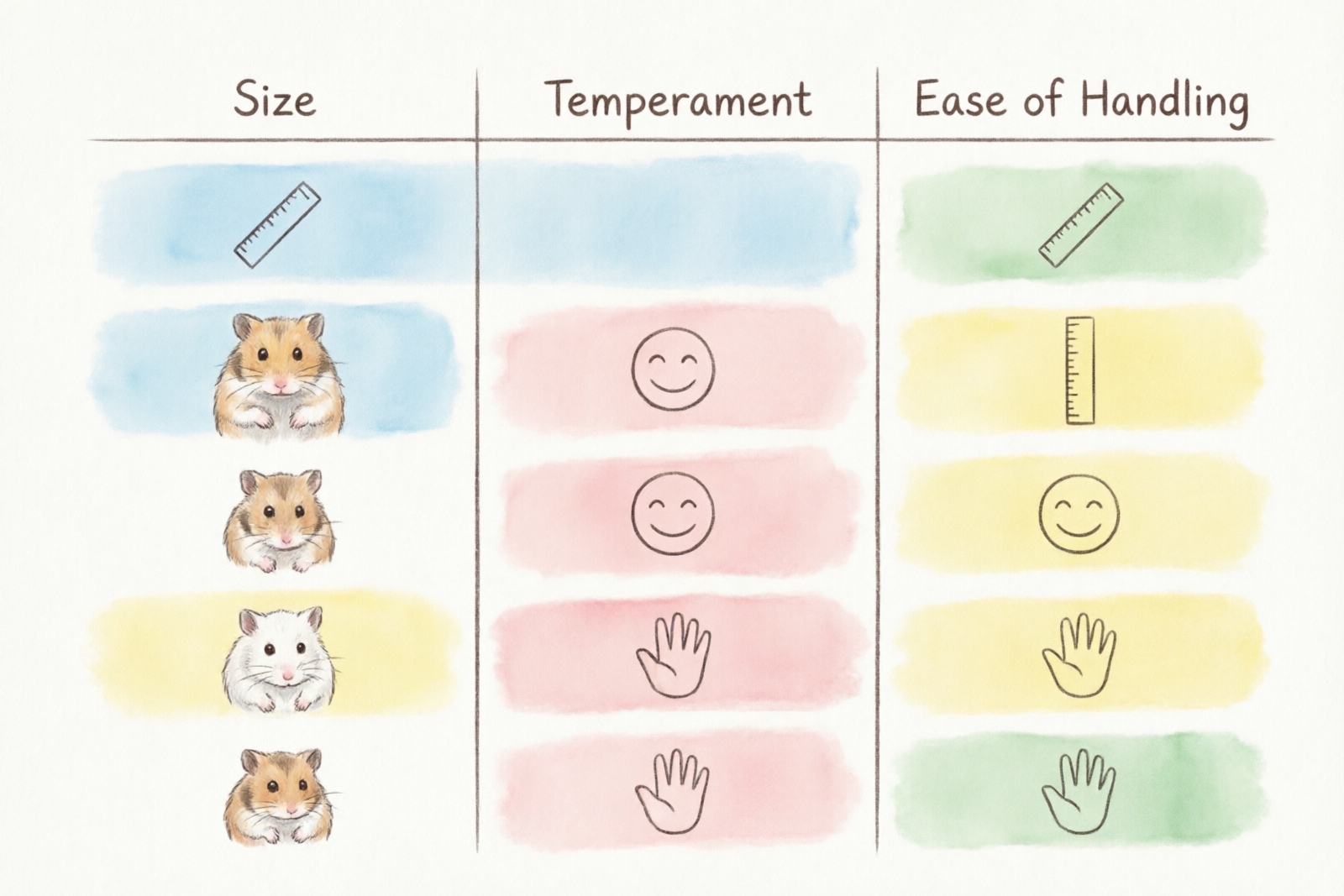
Key takeaways:
- Syrian hamsters are the largest and easiest to handle
- Roborovskis live the longest but are the hardest to handle
- Campbell’s and Winter Whites have the shortest lifespans
- Chinese hamsters are solitary like Syrians despite their dwarf size
Hamster Breeds with Pictures — Visual Guide
Understanding what each breed looks like helps you identify them at pet stores and choose the right hamster for you.
Syrian Hamster Visual Features
Syrian hamsters have a robust, rounded body with a very short tail. They come in many colors including golden (the classic wild color), cream, cinnamon, sable, and patterned varieties. Long-haired Syrians have flowing fur that can be several inches long, especially on males.
Key identifiers: Large size, round body, short tail, variety of coat types
Roborovski Dwarf Visual Features
Roborovskis are tiny with sandy-brown fur and distinctive white patches above their eyes (like eyebrows). They’re the only dwarf species without a dorsal stripe. Their legs are relatively long for their size, contributing to their speed.
Key identifiers: Smallest breed, white “eyebrows,” no dorsal stripe, sandy color
Campbell’s Dwarf Visual Features
Campbell’s dwarfs have gray-brown fur with a dark stripe running down their back (dorsal stripe). They have a rounded body shape and relatively short tail.
Key identifiers: Dorsal stripe, gray-brown color, rounded body
Winter White Dwarf Visual Features
Winter Whites look similar to Campbell’s dwarfs but with some differences. They have a darker, more contrasting dorsal stripe and a slightly different body shape. In winter, some develop a white or light gray coat — this is where their name comes from.
Key identifiers: Dark dorsal stripe, possible winter coat change, pearl white variety available
Chinese Hamster Visual Features
Chinese hamsters look distinctly mouse-like with a longer, thinner body and a visible tail (about 1 inch long). They have gray-brown fur with a dorsal stripe but a more elongated head than other dwarfs.
Key identifiers: Mouse-like appearance, visible tail, elongated body
Which Hamster Breed Should You Choose?
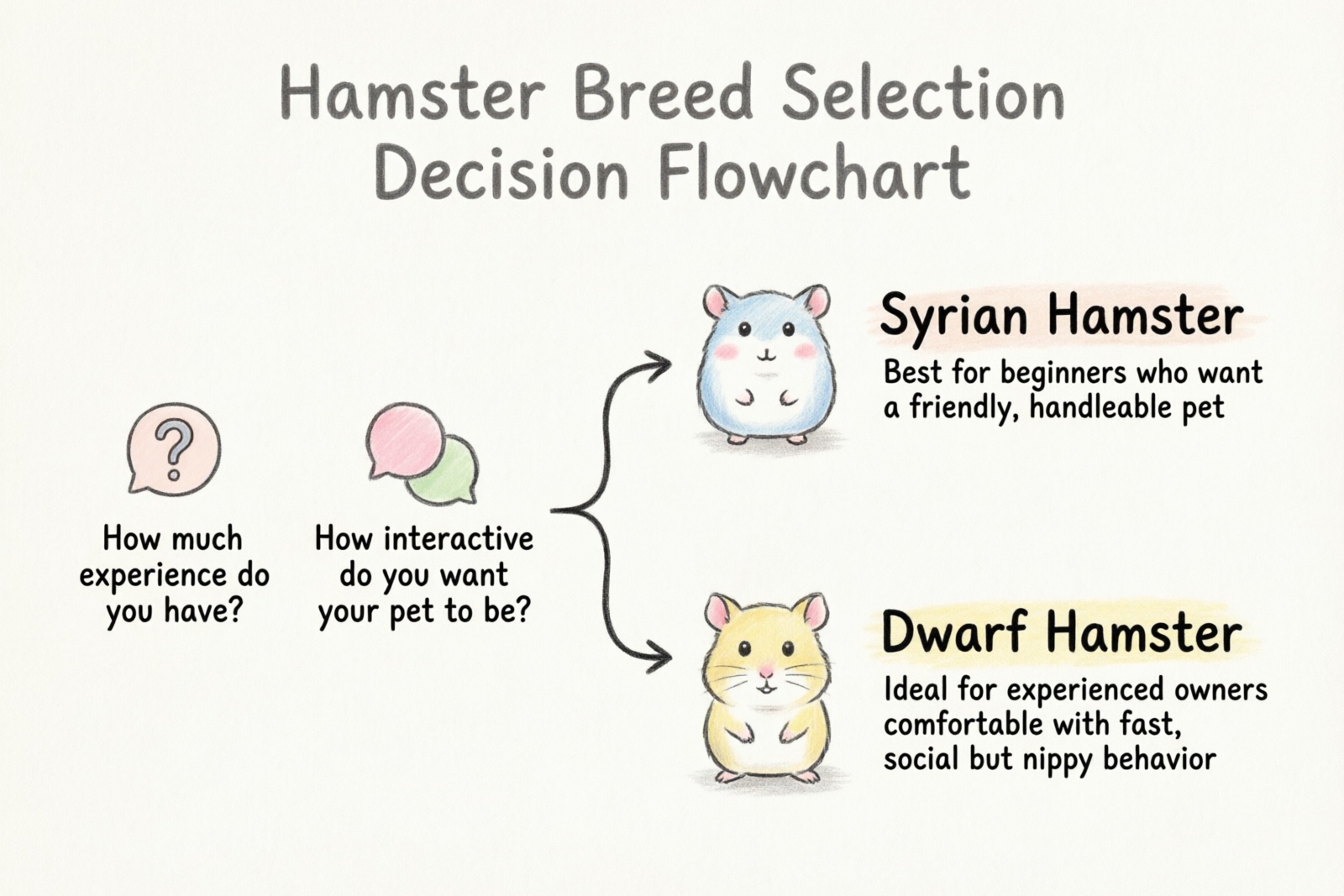
Choosing the right hamster breed depends on your experience level, housing situation, and what you want from a pet.
Decision Flowchart
The flowchart below helps you quickly identify which breed matches your needs.
Best for Families with Children
Syrian hamster is the clear winner for families. Their large size makes them easy for children to see and hold, and their calm temperament means less risk of biting when handled gently. Children can actually interact with a Syrian — holding, petting, and playing — which creates a more rewarding pet experience.
Best for Apartment Living
Dwarf hamsters (especially Roborovskis) work well in smaller spaces because their cage size requirements are smaller. A 32-quart bin cage or equivalent works for dwarfs, whereas Syrians need larger enclosures. Dwarfs are also generally quieter than Syrians.
Best for Watching, Not Handling
Roborovski dwarf hamsters are entertaining to watch as they zoom around their cage, dig tunnels, and interact with each other. If you want a pet that’s fascinating to observe but don’t feel the need to hold them, Robos are perfect. Their long lifespan (3+ years) means you’ll have years of entertainment.
Best for Experienced Owners
Chinese hamsters are rewarding for experienced owners who appreciate their unique climbing abilities and calm temperament. Their permit requirements in some areas and need for vertical cage enrichment make them less suitable for beginners.
Best Hamster for Beginners: Top Recommendations
Top Pick: Syrian Hamster
For first-time hamster owners, the Syrian hamster is the best choice:
- Easy to handle: Large size and calm nature make them less likely to be accidentally hurt or dropped
- Simple housing: Solitary by nature — no complex social dynamics to manage
- Forgiving: More tolerant of minor husbandry mistakes than dwarf breeds
- Interactive: Enjoy human interaction once tamed
Syrian hamsters give new owners the highest chance of a successful, enjoyable pet experience. For a complete guide to getting started, see our first-time hamster owner guide.
Second Choice: Winter White Dwarf
If you specifically want a smaller hamster, Winter White dwarfs are the best dwarf breed for beginners:
- Gentler than Campbell’s: Less likely to nip when nervous
- Manageable size: Small but not so tiny that handling becomes impossible
- Engaging personality: Active and interesting to watch
The trade-off: Winter Whites require more patience to tame than Syrians, and their smaller size means more care during handling.
Breeds to Avoid as First Hamster
Roborovski dwarfs: Too fast and small for easy handling. Many first-time owners become frustrated that they can’t interact with their pet. Choose Robos only if you’re comfortable with a “watch only” pet.
Campbell’s dwarfs: Their genetic predisposition to diabetes requires specialized diet knowledge. New owners may not recognize early symptoms or know how to manage this condition properly.
Breed-Specific Product Recommendations
Different hamster breeds need different-sized equipment. Using the wrong size cage or wheel can cause health problems.
Syrian Hamster Essentials
| Item | Product | Price | Why It Works |
|---|---|---|---|
| Cage | Sterilite 116 Quart Ultra Latch Box | $26.20 | Large floor space (468 sq in) at budget price |
| Wheel | Niteangel 10.5” Wheel | $36.99 | Correct size protects Syrian’s spine |
| Hideout | Hamiledyi Wooden Hideout | $6.99 | Natural wood, chew-safe |
| Bedding | Kaytee Clean & Cozy Bedding | $19.95 | Dust-free, absorbent |
| Food | Kaytee Supreme Hamster Food | $5.99 | Balanced nutrition |
Dwarf Hamster Essentials
| Item | Product | Price | Why It Works |
|---|---|---|---|
| Cage | Sterilite 32-Quart Clear View Latch Box | $34.99 | Appropriate size for dwarfs |
| Wheel | Niteangel 8.5” Wheel | $33.99 | Dwarf-appropriate size |
| Hideout | Hamiledyi Wooden Hideout | $6.99 | Works for all breeds |
| Bedding | Kaytee Clean & Cozy Bedding | $19.95 | Works for all breeds |
| Food | Kaytee Supreme Hamster Food | $5.99 | For non-diabetic dwarfs only |
Important note for Campbell’s dwarfs: Because of diabetes risk, Campbell’s dwarf hamsters should be fed a low-sugar diet, not standard commercial mixes with fruit and sugary ingredients. See our hamster diet guide for appropriate food choices.
Caring for Your Hamster by Breed
Each hamster breed has specific care considerations that go beyond the basics.
Syrian-Specific Care
- Housing alone is non-negotiable: Syrian hamsters will fight to the death if housed together. Even siblings must be separated by 6–8 weeks of age.
- Larger equipment required: Syrians need bigger cages (100 × 50 cm minimum) and larger wheels (8.5–12 inches). A too-small wheel causes permanent spinal damage.
- Long-haired Syrians need grooming: If you have a long-haired Syrian (Teddy Bear), gently brush their coat weekly to prevent matting.
For complete setup instructions, see our guide on how to set up a hamster cage.
Dwarf-Specific Care
- Group housing is possible but risky: Same-sex littermates raised together may coexist peacefully, but fights can break out at any time. Have a backup cage ready.
- Correct wheel size matters: Dwarf wheels should be 6–8 inches. Wheels that are too small cause back problems; wheels that are too large are hard to push.
- Campbell’s diabetes management: Feed a low-sugar diet from day one. Avoid all fruit, honey treats, and high-sugar commercial mixes.
For more information about exercise needs, see our hamster exercise and wheel guide.
Chinese Hamster-Specific Care
- Solitary despite dwarf classification: Chinese hamsters must live alone — they’re actually closer to Syrian hamsters in social behavior.
- Provide climbing opportunities: Chinese hamsters are excellent climbers. Add branches, ladders, and vertical platforms to their cage.
- Check permit requirements: Some U.S. states require permits to own Chinese hamsters. Verify your local laws before purchasing.
Common Questions About Hamster Breeds (FAQ)
Which hamster breed is the friendliest?
Syrian hamsters are generally the friendliest and most tolerant of handling. Their larger size and calmer nature make them less skittish than dwarf breeds. Syrians typically bond well with their owners and enjoy gentle interaction once tamed.
Can different hamster breeds live together?
No, never. Different hamster species cannot be housed together. Even within the same species, Syrian and Chinese hamsters are strictly solitary. Dwarf breeds (Robo, Campbell’s, Winter White) may tolerate same-sex littermates, but this is not guaranteed and requires backup housing in case of conflict.
Which hamster is best for kids?
Syrian hamsters are the best choice for children. Their large size makes them easy to hold, they’re less likely to be injured by accidental squeezing, and their calm temperament means fewer bites. Children can successfully interact with and care for a Syrian with proper supervision.
How long do hamsters live by breed?
- Roborovski: 3–3.5 years (longest)
- Syrian: 2–3 years
- Chinese: 2–3 years
- Campbell’s: 1.5–2 years
- Winter White: 1.5–2 years
What’s the smallest hamster breed?
The Roborovski dwarf hamster is the smallest pet hamster breed, measuring just 2–2.5 inches and weighing only 20–25 grams.
What’s the largest hamster breed?
The Syrian hamster (Golden Hamster) is the largest pet hamster breed, growing 5–7 inches long and weighing 120–150 grams — roughly 4–5 times larger than dwarf breeds.
Conclusion
Choosing the right hamster breed sets the foundation for a rewarding pet ownership experience. The five pet hamster breeds each offer something different:
- Syrian hamsters are the best all-around choice for handling and interaction
- Roborovskis offer years of entertainment as active, fascinating pets to watch
- Winter Whites provide a gentle dwarf option for those wanting a smaller pet
- Campbell’s dwarfs require diabetes-aware feeding but are engaging pets
- Chinese hamsters offer unique climbing abilities and a calm demeanor
Next steps:
- Decide what you want from your hamster (interaction vs. observation)
- Choose the breed that matches your experience level and lifestyle
- Prepare appropriately sized housing and equipment for your chosen breed
- Find a reputable breeder or consider adoption from a hamster rescue