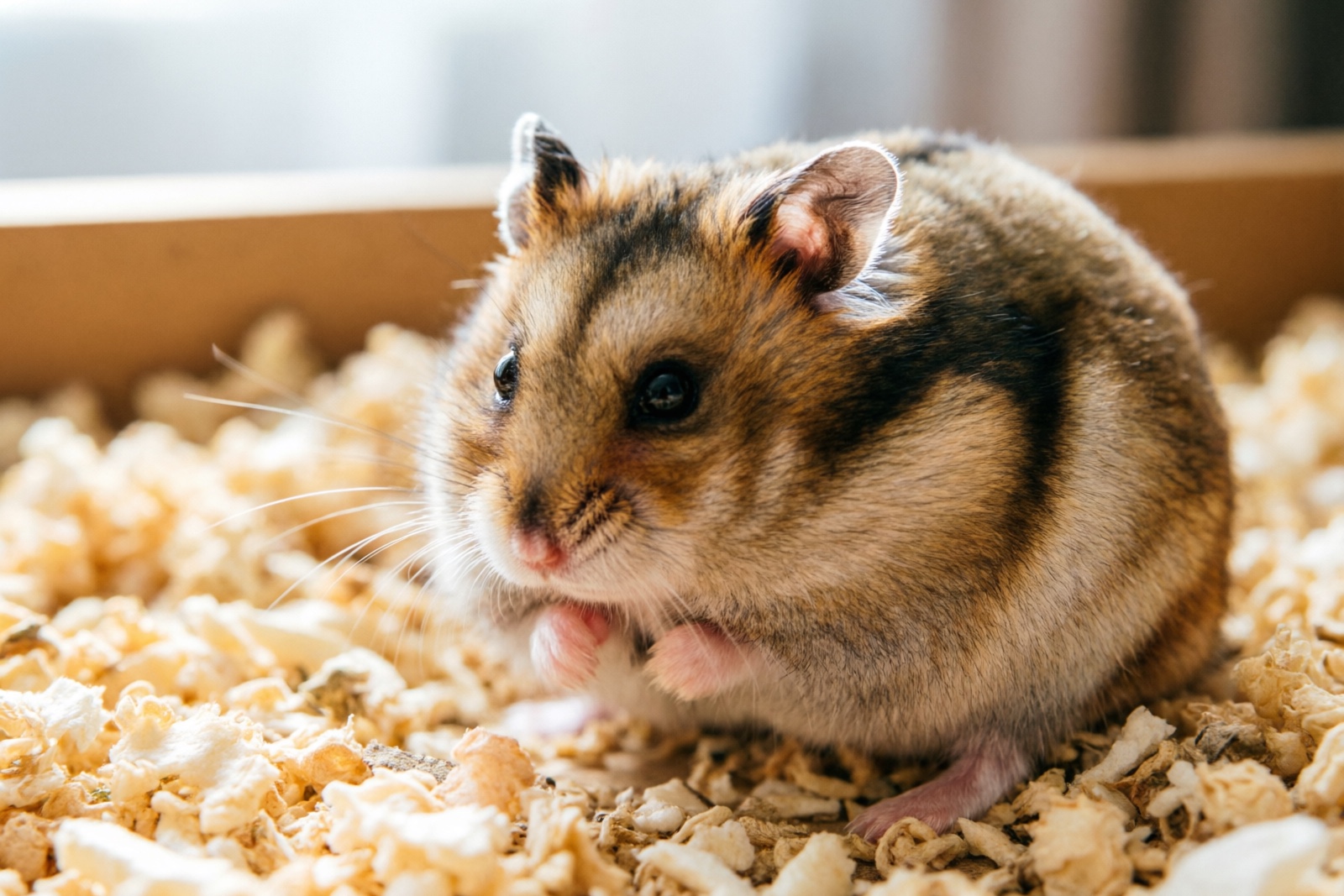
Hamsters communicate constantly through their body language, sounds, and behaviors—but most owners miss these important signals. Understanding what your hamster is telling you prevents stress, builds trust, and helps you provide better care. This guide decodes hamster communication so you can truly understand your furry friend.
New to hamsters? See our Beginner’s Guide to learn the basics before diving into behavior.
Why Understanding Hamster Behavior Matters
Hamsters Are Prey Animals
As prey animals, hamsters have evolved to:
- Hide illness and weakness (to avoid appearing vulnerable)
- Be constantly alert for threats
- Communicate subtly (obvious signals attract predators)
- React quickly to perceived danger
This means your hamster’s signals are often subtle and easily missed.
Benefits of Understanding Behavior
When you understand your hamster’s language:
- ✅ Spot health issues early (behavioral changes often precede obvious symptoms)
- ✅ Reduce stress (avoid situations that frighten your hamster)
- ✅ Build trust faster (respond appropriately to their needs)
- ✅ Prevent bites (recognize warning signs)
- ✅ Improve quality of life (provide what they need for happiness)
Key Insight: A hamster that feels understood is a happier, healthier hamster.
Reading Hamster Body Language
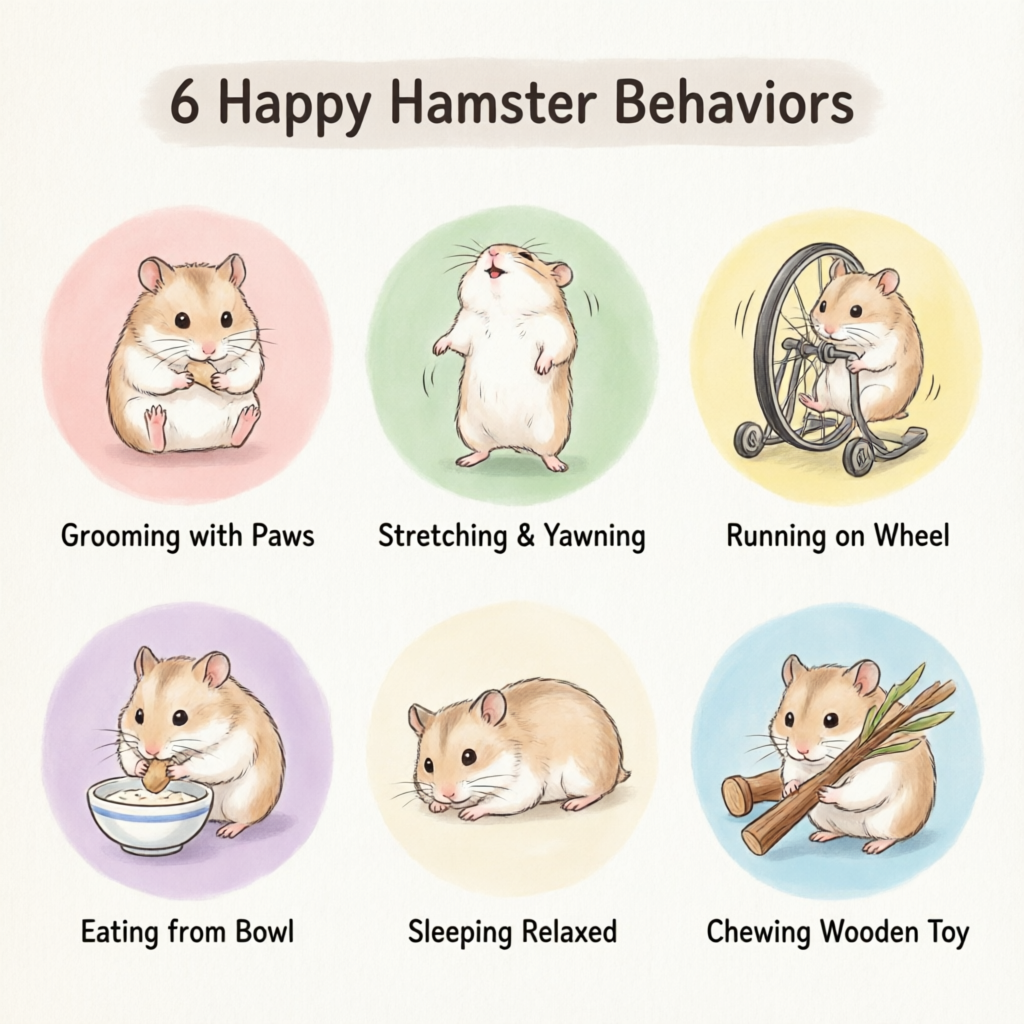
Positive Behaviors (Happy & Content)
1. Grooming
What it looks like: Hamster cleaning face, fur, or paws What it means: Comfort and contentment
- Hamsters groom when they feel safe
- Grooming in your presence shows trust
- Excessive grooming may indicate stress (see below)
2. Stretching and Yawning
What it looks like: Full-body stretch, open mouth yawn What it means: Relaxation and comfort
- Often seen after waking up
- Indicates feeling secure in environment
- “Hamster yoga” shows happiness
3. Running and Playing
What it looks like: Energetic movement, exploring, using wheel What it means: Good health and happiness
- Healthy hamsters are active at night
- Binkying (happy hops/jumps) = pure joy
- Exploring shows curiosity and confidence
4. Eating and Drinking Normally
What it looks like: Regular food and water consumption What it means: Physical health and comfort
- Sudden changes in appetite = potential health issue
- Hoarding food is normal (not overeating)
5. Sleeping in Open Positions
What it looks like: Sprawled out, not in a tight ball What it means: Deep relaxation and security
- Hamsters only sleep openly when feeling very safe
- Curled in a ball = normal
- Flat on back or side = extremely comfortable
6. Chewing on Toys
What it looks like: Gnawing on wood, cardboard, or chew toys What it means: Normal dental maintenance + contentment
- Teeth grow continuously (chewing is essential)
- Destructive chewing on cage bars = stress (see below)
Negative Behaviors (Stress, Fear, or Illness)
1. Bar Biting / Cage Chewing
What it looks like: Biting or chewing on cage bars repeatedly What it means: STRESS - serious issue requiring attention Causes:
- Cage too small
- Boredom (not enough enrichment)
- Wanting to escape
- Habit (if started from stress, can continue)
Solutions:
- Provide larger cage (minimum 450 sq inches for Syrians)
- Add more toys and enrichment
- Increase out-of-cage time
- Provide chew toys (redirect behavior)
Important: Bar biting damages teeth and indicates poor welfare. Address immediately.
2. Freezing
What it looks like: Hamster suddenly stops moving completely, may stand on hind legs What it means: Fear or alertness to potential threat
- Natural prey response to perceived danger
- Trying to assess situation
- Common in new environments
What to do:
- Stay still and quiet
- Don’t make sudden movements
- Give hamster time to relax
- Identify and remove stressor if possible
3. Biting
What it looks like: Hamster bites you (obvious!) What it means: Fear, pain, or territorial defense Reasons for biting:
- Fear: Handled too soon, not tame, startled
- Pain: Injured or ill (check for other symptoms)
- Territorial: Protecting nest or food
- Mistaking finger for food: If hands smell like food
What to do:
- Don’t react dramatically (no yelling or dropping)
- Gently return hamster to cage
- Wash wound with soap and water
- Assess cause (taming needed? health issue?)
- See hamster handling guide for taming tips
4. Hissing or Screaming
What it looks like: Vocal sounds (rare in hamsters) What it means: Extreme fear or aggression
- Rare (hamsters are usually silent)
- Indicates severe stress or threat
- Back off immediately if you hear this
5. Excessive Grooming
What it looks like: Over-grooming one area, hair loss, raw skin What it means: Stress, skin parasites, or allergies
- Can indicate mites or fungal infection
- Stress from environment or boredom
- See vet if persistent
6. Lethargy / Lack of Activity
What it looks like: Sleeping all the time, not moving much when awake What it means: Illness, old age, or improper temperature
- Healthy hamsters are active at night
- Lethargy is a serious symptom
- Check temperature (65-75°F ideal)
- See vet immediately if accompanied by other symptoms
7. Cage Climbing / Monkey Barring
What it looks like: Hanging from cage top, climbing walls frantically What it means: Stress, boredom, or desire to escape
- Often related to cage size or lack of enrichment
- Can indicate need for more exercise
8. Pacing / Circling
What it looks like: Repeating the same path over and over What it means: Stereotypic behavior from stress or boredom
- Sign of psychological distress
- Indicates enclosure is inadequate
- Requires environmental enrichment and/or larger cage
Red Flag: Any sudden behavioral change warrants attention. Hamsters hide illness well, so behavior is often the first indicator.
Wet tail can cause sudden behavioral changes — learn the signs to catch it early.
Toys affect behavior — explore our hamster toys guide for enrichment ideas that reduce stress and boredom.
Understanding Hamster Sounds
Hamsters are generally quiet animals, but they do vocalize. Understanding these sounds helps you respond appropriately.
Common Hamster Sounds
1. Squeaking / Chirping
What it sounds like: Short, high-pitched sounds What it means:
- Mild annoyance or protest
- Baby hamsters: Communicating with mother
- Excitement in some contexts
- Usually not serious
2. Hissing
What it sounds like: Sharp exhale, snake-like hiss What it means: WARNING - fear or aggression
- Back off immediately
- Give hamster space
- Assess what caused this reaction
3. Chattering Teeth
What it sounds like: Rapid teeth grinding or clicking What it means: Irritation, annoyance, or aggression
- Warning signal
- Often precedes biting
- Give hamster space
4. Screaming
What it sounds like: Loud, piercing cry What it means: EXTREME FEAR OR PAIN
- Rare but serious
- Immediate threat or severe distress
- Investigate cause immediately
5. Purring
What it sounds like: Low, rhythmic sound (rare in hamsters) What it means: Contentment (similar to cats, but uncommon in hamsters)
- Some hamsters make soft sounds when relaxed
- Very subtle, easily missed
Note: Most hamster communication is non-vocal. Pay more attention to body language than sounds.
Hamster Sleep Patterns
Understanding Natural Rhythms
Hamsters are crepuscular to nocturnal:
- Most active: Dawn and dusk (crepuscular) or nighttime (nocturnal)
- Sleep during day: 12-14 hours in one stretch
- Wake at night: Energetic, exploring, exercising
Sleep Behavior
Normal Sleep
- Curled in a ball or sprawled (if very comfortable)
- Deep sleep (hard to wake)
- In nest or hide house
- May twitch or move (dreaming)
Sleep Disturbances
- Waking frequently: Could indicate illness or stress
- Sleeping in unusual spots: Temperature too hot/cold, or feeling insecure
- Difficulty waking: Could indicate illness or torpor (see below)
Torpor (Hibernation-like State)
What it is: Deep sleep state triggered by cold temperatures
- Not true hibernation, but similar
- Triggered by temperatures below 60°F (15°C)
- Can be fatal if not warmed gradually
Signs of torpor:
- Cold to the touch
- Very slow breathing
- Limp body
- Unresponsive
What to do:
- Don’T assume death - hamster may be in torpor
- Warm gradually (hold against your body, use heating pad on LOW)
- Don’t force food or water
- Once active, offer warm fluids
- Prevent future occurrences (maintain 65-75°F)
Critical: Many hamsters are mistakenly buried alive in torpor. Always warm a “dead” hamster before disposing.
Social Behavior
Solitary Nature
Most hamsters are solitary and must live alone:
- Syrian hamsters: STRICTLY solitary, will fight to the death if housed together
- Dwarf hamsters: Some can coexist in same-sex pairs IF introduced young, but still risky
- Chinese hamsters: Generally solitary
Signs of Aggression (If Housed Together)
If you’re attempting to house dwarf hamsters together, watch for:
- Chasing
- Biting
- Squealing
- One hamster preventing another from eating/drinking
- Injuries (scratches, bites, wounds)
If you see these signs: Separate immediately. Even long-time “friends” can suddenly turn aggressive.
Play vs. Fighting
Play (rare in adult hamsters):
- Gentle chasing
- Taking turns
- No squealing or distress sounds
- Breaks off quickly
Fighting:
- Aggressive chasing
- Loud squealing
- Biting (especially on rear/belly)
- Ball of fighting hamsters
- One hamster clearly trying to escape
Recommendation: House all hamsters separately to avoid stress, injury, and death. The risk is not worth it.
Hamster Scent Marking
Why Hamsters Mark
Hamsters have scent glands and use scent to:
- Mark territory
- Navigate (follow their own scent trails)
- Communicate with other hamsters (in wild)
- Feel secure (familiar scent = safe)
Types of Scent Marking
1. Flank Gland Marking (Syrian Hamsters)
What it looks like: Rubbing sides/hips against objects
- Syrian hamsters have visible flank glands (dark spots on hips)
- They rub these against cage items to mark territory
- More common in males
2. Belly Dragging
What it looks like: Dragging belly along ground or objects
- Marks area with scent
- Creates familiar environment
3. Cheek Gland Marking
What it looks like: Rubbing cheeks on items
- All hamsters have cheek glands
- Used to mark food, bedding, toys
Is Scent Marking Normal?
- ✅ Yes, completely normal. It’s natural behavior that helps hamsters feel secure in their environment.
Nesting Behavior
Why Hamsters Build Nests
- Security: Hide from perceived threats
- Warmth: Conserve body heat during sleep
- Comfort: Soft place to rest
- Storage: Some hamsters keep food in nest
Nesting Materials
Safe nesting materials:
- Unscented toilet paper (rip into strips)
- Paper bedding (Carefresh, Kaytee Clean & Cozy)
- Hemp bedding
- Torn paper towels
Avoid:
- ❌ Cotton bedding (fiber can wrap around limbs, cause choking)
- ❌ Cedar or pine shavings (respiratory issues)
- ❌ Scented materials
Excessive Nesting
If your hamster is building multiple large nests:
- Normal in some hamsters (personality trait)
- Could indicate stress (trying to feel secure)
- Pregnancy sign (in females housed with males)
Hoarding Behavior
Why Hamsters Hoard
Hamsters are natural hoarders:
- In wild, food is scarce and unpredictable
- Cheek pouches allow carrying large amounts
- Hoarding is instinct, not a sign of hunger
Where Hamsters Hoard
- In nest
- In hide house
- Buried in bedding
- Various secret spots around cage
Is Hoarding Normal?
- ✅ Yes, completely normal and healthy. Let your hamster hoard.
What NOT to do:
- Don’t remove hoard daily (causes stress)
- Don’t limit food to prevent hoarding
What to do:
- Provide enough food for hoarding
- Check hoard weekly (remove fresh foods that can rot)
- Clean hoard during cage cleaning only
Digging and Burrowing
Natural Behavior
In the wild, hamsters:
- Dig extensive burrow systems (up to 3 feet deep)
- Create multiple chambers (sleeping, food storage, bathroom)
- Spend significant time underground
In Captivity
Provide digging opportunities:
- Deep bedding (minimum 3-4 inches, deeper is better)
- Safe substrate (paper-based, hemp, aspen)
- Digging box (container with deeper bedding)
Benefits:
- Mental stimulation
- Exercise
- Natural behavior expression
- Stress relief
Excessive Digging
If your hamster digs frantically at corners:
- Could indicate stress or escape attempt
- Provide more bedding and enrichment
- Check cage size (too small?)
Temperature Regulation Behavior
How Hamsters Regulate Temperature
Hamsters can’t sweat effectively. They regulate temperature through:
- Moving to warmer/cooler areas
- Burrowing (cooler underground)
- Adjusting nest thickness
- Spreading out (cooling) or curling up (warming)
Signs of Overheating
- Lying flat, spread out
- Panting (rapid breathing)
- Lethargy
- Warm to the touch
- Seeking cool surfaces (tile, glass)
What to do:
- Move to cooler area immediately
- Offer cool (not cold) water
- Place ceramic tile in cage (cool surface)
- Never put hamster in fridge or cold water (shock)
Ideal temperature: 65-75°F (18-24°C)
Signs of Being Too Cold
- Huddled in ball
- Shivering
- Torpor (see above)
- Seeking warmth
What to do:
- Provide extra bedding
- Move cage to warmer location
- Use heating pad (under part of cage, not all)
- Maintain consistent temperature
Age-Related Behavior Changes
Young Hamsters (Under 3 months)
- Very active: High energy, exploring
- Nervous: More skittish, startles easily
- Fast metabolism: Eat and drink more
- Learning: Figuring out environment
Adult Hamsters (3-18 months)
- Settled: Established routines
- Peak activity: Most energetic life stage
- Trainable: Best age for taming and interaction
Senior Hamsters (18+ months)
- Slower: Less active, more sleeping
- May develop arthritis: Stiff movement
- Weight changes: May gain or lose weight
- More rest: Need softer bedding, easier access to food/water
- Behavioral changes: May become less social or more irritable
Care tip: Adjust care for senior hamsters. Provide softer bedding, lower platforms, easy access to essentials.
Common Behavior Problems (And Solutions)
Problem 1: Biting
Causes:
- Not tame / not used to handling
- Startled (woken suddenly)
- Handled incorrectly
- Pain or illness
- Hands smell like food
Solutions:
- See hamster handling guide for taming steps
- Wake hamster gently (don’t grab while sleeping)
- Handle correctly (scoop, don’t grab from above)
- Wash hands before handling (remove food smells)
- Check for health issues if biting is new behavior
Problem 2: Not Using Wheel
Causes:
- Wheel too small (back arched)
- Wheel broken / stuck
- Wheel too loud
- Hamster ill or injured
- Wrong type (mesh/wire wheels dangerous)
Solutions:
- Provide appropriate-sized wheel (8-12” for Syrians, 6-8” for dwarfs)
- Ensure wheel spins freely
- Use solid surface wheel (not mesh)
- Check for health issues
- Some hamsters need time to learn
Problem 3: Sleeping All Day AND Night
Causes:
- Illness
- Old age
- Wrong temperature (too cold or hot)
- Depression / stress
- Not enough enrichment
Solutions:
- See vet if sudden change
- Check temperature (65-75°F)
- Add enrichment (toys, foraging)
- Ensure cage is large enough
- Look for other symptoms (diarrhea, discharge, weight loss)
Problem 4: Aggression Toward Owner
Causes:
- Fear / not tame
- Hormonal (especially intact males)
- Territorial over cage
- Pain or illness
Solutions:
- Go back to taming basics (patience, treats)
- Interact outside cage (neutral territory)
- Consider neutering (consult vet)
- Check for health issues
- Don’t punish aggression (makes it worse)
Problem 5: Escape Attempts
Causes:
- Cage too small
- Boredom
- Natural instinct to explore
Solutions:
- Provide larger cage
- Add enrichment and toys
- Ensure out-of-cage time in playpen
- Secure cage properly (check locks)
Building Trust Through Behavior Understanding
Signs Your Hamster Trusts You
- ✅ Doesn’t hide when you approach
- ✅ Comes to cage front to greet you
- ✅ Takes treats from your hand
- ✅ Grooms in your presence
- ✅ Relaxed body language (not freezing or fleeing)
- ✅ Willing to climb onto your hand
How to Build Trust
- Be patient: Taming takes days to weeks
- Move slowly: No sudden movements
- Talk softly: Let hamster get used to your voice
- Offer treats: Associate you with good things
- Don’t force interaction: Let hamster come to you
- Handle gently: Correct technique builds confidence
- Respect boundaries: If hamster retreats, give space
See detailed taming guide: Hamster Handling & Taming
Summary: Reading Your Hamster
Quick Reference Guide
| Behavior | Meaning |
|---|---|
| Grooming | Content, comfortable |
| Stretching/yawning | Relaxed |
| Active, exploring | Happy, healthy |
| Freezing | Alert, afraid |
| Bar biting | Stressed (cage too small/bored) |
| Biting | Fear, pain, or territorial |
| Hissing/screaming | Extreme fear |
| Lethargy | Illness (see vet) |
| Excessive grooming | Stress or skin issue |
| Hoarding | Normal instinct |
| Scent marking | Normal territorial behavior |
| Sleeping openly | Very secure |
Red Flags (See Vet Immediately)
🚨 Sudden lethargy or inactivity 🚨 Not eating or drinking 🚨 Wet tail (diarrhea + lethargy) 🚨 Difficulty breathing 🚨 Abnormal posture (hunched, arched back) 🚨 Discharge from eyes/nose 🚨 Sudden aggression in tame hamster
Frequently Asked Questions (FAQ)
1. Why does my hamster bite me?
Common reasons: Not tame, startled, handled incorrectly, hands smell like food, or pain/illness. Work on taming and ensure gentle handling.
2. Why does my hamster chew on cage bars?
Stress indicator: Usually means cage is too small or hamster is bored. Provide larger cage and more enrichment.
3. Why is my hamster sleeping all the time?
Possible causes: Illness, old age, or wrong temperature. If sudden change, see vet immediately.
4. Why does my hamster freeze sometimes?
Fear response: Hamster feels threatened or hears something alarming. Stay still and quiet, let hamster relax.
5. Why does my hamster stuff food in its cheeks?
Natural hoarding behavior: Hamsters carry food to storage areas. Completely normal.
6. Can hamsters learn their names?
Not likely, but they can learn to recognize your voice and associate it with you/treats.
7. Why is my hamster more active at night?
Nocturnal/crepuscular: Natural sleep cycle. Hamsters are most active at dawn/dusk and nighttime.
8. Why does my hamster groom so much?
Normal if moderate: Grooming is self-care. Excessive grooming (hair loss, raw skin) indicates stress or parasites.
9. Is it normal for hamsters to eat their poop?
Yes: Hamsters produce two types of droppings. They eat “cecotropes” (soft, nutrient-rich droppings) to absorb more nutrients. Normal and healthy.
10. Why does my hamster run on the wheel so much?
Natural instinct: Wild hamsters run miles each night. Wheel running is healthy exercise. If excessive (8+ hours), may indicate stress.
Advanced Behavior Interpretation
Context is Everything
Hamster behavior must be interpreted in context:
- Time of day: Nocturnal/crepuscular activity is normal
- Recent events: New cage, new pet, loud noise = stress behaviors
- Age: Young hamsters more active, seniors slow down
- Health: Illness changes behavior suddenly
- Individual personality: Some hamsters naturally more active/quiet
Behavioral Combinations
Hamsters often display multiple behaviors together:
Happy Hamster:
- Active exploration + relaxed posture
- Grooming after waking
- Eating and drinking normally
- Using wheel
- Popcorning (jumping for joy)
Stressed Hamster:
- Bar biting + pacing + lethargy
- Hiding excessively + not eating
- Aggressive when handled
- Hyperactivity or unusual stillness
Sick Hamster:
- Lethargy + not eating + hunched posture
- Not grooming (messy coat)
- Not using wheel
- Unusual aggression or passivity
- See vet immediately
Behavioral Changes Over Time
New Hamster (First 1-2 weeks):
- May be shy, hide frequently
- Establishing territory
- Getting used to sounds/smells
- Normal to be less active
Settled Hamster (After 2 weeks):
- More confident exploration
- Regular activity patterns
- Comfortable with routine
Seasonal Changes:
- More active in cooler weather
- May slow down in extreme heat
- Some species have seasonal coat changes
Age-Related Changes:
- Young: Very active, learning, exploring
- Adult: Stable activity patterns
- Senior (18+ months): Slower, less active, may sleep more
Behavioral Problems and Solutions
Problem 1: Bar Biting
Causes: Boredom, cage too small, stress, habit
Solutions:
- Larger cage (450+ sq inches for Syrian, 400+ for dwarfs)
- More enrichment (toys, chews, tunnels, digging box)
- Wheel access (appropriate size, always available)
- Ignore the behavior (attention reinforces it)
- Bar covers (paper, cardboard - replace when chewed)
Problem 2: Excessive Sleeping
Causes: Normal (nocturnal), illness, depression, age
Solutions:
- If eating/drinking normally = likely normal
- If sudden change + other symptoms = see vet
- Senior hamsters sleep more = normal
- Ensure cage is in quiet, dark area during day
Problem 3: Aggression
Causes: Fear, pain, territorial, hormonal, not tamed
Solutions:
- Never punish (makes it worse)
- Check for illness (pain causes aggression)
- Go back to trust-building (start over with taming)
- Give hamster space
- Some hamsters are naturally more aggressive = respect personality
Problem 4: Lethargy
Causes: Illness, stress, old age, wrong temperature
Solutions:
- Check temperature (65-75°F ideal)
- Look for other symptoms (not eating, drinking, hunched)
- If sudden = see vet immediately
- If gradual + old age = may be normal aging
Problem 5: Pacing
Causes: Stress, cage too small, boredom, habit
Solutions:
- Larger cage
- More enrichment (change layout, add toys)
- Wheel (if not using, check size)
- Out-of-cage time (playpen)
- Ignore pacing (attention reinforces)
Problem 6: Not Using Wheel
Causes: Wrong size, stuck, illness, wrong type
Solutions:
- Check size (too small = uncomfortable)
- Ensure wheel spins freely
- Try different wheel type (solid vs. mesh)
- Place in different location
- Check for illness (if not moving much in general)
Real-World Behavior Examples
Example 1: The Nightly Routine
Behavior: Hamster wakes at 8 PM, grooms for 5 minutes, eats, drinks, runs on wheel for 2 hours, explores cage, naps, wakes again at 2 AM
Meaning: Normal, healthy behavior pattern for nocturnal hamster
Action: Enjoy watching! Your hamster is thriving.
Example 2: The New Hamster
Behavior: Brought hamster home 3 days ago. Hasn’t come out of hide. Only eats/drinks at night when no one is watching.
Meaning: Normal adjustment period. Hamster is scared and getting used to new environment.
Action: Be patient. Give hamster space. Don’t try to handle yet. Wait 1-2 weeks before taming.
Example 3: The Bar Biter
Behavior: Hamster constantly bites cage bars, especially at night. Loud chewing sound.
Meaning: Bored, frustrated, cage may be too small.
Action: Upgrade cage size. Add more toys, chews, wheel. Provide playpen time. Ignore bar biting (don’t give attention).
Example 4: The Sick Hamster
Behavior: Normally active hamster suddenly lethargic, hunched, not eating, messy coat, sleeping more than usual.
Meaning: Illness. This is an emergency.
Action: See vet immediately. Small animals deteriorate quickly.
Example 5: The Popcorning Hamster
Behavior: Hamster suddenly jumps and twists in air, lands, runs, jumps again.
Meaning: Extreme happiness! This is a “popcorn” - like a happy dance.
Action: Enjoy! Your hamster is expressing joy.
Example 6: The Pouching Hamster
Behavior: Hamster stuffs food in cheek pouches until face is bulging, carries to hide, empties pouches, returns for more.
Meaning: Normal foraging and hoarding behavior. Hamster is storing food for later.
Action: Normal behavior. Ensure hamster has enough food.
Example 7: The Aggressive Tamer
Behavior: Every time you try to handle hamster, it bites, hisses, or rolls on back.
Meaning: Fear, not aggression. Hamster feels threatened.
Action: Go back to step 1 of taming. Spend more time on trust-building. Never force handling.
Behavior and Health Connection
Behavior is often the first sign of illness. Watch for:
- Sudden changes in activity level
- Not eating or drinking (anorexia = emergency)
- Lethargy or unusual stillness
- Hunched posture (pain)
- Messy coat (not grooming)
- Wet tail (diarrhea = emergency)
- Difficulty walking or moving
- Aggression in normally tame hamster
When in doubt, see a vet. Small animals deteriorate quickly.
Finding a Hamster-Savvy Vet
Not all vets treat hamsters. Look for:
- “Exotic animal” vet
- Experience with small mammals
- Emergency services available
- Good reviews from hamster owners
Have vet contact ready before you need it.