Quick Answer: Can Hamsters Eat Grapes?
Yes, hamsters can eat grapes — but with stricter limits than almost any other fruit. Grapes contain 15.48g of sugar per 100g, making them the highest-sugar fruit commonly offered to hamsters. Syrian hamsters can have half a small grape once a week. Dwarf hamsters should get only a tiny piece once every two weeks.
💡 TL;DR: Grapes are the most sugar-dense common fruit, so portion control matters more here than with strawberries or blueberries. Always use seedless grapes, cut into small pieces, and introduce gradually. If you have a dwarf hamster, consider lower-sugar alternatives like cucumber or blueberries instead.
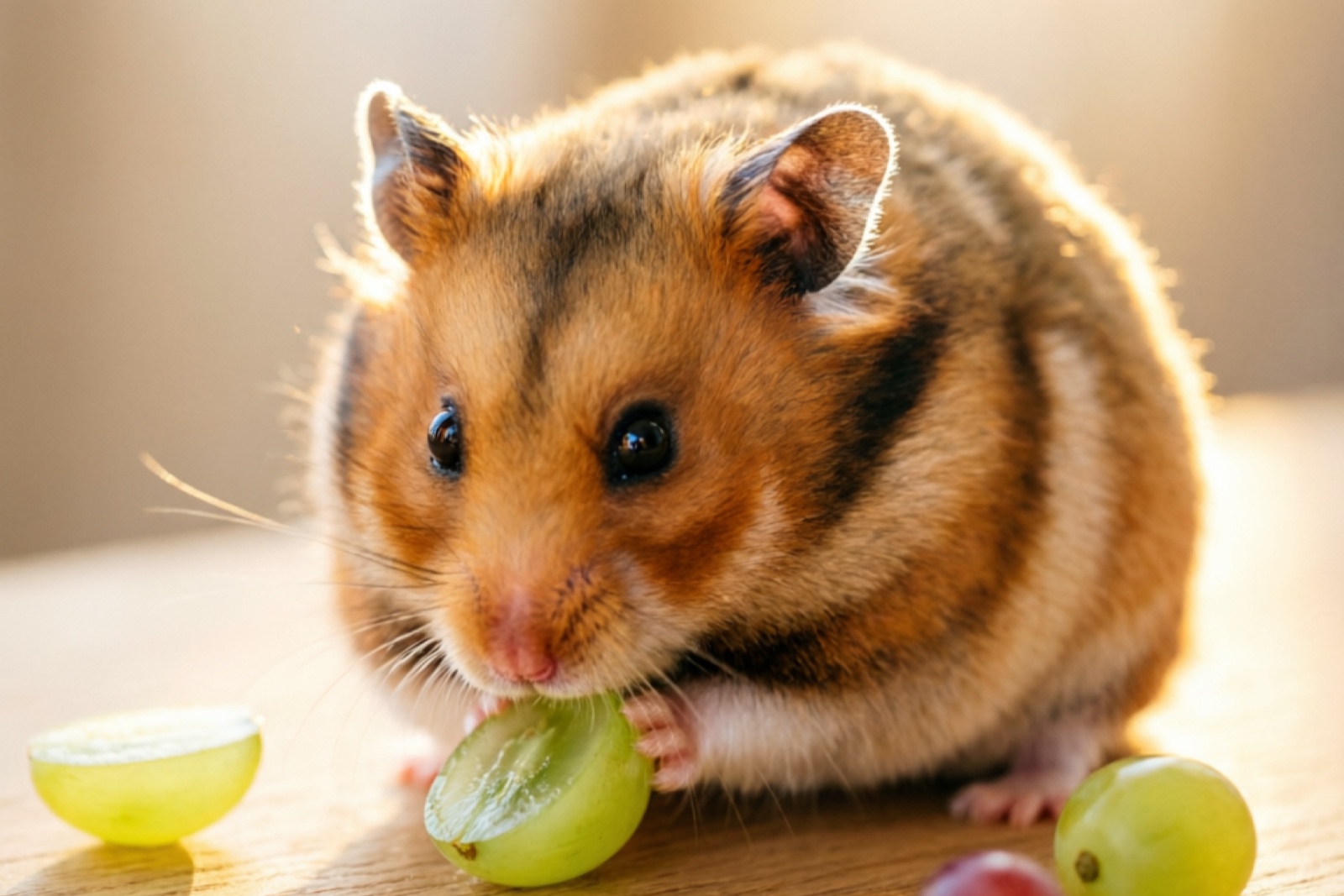
I’ve offered grapes to my Syrian hamsters over the years, and they do enjoy them — but I’ve always treated grapes as a special-occasion treat rather than a regular one. The sugar content is simply too high to justify weekly feeding, especially when there are safer fruit options available. If you’re wondering whether can hamsters eat grapes is a yes or no question, it’s a cautious yes for Syrians and a strong “think twice” for dwarf breeds. Can hamsters eat grapes safely as a regular treat? I’d argue no — there are better options.
For a complete overview of safe foods, see our hamster diet guide.
Nutritional Value of Grapes for Hamsters
Kaytee CritterTrail Off To School is a quality option worth considering for your setup.
USDA nutritional data — raw grapes (red or green, European type), per 100g USDA FDC ID 09035 — “Grapes, red or green, raw”:
| Nutrient | Per 100g Grapes | Per Half Grape (~3g) | Benefit for Hamsters |
|---|---|---|---|
| Calories | 69 kcal | ~2.1 kcal | Moderate — fine in tiny portions |
| Sugar | 15.48g | ~0.46g | Main concern — highest among common fruits |
| Carbohydrates | 18.1g | ~0.54g | High — limit strictly |
| Fiber | 0.9g | ~0.03g | Low — minimal digestive support |
| Vitamin C | 3.2mg | ~0.1mg | Minimal — hamsters synthesize their own |
| Vitamin K | 14.6µg | ~0.4µg | Supports blood clotting |
| Potassium | 191mg | ~5.7mg | Heart and muscle function |
| Water | 80.5% | ~2.4g | Moderate hydration |
| Protein | 0.72g | ~0.02g | Negligible |
| Fat | 0.16g | Negligible | Negligible |
Why Sugar Is the Central Concern
At 15.48g per 100g, grapes have significantly more sugar than other popular hamster fruits. This is the single most important factor when asking can hamsters eat grapes — the answer depends heavily on breed and portion size:
| Fruit | Sugar per 100g | Relative Risk |
|---|---|---|
| Grape | 15.48g | Highest |
| Banana | 12.23g | High |
| Apple | 10.39g | Moderate-High |
| Blueberry | 9.96g | Moderate |
| Strawberry | 4.89g | Lower |
| Watermelon | 6.2g | Lower |
| Cucumber | 1.67g | Safest |
A typical Syrian hamster serving is half a small grape — roughly 3 grams. At that size, you’re looking at about 0.46g of sugar. That’s manageable for a Syrian but pushing it for a dwarf hamster weighing only 25-50 grams. In my experience, blueberries are a better regular fruit choice — they’re naturally portioned at 1-2g each and contain roughly 9.96g of sugar per 100g.
Can Syrian Hamsters Eat Grapes?
Many owners find that Exotic Nutrition Bonding Pouch works well for their pet’s needs.
Yes — Syrian hamsters are the best candidates for occasional grape treats. Their larger body size (120-200g) and relatively low diabetes risk mean they can handle sugar better than dwarf breeds. If you’re asking can hamsters eat grapes, Syrians are the only breed where the answer is a reasonably comfortable yes.
Recommended Serving for Syrians
- Amount: Half a small grape, cut into small pieces
- Frequency: Once per week maximum
- Preparation: Seedless variety, washed thoroughly, cut into pieces no larger than a pea
Syrians tolerate dietary variety well, but I’d still keep grapes to once a week rather than pushing for two. With 15.48g of sugar per 100g, there’s simply no nutritional reason to offer grapes more frequently when safer options exist. Strawberries and blueberries deliver antioxidants with less sugar.
How to Feed Grapes to Syrian Hamsters
- Choose fresh, firm, seedless grapes (green or red are both fine)
- Wash thoroughly under running water to remove pesticide residue
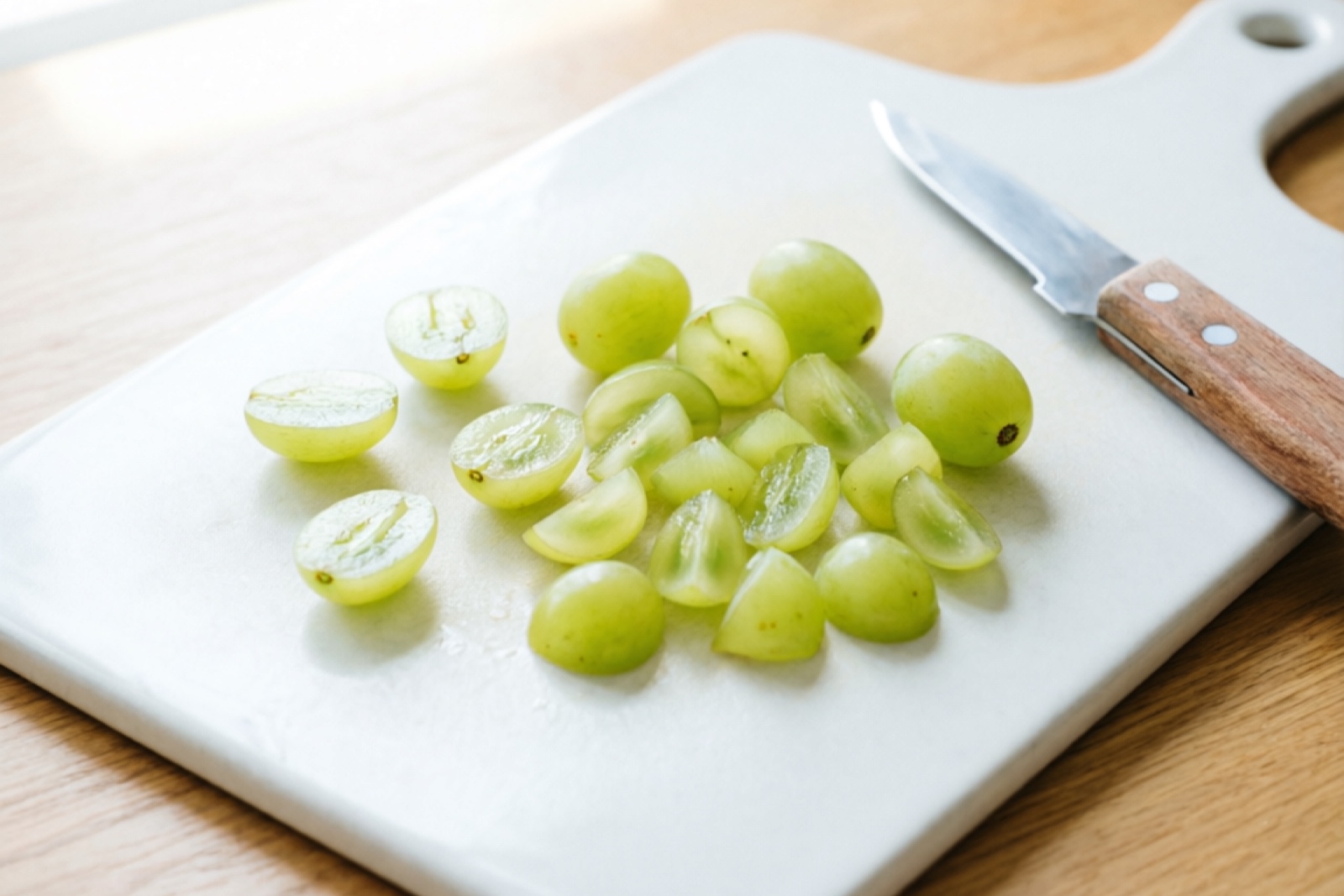
- Cut in half, then slice each half into pea-sized pieces
- Offer in a small dish or by hand for bonding
- Remove any uneaten pieces after 2 hours
If this is your hamster’s first time eating grapes, start with a quarter of the recommended amount and wait 24 hours. Check for normal stool and energy levels before offering the full portion.
Can Dwarf Hamsters Eat Grapes?
For this purpose, BUCATSTATE Carrier + Water Bottle is a popular choice among pet owners.
Yes, but with significant caution and reduced portions. Dwarf hamsters — including Winter Whites and Campbell’s dwarfs — are the most diabetes-prone hamster species. Feeding them the highest-sugar common fruit requires strict portion control. Can hamsters eat grapes if they’re dwarfs? Technically yes, but many owners choose to skip grapes entirely for dwarfs.
⚠️ Dwarf Hamster Diabetes Risk
Campbell’s dwarf hamsters have an estimated diabetes incidence of 10-15% in captivity. The condition is progressive and irreversible — once a hamster develops diabetes, it requires lifelong management with a specialized low-sugar diet and regular glucose monitoring. Grapes, at 15.48g of sugar per 100g, are one of the riskiest fruit choices for dwarfs. For more on this condition, see our hamster diabetes guide. Excess sugar can also contribute to other health problems over time.
Recommended Serving for Dwarfs
- Amount: A quarter of a small grape, cut into tiny pieces — roughly the size of a sesame seed
- Frequency: Once every two weeks maximum
- Preparation: Seedless, washed, cut as small as possible
Many experienced dwarf hamster keepers I’ve spoken with skip grapes entirely and offer blueberries or cucumber instead. If your dwarf is already overweight, has a family history of diabetes, or shows increased thirst and urination, I’d strongly recommend doing the same.
Can Chinese Hamsters Eat Grapes?
Yes, in very small amounts. Chinese hamsters sit between Syrians and dwarfs on the diabetes risk spectrum. They’re more sensitive than Syrians but generally less prone than Campbell’s dwarfs. When it comes to can hamsters eat grapes, Chinese hamsters fall in the middle — proceed with caution.
Recommended Serving for Chinese Hamsters
- Amount: A quarter of a small grape, cut into tiny pieces
- Frequency: Once every one to two weeks
- Preparation: Seedless, washed, cut small
Chinese hamsters are less commonly kept than Syrians or dwarfs, so there’s less anecdotal data available. Based on their body size (30-45g) and metabolic profile, I’d treat them similarly to dwarf hamsters for high-sugar fruits like grapes.
How to Prepare Grapes for Your Hamster
Step 1: Choose the Right Grapes
- Seedless only — Grape seeds are a choking hazard and provide no benefit
- Fresh and firm — Avoid mushy, wrinkled, or moldy grapes
- Green or red — Both are fine nutritionally. Red grapes have slightly more antioxidants (resveratrol), but the difference is minimal at hamster serving sizes
- Organic when possible — Reduces pesticide residue on the skin
Step 2: Wash Thoroughly
Run under cool water for 15-20 seconds. Grapes are on the Environmental Working Group’s “Dirty Dozen” list for pesticide residue, so washing is essential even with organic grapes. I use a soft vegetable brush to clean the surface.
Step 3: Cut into Tiny Pieces
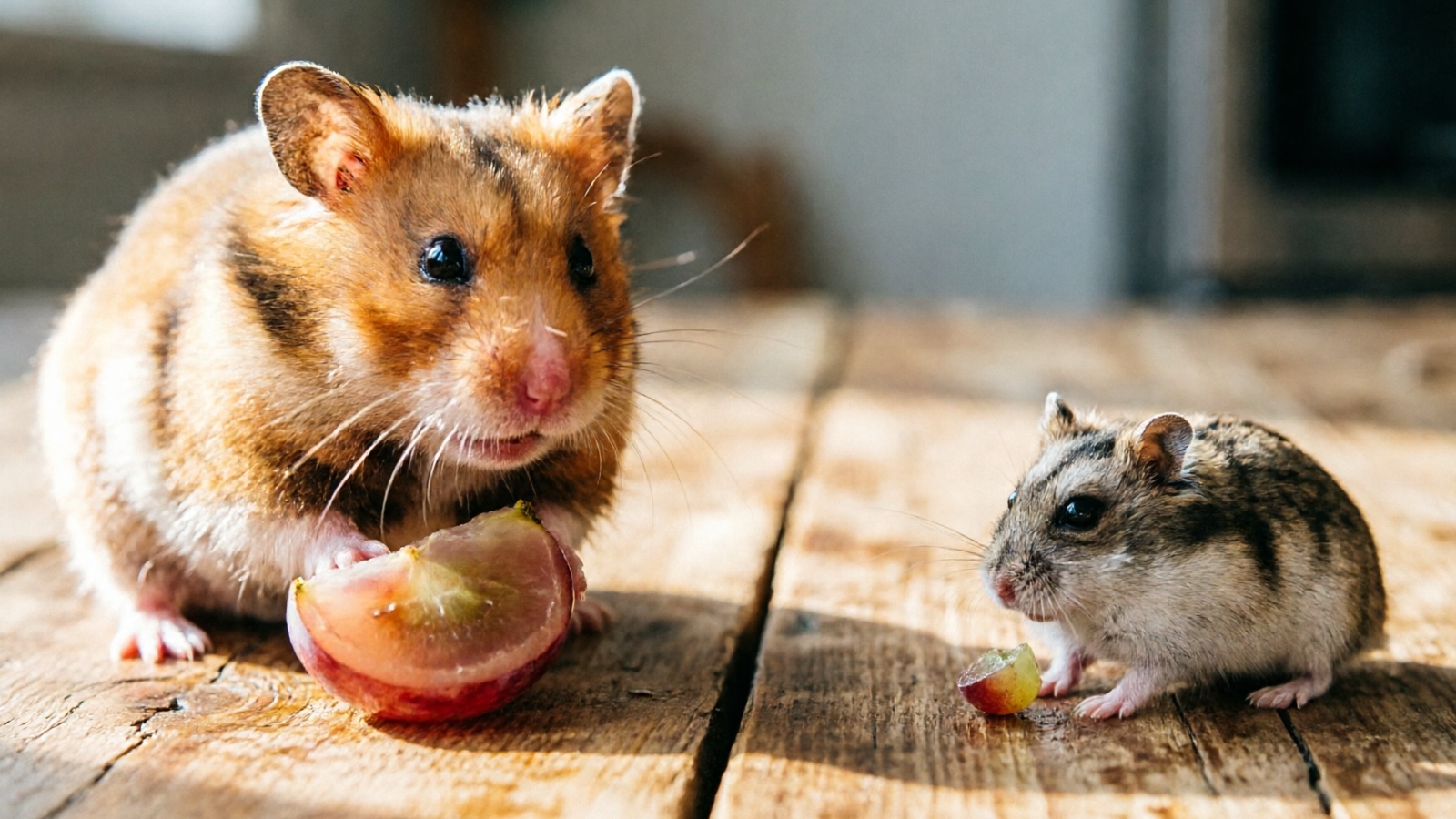
This is critical. A whole grape is a choking hazard for any hamster. For Syrians, cut a grape in half, then slice each half into 2-3 pea-sized pieces. For dwarfs, cut a quarter grape into the smallest pieces possible — sesame seed sized or smaller.
Step 4: Introduce Gradually
If your hamster has never had grapes, offer just one tiny piece and wait 24 hours. Watch for:
- Normal stool (not loose or runny)
- Normal activity level and energy
- No bloating or signs of discomfort
Step 5: Remove Uneaten Pieces After 2 Hours
Fresh fruit spoils quickly at room temperature. Any uneaten grape should be removed to prevent bacterial growth and mold, which can cause respiratory infections and digestive issues.
How Often Can Hamsters Eat Grapes?
| Breed | Frequency | Serving Size | Notes |
|---|---|---|---|
| Syrian Hamster | 1x per week | ½ small grape, cut small | Most sugar-tolerant |
| Dwarf Hamster (WW/CC) | 1x every 2 weeks | ¼ small grape, tiny pieces | High diabetes risk — be conservative |
| Chinese Hamster | 1x every 1-2 weeks | ¼ small grape, tiny pieces | Moderate diabetes risk |
These recommendations assume a healthy hamster at normal weight. If your hamster is overweight, diabetic, or has digestive issues, eliminate fruit entirely and stick to low-sugar vegetables.
What About Grape Products?
Raisins — Absolutely Not
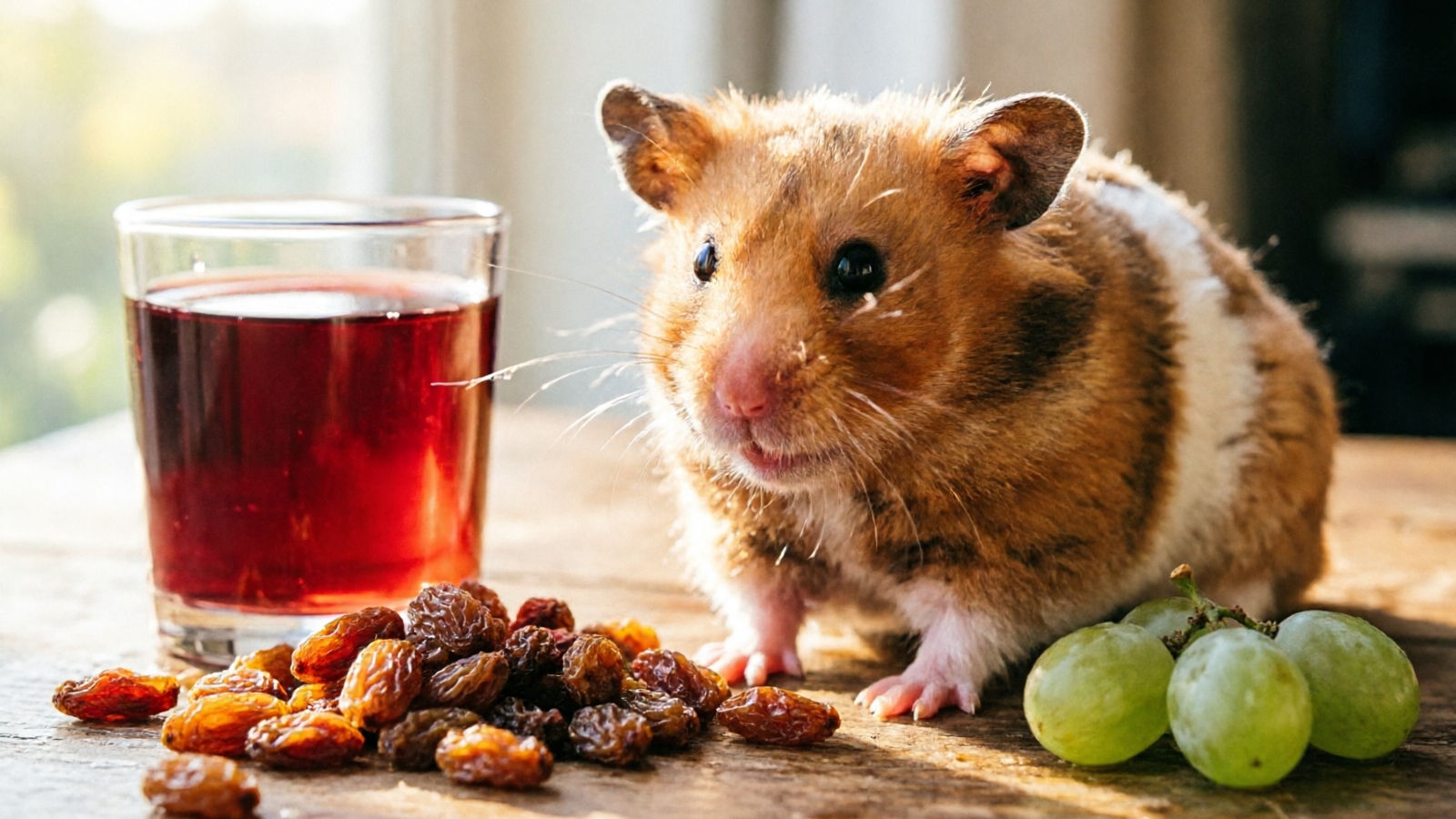
Raisins are dried grapes, and the dehydration process concentrates sugar to roughly 60-70g per 100g — nearly four times the sugar of fresh grapes. At that concentration, even a single raisin delivers a dangerous sugar load for any hamster. If you’re still considering can hamsters eat grapes in dried form, the answer is a hard no. Never offer raisins, sultanas, or currants to hamsters.
Grape Juice — No
Grape juice is essentially concentrated grape sugar with zero fiber. Without fiber to slow absorption, the sugar hits the bloodstream rapidly, causing a dangerous blood glucose spike. Absolutely unsafe for all hamsters.
Grape Jelly or Jam — No
These products contain added sugar, preservatives, and often artificial ingredients. The sugar content can reach 40-50g per 100g. When owners ask can hamsters eat grapes in processed form, the answer is always no — only fresh, raw grapes are even worth discussing.
Frozen Grapes — Yes, with Preparation
Frozen grapes are safe if fully thawed to room temperature before feeding. Cold food can cause digestive upset and potentially trigger hibernation-like symptoms in hamsters. Thaw on a paper towel, pat dry, and offer at room temperature.
Signs Your Hamster Ate Too Many Grapes
When researching can hamsters eat grapes, it’s equally important to know the warning signs of overconsumption:
- Loose stool or diarrhea — The most common and earliest sign. Watery stool is concerning.
- Bloating — A swollen belly indicates gas from excess sugar fermenting in the gut.
- Lethargy — A normally active hamster that becomes unusually sleepy or disinterested.
- Increased thirst and urination — Especially concerning in dwarf hamsters, this can signal elevated blood sugar.
- Decreased appetite — Refusing regular food, which is dangerous for hamsters given their fast metabolism.
When to See a Vet
Most mild cases resolve within 12-24 hours if you remove all treats and provide fresh water and pellets. Contact your exotic vet immediately if:
- Diarrhea lasts more than 24 hours
- Blood in the stool
- Complete refusal to eat or drink
- Extreme lethargy or unresponsiveness
- Seizures or collapse
Persistent diarrhea can also signal wet tail, a dangerous condition requiring immediate treatment.
Better Alternatives to Grapes for Hamsters
I reach for these more often than grapes, especially for my dwarf hamsters:
Lower-Sugar Fresh Foods
- Blueberries — 9.96g sugar per 100g, naturally portioned at 1-2g each. My top fruit recommendation for all hamster breeds.
- Strawberries — 4.89g sugar per 100g with solid vitamin C. Lower sugar than grapes by a wide margin.
- Cucumber — 1.67g sugar per 100g. Essentially sugar-free. Excellent for hydration.
- Broccoli — 1.7g sugar per 100g with fiber and vitamin C. One of the best vegetable treats.
- Carrots — 4.74g sugar per 100g. Good crunch, but still a treat rather than a daily food.
- Celery — Very low sugar. Cut into short pieces to prevent stringy fiber issues.
- Bell peppers — Low sugar with good vitamin content. A solid daily vegetable option.
For comprehensive treat recommendations, check our best hamster treats guide.
Other Foods Your Hamster Can Eat
Fruits
- Can Hamsters Eat Apples?
- Can Hamsters Eat Bananas?
- Can Hamsters Eat Blueberries?
- Can Hamsters Eat Strawberries?
- Can Hamsters Eat Watermelon?
- Can Hamsters Eat Tomatoes?
Vegetables
- Can Hamsters Eat Carrots?
- Can Hamsters Eat Broccoli?
- Can Hamsters Eat Cucumbers?
- Can Hamsters Eat Celery?
- Can Hamsters Eat Lettuce?
- Can Hamsters Eat Spinach?
Proteins & Other
Further Reading
- Hamster Diet Guide — Complete food list and dietary requirements
- Hamster Care Guide — New to hamsters? Start here
- Syrian Hamster Care | Dwarf Hamster Cage
- Best Hamster Food | Best Hamster Cage
- Hamster Behavior | Hamster Handling
- Hamster Breeds | Syrian vs Dwarf
Product Recommendations
Here are some products mentioned in this guide:
Frequently Asked Questions
Can hamsters eat grapes?
Yes, hamsters can eat grapes in moderation. Grapes contain 15.48g of sugar per 100g — the highest among common fruits — so strict portion control is essential. Syrian hamsters can have half a small grape once a week. Dwarf hamsters should only get a tiny piece once every two weeks. Always use seedless grapes, cut into small pieces, and wash thoroughly.
Can dwarf hamsters eat grapes?
Dwarf hamsters can eat a very small piece of grape — roughly a quarter of a small grape — once every two weeks. Campbell’s dwarfs have an estimated 10-15% diabetes incidence in captivity, and the high sugar content makes grapes one of the riskiest fruit choices. Many experienced dwarf keepers choose lower-sugar alternatives like blueberries or cucumber instead.
Can Syrian hamsters eat grapes?
Yes. Syrian hamsters can eat half a small grape once a week. Their larger body size (120-200g) and lower diabetes risk make them the most tolerant of sugar. Cut into pea-sized pieces, use seedless grapes, and start with half the recommended amount for first-time feeding.
Can hamsters eat grape seeds?
No. Grape seeds are a choking hazard — they’re too small and hard for hamsters to chew effectively. Always buy seedless grapes or remove seeds before feeding. While not toxic like apple seeds, they serve no nutritional purpose and pose a real safety risk.
Can hamsters eat raisins?
No. Raisins are dried grapes with sugar concentrated to roughly 60-70g per 100g — nearly four times the sugar of fresh grapes. A single raisin delivers a dangerous sugar load for any hamster. Fresh grapes in strict moderation are far safer than raisins.
Can baby hamsters eat grapes?
No. Baby hamsters under 4 weeks should not eat grapes or any fresh fruit. Their digestive systems are still developing. Feed only mother’s milk or commercial pellets until 4 weeks, then introduce fruit gradually starting with lower-sugar options like cucumber before moving to sweeter fruits.
What happens if a hamster eats too many grapes?
Excessive grape consumption causes diarrhea, bloating, weight gain, and elevated blood sugar. In dwarf hamsters, repeated high-sugar intake increases diabetes risk. Symptoms include loose stool, lethargy, increased thirst and urination, and decreased appetite. If symptoms persist beyond 24 hours, contact your exotic vet.
Are there healthier alternatives to grapes for hamsters?
Yes. Blueberries (9.96g sugar per 100g) are a better regular fruit choice — naturally portioned and lower in sugar. Strawberries (4.89g) and cucumber (1.67g) are even lower. Broccoli provides nutrients with minimal sugar. For a complete list of safe treats, see our best hamster treats guide.